The Lumberjack


Students Serving The Cal Poly Humboldt Campus and Community Since 1929

Day: November 4, 2023

  • Cemetery Boys: emo meets hyperpop

    by Savana Robinson

    The Miniplex, located in the back of Richards’ Goat, was dark with only a purple light emitting from the stage. People slowly shuffled in, some donning costumes in the Halloween spirit. The crowd was bustling with excitement, many concert goers with a drink in their hand. The show began around 9:45 p.m. and lasted about an hour and a half. Collectively, the boys put on a show that had a modern emo, hyperpop feel. The crowd danced and a small moshpit opened up in the center. With smiles on their faces, it was obvious that the crowd was happy to be there.

    Louie Lingard, Osha Fiuty and Benny Pavloff make up the local trio Cemetery Boys. Respectively, the boys go by NotLewy, MESpirit and beninpayne. The collective played a show on Saturday, Oct. 14. The show had a turnout of about 20 people, which was perfect for the tiny showroom in the back of the tavern.

    Playing more as a collective than a band, the boys took turns taking the stage, each playing a set of about ten songs. Pavloff went first, then Fiuty and Lingard last. Although they each had their own sound, they complemented each other at the same time.

    Pavloff dedicated a song to his girlfriend, Shannon. It was a heartfelt song where he stated he doesn’t know how she got him and falling in love isn’t like him.

    “Girl, you got me floatin’/ I be swimmin’ through your oceans,” sang Pavloff.

    Pavloff’s sound could be described as emo y2k electronic. His soft yet bold vocals mixed with the autotune and hyperpop backtrack blended well.

    Pavloff described his sound as influenced by Midwest emo with math rock samples and a mix of different types of vocals.

    “I have a lot of different things that I do. Sometimes it’s really harsh autotune, and very glitchcore-hyperpop stuff,” Pavloff said. “I’ve recently been branching out and trying to get my real voice more out there and just singing.”

    Fiuty’s sound was also drenched in hyperpop with an emo overtone. Bassy lines and quick lyrics made his music sound polished.

    “Real cemetery shit, yeah I’m in for life,” sang Fiuty, referring to his dedication to the group as a whole.

    Fiuty said that the group’s music has changed throughout the years.

    “It started with the emo rap wave that was happening in 2016, 2017,” Fiuty said. “We’ve all kind of developed and gone off into different directions with it.”

    Lingard played several songs off his mixtape “2k13” released Oct. 13. The mixtape has heavy overtones of trap.

    “Now we in a different league,” sang Lingard.

    Lingard has a sound influenced by a blend of genres including rap and witchhouse.

    “I’m really influenced by 2010s trap music. Chief Keef, Gucci Mane, Young Thug, Rich Homie Quan, stuff like that,” Lingard said.

    The group has been together since 2019, but took a break during the pandemic. They have played a total of nine shows together. Lingard and Pavloff are both College of the Redwoods students who plan to transfer to Cal Poly Humboldt.

    “We all fucking killed that,” Pavloff said.

  • Green solution to Humboldt’s parking issue

    Green solution to Humboldt’s parking issue

    by Jake Hyslop

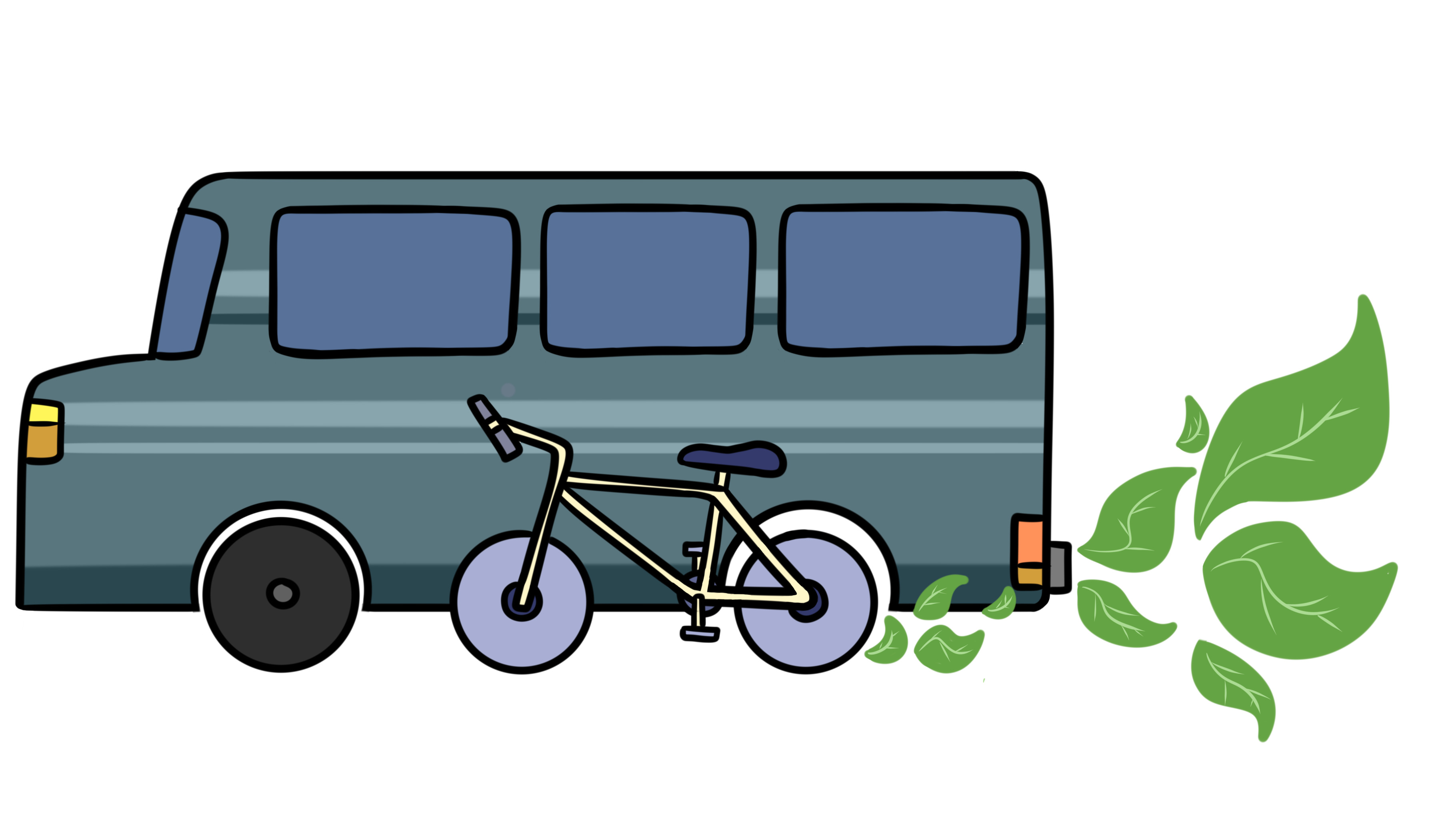
    It’s no secret that transportation is a big issue here at Cal Poly Humboldt. With almost 6,000 students currently enrolled and only 2,137 parking spaces, parking is the least fun game of musical chairs played daily by students. Despite past assurances of more parking spaces in the future, students are left to maneuver the measly parking available until then. Some students will graduate long before additional parking is finalized. 

    Morgan King, chair of the Sustainable Transportation Committee and a Climate Action Analyst in the Office of Sustainability, has been working on programs and initiatives to provide a variety of transportation options to, from and around campus. At a time when parking is a limited commodity, King is striving to offer students equitable options. 

    “Our focus is on transportation equity,” King said. “We really need to look at how we can ensure that everyone has access to the same levels of service, regardless if they’re taking a bus, walking or riding a bike.” 

    Not only does sustainable transportation operate to provide non-single occupancy vehicle (SOV) alternatives, they also focus on making these methods of transportation as sustainable as possible. Cal Poly Humboldt has established a reputation as an eco-friendly university, releasing two Climate Action Plans (CAP) since 2017. These plans are drafted with the intent of reducing emissions across campus and achieving carbon neutrality by 2045, essentially rendering the school free of fossil fuel use and conceivably running on sustainable, clean energy. 

    Vehicle commuting accounts for 16.9% of greenhouse gas emissions at Cal Poly Humboldt, measuring at 2,323 metric tons of carbon dioxide equivalent emissions. According to the most recent CAP, SOV trips account for the largest part of commuter emissions. 

    “[Administrators] are saying that they want to be a green campus,” said Zachary Meyer, student Transportation Specialist in the Office of Sustainability. “Well, one of the biggest sources of emissions is transportation emissions.” 

    Ranging from a Ride Share program that matches up students to carpool with guaranteed preferential parking to the simple but effective Jack Pass that provides unlimited free bus rides during the semester, there are a myriad of options available to students. King urged students to take advantage of the Jack Pass in particular, as the pricing is already built into the tuition students are paying. One service to take note of is the Lumberjack Express, which launched in early October. The new bus system offers free rides to students and is designed specifically to get around campus, only stopping at campus and campus-adjacent locations. 

    A large portion of sustainable transportation focuses on biking. Options offered to students include the Bike Share program, which provides low-cost bicycle rentals for conveniently getting around campus, as well as the Bicycle Learning Center (BLC), a student-run bicycle shop located under the West Gym stairwell by the Recreation and Wellness Center. The BLC offers free bicycle maintenance and bike parts, plus it raffles away free bikes on its Instagram. Unfortunately, bike theft remains a persistent problem for cyclists on campus. 

    “The immediate thing I’d suggest is registering your bike with the UPD because they can get you a free new lock,” said Adam Wood, student co-director for the BLC. “The free lock is a much better option than the more common braided steel cable lock, which can be cut through real quick.” 

    Luckily, through a student proposal approved by the Humboldt Energy Independence Fund (HEIF) and awarded $120K in 2021, there is a secure, weatherproof bike structure currently being designed for on-campus use in the near future. 

    Some issues impeding progress include funding and outreach for visibility to students. King mentioned that students often aren’t aware of the options available to them. Often, news and events are relegated to the end of department newsletters. The annual transportation fair used to be mandatory for new students as part of orientation, but King said they’ve lost administrative support for that. 

    “It needs to be constantly communicated,” King said. “It can’t only come out of my office. We’re trying to work on that, but there’s a lot of work to be done.” 

    “I think there could definitely be more funding towards [sustainable transportation],” Meyer said. “I personally don’t know what my budget is, what I can do fiscally. I’ve switched my approach this semester to do more education and event organizing to increase awareness and outreach.” 

    Meyer and King both also noted how hard it can be to push sustainable means of transportation when cars are so central to society. 

    “We live in a car-centric paradigm where people have grown up always respecting the car,” Meyer said. “The thing in your pocket to identify yourself is your driver’s license. That’s how ingrained driving is in our culture.” 

    Because of the need for the campus to become more sustainable, King said additional parking structures are not the priority. 

    There’s no telling whether the university would be able to substantially ease parking difficulties, including the pricey permits, at any point in the future, as the school aims to reach an estimated enrollment of 11,000 students by 2028. This sentiment was echoed at a mid-October meeting for the Sustainable Transportation Committee. 

    “Building more parking is just going to make parking cost more,” said Hank Kaplan, Transportation Analyst for the CSU system.

    Major changes are being proposed for the university. One proposal considered is for a shuttle system designed to transport students from school to offsite parking located away from the campus. Another such change is to “pedestrianize” the streets, closing the core of the campus off to cars, thereby making it safer for pedestrians and more encouraging for non-SOV transportation. 

    “I’d like to see no cars in the center of campus,” Meyer said. “We have people getting hit by cars, and it’s pretty unsafe to walk and bike around that.”

    Most of these radical changes are some years off, so in the meantime, King encourages students to make use of the alternative means of transportation available to them. 

    “It costs a lot of money to own, gas up and park a car – money that many of our students do not have,” King said. “And the single occupant vehicle is a major contributor to the global climate crisis affecting us all. But riding the bus with JackPass is free! Walking is free! Riding a bike is healthy and non-polluting! Carpooling is a great way to meet new people and save on gas and parking! So, if you are only driving alone to campus, try to walk, roll or bus one day a week.”
  • Submerged in science 

    Submerged in science 

    By: Alina Ferguson and Emma Wilson

    Diving can take you to magical, strange places that can be beneficial to science, research and our understanding of the oceanic unknown. There are still many mysteries to be discovered in the deep sea. 

    “Humans are not meant to be submerged underwater,” Cal Poly Humboldt diving student Rory Bourdage said. “We are aliens in that world.” 

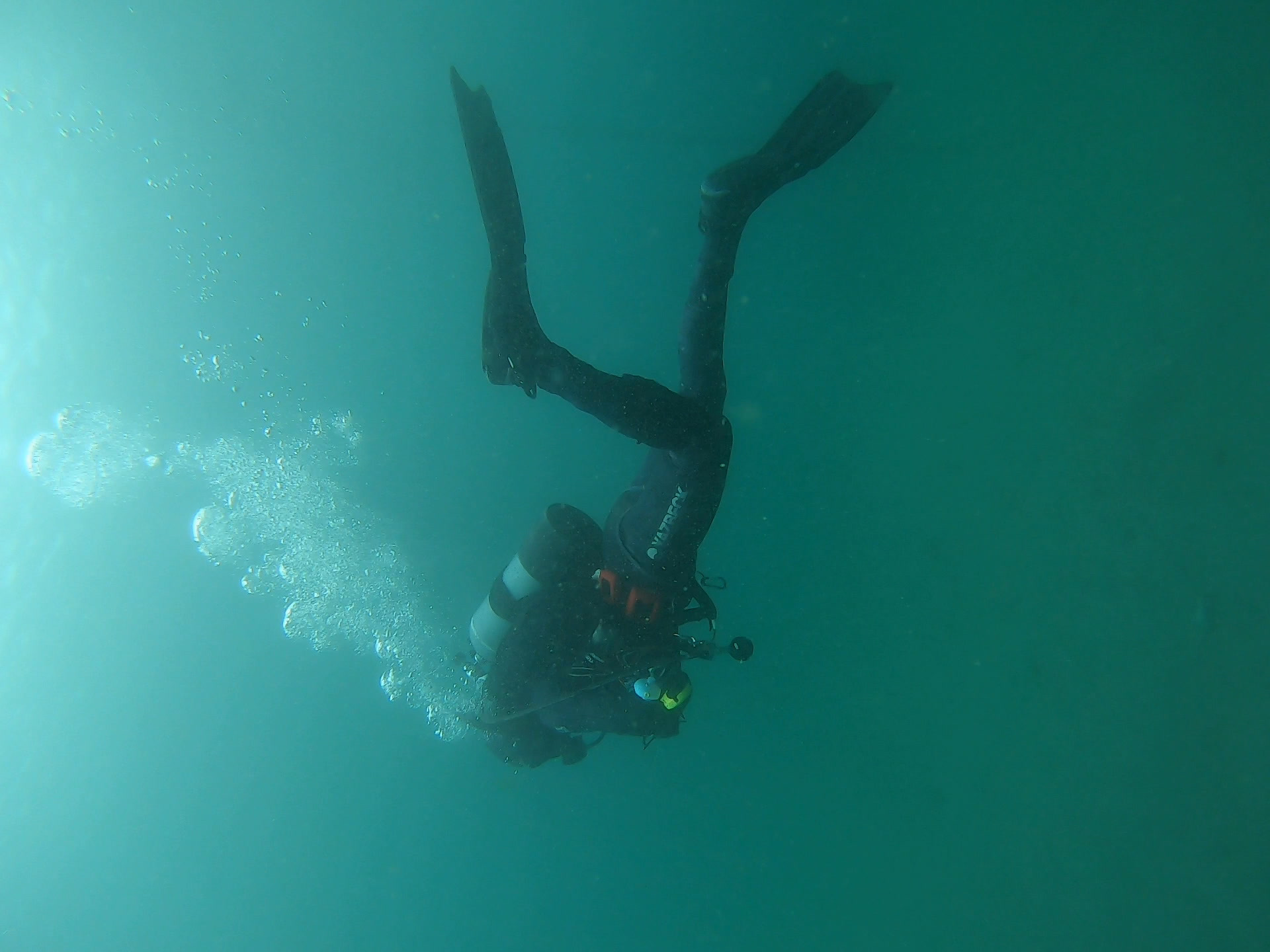
    At Cal Poly Humboldt, students can enter that alien world through the scientific diving courses offered. This can lead to them getting certified in scientific diving, along with hands-on experience in conducting underwater research and preparing them for a career in marine science. 

    Richard Alvarez, the university’s Diving Safety Officer since 2005, has been diving since 1994. He consults and oversees the diving classes, making sure everyone is staying safe and equipped with diving equipment that is properly maintained. 

    When you go through the scientific diving process, you can get your certificate in American Academy and Underwater Sciences — also known as AAUS — for free through Cal Poly Humboldt. It will take about four semesters, as the classes are not always offered each term. 

    “To get that certification as a scientific diver, you have to do 12 open water dives,” said Alvarez. “What we traditionally do is we learn a scientific protocol, we have people go out and they learn that protocol, they show me that they can do it in the ocean, [that] they can do the extra scientific stuff in addition to being safe scuba divers.” 

    Photo by Angie Edmunds. Master diver students completing a navigation dive under the supervision of leadership diving students and instructors.

    Scientific diving is an important skill to have for conducting underwater research, but is also physically and mentally challenging. Common barriers for aspiring divers are the expense, access to training and gear required for getting the AAUS certification. 

    “[There’s] a lot of things that you have to learn so that you can do it safely. Diving in Northern California waters is a couple of notches higher than most other places because our ocean is just a little bit more demanding,” Alvarez said. “We are exposed to a lot of open ocean swells, we see a lot of ocean energy. Our visibility is pretty limited by world standards. You know, we’re pretty happy with five to 10-foot visibility.”

    Marine biology student Rory Bourdage has been in the scientific diving class for almost three years. He is currently a teaching assistant for the scientific diving class. Bourdage is certified as a beginner diver and as a master diver. 

    One of the projects the class conducts is measuring sea creatures, sometimes down to the nearest millimeter, depending on their rarity. For example, a red abalone, an underwater sea snail, will need to be measured as accurately as possible. 

    “In our protocol for the class, we want to measure abalone, for example, since they have been struggling for years, so we want to track not only how many there are in a location, but how big they are getting to get a better idea of their recovery – or decline if that’s the trend that is found,” said Bourdage.

    Bourdage mentioned that it is easier to conduct research in certain areas since the animals are less likely to be afraid of humans. An example of one such place is Catalina Island situated southwest of Los Angeles, a marine protected area. 

    Photo by Angie Edmunds. Student diver and the California state fish called a Garibaldi.

    This means they heavily restrict what can go in and out of it. Due to these restrictions, the animals are a lot more comfortable with people, compared to other places and sometimes they will come right up to you. 

    “Many of these animals have gone generations without having the fear of humans,”  said Bourdgae. “They can get right up in your face.”

    Rebecca Colyar is a transfer student who started in the scientific program two years ago. She is originally from Fresno, CA, and when she was looking for schools to apply to, Cal Poly Humboldt was the only one to have a scientific diving program, which caught her eye. 

    Colyar’s interest in diving began the summer before her freshman year in high school after her mom took her snorkeling in the Bahamas.

    “That was the one big thing that got me really into ocean life and documentaries,” Colyar said. “I kind of realized if I wanted to do that, if I wanted to tag animals, that I have to scuba dive, like there’s no other way than to start learning how to dive and be comfortable in the water. So, I found out about the scientific diving minor.”

    Colyar is, in a way, a superhero. A large obstacle that may normally scare off some divers, does not deter her. 

    “I have a superpower — I can breathe underwater,” Colyar said. “It’s just that, like, feeling of being in a place where your body knows you’re not supposed to be, and being able to overcome those obstacles that your body and fighting your body to. I feel like there’s a lot of accomplishing hard things.”

    While it may seem like the only people in the diving program are science majors, it is not a requirement. You can have any major or other interest, just as long as you are willing to put in the work for the AAUS certification. 

    “You don’t have to be a STEM major or Marine Science major, you can be anybody,” Bourdage said. “As long as you have the willingness to, you know, take the plunge into the unknown.”