The Lumberjack


Students Serving The Cal Poly Humboldt Campus and Community Since 1929

Author: Ahmed Al-Sakkaf

  • Provost speeds up dean’s resignation

    Provost speeds up dean’s resignation

    “I couldn’t compromise the values of CNRS and my own.”

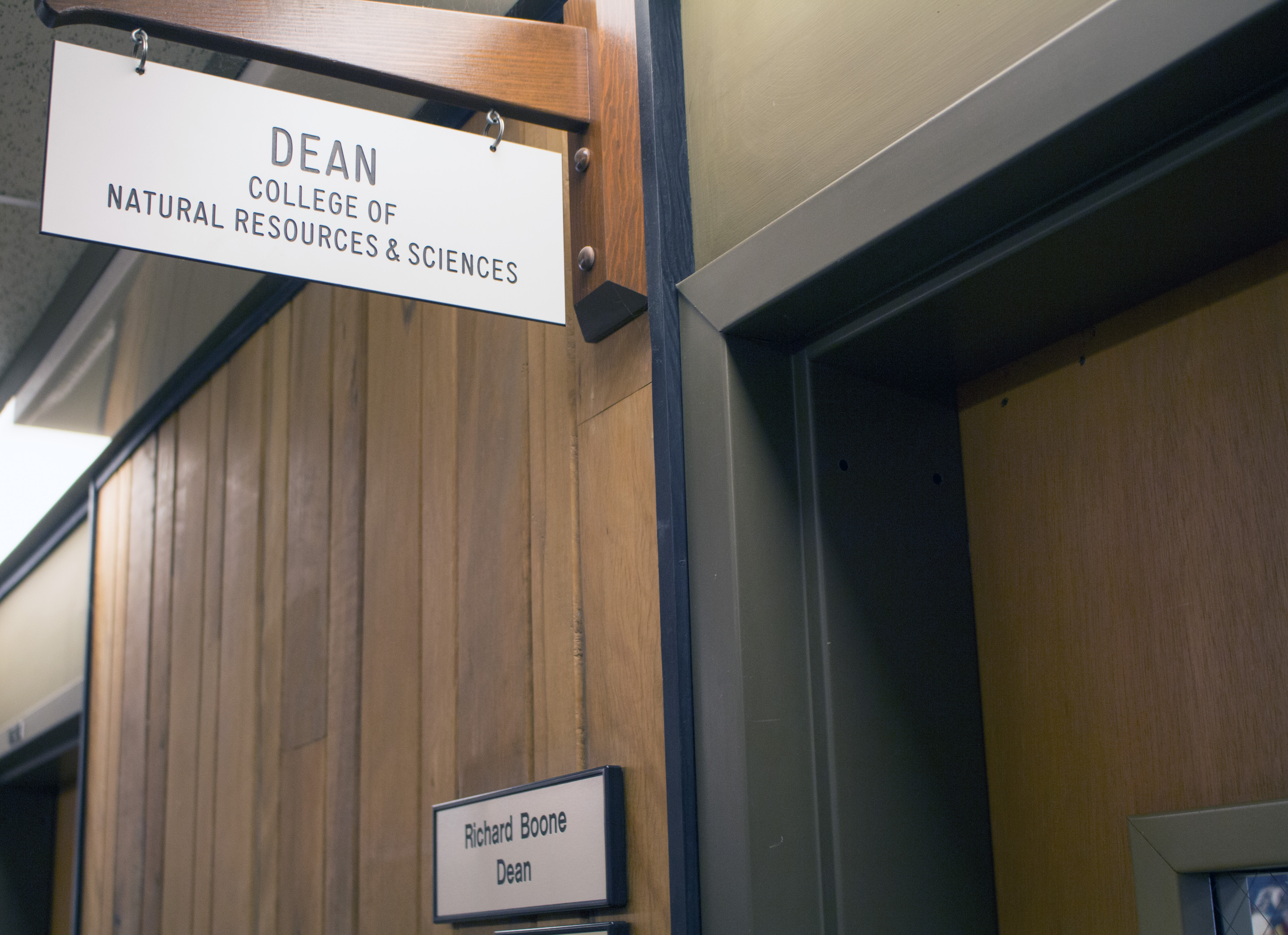
    Richard Boone, the former dean of College of Natural Resources and Sciences at Humboldt State, was let go before his resignation came into effect. Earlier this month, Boone formerly announced his resignation, effective June 30. But Alexander Enyedi, provost and vice president for Academic Affairs, informed him in a meeting on March 9 that his resignation was accepted and effective immediately. Steve Smith took office as the new interim dean for CNRS, replacing Boone.

    Boone planned to remain dean of CNRS until June 30, as he said to the provost when he resigned. He was surprised during the meeting that he didn’t have the time to continue working on the things he planned out.

    It was important for Boone to carry out his plans leading up to the initial June 30 resignation. He and his staff were in the process of finalizing the steps to reduce the budget for next year.

    “Having the remaining time was important for me, personally and professionally,” Boone said. “Also for the college and my role in the college, I was looking forward to working in Humboldt until the end of June.”

    Boone said he doesn’t know why he was asked to leave office four months before his initial resignation date.

    “I had conveyed to [the provost] my resignation was effective June 30 and he had not rejected the date when I met with him,” Boone said.

    The Lumberjack reached out to the provost to comment on Boone’s resignation, but was directed to HSU’s public relations team. Humboldt State communications specialist, Grant Scott-Goforth, responded about why the provost adjusted his resignation date.

    “Unfortunately, because it’s a personnel issue, the school can’t release anymore details about the resignation,” Scott-Goforth said. “We have a duty to protect individual privacy in these kinds of matters. I’m sorry I can’t help more.”

    Boone left the area and is now in the process of relocating to Fairbanks, Alaska.

    “I’m leaving Humboldt with a great deal of sadness,” Boone said. “I loved Humboldt and I really loved Arcata. This is a part of me and it will always be a part of me.”

    Reflecting on his time at HSU, Boone said he really enjoyed his time working as dean.

    “It was an honor to serve as the dean,” Boone said. “It was really a joy to work for the CNRS faculty, staff and students.”

    According to Rick Zechman, associate dean of CNRS, Boone was respected across HSU and concerned about CNRS.

    “He was very concerned about the health and vitality of the college, its students, faculty and staff,” Zechman said.

    Why did Boone resign?

    Boone and HSU provost Enyedi had conflicting views regarding the depth of the cuts to the CNRS budget.

    “I decided to resign, because it became clear the provost and I had irreconcilable differences over the depth of budget cuts and priorities for CNRS,” Boone said. “I couldn’t compromise the values of CNRS and my own.”

    Boone said his strength is in building new programs, developing interdisciplinary teams, integrating research in teaching and graduate education. With the current budget crisis HSU is facing, there’s going to be some downsizing. In such an environment, Boone thinks he can’t put his skills to practice.

    “I felt that I couldn’t utilize that experience and skill set sufficiently to make me satisfied and to help the college as much as I wanted to,” Boone said.

    Boone said he is proud of the work he has done as the dean of CNRS.

    “I think I did good work in my time there and would have continued doing good work through June,” Boone said.

    Though Boone is proud of his work as dean, he said he could’ve done better if not for the current budget cuts.

    When he joined HSU on July 25, 2016, Boone was aware of CNRS budget deficit, but not the university deficit.

    The cause of CNRS deficit wasn’t clear to Boone at first. Last year, he spent time understanding the budget for CNRS and the university.

    “It wasn’t clear to me initially why there was a mismatch between the budget and the expenditures in the college,” Boone said. “I learned the mismatch is primarily due to the under-budgeting of lectures in college.”

    Boone started the CNRS strategic planning committee. One of the goals of this committee is to find ways to achieve a balanced budget.

    “I took my responsibilities seriously to eliminate the deficit,” Boone said. “I believe that the strategic planning process we started this year would’ve led to recommendations for a balanced budget.”

    According to Zechman, the strategic planning committee is one of Boone’s major initiative during his short time as dean for CNRS. This initiative will guide the college for coming years.

    “[Boone] has a collaborative leadership style that was reflected in one of his major initiative during his brief time as dean of CNRS, a strategic planning effort involving faculty, staff and students that will guide the college over the next several years,” Zechman said.

    Over the last eight years, the college grew in terms of majors and number of full-time students. To accommodate the growth, the college hired around 57 lecturers. Costs for most of those lecturers were not added to the college budget.

    “Last year, if the money for the lecturers that we employed was in the budget, there would not have been a deficit,” Boone said.


     

  • Humboldt State now has a mobile app

    Humboldt State now has a mobile app

    You now can register for classes on the go without having to wait to get to a computer. With the new Humboldt State mobile app, you can access your student center anywhere. Students can not only register for classes through this new app, but they can also check their grades and financial aid status too.

    According to Bethany Rizzardi, chief information officer for ITS, the app has an annual cost of $50,000 and a one-time $25,000 initial setup and configuration fee.

    The app adopted several modules including the student center, library, campus news, course catalogue, events calendar and a new interactive map. All of this and much more is just a touch away.

    According to HSU Information Technology Services project coordinator, Billie Herman, ITS office did extensive research prior to implementing the mobile app. In this research, several mobile app vendors were reviewed.

    “There were two vendors selected out of that research project,” Herman said. “There was Modo Labs and Greyhaller.”

    The decision was then made to pick Modo Labs, a software company that creates mobile apps.

    “There are nine other CSUs that have followed the same model and are using the same vendor,” Herman said.

    This new HSU mobile app is free and available to anyone with a smartphone. You can download the app through the iPhone App Store or Android Google Play Store.

    According to Herman, there’s around 1,000 unique visitors to the app so far.

    Connor Callison is a HSU programmer who works on maintaining and developing the app. He created a new campus interactive map. The map can be found on the homepage of the app.

    The app was first presented to students in both software engineering and database design classes last fall. Students in those classes tested the app and provided feedback to the programmers.

    “[Computer science] students have pretty intricate knowledge of how apps works, [and] we figured they might be able to find some of the holes that we might have to deal with first,” Callison said. “They were our beta testers and we got some feedback from them that was helpful.”

    “ITS likes to reach out and work with the CS students as much as possible,” Herman said. “We love to have a bridge, students brings such vitality and that new perspective.”

    The launching of the app came as a part of an an initiative at ITS to make it easier for students to access campus services using their phones.

    “We are trying to make the business of being a student very easy,” Herman said. “It’s hard to be a student as it is and it’s very nice to be able to easily navigate through all the process and procedures that you have to go through.”

    The app is a work in progress. Programmers at ITS are still working to improve students’ mobile experience with the app. Users can send comments about the app by using the app feedback form found on the home page.

    “This is our first step into this arena and we’re going to continue to evolve this as we get more feedback,” Herman said. “Give us a year and that app is going to sing.”


  • International students first few days in the U.S.

    International students first few days in the U.S.

    As the spring semester approached, Humboldt State University welcomed new foreign exchange students. Archana Nihalani from Pakistan and Gereon Ploenes from Germany are two of the new incoming students. Nihalani came from Hyderabad, a city located in the Sindh province of Pakistan, and Ploenes came from Nijmegen, a city in the Dutch province of Gelderland where he resides. Both had stories to tell about their first few days in the U.S. before the spring semester started.

    Nihalani thinks that people are too polite.

    Archana Nihalani from Pakistan. Photo by Ahmed Al Sakkaf

    “People here say thank you a lot and sorry a lot,” Nihalani said. “A lot of times and I’m not used for this.”

    Saying thank you and sorry too much is considered a very formal behavior in Pakistan, according to Nihalani. It may mean that a person has too many boundaries.

    “Here [U.S.], if you don’t say ‘thank you’ or ‘sorry,’ it’s rude,’ Nihalani said. “But there [Pakistan], it’s rude if you say ‘thank you’ and ‘sorry’ all the time, because it means that you’re being too much formal.”

    Nihalani described food to be her worst struggle. She thinks the food here is too plain and lacks flavor.

    “Food here is plain,” Nihalani said. “I’m not used to eating plain food with no flavors… it’s too plain. In Pakistan, we put so such spices in food, so many flavors.”

    Nihalani thinks that people here in the U.S. have more personal space than their counterparts in Pakistan. She also notices that people here are easily offended.

    “People here [U.S.] have so much personal space and there [Pakistan] we don’t have so much personal space,” Nihalani said. “Everything here offends people I don’t know why? They get offended very easily.”

    Ploenes from Germany residing in the Netherlands. Photo by Ahmed Al Sakkaf

    “The first impression I had of the U.S. [is] that it’s exactly like the movies,” Ploenes said. “The J cafeteria and how it works… it’s really like the High School Musical.”

    To save money on his flight, Ploenes flew to San Francisco International Airport and took the Greyhound bus to Arcata. He was surprised when a Greyhound worker asked him several times if he is carrying any guns in his oversized backpack.

    “The guy working in the Greyhound asked me five times if I carry guns in my big backpack,” Ploenes said. “It’s not normal to carry any guns in Europe. You’re not allowed to. But in America, guns are normal.”

    Ploenes was also surprised by the amount of “big cars” and pickups he found in the streets here.

    “I’m not used to seeing a lot of pickups and a lot of big cars. Why [do] people need these big cars?” Ploenes said.

    Ploenes noticed that the toilets here in the U.S uses a lot of water to flush and they have a lot more water in their bowls too.

    “Toilets are totally different here,” Pioenes said. “You use a lot of water to flush.”

    Both Ploenes and Nihalani think that people here are very kind.

    “I was surprised with how friendly the people are,” Ploenes said.

    “People are really nice here,” Nihalani said. “They’re very helpful.”


  • Proposal to cut Third Street Gallery

    Proposal to cut Third Street Gallery

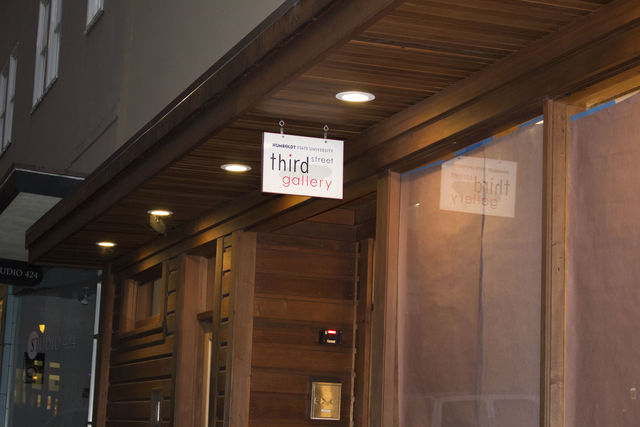
    Humboldt State University’s Third Street Gallery in Eureka may shut down in an effort to reduce the university’s spending budget. The proposal to close the gallery calls for $55,000 of the gallery’s budget to be reduced. That makes a third of the gallery’s whole budget and the remaining two thirds transfer to other gallery programs on campus.

    Jack Bentley is the Third Street Gallery director.

    “The proposal to close this gallery is actually very short-sighted,” Bentley said. “It misses the point of what the purpose of this gallery was and the inherited highly developed community expectation of what we do here.”

    The Third Street Gallery was founded in 1998 to provide students with real world, hands-on learning through work and internship opportunities. It’s also meant to give HSU opportunities to reaching out to the community.

    Pedro Uribe Godoy is an art major and works at the gallery.

    Godoy opposes the proposal to close the gallery and thinks it is “destructive” as it will cut out a venue for learning for current and future art students.

    “There’s a lot to learn here and for them [HSU administrators] to take it away and not expose new students to this line of work, I think, is very destructive,” Godoy said. “They are limiting students of what they’re gonna learn and what kind of avenues of work they can plug themselves into.”

    The gallery is supported by the university, revenue from art sales and public donations. The Third Street Gallery raised around $22,000 from both sales and donations during the first half of the current fiscal year.

    “It’s kinda messed up for the university to take away this gallery and undermine all the donors that have been donating for this gallery for so long,” Godoy said.

    Andrew Daniel is an art alumnus who graduated from HSU 16 years ago. As a student, he had his work shown in the gallery. Daniel wrote a letter to HSU administrators expressing his displeasure with the proposal to close the gallery.

    “The gallery brings a unique perspective to the community. It brings in work from out of the area,” Daniel said. “I don’t know if we’ll get those artworks if not for this gallery.”

    Over the years, Humboldt County has gained a reputation for being a haven for art and artists of all kinds. Besides student artists, local artists exhibit their artwork in the gallery too.

    “It’s such a valuable thing to our community,” Daniel said. “There are a lot of artists in our community that would just not even show their work if it didn’t show at that gallery. It’s such a unique venue.”

    In such a rural area, the Third Street Gallery provides students and the community access to different forms of art from different parts of the world.

    “We’re rather isolated. Here, people have access to art forms and new ideas that otherwise they won’t have,” Bentley said. “They would have to travel several hundred miles to either Portland or San Francisco to have that type of access.”

    The gallery host exhibitions for local artists and other visiting artists from outside the area. It also provides a venue for students and alumni artists to exhibit their work in a professional gallery off campus and in the community.

    “Student artists and alumni artists exhibit here where they have a much higher probability of coming into contact with the public than they would if they’re exhibiting their work on campus,” Bentley said.

    Living in a rural area like Humboldt, art students at HSU can find it difficult to find a job or an internship related to their major.

    Ann Valdes is an art student at HSU and also works in the Third Street Gallery.

    “Being in Humboldt, we’re so removed from a large art market. It’s really hard to get good solid work experience if we didn’t have programs like this,” Valdes said. “We’re learning all the lessons that we may not be able to learn if we’ve never worked in a gallery.”

    HSU prides itself on offering plenty of hands-on learning opportunities for its students. Students say HSU Third Street Gallery provides students with real world experience.

    “I’ve been learning valuable lessons here,” Godoy said. “There’s no more hands on than this. This is hands on.”

    Valdes thinks the proposal to close the gallery goes against how HSU advertises itself.

    “What this budget cut proposal intends almost goes against the way Humboldt State University advertises itself,” Valdes said. “For them to cut this program is almost undermining what Humboldt says it’s about.”

    HSU owns three art galleries. Reese Bullen Gallery and Goudi’ni Native American Arts Gallery are both located on campus, while HSU Third Street Gallery is located off campus in Eureka.

    Bentley thinks all of these galleries are important and serve important purposes. The most important purpose, he believes, is that the Third Street Gallery serves as community outreach.

    According to Bentley, the art department is planning on launching a new Bachelor of Fine Arts program in the future.

    “This gallery is the natural venue for the BFA exhibitions,” Bentley said. “Here, students will have the opportunity to gain more studio time.”

    Bernadette McConnell is another art student who works in the gallery. She opposes the proposal to close the gallery. McConnell thinks the proposal to close the gallery is ill-informed.

    “If it wasn’t for my job here at the Third Street Gallery, I wouldn’t be here at Humboldt State,” McConnell said. “If this place gets shuttered, I have no reason to be at Humboldt State. I will leave Humboldt.”

    Bentley has received many letters that oppose the proposal.

    “The letters I received are very supportive of the gallery,” Bentley said. “Letters from former students, community members who object the proposal very strongly.

    Every summer, the Third Street Gallery hosts an exhibition of work from HSU art graduates.

    All graduates who have a piece in the senior show get to show their work in the gallery. In the Third Street Gallery, students get exposure to the overall community off campus.

    “Every summer we have a show dedicated for graduating seniors from the art department. They get off campus public exposure that they otherwise wouldn’t get,” Bentley said. “If this gallery closes, those type of exhibitions will simply be on campus and not available to the broader community.”

    The proposal to close the gallery came as a surprise to Bentley. He learned about it by reading the list of proposed budget reductions.

    “There’s been no outreach by any of these communities to the gallery,” Bentley said. “I learned about it by opening the proposal. This is how I learned about it.”

    Godoy hopes the community comes together to help keep the gallery open as they did with the football program.

    “I’m hoping that the community does that for us too,” Godoy said. “Hopefully, it all comes together well and we all fight together for it, and I’m hoping that we can keep it alive with the help of the community.”

  • Word on the Street: What students look forward to this semester

    Word on the Street: What students look forward to this semester

    Name: Dalvin Jamal-Milton

    Major: Psychology

    Standing: Sophomore

    “One thing that I’m looking forward to is this rugby season. Our rugby team looks pretty good this year, and I think we have some really good chemistry… we have all the means to do well.”

    ——

    Name: Seth Velasco

    Major: Kinesiology

    Standing: Freshman

    “I’m looking forward to starting off a little better than I did last semester now that I know what I’m doing. I struggled a bit in the beginning of last semester. Now that I know what I messed up on last semester, I can fix it.”

    ——

    Name: Rebecca Bantum

    Major: Psychology

    Standing: Freshman

    “I’m looking forward to taking different classes that I didn’t take in high school. Here in HSU, there’s a lot of options. I’m looking forward to pick what I want to take.”

    —–

    Name: Cailyn Lien

    Major: Cellular Biology

    Standing: Freshman

    “I’m looking forward to learning more stuff about my major. I’m probably going to start working at a blood bank and hospitals to learn more about human biology.”

    —–

    Name: Mei Shimizu

    Major: Child Development

    Standing: New transfer student from Japan

    “I’m excited to take classes about child development. This is what I wanted to learn from before.”

    —–

    Name: Akane Yajima

    Major: Francophone Studies

    Standing: New transfer student from Japan

    “I’m excited to learn about Francophone studies in the English language.”

  • HSU student Erin Henry found deceased near Westhaven

    HSU student Erin Henry found deceased near Westhaven

    The 22-year-old missing HSU student Erin Henry was found deceased this morning near Westhaven 12 miles north of Arcata. Henry was reported missing by her roommate on Nov. 30, 2017.

    A CalTrans worker had found a knee scooter along Highway 101 just south of Westhaven. Arcata Police Department was then notified. APD reported to the location and searched the area when they found Henry’s body at a short distance from the highway.

    According to an APD press release, “The preliminary investigation revealed no sign of foul play.”

  • Farewell time

    Farewell time

    * Ahmed Al-Sakkaf works as front desk student assistant for the Center for International Programs

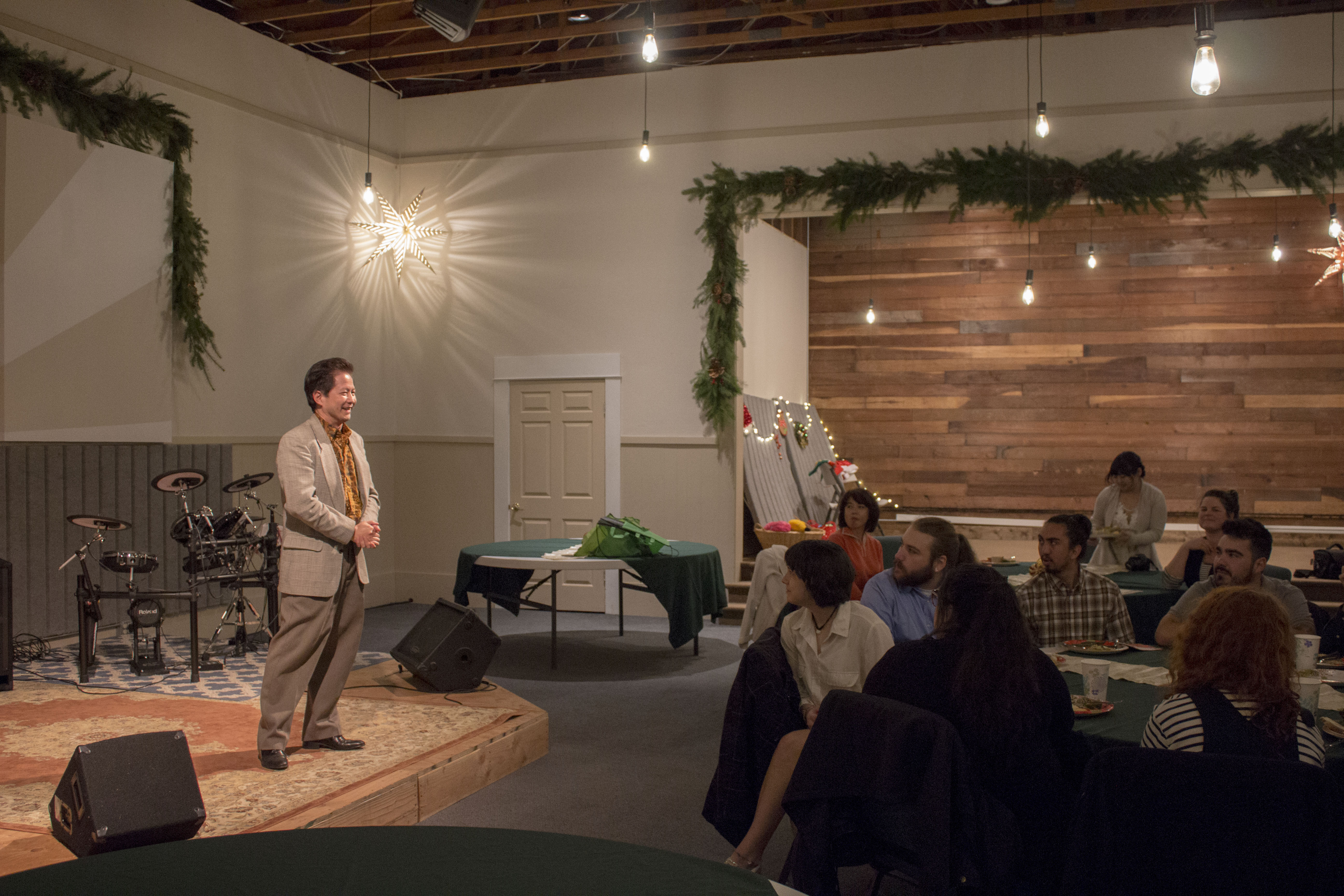
    The Center for International Programs hosted a farewell party on Saturday for international exchange students who are going back to their home countries. They are leaving with unforgettable memories they’ve made here at Humboldt State.

    Sonja Willigerode is a German exchange student studying Business. During her semester at HSU, Willigerode took a sustainability-focused business class.

    In Germany, Willigerode studied economic theory which was “just about money and trade,” she said.

    At Humboldt she learned how to apply that same theory in an environmental context.

    “I studied economic theory in Germany and it was just about money and trade,” Willigerode said. “But here you learn how you can apply it to environmental context.”

    This is Willigerode’s last semester of study and she chose to spend it abroad here in HSU.

    “It was the best semester in my whole studies,” she said. “I’m so thankful that I can be here and stayed this semester.”

    Linus Kaminski is another exchange student from Germany. He’s majoring in Water Resources Management. Kaminski loves Humboldt and thinks it’s beautiful.

    “I like the area here. It’s so beautiful. The ocean the forest it’s beautiful,” he said. “There aren’t many places where I can see deer and raccoons on just my way walking from my dorm to the library.”

    Kaminski celebrated Thanksgiving for the first time this year. He celebrated it with the family of one of his American friends. He also played American football for the first time.

    “This year it was my first Thanksgiving and it was really cool, I really like it,” he said. “There was so much to eat. I also played football it was my first time playing American football and it was so much fun.”

    Ruby Saint a bilateral exchange student from Australia. Students in the bilateral exchange program pay their tuition fees at their home university and study abroad at another university. Saint grew up in Tasmania and previously studied at the University of Tasmania in Hobart. This year she also celebrated Thanksgiving for the first time. She and her friends had a Friendsgiving celebration.

    “That was interesting , we had like a Friendsgiving,” she said. “It was interesting to kinda experience Thanksgiving.”

    Saint thinks Humboldt is “kinda quirky and interesting,” she said. Saint arrived to the U.S. few days before the beginning of the fall semester. She flew to San Francisco and took the Greyhound bus to Arcata. She was shocked by the smell of weed in the bus.

    “I was like shit where am I,” she said. “Marijuana back home is a big no-no. If the police smell it on you’re done.”

    Here in Humboldt Saint discovered her love for Pumpkin pie.

    “Pumpkin pie, I need to take back and make a thing there.”

    Yasmina Umarkhanova an exchange student from Kazakhstan studying Psychology. When she first arrived in the U.S. at the beginning of the fall semester, she was amazed by the redwood trees.

    “I was really amazed by the redwood forest,” she said. “I really like the fact that I’m living in a forest.”

    Umarkhanova is going back to Kazakhstan in two weeks. She going to miss the redwoods the most.

    “I’m going to miss the forest,” she said. “When I’m walking and looking around, it’s meditation every day.”

    As Umarkhanova reflects on her semester abroad experience at HSU. She thinks it’s the best “chapter” of her life.

    “Humboldt for all international students was one chapter of our lives,” she said. “For me, this chapter of my life is the best.”

  • Your first amendment is under assault

    Your first amendment is under assault

    In an effort to crack down on the fast-growing global Boycott, Divestment and Sanctions (BDS) movement, pro-Israel U.S lawmakers across both aisles are trying to pass a bill that criminalizes the boycott of Israel.

    Inspired by the South African anti-apartheid movement, the goal of the BDS movement is to pressure Israel to end its violations of human rights and to comply with international law. According to the United Nations human rights council, Israel is the world’s top human rights violator.

    Israel Anti-Boycott Act bills (S.720/H.R.1697) were introduced in both the House and the Senate earlier this year. Now more than 43 senators and 247 house members support these bills.

    According to the American Civil Liberties Union (ACLU), the law will make it a felony to boycott both Israel and its illegal settlements in occupied West Bank if the bills passed. In addition, U.S persons who boycott Israel can face up to 20 years in prison and fines up to one million dollars.

    Dylan J. Williams of J Street, a pro-Israel advocacy group based out of Washington D.C., wrote a letter to Congress in regards to the Anti-Boycott Act.

    “The penalties associated with these offenses are serious, potentially including substantial fines and prison time of up to 10 years,” Williams wrote. “This bill could give Attorney General Jeff Sessions the power to prosecute any American who chooses not to buy settlement products for a felony offense. That kind of authority should not be given to any administration, let alone one that has engaged in extreme rhetoric against political opponents, including threats to ‘lock [them] up.’”

    The ACLU wrote a letter to members of the Senate urging them to oppose the Israel Anti-Boycott Act.

    “We [ACLU] urge you [senators] to refrain from co-sponsoring the legislation because it would punish individuals for no reason other than their political beliefs… This bill would impose civil and criminal punishment on individuals solely because of their political beliefs about Israel and its policies.”

    This unconstitutional bill represents a serious threat to people’s right to boycott. Freedom to boycott is part and parcel of freedom of speech protected by the first amendment of the U.S. Constitution.

    About 23 states, including California, have already passed laws against boycotting Israel. California Assembly Bill 2844 was signed into law by Governor Jerry Brown. This Califonia law requires those who enter into contracts with state agencies to certify that they are not boycotting Israel as well as not supporting the BDS movement or any of its programs. This straight up goes against freedom of speech.

    I’m not in any way, shape or form implying that I boycott Israel, nor am I encouraging anyone to do so. However, I believe that freedom of speech is a fundamental human right that shouldn’t be undermined. I strongly oppose the Israel Anti-Boycott Act. If you too think that the first amendment and freedom of speech shouldn’t be undermined, then go and write your representatives on Capitol Hill. Ask them to oppose any bill that may jeopardize your freedom of speech.

  • Raising the bar

    Raising the bar

    In the National Survey of Student Engagement, zero percent of faculty think seniors devote “Very Much” or “Quite a bit” of their time doing community service or volunteer work. Six percent of seniors said they devote “Very Much” or “Quite a bit” of their time for community service or volunteer work.

    The National Survey of Student Engagement was sent out to seniors last spring at the same time the Faculty Survey of Student Engagement was sent out.

    In these surveys, 298 seniors and 226 faculties participated. Percentage-wise, that’s around 31 percent of seniors and 40 percent of the faculty. A part of the results from both surveys for the 2016-17 academic year shows how upper division faculty thinks seniors spend their time versus how senior say they spend their time.

    Upper division faculty were asked how much time do they think seniors devote to participating in co-curricular activities. Faculty answered only one percent of students devote “Very Much” or “Quite a bit” of their time participating in co-curricular activities. On the other hand, seniors answered seven percent.

    According to the same surveys, upper division faculty thinks 41 percent of seniors devote “Very Much” or “Quite a bit” of their time relaxing and socializing, while seniors answered only 23 percent.

    Almost half of all seniors in the survey said they devote “Very Much” or “Quite a bit” of their time to prepare for class, on the other hand, Upper division faculty think only 13 percent of seniors do so.

    It’s not the first time HSU students participate in the National Survey of Student Engagement. The first time was back in 2002, according to NSSE website, though last spring was the first time HSU conducted the Faculty Survey of Student Engagement on HSU faculty.

    According to the Office of Institutional Effectiveness, the Faculty Survey of Student Engagement costs $2,008 and the National Survey of Student Engagement cost $5,550.

    Such surveys are important as they help the university administration understand students and how do they spend their time and how both student and faculty are seeing and perceiving things.

  • Mondays are no longer meatless

    Mondays are no longer meatless

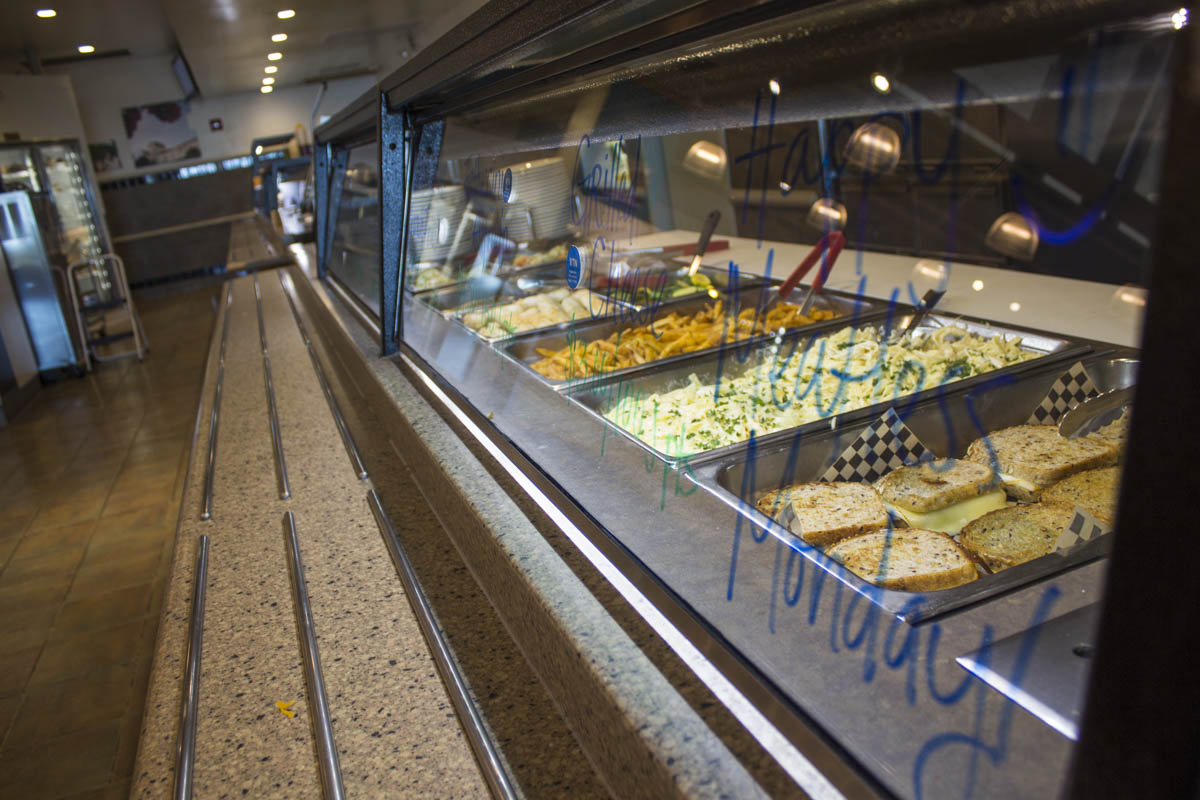
    No more Meatless Mondays. They will now become Pollo-pescetarian. HSU Residence Hall Association decided last Monday, Oct. 9th by a unanimous vote to incorporate white meat into Monday’s dining services, and add more vegan and vegetarians options throughout the week to compensate. Chicken, turkey and fish will now be served at the J cafeteria on Mondays.

    IMG_9911.jpg
    Students getting food from the J cafeteria on a meatless Monday. Photo credit: Ahmed Al-Sakkaf

    “We came to a vote last week, instead of one whole day for vegetarian and vegan options, we’re going to incorporate it more throughout the week,” Destiny Mendoza, sitting President, said.

    Meatless Monday is an international movement that launched in 2003. Its goal is to reduce global meat consumption by 15 percent. In Spring of 2015, about 700 HSU students signed a petition in support of Meatless Mondays. RHA then voted to implement Meatless Mondays at the J starting Fall 2015.

    Ron Rudebock, director of Dining Services said that the foot traffic in the J has dropped by 15 percent on Mondays compared to compared to other weekdays.

    RHA National Communication coordinator Nicole Laureano said that besides the dip in sales at the J on Mondays, dining services didn’t see an increase of sales anywhere else on campus.

    “The big question was where are people [students] going to eat? Are they not eating? Are people starving themselves? Or leaving campus in order to get what they want?” Laureano said.

    IMG_9880.jpg
    The J food servers behind a counter waiting to serve students. Photo credit: Ahmed Al-Sakkaf

    Many students around campus dislike Meatless Mondays at the J cafeteria. Cynthia Godinez, a student coordinator who works at the J cafeteria, hears students complain and express their frustration about Meatless Mondays.

    “Students come in and they literally roll their eyes and scoff because they hate Meatless Mondays,” Godinez said. “People complain about Meatless Monday all the time… I hear it, I hear it.”

    A large amount of the food served on Mondays is dairy-based and contains a lot of cheese, making it hard for students who are lactose intolerant to eat at the cafeteria.

    “They [students] want to see less cheese,” Mendoza said. “We had Ron from Dining come in and we told him to lay off the cheese.”

    Godinez thinks that the food served on Meatless Monday isn’t healthy as it contains large amounts of fat.

    “You’ll think something like Meatless Monday is healthy, but it’s not healthy, it’s all cheese. It’s very heavy greasy food,” Godinez said.

    IMG_9941.jpg
    Harrison Cole on a meatless Monday making a salad at the J cafeteria salad bar. Photo credit: Ahmed Al-Sakkaf

    With the dip in the number of students going to the J on Mondays, a lot of food went to waste said Godinez.

    “A lot of food goes to waste because of Meatless Mondays,” Godinez said. “We [Dining services] waste a bunch of food, we waste a bunch of money.”

    Last year, chefs from People for the Ethical Treatment of Animals (PETA) visited HSU and suggested changing Meatless Mondays to include some meat. This was to avoid steering students away from the J on Mondays and avoid making them feel excluded.

    The changes made are open to reevaluation and change.

    “If this is not the solution then we’ll reevaluate,” Mendoza said, “it’s not set and stone. Nothing is set and stone.”


  • HSU compost goes to landfill

    HSU compost goes to landfill

    UPDATED: 6:00 p.m. on Oct. 16

    More than six weeks worth of compost went to a landfill. That’s after the composting contract HSU had with the Local Worm Guy ended and wasn’t renewed. All compost materials which ends up in the compost BiobiN vessel will be sent to landfill, as there is no alternative in sight.

    IMG_9809
    HSU bio bin located near the Jolly Giants Commons. | Ahmed Al-Sakkaf

    Last year, the university signed a $14 thousand contract with The Local Worm Guy farm to divert all the food waste the campus generates. All campus-generated compostable material is deposited to the 20-cubic-yard composting bio bin that was installed a year ago near the Jolly Giant Commons. When the bin is close to full, it’s then hauled away by Recology Arcata to be dumped at the worm farm. The university pays Recology around $80 per haul.

    Last August, the owner of the worm farm Lloyd Barker informed HSU that he wouldn’t renew the contract with the university.

    “It’s probably one of the harder decisions that we’ve had to make as a business,” Barker said. “With the challenges we faced last year we’ve had to take a step back and look at exactly what we need in terms of our business development to be able to offer that service again.”

    The volume and the type of material that is generated on campus is challenging from a composting perspective. The challenges his business was facing from the university’s material didn’t leave him an option.

    IMG_9819
    Organic food wastes inside the bio bin. | Ahmed Al-Sakkaf

    “HSU is really a big feather in someone’s cap, it’s a really important customer for us, but right now it’s really hard to offer them the service we want to be able to offer them,” Barker said.

    The university has a small scale composting facility called the Earth Tub. The Earth Tub is run by Waste-Reduction & Resource Awareness Program. WRRAP compost food waste they collect from student-run coffee tables, departmental break rooms and zero waste events, food waste that is not sent to the biobin where the majority of the organic waste ends up.

    For organic waste to compost, it requires a consistent balance of carbon to nitrogen ratio. The ratio is around 25 to 30 parts of carbon to every one part of nitrogen. The compost material generated on campus mainly consists of heavily water saturated food type materials with very little carbon. Besides the imbalanced ratio of carbon to nitrogen, the university’s compost material tends to have a lot of garbage in it, such as F’real milkshake cubs and other noncompostable plastic bags from dining kitchens.

    IMG_9815
    Organic food wastes inside the bio bin. | Ahmed Al-Sakkaf

    “We end up with a lot of those pre-made milkshakes in a little plastic cups. We end up with probably 50 of those milkshake containers, and up to 150 pieces of recycles and garbage from the cafeteria per load,” Barker said. “We’ll also end up with big bags of stuff from the back of the house. It caused us a lot of problems and issues along the way.”

    Last year alone, the worm farm composted over 200 cubic yards of HSU’s material that weighed about 97 tons. The university paid a total of $64 per cubic yard to divert this food waste from landfill to compost.

    HSU is mandated by California’s AB 1826 law to compost. The law currently requires businesses that generate four cubic yards or more of organic waste per week to arrange for organic waste recycling services. Organic waste includes green waste, landscape pruning and wood waste. The university generates over seven cubic yards of organic waste per week.

    “We are a state agency. We need to be compliant with this law,” said Morgan King HSU’s Sustainability and Climate Action Analyst.

    Neither the university nor the county has the infrastructure or the appropriate facilities to compost large amounts of organic waste. Until the county builds a facility that can accept HSU’s food wastes, the university has no option but to try to work with the local worm farmer to resume their agreement.

    IMG_9793
    Katherine Rodriguez scraping off leftover food into a compost bucket. | Ahmed Al-Sakkaf

    “We’re kinda stuck. We need to haul it out to someone else who is a professional and can compost it,” said King. “He [Barker] can’t take our stuff and there’s no one locally besides him that would take this amount of food waste.”

    Both the university and The Local Worm Guy view this as a temporary setback until they are all ready to resume their cooperation and resume their work.

    “The Local Worm Guy is working on his side to be in a better position to take our food waste, and on our side, we are working on making our material more acceptable,” said King.

    Prior to signing this contract with the local worm farmer, HSU didn’t have a large-scale composting program in place. Madi Whaley, the WRRAP program manager, said that before last year parts of the food waste generated on campus was diverted to a local hog farmer for pigs to eat.

    “It is unfortunate,” said Whaley. “It’s a real shame that the compost is going to the landfill instead of being diverted to a composting facility.”

    HSU prides itself on having a great food recovery system. This past summer, HSU won the Innovative Waste Reduction Award at the California Higher Education Sustainability Conference. The composting program HSU had in place partnering with Barker was a significant factor in winning the award. A factor that isn’t in place now.


  • A new learning experience

    A new learning experience

    No more paying for individual tutoring or hiding away in dark basements. Tutoring is now free for all students.

    The HSU Learning Center opened its brand new tutoring hub on the ground floor of the library. Su Karl, Learning Center Director, said the new facility cost $100,000 to build.

    The hub was funded mainly by a $4 million grant by the Hispanic Serving Institution (HSI) STEM grant, which was awarded to HSU last year by the U.S. Department of Education.

    “The new space is a lot more spacious and inviting. It was made possible by the HSI STEM grant,” Karl said. “That grant allowed us to build that up.”

    AAtutoringhub-.jpg
    Students working on computers in the library Photo credit: Ahmed Al-Sakkaf

    Angelica Huerta is a Chemistry major and is a tutor for Chemistry, Math, and Physics. She is one of many students who like the new facility.

    “Now I like it way better than last year it was in the basement,” Huerta said. “It was all weird and lonely.”

    Mia Arnold and Katy Davidson, both majoring in biology, are also happy with the new location and setup of the tutoring center.

    “Now it’s accessible and you can see it,” Arnold said. “Downstairs, it was dark and confusing it was like a maze.”

    “It’s a solid setup, I like how it’s more open and you don’t have to go to the basement,” Davidson said.

    Also thanks to the grant money, the Learning Center started this year with a budget increase of around $12,000. All tutoring services for about 50 subjects including individual tutoring are now free. Last year, students had to pay for tutoring or find their own groups

    .AAtutoringhub--3.jpg

    Finding a small group was difficult for some students, Karl said. Some students schedules didn’t fit with others and some students were shy of reaching out to other students, she said.

    “That just didn’t seem fair, it didn’t seem right,” Karl said. “There were too many hoops for students to jump through.”

    Huerta thinks the fact that all these roadblocks stopped a lot of students from getting tutoring.

    The Learning Center opened in 1998 and was located in house 71, then moved to the library basement in 2009. Though all tutoring services were transferred to the library ground floor, few staff offices remain in the basement.

    In the past tutors had little or no training and were also hired or laid off based on demand. Karl said in the past they would hire many tutors, many of them were getting very few hours and it didn’t make sense to train them.

    “Some of them didn’t get the very best training because we didn’t have the funds to train them well,” Karl said. “The grant allowed us to increase training for our tutors.”

    This year, the center employed 85 tutors, compared to 110 tutors last year. All tutors are a part of the California State University Employees Union – Unit 11.

    “We’ve been trying to be more systematic about not just having quantity in terms of tutors, but having tutors who are well-trained who have enough hours,” said Karl.

    Although the Math, Science and General tutoring labs fall under the umbrella of the Learning Center. In the past, they were located in different locations throughout the library. The Math tutoring lab was on the second floor of the library while the other tutoring was in the basement.

    “The Math tutoring was all the way up on the second floor of the library, not a lot of people knew about the Math tutoring lab,” Davidson said. “It was also a smaller more confined space.”

    Now they’re all situated in the same area, making tutoring more accessible for students. The new tutoring hub has become a one-stop-shop for tutoring.

    “It’s much more helpful and easier to have the two places together,” Huerta said.

    The HSI grant which helped fund the Learning Center’s expansion and reforms were awarded to HSU and divided over five years.

    Though the improvements made are great, they aren’t sustainable over the long term. HSU is only receiving the HSI grant for a five-year period. When asked what will happen after five years, Karl said that’s up to the university or other grants.

  • Students’ J-point money washed away

    Students’ J-point money washed away

    As the end of last spring semester approached, sophomore Tonita Johnson, 19, had around $600 of leftover J-points on her meal plan. During the last weeks of the semester, Johnson was trying to spend her remaining points by paying for her friends who had used up all of their J-points.

    “I paid for other people who ran out of J-points,” Johnson said, “I had to get rid of $600, I got it down to $92.”

    Last year alone, $82,513 worth of unused J-points expired. HSU meal plan J-points expire at the end of every spring semester. Every year a number of students lose their leftover points. These already expensive points are nonrefundable and can’t rollover to the summer semester or the following school year.

    IMG_2885.JPG

    Like many other students, Johnson took out a loan to pay for the gold plan she had last year. Students pay $1.96 for every $1 they get on the gold plan. The plan costs $5,544 while students only get $2,832 worth of J-points. $1,416 for each semester. This hidden,

    prepaid cost is known as a fixed cost.

    Johnson lost $92 of J-points, but adding the fixed cost fees she paid for when purchasing the plan brings her total loss to $180.

    “That money would have gone towards my books and other stuff that I needed for this semester,” Johnson said.

    Besides buying things for friends, before heading home to Los Angeles, Johnson spent some of her J-points buying things from the on-campus markets and left them at a friend’s house in Arcata that caught on fire this summer.

    “My friend house caught on fire, a lot of those things that I’ve bought from all around got destroyed in the fire,” Johnson said. “Everything is gone. They lost a lot of stuff, I lost some of my stuff.”

    HSU does not refund students any part of their remaining meal plan balance.

    “They [HSU] should refund the points. I feel they have the ability to refund the points,” Joey Mularky, president of Associated Students, said.

    Sahil Barot, a 19-year-old international student from India, said it’s a waste of money.

    At the end of last spring semester, he had over $280 leftover points on his meal plan. He spent some of his remaining points on things from the on-campus markets, but still lost around $70 worth of J-points that expired. IMG_2909.JPG

    “It was sad. It’s a lot, it’s a big amount,” Barot said. “With that money, I could buy my stuff for a month. My food, groceries, milk or cereal or vegetables and fruits I could buy it for a month.”

    Barot’s family owns a farm in India where they grow cotton, potatoes and tobacco. His father helped him pay for the meal plan with their farm income savings. His father also took a loan to pay for his education.

    “My father saved some money for me,” Barot said. “My father took a loan from a bank and got money from the farm.”

    In a school where over 50 percent of student come from low-income families, there are no plans to consider refunding student for their unused meal plans money. This brings up the question, what does student who needs that money do?

    IMG_2976.JPG
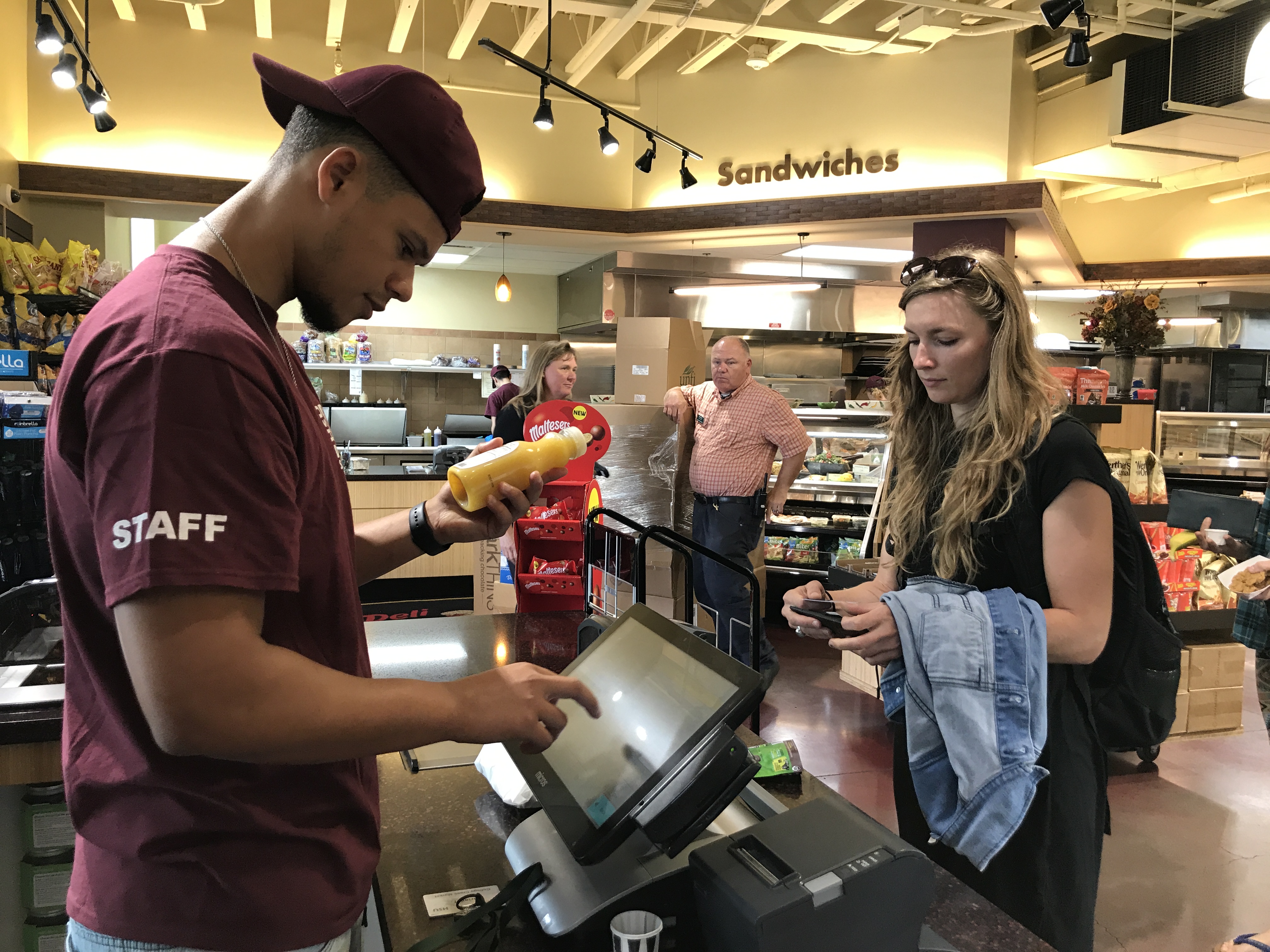
    Brian Thompson (Cashier) checking out items for a student at the college creek marketplace. Photo credit: Ahmed Al-Sakkaf

    “The answer to the question ‘What do student who need that money do?’ I don’t have a good answer for that,” said Ron Rudebock, the director of Dining Services. “Life is not fair sometimes.”