HSU student athletes share grief at abrupt endings
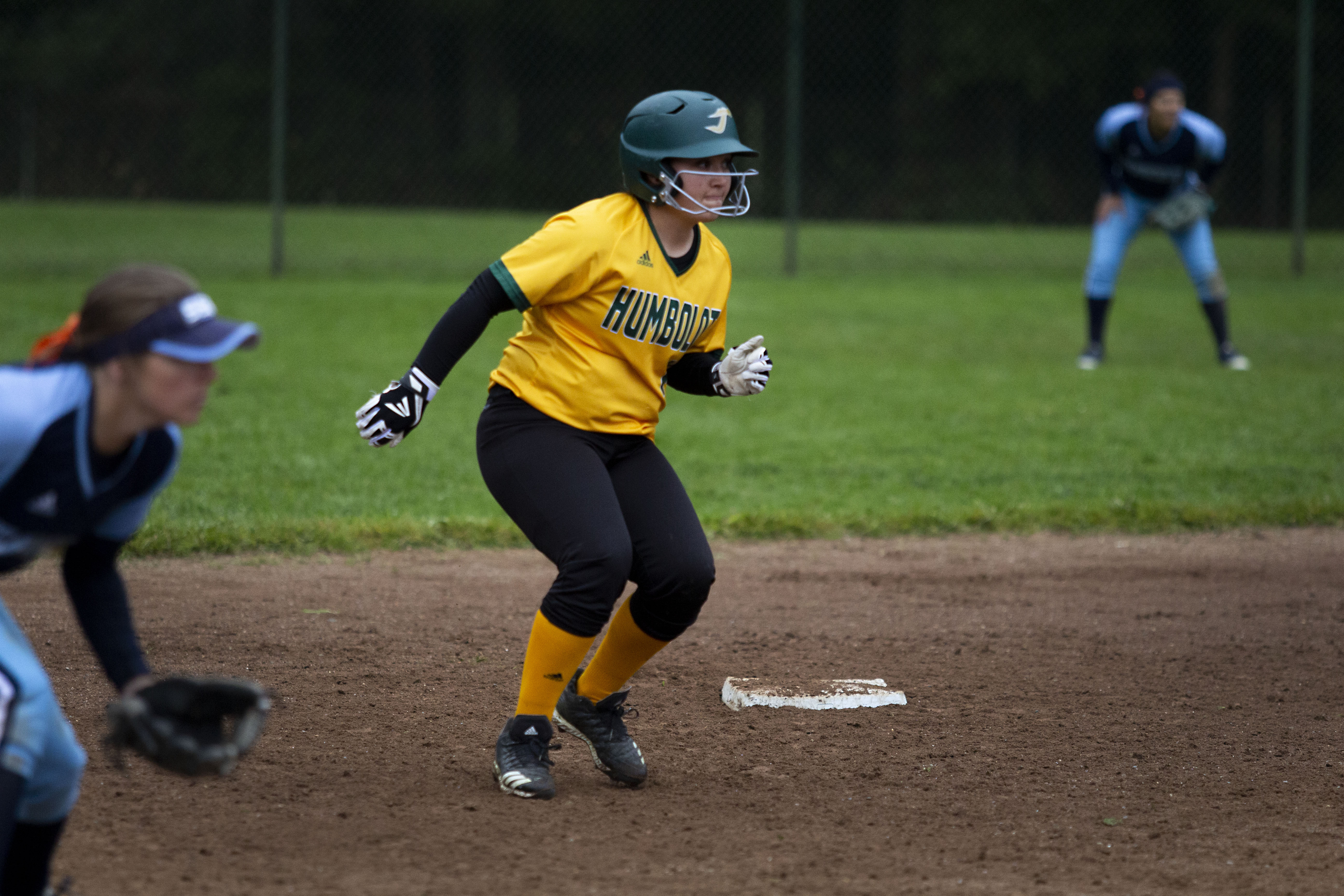
Humboldt State University and the California Collegiate Athletic Association canceled sports for the spring semester back in March due to COVID-19. Student athletes have been left to deal with the aftermath.
Mariah Kalamaras is a graduating senior and a member of the HSU softball team. The softball season came to an end less than halfway through.
“This was my last season playing a sport that I truly love, and to have it cut short so abruptly is devastating,” Kalamaras said. “I felt like the world was ending.”
Following the NCAA’s decision to cancel winter and spring championships, the current sports landscape has been flat, with professional sports also forced to come to a halt. Fortunately for spring athletes, the NCAA will be granting eligibility relief, provided students remain enrolled while participating in athletics.
Sydney Oliver is a senior and captain of the HSU club cheer team. Although the basketball season had already wrapped, the cheer club would have continued to meet for practice through the end of the academic year.
“I have dreamt of walking across that graduation stage since I was a little kid.”
Sydney Oliver
“It’s kind of sad that I can’t see my teammates and help influence them to do better, as well for them to push me,” Oliver said. “Because we did a lot of working out together.”
Senior athletes were in for another disappointment when HSU also canceled the 2020 commencement ceremony. Kalamaras said she felt like she’s missing out on a rite of passage.
“I have dreamt of walking across that graduation stage since I was a little kid,” Kalamaras said. “To hear the song, wear the gown, to hear your name and to hold that diploma high into the air and say, ‘I did it! I made it.’ It makes all the sleepless nights, all the hard work on the long road trips, all the class time, and all the stress worth it.”
The shutdown has also had significant impacts on the daily lives of student athletes. Students have gone without school and sports—and work, for some—but they’re also encouraged to avoid gathering with friends to comply with social distancing.
“Now that it’s not an option to see them, it’s kinda like you wanna see them,” Oliver said. “As opposed to when it was an option and you could see them anytime, and you’re like, ‘Oh, I’ll see them tomorrow.’”
“Since all of the classes are online, it’s basically on us, the students.”
Gabrys Sadaunykas
Students are also now forced to finish their semesters online. As a kinesiology major, Oliver wasn’t stressing the change.
“I like my subject, so it’s not hard for me to still be passionate about it,” Oliver said.
Other students are less enthusiastic about the shift online. Gabrys Sadaunykas is an international student from Lithuania and a basketball player at HSU.
“Since all of the classes are online, it’s basically on us, the students,” Sadaunykas said.
Although Sadaunykas’ season was already finished, he’s stuck here until the end of May.
“Of course, it’s hard, because all of my friends are back with their families and I’m here by myself basically,” Sadaunykas said. “But it’s a nice place. I like Humboldt—it’s got a lot of nature.”
Not for the reasons athletes were expecting, COVID-19 has created an unforgettable 2020 spring season.
“It has taken so much away and although I understand that this global shutdown is necessary, it doesn’t make it hurt any less,” Kalamaras said. “I won’t be able to play my sport at this high level ever again. I won’t get to walk across a stage to show the world I got my diploma. I don’t get to go out and experience all [of] this great place I have had the privilege to call home the past two years.”
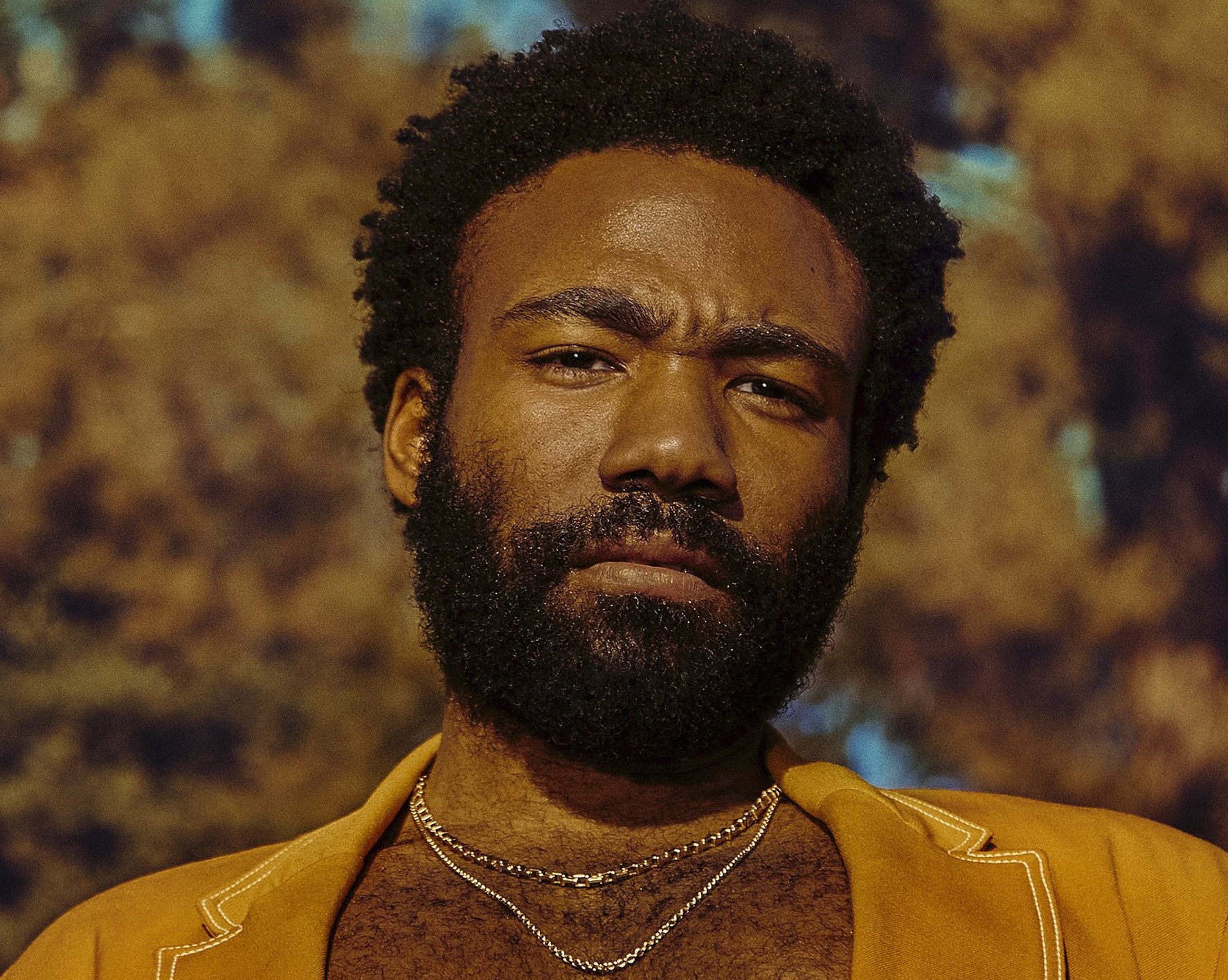
The Swiss Army knife of creative minds, Donald Glover, also known by his musical alias Childish Gambino, has returned with his fourth and final studio album, “3.15.20.”
Glover announced the planned retirement of his Gambino alias at the 2017 Governors Ball Music Festival.
“I’ll see you for the last Gambino album,” Glover said.
Glover, meanwhile, has kept himself extremely busy between musical releases, starring as Lando Calrissian in 2018’s “Solo: A Star Wars Story” and voicing Simba in 2019’s rendition of “The Lion King.” Glover also writes, directs, produces and stars in his own television show, “Atlanta,” which is currently green lit for two more seasons.
Karen Castañeda, a Humboldt State University environmental studies major, discovered Glover through his show, “Atlanta.”
“I love him as an actor and I blew through the whole show really fast,” Castañeda said. “He’s super talented and I really support everything he puts out.”
“3.15.20” saw its official release on March 21, after briefly appearing on donaldgloverpresents.com before it was removed and replaced with a countdown clock.
The album is peppered with conscious messages that apply now more than ever, in the current pandemic circumstances. The first real song of the album, “Algorhthym,” was unofficially released to fans that attended the This is America Tour in 2018. On the track, Glover addresses brainwashing of humans by social media to make them feel inadequate.
Particia Pettit-Blair, an HSU psychology major, discovered Glover’s music through friends, and has listened ever since. Despite the unique sounds he creates by layering instruments and combining styles, Pettit-Blair finds Glover’s lyrics to be extremely meaningful and relatable.
“I like that he kinda takes a different approach to music,” Pettit-Blair said.
On the previously released “Feels Like Summer,” now titled “42.26,” Glover confronts the climate crisis with a global warming public service announcement.
Glover reinforces the same message on the track, “Time.” The song sounds like a remix to “Feels Like Summer,” and stresses the obvious truth that “We’re running out of time.” Glover is able to address serious issues without compromising the quality of his music because they come off as organic with the brand he’s built.
Glover carries his unorthodox approach to the release of “3.15.20” into the album itself. Out of the 12 tracks, 10 on the LP are simply named after their linear location on the album. The project also has two tracks with hidden features, including pop-star Ariana Grande on the song, “Time,” and Grammy-award-winner 21 Savage on the next track, “12.38.”
On top of a cinematic intro track, each song has its own intro or outro, providing a transition between each one. This gives the album the cinematic experience Glover was after with his 2013 album, “Because the Internet.”
“3.15.20” is packed with Glover’s versatile singing and the unique sounds he’s developed over the span of his career. He largely leaves rap behind, as he did on “Awaken, My Love” and his “Kauai” EP, with the exception of his distorted verses on the song “Algorhythm” and the highly aggressive flow on the outro track. Glover takes the hardcore fans of his music on a trip down memory lane, incorporating sounds from all of his previous projects into the album.
Glover brings back the chaotic energy of his debut single, “Bonfire,” on his weirdest song to date, “32.22.” Glover continues to push the boundaries of his audience with the mostly incomprehensible track that can only be described as a war chant. Glover gives fans more deja vu on the track, “19.10,” with a heavy dance vibe resembling Glover’s 2014 single, “Sober,” along with several other tracks from “Kauai.”
The project with the most influence on “3.15.20” is the most recent and most unique, “Awaken, My Love.” The album’s presence can be felt on multiple tracks, including the heartwarming love song, “24.19,” sung in the same style as his biggest hit, “Redbone.”
Paired with some of Glover’s most meaningful messages, the experimental sounds Glover has flirted with since he first came on the scene have come together in spectacular fashion for the ultimate payoff on the last Childish Gambino album.
Associated Students Board of Directors redesigns spring elections
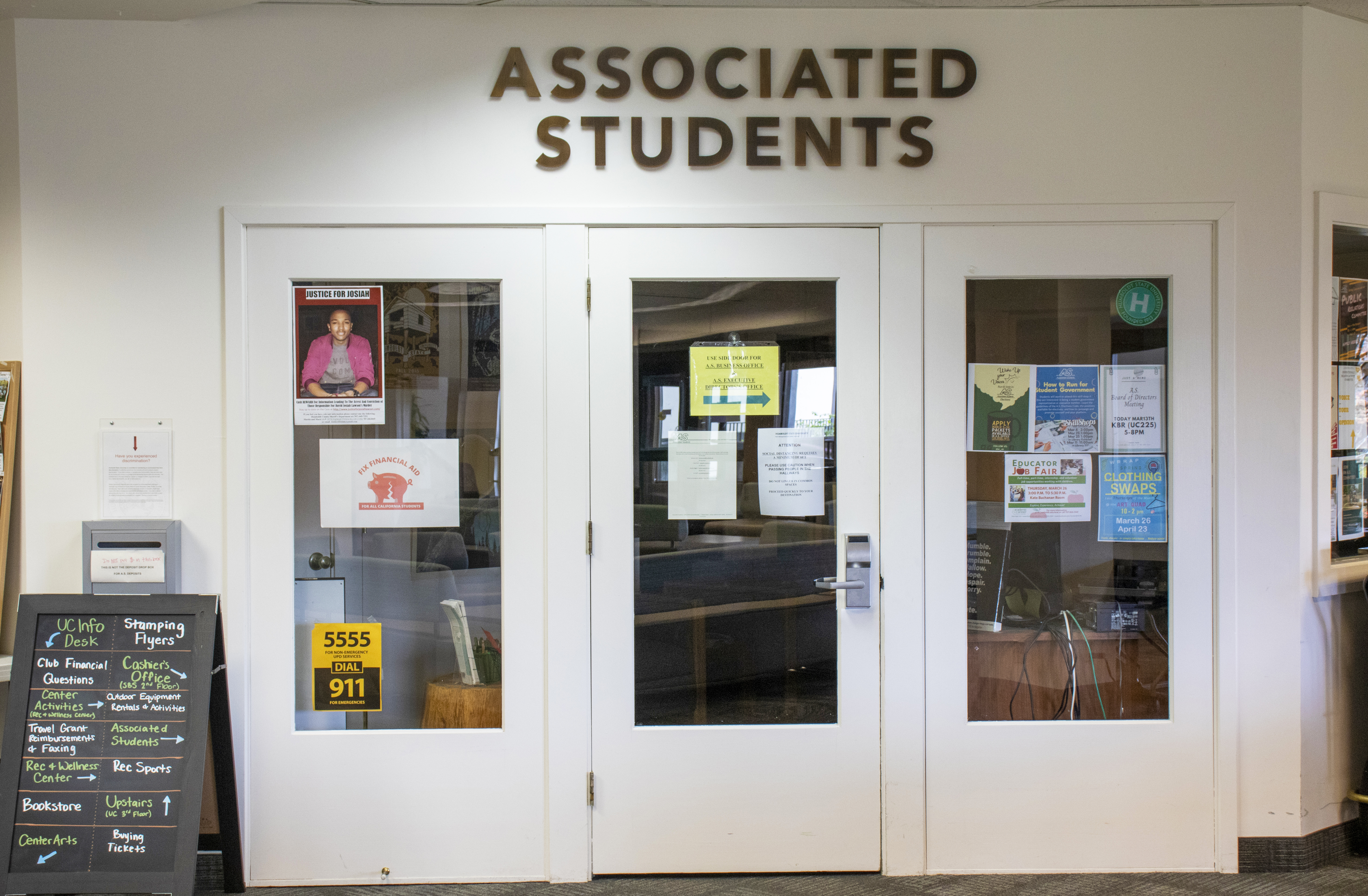
The Associated Students Board of Directors motioned to push their voting period for their upcoming elections back two weeks and expand the period from three to five days, now April 27 through May 1.
The March 27 AS Board meeting held through Zoom included the extension of the filing period for AS candidates to April 16 and several other amendments to the upcoming elections. Elections Commissioner Cassaundra Caudillo said postponing the election could be beneficial.
“It allows for professional staff and the Elections Commission to promote elections a bit longer, so that way we raise our chances of having candidates for each position,” Caudillo said. “Because at the moment, we don’t have a candidate for every position. Not only that, but it also allows students themselves to have an additional two weeks to apply for candidacy.”
“In general, postponing elections for two weeks allows everyone to have a fair and equitable chance at running.”
Cassaundra Caudillo, AS Elections Commissioner and Public Relations Officer
AS Executive Director Jenessa Lund said students expressed interest running in this election who haven’t had the opportunity to take the necessary steps to sign up before the office closed.
“In general, postponing elections for two weeks allows everyone to have a fair and equitable chance at running—keeping in mind the situation we’re all in and how much added stress we’ve all been faced with as students and as human beings,” Caudillo said.
While minimum residency and unit load qualifications are still in place, candidates are no longer required to appear in person to obtain their nomination materials, as the AS office has closed its doors. Students can find everything they need under the “Elections!” tab on the AS website.
Students are also no longer required to supply petitions with 150 student signatures. The candidate quad talk will be replaced with one-minute videos of candidates reading their speeches that will be shared on AS social media. Requirements of wet signatures from candidates will be swapped with a Google forum, and the candidate orientations will now be held over Zoom on April 16 and 17.
The AS Board is willing to review and consider reimbursing any campaign supplies that can no longer be distributed.
AS President Lizbeth Cano-Sanchez described the value of joining AS in a separate interview with The Lumberjack.
“Education is power, and in AS you can put your education to practice, because there’s a lot of things that correlate with it,” Cano-Sanchez said. “It helps you develop yourself, and at the same time, we’re students serving students and that’s really important.”
The Weeknd’s fourth album, “After Hours,” has arrived
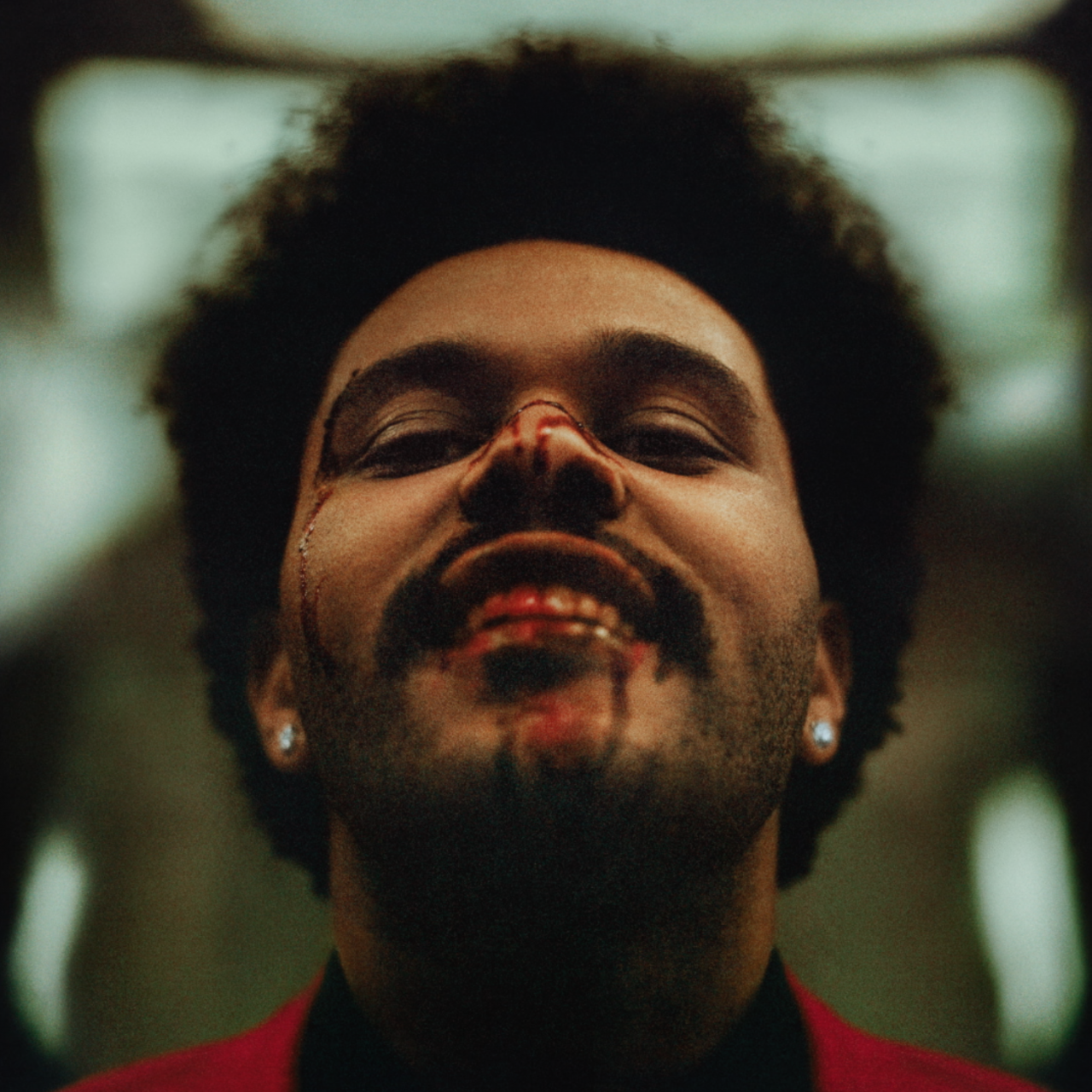
The R&B villain, better known as The Weeknd, has returned with his fourth studio album, “After Hours.” In this album, The Weeknd revisits the same themes of drugs, lust and heartbreak found in previous releases, but this time, with a different approach. In the past, his music has come off generally unapologetic, but “After Hours” brings a mix of emotions on his lifestyle.
After nearly a decade of partying and coming onto the scene in 2011, The Weeknd reveals on track eight, “Faith,” that he’s spent the last year sober. Still battling the urge to return to the fast life, The Weeknd comes to terms with the choices he’s made in “After Hours” and the mental war he’s fighting to avoid making those same mistakes.
Coming into this project, The Weeknd set the tone by dropping two pop singles at the end of November, claiming the top position on the Billboard Hot 100 chart with his lead single, “Heartless.” His follow up, “Blinding Lights,” is currently peaking at number two on the Hot 100 chart in the wake of the album release. He followed up in the second half of February with the title track, “After Hours,” as an unofficial single. The song is slow to build, but is equal parts patience and pop, making it clear that the pop-star style is here to stay.
“I will always prefer his earlier stuff. It’s just a sound you couldn’t have found anywhere else at the time.”
Alexa Noperi, HSU film major
Alexa Noperi is a film major at Humboldt State University, and she hasn’t been happy with The Weeknd’s direction since he dropped “Starboy.”
“I will always prefer his earlier stuff,” Noperi said. “It’s just a sound you couldn’t have found anywhere else at the time.”
The Weeknd’s gradual transition to pop music has left some of his day-one fans behind in the darkness of his mixtapes. Made official by his 2016 album “Starboy,” the style shift can be attributed to the success of his biggest single, “Can’t Feel My Face,” along with other pop efforts on “Beauty Behind the Madness,” including “Earned It” and “Angel.”
When he released his first EP, “My Dear Melancholy,” in 2018, the day-one fans that were left behind were delighted by the return of a dark Weeknd. With his latest release, The Weeknd is likely to disappoint hardcore fans again, as he mostly leaves behind the dark, moody atmosphere of his earlier music to make room for the pop sound that generated so much success with “Starboy.”
“After Hours” is a rollercoaster of indecisiveness. The Weeknd’s desires constantly clash with one another on his quest for true happiness.
The album begins with chilly instrumentals that build into their own pop section. The Weeknd flaunts his typical unremorseful attitude, claiming, “It’s too late to save our souls,” on the song “Too Late.”
“After Hours” is the most consistently solid project The Weeknd has dropped so far.
Track four, “Scared To Live,” marks the first shift in his approach. He begins to express remorse for his actions, as well as an authentic desire to leave the fast life behind on the stand-out track “Snowchild,” reinforced on the next song, “Escape From LA.”
Unfortunately, The Weeknd relapses, back to the fast life on his song, “Heartless.” This marks the beginning of the pop-star section that dominated the sound of “Starboy,” this time, with a heavy ’80s electro-dance influence.
“After Hours” then enters its final section, returning to the slower, chilly instrumentals that opened the album on the “Repeat After Me” interlude. The Weeknd concludes his fourth album, echoing a desire to leave the fast life behind and asking for one last chance at a normal life.
Though it may be missing the unique, dark sound of The Weeknd’s early music, found on songs like “D.D.” and “The Hills,” as well as the beauty and optimism found on “True Colors” and “I Feel It Coming” from “Starboy,” “After Hours” is the most consistently solid project The Weeknd has dropped so far.
“It’s not bad background music to try on jeans to. But I don’t think I will be playing it again.”
Isabelle Eddisford, HSU political science and dance major
This album marks a growth in his discipline, but also in experimentation. Following the massive success of “Starboy” and the widely-positive reception of “My Dear Melancholy,” the less-than-spectacular “After Hours” might just leave all of his fans a little disappointed.
Isabelle Eddisford, an HSU student studying political science and dance, felt disappointed that the new songs sounded the same. She described the album as something that would be playing in an Abercrombie and Fitch store.
“It’s not bad background music to try on jeans to,” Eddisford said. “But I don’t think I will be playing it again.”
With predicted first-week sales of 400,000 units for “After Hours,” The Weeknd’s continued success in the pop genre may mean the death of his dark times.
Editor’s note: members of The Lumberjack staff have been and are currently part of KRFH, including the current KRFH student station manager. The author of this story had no previous affiliation with KRFH, but our coverage is inevitably biased by this crossover.
Students expressed a range of emotions in response to a recent slip-up from their radio production teacher, Cliff Berkowitz.
In a conversation that followed an interview with the Times Standard for his then-upcoming election for the First District Board of Supervisors, Berkowitz said the N-word in a comment he thought was off the record.
When asked to chime in on the conversation surrounding a racist joke that had been made by his opponent in the election, Berkowitz did a Richard Pryor impersonation using the N-word—but he said the complete N-word. Berkowitz requested the reporters not print his slip-up, but they were well within their rights to do so.
In the wake of the interview, Berkowitz lost his primary election by a landslide, although it’s not clear what impact the interview had. Berkowitz issued a public apology to the press that he also read to his students.
“There are words that are so steeped in hate and racism, that they inflame our community when uttered; I am grateful to live somewhere that holds people accountable for what they say and do,” Berkowitz said. “While I did not wield that word as a weapon nor did I direct it at anyone, it does not remove the harm of saying the word. Nothing excuses what I said. There are people who have trusted me and for them this is a betrayal.”
Mikayla Moore-Bastide, first-semester KRFH student, described her experience at the station leading up to Berkowitz’s remark as a welcoming family environment.
“Whether he was on record or not, I still don’t understand why he felt he even had the right to say it anyways,” Moore-Bastide said. “Like, I’m a black person. I don’t even say it. I don’t even say the word at all. Anybody who knows me knows I don’t even say it, ’cause of the history behind it.”
Moore-Bastide intends to return for another semester of KRFH in the fall, not because she forgives Berkowitz, but because of her passion for radio.
“I don’t think I really forgive him yet,” Moore-Bastide said. “It’s gonna take a long while for me to forgive anyone who would just say the N-word around people who feel comfortable to say it.”
“If I’m being totally honest, I was super hurt.”
Delaney Duarte
Moving forward, Moore-Bastide believed Berkowitz has done all he can to repair the damage his statement caused.
“He knows what he did wrong, he knows that he hurt people, he’s not oblivious to that fact—he’s very aware,” said Moore-Bastide. “It’s one of those things where you kind of have to just put it behind you and then just kind of realize that people are probably gonna remember you for that, and you kinda have to accept it.”
Delaney Duarte, manager of KRFH’s TALX program, has been at the station for three semesters.
“If I’m being totally honest, I was super hurt,” Duarte said. “The whole day when I found out I was just like, I don’t know, I couldn’t wrap my mind around someone who I look up to so much to say that.”
Duarte wanted it to be made clear that KRFH is a student-run radio program, and that Berkowitz’s role does not go beyond instruction in the classroom.
“His apology in my opinion was just complete crap, if I’m being totally honest,” Duarte said. “It just seemed like he’s just saying sorry cause he has to. He got caught. You have to say sorry.”
Duarte expressed sympathy and concern for the African-American students in class, feeling a great deal of pain, herself, as a Latinx student.
“I wouldn’t blame them if they didn’t want to join because of that,” Duarte said. “Because, I mean, who wants to be taught by someone who doesn’t respect their students?”
It’s not just the students of color that feel uncomfortable in the classroom.
“People in our group, they’re just like really uncomfortable even going to the booth, like knowing that he’s either upstairs teaching his class, or like, his office is literally in the radio station,” Duarte said. “So it’s kinda hard to not run into him.”
“You have to take into account the perspective of the people that would potentially be offended by these kinds of statements in that regard.”
Elliott Portillo
Elliott Portillo has been a part of KRFH for three semesters, and doesn’t think this single incident should overshadow the good Berkowitz has done for students and the community.
“I think the joke was in bad taste,” Portillo said. “I think it came from more of a position of ignorance rather than of blatant hatred. I don’t think Cliff is a racist in any way, just based on the interactions he’s had with students and his passion for students.”
Portillo pointed out that his perspective should be taken with a grain of salt, as a self-described “white-washed” Mexican.
“You have to take into account the perspective of the people that would potentially be offended by these kinds of statements in that regard,” Portillo said. “But in my personal preference, I think he’s done so much that it’s hard for me to warrant lasting damage or lasting punishment.”
Duarte said students have come forward to request Berkowitz’s replacement because of an unsafe learning environment.
“As much as it hurts to say—I’ve always looked up to Cliff—but now at this point I’m kinda just bummed out and really hurt,” Duarte said. “So, I’d probably want to see a replacement. Someone who’s more respectable to our students of color.”
Entire Statement from Cliff Berkowitz:
I am writing this to formally apologize. I am truly contrite that my words caused pain or anyone to feel less than. I was wrong, it was stupid, and I should not have done it. We all commit harm, and when we do, it is only right to both apologize and work to make things better. I know I harmed people. I am sorry.
I have been asked over and over again about my opponent’s racist comment, which he has attributed to a Cheech and Chong joke. While that may be true, it is still unacceptable. I foolishly compared that to quoting Richard Pryor, trying to make the point that even quoting someone saying the wrong thing is unacceptable, and in making my example, I too said the unacceptable.
There are words that are so steeped in hate and racism, that they enflame our community when uttered; I am grateful to live somewhere that holds people accountable for what they say and do. While I did not wield that word as a weapon nor did I direct it at anyone, it does not remove the harm of saying the word. Nothing excuses what I said. There are people who have trusted me and for them this is a betrayal.
I have spent the past decades of my life trying to facilitate conversations that include rather than exclude. I have used my position to try to give voice to those who often don’t get to talk about their lived experiences. However, that is not enough. I formally, and contritely apologize. I apologize to all those hurt by my words, my friends, my family, the community, and my students. My past actions to help People of Color do not absolve me for the harm I committed. I still said that word. It is still not okay.
As I continue to reflect on how I have harmed people by saying that word, I will work towards a more just society. I will not stop activism or working to dismantle racism, and I will continue to interrogate how racist ideology has worked its way into my own mind. I will continue to work to make things better. I will uphold my promise to make sure all voices are heard and that there will be a place at the table for everyone, especially People of Color.
I am deeply grateful to those people in my life who have held me accountable and shared their personal experiences and knowledge about racism. Thank you to the community for also holding me accountable.
Associated Students takes over remains of the clubs budget
The Associated Students Programs Grants budget has been cut by more than half of the previous academic year’s budget to $25,000 from $52,000. With student enrollment on the decline since 2016, student fees. which make up the entire AS budget, have taken a significant hit.
As a result of the cuts, it was decided the control of the budgets would be kept within the Associated Students Board of Finance for this academic year. All student clubs are allowed to apply for AS grants, either for events or travel.
Grant requests are brought to the Associated Students Board of Finance for evaluation before being handed off to the Associated Students Board of Directors, made up of 15 voting and three non-voting members, for final approval.
In the past five years, between about 10-18% of the AS Programs Grants budget has gone to AS category two programs like CCAT and the MultiCultural Center, which receive separate funding through different outlets. This year, AS decided clubs will receive the entire AS Programs Grants budget in the 2019-2020 academic year.
The AS Board is currently in the process of their third and final grant allocation for the 2019-2020 academic year. So far, the Board of Directors has approved grants to all 29 clubs that requested—however, not all requests have been entirely met.
As a result of the budget reduction, AS put in place a cap of $500 per event, $800 per cultural event and $100 per person for travel. The Board of Directors will hold their final vote on March 13 to decide the 11 remaining grant requests for the academic year.
AS Legislative Vice President Jeremiah Finley is working to provide a fair opportunity for all clubs to receive funding.
“AS is doing the best with the situation that they’re having to navigate through.”
Molly Kresl
“I think clubs always need more access to more funds across the board,” Finley said. “I think the goal of AS here is to really try to make sure that they do have access to funds. And so, in trying to do that, we’re trying on our part, to find ways in our budget to make sure they have access.”
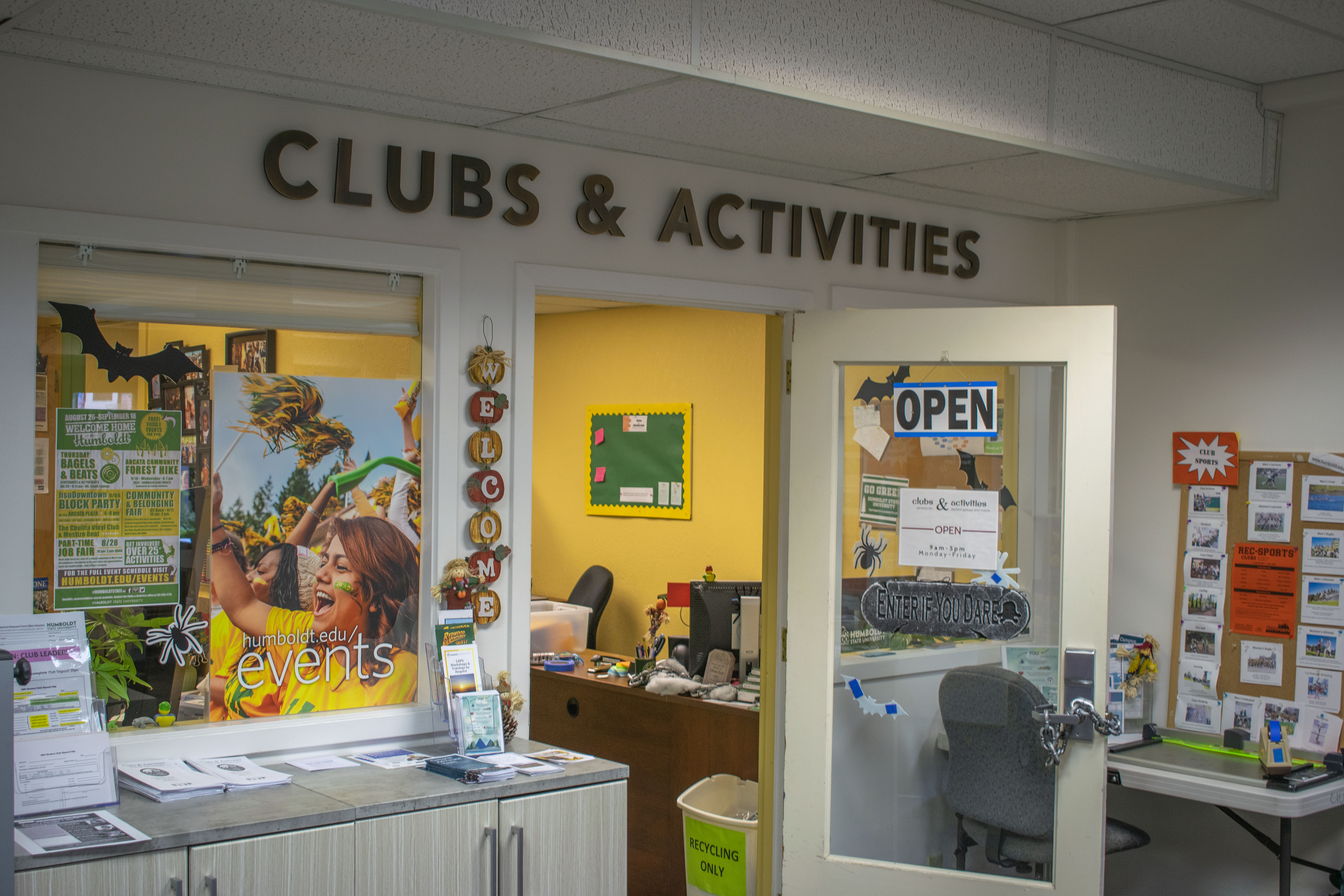
The clubs budget reduction has forced everyone involved to be more responsible with their spending, according to Clubs and Activities Coordinator Molly Kresl.
“That’s something that’s been really cool that’s come out of this unfortunate situation,” Kresl said. “Even though we have a decrease in funding, there’s an increase in collaboration with student-initiated programs.”
However, there’s still much improvement to be made. AS wants to hear the voices of students that are affected by these decisions. For students who want to take matters into their own hands, they can sign up as a candidate for the AS Board.
“AS is doing the best with the situation that they’re having to navigate through,” Kresl said. “It’s important to recognize the complexity of the situation, and that there are ways that we can help our students be successful and do what they wanna do on campus.”
Personal accountability paves way for future of transformative justice
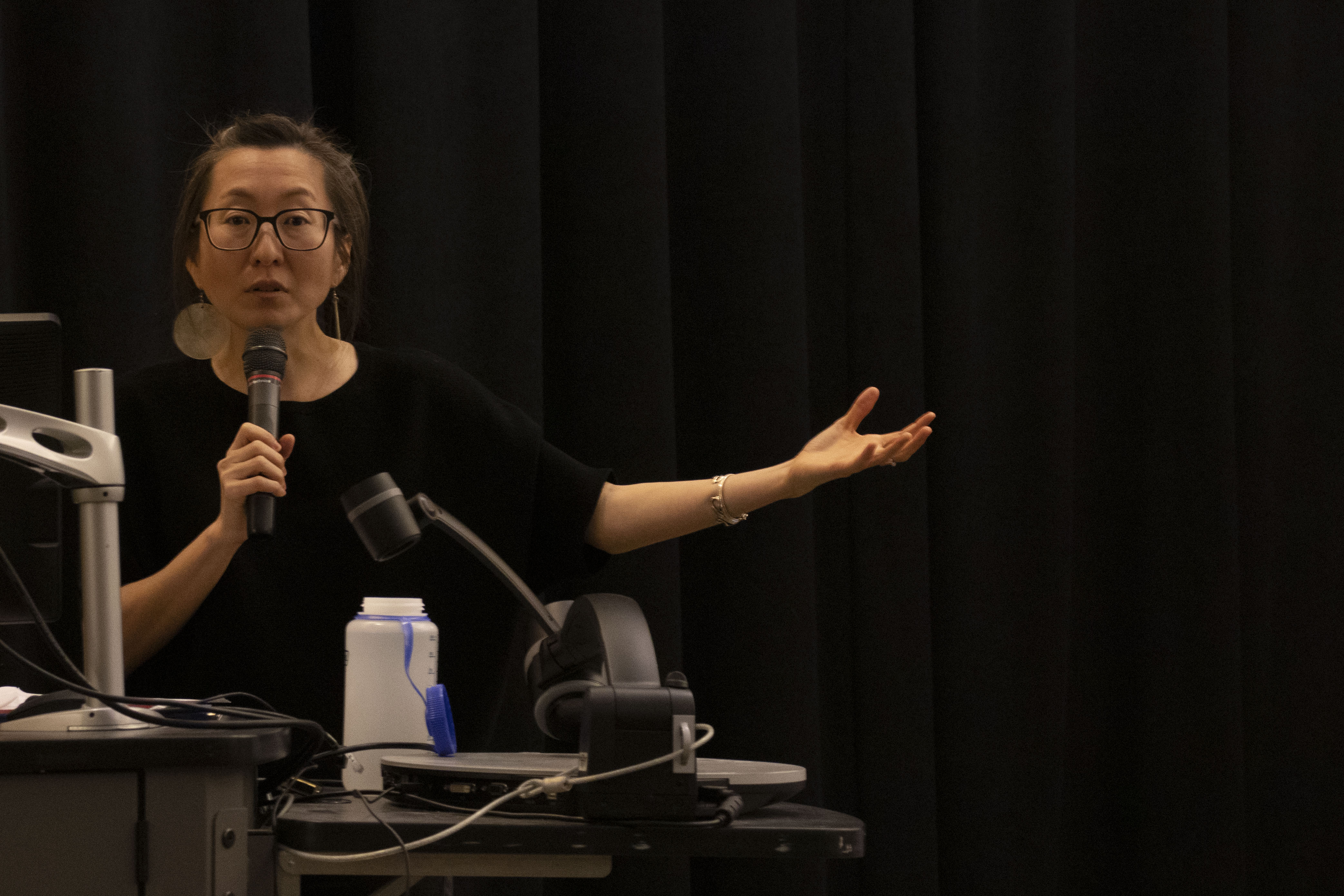
Writer, educator and community organizer for disability and transformative justice Mia Mingus attended Humboldt State University March 6 as the keynote speaker for the Social Justice Summit. As a queer, physically disabled, Korean, transracial, transnational adoptee, Mingus faces adversity in all major facets of life and advocates for dignity and the end of violence, harm and abuse.
Mingus took the stage for an hour, discussing everyday transformative justice and how to achieve transformative justice on a societal level. Transformative justice is about finding alternative solutions to violence, harm and abuse outside of our punitive system.
“The system that we have is so based in, ‘You’re a bad person, so bad things deserve to happen to you,’” Mingus said. “Rather than, ‘We are all human, and human beings make mistakes, and we are all flawed, and we are all living in incredibly violent conditions.’”
“If you’re not proactively building accountable relationships in your life, you’re proactively building an unaccountable life.”
Mia Mingus
Instead of focusing on big picture questions, like what will replace our current system and how to end violence, Mingus insisted to focus on the ways that transformative justice can improve our own lives, and in return, impact the world.
“We can start small, because it’s just like building a muscle,” Mingus said. “You don’t go into the gym and start bench pressing 400 pounds immediately, or if you do, you’re gonna get really hurt.”
Mingus walked the audience through her four steps of accountability.
“If you’re not proactively building accountable relationships in your life, you’re proactively building an unaccountable life,” Mingus said.
“It doesn’t matter how good of an apology you gave or how well you repaired the relationship. If you keep doing the harm, what does it matter?”
Mia Mingus
For the first step of accountability, Mingus said we must possess self-reflection, without which you can’t achieve any transformative justice.
Second, we must be capable of genuine apology, demonstrating our remorse and understanding of our improper actions.
Third, we must be willing to repair and mend broken relationships and earn back trust.
Finally, we must change our behavior.
“It doesn’t matter how good of an apology you gave or how well you repaired the relationship,” Mingus said. “If you keep doing the harm, what does it matter?”
Transformative justice operates under the belief that acts of violence are deeply connected to the conditions that helped create and perpetuate those incidences of violence.
“That violence doesn’t happen in a vacuum,” Mingus said. “They are connected to the conditions that we live in, and we all participate in creating those conditions, and we all have a collective responsibility for ending violence, harm and abuse.”
“It’s not enough just to change the systems that we’re up against. We also have to change ourselves, and I really appreciate that.”
Mia Mingus
As a society, Mingus said we need to practice preventative actions, rather than respond with punishment.
“When we publicly shame people, or when we shame and blame people in general, it doesn’t actually get the violence to stop,” Mingus said. “It usually just teaches people how to hide the violence or harm better. It doesn’t actually make the kind of deep fundamental change that we actually want.”
After her lecture, Mingus elaborated on fundamental change in an exclusive interview with The Lumberjack.
“It’s not enough just to change the systems that we’re up against. We also have to change ourselves, and I really appreciate that,” Mingus said. “And vice versa, you know, it’s not enough just to change yourself. You have to also help change the world too because I think that’s where the magic lives.”
Mingus said transformative justice focuses on the fundamental improvements that must be made along the way.
“We’re working on a micro level but we’re doing it with a macro perspective because we’re actually trying to interrupt generational cycles of violence and harm,” Mingus said. “That’s the goal.”
Mingus gave a final piece of advice for helping with world progression.
“Learn as much as you can, give as much as you can,” Mingus said. “But like, generally, just start from where you are, with what you have, and don’t get overwhelmed by trying to change the whole world.”
Editor’s note: members of the editorial staff of The Lumberjack are part of and have been part of KRFH. The author of this article had no previous affiliation with KRFH.
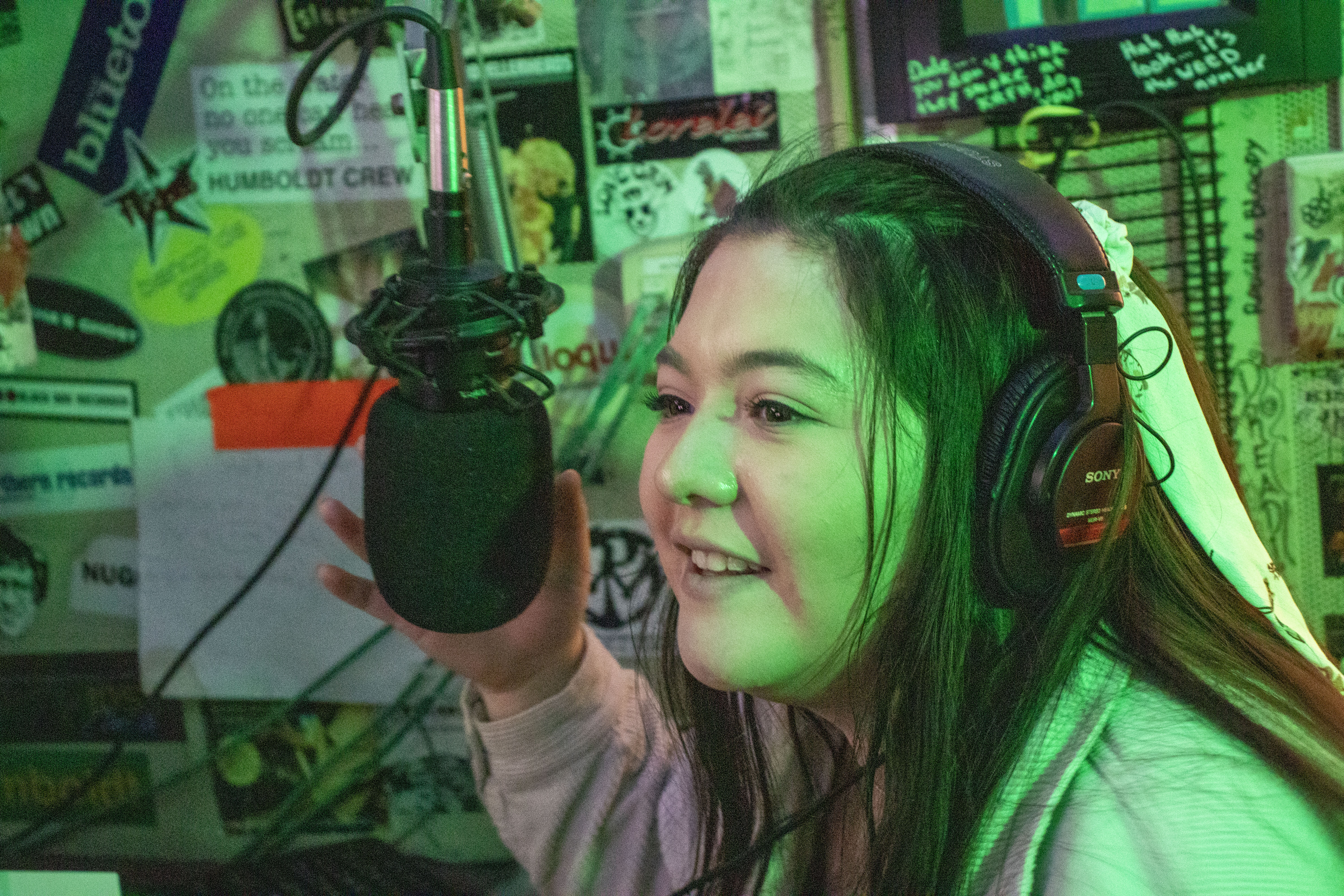
Following winter break, KRFH has returned with its entirely student-staffed programs, TALX, MIXX and Local LIXX. Each of the programs bring on guests to participate in their show, providing a platform for community members to show off their skills and speak their mind.
Local LIXX, the longest running program at KRFH, invites local artists to display their talent live on the radio.
Co-Manager of LIXX, Michael Freire first became part of the program in 2017.
“It’s like a really, really cool special thing to have a fully student-run radio station that is promoting a local music scene in a town that has a surprising number of good musicians per capita,” Freire said.
One of the main focuses at LIXX is to create a diverse program that speaks to all music genres and tastes.
“One of the few limitations is that I obviously only have a view on the part of the music scene that I’m familiar with,” Freire said. “So I also try to like reach out to as many friends as possible for suggestions of places I can go, ’cause I don’t want to just put one genre of music or one group of friends on the radio.”
To scout talent for LIXX, Freire attends as many shows as he can, searching for sounds that he feels are a proper fit for the program.
LIXX Co-Manager Michael Freire preps the board for the big show. Photo by Dakota Cox
Konner Bouyette and Quentin Wall of Quentin Wall of Sound rockin’ out on air.
Quentin Wall and his band, Quentin Wall of Sound, were the first guests of the spring semester. This was Wall’s second appearance on the program, but his first with the new band.
“Playing on air is fun,” Wall said. “It’s scary because anything you do, there’s no take-backs. But it’s fun because anyone can listen, and it’s a lot of people that I would never meet.”
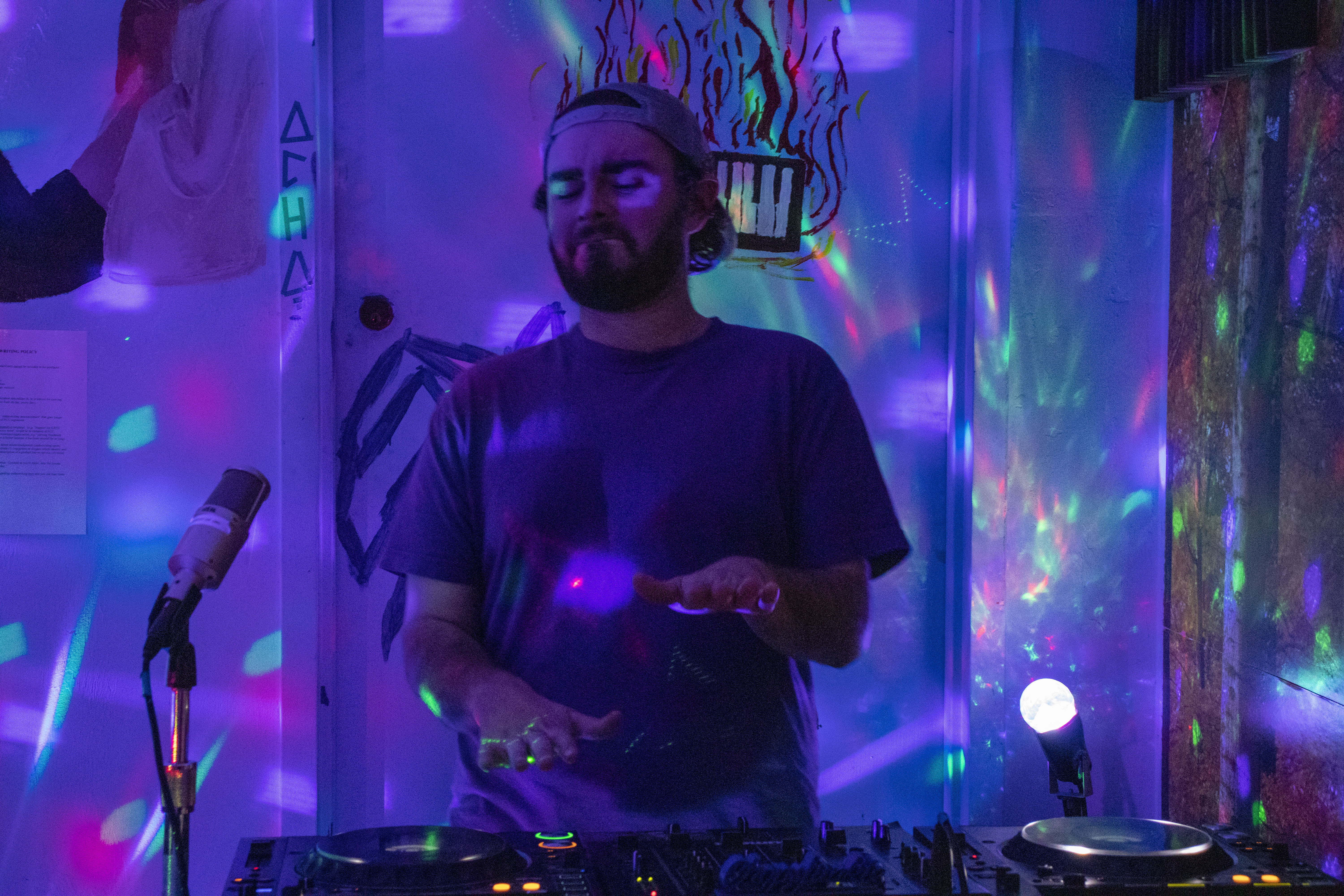
Not to be mistaken for LIXX, the MIXX program currently abides by a first come, first serve policy. This allows the platform to seek out the hungriest, most enthusiastic artists first.
Manager of MIXX Alejandro Zepeda does a final for ChopsJunkie before showtime. Photo by Dakota Cox
ChopsJunkie hard at work spinning records on the KRFH MIXX program. Photo by Dakota Cox
MIXX Manager Alejandro Zepeda is currently in his sixth semester with the radio program.
“It’s really fun to watch the different DJs and their different techniques and how they’re doing it,” Zepeda said. “It’s a really great learning opportunity for myself and anyone else on the MIXX crew if they’re interested in DJing, just because you don’t really get to be this close to the performer usually when you’re out at an event, and you know there’s all sorts of other stuff going on.”
TALX is the odd man out of the programs. Instead of placing the focus of an entire show on a single guest act, TALX incorporates their guests as part of a larger conversation. Unlike MIXX and LIXX, TALX doesn’t require a guest in order for the show to go on. Instead, students are given direct control of the content they create.
Members of TALX discuss the days trending topics. Left to right, Manager Delaney Duarte, & Deserie Carias. Photo by Dakota Cox
Members of TALX discuss the days trending topics. Left to right, Paul Hilton & Ayrton Flaherty. Photo by Dakota Cox
Delaney Duarte is currently in her second semester as manager of the TALX program.
“When you’re in there you’re gonna meet a bunch of other people, and then you kinda create like this bond with everyone,” Duarte said. “Everyone knows you and it’s like a really good community. I love the radio community a lot here on campus.”
KRFH is one of the last student-run free-from radio stations. Students are given complete creative control over their content, so long as they conform to Federal Communications Commission regulations. KRFH programs provide an opportunity, not only for community members to showcase their talents, but for students to express, explore and share their identities.
“There’s just something about being in the booth, something about being in this radio station,” Zepeda said. “It’s calming for me despite all the crazy things that happen, and there’s always something ridiculous happening. It’s my happy place, and I’d like to continue that for other people that need to find something like this in their lives.”
Saving money and the planet at the HSU Bicycle Learning Center
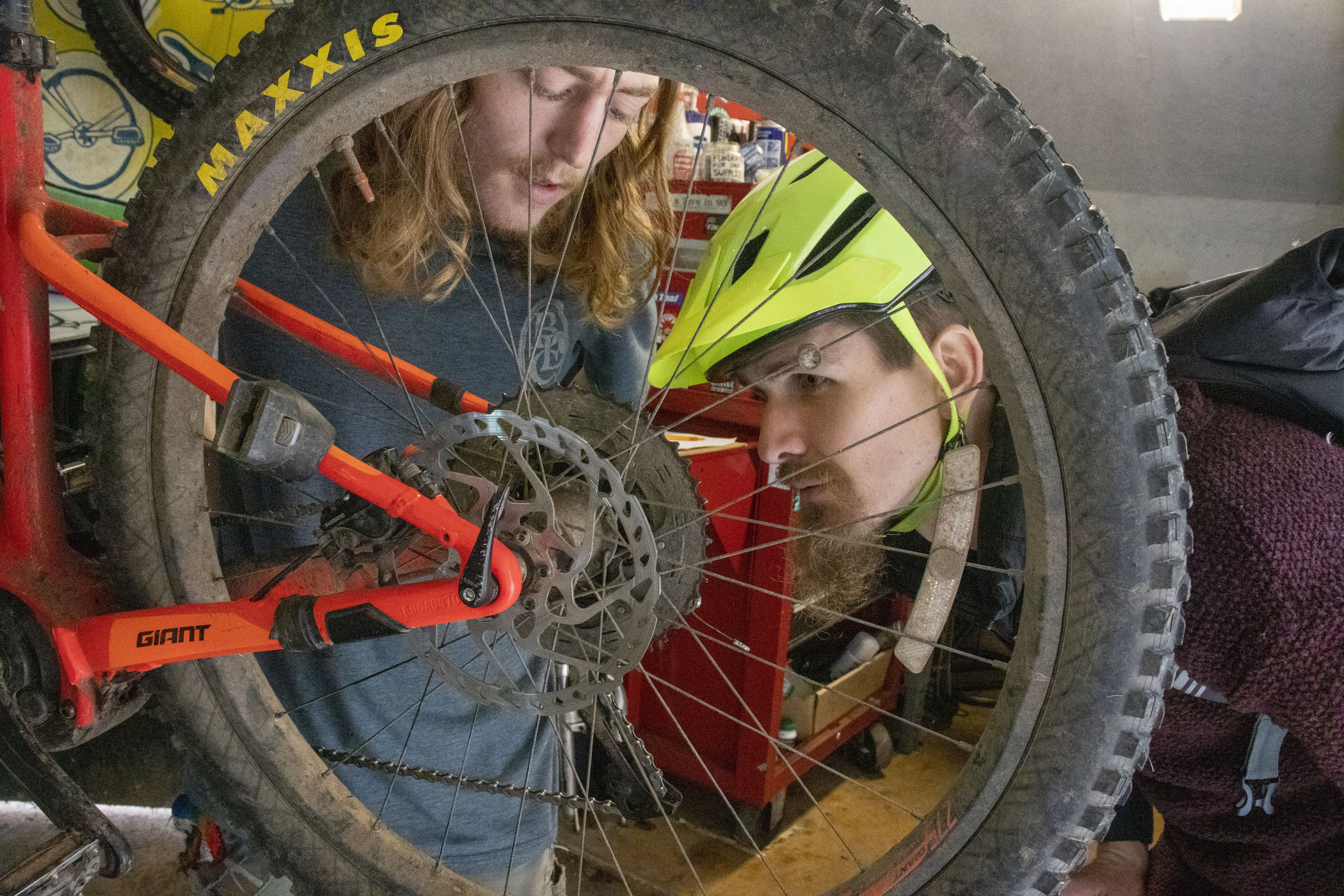
Humboldt State University’s Bicycle Learning Center made the transition in September 2018 from a student club to an Associated Students program umbrellaed under HSU’s Waste Reduction and Resource Awareness Program.
Steven Sperling volunteers at the BLC while pursuing his master’s in business administration.
“Bicycles are the most efficient form of transportation there is for human beings,” Sperling said. “Bicycles can and should save the world, period.”
Originally founded in 1992, HSU’s entirely student-staffed Bicycle Learning Center is a free resource available to all HSU students in need of bike repairs. The transition opened up two part-time instructor positions, paid for with student fees, that are currently split between three students.
“Probably the biggest thing that I’m working on here is how to share my bicycle knowledge efficiently,” Sperling said. “Learning how to teach is one of the things that I’m most excited about learning while I’m here.”
BLC Director Julian Palmisano scours the donated pins bin on Jan. 29. | Photo by Dakota Cox
Colton Trent hard at work at the BLC on Jan. 29. | Photo by Dakota Cox
Current Director Julian Palmisano has been a member of the BLC since he transferred to HSU from Santa Barbara City College in 2017.
“We all started as volunteers at the shop to serve and build community, utilize the resources and gain experience,” Palmisano said.
The BLC does its best to provide all of the tools necessary for maintaining a well-conditioned bicycle, along with as many consumable parts that they can get their hands on. With a budget of only $800 provided by WRRAP, the majority of parts that cycle through the BLC are donations.
“Sometimes we just don’t have stuff and we have to tell people like, sorry we can’t help. Which is a real bummer.”
Colton trent
Colton Trent is an instructor entering his third semester volunteering for the BLC.
“The budget provides a buffer in case we run out of stuff,” Trent said. “But for the most part we can function pretty well trying to up-cycle and recycle things.”
As a result of their small budget, the BLC can only provide a finite number of students with bicycle maintenance.
“Sometimes we just don’t have stuff and we have to tell people like, sorry we can’t help,” Trent said. “Which is a real bummer.”
The BLC encourages donations in the form of tools, bicycle parts and old bikes that will be refurbished and donated to a student-rider in need. All cash donations that the BLC receives go directly into the shop’s spare parts fund.
In the fall semester of 2019, the BLC saw over 180 documented student visits, totaling over 100 hours of bicycle maintenance. By spreading the trend of using bicycles as a primary-method of transportation, the BLC is promoting a healthier lifestyle with a significantly smaller carbon footprint.
Located in the eastern tunnel by the Redwood Bowl, the BLC is open 10 a.m. to 2 p.m. Monday through Friday, with instructors and volunteers standing by to assist and educate students in bicycle repair.
This website uses cookies to improve your experience. We'll assume you're ok with this, but you can opt-out if you wish. Cookie settingsACCEPT
Privacy & Cookies Policy
Privacy Overview
This website uses cookies to improve your experience while you navigate through the website. Out of these cookies, the cookies that are categorized as necessary are stored on your browser as they are essential for the working of basic functionalities of the website. We also use third-party cookies that help us analyze and understand how you use this website. These cookies will be stored in your browser only with your consent. You also have the option to opt-out of these cookies. But opting out of some of these cookies may have an effect on your browsing experience.
Necessary cookies are absolutely essential for the website to function properly. This category only includes cookies that ensures basic functionalities and security features of the website. These cookies do not store any personal information.
Any cookies that may not be particularly necessary for the website to function and is used specifically to collect user personal data via analytics, ads, other embedded contents are termed as non-necessary cookies. It is mandatory to procure user consent prior to running these cookies on your website.