The Lumberjack


Students Serving The Cal Poly Humboldt Campus and Community Since 1929

Author: Gabrielle Sturm

  • California’s native elk need your help

    California’s native elk need your help

    This past year, an estimated 152 native Tule elk died at Point Reyes National Seashore. This was the result of the elks’ one predator: local ranchers. For an area that is home to some of the richest biodiversity in California, this is dangerous news for both the elk and the environment.

    In Humboldt County, the Roosevelt elk roam free and plentiful throughout the Redwood National and State Parks. The largest of the seven herds of this subspecies in the park amounts to 250 elk – about the same amount as the entire population of Tule elk in all of Point Reyes. The large, healthy population of Roosevelt elk provides a stark contrast to the dwindling numbers of Tule elk. Even though the elk population of Humboldt County is not at risk, declines in endemic Tule elk are sure to affect the entirety of biodiversity in the state.

    The Tule elk lived alongside the native Coast Miwok peoples for thousands of years until the late 1800s, when European settlers stole the land of the Coast Miwok and decimated the elk. The herd rapidly became endangered. In the 1970s, however, the Park Service were able to fully restore the native Tule elk herd to Point Reyes. Unfortunately, greed and carelessness reared their heads again about eight years ago when the local ranchers agreed to put up elk fences in the area. These fences block the elk from accessing food and water sources and have led to the deaths of nearly half the herd.

    Laura Cunningham, the California director of the Western Watersheds Project, is a native grass ecologist whose organization was part of the original lawsuit to perform an Environmental Impact Statement on the ranches of Point Reyes. Cunningham explained the direct effect the fences have had on the Tule elk.

    “The 8-foot-tall elk exclusion fence that traps Tule elk within a ‘zoo’ on Tomales Point to keep them out of cattle pastures, actually is contributing to a drought die-off of Tule elk,” Cunningham said. “They cannot migrate out to find water and better forage, and about 150 elk have already died, from a recent National Park Service survey. The park refuses to provide water or supplemental nutrition to these trapped elk on the narrow spit of land with poor water sources. Meanwhile, ranchers have been sinking new wells and pumping more water to their cows, to keep them from colicing of dehydration during this drought.”

    Point Reyes is known for its picturesque beaches, lagoons, marshes, estuaries, and forests and is the only National Seashore on the West Coast. One can visit the area and expect to see an abundance of wildlife, plantlife, and many, many cows, creating a glaringly obvious contrast between untouched nature and the destructive agriculture of the area. Behind this juxtaposition of nature and destruction is a long and sinister history between ranch expansion and the National Park Service.

    Skyler Thomas, the creator of The Shame of Point Reyes film and blog, believes the National Park Service is not managing the park appropriately.

    “At this stage the mismanagement of the park is so ludicrous that one can’t even claim they are struggling to balance the challenge of having ranching and wildlife in the same place,” Thomas said. “What we have been observing is an absolutely blatant bias in favor of the ranchers… Point Reyes could be a living classroom for scientists to observe firsthand how the Tule elk interact with the soil, plants, rocks, even other animals. No studies like that are taking place even with the non captive herd, which should tell you something about the mindset of the park staff. For the Tule elk themselves, being held captive is likely a drawn out death sentence for the herd.”

    The war between ranching and the environment has only gotten worse. Last year, Point Reyes National Seashore released their General Land Management Plan. This plan grants 20-year leases to ranchers, allowing them to diversify their operations by expanding their ranches and adding new animals to their businesses. Most notably, the plan allows for the culling of native Tule elk. This means that the Park Service has agreed to kill a certain amount of the herd each year. “Protecting the natural world” is a slogan on the homepage of the National Park Service’s website. This statement reeks of hypocrisy.

    Local environmental activist Ken Bouley believes the National Park Service has violated public trust.

    “[Ranching] impoverishes the land, causes barren monocultures, invites invasive species, displaces habitat, and pollutes the waterways,” Bouley said. “It significantly reduces biodiversity. Ranching always does this, and if you hear any greenwashing about ‘regenerative ranching,’ ‘carbon farming,’ etc., reach for your wallet; it means don’t trust it. All they ever mean, as far as I can tell, is that it is possible to somewhat mitigate impact on the land. The studies are usually from the agriculture industry, or universities who receive a lot of money from the agriculture industry.”

    Point Reyes National Seashore is one of the most biodiverse regions in California – a state that’s already a biodiversity hotspot. According to the National Park Service’s website, “Over 45% of North American avian species and nearly 18% of California’s plant species are found in the park, due to the variety of habitat and uniqueness of the geology.” Within the seashore, there are around thirty federally-listed threatened or endangered animal species and six threatened or endangered plant species. A critical part of this intricate ecosystem are the Tule elk. The irony of the National Park Service preaching these facts online and then proceeding to commit this shameful act against the fragile ecosystem is striking.

    Matthew Polvorosa Kline is a local wildlife photographer who has been documenting the Pierce Point Tule elk herd for the last twelve years.

    “This [California coastal prairie] is the most species-rich grassland type in North America,” Polvorosa Kline said. “In Point Reyes, you can find remnants of this severely diminished habitat type in areas where cattle are prevented from going or restricted from heavy grazing, and where the invasive grasses that ranchers planted stop. I’m not the only one who believes that this endangered habitat type would be far, far better with native grazers like the Tule elk. Consider a key plant species like eelgrass or an ecosystem like marine eelgrass meadows and the incredible amount of biodiversity found within them. There are concerns that agriculture runoff is potentially affecting healthy eelgrass meadows through eutrophication of waterways.

    Diana Oppenheim, founder of ForElk.org, an independent organization in support of saving the Tule elk, said it’s especially important to keep the elk alive in Point Reyes. An unfortunate irony lies in the fact that out of the twenty-two herds who exist throughout the state, the Point Reyes herd is the only one that is not allowed to be hunted.

    “The National Park is some of the most protected land in the world,” Oppenheim said. “And there are supposed to be higher protections there for the elk. I think it is a really important thing to keep them alive in Point Reyes because this is the place where they should be safest, yet the Park Service is now planning on shooting them.”

    Six thousand cattle graze in Point Reyes National Seashore. There are now less than three hundred Tule elk in that same area. Biodiversity is being ripped from the earth and in its place lies the decaying carcasses of elk. This ratio of agriculture to native wildlife represents a mucher larger existential threat at hand. The planet simply cannot afford the extinction of any more species.

    “Extinction is forever,” Oppenheim said. “This is the Tule elks’ second chance. We should be protecting them at all costs, not shooting them to protect industry.”

  • The six deadly sins of greenwashing

    The six deadly sins of greenwashing

    The recent trend of purchasing organic products has led to a massive increase in companies labelling their products to fit this demand. It’s not just Whole Foods anymore. Most stores carry products labelled as “organic,” “eco-conscious,” or “green,” making it seem as though it is an easy task to be a responsible consumer. However, these labels are often deceitful.

    Greenwashing is a marketing tool used by companies to inaccurately portray their products as environmentally friendly, resulting in consumers feeling as though they are making the greener choice by purchasing from them. There are six “sins” of greenwashing – a phrase coined by TerraChoice Environmental Marketing after the company conducted research on green marketing. Ignoring these forms of greenwashing is detrimental for the planet.

    These six types of greenwashing do a great job of making consumers feel a false sense of security. Environmental politics professor Nicola Walters believes that greenwashing creates a mask that makes it difficult for consumers to know what is safe and what is okay to purchase.

    “Think about how many products these days are with green ‘down home’ packaging,” Walters said. “The local focus recently has been huge! People want to know where their purchases are coming from and companies know this. They are trying to appeal to this customer interest and there’s big money in it. Being educated about what is good for our bodies and the Earth shouldn’t be akin to a complex calculus question and an elongated research project.”

    The most common greenwashing techniques that consumers should be aware of are hidden trade-off greenwashing and no proof greenwashing. Hidden trade-offs suggests that an entire product is “green” when it’s misleading about what percentage of the product is sustainably made. For example, it could contain only one percent recycled material and still be labeled as “green.” No proof greenwashing is just what it sounds like and occurs all the time. With this, there will be claims with no real certification or evidence.

    Environmental studies senior Cassidy Mullennix admits that she has fallen victim to the hidden trade-off form of greenwashing. She questions whether or not the world can go green while living within a throwaway culture.

    “At Plant Power in San Diego, I used to celebrate with a milkshake because it was packaged in ‘compostable plastic’ and that meant that I didn’t have to avoid it, right?” Mullenix said. “Wrong! I took some time to research how compostable plastic worked and it turns out that the material I was using would break down the same exact way plastic does if placed in the landfill and not sent to a high-temperature compost facility.”

    Vagueness greenwashing is another common marketing tactic. Labels like “green” or “sustainable” that companies slap onto their products with a plastic sticker do not mean that they lived up to a strict standard. These labels are vague and do not clarify what standard of sustainable that they are following.

    Similar to these misleading standards, the irrelevance greenwashing occurs when a company advertises that their product is free of something that is environmentally irrelevant. A common example of this are products that say “CFC free,” even though CFCs have been banned globally by law for over a decade.

    The fibbing tactic is self-explanatory. Companies will simply outright lie about the environmental impact of their products. An example of this is Dieselgate, which is when Volkswagen lied about their automobiles’ emissions.

    Lesser of two evils greenwashing misleads consumers by stating oxymorons. Examples of this are organic cigarettes and “green” pesticides. Although it may feel better to pick these options, they are overall still a bad choice.

    Green marketing is a sinister and highly effective tactic that tells people what they want to hear. It is easy to fall victim to the greenwashing of products.

    HSU alumnus Michael Powell believes that the only solution to this is to do the inconvenient research before purchasing a product.

    “I think greenwashing lulls people into a false sense of security,” Powell said. “It makes us feel good because we want to help the environment and we think we are doing just that. We stop asking questions. The sad reality is that, oftentimes, we’re hurting the environment just the same.”

  • Dying a conscious death

    Dying a conscious death

    As a young and seemingly invincible college student, one presumably does not put much thought into their inevitable death. However, if you are eco-conscious, perhaps it is time to start planning ahead.

    The need to preserve one’s lifeless beauty for just a little bit longer has grave consequences for the earth. When a person dies, it is common for their body to be pumped with an embalming fluid that contains a mixture of toxic chemicals in order to postpone their inevitable decomposition. They are then placed in a casket that is likely made up of inorganic hardwood, copper, bronze, and steel. Their toxic body encased in a casket of unsustainable materials will eventually be lowered into the ground in a concrete crypt.

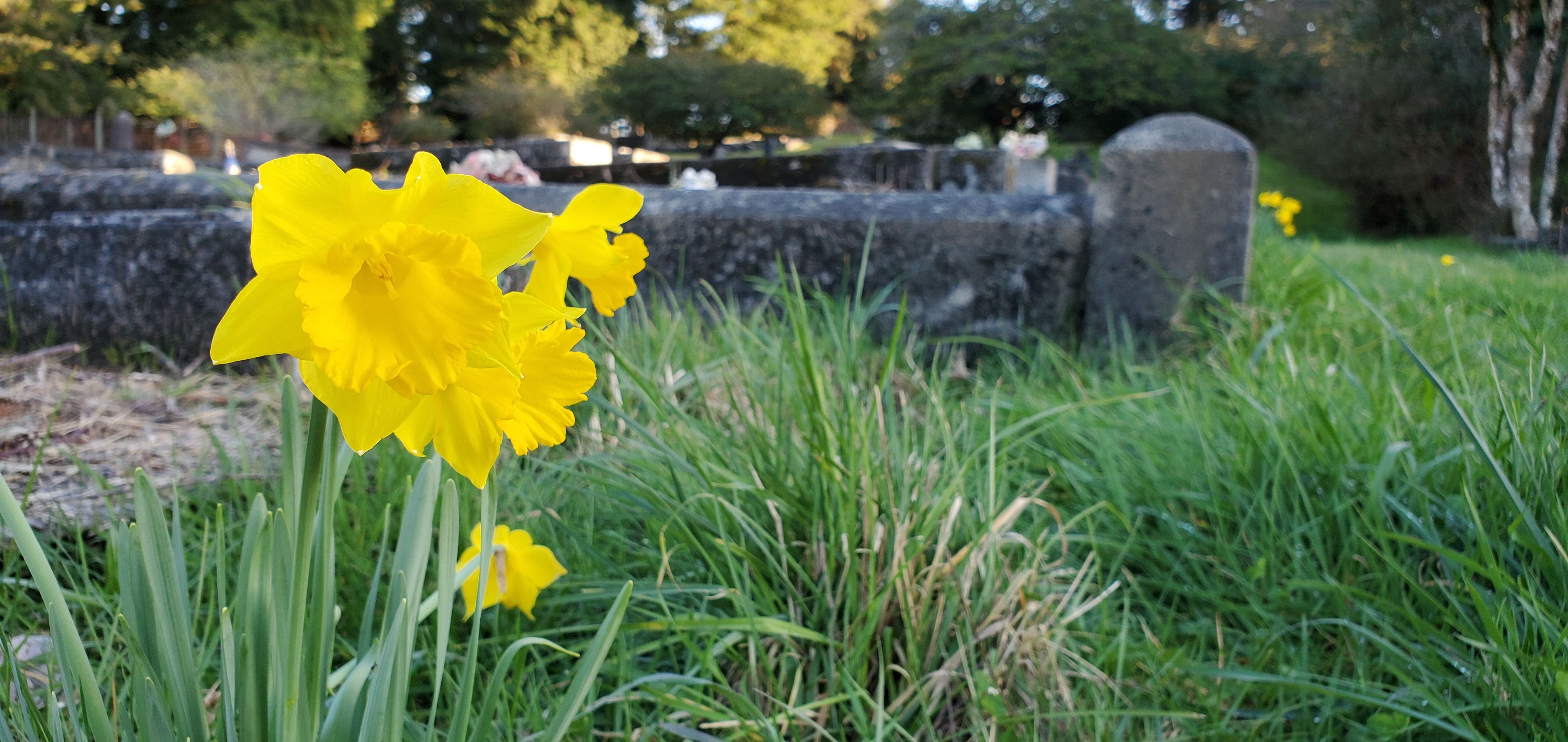
    Green burials are a sustainable alternative to this contemporary western burial method. They may also be called “natural burials,” and the process does not involve any inhibition of decomposition. Instead, the body in its natural state is placed into the soil so that it can be recycled into the earth and help to nourish the land, as most decomposing life does. The body is wrapped in a biodegradable shroud or casket and then buried shallow enough to decay in a way that is similar to composting.

    Craig Benson, an environmental science and management lecturer, said that the funeral and cemetery industry already appears to be responding to increasing requests for green burials.

    “I would like to see more conservation burial options like the Prairie Creek Conservation Cemetery near Gainesville, Florida,” Benson said. “This is where old restoration ecologists, like me, could make a last ditch effort– pun intended– at creating a contiguous savanna habitat and providing lots of underground munchies for the microfauna and microflora. Why have a feast at your funeral when you can be one!”

    In the United States, cremation has recently become the most popular choice for those who pass away. While the ashes of our loved ones harbor sentimental value, this way of honoring the dead is unfortunately still harmful to the environment. Cremation leads to release of harmful toxins into the atmosphere, including carbon monoxide, fine soot, sulfur dioxide, heavy metals, and mercury emissions.

    When asked about the environmental impact of cremation, Jennifer Kalt, the director of Humboldt Baykeeper, gave insight on the atmospheric consequences of the practice.

    “I noticed that the Los Angeles Air Quality Board recently lifted the limits on cremations temporarily due to the number of COVID-19 deaths,” Kalt said. “I’ve read that cremation is a significant source of mercury pollution. Once it’s released into the atmosphere, it gets re-deposited by rain and fog. All that does make me wonder why people think cremation is a better option. My understanding of the green burial concept is that it prohibits embalming, but human bodies still have contaminants that we store up over lifetimes.”

    There are a few local options for those who choose to give their body back to the earth. Cemeteries in Loleta, Fortuna, and Blue Lake all offer natural burial options. However, Blue Lake Cemetery is the only place that does not require the body to be contained in a concrete crypt.

    Environmental conflict resolution lecturer Natalie Arroyo said that, in her personal opinion, green burials seem like a great end-of-life option for those who would like to practice sustainability even after they die. However, it is important to note that how humans deal with death is wholly intertwined with their cultural, religious, and personal values.

    “I would say as a community member and lecturer who has read and heard a little bit about this, that green burials seem like an excellent alternative with environmental benefits,” Arroyo said. “But they may not fit with people’s religious and cultural values, and they may not suit every circumstance. For example, my own father died far away from home, and his body was cremated due to the low cost and need to transport the remains easily over a long distance.”

  • How to Communicate With A Science Skeptic

    How to Communicate With A Science Skeptic

    The year 2020 proved to be the year of difficult and uncomfortable conversations. Topics about politics, race, and inequality in the United States have come to the forefront of daily conversations on a much wider scale than before. Some may see this as an awakening that spread across America, leading to positive political and social reform. Therefore we, as Americans, must keep these conversations going.

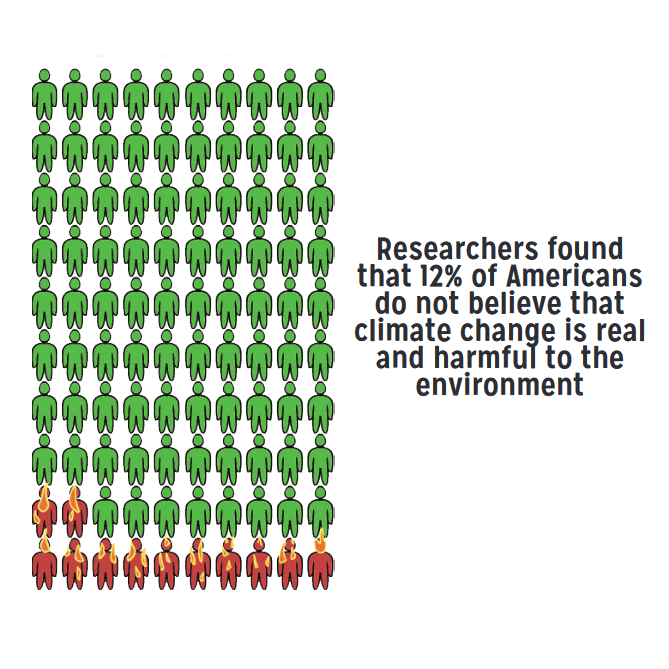
    In a nationally representative survey conducted in 2019 by the Yale Program on Climate Change Communication and the George Mason University Center for Climate Change Communication called “Climate Change in the American Mind” researchers found that 12% of Americans do not believe that climate change is real and harmful to the environment. While this seems like a fairly small percentage of people, it comes to a grand total of about 39 million people.

    Thirty-nine million people who disregard accurate data, ignore signs of environmental degradation, and refuse to believe the world’s leading climate scientists. The world can no longer afford science skepticism. How do we persuade this many people– more than the entire population of Canada– to change their worldviews?

    Environmental Communication Professor Jennifer Ortega believes that the solution may lie in a shift in the way we communicate with climate change skeptics.

    “Climate change is so big,” Ortega said. “In every community it looks very different as to how they are supposed to address it. If we talk about how there is, say, a disruption in this hydrological process, people are more inclined to be like, ‘Oh, what does that mean?’”

    The problem with the constant preaching of “we need to solve climate change” is that people do not know where to begin with that sentiment. The destruction of the Earth is often seen as an insurmountable problem which often leads to either complacency or outright denial. This is because, well, it is hardly possible to wrap our human minds around something as colossal as an entire planet in need of help.

    Creating viable, tangible solutions to smaller scale issues has the potential to both give people hope and convince skeptics that these problems are truly occurring. Ortega suggests that leaving the term climate change completely out of the conversation when trying to convince people to take action may be an effective route. People become turned off by the phrase, so keeping them engaged with local issues such as disruptions in a hydrological process or the benefits of electric cars in a city may be more constructive. Language is key.

    Environmental Studies Alumnus Miles Kinman agrees with this sentiment.

    “It is important to show people how climate change would impact their lives and the area in which they live,” Kinman said. “Sometimes the effects of climate change don’t seem real because the conversation often revolves around far off places such as the Amazon forest. Reframing the conversation in a way that makes people feel more connected to the problem of definitely a necessary step in trying to help people understand climate change is real.”

    Environmental studies student Emily Dreyer believes that climate change skepticism is one of the most pressing issues in the United States.

    “I think it’s an issue because it can disrupt the dominant narrative of environmental education,” Dreyer said. “Therefore, pressing issues aren’t supported enough and no change occurs. We are running out of time to save our planet and move towards total sustainability and any skepticism disrupts that process.”

  • How a Local Clean Energy Microgrid Could Transform California

    How a Local Clean Energy Microgrid Could Transform California

    A new project in Humboldt County is paving the way for clean energy operations throughout the rest of California. After two years of planning, construction of the Redwood Coast Airport Renewable Energy Microgrid is set to begin in April of this year.

    A microgrid is decentralized from the larger energy grid. It is able to become its own “island.” It ensures that power can be restored to a specific area during emergency situations even when the larger energy grid is down, such as during a public safety power outage. A notable component of the RCAM is that it is entirely run by renewable energy, operating off of solar power, making it even more appealing to the area.

    The prime contractor and lead technology integrator for this project is Humboldt State University’s very own Schatz Energy Research Center. The RCAM will be the first-ever multi-customer microgrid in Northern California.

    Environmental Science Professor Jack Murphy said that in his opinion, the clean energy microgrid is a great idea for two reasons.

    “The first is just that it contributes to the decarbonization of our electrical generation, and that’s good,” Murphy said. “Less carbon dioxide going into the atmosphere is good and humanity needs big clean energy projects ASAP. The second reason it’s a great idea is that the airport could be critically important during regional disasters such as tsunami or earthquake, and having a microgrid operable when the grid is down would be hugely important.”

    Another important goal of the RCAM project is to create a template for the construction of other clean energy microgrids across the state. By partnering with PG&E and the Redwood Coast Energy Authority, the microgrid will be an example for the rest of California of the policies, tariff structures, and operating procedures that are involved with a project like this.

    “The RCAM project has led to the development of PG&E’s recently proposed Community Microgrid Enablement Program,” David Carter, principal engineer for the Schatz Energy Research Center said. “CMEP creates a process and a path for other eligible communities to deploy front-of-the-meter, multi-customer microgrids that will provide resilience to critical facilities.”

    With the details of the successful project documented, other communities can use it as a technical guide for the construction of new microgrids. Reducing the use of fossil fuels in a state that has the second highest amount of annual carbon dioxide emissions in the entire country is an exciting step forward toward combating climate change. The RCAM project demonstrates that it is possible for a community microgrid to be powered by 100% renewable, solar energy.

    When asked about the work of the Schatz Energy Research Center, HSU alumnus Kyle Powell said that he is continuously inspired by the various sustainability efforts that come out of the university’s programs.

    “Humboldt State as a whole does a great job of promoting sustainability and clean energy throughout all of its programs,” Powell said. “It’s one of the main factors that brought me to the university, and it continues to influence my life on a daily basis.”

  • Update on HSU’s Climate Action Plan

    Update on HSU’s Climate Action Plan

    As Humboldt State students prepare to graduate, they take a pledge before they walk across the stage and receive their diplomas.

    “I pledge to explore and take into account the social and environmental consequences of any job I consider and will try to improve these aspects of any organizations for which I work.”

    The university makes it clear they want all students to take sustainability into account throughout their careers, but does the school itself practice what it preaches?

    The answer to this question by many standards is yes.

    In 2017, a Climate Action Plan (CAP) was put forth by HSU in order to integrate climate change and sustainability into the curriculum, conduct more research on climate change and resiliency, and reduce the direct and indirect greenhouse gas emissions of the school.

    The plan also includes strategies to curb emissions from energy and utilities, transportation, and waste. This is just a small fragment of what the 26 page plan aims to achieve.

    The most ambitious aspect of the CAP was to reduce the university’s emissions to complete carbon neutrality by 2030, and begin on a carbon negative path thereafter. This course of action comes with progress reports that include an update on the implementation of the CAP’s 55 strategies used to lower greenhouse gas emissions.

    The last report was released in November of 2019, and it states that out of the strategies, 45% were completed, 18% are in implementation, 22% are in development, and 15% are not yet started. While the school is making significant progress, the ambitious goal of reaching carbon neutrality was pushed back to 2045.

    The university budget cuts caused by the COVID-19 pandemic have not had a significant impact on the progress of the CAP.

    “Many of those initial strategies that were completed [in the CAP] were zero to moderate cost (e.g., policy or procedural changes or non-construction related),” Morgan King, climate action analyst for HSU, said. “But some projects requiring a large initial capital outlay (e.g., solar, electric vehicle charging) did not move beyond an initial exploratory phase in part because of funding, but that was an issue before the pandemic.”

    Some of the goals in the 2019 progress report include a reduction in facility and fleet greenhouse gas emissions to 1990 levels by the end of 2020, a further reduction in emissions to 80% below 1990 levels by 2040, and an achievement of carbon neutrality by 2045.

    King is drafting an update to the CAP which the university is calling the CAP 2.0. “We currently have leadership actively engaging with sustainability into all facets of the university,” King said. “So I am optimistic that we will be able to push forward some of the more capital intensive strategies in the CAP 2.0. For example, the campus is already pursuing a microgrid with solar and battery storage, which is a critical element to building resilience and drawing down emissions.”

    The university practices sustainability throughout its curriculum as well. Environmental Studies Associate Professor and Department Chair Dr. Sarah Ray emphasizes the importance of environmental awareness in a social justice based interdisciplinary curriculum.

    “The work of Katie [Koscielak] and Morgan [King] in sustainability is cross-cutting; they go beyond the facilities box and are doing what has to happen on all campuses of merging academics and facilities much more intensely,” Ray said. “The biggest thing we can do to achieve this even better is to continue to center the conversation around social and racial justice– how might those lenses shape what we do environmentally? What and whose traditions are we hoping to sustain, and how do we know what approaches are best for the environment?”

    Environmental studies student August Andrews says that he sees various ways in which environmental awareness is presented by the university outside of the classroom.

    “I definitely see HSU doing so outside of the courses they offer,” Andrews said. “HSU is not only known for its environmental curriculums but, simultaneously, it seems to be rapidly striving to be as ‘green’ of a university as possible, which is inspiring.”