The Lumberjack


Students Serving The Cal Poly Humboldt Campus and Community Since 1929

Author: Linh Pham

  • Seeing is not believing: hidden disabilities in science students

    Seeing is not believing: hidden disabilities in science students

    Every morning, Humboldt State University senior and cellular molecular biology student Shazi Saboori wakes up next to a stack of pill bottles.

    “Depending on the day, I take between 8-10 pills, including Adderall when I wake up,” Saboori said. “I then eat something small, lay in bed for 30-40 minutes and wait for the Adderall to kick in, and allow me to have access to my brain.”

    Six months ago, Saboori was diagnosed with postural orthostatic tachycardia syndrome, or POTS.

    “There’s a part of my brain that cannot regulate blood flow,” Saboori said. “This causes me to get blood pooling, have a sudden drop in blood pressure and almost faint.”

    Saboori’s body attempts to increase the pressure drop through tachycardia, an extremely fast pumping of the heart while it’s at rest.

    “At one point, my resting heart rate was 214 [beats per minute],” Saboori said.

    In addition to tachycardia, POTS inhibits the left side of Saboori’s brain from communicating with the right side.

    “In my classes, I can’t just read the book and understand the material,” Saboori said. “I take a long time to make a master study guide, and to write and rewrite the material. I still get mediocre scores on tests.”

    POTS also causes Saboori to have anemia, or red blood cell deficiency, and gastric distress, which makes eating difficult. Saboori feels frustrated when people do not acknowledge her disorder, because it isn’t visible.

    “Many people have told me, ‘You don’t look like you’re sick,’” Saboori said. “I’m not looking for pity, or for people to lower their expectations for me. I’m looking for people to understand that [POTS] is not something I can control.”

    Michelle Goldberg, another HSU senior cell/molecular biology student, has ankylosing spondilitis (AS).

    AS is a form of rheumatoid arthritis (RA), which leads to joint degradation and inflammation of the surrounding membrane. Goldberg was first diagnosed at 12.

    “For awhile, I went to a support group for people with RA,” Goldberg said. “Most of the people there were adults. I was there with my dad.”

    RA causes Goldberg to experience pain in her lower body, center of spine, hips and joints.

    “When I feel good, I go to the gym, and do a little bit of elliptical and weight,” Goldberg said. “If it’s bad, I take some Aleve and put a smile on my face. Some days, I can’t stand up straight. Luckily, this has only happened twice since I’ve been at HSU.”

    Similar to Saboori, Goldberg recognizes that an invisible disability is not taken seriously.

    “Sometimes, I can encounter people who say, ‘You’re fine.’ But really, I’m not,” Goldberg said. “You can’t see what I have until my knees are really inflamed, and turned red.”

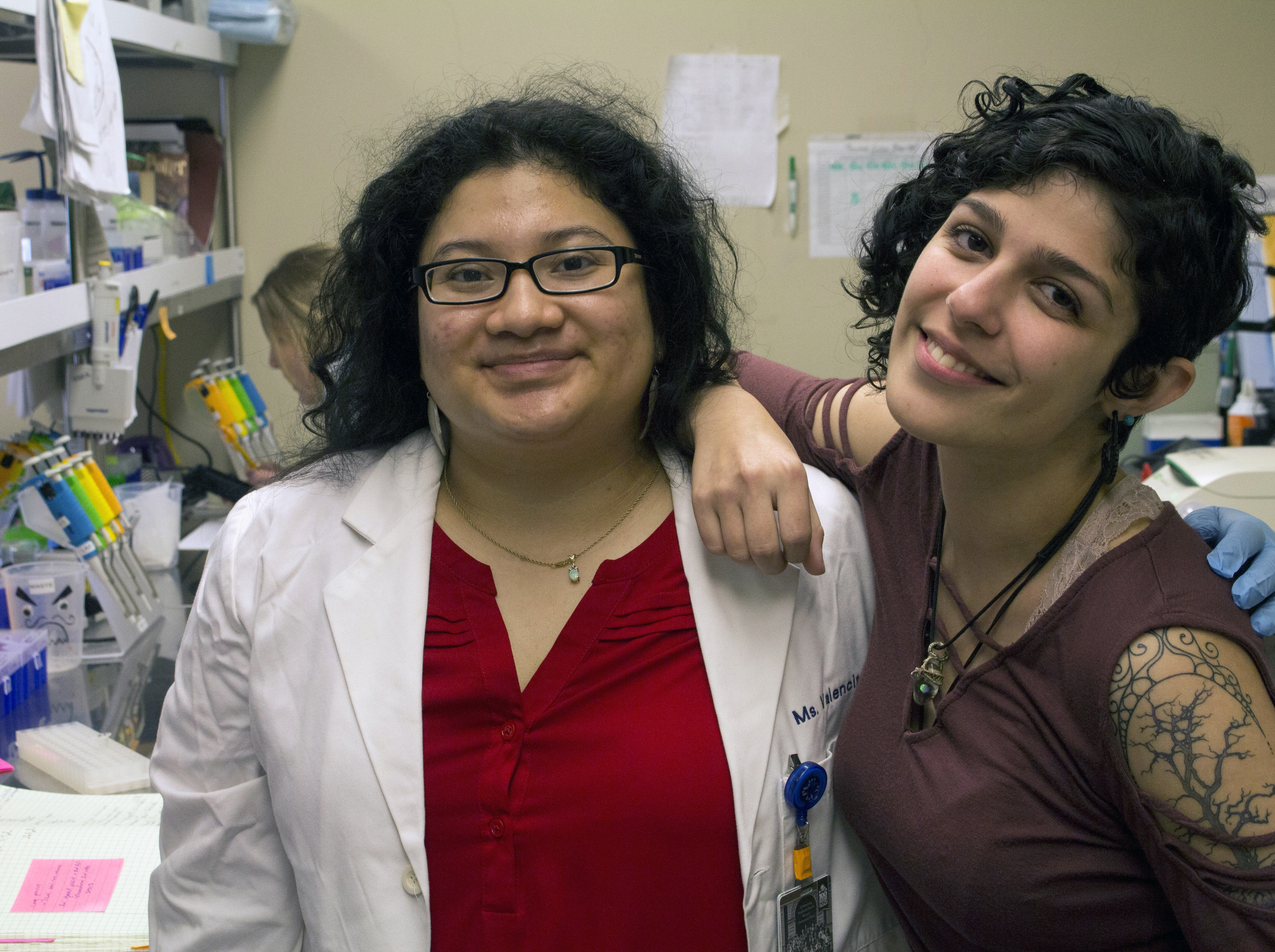
    Stephanie Valencia, also an HSU senior cell/molecular biology student, took eight years to finish a bachelor’s degree due to her hidden disorders.

    “I became friends with my microbiology teacher at my community college,” Valencia said. “She told me to get tested for a learning disability. I didn’t always have the best grade, but she believed I was a good scientist.”

    Valencia was diagnosed with a processing disorder, similar to autism and dyslexia. For people with processing disorders, learning new things takes a lot more time.

    “I wanted to know why I didn’t figure this out when I was younger,” Valencia said. “[My psychologist] said that a lot of people who are brown, like me, don’t get diagnosed until they’re in college. Elementary school teachers assume that brown students are dumb. They don’t push for students to go get tested.”

    When Valencia transferred to HSU, she began to suffer from anxiety attacks that caused her to miss classes. She was eventually diagnosed with generalized anxiety disorder, or GAD.

    “There’s a stigma about anxiety and depression in the sciences,” Valencia said. “People think that you don’t have the mental capacity to complete a rigorous program in STEM.”

    Valencia hopes to eventually become a physician-scientist in the field of neuroscience, even though the stigma around GAD could cause her some difficulty in pursuing her dream.

    “Unfortunately, people may not give you the opportunity to show that you could do it when they know of your disability,” Valencia said. “People think, ‘Oh, maybe she can’t.’ It’s the maybe that gets in the way of me being able to prove myself.”

    For more information on individuals with disability in the sciences, check out Dr. Mahadeo Sukhai and his book Creating a Culture of Accessibility in the Sciences.
  • Students v. admins: frustrated conversations at the budget cuts walkout

    Students v. admins: frustrated conversations at the budget cuts walkout

    “Students’ rights! Students’ rights!”

    “Where the fuck is Lisa? Where the fuck is Lisa?”

    “Cut her pay! Cut her pay!”

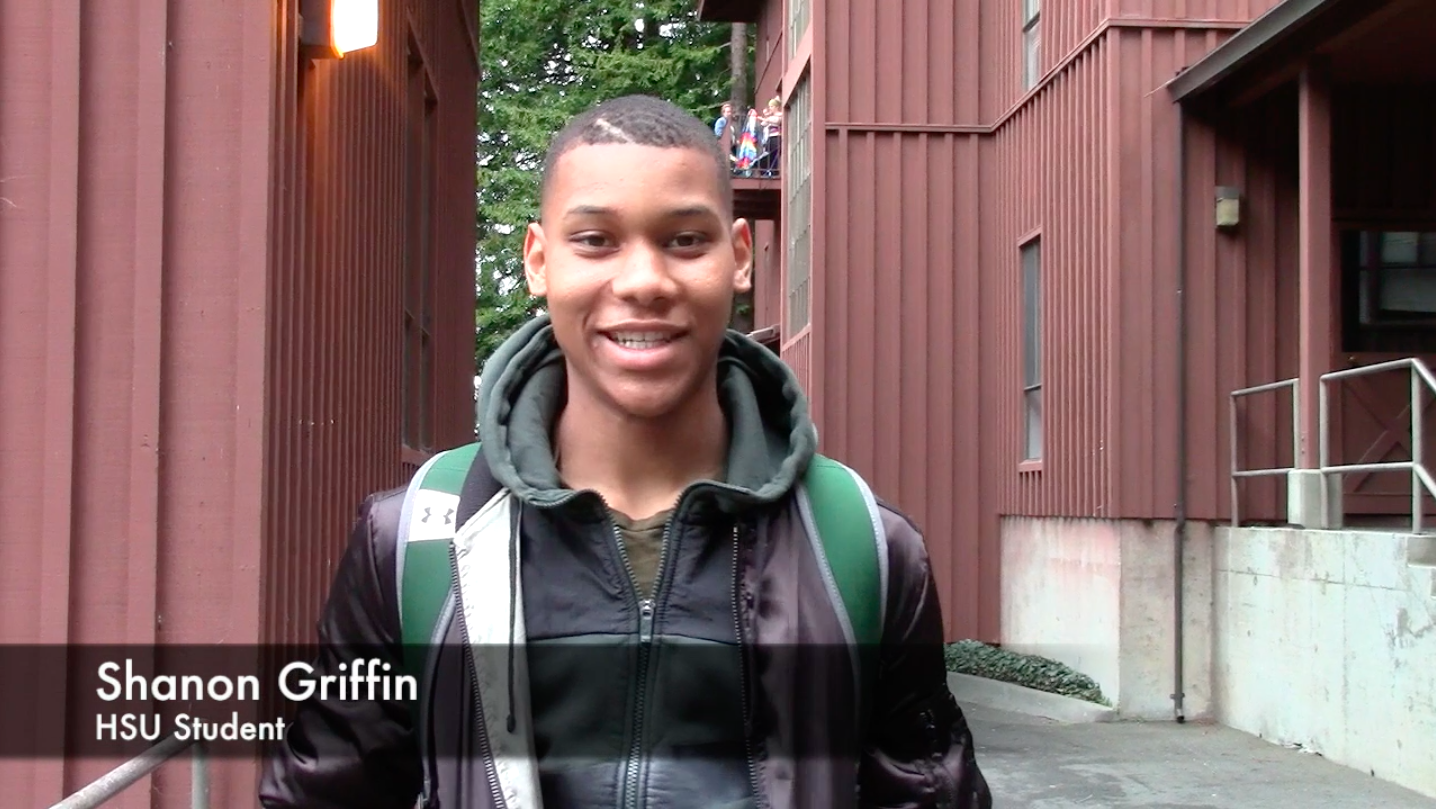
    Video by Bailey Tennery.

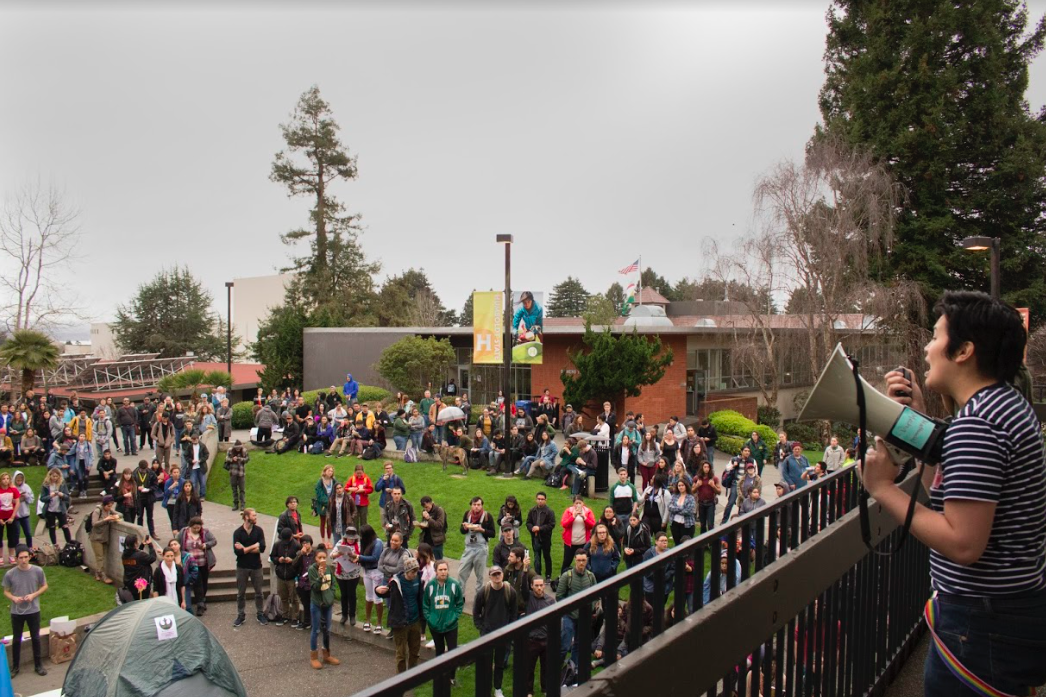
    HSU students could be heard storming through Siemens Hall yesterday, demanding the school’s administration to face students’ anger surrounding the budget crisis.

    Trevor McDowell, a wildlife major at HSU, was among the crowd of student protestors.

    “We are marching to find President Rossbacher, wherever she is meeting with WASC,” McDowell said.

    WASC, or the Western Association of Schools and Colleges, is a reviewing body that determines whether a school is capable of preparing students for the next steps in their careers.

    Dr. W. Wayne Brumfield, interim vice president of student affairs, explains the significance of a WASC approved institution.

    “WASC accreditation happens all across the country, and is important to a student’s degree. Having the accreditation is a sign of a healthy institution with good academics,” Brumfield said.

    Interim VP of Student Affairs Dr. W. Wayne Brumfield listens to student demands in Siemens Hall on March 21. Photo by Philip Santos.

    David Alvarez, a student protestor, wanted Brumfield to know that HSU is not healthy.

    “Why is there a lottery to live on campus? That’s not healthy,” Alvarez said. “I am scared to be homeless. We are not healthy.”

    The students’ protest, led by Moxie Alvarnaz, started in the UC Quad.

    “How do you feel about the budget cut? The administration just got another raise,” Alvarnaz said.

    A collective “boo” swept through the crowd.

    Dr. Alexander Enyedi, HSU’s provost and an administrator, was in attendance at the protest.

    “I think we should keep the focus on the budget structure,” Enyedi said. “A deficit is different from a budget cut. The colleges’ budgets are mostly untouched, but we are asking them to not spend more than what they are given.”

    Enyedi was certain that using the school’s degree auditing system, or DARS, to gather an idea of what classes students need will ensure that students have the right classes to graduate on time, in spite of the deficit reduction effort.

    Tents in the UC Quad at Humboldt State during the student-organized event to protest budget cuts on March 21. The walkout was organized by Students Coalition for Organized and Direct Action. Photo by Matthew Hable.

    As students marched into Siemens Hall from the UC Quad to find President Lisa Rossbacher, they confronted Enyedi in front of his office. William Cooke, a student protestor, disagreed with Enyedi on the class offering strategy.

    “If you think that we should be prepared for the rest of our lives, then why offer only the classes we need?” Cooke said. “I pay so much money for my education. Why can’t I take the classes that I want to take and experience college fully?”

    Footage by Garrett Goodnight. Edited by Bailey Tennery.

    David Alvarez, an undeclared major, expressed concerns for students’ ability to explore different majors.

    “I am undeclared. What if I want to become a biology major? Are you going to cut biochemistry [and] botany classes?” Alvarez said.

    Kelsey Meusburger, another student protestor, explained what students are seeking from administrators.

    “We are asking for an income cap to make HSU a more equitable place,” Meusburger said. “Is that something you’d be open to?”

    “Always, always,” Enyedi said.

    Ben Gorham and other HSU students ensure they are heard while WASC reviewers meet in Siemens Hall 222 on March 21. Photo by Philip Santos.

    Brianna Allen, who was missing a capstone class to be at the protest, expressed frustrations with the responses Enyedi has given to students’ questions.

    “I need to see you take action,” Allen said. “I need to know if you will advocate for us, on the board of admin, to take budget cuts through your money.”

    “I will advocate for you,” Enyedi said. “I will discuss with the cabinet about the ideas that are being put through.”

    Dixie Blumenshine, a biology major, brought up the recent firing of CNRS’s dean, Dr. Richard Boone.

    “Why did Rich Boone leave early? His resignation isn’t effective until June,” Blumenshine said.

    “He wasn’t interested in doing his job anymore,” Enyedi said. “If he was committed, he wouldn’t resign.”

    Kylie Brown, a general biology freshman student, was watching the protest from the UC Quad.

    “I am here today because I heard that some classes, which I’m hoping to take, will be cut,” Brown said. “I hope to become an endangered species biologist. If the [budget deficit] cuts botany classes at HSU, I will not be prepared for my career. This makes me angry. I haven’t been able to experience all the classes I want to take, and they’re already taking it away.”

    Lizzie Phillips (left), one of the members of Students Coalition for Organized and Direct Action who participated in the HSU walkout on March 21, stands in front of a makeshift mural where students air our their grievances on the budget cuts at Humboldt State. Photo by Matthew Hable.

    Hana Watanabe and Kotaro Kawakubo, international students, were present at the protest in the UC Quad.

    “We heard about this protest through our professor, who told us to come see the cultural differences,” Watanabe said.

    “We’re also here because we’re worried about the office of international programs,” Kawakubo said. “Our boss has already been fired. We don’t want the office to close. Losing this program would be like losing a home for us.”

    Students are encouraged to attend the Associated Students budget forum on Monday, March 26th, from 5-6:30 pm in the KBR for further questions.

    See what the HSU budget looks like at URPC.

    Information on HSU’s WASC accreditation can be found here.

  • “If you can’t be rational, at least be real”

    “If you can’t be rational, at least be real”

    A conversation with science and beer.

    Pythagoras, the Greek philosopher and mathematician, died from an angry mob because he refused to cross a field of beans.

    Followers of his cult, the Pythagoraeans, believed all numbers were either whole or ratios of whole numbers, which means they have either terminating or repeating decimals. To a Pythagorean, a number such as 1.1234567891011… did not exist. The Pythagoreans believed this so strongly that they killed Hippasus, a fellow Pythagorean, by throwing him into the ocean when he proved the square root of two is an irrational number.

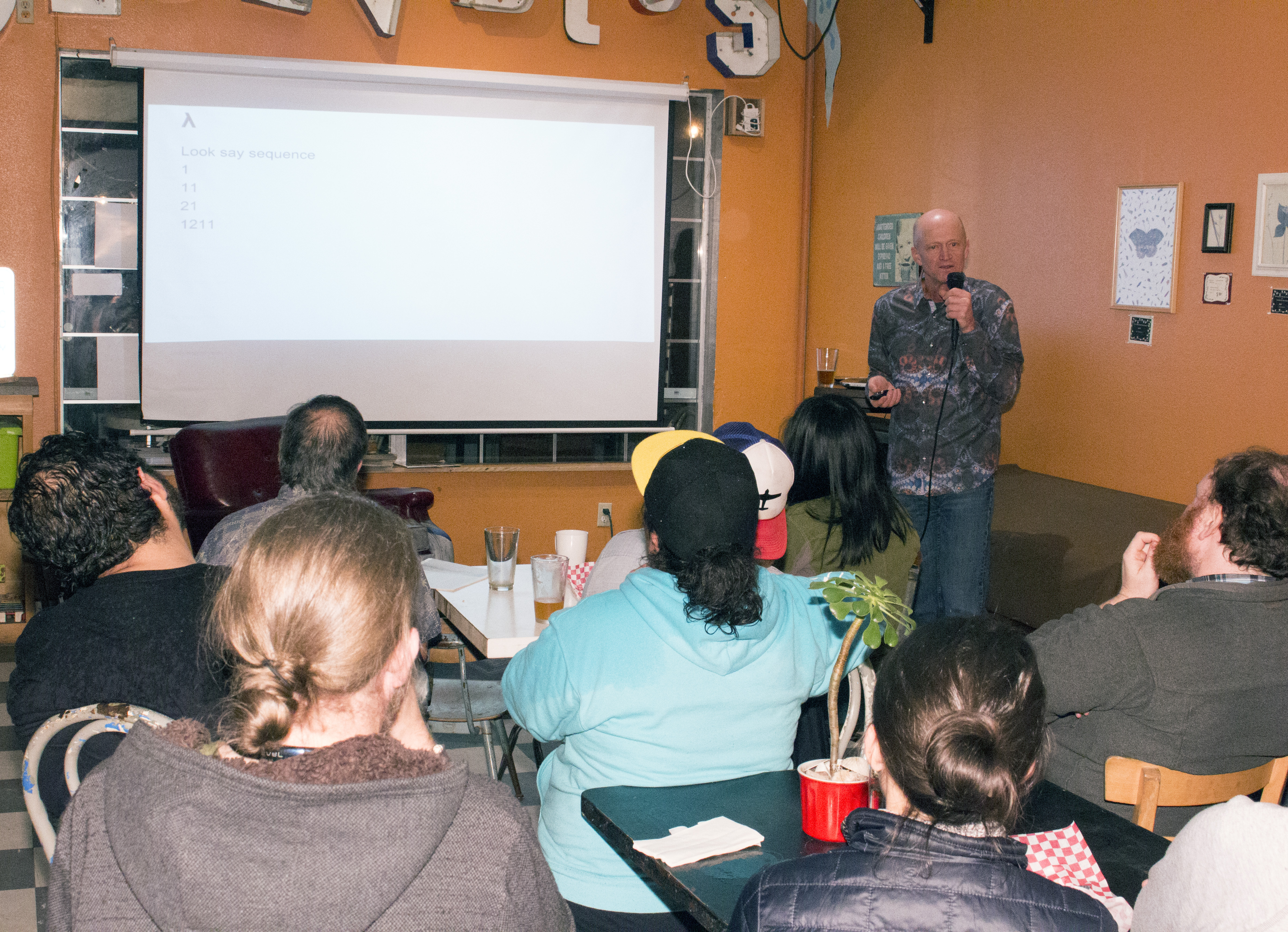
    The square root of two’s origin story was presented by Jeff Haag, a professor from the math department, as part of his talk, “If You Can’t Be Rational, At Least Be Real,” at Blondie’s Science on Tap event on March 7 in Arcata. This is Haag’s second time presenting at Science on Tap.

    ”My primary goal for coming back is to spread the joy of mathematics,” Haag said. “I want to take every opportunity to help people understand simple things deeply. I also enjoy coming back for the free beer!”

    Science on Tap is a monthly public science talk hosted at Blondies. Attendants can be found drinking beer and munching on snacks while learning about a new science-related topic. C.D. Hoyle from the physics and astronomy department brought Science on Tap to Humboldt State.

    “I first got into Science on Tap because there was one at University of Washington where I went to graduate school,” Hoyle said. “I started the first Science on Tap at HSU in Dec. 2011. There was a huge turnout for the first one. Someone from NOVA the TV show came up to help us promote the event as part of their Cosmic Cafe program.”

    Chris Harmon, a professor from the chemistry department, was fascinated with Science on Tap when he first arrived at HSU.

    “I really thought that Science on Tap is what science [communication] should be — having fun with a broad audience about science topics, and not just learning about these topics in class,” Harmon said. “When [Hoyle] went on sabbatical, I took over with organizing the talks and I enjoyed being involved.”

    Harmon and Hoyle, now co-organizers of these talks, credited Johanna Nagan, the owner of Blondies, for providing the means necessary to make Science on Tap happen.

    “Blondies helped to promote our event on their websites,” Hoyle said. “Johanna installed a projector screen system so we don’t have to bring our equipment over for the talks anymore.”

    Now in its seventh year, Science on Tap continues to receive strong support from students, faculty and community members.

    “Blondies would often get calls from community members who want to know when the next Science on Tap is scheduled. We usually have a full room at every event,” Hoyle said. “When I send out talk invitations to faculty, I get volunteers pretty quickly.”

    Harmon is one of the faculty who has given a few talks at Science on Tap.

    “I think that preparing for a Science on Tap talk is more difficult than preparing for a seminar at a conference or for class,” Harmon said. “I have to engage a broad audience without leaving out the experts in the audience. Even though this is challenging, I find it to be really fun as well.”

    John Rosa, a HSU biology alumnus (‘79) and community member, has regularly attended Science on Tap for the past three years.

    “The talks at Science on Tap do make sense to me, and I feel that I actually learn more when I don’t know anything about the topic to start,” Rosa said. “There was a talk about stem cell biology by Dr. Amy Sprowles that I found really interesting. There was also a political science talk on how science is having a tough time in the current politics that I enjoyed.”

    Hoyle believes public science communication avenues such as Science on Tap are important in today’s political climate.

    “In the past couple years, science has been under attack by politicians,” Hoyle said. “Public exposure to how evidence-based science works and the confidence limits in science will lead to more sound decision-making.”

  • Big trees, small trees, finding strengths in diversity

    Big trees, small trees, finding strengths in diversity

    For Chelsea Obeidy, an environmental science graduate from Humboldt State, a small senior capstone project studying how different factors affect seedling growth became a publication.

    “I approached professor Pascal Berrill with the idea to monitor seedling growths for my senior capstone project,” Obeidy said. “I was interested in seedling monitoring on the variable density retention patches that Berrill and Christa Dagley had developed.”

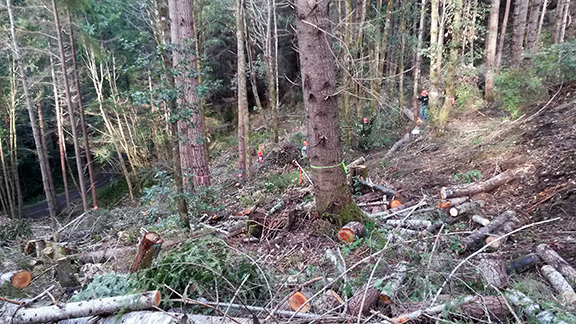
    Variable-density retention is a method of forest restoration that originated from HSU, according to Dr. Pascal Berrill, a professor in the department of forestry and wildland resources at HSU. In variable-density retention, overpopulated trees are thinned to maintain different densities while underpopulated trees are planted at different densities to encourage a natural-looking restoration. To apply this method, an area of the forest containing these trees can be divided into small regions or patches that receive varying levels of tree thinning and planting.

    Pascal Berrill, Obeidy’s research advisor, applies this method to restore the growth of conifers, specifically Douglas firs, in a forest area that has been dominantly populated by tanoaks.

    “About 50-60 years ago, people came in to harvest wood from the forests in California,” Berrill said. “When they did this, they only harvested Douglas firs and left the smaller hardwood trees, or tanoaks alone. Douglas firs are much more profitable comparing to tanoaks.”

    Alexander Goreman is a forestry senior at HSU on Berrill’s team.

    “Douglas firs are big trees and their trunks are straight, which makes them easier to process into lumber for different usages,” Goreman said. “Tanoaks have twisted trunks, which makes them harder to process and therefore, are only profitable as firewood.”

    Clearing away Douglas firs provides space for tanoaks to thrive and take over the forest. An increase in tanoaks density is a cause for concern.

    “Douglas firs are very fire resistant while tanoaks are not,” Berrill said. “Having a high density of tanoaks pose a greater wildfire threat to the forest comparing to Douglas fir. Introducing Douglas fir back into the population would decrease that risk.”

    In addition to decreasing wildfire, increasing Douglas fir population while decreasing tanoaks population would lead to more tree diversity in the forest system.

    “Increasing tree diversity would allow the forest to better fight off diseases among trees,” Obeidy said.

    “Restoring Douglas fir population to meet the area’s original Douglas fir-to-tanoaks ratio would also encourage populations of animals that are native to the area to come back,” team member Goreman said.

    To test which patch in the variable-density retention treatment produced the best growth for Douglas fir, Douglas fir seedlings were planted in each of the patches, then students collected growth measurement on the seedlings. The students also recorded factors that might affect seedling growth, such as light availability to the plants and resources competition.

    “We found that below-ground competition was the factor that affected seedling growth the most,” Goreman said.

    Below-ground competition occurs when plants decrease one another’s growth by competing for resources within the soil. The team found that when there were more tanoaks surrounding the Douglas firs seedlings, and at closer distances, seedling growth was greatly decreased. This is an indication that below-ground competition may be contributing to the change in growth.

    Conducting research with Berrill was a valuable experience for Goreman.

    “This was a cool opportunity for me to learn how to apply the things I learned in my classes and to collaborate with students from other departments,” Goreman said.

    Obeidy said his experience conducting research benefited his academic career.

    “This project specifically helped me find a beneficial approach to the scientific method, delineate a hypothesis and present the results in a meaningful way,” Obeidy said.

  • One man’s trash is another man’s supercomputer

    One man’s trash is another man’s supercomputer

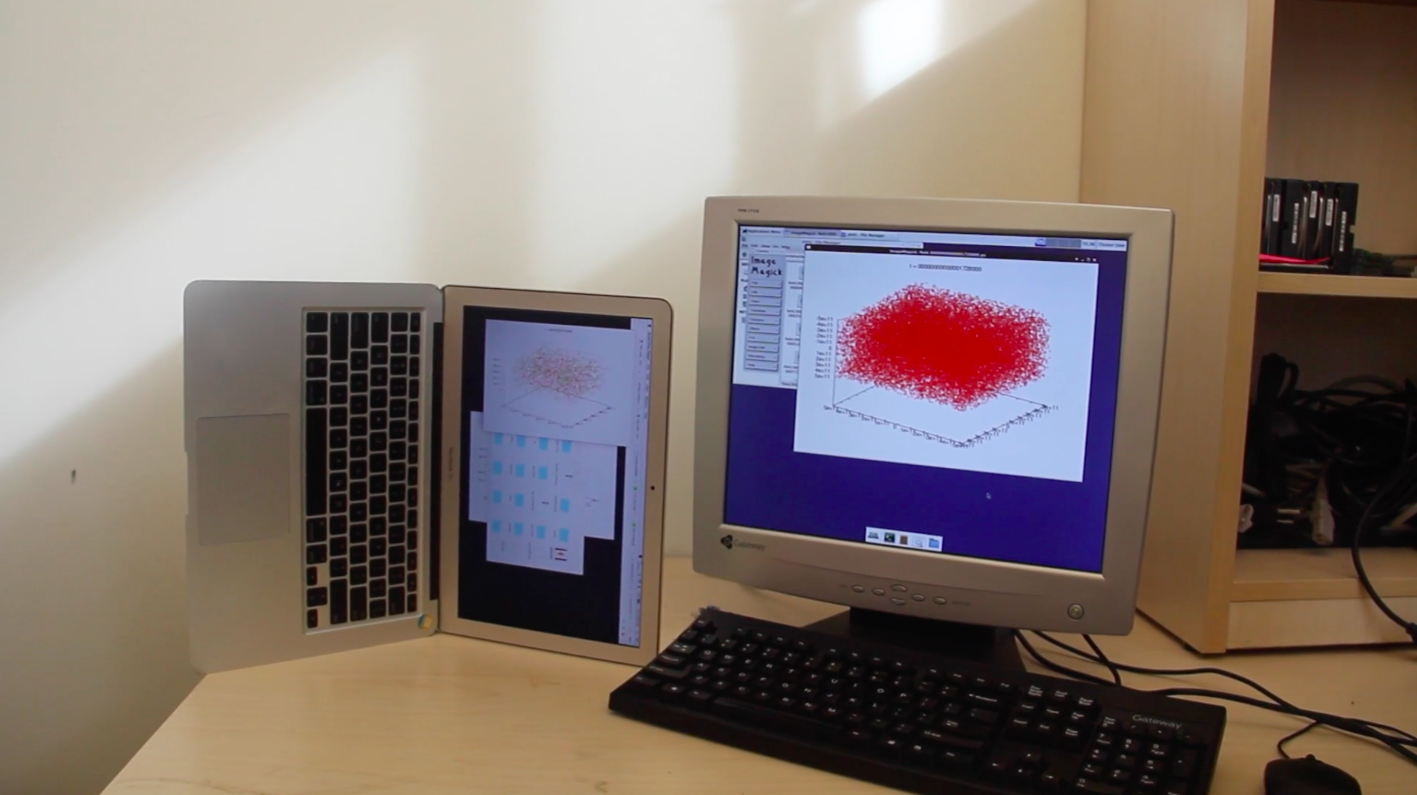
    HSU students Sean Haas and Jack Eicher build a supercomputer to better conduct biophysics research on campus.

    At large research institutions such as Lawrence Livermore National Laboratory and International Business Machines, or IBM, supercomputers can cost anywhere from $100 million and $250 million to design and assemble (Wagstaff, 2012).

    Sean Haas, an astrophysics student, and Jack Eicher, a biochemistry student, built a supercomputer for nothing.

    “All of the parts we used for the supercomputer came from eWaste and ITS,” Haas said. “Professor Chris Harmon from the chemistry department donated the rack that houses the supercomputer.”

    Eicher said that students also donate computer components.

    Information given to computers is stored in their short-term memory, known as the random access memory, or RAM, and the long-term memory hard drive. Supercomputers have an enormous amount of both storage types.

    “Computers’ storage capacity are measured in bytes. The larger the bytes value, the more memory the computer can store,” Haas said. “A normal computer contains between four and eight gigabytes of RAM. Our supercomputer has 106 gigabytes of RAM.”

    Processors are components that pull information from the RAM and hard drive to perform calculations. A processor is divided into multiple cores. The core amount determines how many calculations a processor can perform at one time.

    “Our supercomputer contains 96 cores, which means that it can perform 96 calculations at one time,” Haas said. “When combined with the computer’s large memory, these 96 cores should allow us to do more calculations in a shorter period of time.”

    Haas is now testing the supercomputer’s capacities using galaxy formation simulations. Galaxies are large collections of gas, dust and various materials that exist in space. By giving these particles different physical properties, computer simulations can change the the particles’ locations until they form galaxies.

    Footage by Surya Gopalan. Edited by Linh Pham.

    “On my normal computer, I can put 8,000 particles under the galaxy simulations, but galaxies are really big, and could contain millions of particles,” Haas said. “8,000 particles isn’t really enough to accurately resemble galaxy formations.”

    Using the supercomputer, Haas has put 30,000 particles through the galaxy simulations.

    “My own computer would melt if I try to do that many particles,” Haas said.

    The supercomputer was born out of Jack Eicher’s wish to study biophysics at Humboldt State.

    “I remember checking out library books about biophysics during my sophomore year and wanting to learn more about this topic in my classes, but there were no classes that teach biophysics,” Eicher said.

    Biophysics is the study of living organisms using math principles and the laws of physics. The lack of resources for biophysics at HSU motivated Eicher to start his own biophysics learning community.

    “I’m currently the president of the biophysics club on campus,” Eicher said. “Our club is very research-focused. We develop [biophysics-related] research projects based on the interests of both faculty and students.”

    In biophysics, computer models are often used to explain how a biological phenomenon may work, especially when the phenomenon cannot be observed with previously existing methods. Some of these models, such as models that describe protein formation, require a supercomputer’s capabilities.

    “Proteins are made from long chains of building blocks, or amino acids. Amino acids have different properties, allowing them to interact with each other. These interactions cause the chains to fold in different ways, eventually forming big proteins,” Eicher said. “Calculating all the ways that amino acids can interact to form a protein really requires a supercomputer’s power.”

    “In the future, we plan on showing the galaxies simulation results to tech companies,” Haas said. “We hope that this would encourage the companies to donate more components for our supercomputer, such as graphics cards. This would allow Jack to start studying protein folding.”

    Haas and Eicher’s supercomputer has already garnered interests from students and faculty, such as Ruth Saunders, a professor in the physics department.

    “In my lab, we study how very small carbon tubes, called carbon nanotubes, are formed,” Saunders said. “We use computers to model these tubes’ formation, but some of our calculations would require two days to do on a normal computer. Using the supercomputer, we may be able to reduce our computing time, and simulate the formation of more nanotubes at the same time.”

    For Eicher, building the supercomputer taught him an important lesson on resourcefulness.

    “I honestly didn’t think that we would be able to build this supercomputer, given that our school has very low funding for research,” Eicher said. “But when we were able to put this project together, it made me realize that even if we have constraints to what we want to do, if we really want to do it, we can make it happen.”

    Illustration by Jen Kelly.
  • The evolution of biology 105

    The evolution of biology 105

    Do sports drinks lie about their sugar content?

    In biology 105, HSU oceanography major Courtney Dressler and her classmates tried to answer this question.

    “We are adding dinitrosalicylic acid into solutions of Gatorade and Vitamin Water Zero,” Dressler said. “The acid helps us identify how much sugar is in these drinks.”

    Dinitrosalicylic acid, or DNS, binds to sugar molecules in a solution. When this binding occurs, the solution’s color can transform into a shade between orange and red.

    Wesley Warren, also an oceanography major at HSU, explains how these color changes are detected.

    “We put the solutions into a spectrophotometer, which tells us how much light they absorb,” Warren said.

    Orange solutions absorb a different amount of light than red solutions. By comparing the sports drinks’ light absorbance values to those of the standards, or solutions with known sugar content, the drinks’ actual sugar concentrations can be determined.

    Dr. John Steele, one of the instructors for biology 105, elaborated on how this experiment fits into the course’s schematic.

    “Biology 105 provides an introduction to topics that a cell/molecular biology, microbiology and general biology major would encounter in their undergraduate studies,” Steele said. “[The experiment] is used to teach students how to make diluted solutions from a stock solution and how to determine the concentration of [molecules] in a given solution.”

    In prior semesters, two laboratory periods were given for students to complete the experiment and learn these essential techniques. Now, students are allowed three periods to conduct the experiment.

    A few other labs in biology 105 were also modified to include more time.

    Video by Linh Pham and Surya Gopalan.

    Dr. Brigitte Blackman, who teaches a section of biology 105, explained the factor that prompted these changes.

    “We try to take feedback from students every semester and change the course based on their comments,” Blackman said. “In past semesters, some students have felt the labs were too long and covered too much in one period.”

    “By spreading out the labs, we hope that students will be able to better understand the principles covered in lab and apply these principles to test a scientific hypothesis,” Steele said.

    For Marjani Ellison, an environmental science major who’s retaking biology 105, the order in which the experiments are conducted also seemed to change.

    “Last semester, the labs and lectures materials did not coordinate. I felt as if the two were separate classes,” Ellison said. “This semester, the labs follow the lectures. I feel that I’m actually learning this time.”

    In addition to student feedback, current trends and issues in biology also determine the necessary changes for the class.

    “Last semester, we incorporated the Small World Initiative into our laboratory curriculum,” Blackman said. “The initiative was introduced to the course by [professor] Mark Wilson. As part of this initiative, students sampled and grew bacteria from the local environment, such as the Arcata Marsh, then searched for bacteria that were producing antibiotics.”

    This semester, biology 105 replaced the Small World Initiative with gene-editing using CRISPR as the current topic in biotechnology.

    “CRISPR is a gene editing system made by two scientists named Jennifer Doudna and Emmanuelle Chapentier. To use this tool, all you need to know is the DNA sequence where you would like to make an edit,” Steele said. “Because of its versatility and popularity in biotechnology, bio 105 students need to learn the basics of this tool and the first step of building it.”

    Learning CRISPR at the introductory biology level could increase the horizon of opportunities for HSU students.

    “This topic has grown from being a sentence in a textbook to a paragraph, and soon, probably full sections of a chapter,” Steele said. “Biotech companies are looking for people who know how to use CRISPR and gene editing technologies. Learning this technique early could really put HSU students ahead of the competition.”

    Steele also claimed a selfish reason for teaching students CRISPR.

    “If more students know how to use this tool, then more students will be able to work for my lab,” Steele said. “My lab uses this tool everyday!”


  • Sand, wind and poop: a tale of American dune grass’ life troubles

    Sand, wind and poop: a tale of American dune grass’ life troubles

    For undergraduates Elizabeth Nguyen and Sean Thull, their past summer was spent staring at grass.

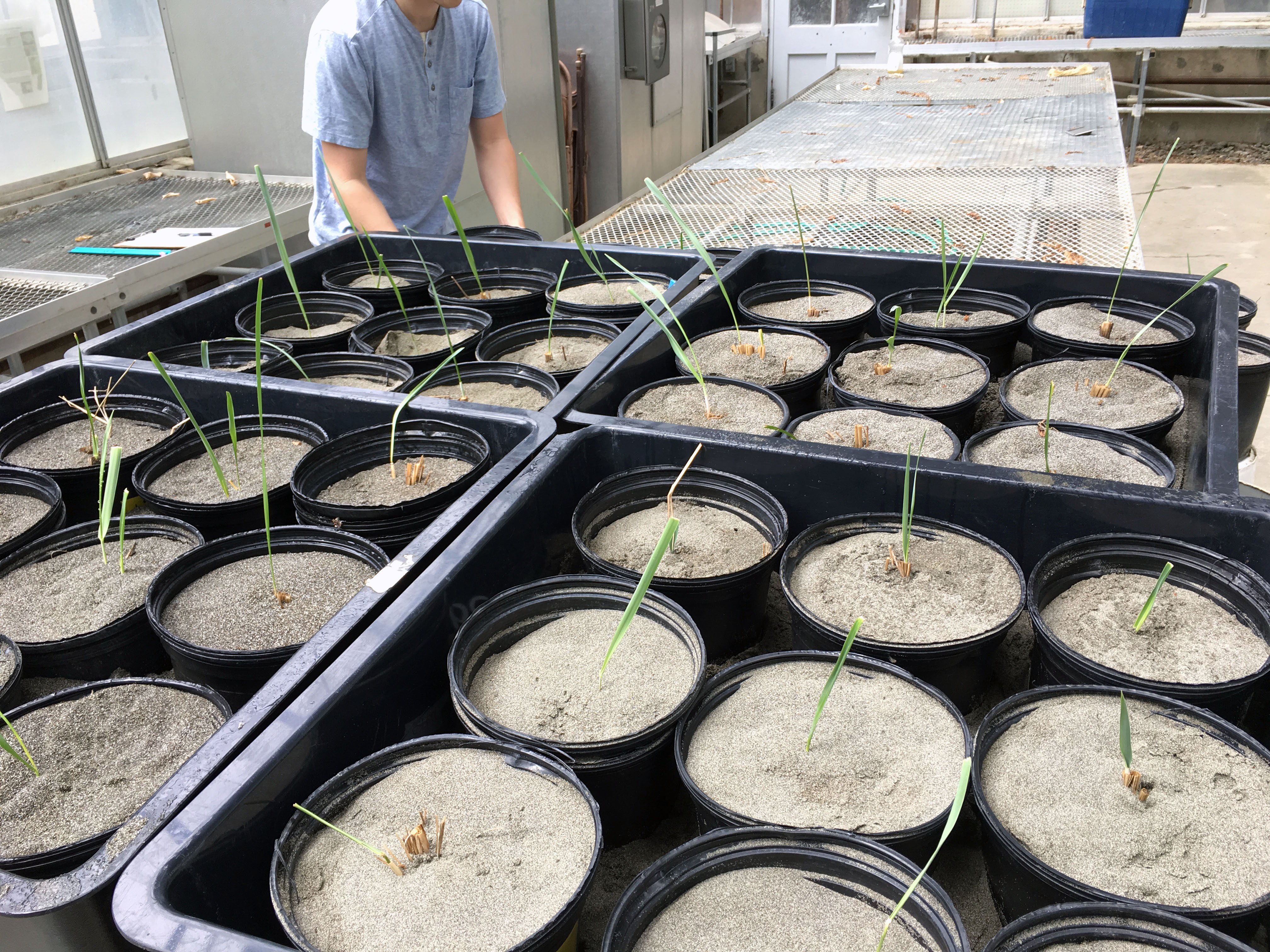
    “We spent between two to four hours every three weeks, collecting data on Elymus mollis growth patterns at the Ma-l’el and Eel River foredunes,” Thull said.

    Elymus, or American dune grass, is a native plant that can change the foredunes’ landscape.

    Erik Jules, a professor in the Department of Biological Sciences, advised Elizabeth Nguyen, Sean Thull and Steven La Pointe on the project.

    “Foredunes are dunes’ regions closest to the ocean. They often become eroded from crashing ocean waves or by wind,” Jules said. “U.S. Fish and Wildlife wants to keep foredunes from being eroded too fast and improve their resilience in the face of rising sea levels.”

    Growing Elymus on foredunes is known to help the foredunes withstand heavy waves.

    While Elymus growth at some of the region’s foredunes, such as Lanphere and Ma-le’l dunes, was healthy, Elymus grown at the Eel River foredunes suffered another fate.

    “We wanted to know whether Elymus deaths were due to soil differences between these dunes and Lanphere dunes,” Thull said.

    To answer this question, Nguyen, Thull and La Pointe observed the growth of Elymus from Lanphere dunes that were transplanted into Eel River and Ma-le’l soil.

    HSU biology students Sean Thull (left) and Steven La Pointe collecting data on American dune grass growth at the Ma-le’l dunes. Photo and caption by Dr. Erik Jules.

    A hundred Elymus were planted at each dune and an additional 41 plants were grown in the greenhouse.

    “In the greenhouse, we cut the Elymus down to their base, giving them the same start point,” Thull said. “We watered them three times a week, rotated them to evenly distribute the sunlight and measured their longest leaf lengths.”

    While the Elymus planted at Eel River had high mortality rates, the greenhouse Elymus grew strong. The longest leaf lengths in both soil types were not significantly different from each other.

    “This showed that the soil at Ma-le’l and Eel River could supplement the plants just fine,” Thull said, “but something else in the environment is causing the plants to die.”

    Unexpectedly, Elymus planted at Ma-le’l for this study also died.

    “Because the Elymus in our experiment were planted at the same time that the winds at Ma-le’l was strong, this could have caused them to be buried by the sand and affected their growth,” Nguyen said.

    “There were Elymus planted closer to the water, and planted when the winds were not as strong,” Thull said. “These plants were growing better comparing to our plants. If Elymus planting at Ma-le’l begins at the right season and Elymus is planted from the water inward, then maybe the plants could stabilize each other as they grow to alleviate the wind impacts.”

    At the Eel River site, Nguyen and Thull found something different.

    “We found rabbit scats in our Eel River’s Elymus plot,” Nguyen said. “Because there were lots of non-native, thick European beach grass near the plot, we think that the rabbits hide from predators in the beach grass, then come out to the Elymus plot to eat.”

    A large patch of the invasive European beachgrass on the local dunes (left) adjacent to native dune mat vegetation (right). There is growing evidence that dense beachgrass patches harbor more rabbits, and that these rabbits then venture out to consume the native vegetation. Photo and caption by Dr. Erik Jules.

    Nguyen and Thull’s observation made way for another project in Jules’ lab.

    “Currently, I have a master student studying what rabbits eat out in the dunes and how that would impact the vegetation,” Jules said.

    If rabbits are found to be the culprit of stunted Elymus’ growth, removing the invasive European beach grass from Eel River dunes could make them more prone to predators. This would cause the rabbit population at Eel River to decrease, giving Elymus a better chance to grow.

    “Growing another plant species that could both restructure the dunes and deter the rabbits would be difficult,” Jules said. “Not many can tolerate the high salt soil of the dunes like Elymus.”

    “Understanding how to help Elymus grow will usher in the growth of other native plants in the area, which could contribute to further dunes stabilization,” Nguyen said.

    During this project, Thull and Nguyen gained the necessary skills to prepare them for a scientific career.

    “We learned how to analyze our data with statistics and how to design an experiment based on what statistical methods should be employed,” Nguyen said.

    “We’re also writing a report on this project,” Thull said, “and we’re learning that our experimental methodology are also used by professionals.”

    Nguyen and Thull attributed their growth as researchers to Jules’ confidence in letting them work independently. This growth also transferred to their academic experience.

    “We find the materials in our classes more exciting, because we see their applicability to our work,” Thull said. “This really makes us feel excited to eventually enter Ph.D programs.”

  • Government shutdowns: uncertainty as a price for democracy?

    Government shutdowns: uncertainty as a price for democracy?

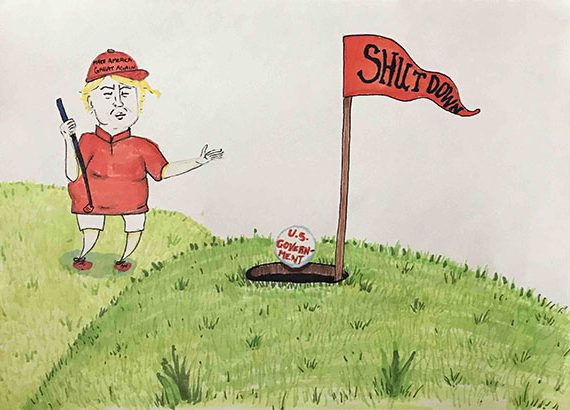
    The showcase of the United States’ unique democratic system happened on Jan. 20. It marked the one-year anniversary of a reality TV star’s presidential inauguration. It also highlighted the country’s freedom of speech in the form of a nationwide women’s rights demonstration, as well as the beginning of a short-lived government shutdown.

    Professor Stephanie Burkhalter, a political science professor at HSU who studies communication strategies between Congress and the president, provides more insights on the phenomena of government shutdowns.

    What is a government shutdown?

    A government shutdown occurs when the House of Representatives and the Senate cannot pass an appropriations bill — the technical name for a bill that funds the government agencies — that the president will sign.

    Shutdowns are a uniquely U.S. government thing, because of our constitution, the filibuster rule and our two-party system. The two parties have become increasingly polarized on policy issues and more willing to have a shutdown if they cannot get the policy changes that they think are important.

    What caused this previous government shutdown and why was it so short?

    This answer depends on whom you ask. The consensus from mainstream media sources is that the Senate Democrats caused the shutdown by filibustering and demanding that the Senate markup — the official term for editing a bill — and debate an immigration bill that would create a pathway to citizenship for DACA recipients, known as “Dreamers.”

    Senate Democrats agreed to fund the government through Feb. 8 in exchange for Senate Majority Leader Mitch McConnell’s promise that the Senate will take up an immigration bill in the next two weeks.

    In this shutdown, Democrats were also able to negotiate six years of funding for the Children’s Health Insurance Program. House Republicans had not funded this program in their version of the permanent appropriations bill.

    What does a shutdown say about the administration of President Trump?

    From my understanding, President Trump was ready to make a deal on Jan. 19 to avoid a shutdown, but his advisers scuttled the deal, because they believed that this deal was not tough enough on immigration policy.

    So, this shutdown says less about Trump and more about the partisan politics plaguing our nation’s capital.

    What could happen around Feb. 8?

    [On Feb. 8], the Senate will reconsider a permanent spending bill. If Democrats again decide to filibuster, another shutdown could occur if a deal cannot be reached between Republicans and Democrats on immigration policy.

    Government employees, such as those who work in the National Park Service and the Bureau of Land Management, will not be paid.

    ——–

    Eric Nelson, the manager of Humboldt Wildlife Refuge, an organization managed by U.S. Fish and Wildlife Service, detailed the obstacles a shutdown would impose on the refuge’s operations.

    “In 2013, there was a shutdown that lasted 13 days, I believe,” Nelson said. “Probably the most challenging part of a shutdown is dealing with the uncertainty, and what it can do to schedules and scheduled work.”

    Because shutdowns are often prevented at the last minute, preparing for them is difficult. Fortunately, most shutdowns occurred outside of the spring/summer restoration work season and did not pose big problems for the refuge’s projects.

    If a shutdown occurs on Feb. 8, the refuge will be closed to most of the public. However, independent researchers working on the refuge will be allowed to continue their work, as long as they can access their research site without the help of a federal employee.

    Nelson added that if the shutdown goes on for three to four weeks, the financial challenge of not getting paid will become an issue.

    “Ironically, Congressional members do get paid during a shutdown,” Nelson said.

    Burkhalter also recognizes that a shutdown’s impact is affected by its length.

    “The effects of a shutdown are felt the longer it continues,” Burkhalter said. “Let’s hope that the Senate can make a deal on immigration policy, a permanent spending measure can be passed and we can feel secure that our government is funded through this fiscal year.”

    On the potential of shutdowns that may occur beyond Feb. 8, Burkhalter said that they could happen again when Congress tries to pass appropriate measures.

    “I would not be surprised if a few more shutdowns are headed our way in the next few years,” Burkhalter said.

  • Affordable textbooks for an awesome cause

    Affordable textbooks for an awesome cause

    With a new semester comes a need for new textbooks and class texts. One club on campus, the Society for Women in Math and Sciences (SWiMS), is offering students an affordable book purchasing option.

    Carla Quintero, the president of SWiMS, explains the offer.

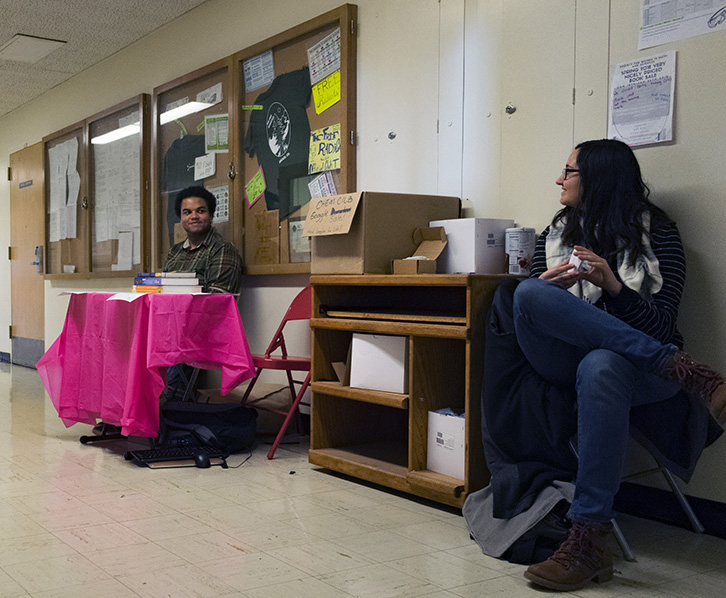
    “We are here selling used books which were donated by several people,” Quintero said. “We’re trying to raise money to fund our club’s events.”

    The society has high hopes their book sales will provide students with a much better alternative than the Humboldt State Bookstore or Amazon.

    “I think we can all agree that the bookstore is already overpriced,” Quintero said. “Most people try to find other sources, such as Amazon, to purchase their textbooks. We are selling our books at a fraction of an Amazon textbook price.”

    SWiMS will be using the money raised from book sales to create educational and community-building events for HSU.

    “SWiMS hosts several different events throughout the semester, one of them being Codernoon,” Quintero said. “We have computer science majors who are running this event and teaching people how to code in Python.”

    The club hosts Codernoon twice a week and offers refreshments to participants.

    “Through these workshops, we are trying to break the stigma that coding and computer science is a boys club,” Quintero said. “Coding is accessible and fun. Everyone should learn how to do it!”

    In addition to Codernoon, SWiMS will be using money from book sales to fund Crafternoons, which are crafting events that occur for two hours every other week.

    SWiMS provides participants with crafting materials and lessons on knitting and crocheting. They also offer a space for participants to interact with other majors and destress from their heavy workloads.

    Specifically for STEM majors, Crafternoon hopes to be a space for this group to interact with people outside of their majors. The purpose here is to create a community SWiMS is aiming to establish in their role of being a support group.

    One major event that SWiMS has been pushing to put on annually is a workshop called You Belong Here.

    “In this workshop, we try to inform STEM majors about imposter syndrome, stereotype threat and provide students with the tools to combat these things,” Quintero said. “With these tools, students can move through their respective fields feeling empowered and welcomed because everyone should have the same access to science and math.”

    Money raised from book sales will also be used to host You Belong Here in March.

    To Quintero, being apart of SWiMS means the world to her. As a woman of color in physics, it can be disheartening at times.

    “It can be hard to see yourself in a career when you don’t see anyone else like you in that career,” Quintero said. “The point of SWiMS is for everyone to realize that, while women’s population in the sciences may be small, they still are an important part of the scientific community.”

    Purchasing books from SWiMS will provide the club with the funding to continue their mission of supporting underrepresented groups in the sciences. These include women, people of color, LGBTQIA and other individuals in their scientific journey at HSU.

    Linh Pham is affiliated with Society for Women in Math and Sciences.