The Lumberjack


Students Serving The Cal Poly Humboldt Campus and Community Since 1929

Author: Ruby Guillette

  • Getting Polytechnical

    Over 130 students, faculty, staff, alumni, and community members tuned in to the polytechnic open forum last week. The forum provided an opportunity for students and faculty to come together and discuss perspectives. Participants came with varied feedback and concerns about the polytechnic change.

    Several graduate students came prepared with a statement and questions about the Polytechnic designation. Their concerns were about the polytechnic emphasis on Indigenous traditional ecologic knowledge (TEK). Provost Jenn Capps explained that Humboldt would be different from other polytechnics. Emphasis on unique location and relationships with TEK and CAHSS would set Humboldt apart from other polytechnic universities.

    “The focus is on making sure that we infuse concepts of sustainability traditional ecological knowledge, making sure that liberal arts and social sciences and humanities remain at the center of what we’re doing,” Capps said.

    The group of graduate students wanted to understand how the polytechnic transition will support, uplift, and provide funding for indigenous and sustainability programs. Concerns were for programs such as Native American Studies (NAS), the Indian Tribal & Educational Personnel Program (ITEPP), the Indian Natural Resources, Science and Engineering Program (INRSEP), the Food Sovereignty Lab, and Critical Race, Gender and Sexuality Studies (CRGS).

    “If TEK and Indigenous knowledge are integral to this transition, how is the university funding, staffing, and filling positions to aid these core programs?” the letter reads. “Where are the cluster hires and faculty positions for NAS and CRGS? Where are the funding initiatives that support Indigenous students and all students within these programs?”

    The forum did not have enough time to fully address these students’ questions or the letter.

    Graduate student Marlene Dusek spoke on behalf of the student group in the forum. Dusek pointed out NAS and TEK seem to be integral in the polytechnic transition, yet will not receive the same attention and funding as the new natural resources and STEM programs soon to be rolled out.

    “Native American studies and TEK is mentioned more than sustainability in the prospectus, where is the Native program state of the art remodel and buildings as a part of this plan?” Dusek asked during the forum. At the end of the forum, Dusek’s peers noted that these questions were still unanswered.

    Provost Capps explains why STEM-based programs are being propped up in this stage of the polytechnic transition.

    “In order for us to seek the designation, there were some programs that we needed to offer,” Capps said. “More engineering and technology programs, otherwise we wouldn’t be eligible for the designation, so we did. A large portion of the funding that we received was to support that.”

    The students and administration will continue to discuss these matters. In a separate interview, Capps discussed communicative efforts with students about polytechnic changes.

    “I suspect that a lot of [polytechnic] communications are going to faculty staff and community members, and not to students,” Capps said. “It makes me realize that we need to target specifically to students and perhaps do some open forum sessions.”

    Faculty member and attendee Daniel Barton spoke up about this being an opportunity to reflect on this school’s image. Barton challenged the mascot, and if it reflects Humboldt’s values.

    “Can we rethink whether we want to keep using a gendered symbol of colonial, natural resource extraction?” Barton said. “[Let’s] assemble something other than patriarchy. The lumberjack is gendered as a noun and as our mascot, violent colonialism, and exploitation of labor because that’s what the lumberjack symbolizes in a contemporary context.”

    A presenter responded that a logo change will be a further examined item. There are arguments in favor of both sides and will be covered in depth at an unspecified later time. Changes are happening university-wide, giving students and faculty opportune time to address the school’s image and values.


  • Brace yourselves: January 2022, “HSU” will be a thing of the past

    Brace yourselves: January 2022, “HSU” will be a thing of the past

    Humboldt State has presented the initial movement to officially change HSU into California’s third polytechnic university. On Nov. 9 the California State University Board of Trustees met to discuss the name change of Humboldt State University to California State Polytechnic University Humboldt, or Cal Poly Humboldt. If approved by the trustees at the next meeting in Jan. 2022, the name change would be effective immediately.

    Starting in Jan. 2021, HSU began a self study program to decide if they had the qualities to fulfill the role as a polytechnic university. President Tom Jackson expects the turning of HSU into a polytechnic to assist in stimulating the economy of Northern California. Currently HSU is the largest employer in the area, boasting $495 million annually.

    On June 25 Governor Newsom and the state legislature designated $433 million in one time funding for facilities as well as $25 million in recurring operating costs to help transform HSU into a polytechnic university. At the November board of trustees meeting Provost Jenn Capps, President Tom Jackson, and Executive Vice Chancellor for Academic and Student Affairs Sylvia Alva presented an item to officially request the name change of Humboldt State University. The action will be taken in the January 2022 Board of Trustees meeting.

    A polytechnic university is one that embraces a learn-by-doing approach. This allows students to apply learned concepts in preparation for careers. It includes natural and applied sciences, technology, engineering, and also focuses on liberal arts curriculum. According to Jen Capps, HSU will be a different kind of polytechnic university.

    “We don’t deem to replicate the excellence at Pomona and San Luis Obispo,” Capps said. “But strengthen our expertise in sustainability and traditional ecological knowledge, and social justice and who we include and not who we exclude.”

    Within the first seven years of becoming a polytechnic, HSU projects to bring up the enrollment to 11,000 students, nearly doubling the current enrollment numbers. This has been a key goal since the recent years have seen steadily declining enrollment numbers.

    HSU plans on hiring more diverse staff and faculty to increase inclusion. Another objective for the university is increasing tribal partnership with the thirteen tribes in the surrounding areas. The university offers education to the tribal populations to help them grow and flourish. Both the university and the tribes will work together to fuse their knowledge of science and the environment to help support the community.

    The board of trustees seemed generally supportive of the HSU name change, although they did have key questions for the presenters. Questions posed addressed student housing concerns, giving back to tribes, supporting higher education in tribal communities, as well as strategies to improve enrollment.

    Although many questions are yet to be answered, trustees were overall supportive. One trustee, Adam Day, voiced his support of the polytechnic change.

    “It just makes so much sense for so many reasons,” Day said. “The special place this campus holds in that physical geographical location. Historical issues, the economic issues, social economic issues, environmental and ecological. Your campus is so unique.”

    With the incredible amount of money designated to the school and the immense pressure to properly create a new polytechnic, HSU president Tom Jackson seems up for the challenge.

    “This is a huge responsibility,” Jackson said. “HSU will be deliberate and respectful and responsible and forthright as we accept the investment by the people of California in this incredible university and the emerging region. This is our moment.”

    There will be a virtual open forum held by Provost Jen Capps and Chief of Staff Sherie C. Gordon on November 19th at 10:00AM. This is an opportunity for students, staff, faculty and members of the community to share their thoughts and ask questions about the upcoming changes. Register for the Zoom meeting in advance, online. If you have further questions call or email poly@humboldt.edu or 707-826-3300.

  • My love/hate relationship with HyFlex

    My love/hate relationship with HyFlex

    I moved to Arcata in the spring of 2020. After recently graduating from community college with an associate’s degree in communications, I was eager to begin work on my bachelor’s. I worked up my courage, moved myself and belongings to a musty house in Pneumonia Gulch, and began to work. I was just finding a routine and making connections on campus when COVID hit. With worries of getting sick and the loneliness I began to feel at my rental, I packed up my belongings, one sickly anthurium and panic-moved in with my boyfriend in southern Humboldt. I worked through the rest of the semester. And the next semester. And the next. Now, halfway through the fall of 2021, I have learned to cope with HyFlex. The results? It’s difficult. It’s hard to hear what’s going on in class and I find myself missing the collaborations built on campus. I feel disconnected from my peers and teachers. Maybe it’s my anxiety talking, but the online community just doesn’t jive with the in-person folk. It’s hard to pipe up from Zoom, and if there is a shoddy internet connection, or the people in class are having a rowdy discussion, there’s just no point to even talk.

    Although it is arguably more difficult to communicate via HyFlex, I do appreciate the freedom that comes with online school. I have more time to focus on my studies, I don’t have to account for drive time, which always eats into the schedule, and I don’t have to relocate, which can be difficult in itself. During the pandemic, I also got a puppy. A giant goofball of a puppy, and my mom gave me her small dog. I also have a cat and chickens. I live on a decent sized farm in SoHum, but these responsibilities make moving more challenging. Even if I were to relocate, it would be difficult to find a place that allowed a petting zoo. Other options include some rehoming, maybe for the cats and chickens, but…who wants to rip apart the pack? Not me.

    At this point, I don’t even want to move to Arcata. With winter just beginning and Delta variant trends and rates of sickness only bound to increase due to winter’s lower temps, I just don’t think it’s feasible. What if campus shuts down again? Will I find myself in the same place as spring 2020?

    On one hand, Hyflex gives me the freedom that I love. I can accomplish my educational goals from the comfort of my home. I also have more time to focus on other irons I have in the fire, and believe me, there are a lot of them. On the other hand, I lack the camaraderie found in classroom settings. I find myself isolated from my peer group and unable to communicate effectively. It’s also difficult to work through the challenges of being a college level senior alone.

    Overall, I feel like my college experience was ripped from my hands. Now, with graduation just one semester away, I’m in limbo. Even though HyFlex has its downsides, it’s a better option than uprooting my menagerie. So for now, I’m staying put. HyFlex, shcmy-flex. I’m getting my degree no matter how many times I have to ask someone to repeat themselves.

  • Giving incarcerated youth a chance

    Giving incarcerated youth a chance

    The Juvenile Hall Recreation Program (JHRP) is one of the YES house’s longest running volunteer programs at HSU. Developed in 1974, the program took a short, few year hiatus, and has been running since 1980. It is one of the YES house’s many hands-on volunteer opportunities and a way for students at HSU to get practical experience in their fields.

    “Volunteers of JHRP spend time with the incarcerated youth at the Humboldt County Juvenile Hall in Eureka, and provide outside community contact during regularly scheduled recreation time,” the program’s mission states. “JHRP volunteers provide support and positive guidance to the youth they serve in an effort to restore a connection to the outside community.”

    It’s one of the most popular and long standing programs at YES. Typically volunteers visit during recreation time and help engage participants with art and games while providing social connection and productive distractions to youth in difficult situations. The HSU volunteers help build bonds and create prosocial connections.

    COVID-19 has been a challenging obstacle for these hands-on programs, but part of the goal for YES is to sustain the programs throughout the pandemic. Due to COVID, the typical protocol has shifted from a one hundred percent hands-on community learning experience to a remote program focused on juvenile justice issues. Deeper learning for volunteers has included presentations from alumni, films, and other media-based features to build personal knowledge.

    This semester, JHRP was able to collaborate with Scotia Middle School to create a pen pal program for students to engage with JHRP volunteers. This new collaborative effort is less tied to the JHRP mission, but still allows for HSU students to get hands-on learning experience.

    The current co-directors for JHRP, Brenda Ramirez and Ashley Ramos, have been working with the program for three semesters. Both started as volunteers and moved into leadership positions during the pandemic. For Ramos, the leadership deepened her understanding of JHRP.

    “It was a whole new perspective on the program,” Ramos said. “I felt like I valued JHRP more, being on the inside of it, seeing how much hard work goes into making sure our volunteers have a good experience.”

    Ramirez’s work within the program has been a time of growth. “It was a lot of personal growth,” Ramirez said. “For an introvert, that’s kind of going out of your shell.”

    Before COVID, JHRP created a support system for the youth at juvenile hall. Social collaborations were cornerstones of the program which all shifted due to the pandemic. Still wanting to sustain the program’s mission, the current directors have appreciated the hands-on experience of the pen pal program.

    “JHRP wants HSU students to collaborate with the community hands on,” Ramos said. “So [the pen pal program] was the only way we could provide that.”

    Current volunteer and social work major Jasmine Rafferty is eager to sustain the program and build knowledge throughout, and after, the pandemic.

    “[JHRP] creates a safe and welcoming space for everyone,” Rafferty said. “I can see myself staying with them for a while. They address community needs and support community organizations which really is what social work is about.”

    Rafferty is also passionate about the program’s mission and working with the incarcerated youth.

    “For me, it’s a super interesting focus to be working with kids that have met adversity in their early childhood, because if we can hopefully get through while they are young, then they won’t have to go through a lot of things that unfortunately might happen,” Rafferty said.

    Former program director Meg Bezak worked in leadership for three semesters and volunteered for JHRP for a year. During her time, the program worked often with the youth and did visits three times a week. The group would hold book drives, bring card games, and play board games or basketball, all centered around team building.

    “It was always amazing to see them open up, because in the beginning, they didn’t want anything to do with us,” Bezak said. “But as time goes on and you get to know them a little better, they realize, and you realize, how much you can get from maintaining that relationship.”

    Bezak describes the relationships she built as fleeting. “Some are there for a week, some are there for months, some come and go frequently.”

    However, these relationships were inspiring for the volunteers and helpful for the incarcerated youth.

    “It’s important for us to be that safe place for them and give them the hope that once they do get back out and start to live their life on the outside that they can do it,” Bezak said. “We try to provide them with the tools that can kind of help them transition back into that life again.”

  • Say YES to Volunteering

    Say YES to Volunteering

    YES program is back on campus offering once a week in-person, hour-long volunteer programs. The program, like all others, was stymied when the COVID-19 pandemic began.

    The YES program is a student-led community engagement program focused on youth services in and around the HSU campus. The program has been at HSU since 1968 and initiated over 70 community programs. This semester they are offering nine programs for student internships and leadership opportunities.

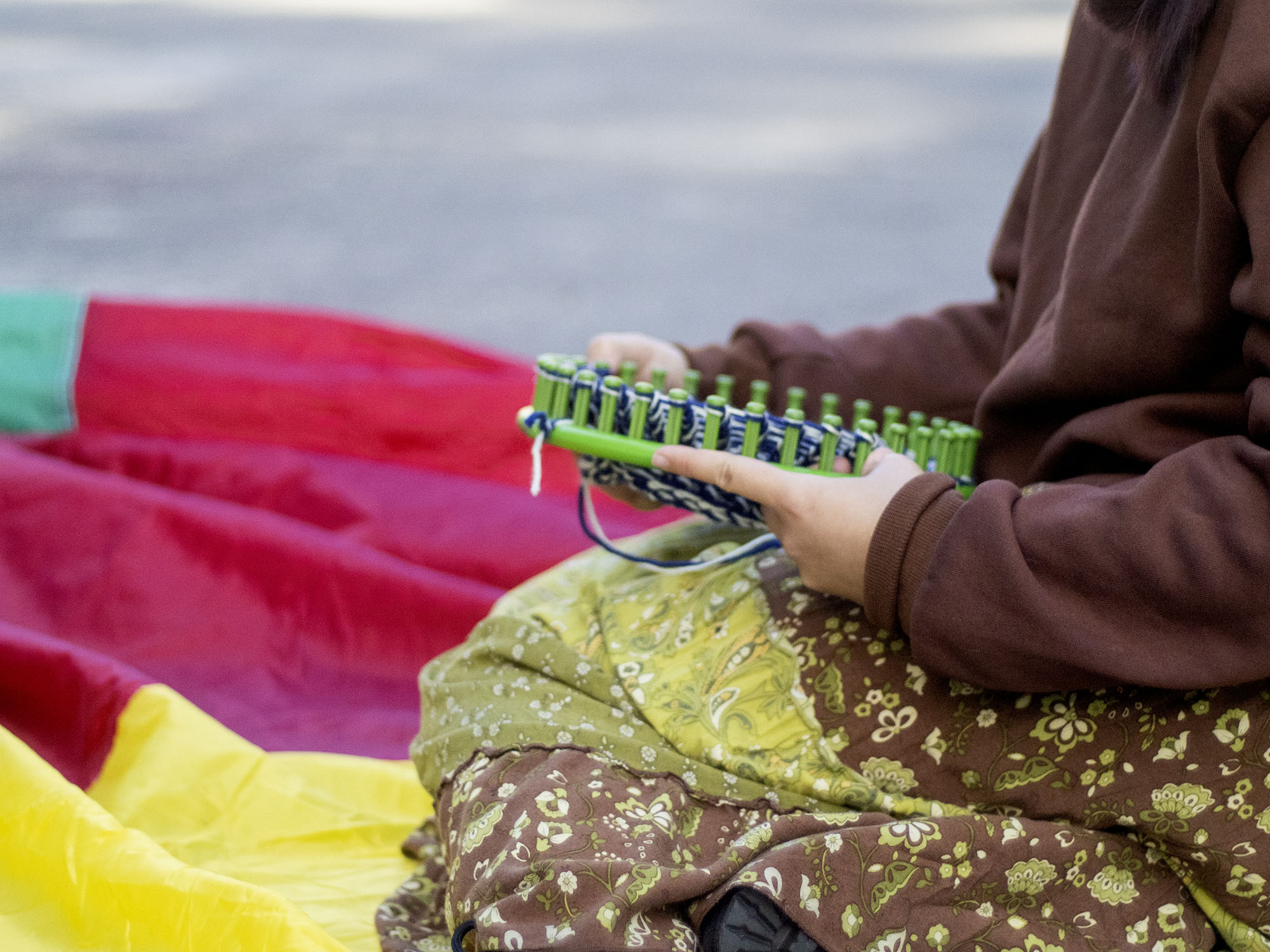
    We spoke to Melea Smith, the YES program coordinator, about the Potowot volunteer gardening program as well as the drop-in knitting program. Both programs are part of the Volunteer Opportunity Program (VOP) and offer short-term in-person volunteering to HSU students. Access is limited in both programs but requires no previous experience. The volunteer gardening program requires a sign up for their Thursday hour and a half work. However, the knitting group is first come first serve. Knitting takes place at noon on Wednesdays and volunteers are asked to come a few minutes early to get situated.

    “What I found is that it’s a really sweet way for students who want to connect or volunteer to come together for an hour and do something that’s creative and it’s a big stress reliever,” Smith said.

    The VOP Potowot gardening project is a collaborative effort between the YES program and United Indian Health Services (UIHS). This program has helped students at HSU learn various organic gardening techniques as well as give much needed support to run the UIHS three acre garden. This semester, volunteers have helped harvest squash, pick blackberries for jam, weeded and prepped garden beds and helped maintain artichokes.

    Jude Marshall, the community nutrition manager at UIHS has said that HSU students are welcome to help with volunteer efforts, while gaining practical experience in the garden.

    “When they come in they’re going to get hands-on education on whatever’s needed at the garden,” Marshall said. “Each week it’s something different.”

    Jasmine Rafferty, a transfer student to the social work program, has been attending the gardening program since this semester’s start. Rafferty has found a great community within the gardening volunteer program and the YES House.

    “I’m honored and grateful to be participating in the program because it’s addressing the needs of our community and students alike so it just brings everybody together,” Rafferty said.

    The drop-in knitting program is currently led by student leader Bran Hoyt, an art studio and art education major. Hoyt has been volunteering with YES since spring of 2019 after joining one of YES’s semester-long volunteer programs following their transfer to HSU.

    “YES has kind of really been the heart of my HSU experience,” Hoyt said. “It has connected me with other leaders on campus and helped build my own leadership skills.”

    Student leadership is a feature of the YES House and empowers students to find leadership roles based around their interests or major.

    “Within YES there’s a really beautiful structure of student leadership,” Smith said. “Volunteers fuel the program, program directors help lead those volunteer programs, and then the program consultants help mentor and support student leaders as they learn how to lead their program and other parts of their internship.”

    The drop-in knitting program will meet weekly until November 17 with a volunteer limit of 10 people. The Potowot gardening project will end three weeks earlier on October 28 and is limited to 15 student volunteers each session.

    Amanda Ramirez-Sebree was a part of the YES program during her time at HSU from 2014 to 2018 and even held the position of governing body co-chair within the program. Ramirez-Sebree credits her time with YES as the inspiration to her current career as a school teacher.

    “You get to build relations and get connections with those around you,” Ramirez-Sebree said. “You get to give back to a community that is serving you.”

    YES currently has plans for more in-person volunteer opportunities next semester but is still working on the dates and programs that will be offered.

  • Onward and Upward

    Project Rebound was born as a way to help offer new opportunities to the formerly incarcerated. The project gives students tools to succeed outside the prison system, offering help with admission, finding homes and jobs, financial aid assistance, help with legal services and much more. In essence, the project helps students find community on campus and acclimate to life outside the criminal justice system. These efforts help redirect the school to prison pipeline to an education centered mechanism that inspires students to thrive and further their educational pursuits.

    For Tony Wallin, HSU graduate and Project Rebound program coordinator at HSU, the program is more than just an association.

    “Now we have a program, really a family, a support system, a network where all the staff members are formerly incarcerated, as well as students,” Wallin said.

    Project Rebound has been a feature of the CSU system for over 50 years. However, Humboldt State joined the consortium, with major help from students, in 2020. Since its inception at Humboldt State, the program has provided resources for the formerly incarcerated as well as made efforts to educate faculty and other students.

    HSU’s Project Rebound has sponsored events via Zoom and held workshops for full campus education about what it means to be formerly incarcerated, as well as how flawed the prison system really is. Former topics included liberating women in prison, COVID-19 in prisons and most recently, a panel with Dr. Xuan Santos and Martin Leyva entitled, “We have nothing to lose but our chains- the art and culture of being OGs, Opportunity Givers.”

    This semester, the project has expanded its efforts and implemented a workshop with children currently incarcerated at juvenile hall. This program is designed for incarcerated youth to connect with college students that understand what they are going through. The ten week program just entered its third week and things are going well.

    Jeremy Tietz, current HSU student and Outreach Specialist for Project Rebound, participates in the youth program. He said that kids in the program were somewhat hesitant, but as they learned what Project Rebound was about, were thankful for their efforts.

    “They thought we were just going to be another group of of white, square guys coming in and teaching some lame-ass class,” Tietz said. “Almost all of them came up to all of us and thanked us for showing them respect.”

    For students of all ages, these outreach programs can be vital tools for success. This is why Project Rebound at HSU has been so welcomed and important. For many formerly incarcerated people, education is the mechanism and platform for victory.

    In the recent Zoom with Dr. Xuan Santos, Executive Director for Project Rebound San Marcos, Dr. Santos reiterates the message of education. Interspersed with stories of his past and the problems he encountered, the ultimate message was get educated and support people getting educated.

    “The ultimate goal is to destroy those chains,” Santos said. “Nobody deserves to feel like we have hopelessness in this world, we should be a community of hope.”

  • All aboard the HSU express

    HSU now offers a free shopping shuttle for students. All you need is your student ID number, shopping destination, and a release of liability and you are set to ride. This free service, provided by HSU’s Student Life Center, runs every first and third Saturday from 10am to 5pm with potential to expand based on student feedback. Students are picked up from The J or College Creek Marketplace and can ride to Target, Old Town Eureka, the Bayshore Mall, Winco, or Henderson Center. This service allows students to explore the greater Humboldt area while reducing their carbon footprint.

    Molly Kresl, Student Life Coordinator at the Office of Student Life, has helped spearhead this program and hopes the shuttle service will help students meet their shopping needs.

    “It’s our way of trying to help students explore new areas outside of Arcata proper and see all that Humboldt County has to offer, while also offering more accessible shopping for our students,” Kresl said. “Also sustainably, we’re encouraging our students to not bring cars up here in part because we don’t have a ton of parking but also because there’s other ways to get around.”

    The student shopping service is actually a relaunch from an idea that spawned just before COVID-19 hit the brakes on much of student life in early 2020. The shuttle ran just once before COVID restrictions stifled the program’s efforts. Presently, as pandemic restrictions loosen, the shuttle is running, employs student drivers, and is helping rebuild our student community.

    As mandated by the CSU system, students must have vaccination information or a medical exemption in order to ride. When getting on board, students must sign a release of liability, which includes a wellness check, to make sure they are free of COVID-19 symptoms. The six foot social distancing guideline has been lifted for campus, as long as people are masked. The shuttle provides masks, hand sanitizers and wipes for students that need a ride.

    For Kresl, the shuttle is a way to support and provide resources for students. Students can also request services through the Student Life Center if they see an unmet campus need.

    “The only way we are able to make change is by knowing what change wants to be made.” Kresl said.

    Sophia Bernardino, a senior from SoCal, rode the shuttle and was pleased with the opportunity.

    “I don’t drive and using the shuttle service was very helpful,” Bernardino said. Bernardino went on to say she hopes the shuttle expands its services so other students can utilize the program.

    Chase Markham, residential advisor for Cypress dorms and Student Affairs Vice President also tried the shuttle service on its inaugural run. For Markham, this service is practical and helpful for his success.

    “I don’t have a vehicle so I’m either hoofin’ it or I’m on public transportation, and this shuttle program for students is absolutely fabulous,” Markham said.

    Although there are other affordable transportation opportunities such as the student bus pass, the student shopping shuttle is helpful because it’s only for students.

    “It gives us a great avenue to get out there and get the stuff that we need without having to go through more hassle or risk to COVID exposure,” Markham said.

  • Propagating In Place

    Let’s be honest, who here has never killed a plant? Maybe you overwatered it or maybe you’re one of those people who walk by your thirst craved, desiccating plant with a glass of water and think, “hmm…. wonder what I should do.” Maybe you even did your research and talked to your friends, and still, your plant croaked.

    Whatever your affliction may be, you’re not alone. We’ve all killed a plant. Seems to be the ones you love the most are the most susceptible to an untimely death. I attribute this to over-care. I, for one, tend to put most of my attention to my most loved plants. This somewhat obsessive attention seems to fuel their tendency to die. I’ve found that in doubt, err on the side of neglect. Container plants do not require as much water as those planted in the ground. Of course, this all depends on temperature, placement and variety of plant. One type of plant that seems to be especially evasive are succulents. Something about these drought-tolerant plants just makes people want to water them, causing them to become over-saturated and die.

    If you fear your succulent is on the verge of dying, do not, I REPEAT, do NOT throw it out and give up. Succulents are very easy to propagate and require very little care. These geometric beauties come in all forms, shapes, and sizes and are native to almost every continent. From the high desert to cool, wet shores these appealing plants are amazing additions to a plant collection, easy on the eyes and a lot of fun to grow. Just have patience, everything takes time.

    You can propagate a succulent in many ways. You can pluck leaves and propagate from a single leaf, take a pup – a baby rosette that has grown from the mother plant – and if you’ve found that you did, in fact, overwater it, you can break your plant from its original root mass and plant it in dry dirt to revitalize it. This last method can take more time for your plant to resituate itself, but it still works.

    The propagation method for all of these ways is essentially the same. I have had success propagating succulents in all the aforementioned ways but found the most successful and gratifying way to propagate succulents is to pluck a pup from a healthy mother plant and start a new plant. Although the other ways still produce a healthy plant, they take more time, which is always a hard pill to swallow. Again, be patient, waiting will serve you.

    To propagate a pup from your mother plant take sharp scissors and cut the pup as close to the base of the mother plant as you can. Leave a couple inches of stem so that roots can grow from the stem area. Once you have separated your pup, place it into some well draining soil and let it sit completely dry for a while. The trick for propagating succulents is to keep the soil completely dry. You will drown developing roots if you water your new cutting. Depending on temperature, wait at least a week to water your succulent, probably two. When you finally decide your plant needs water, be sparing. These plants are very resilient and will grow faster if their roots are not saturated.

    Lastly, and not to harp on this, but be patient! Growth takes time. Your plant won’t grow any faster if you obsess over it. Happy succulenting!

  • Cleaning Up Our Act

    Cleaning Up Our Act

    California’s Coastal Clean Up Month, formerly Clean Up Day, is upon us. This beloved California tradition is dedicated to cleaning up our cities and streets, as well as focusing our attention on one of our prized ecological areas, the beach.

    The California Coastal Commission (CCC), established in 1972 and made permanent in the California Coastal Act of 1976, is responsible for, “the biggest, single day volunteer event on the planet” according to the Guinness Book of World Records. This momentous day has evolved from a single day to a month-long volunteer extravaganza with 74,000 volunteers collecting nearly a million pounds of garbage from our waterways in 2019. As the movement has grown, efforts have turned inland where the majority of waste originates.

    Data collection has been a central force in the decades of trash clean ups. Throughout the years, the CCC has found that up to 85% of trash collected on beaches originates on land.

    Eben Schwartz is the Marine Debris Program Manager and Outreach Manager for the CCC.

    “If the trash is coming from land then we should try to stop it where it starts, so we started spreading our cleanups inland. We’re now at the point where we’re cleaning just about everywhere in California,” Schwartz said.

    Through data collection, the CCC has found that the worst polluter is cigarette butts, an incredibly toxic form of plastic pollution. Don’t be fooled, although the material that makes up cigarette butts is known as cellulose acetate, this is not a plant based product. Cellulose acetate is a plastic, primarily a mixture of rayon and paper. Cigarette butts make up the largest category of collected items next to food and beverage containers.

    “When you look at categories of debris that’s out there, by far the largest category is food and beverage packaging. Basically you take a convenience store and shake it upside down, and anything that falls out is what we’re finding in our environment,” Schwartz said.

    Schwartz is primarily responsible for public education to get people involved in coastal stewardship, mostly through large volunteer events like Coastal Clean Up Day. Unfortunately, the pandemic has taken its toll. Data, although less robust than past years, shows that pandemic trash and single use items such as plastic bags have impacted our beaches and waterways. Since the 2014 plastic bag ban, plastic bags slowly receded down on the list of the top trash items. During the pandemic, when the ban was lifted for just two short months, bags jumped right back to the sixth position on the top ten list.

    “It really did show what an impact the pandemic was having on our environment,” Schwartz said. “The other interesting tidbit was that PPE – masks and gloves, but mostly masks – came in as the twelfth most picked up item in 2020, which is shockingly high for an item that has just recently been introduced to our society.”

    Along with the pandemic’s uptick in production and discard of plastic products, Schwartz points out that producers of these products need to take more responsibility for the trash they introduce to the public.

    Locally, the North Coast Environmental Center (NEC) also points to producers to take more responsibility for the garbage they produce.

    Ivy Munnerlyn, the Coastal Programs Coordinator for NEC said, “Preventing [trash] from being created in the first place is a lot more effective in the long run.”

    NEC has worked with the city of Arcata for their single use plastic ban. Statewide, groups have been working to create extended producer responsibility bans which would tax those actually responsible for creating the waste. Caroline Griffith is co-executive director and EcoNews journalist for NEC, these extended producer responsibility acts raise the money to implement local and actual recycling programs instead of shipping plastic waste to developing nations. These bans also incentivize consumers and producers alike to utilize other products.

    Statewide beach clean ups started in 1985, but the city of Arcata predated statewide efforts by over ten years with the Arcata Recycling Center, boasted as the birthplace of beach clean ups. This noble effort, unfortunately, was diverted as the nature of recycling fell to a capitalistic venture.

    “Slowly, recycling became an industry. That really shifted how things worked,” Griffith said. “They wanted to recover materials versus actually making things into new materials. There’s that financial incentive that really changed it.”

    Although the history and current reality of plastic is a highly complex issue, there are ways for beach lovers and climate activists alike to get involved this month. Local cleanups are scheduled every weekend in September, and people can sign up through the NEC website, www.yournec.org, to attend cleanups in their neighborhoods. September is a wonderful month to get involved but, as Griffith puts it, cleanups should be much more common practice.

    “We should be doing this all the time,” Griffith said. “It’s fun to have one big event where we all do it together, but really making a habit of it and doing it regularly is the most effective. Then you actually do see those waste patterns in your neighborhood – you know where that waste is coming from.”

    Armed with information, you can go to local businesses responsible for making waste and let them know what the problem is. Hopefully, these businesses will be responsive and work with you to make changes.