The Lumberjack


Students Serving The Cal Poly Humboldt Campus and Community Since 1929

Tag: 2020 presidential election

  • How to cope with post election anxiety

    The election may be over but the emotional aftereffects can be difficult to manage

    In addition to handling mental health post election, students have reached the middle of the semester and are working to finish strong after adjusting to the new virtual learning conduction of class.

    Resources are available for all students during these stressful times. According to the Humboldt State University’s website, “Counseling and Psychological Services (CAPS) promotes the well being of students through outreach, consultation, educational and counseling services.”

    Students are able to utilize CAPS from traditional one-on-one counseling support, group therapy, Single Session Therapy, “Web-In Wednesdays,” a “walk-in” service for students, and on-call services from 9 a.m.-4 p.m. Mon-Fri.

    The university also holds formalized events in the virtual quad for students to attend and discuss their mental health with professionals.

    On Nov. 4, a student dialogue event was hosted to discuss the election.

    The event was led by professional therapists and counselors of HSU. It was a safe environment and a fully confidential meeting where students were able to talk about their recent feelings surrounding the presidential election, the pandemic or anything else on their mind.

    One of the hosts of the meeting, Cedric Aaron, is a multicultural specialist and staff psychotherapist at CAPS. His advice for students is to not ignore or minimize any feelings.

    “If we distract ourselves to the point of ignoring them, then our wellness tank will overflow and spill out onto different areas of our lives,” Aaron said.

    He also suggests students lean on their peers for emotional support even if it’s as simple as a text message or a written letter.

    The election has not only affected students but many individuals in our community. Aaron, as a Black man and candidate in a local election in Humboldt County, has had to discover ways to manage his own stress and anxiety. His fear for our community intensified these past few months of elections.

    “Maintaining a strong connection and being in space within my Black/BIPOC community was key in getting me through these stressful months,” Aaron said.

    Paula Nedelcoff is a staff psychotherapist and community outreach coordinator at CAPS. She suggests movement is a good way to relieve stress. Whether it’s walking or talking out our feelings, movement is what works best for her.

    “The faculty and staff at HSU are here for the students, we at CAPS want to support your needs,” Nedelcoff said.

    For more information about confidential support, contact CAPS at (707) 826-3236, Humboldt County Mental Health at (707) 268-2900 or the 24-Hour County Crisis Line (707) 445-7715.
  • Getting stuck on the Trump train

    Getting stuck on the Trump train

    Writer Anthony Aragon details his experience of accidentally joining a pro-Trump car rally.

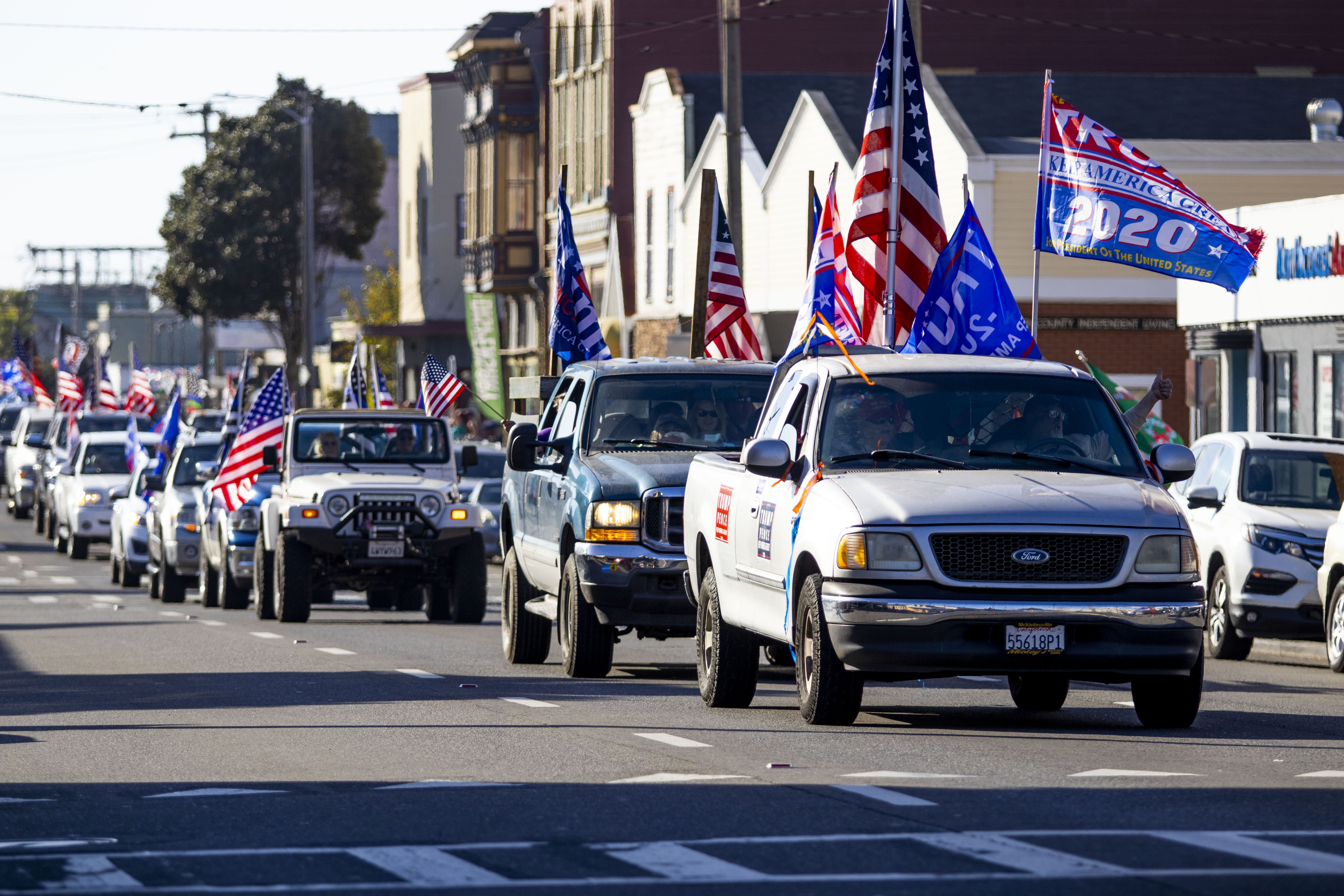
    It all started on Sun., Nov. 1, when hundreds took to the streets of Humboldt County to embark on a political car rally to voice adamant support for current President Donald Trump. The organized caravan of Trump loyalists began the trek in Fortuna around 2 p.m., ending in McKinleyville later that afternoon.

    What came as no I surprise to me with a track record of bad luck, I got stuck in the middle of this parade while out in Eureka doing my normal, weekend errands.

    Once I merged from the corner of Sixth street onto Broadway, I knew I was in trouble.

    Surrounding me was a fleet of lifted trucks and muscle cars boasting banners and American flags flooding the majority of the street. The sounds of revved truck engines and chants of USA from vehicles grew louder as we traveled north towards Arcata.

    As we approached the Eureka courthouse I could see protestors lining the sidewalks on both sides of the street. The small restless crowds chanted in disapproval of the arrival of the conservative coalition. Adversaries were clearly at odds with one another, each party growing more aggressive in verbal taunts. At one point while waiting for the street light to turn green I looked to the individuals on the left side of the road and gave a small smile of approval against the other vehicles stuck in traffic. Evidently, this smirk was mistaken as a sign of disrespect and two female protestors began to shout and throw middle fingers at me while I sat in dismay.

    After what seemed like an eternity the light finally turned green. Trying my best to maneuver past the vehicles participating in the rally, I couldn’t help but begin to read the flags plastered with Trump propaganda. Amongst the various banners that waved freely through Highway 101, one struck me in particular:

    “Trump 2020 NO MORE BULLSHIT.”

    The irony of watching the divide between local, sprung a question into my mind that I’m still trying to come to terms with: how did we become this divided as a nation?

    In the last four years since Trump’s administration has taken office, our culture has become separated in which respecting political beliefs that differ from your own is increasingly more difficult. Polarizing topics such as immigration reform, the constant fight for equality amongst BIPOC, climate change and dealing with the repercussions of COVID-19 have added fuel to the already volatile fire that is in America.

    As time grew closer to election day, the uncertainty of what direction the United States would be headed towards became nerve racking. Attending college during a pandemic in a rural area that lacks diversity has been shrouded in lingering doubts. Paying full-priced tuition for an education that feels subpar, while studying an industry that has been bastardized by Donald Trump is hard to reconcile with. The feelings of frivolity I’ve felt as a college student in such an uncertain era have been amplified by the fear of what is to come in Humboldt County since Trump has lost the election.

    Four days after Tuesday’s, Nov. 3, election it has been officially announced democrat candidate, Joseph Robinette Biden Jr., has won the presidential race of 2020. Though the future seems hopeful, the divide in our nation doesn’t dissipate when Biden takes his eventual oath in office.

    On Nov. 7, Biden held a press conference in Wilmington, Delaware to announce his victory. Within minutes of his speech, it felt incredibly refreshing to not be subjected to coded language and devised rhetoric that became the norm in past years.

  • Four more years of fear

    News Editor Carlos Holguin explains why he is worried about the next four years.

    I remember sitting with my Dad on Nov. 3, 2016, and silently watching the election results come in.

    It was his first election, having just become a United States citizen after years of being a permanent resident. He was always on the outside looking in, encouraging everyone in the house to vote every primary and general election.

    The happiness I saw earlier in the day when he cast his first ballot was drained away with each new state’s results.

    After Michigan’s results were announced I decided to call it, having to go to bed with the knowledge that the country let my father down. He stayed up until the last states were called, going to bed with the belief that the country he loved so much did not love him back.

    For the next four years, that haunting realization would rear its head on more and more frequent occasions. Red hats and flags striking fear, hate speech spray painted on the walls and yelled from passing trucks. Fourth of July celebrations were spent inside in fear of violence.

    With those grim reminders came the terrifying conclusion that nothing was going to change. Every few months a new scandal would come and go, ones that would end ordinary presidencies, and I would become more scared of the responses from his followers locally and nationally.

    No matter who wins the presidency in this current election, I, along with many other Latinx and BIPOC around the country, am still going to be scared. Scared of the possible violence that may come with whatever the results may be.

    Since the announcement of his campaign, President Trump has had an uncanny way of bringing hate and vitriol to the surface. For some it was a wake up call to what America really was, but for the rest of us it was nothing new. The quiet parts were just being spoken out loud.

    It may be an uncomfortable truth for some, but one that many in my place have faced. The United States will also be a land knee deep in the blood of a racist history that still stirs trouble into the modern day.

    A history of scapegoating Latinx people with things like Operation Wetback, where over a million Latinx people were forcibly removed in the largest mass deportations in US history, and its everlasting effects on the immigration system that cages asylum seekers.

    It is reflected in the of killing Indigenous tribes under the guise of Manifest Destiny and the unjust killing of Black people at the hands of police brutality.

    That’s not something that can be put back under the floorboards of this nation.

    Hate that strong never fades away. It won’t under a Biden presidency, it certainly won’t under a Trump presidency. It will continue to fester, divide and instill fear into the marginalized masses across the nation.

    I remember one of the first nights after moving to Arcata and going to the store late at night to buy supplies for a bonfire. The cashier, who was so friendly to my friend turned to me, the warmth from his face fading and said, “what do you want, boy?”

    A few months back a stranger driving by called me a wetback as I stood on the corner waiting to cross the street.

    Both times I continued along as much I could without letting it show, much like I did when I heard those same words and comments at age 8, 15, 18 and every year since.

    It’s the same words that I expect to hear after Nov. 3, as the country once again reveals its true colors. Every year of my life the United States has refused to face the consequences of the past to create a future where I, and others in my position, won’t be scared every four years.

  • HSU creates election coping resources for students

    Post election assistance for those that feel anxious about the future of the country

    From educational campaigns across social media to election dialogues, Humboldt State University provides students with resources despite the difficulty of being virtual. Check It! and Associated Students are working to give students the counseling and services they need.

    Students can also learn ways to keep themselves and others safe while taking part in community action. Faculty from Native American studies, history and environmental law will host a panel to discuss the history of elections, social change movements and impacts.

    “Our purpose and our responsibility is here to educate students about the importance of voting and why to vote, and then providing them the space if and when they need to or want to decompress,” said Kresl.

    Dean of Students Eboni Turnbow sent an email to students Oct. 30 to remind and students of HSU’s resources for the election.

    “We encourage our students to exercise their First Amendment rights in a safe and healthy way,” Turnbow said in an email. “For some this is on social media, others through dialogue with family and friends, and others through community action. Despite your preferred outlet, we want to help you be prepared.”

    Two election follow ups by Counseling and Psych Services, Associated Students, and the Dean of Students Office will meet on Nov. 4 at 5 p.m. and Nov. 12 at noon to discuss anxiety and fear following the election.

    El Centro, the LatinX center will discuss the elections this Fri., Nov. 6 at 3 p.m. as well.

    HSU also created the HSU Votes website to give students resources and information regarding voting and to give students resources while social distancing.

    “No matter which way this goes, there is going to be stress and anxiety and anger on both and on either side, not exclusively because of the outcome but because of the whole process,” said HSU Student Life Coordinator Molly Kresl.

    CAPS has drop-in hours on Wednesday and a crisis hotline for students who are experiencing any emotions post election, or if they just need to talk.

    Additionally, a virtual tool-kit has been created for students that provides information about self care, difficult dialogues, election education, resources and how to navigate emotions and stress during and after elections.

    “At the core of it is for students to know that we see them, we recognize them, and we value them,” said Kresl.

    HSU has recommended, not mandated, faculty to limit assignments if they can, check in with students and provide resources within their class. HSU recommended groups and organizations exercise activities this week to provide support to students.

    “Remember, feeling overwhelmed is human and natural, so using these vital resources is important to self-care,” Turnbow said in the email.

    Despite the election results, students are reminded that their vote matters, and HSU will be ready to support them in any way they feel and react.

    Wrenna Williams is a forestry and restoration major who is taking a gap year due to COVID-19. Williams voted and expressed the anxiety that followed, but won’t use HSU’s services due to it being strictly available for students currently enrolled.

    “Especially if I was living on campus still, I would totally go use those services. They’re great,” said Williams.

    Carlos Ochoa-Silvas, a freshman at HSU, mailed in his voting ballots a few weeks ago and expressed concern toward the election, the aftermath and riots. He said he would think about reaching out to HSU’s services if he felt too anxious.

    “I definitely think that it’s important for people who are more sensitive about the topic or people who want to express how they feel with the community and see other people’s views,” Ochoa-Silvas said.

  • Dismal democracy

    Dismal democracy

    The Lumberjack editorial staff comments on America’s flawed electoral system

    As the world watches the United States 2020 election results, waiting for our pseudodemocratic process to churn out a new president, historically unprecedented voting methods misrepresents the reported Election Day results.

    A common misconception surrounding the democratic voting process is that a casted ballot directly counts toward and impacts the presidential election. However, the reality is that every individual’s vote doesn’t hold the same amount of power or equitable value.

    The power and value behind your vote is entirely dependent on where you live. Because the electoral college ultimately chooses the president, not the people, the real value of your vote is determined by the ratio of individual votes to electoral votes in each state. 

    For example, California has a population of about 39.5 million. We have 55 electoral votes, one for each of our congressional representatives. That works out to about 718,000 people per electoral vote. Wyoming has a population of about 579,000. They have three electoral votes. Only one from their representative in the house, but two from their representatives in the senate like every other state. That works out to about 193,000 people per electoral vote. If you’re from California, a Wyoming presidential vote is worth 3.7 times the amount of yours. The story is the same for many of the less populated states.

    The voting process falsely validates casted ballots and ultimately undermines votes through the electoral college’s overriding casted vote. Ultimately, you’re not directly voting for a presidential candidate, you’re informing the decision of the electors who do. 

    Within battleground states, Democrats are sending in more mail-in ballots than their Republican counterparts. The New York Times estimates that 64 million mail in ballots were cast in this election, nearly three times the amount cast in the 2016 election. While COVID-19 played a significant factor in the disparity, pushes came from Democratic candidates across the nation to gain momentum moving into Election Day.

    Due to mail-in ballots accounting anywhere from 20-50 percent of the votes in different states, we may not know actual election results until days after election night. States, such as North Carolina, are planning to accept ballots postmarked on election night until Nov. 12. Some states have relatively small margins of difference, which could result in swing states prolonging the definitive results of the election.

    Additionally, the United States leaves self-declared territories, for example Guam and the Dominican Republic, neglected in the political process and without influence in the choice of US president. The same could be said for the millions of American citizens who have been deprived of their right to vote because of the criminal justice system. This imbalance significantly alters the demographic of voting participants, therefore not valuing or accounting for every community’s perspective. 

    This disparity leads to presidents with less votes defeating their opponents, or candidates never getting a clear majority. 

    While the Lumberjack staff believes the US’s democratic process is deceitful in terms of transparency, we do not agree or echo any of Trump’s sentiments that discredit voting. Instead, we believe his spewing of misinformation contributes to the detriment of the country’s Democratic Republic status. 

    The US glamorizes its democratic facade as legitimate, straight forward and for the people, however, systemic strategies have displaced and deprived American citizens of their Constitutional right to vote. Between systemic imbalance of the electoral college, active voter suppression and unequal voter representation, our democracy is rooted in unequal representation. 

  • Students speak honestly on voting in 2020 the elections

    Students speak honestly on voting in 2020 the elections

    Students look toward an uncertain future while factoring in the past four years.

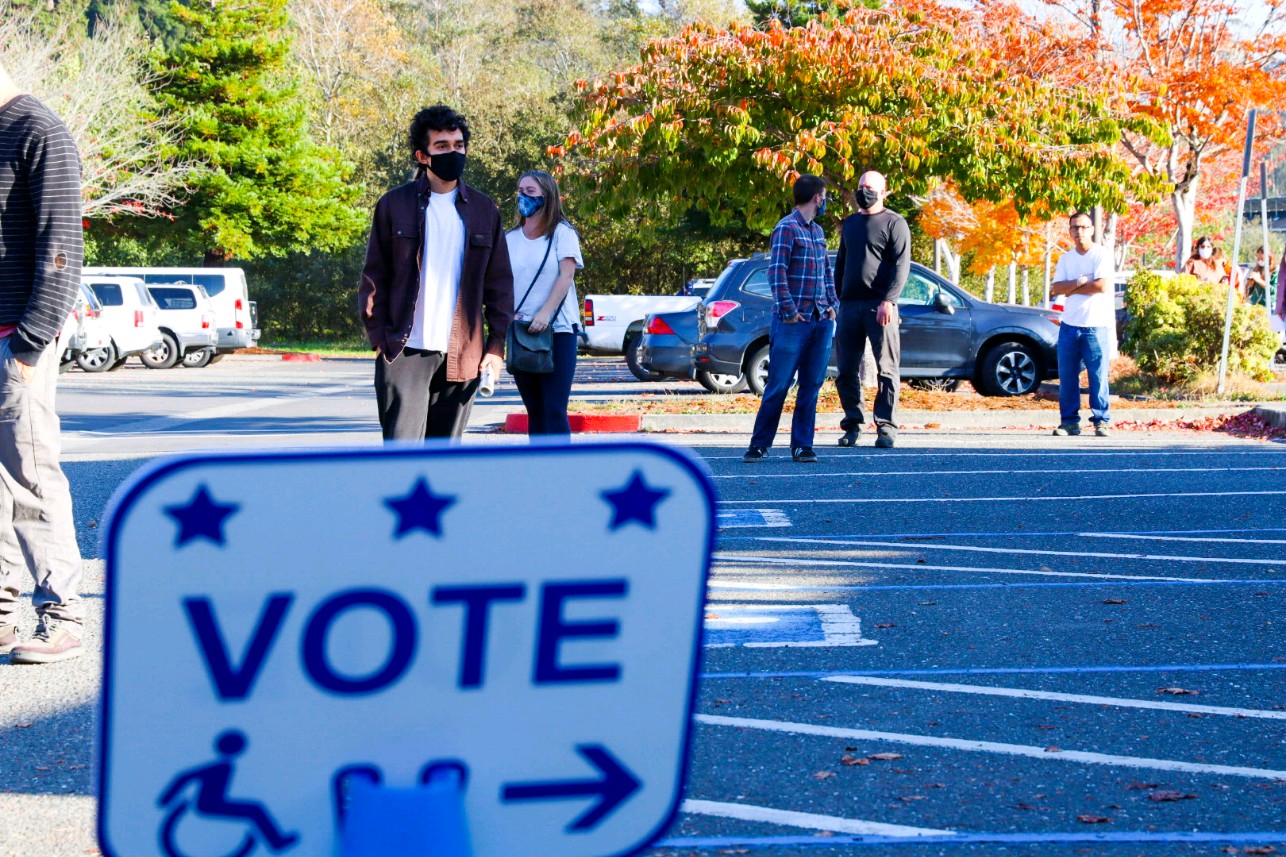
    Students at Humboldt State University took the steps to cast their ballots in the 2020 presidential election.

    For some, like Alejandra Sanchez, it was the first election she could vote in. Sanchez, a criminology major, was not optimistic about what a second term for President Trump would mean.

    “Being a woman and being brown, four more years…four more years would not be the best for me,” Sanchez said.

    Sanchez felt especially disappointed in the Democratic party candidates. She believed the Democratic party could have done better.

    “In my eyes, we were settling for Biden,” Sanchez said. “It’s just like horrible and slightly less horrible, either way you vote it’s not that great. I’m sure there will be little differences that do help.”

    The 2020 election painted Biden as a candidate voters settled for, or defensively voted for in strong dissent of a reelection.

    Maia Nguyen, a wildlife major, believed Biden is not the strongest or most ideal Democratic party candidate. In comparison to Trump, Biden offers more promising initiatives like environmental advocacy.

    “We definitely settled for him as democrats, but I would feel better with him as a president,” said Nguyen. “Someone who takes clean energy and the environment more seriously than Trump does.”

    While Nguyen was not old enough to vote in 2016, she made sure to cast her vote early for the 2020 election. Nguyen emphasized how the past presidential term has been difficult to witness.

    “As a wildlife major, it meant a lot of disappointment overall,” Nguyen said. “You can see terrible things happening and people not listening to scientists. Just a disappointment overall, I would say.”

    On the subject of the 2020 election, Nguyen looked at how future presidents would affect her fields of study. She mentioned the discrediting effects a less science focused presidency could bring.

    “Honestly, I’ve been thinking about that a lot, and I would say that it would be harder in my field,” said Nguyen. “Our funding comes from government funding so if we had pushback, my work would be affected, and a lot of pushback for us because people wouldn’t want to work with scientists.”

    Tayler Reedy, a child development major, voted in 2016 but felt a personal need to vote in the 2020 election and defend communities Trump harms.

    “Well for me personally, with everything that Trump has done with immigration and everything he has said, as someone who is a bisexual woman and person of color it’s a little scary to see how he treated everyone in those categories,” Reedy said.

    Reedy echoed the overarching assumption that a vote for Biden was simply a defensive vote against a Trump reelection.

    “I feel like Biden is more accepting of people like that. He’s not my favorite,” Reedy said. “I was more about Elizabeth Warren at the time, but I feel like he’ll do a better job than Trump.”

    California polls close at 8 p.m., with the state historically leaning Democratic. While initial election results may be called on Nov. 3, the New York Times states that approximately nine of the 50 states will have final results in by noon the day after the election.