The Lumberjack


Students Serving The Cal Poly Humboldt Campus and Community Since 1929

Tag: administration

  • Administration calls professor’s accusations into question

    by Liam Gwynn

    Dr. Christopher Aberson came forward to the Lumberjack with a story about how he was symptomatic and asked to teach online but was denied the opportunity and asked to teach in person instead. Provost Jenn Capps responded to these accusations after Aberson’s story was released. Capps claims that a majority of the time teachers are allowed to change modality, however, they have to meet certain requirements.

    According to Capps, a professor seeking a modality change has to be verifiably ill and then has to seek approval from their department head to change modality. In cases like Aberson’s where the department head is the one asking, they have to seek approval from Capps directly. Capps couldn’t speak on Aberson’s case specifically due to confidentiality reasons, yet she was able to speak on similar hypothetical situations.

    “I’d say eighty percent of the time a request for a change is being granted, when it’s not being granted, it’s because perhaps a person is operating off of being afraid or they are like ‘something could happen therefore I don’t want to teach in person I’m just going to shift my course online and I’ll let you know when I wanna come back,’” Capps said. “Well, that’s not somebody who is sick and that’s not the agreement that was made with the students.”

    Aberson never tested positive for COVID-19 but he did claim he was symptomatic. In times where COVID-19 takes up the majority of the conversation, people are still getting sick with other illnesses and it can be confusing when symptoms of one illness overlap with COVID-19 symptoms. According to Capps and school policy, just coming in contact with COVID-19 is not enough to warrant staying home or teaching online.

    “For students, faculty, and staff our current policy is that if you are vaccinated and you come into contact with somebody with COVID and you’re masked and vaccinated, that doesn’t mean that anything needs to change,” said Capps, continuing. “What you need to do is continue about your work and life and monitor and keep doing wellness checks, and if you start to experience symptoms then you get tested and isolate.”

    Strangely enough, that is what Aberson was trying to do according to his accounts of the event. He came into contact with COVID-19, started feeling symptoms, and then requested a modality change. Aberson was under the impression that his request was possibly denied due to him being outspoken against different school policies. When asked about whether this was a genuine possibility, Capps firmly denied any bias in the deciding process.

    “Oh of course not, that would be all kinds of wrong,” Capps said. “It’s just really centering on a couple of things, making sure the student gets the instructional experience that they desired and making sure that faculty and staff and student health is protected.”

  • Retention Rate on the Rise at HSU

    Retention Rate on the Rise at HSU

    More Humboldt State students are electing to stick around, but there’s still work to be done

    Corrections: a previous version of this story incorrectly quoted Casey Park as saying “We’re absent as an institution.” The quote should have said “We were absent as an institution.” The story also wrongly included “interim” in Jason Meriwether’s title.

    Humboldt State revealed more students were staying on its campus rather than taking off for other schools or ventures in a Jan. 31 press release.

    Tracy Smith, the director of the HSU Retention through Academic Mentoring Program, said she was proud of the work she and her peer mentors have accomplished over the years.

    “I think Humboldt sincerely believes that whether students decide to stay at Humboldt or not is really a product of our entire campus community and off-campus community,” Smith said. “RAMP really is designed to support incoming students and them finding a place where they feel a connection.”

    “85 percent of new first-year students said if they were given the option to choose a college again, they ‘probably’ or ‘definitely’ would attend HSU again.”

    National Survey of Student Engagement, spring 2019

    A study done in conjunction with HSU by the National Survey of Student Engagement in spring 2019 provided some data on student perceptions of HSU.

    “85 percent of new first-year students said if they were given the option to choose a college again, they ‘probably’ or ‘definitely’ would attend HSU again,” the study said. “And 89 percent of first-year students said their overall experience was ‘good’ or ‘excellent’, compared to an overall CSU system rate of 84 percent.”

    Jason Meriwether, Ph.D., vice president for Enrollment Management, said a few things have contributed to the increased retention rates, including Enrollment Management staff and related faculty streamlining the registration process and connecting students with support services—all in an attempt to create a sense of belonging for students.

    “It’s the experience but it’s also the listening and packaging it into one,” Meriwether said. “So, all of that is about looking at the students and giving them what they’re asking for first, and using the resources that we have to create an experience for the student.”

    Meriwether said his staff’s hard work has paid off by meeting student needs.

    “We have to be aligned with what students are expressing that they need and putting ourselves in a position to support students,” Meriwether said.

    “There wasn’t attention given to the most affected and traumatized students. And those are the students who went back to where we recruit from and said ‘Humboldt is not a place for me,’ and ‘Humboldt is not a place for you.’”

    Casey Park, HSU alumna

    He noted a growing trend at HSU of transfer students outnumbering first-time freshmen. HSU has needed to move around campus resources to accommodate the influx of transfer students.

    “It’s about being nimble and seeing where the student population is going and meeting those needs,” Meriwether said.

    Meriwether added that in recent months, the Student Disability Resource Center and cultural centers have received major face-lifts, which, in turn, have opened up more doors for students.

    Casey Park, an HSU alumna, was glad for the rising number of retained students, but said the campus administration’s past actions around retention shouldn’t be ignored as a new wave of measures are enacted. Park is an Associated Students coordinator, but gave her perspective only as an alumna.

    “We are still going to need to reconcile the years where we were neglectful of students,” Park said. “It’s going to take a lot of really good decisions to hold ourselves accountable for that and kind of be like, ‘We were absent as an institution.’”

    Park said the HSU administration’s inaction regarding the Josiah Lawson case and other events affected previous student perceptions of HSU.

    “There wasn’t attention given to the most affected and traumatized students,” Park said. “And those are the students who went back to where we recruit from and said ‘Humboldt is not a place for me,’ and ‘Humboldt is not a place for you.’”

  • HSU considering alternatives to PepsiCo

    HSU considering alternatives to PepsiCo

    By Andrew Butler

    PepsiCo and HSU have spent the last five years in a contractual partnership. PepsiCo pays HSU athletics $35,000 a year in scholarships, HSU gives PepsiCo 80 percent of available shelving space for its drinks, and the students are left to choose between diet or original.

    The current five year pouring rights contract ends June 30, and many around HSU’s campus would like to see HSU break away from its corporate ties with PepsiCo. The Associated Students council has taken up the fight, urging HSU administration to explore alternate partnerships with more reputable companies – preferably local ones.

    AS representative Tessa Lance has been working to rally her fellow students in support of breaking away from PepsiCo. “At first there was little interest, but since the start of this semester, students have been increasingly involved,” Lance said. “ PepsiCo has a long history of committing environmental injustice. The values HSU claims to represent, the values that students come here to uphold, have nothing in common with PepsiCo,” Lance said. Lance along with the help of other students brought their concerns to Joyce Lopes, Vice President of Administration and Finance. Lopes in turn set up a “Pepsi Task Force” to meet regularly and discuss the impact PepsiCo has on HSU.

    The Task Force included representatives from Dining, Athletics, upper Administration, and a few students, including Lance. These meetings found that administration and students have a lot of common ground, and both are in favor of a more sustainable contractual obligations.

    On Monday, April 17, the AS council held a town hall in the Nelson Forum for students and community members to voice their concerns over the PepsiCo contract. Dozens of students showed up to have their voices heard by members of the Pepsi Task Force, including Lopes and Athletic Director Tom Trepiak. Meredith Garrett, a HSU student, was the first to speak. She first recited the HSU graduation pledge found posted in large font on the wall above her. Garrett said that the reasons students came to HSU were being abandoned within the PepsiCo contract. One of the main concerns echoed again and again by students was that PepsiCo and the Athletics were in a mutually beneficial partnership that left the majority of students out. PepsiCo funds roughly eight athletic scholarships a year under the current contract. Additionally, PepsiCo gives money to athletics for one time expenditures such as new scoreboards, totalling roughly $20k a year. There are about 400 athletes at HSU, and around 200 athletes receive partial or full scholarships a year. Although PepsiCo only covers a small percentage of scholarships, losing PepsiCo’s money would only add to the deficit problem within the Athletic Department and subsequently HSU as a whole.

    Senior communications major and Lumberjack football player Jared Layel attended the meeting and expressed a sentiment in stark contrast from the general tone of the meeting. “AS never asked athletes if they wanted to see PepsiCo go,” Layel said. “Breaking ties with PepsiCo would only force HSU to again raise tuition, and it would worsen the deficit.”

    HSU cannot begin the process of exploring a new contractual agreement with a different vendor until the last 30 days of the current contract; that period begins June 1. Until that time, Tessa Lance, the AS council, and the Pepsi Task Force will continue exploring ways in which HSU might find a sustainable alternative to PepsiCo. As of now, there is no concrete plan to replace PepsiCo and the money it brings HSU.

  • Student Strategies: Office Hours

    Student Strategies: Office Hours

    By | Onaja Waki

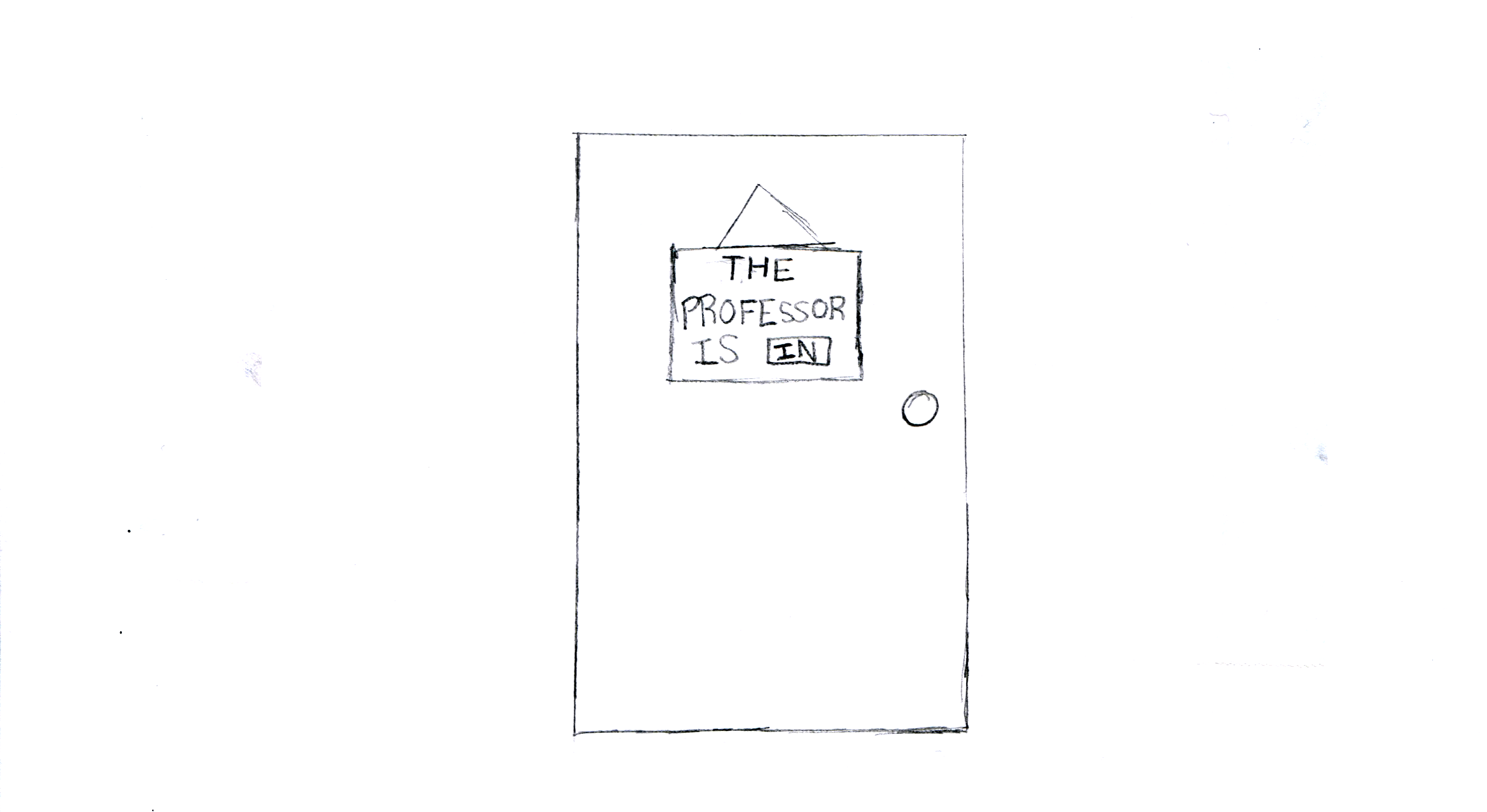
    There may be times when students need that extra one on one time with their professor for things like making up assignments and exams, discussing grades or getting clarity on homework or a project. These are the reasons professors offer their students office hours. Most professors and lecturers have the days and times on their syllabus. However, not all teachers abide by their assigned office hours which sometimes makes it a hassle for students to meet with their teacher.

    There are a few HSU professors that some students claim are hardly available during their office hours. However, when trying to get in contact with some of these professors for an interview they never responded.

    In addition to reaching out to some of the teachers who students feel aren’t always at their office hours, a lot of HSU teachers who are always at their designated office hours responded with confidence about their abidance to their listed times.

    Dan Faulk, a political science professor said that his students can always find him in Founders Hall room 118, and that he’s available even when his office hours are over.

    If you asked the teacher across the hall from me, you would discover that not only am I at my office for my office hours, but that I stay until way past my office hours, if there is a line of students outside my office door, or if students want to continue a conversation past normal office hours,” Faulk said. “My office hours are always right after class, so I am always in my classroom or at my office after class.”

    Spanish professor Anna Montoya said the most reliable way to set up a meeting with her is through phone or email, and that she is always open to working with students on times to meet. “The best way to get a hold of me is through email or phone,” Montoya said.“ I’m also open to setting up a time to meet.”

    Faulk and Montoya are some of the many professors here at HSU who abide by their office hours making it easier for students to meet with their teacher when needed. But for students who may experience the opposite with their professor, they can

    use some of these strategies students have used while on their academic journey here at Humboldt State:

    Samantha Pincus

    Major: Forestry Wildland Fire Management Major

    “I’ve found that emailing them with two different times during their office hours that I know I can meet up works and they’ll choose one,” Pincus said. “Even though it’s inconvenient to set up a meeting, it guarantees that they’ll be available.”

    College of The Redwoods Student Naiomi Leitu:

    Major: Nursing

    “I usually follow them after class and ask them to answer my questions right away,” Leitu said. “Or I email them on their personal email!”

    Yadi Cruz

    Major: Criminology and Justice Studies

    “Usually emailing them before showing up to their office hours, making an appointment with them, or asking them in person what time they’re going to be there,” Cruz said.

    Tre’von King

    Major: Business Management

    “I try emailing them ahead of time. Some teachers don’t go to their office hours because no one shows up,” King said. “If you let them know in advance then they know when and where to be.”

    Jhsiri Massey

    Major: Art Education

    “Email the shit out of them until it’s damn near annoying,” said Massey.

    Alby Alawoya

    Major: International Business

    “I’ve had that problem in the past and honestly I just called my teacher out in front of the class,” Alawoya said. “I also left a note on the door that said ‘students look up to you, and you’re example of keeping your word makes a difference.’ After that my professor sent an apology email to the entire class.”

    Treanna Brown

    Major: Criminology

    “I don’t have any strategies that could get them to show up to their office hours,” Brown said. “But I do think that they should make reasonable office hours. As students we aren’t as flexible as them. We work 9-5 jobs on top of however many units we have to take during the semester. Our campus is suppose to be the place where professors are more engaged but I don’t see that as much as I did my freshman year.”

    Cynthia Godinez

    Major: Psychology “I don’t think I’ve had that issue,” said Godinez. “All the professors I’ve had are good with meeting with students, and if they can’t make their office hours they’ll reschedule for another time. But I think a good strategy to prevent teachers from missing their office hours could be to just talk to them and suggest that they actually be there. Or maybe talk to someone that runs their department so they can figure out why that professor can’t make their office hours.”  

  • The Vote is In, Tuition Goes Up

    The Vote is In, Tuition Goes Up

    By | Maricela Wexler

    On March 22, the California State University Board of Trustees voted 11-to-8 to increase student tuition for the 2017-18 academic year by $270 for undergraduates.  There are over 100,000 more students enrolled in the CSU system today than in 1985 and concurrently funding has decreased by 2.9 percent. The state’s gradual abandonment of CSU funding commitments has pressured the Board of Trustees to find alternative financial support for institution services.

    The recent vote came as a blow to students and their families statewide who are already struggling with the costs of education.  The CSU system is a public institution that relies on state funding to provide high quality education for its students. (jump)  With diminishing state support, universities increasingly rely on students and their families to fill the void.

    An increase of $270 for the 2017-18 academic year is especially tolling for the large number of low-income students currently enrolled in the CSU system. According to a report commissioned by CSU Chancellor Timothy White, 1 in 10 CSU students today experience homelessness during their college career and one in five do not routinely have enough food. Amidst rising living costs, the state of California is investing $6,888 per student in the California State University system as opposed to the $11,607 it invested in 1985.

    The recent Board of Trustees decision strengthens pre existing barriers to higher education for current and prospective low-income students. Additionally, the quality of education students receive is compromised due to insufficient resources. As detailed in the California Faculty Association Spring 2017 report, “Equity Interrupted”, instead of providing a system designed to maximize access and quality for the benefit of the state of California, CSU’s are shrinking access to higher education because of increased tuition, and failing in its duty to support the new generation of CSU students so that they will help our state prosper in the 21st century.

    Cost of tuition is not the only thing that has changed in California over the last 30 years. According to the CFA report, the CSU had over 150,000 more students in 2015 than it had in 1985, a student body increase of 64 percent over those 30 years. In 1985, 63 percent of the CSU student body identified as white, and only 27 percent identified with another ethnic group. By 2015, this changed to 26 percent and 62 percent, respectively. CFA Associate Vice President Dr. Cecil E. Canton said in front of the State Assembly in 2016, “as the student body of the CSU became darker, funding became lighter.”

    Students around the state have been advocating for the CSU system to reclaim its title as the “people’s university” by demanding  free, safe, inclusive, and quality higher education. Students opposing tuition hikes are now moving attention towards the updated budget proposal to be submitted by Governor Jerry Brown’s office this May. Those fighting tuition hikes have not lost hope. There is potential for the Board of Trustees to vote against tuition hikes in the future, which could put pressure on the state to increase the education budget. Other proposals and bills have surfaced, including Assembly Bill 393 which would prohibit California State University and the California Community Colleges from increasing tuition and any mandatory student fees until the end of the 2019-2020 school year.

    Student groups currently focusing on this issue at Humboldt State University include: M.E.Ch.A., HSU Green, I.N.R.S.E.P., Double Dare Ya, Humboldt Unity Coalition Front, and Associated Students of HSU, and Power Up!. To find out more about the recent tuition hikes, relevant upcoming legislation, and how the CSU Board of Trustees operates, visit the Cal State website.

    Maricela Wexler submitted this piece on behalf of Power-Up! A student advocacy group at HSU. Power-Up!

    Photo of HSU’s Power Up! members discussing organizing strategies and tactics to address unequal access to higher education. Photo courtesy of Maricela Wexler
    Photo of HSU’s Power Up! members discussing organizing strategies and tactics to address unequal access to higher education. Photo courtesy of Maricela Wexler