The Lumberjack


Students Serving The Cal Poly Humboldt Campus and Community Since 1929

Tag: alcohol

  • Navigating nightlife; staying safe while out

    Navigating nightlife; staying safe while out

    by Christina Mehr

    Despite the fact I had only had two drinks throughout the entire night, I very quickly felt unwell and more drunk than I have ever been in my entire life. The fact is, if you are roofied, you often have very little time between drinking and realizing that you are not well. It comes on quickly and you may find someone promising to “help you.” I realized then I had been roofied. The scariest part about that night is I don’t remember half of it. 

    What exactly is a roofie though? Roofies, or being roofied, is the slang term for the date rape drug called Rohypnol, officially known as flunitrazepam. Easily popped into and dissolved in drinks, the sedative causes memory loss, drowsiness, and sometimes even the loss of consciousness. Only one tablet can impair you for up to 8-12 hours. Combined with alcohol, it makes for an intensified effect.

    As cliche as it sounds, don’t ever leave your drink unattended. Sometimes, you need to be even more careful of those around you that are your so-called friends. It’s not that I didn’t not trust who I was with – I had my friends and dormmates with me, but we had been party hopping on Halloween night, drinking and accepting drinks from wherever they came from. Truth is, I still have no idea how I got roofied. This wasn’t a blackout just from too much alcohol, this was a new experience clearly resembling the effects of being roofied.

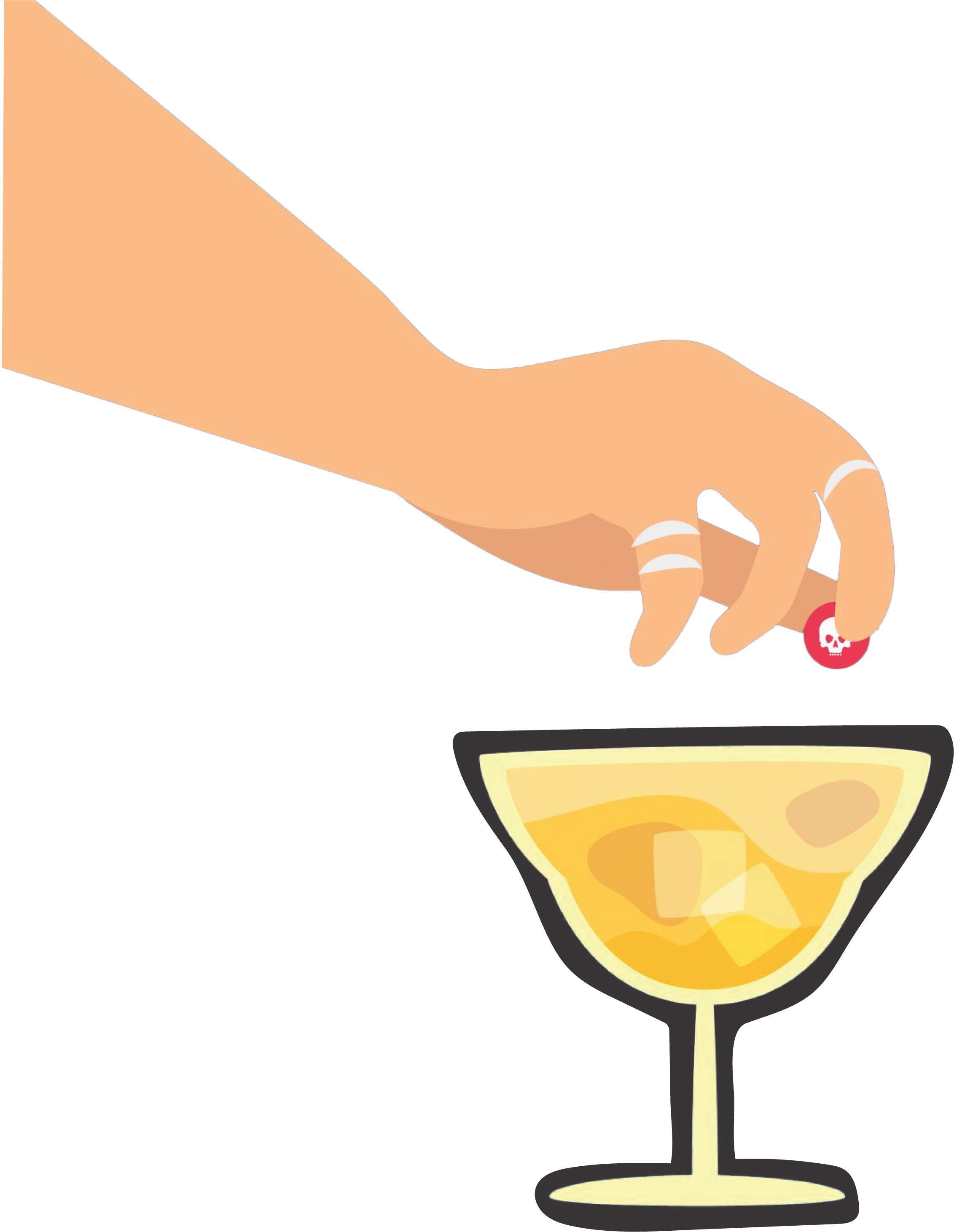
    Staying safe while out on the town starts with prevention. Consider bringing cup covers next time you go out partying. Cup covers prevent someone from getting the opportunity to slip pills, powders, or other substances into your drink without you knowing. I understand you may feel silly pulling out something that resembles a condom for your cup but remember, self defense begins with prevention. The Check Your Drink CYD test strips are another way to prevent being roofied. This is an easy-to-use rapid drink spiking test that detects ketamine, rohypnol, and GHB from only a few drops of your drink.

    It’s not like this experience has deterred me away from drinking or the occasional partying, especially now that the drinking I’m doing is legal. However, it has made me think to just be a little more careful and aware of my surroundings because of what can happen.

    If I can bring awareness and prevention methods to just one person, I’d be happy with that. Nobody deserves to have their drink tampered with and potentially taken advantage of. 
  • Science Behind Brewing Beer

    Science Behind Brewing Beer

    Crowded in a warmly lit apartment, I sat huddled over a great big steaming silver pot with my friends, Seamus Begley and Sam Kirby, as we waited in anticipation to brew another batch of beer.

    Since the brewing process takes a few hours, we started early in the evening. Begley had gathered the four basic ingredients: malted barley, hops, yeast and water.

    According to the the Youtube channel It’s Okay to Be Smart, the basic beer is any alcoholic beverage made from fermented cereal grains, usually preserved and flavored with hops. It was a good guide to start, but Begley and Kirby recommend reading books to master the process.

    To begin, we mixed up a batch of wheat and barley, threw it into a giant tea-bag like grain pouch and set it to steep. This is mash. We were activating enzymes in the grain, which turn the grain starches into fermentable sugars. Within a piece of grain, enzymes are proteins which, when activated, accelerate the deconstruction of starch. A starch is a complex molecule which, when divided into its component bits, becomes a sugar called glucose. The glucose will turn into alcohol later.

    beerrrrr

    The product of the steeped (not boiled) mash is a tea-like liquid called wort. Wort is essentially sugar water which will be the home and food for yeast. It also tastes delicious. We rinsed the grain sack to collect any residual glucose, drained the thing into our cooking pot and set it aside. We were left with a pot full of wort.

    Wort, immediately after rinsing the grain pouch, was not as concentrated as we would like it. Ideally a wort is super saturated with sugar, meaning there is a really high ratio of sugar to water. Concentrating the sugars will make the wort tastier and nutritious for the yeast. To achieve this concentration, boil the wort between 15 to 90 minutes. Excess water evaporates and leaves behind concentrated sugar water. Boiling also provides an essential service to the beer making process, sanitation.

    Sanitation is an essential part of brewing. The grain itself is covered in different bacteria and other yeast that eat sugar, but their byproducts taint the flavor of beer. We sanitized everything from the pots to the bottles to the stirring sticks with a chemical called Starsun, but diluted bleach works as well. Beyond that, boiling the wort kills off these other organisms. Sanitize, sanitize, sanitize.

    During the boil, we add hops. If you drink beer, you’ve probably heard of hops, and if you drink IPA’s, you’ve definitely tasted hops. They’re the bitter, flowery, citrusy flavors in beer. Hops contribute to the flavor of beer, the shelf life of beer and the scent of beer. We had many options to choose from, but this particular batch of hops was grown by Begley’s grandmother.

    Next, the beer needs cooled as quickly as possible so we could add the yeast without killing them. Yeast is a critical ingredient because it is a fermenter. Fermentation is the process when yeast converts to glucose in the wort to ethyl alcohol and carbon dioxide gas — giving the beer both its alcohol content and its carbonation. When the yeast are first added to the wort, Begley took a sample and measured its specific gravity using a hydrometer. The tool told Begley the density of sugar in the water, and how much alcohol would be created by yeast.

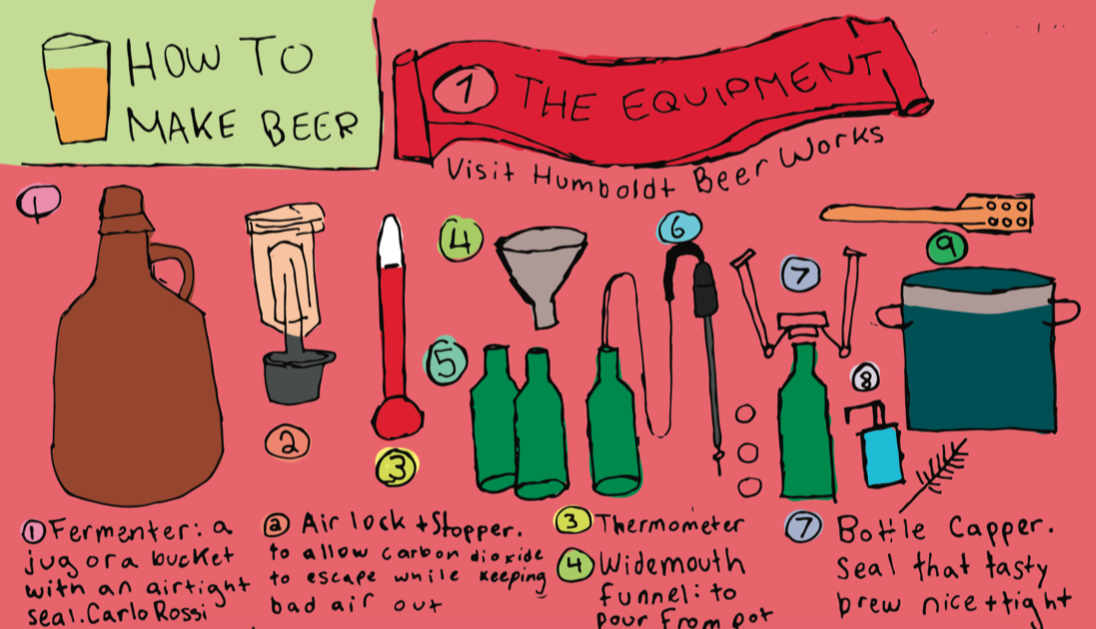
    The yeast and wort mixture is then poured into a sanitized fermenter or carboy. An airlock is attached to the top of the fermenter to allow CO2 to escape from the bottle. The fermenter is then stored in a dark spot where the temperature is desirable for the yeast to do its thing. We left it there for a couple of weeks before bottling.

    Once the fermentation was completely finished, we prepared to bottle. We poured the beer into a second sanitized jug, added a small amount of sugar and yeast for carbonation, and then siphoned the final beer mixture into bottles. The siphon is important because we didn’t want too much air in our beer. Finally, we crimped a sanitized cap on the bottles and let them sit for a couple more weeks.

    After that tediously long wait, we popped them open and enjoyed the sweet, sweet product of our labor. It was definitely worth it.

  • Drink smart

    Drink smart

    If we’re going out for drinks, we need to follow some rules for our own good. All work and no play makes a Lumberjack dull. Okay, that’s not exactly how the saying goes, but the truth is many people want to get buzzed after a long week. The major downside to this reality is that trouble usually follows where drunkards go. Petty fights, alcohol poisonings and sexual assaults are some of the ramifications of irresponsible partying.

    Some of the ways people de-stress are exercising, playing video games or binge-watching shows on Netflix. The list goes on, but drinking alcohol remains one of the most popular ways to take a load off. This ritual isn’t going to stop, especially for college students. As long as we go out to bars or parties, the odds of putting ourselves in precarious situations are high. So, we present to you practical guidelines to protect yourself.

    First of all, don’t drink on an empty stomach. You’re more likely to wind up blacked out, in jail or the hospital by avoiding this step.

    Drink in moderation and know your limits. In other words, listen to your body. If you’re tipsy, it’s probably in your best interest to take a break and hydrate than giving in to more booze.

    Be mindful of leaving your drink unattended, because they might get drugged. This applies especially to those who believe that placing a coaster over their glass will prevent any harm.

    Establish a buddy system with trustworthy friends and try to stick together. If you stray from your friends, don’t go home with someone you don’t know. Remember that the bartender or bouncer’s job is to help their patrons, so don’t hesitate to ask for help.