The Lumberjack


Students Serving The Cal Poly Humboldt Campus and Community Since 1929

Tag: Arcata city council

  • Humboldt Election Forums Are Going Virtual

    Humboldt Election Forums Are Going Virtual

    In order to keep up community involvement, Eureka and Arcata city councils go online.

    There are 32 local races and nine measures that Humboldt County residents will be voting on this year.

    With so many decisions to make, it’s important to educate ourselves as much as possible. One easy way to get informed is through forums, which are all online this year. Forums are meetings where people discuss ideas and views on a specific or various issues.

    There are 15 community organizations who have come together to host a series of forums, Humboldt Candidate Forum. One of the organizations is Coalition for Responsible Transportation Priorities. Its Executive Director, Colin Fiske, said, “these forums are important because local elected officials make decisions that can deeply affect people’s everyday lives and our collective futures, but there is relatively little information available to voters in local elections.”

    President of Affordable Homeless Housing Alternatives, Inc. (AHHA), Nezzie Wade said, “The main goal of these candidate forums is to provide a platform so that the voters and our community can learn about the people running for office and their thoughts on issues or solutions.”

    Wade added, “The topic AHHA chose to cover with the candidates includes whether they are willing to work with non profits on non traditional options or alternatives for shelter and housing.”

    Two forums have passed and both can be found on Access Humboldt’s YouTube channel. The first forum, held on Sept. 18, featured the nine candidates running for two wards for the Eureka City Council. The second forum was held on Sept. 25 and included the 10 candidates running for the Arcata City Council.

    The final one will be held on Fri., Oct. 2, at 6 p.m. for candidates from McKinleyville and Humboldt Community Services Districts. The organizations will be asking the candidates questions on various topics. It will be broadcast on YouTube, television Channel 11, radio station KZZH, and Humboldt Candidate Forum’s Facebook page.

    David Cobb from Cooperation Humboldt spoke on the significance of this forum, stating “The most important thing about this candidate forum is that it brings together a diverse group of social change agents…who are engaging the electoral process to ensure that our voices are heard.”

    To learn more about the candidates running in Eureka and Arcata City Councils and ask any questions, visit Lost Coast Outpost’s General Election Page. You can also read previous questions and answers there and even register to vote.

    Information on the nine measures being proposed can be found Humboldt County’s Official, Local Measures page. You can read an impartial analysis for each, as well as arguments in favor of and against. Some include Measure F, a special tax to support the Arcata Fire Department, and Measure B, which would increase the total number of affordable housing units in Arcata, and more.

    “We won’t have a voting location on the HSU campus this year, due to COVID, it’s a closed campus,” according to the Humboldt County Clerk, Recorder, Kelly Sanders. Voting Assistant Centers and Ballot Drop Box Locations are still being finalized, and updated information can be found on the Humboldt County official website.

    “All registered voters in Humboldt County will be mailed a Vote by Mail ballot to ensure a safe and accessible voting option during the COVID 19 pandemic,” said Sanders “Mailing of Vote by Mail ballots will begin on October 5.”

    With the Coronavirus still prevalent, mailing your ballot is the easiest way to vote this year.

    Sanders recommended students refer to Humboldt County Qualified Candidates Presidential General Election Page for a complete list of races and the Local Measures page for all measures happening in Humboldt County.

    If you are 18 and older and haven’t registered to vote yet, make sure to do so on the official Humboldt County website.

    “While national elections get the most attention, local elections are also really important. I hope everyone tunes into the forums, educates themselves on the candidates and the issues, and votes,” Fiske said.


  • Arcata Committee Hears Parking Complaints

    Arcata Committee Hears Parking Complaints

    It’s not just Humboldt State that has a parking issue

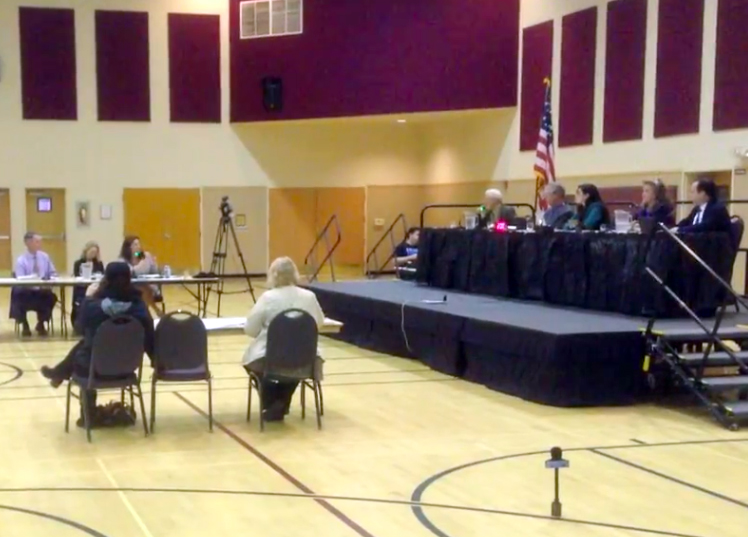
    Arcata’s Transportation Safety Committee held its monthly meeting on Tuesday, in which they opened up for public comment on city parking restrictions.

    Netra Khatri, staff liaison of the committee and Arcata assistant city engineer, thanked the small crowd of about ten locals gathered in the City Council Chamber of Arcata City Hall.

    “We decided to make this meeting annual three years ago, where we can take public comments and hopefully make changes from input,” Khatri said.

    After discussing minutes from a previous meeting, the committee of eleven opened the meeting for public comment.

    The comments varied in severity and scale, but revolved around one central theme: the city of Arcata lacks sufficient parking.

    Arcata resident Vernon Price proposed a plan to allow some Arcata citizens to park their cars freely from dusk til dawn. Price said he was unhoused for 15 years, and wanted the committee to keep the homeless in their hearts and minds.

    “There are people who have lost their homes, and their only tangible property is their homes—and they live in those,” Price said.

    parking_map-avenza12-10-2015

    The committee noted Price’s suggestion and promised to look into designating overnight parking spaces.

    Arcata resident Collin Wingfield brought to attention a parking overflow resulting from the recent construction of the 142-apartment Sunset Terrace complex located between Sunset and Foster Avenues.

    Wingfield, who said he lives on Wilson St., just off of Sunset, has noticed an influx of Sunset Terrace residents parking their vehicles along Sunset Ave. and even on his street.

    Even though Sunset Terrace residents are allotted one parking space in their complex, Wingfield said residents often park their cars along Sunset Ave., leaving other homes with insufficient parking.

    “They will leave their cars parked for weeks at a time,” Wingfield said.

    The committee sympathized with Wingfield and discussed possibly issuing parking permits for Sunset Ave. residents.

    Arcata Library Branch Manager Susan Parsons brought to attention a lack of parking for library visitors. Parsons said parents with children often have to walk through a lot marked by uneven terrain and frequent drug users.

    “Parking for visitors of the library is an issue of safety,” Parsons said.

    In response, the committee suggested designating specific parking spots for the library or enforcing time limits on the spaces outside of the library to prevent them from filling with non-library visitors.

    Tisha Farrer, an employee of the North Coast Co-Op, urged the committee to get rid of parking meters and two-hour spaces. The Co-Op, Farrrer said, reserves its lot for customers only and employees often have to park far away.

    “I just want them to feel safe and have parking where they work,” Farrer said.

    The committee noted Farrer’s concerns while making clear that Arcata’s parking shortage comes at a tricky time as the city tries to encourage the reduction of personal vehicular use to reduce greenhouse gas emissions.

    TSC will now take the public comments and bring their recommendations to the Arcata City Council on Oct. 16. TSC meets the third Tuesday of every month at the City Council Chamber.

  • Letter to the editor

    Letter to the editor

    New Student Housing Community in the Works for Lumberjacks!

    Dear Editor:

    I’m pleased to announce that The Village, a new housing choice, is in the works for students attending Humboldt State University. As you probably know, HSU currently has room on campus for only about 25 percent of the students enrolled, which has made it difficult for HSU students to find housing year after year.

    According to a report funded by HSU, the Arcata housing market is so constrained, some students sleep in their cars or camp in the woods while they look for housing. There is currently demand for roughly 800 new student housing beds in order to address students’ housing insecurity and to support their academic pursuits.

    After various inadequate attempts to increase housing options, the city is now on the verge of having the most viable new housing choice for students in many years.

    The Village isn’t just another apartment building, it is planned as a purpose-built student housing community only half a mile from campus that specifically meets students’ needs with academic amenities such as spacious study rooms, computer lab and presentation room for individual or group study and collaboration, a fitness center with on-demand fitness programs, outdoor community space and secure covered bicycle parking. The Village will also have 24-hour professional on-site management, as well as peer mentorship from resident assistants that will be responsive to students’ needs. This property will also include many sustainable features including solar power, a bicycle-share program and electric vehicle charging stations, and will be built to environmentally conscious Leadership in Energy and Environmental Design (LEED) Silver standards.

    The Village will help improve the reputation of the Arcata community by creating more healthy competition in the housing market and energizing the local economy that is largely fueled by HSU and its students, and will introduce more diversity into the housing mix to reflect the diversity of today’s students and their needs.

    Despite the many positive benefits The Village will bring to the community, there are those who are actively trying to prevent current and future Lumberjacks from making The Village their home while attending HSU.

    If you are in support of the positive housing choice The Village will offer to HSU students and the community of Arcata and want to find out more, please visit this website: https://www.thevillagearcata.com/. You can also contact the Arcata City Council and let them know you support more student housing in Arcata, especially purpose-built student housing communities like The Village.

    It’s all about choices. Your support of this project can help ensure The Village is able to offer HSU students an exciting, new place to call home, and one that HSU students deserve.

    Percival Vaz
    Chief Executive Officer
    AMCAL Equities, LLC

  • Community doubles down on McKinley statue

    Community doubles down on McKinley statue

    Community straightens out Arcata City Council on removing McKinley statue.

    The Arcata City Council held a meeting at the Arcata Community Center on March 21 concerning the McKinley statue on the Arcata Plaza. Over 200 community members attended.

    The Arcata City Council voted 4-1 with one abstention on Feb. 21 to remove the McKinley statue from the plaza.

    The March 21 council meeting was an attempt to invalidate the recent vote and years of community protest against the statue in the town square.

    Council member Susan Ornelas put the ballot item on the March 21 council meeting agenda as part of a “no project alternative.”

    “I felt I could trust the citizens of Arcata to see this issue deeper than people have been projecting they would see it,” Ornelas said. “I thought I could trust people [to] see why [the statue] should be there.”

    Council member Paul Pitino spoke on the subject of a public ballot.

    “In reality, it is not going to be an option to have the statue remain in the middle of the plaza,” Pitino said. “I see we have this thing handled already. We don’t need a vote.”

    Mayor of Arcata Sofia Pereira also commented.

    “Given that we have already made a vote to move the statue, I believe that putting this to a vote doesn’t give us the information we need in a public process,” Pereira said.

    When Pereira opened up the public comment, 121 people were signed up to give a three-minute comment on the McKinley statue removal. Public comment lasted for over three hours.

    The first speaker during the public comment, Claudia Johnson of Arcata, said that the only people who should determine if the statue should be removed are the voters.

    “That statue was a gift to the citizens of Arcata and the city council is responsible for caring for it,” Johnson said. “Right now, [the city council is] not taking care of it.”

    Arcata resident Rob Hepburn has been the gardener at Veterans Memorial Park in Arcata for 15 years.

    “I’m a Vietnam combat veteran and that is why this is really important to me,” Hepburn said. “I know what happened in the Philippines. That started under the watch of McKinley. It started with an ideology called ‘manifest destiny,’ which in essence says that white men are determined by a God-given right to take the lands of non-white peoples and civilize them into imitation white men.”

    Hepburn ties the Philippine-American War to Vietnam War.

    “The results in the Philippines were 250,000 civilian deaths. Massacres in the Philippines were precursors to the My Lai Massacre and other massacres in Vietnam,” Hepburn said. “That is why I feel so strongly that this statue should not be in a place of honor in the center of Arcata. The legacy of imperialism and racism needs to stop here. It needs to end with us.”

    Arcata resident Joanne McGarry stands for peace on the Arcata Plaza.

    “McKinley invaded the Philippines and Hawaii,” McGarry said. “He does not stand for peace. I want a peaceful plaza.”

    McKinleyville resident Maureen Kane also made a statement during the public comment.

    “If we are to have peace, we must openly and knowingly acknowledge all of our wrongdoings so we can ask to be forgiven,” Kane said. “Atrocities occurred in our town square.”

    Allison Lundahl, a Humboldt State student pursuing a masters in social work, spoke at the meeting.

    “I encourage [the city council] to include historical trauma [and] the impact of the symptoms of colonialism in your CEQA report,” Lundahl said.

    CEQA, or the California Environmental Quality Act, is a California environmental statute requiring state and local governances to comply with environmental guidelines.

    Tia Oros Peters of the Seventh Generation Fund in Arcata spoke next.

    “I request that the city council open every council meeting recognizing that we are on Wiyot territory as a right of indigenous peoples, recognizing the sovereignty and determination of the Wiyot people,” Peters said.

    Peters also requested the council to stand firm in their decision.

    “We should not be having this meeting,” Peters said. “You already voted to remove the statue.”

    At the end of public comment, the council agreed to honor their earlier decision to remove the McKinley statue from the plaza.

    “At this point, I’m saying I would just continue with what we’re doing,” Ornelas said. “I’m sorry we took all of this time.”


  • McKinley statue is no more

    McKinley statue is no more

    The Arcata City Council votes to remove the McKinley statue on Feb 23. amid strong support from the community.

    Footage by Stephanie McGeary and Garrett Goodnight. Edited by Stephanie McGeary.

    “Hey! Ho! McKinley’s got to go!” Humboldt State students shouted as they marched to the Arcata Plaza on Feb. 23. Supporters stood up for their support of the removal of the McKinley statue and Jacoby Building plaque. A crowd of people then crammed into City Hall to participate in the city council meeting where the council voted to remove the statue.

    “It’s like pulling the thorn out of a festering sore,” 64-year-old activist Fhyre Phoenix said.

    Phoenix was among the many who came to show his support for the removal of the statue, which he has been protesting for several years. Since December, Phoenix spent 26 days on the plaza demonstrating against the statue.

    “My goal was to start a conversation with 100 people every day I was there,” Phoenix said. “I found the response overwhelmingly positive. I had 15 positive responses for every one negative.”

    A crowd of people making their way to Arcata Plaza on Feb. 21. to participate in the decision to remove the McKinley statue. Photo by Patrick Maravelias.

    Among others supporters were the people of the Weott, Yurok and Pomo tribes, the Seventh Generation Fund for Indigenous Peoples, Earth First, Humboldt Unitarian Universalists Fellowship and HSU students.

    Elijah Lechman, 25, is the board of directors representative of Associated Students. Lechman says the Historic Justice Alliance, a group which includes Seventh Generation, HSU’s Movimiento Estudiantil Chicano de Aztlan, or MECha, and AS Lobby Corps, worked hard to get the word out about this pivotal moment. Lechman says it doesn’t matter if there are plans to replace the statue with something else. The bottom line is it needs to be removed.

    ”It’s distressing people having it there and it would be hurting no one to have nothing there,” Lechman said.

    Chris Peters, president and CEO of Seventh Generation Fund for Indigenous Peoples, spoke during the rally on the plaza of his concern that the city would try to delay this issue again.

    “They raise issues of cost and environmental impact reports,” Peters said. “We need to make a firm stand that we are adamant.”

    Cost issues were presented during the council meeting. City manager, Karen Diemer, estimated the cost to remove the statue at roughly $65,000.

    The decision to change the Jacoby Building plaque, however, seemed easy to agree on. Owner of Jacoby Storehouse Bill Chino agreed to help cover costs for that project.

    The main issue of the meeting was voting on the removal of the statue. Although member Paul Pitino voiced clear support, other council members were on the fence about the issue. There was the discussion of placing the issue on a ballot, to have the public vote in November. Mayor Sofia Pereira did not support this option.

    “I think we lose the nuance of people’s perspective on it,” Pareira said. “As a council, we should give our best effort to resolve it at this level.”

    In the end, the city council did resolve the issue. In a vote of four to one, the council voted to remove the McKinley statue from the Arcata Plaza.

    The estimated $65,000 cost still presents an issue, but Phoenix offered to help run the campaign to earn the funds. The project is currently in the early stages.

    Phoenix said the community support will make this an achievable task.

    “People who want to help move forward can donate to the campaign,” Phoenix said. “This is for people who didn’t make it to the rally or to the meeting to show support. Here’s your chance to make a mark.”

    People interested in contributing can inquire by emailing fhyrephoenix@gmail.com.

    This story has been changed from its original version on Feb. 27 at 4:22 p.m.


  • Josiah’s legacy

    Josiah’s legacy

    By Reza Sadeghzadeh and Curran C. Daly

    The Arcata Police Department is still investigating the homicide of Josiah Lawson, five months after his death. Charmaine Lawson, Josiah’s mom, has remained an ever constant presence in Humboldt County while living 14 hours away

    She is currently planning on a fundraiser to open a house for homeless students and community members that she calls, “Josiah Lawson’s house.” Citing Josiah’s desire to help reduce homelessness in Arcata.

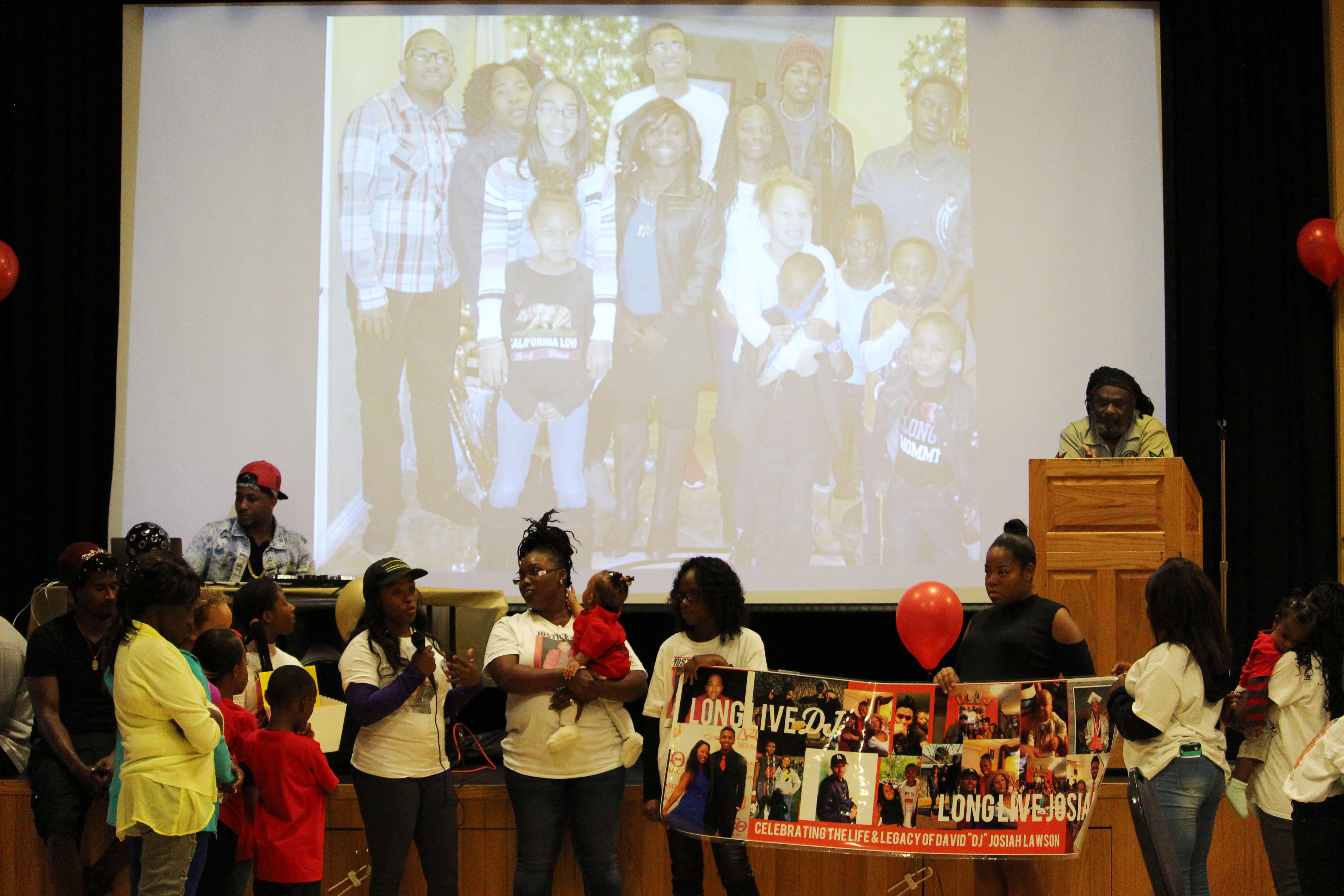
    “I wanted to just celebrate DJ’s life,” Charmaine Lawson said. “The fun, energetic person that he was.”

    Charmaine Lawson revealed her fundraising efforts at a five month memorial for Josiah.

    One of the main topics of discussion by those who attended the event was restoring the relationship between the community, the university and students. Especially students of color.

    Barbara Singleton, Sophomore Criminology & Justice major, is the President of the Black Student Union. Singleton is concerned about security in the community.

    Lawson told Singleton to be patient waiting to get justice for Josiah’s case. Lawson said she will not give up on his case.

    “I have to fight for him because he cannot fight for himself, I have to make sure he receives justice,” Singleton said. “If it would have been anyone of us he would have done the same thing.”

    DaMon Thomas, Senior Communications Major, stressed the need for a more accepting community around Humboldt State.

    “The Humboldt State University diversity is growing, but the community is not keeping up,” Thomas said. “There needs to be more awareness, acknowledgement and cooperation.”

    The messages echoed by Josiah’s family and Kenya James, the president of the local NAACP, did not follow on empty ears. The event was attended by City and University officials including Arcata City Council member Sofia Pereira and Humboldt State Provost Alex Enyedi.

    Enyedi and Pereira emphasized some of the ongoing programs that are helping the community and university to achieve that equality in the community. Such programs are GARE (Government Alliance on Race & Equity) and NIOT (Not In Our Town) that are focused on issues of inequality in housing, hiring practices, customer service and first responders.

    The fight is not over. The students and the community have promised Lawson an endeavoring effort to bring justice for Josiah.

    “Josiah’s House is a great wonderful idea to persevere his legacy and help homeless students” said Corliss P. Bennett, Director of Cultural Centers for Academic Excellence. “Students of color can’t find housing, and not because they don’t have money, but because landlords don’t rent to African American students.”

    James said “this horrendous tragedy has been extremely hard on Lawson’s family, but she has proven to be tremendously strong and courageous due to the fact that she has turned this tragic incident into an opportunity to give back to the community.

  • Butane ban from Arcata

    Butane ban from Arcata

    The process to make butane hash oil can result in explosions and chemical fires.

    Butane hash oil, also known as wax, honey oil, shatter, and dab, is made by butane extraction. This process is used to create butane hash oil containing large amounts of THC, the intoxicant in marijuana, by blasting marijuana with butane.

    Butane is odorless and can be easily ignited, and is typically used as camp fuel, propellant, and lighter fluid. Many explosions occur as a result of handling chemicals in an unsafe, non-lab environment such as a house.

    Arcata joined a growing list of cities regulating butane products due to concerns over dangers from its use in producing butane hash oil.

    In an effort to deter people from exploding their homes, garages and other residential areas, Arcata City Council approved an ordinance that regulates the sale and possession of butane.

    City Attorney Nancy Diamond attended the Arcata City Council meeting held on Jan. 4 when the ordinance was approved.

    “Because butane is highly volatile and it is being used in an unregulated context,” Diamond said. “It is causing a particular hazard to the public and first responders.”

    The typical consumer container of butane is 300 ml as opposed to a typical refillable lighter which contains about 5.5 ml.

    Arcata City Councilmember Michael Winkler approved the ordinance due to his concern for an increase in public safety and the overall hazard associated with butane use for extraction of THC.

    Since the ordinance having gone into effect on Feb. 4, there have been two fires where there have been leads to the use of butane, according to Arcata Fire District Chief Justin McDonald.

    On Jan. 8, there was one incident which according to the report was most likely drug related, according to Arcata Fire Chief Justin McDonald.

    In Manila on Jan. 14, inside a trailer, a butane hash oil explosion occurred due the extraction process that blew the doors and the windows out of the building.

    “It absolutely ripped the trailer park apart,” McDonald said. “When our crews got there, the exterior walls were blown 15 to 20 feet out.”

    Not many drug related fires can compare to those of butane fires, according to McDonald. Grow house fires, where someone converts a single family residence into a grow operation, don’t grow as rapidly as a butane explosion, according to McDonald.

    “The fire starts off slow and then builds versus the butane goes, boom, it’s big,” McDonald said.

    In 2016, two people were injured after they ignited their cigarette in their car after making butane hash oil in their car, according to McDonald.

    McDonald has been seeing the evolution of these types of incidents, which he calls catastrophic, while being in the Arcata Fire District for 23 years.

    “The ones [fires] that I have been to, the windows and doors have been blown out of the buildings and if people are in there quite often they are pretty severely burned,” McDonald said. “Hair burned off or singed and skin burned off and hanging from their arms.”

    The most recent explosion in Manila in Midway Court was the most devastating butane related incident that McDonald has seen.

    “There were butane bottles zinging through the air because they were still exploding,” McDonald said. “There were enough butane canisters that sustained and kept burning.”

    Arcata has had a history of butane hash oil explosions with six occurring within the last four years. Eureka has also had its number of incidents and has had regulations on butane since Nov. 2016.

    In Nov. 2016, California voters approved the legalization of recreational marijuana use.  Now adults over the age of 21 can partake in using, possessing and sharing cannabis, as well as growing it at home.

    Under California law, it’s legal for medical marijuana patients to purchase butane hash oil, but the process of making the oil is illegal.

    A law recently signed, called AB 2679, which will go into effect in 2018, provides a framework for legitimate marijuana manufacturers and allows the extraction process to occur under certain conditions.

    AB 2679 addresses the problem of law enforcement now not being able to shut down facilities that have obtained permits by the city for manufacturing. This law clarifies specific requirements both for a legal form of butane extraction and for extraction using solvents that don’t allow fumes to escape during the process.

    Labs often use solvents to extract the psychoactive ingredient THC from dry marijuana. The process produces a gooey residue that contains a highly concentrated dose of THC and is widely popular at medical marijuana dispensaries.

    “I am not against the licensed process of butane extraction, but it has to be done with the proper permits,” Winkler said. “The city of Arcata will issue permits for manufacturing butane extraction that is legal and safe.”

    Patients, pot identification card-holders, caregivers, collectives and cooperatives will not face state criminal sanctions if they follow the new rules.

    Up until this new law, all forms of butane extraction in California were illegal. The process of creating butane hash oil is legal in places like Colorado.

    The city’s ordinance prohibits retailers from selling more than 600 ml of butane to a buyer in one month. One can of butane contains 320 ml. The law would make it illegal for any person who is not a vendor to have more than 600 ml of butane at any given time.

    Store retailers are required to track the sale of butane canisters and and record the buyer’s name and address and keep this record on file for two years. This is for the city to be aware of their own butane sales and to keep track of an individual’s butane purchases.

    Along with this, butane cans must be placed in glass cases within the store where purchasers would not have access without an employee’s assistance.

    Butane cans are now stored in inaccessible glass cases, where purchasers cannot access without employee assistance.

    “Stores would sell cases of butane, twelve at a time,” Winkler said. “Now there is a monthly limit and stricter rules on how many can be bought at one time.”

    These prohibitions are similar among the various butane sales regulation ordinances adopted across the state to date, according to the ordinance.

    Violators of the ordinance would be charged with a misdemeanor or an infraction.