The Lumberjack


Students Serving The Cal Poly Humboldt Campus and Community Since 1929

Tag: Arcata Police Department

  • APD clears out homeless encampment at Arcata Transit Center

    by Andres Felix Romero

    Jacob Sroto, an Army veteran without a home, slept in a cramped encampment at the Arcata Transit Center after being kicked out of a shelter. There were other houseless people that occupied every inch of free space, except for the building’s doors nearby. While using the portable toilet, Sroto would notice rats scurrying nearby. Soon after his arrival at the transit center, he and other residents of the encampment were given notice by police officers that they were trespassing and must leave, despite the wet and cold weather conditions. 

    On the morning of Thursday, March 2, three officers of the Arcata Police Department (APD) removed an encampment of roughly a dozen houseless people outside the Arcata Transit Center. This encampment had been inhabited and growing for at least a month according to City Engineer Netra Katri, who was present at the transit center the day after the removal.

    “There was one big tent right there,” Netra said, pointing out a wall near the transit center, “and the next day it was gone.”

    The City of Arcata brought a large dumpster to toss out the belongings of the houseless individuals. Paul Geyer was present at the transit center during the removal and described the police as trying to be supportive to the individuals they were removing.

    “They were separating the stuff people might want,” Geyer said. “Guitars, cookstoves, probably a dozen propane tanks, stereos… all kinds of stuff.”

    Despite this attempt at civility, encampment residents such as Oscar Featherman felt that they had a right and protection to be on city property, especially with the winter weather warning in place.

    “They executed an eviction,” Featherman said. “You can’t evict people when it’s those kind of conditions.”

    There was about a three weeks’ notice given to the residents of the encampment. The notice cited violation of state laws on trespassing and camping. The notice also said that there have been concerns raised by resident and business owners about health and safety conditions of this location including the presence of rats, drugs, human waste, and debris.

    Over the course of the pandemic, the city of Arcata became more relaxed with houseless people living on city property. However, APD Sergeant Brian Hoffman noted that the conditions and size of the encampment prompted the removal. 

    “At that point it’s a health issue,” Hoffman said. “We tried to offer services to the people. It’s up to them if they act on those or not.”

    Present alongside trespassing notices were groups trying to offer services and support to the transit encampment residents. One group present the day of the removal attempting to offer support was the Arcata House Partnership (AHP), a grant-run program of over 30 years that seeks to advocate for and support houseless indindividuals.

    Prior to the day of the removal, AHP successfully offered services to Sroto by offering him a place in an extreme weather shelter in their housing project known as The Grove. 

    “They told me, ‘this is gonna get cleared out anyway and the weather’s gonna get real bad, you wanna come for this?,’” Sroto said. “Everyone didn’t hesitate with [the offer]. Anything’s better than staying at [the transit center].” 

    The extreme weather shelter is one of many programs run by the AHP directed at supporting the unhoused. They have other locations that offer services and advocacy for houseless individuals including bag lunches delivered by truck, mailing addresses, case managers, showers, sobriety assistance, assistance with EBT and finding shelter, gas cards and more.

    Tanya Rodriguez works for the AHP at their Grove housing project. She feels that the programs are needed for those who don’t know how to navigate the system, and because many are only one situation away from being houseless themselves.

    “Once you’re down on your luck, then you realize how easy it is to be right there,” Rodriguez said. “For many of us, it’s just one hospitalization that will suck everything you own out the door. One hospitalization, one natural disaster, one disability, one car breaking down.”
  • Anti-Immigration Graffiti Found In Arcata Plaza

    Anti-Immigration Graffiti Found In Arcata Plaza

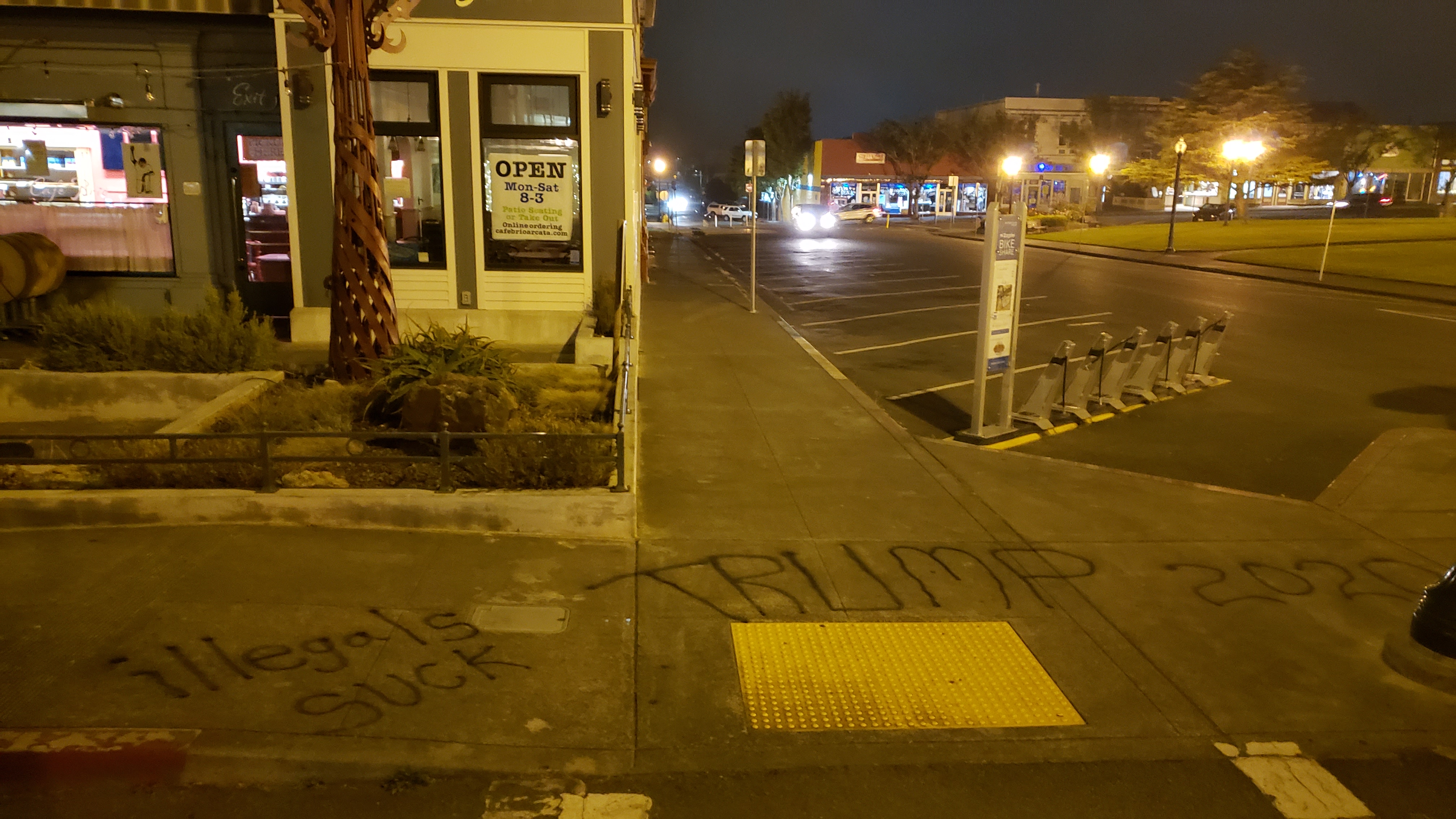
    Anti-immigration graffiti was spray painted outside the corner of Cafe Brio and The Heart Bead store in the Arcata plaza.

    “Trump 2020” as well as “Get out of America” were plastered around the sidewalks just outside of Cafe Brio and Heart Bead. It was reported to APD by Heart Bead store owner, Kim Alveraz, on Aug. 16 and the graffiti was later washed off on Aug. 18.

    APD sergeant, Brian Hoffman, said that the anti-immigration messages were not a hate crime. The APD said that they are not able to open an investigation until suspects are reported. If anyone does witness vandalism or have information on a possible suspect(s), it can be reported to APD at 707-822-2424.

  • Press Release: APD Still Seeks Public’s Help in Lawson Case

    Press Release: APD Still Seeks Public’s Help in Lawson Case

    APD asks witnesses to come forward on third anniversary of David Josiah Lawson’s death

    FOR IMMEDIATE RELEASE

    JOSIAH LAWSON HOMICIDE OCCURRED THREE YEARS AGO

    On this day three years ago HSU Student David Josiah Lawson was murdered in Arcata. This case remains under investigation and the Arcata Police Department is seeking the public’s assistance during the on-going investigation. On April 15, 2017, while attending a house party on Spear Avenue, Josiah was stabbed during an altercation. Josiah was pronounced deceased shortly thereafter at Mad River Community Hospital. 

    Witnesses described upwards of 100 people in attendance at the house party. Many of those who were present have not been identified nor have they been interviewed by Detectives from the Arcata Police Department. The completion of this investigation is dependent on a number of factors including interviewing all people who were present at some point during the party or who have information that can corroborate what occurred that night.

    The Arcata Police Department established a 24 hour confidential tip line for community members to provide information relative to this investigation. The phone number is (707) 825-2590. Community members can also call the APD’s Dispatch Center at (707) 822-2424.  

    Keeping Josiah’s memory alive is paramount to this case. The Arcata Police Department will continue to investigate this case and will continue to work all investigative leads until justice prevails.  

    Attached in a separate email is a Public Service Announcement developed in partnership with DJ’s Mother, Charmaine Lawson, the Arcata Police Department, the Eureka Broadcasting Company and the City of Arcata’s IT Department. The PSA link is Facebook compatible. All are encouraged to share this link with anyone in order to never forget DJ and to encourage community members who have any information at all regarding who else was in attendance at the party and/or the events that led to DJ’s death, to come forward. 

    Public service announcement video reposted by the North Coast Journal:

  • Report Reveals Shortcomings in Lawson Case

    Report Reveals Shortcomings in Lawson Case

    National Police Foundation identifies issues and makes recommendations

    By Grace Caswell and James Wilde

    The National Police Foundation assessment team reviewed the first 72 hours of the Josiah Lawson homicide case and released a 65-page review on Feb. 20. The report included NPF’s response to the case and feedback for the Arcata Police Department.

    NPF said APD responded professionally to the crime scene at 1120 Spear Ave. on April 15, 2017, but the crime scene lacked proper security and management.

    “Many basic tenets of crime scene security and management were not followed in this case,” NPF said.

    The Arcata City Council commissioned the report in September 2018 for $30,000. NPF is an independent, nonpartisan organization that analyzes police cases.

    From August 2018-2019, NPF conducted 24 interviews and reviewed reports, transcripts and court procedures, including 50 hours of recordings and 6 hours of APD dashboard camera video. Due to the ongoing status of the case, NPF couldn’t interview any witnesses or partygoers other than first responders.

    NPF said APD personnel weren’t trained or given access to necessary equipment, which are common issues in small law enforcement teams. As a result, APD couldn’t sufficiently manage the crime scene and investigation.

    NPF recommended APD do more to communicate and build relationships with the Arcata community.

    “The APD chief has an opportunity to institute a culture of ongoing evaluation of the department’s performance—especially in critical incidents or unusual responses,” NPF said. “This is how organizations grow, evolve, learn, and improve.”

  • 33 Months

    33 Months

    Living in a community full of love, fear and a growing void of justice

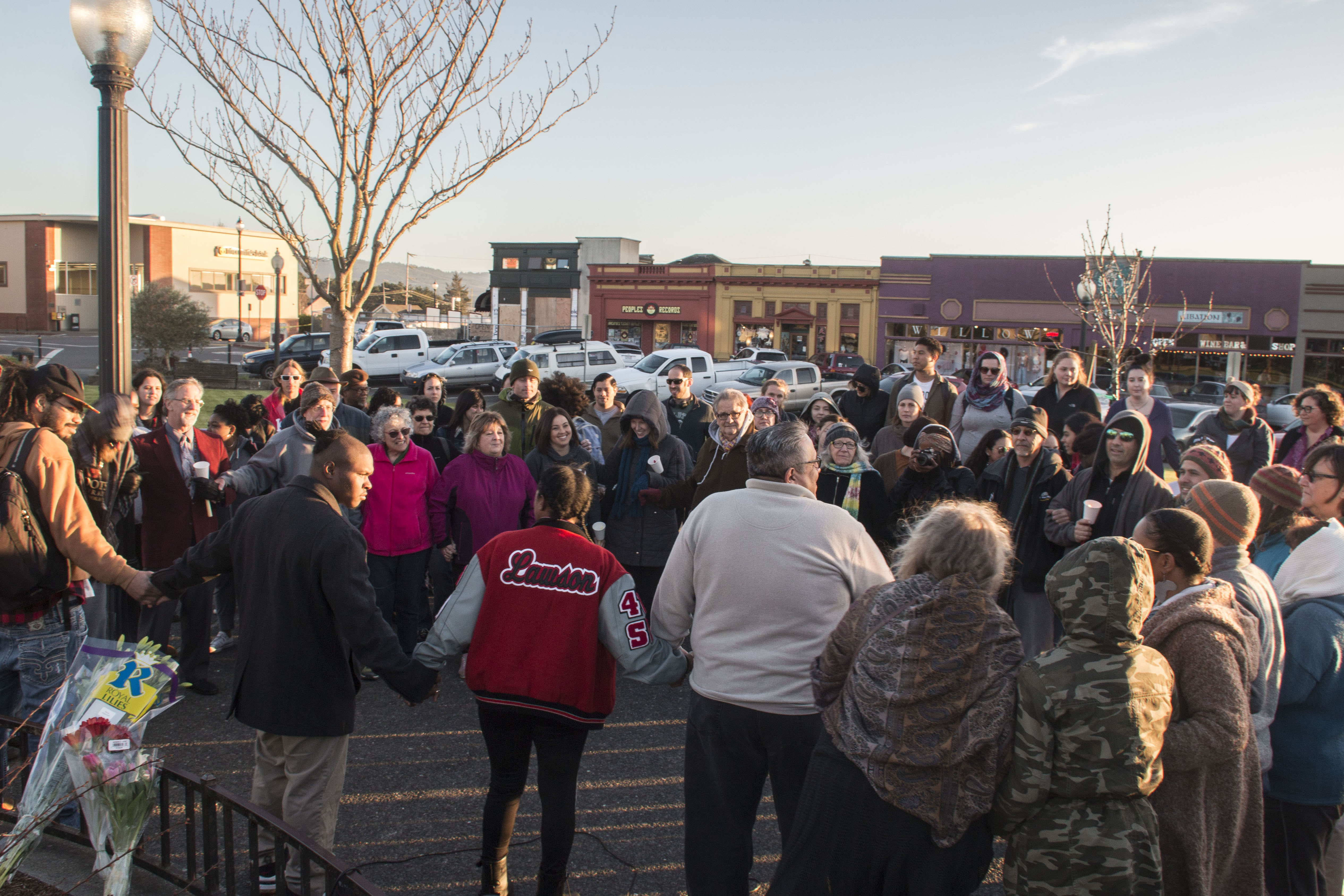
    Thirty-three months after a black HSU student was murdered in the city of Arcata, a circle of family, friends, students and community members huddled together, clasped hands and shouted his name.

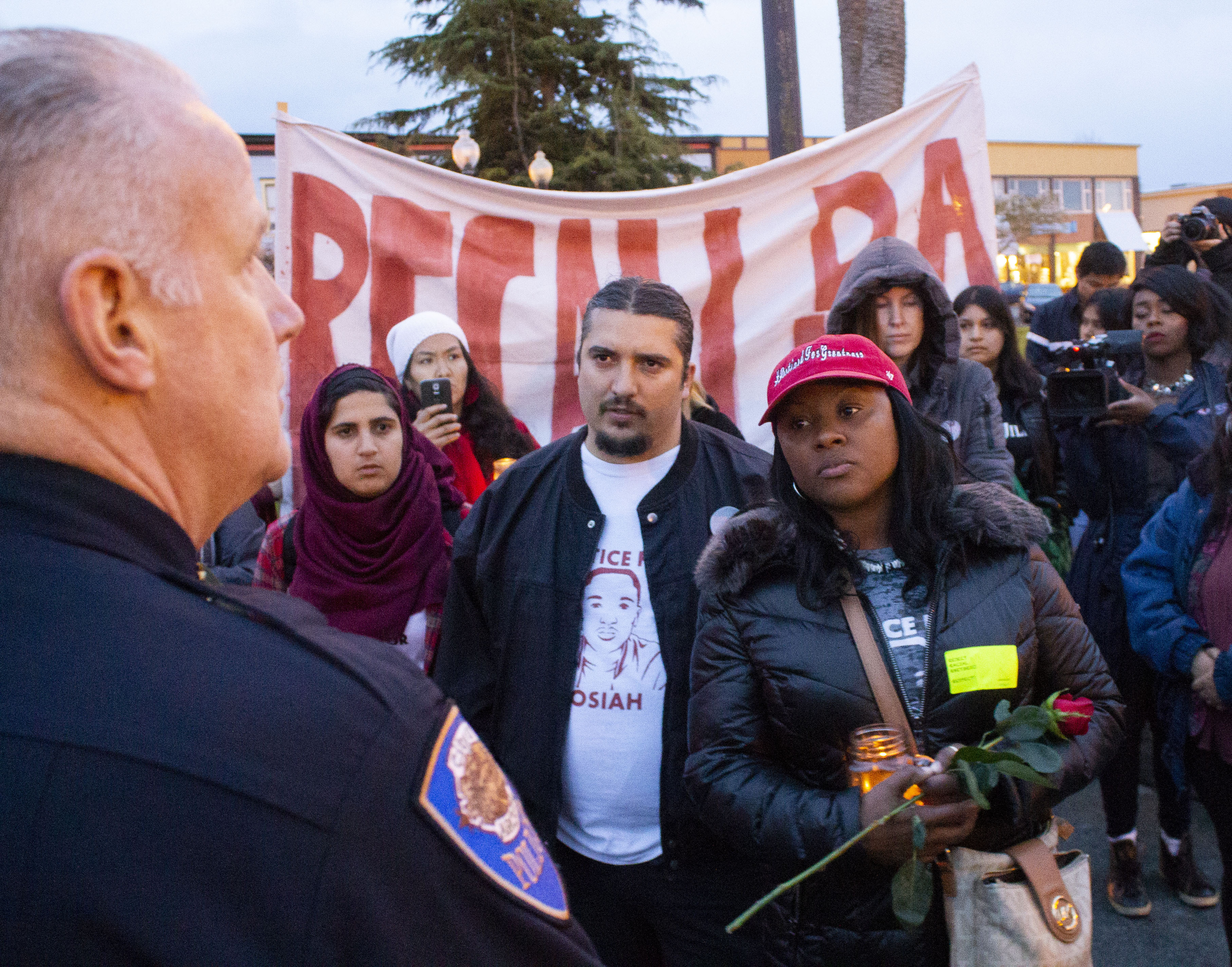
    “Justice for David Josiah Lawson,” the group said loud and clear over and over from the steps of the Arcata City Hall. The sun had set hours ago, and a winter wind was biting at those gathered in attendance, but weather wouldn’t stop the crowd.

    “The vibe itself is very upbeat considering the weather,” said attendee Andre Ramos, who wore a heavy winter coat and a beanie pulled over his ears.

    Every month since the murder of David Josiah Lawson, a crowd has gathered around Charmaine Lawson, the mother of Josiah Lawson, and together they demand justice for Josiah. Lawson remains steadfast in her belief that justice will happen. She makes the journey all the way up to Humboldt from her home in Southern California to remind those in power that she will make it happen.

    “It will happen,” Lawson said. “I serve a mighty god. As long as I have breath in my body I will continue to be here.”

    “There are beautiful, amazing, wonderful, compassionate people here. There is love within this community, but there is evil and darkness here.”

    Charmaine Lawson

    To Lawson, this was an open and shut case. The original suspect, former Mckinleyville resident Kyle Christopher Zoellner, was apprehended the night of the murder. Lawson said the murder weapon was also found. She said DNA evidence should presumably solve this case.

    “Why we’re still here? Dumbfounded,” Lawson said.

    As the months go by, more and more students move to Humboldt to attend Humboldt State University. Yet Lawson is concerned these students don’t know the situation they’re moving into.

    HSU has a much higher population of people of color than the surrounding community. Most HSU students come from Los Angeles or the Bay Area and the small-town culture of Humboldt is different from what they’re used to. Lawson wants to ensure that all students who start the next step of their lives in Humboldt make it out again, but she feels that students of color simply aren’t welcome.

    “If you’re a student of color, be careful,” Lawson said. “There are beautiful, amazing, wonderful, compassionate people here. There is love within this community, but there is evil and darkness here.”

    Kwame Achebe, a San Diego native, agreed. Achebe has attended every vigil since the murder, but his voice still shook when talking about what happened. He chose his words carefully but spoke with a grim humor when recounting one of his first experiences in Humboldt.

    “What’s funny is in San Diego I’m pretty light skinned,” Achebe said with a laugh. “In San Diego I’d have to be convincing people I was black. I didn’t need to convince anybody here. My first day at Arcata High I was greeted as ‘the nigger,’ OK? I was greeted as ‘the nigger.’”

    Achebe said his experiences in Humboldt have told him that this isn’t an aberration.

    “For us not to have justice 33 months after the murder of a young black man? It’s not out of the norm at all,” Achebe said.

    Achebe said the elected leaders of Arcata don’t care about what happened to Josiah Lawson, so it’s up to the people.

    “I’ve been out here from the very beginning. I see the look on their faces when they’re addressing us. They have no souls in their eyes,” Achebe said. “They don’t care.”

    Part of the goal of the Justice for Josiah movement is justice in the form of political change, not just for Josiah Lawson, but for the whole system. Lawson vowed to keep working to elect people who she thinks will be able to uphold justice.

    “I will continue to call people in power out that are elected officials who are not doing their jobs and make sure we get people with integrity and love and compassion in seats,” Lawson said.

    Over the course of the almost three-year history of this case, it has faced numerous setbacks. The case against Zoellner was dismissed in 2017. In 2019, a criminal grand jury decided not to indict anyone for the murder of Josiah Lawson, and the California Attorney General declined to take the case.

    “Justice for me is having Kyle Christopher Zoellner arrested for the murder of my son David Josiah Lawson and held accountable for his actions,” Lawson said.

    The history of the case shows that a system that could bring about the justice that Lawson wants is not the one Humboldt has, but Lawson is convinced it will one day. Until then, Lawson is concerned for the students of color in the here and now.

    “Don’t go anywhere alone in this town,” Lawson said. “Stick together so someone can tell your story if you’re not able to.”

  • Week of Remembering Josiah

    Week of Remembering Josiah

    Charmaine Lawson travels to CSU campuses with SQE and CFA

    It has been 18 months since the death of Humboldt State University student David Josiah Lawson. His murderer still walks free and case remains open.

    Charmaine Lawson, Josiah Lawson’s mother, spoke at Sacramento State on Oct. 15 on a panel with Justice for Josiah committee member Jill Larrabee, and Courtney Wagner, the director and editor of “Unsolved Hate,” a documentary of Josiah Lawson’s murder.

    Sacramento State was one of many campus stops for Charmaine Lawson during “Week of Action,” an event put together by Students for Quality Education to remember Josiah and discuss safety and the CSU’s accountability of Josiah Lawson’s murder.

    Twenty-one of the 23 California State University campuses participated in “Week of Action.” Lawson was invited to CSU San Francisco, Sacramento, Pomona and Fullerton.

    “I never thought I’d be sitting here right now,” Charmaine Lawson said, “We have gotten so much attention because of students.”

    Charmaine Lawson has also gained support of the California Faculty Administration. Charmaine Lawson said CFA has been amazing in the effort to hold the CSU accountable for Josiah Lawson’s murder and to better protect students.

    TW.charmaine.IMG_8408
    Charmaine Lawson (center) said she has been greatly supported by students and CFA in trying to hold CSU accountable for the murder of her son, David Josiah Lawson, who was a HSU student. Charmaine was in Sacramento on Oct. 18, 2018 and has travelled to four other campuses during Weeek of Action. | Photo by Tony Wallin

    Charmaine Lawson said that the CFA is helping by making postcards for people to sign, asking Humboldt County DA Maggie Fleming to excuse herself from the case.

    “CFA has been instrumental in their action plan and their resources,” Charmaine Lawson said.

    Charmaine Lawson told the crowd of CSU faculty, students and parents that she has had resistance from city officials, law enforcement and HSU administration since the beginning of the case.

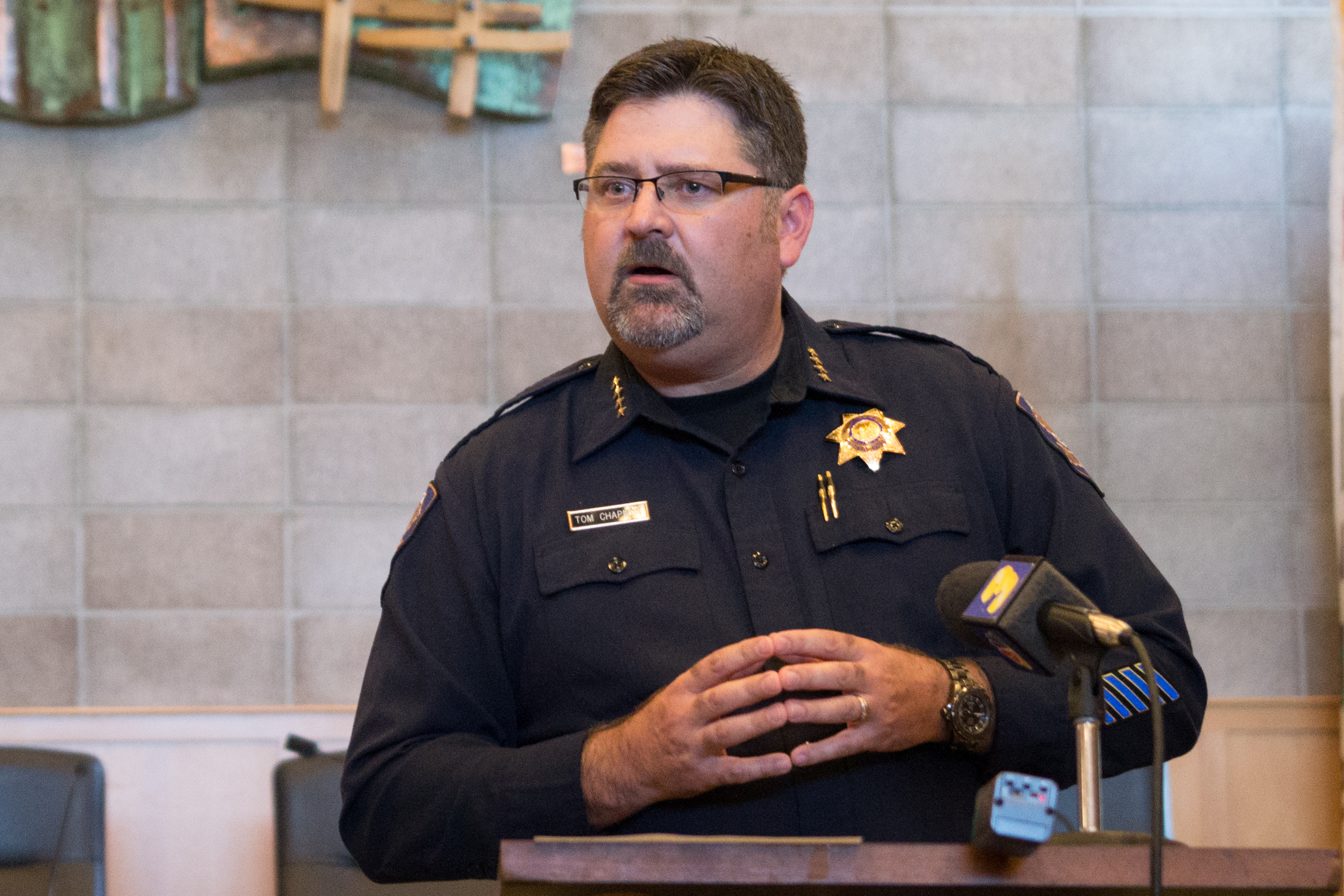
    For months, when the case was being first investigated, Charmaine Lawson said Lt. Todd Dokweiler told her she could only speak with police chief Tom Chapman. Charmaine Lawson said that Chapman was telling her false information and has since resigned from the police force.

    “Chapman lied by saying San Jose and Eureka were helping with the case, but none of that was true,” Charmaine Lawson said.

    Charmaine Lawson said Arcata City Manager Karen Diemer, defended Chapman when she confronted her about Chapman’s lies.

    “She defended the presence of the city instead of exposing the city for what it really stands for,” Charmaine Lawson said. She said Diemer needs to go next.

    When she tried to contact HSU President Lisa Rossbacher about her son’s murder, Charmaine Lawson said she never got a response. She said she called her twice and has yet to get a call back. Rossbacher’s resignation as HSU’s president is effective June 30, 2019.

    “Lisa Rossbacher hasn’t even called me to offer her condolences,” Charmaine Lawson said.

    TW.charmaine.IMG_8415
    Jill Larrabee, Justice for Josiah committee member, Margarita Berta-Avila, CFA president at Sac State, Charmaine Lawson, mother of Josiah Lawson, and Raul Tadle, faculty at Sacramento State University on Oct. 18. | Photo by Tony Wallin

    Sacramento State CFA president Margarita Berta-Avila said one of the problems with the CSU system is recruiting potential students of color without informing them all the details of their possible future environment. The details that aren’t shared include the amount of students of color admitted and how isolated the area may be. Berta-Avila said there should be institutional policy guaranteeing new students will graduate and be safe.

    “It shouldn’t be when someone is killed that change occurs,” Berta-Avila said.

    Berta-Avila said the CFA got involved when Charmaine Lawson met with CSU Chancellor Timothy White. Berta-Avila said that when Charmaine Lawson stood in front of CSU administration to speak of her son’s murder, a police officer walked behind her and put his hand on his gun. Berta-Avila said that was the moment when CFA had to pursue action.

    “The violation doesn’t stop — it continues off campus,” Berta-Avila said.

    Jorge Quintana, a leader of Students for Quality Education at Sacramento State, said there is a difference between recruiting and having available space. Quintana said CSUs don’t hold safe spaces for students of color. Quintana said moving forward means addressing the shortcomings of the university regarding safety and to make sure protocol is followed.

    “It is CSU’s responsibility to keep us safe,” Quintana said.

    Quintana said if the HSU president didn’t call Lawson and CSU hasn’t done anything to help, then this is clearly an issue for students of color. Quintana said CSU hands are tied now that a student has died. Quintana said this is when educating students is needed.

    “Whats most important is to remember Josiah,” Quintana said.

    Quintana said CSU only cares when students are only doing good, but once they’re off campus or even struggling they stop caring. He said they have a choice on who gets admitted and who stays, but don’t have a choice of being students of color.

    “Systemic racism and micro aggressions are happening all over CSU campuses,” Quintana said, “There are more police officers than counselors.”


  • Community still demands ‘Justice for Josiah’

    Community still demands ‘Justice for Josiah’

    Police are past their estimated time for solving the more than one-year-old crime

    He was smart. He had goals. He came to Humboldt to avoid the challenges of South L.A.

    These words were spoken outside of Arcata City Hall by Karim Muhammed, a friend of David Josiah Lawson. Lawson was murdered on April 15 2017 and his case still remains unsolved.

    Discussion on race and safety in the community were the main subjects amongst community members on Oct. 15. Tears streamed down faces as homemade posters of Lawson were hung on the walls in front of Arcata City Hall.

    Muhammed met Lawson their freshman year in the dorms at HSU. He said he misses Lawson and was at his dorm everyday.

    “He was one of the first people I met when I moved to Humboldt,” Muhammed said.

    Muhammed said he thought Arcata was safe compared to south L.A but that isn’t his experience. How to keep moving forward he said is to bring awareness and continue to inform incoming students about Lawson’s murder.

    “We need to get it solved, get new people in power, get people informed and vote,” Muhammed said.

    Muhammed said the goal is to make the community safer but many people in the community are still oblivious to the death of Lawson or they just don’t care. When he learned of the roster release of the HSU’s predominantly African American student clubs to the Arcata Police Department, Muhammed said that was a big red flag. He said this shows where they stand with the situation and further proves their indifference.

    “People choose what they want to believe or they just don’t want to believe,” Muhammed said.

    Meg Stofvsky, a retired school psychologist, said the vigil’s are held to continue remembering Lawson as well as inform people who are new in the area. Stofvsky was representing Charmaine, Lawson’s mother, and said Charmaine has caught the interest of the California State University system about her son’s murder. She said Charmaine has been travelling to other CSU’s to talk about safety on campus and will be in Sacramento later this week.

    “We need a firm insistence we are not going to continue to let this happen,” Stofvsky said.

    It has been 18 months since Lawson’s murder and Stofvsky said the county seems to be sliding backwards. She said we need to continue having resilience and hope and to keep the Arcata Police Department accountable. Stofvsky said the APD recently gave a six to eight week time limit to solve the case and that limit is up.

    “We hear a lot of talk about progress from the APD but we haven’t seen any,” Stofvsky said.

    When Charmaine Lawson comes into town for court hearings or monthly vigils she stays at Sharon and Michael Fennell’s house. Both are HSU alumni and have been proponents seeking justice for Lawson. Sharon Fennell, was a KHSU DJ under the name Sista Soul and said she met Charmaine at the second vigil held for Lawson.

    “We show up once a month. This is a beautiful thing and Charmaine knows,” Fennell said.

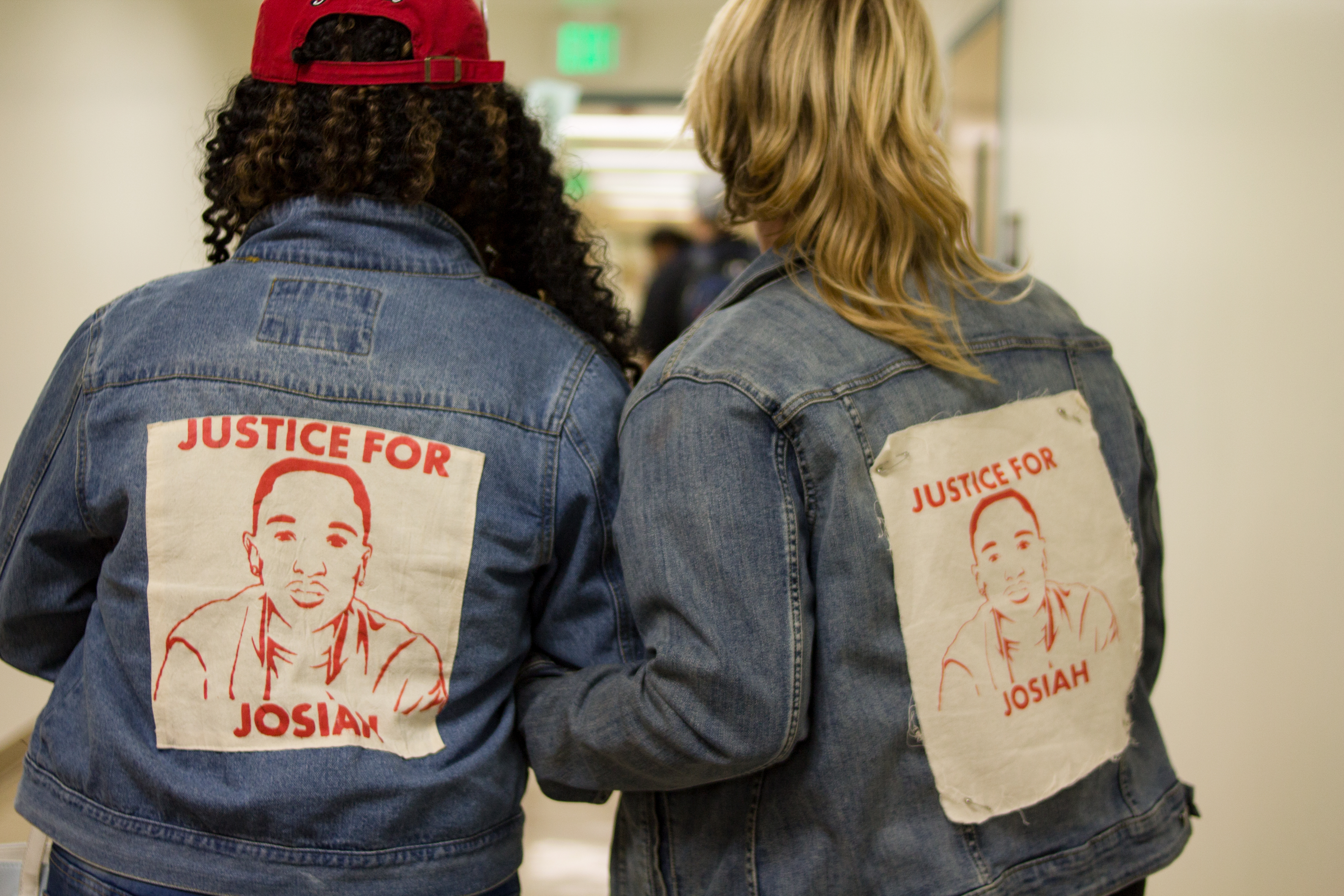
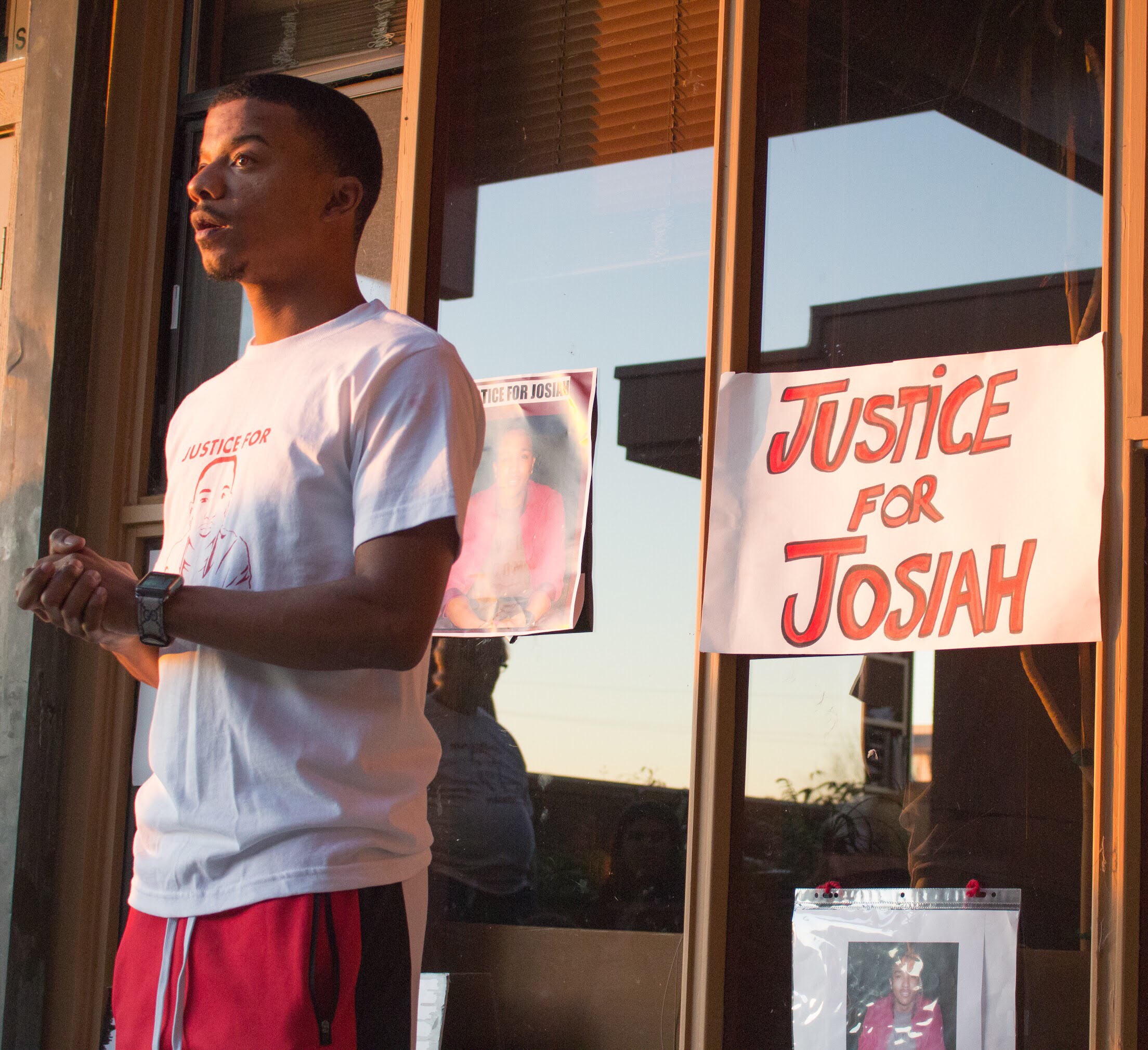
    Fennell offered ideas to start selling “Justice for Josiah” shirts at the HSU bookstore to continue to bring awareness of his murder. She said that way Lawson would be seen more on campus and students would be reminded of what happened. A conflict Fennell has is that students come to HSU but then leave after they graduate, which keeps Humboldt from changing.

    “People need to come, stay, build businesses and change the community,” Fennell said. “If not we stay 80 percent white. Boring.”

    A member of the “Justice for Josiah” movement, Jill Larrabee, said actions by CSU and California Faculty Association are starting to take hold regarding safety on campuses but society needs to change. Larrabee said we need to learn, educate, heal and grow and get more people in office.

    “Humboldt County has the good ol’ boys club in power,” Larrabee said.

    To move forward Larrabee said white people need to converse with other white people about racism. Larrabee said racism is still a big problem here in Arcata but more and more people are coming out and acknowledging their privilege.

    “When we hear white people say we can’t guarantee safety, then we are going to demand it,” Larrabee said.

  • We still don’t feel safe

    We still don’t feel safe

    Racial discrimination on campus is rampant

    I, Skye Kimya, believe I was detained on Feb. 14 over a $40 on-campus parking ticket because of the color of my skin.

    Around 8 a.m. that morning, I walked out of a building on the northeast side of campus to find two parking officers giving me a ticket for where my car was parked.

    After getting into a small verbal altercation with these parking officers, I realized it wasn’t worth the argument. I asked them to give me the ticket and let me go about my day.

    The parking officers were not happy with me driving off while they were still giving me my ticket, and before I knew it, Humboldt State police Chief Donn G. Peterson was pulling me over in an undercover vehicle.

    Within minutes, another University Police Department vehicle arrived to the scene. I was interrogated for approximately 10 minutes by two officers on each side of my car about the incident that had just occurred. After the officers spoke with each other for a few minutes, another cop car pulled up, and UPD officer Delmar Tompkins made his way to my driver side.

    “Please step out of your vehicle and put your hands behind your back,” Tompkins said.

    “Excuse me? I don’t understand,” I said.

    I was told I was being detained under suspicion of assault with law enforcement. After questioning this accusation, I was told I was a threat at that time and needed to be detained for the safety of the officers because they did not know the full story yet.

    Confused and scared, I got out of the car, did what Tompkins asked me to do and began to cry like a baby as he placed me in the back of his cop car.

    Imagine being detained and told you are a threat, under suspicion of assault, by a white officer twice your size. Imagine feeling confused and alone. Imagine questioning what could possibly happen next.

    When you grow up trying to understand the purpose behind discrimination, you begin to notice how common it is and wonder if it will ever go away.

    At times, you lose hope for your children’s generation. Yet other times, you want to become the greatest activist that has ever walked this planet, in order to actually make things right for those future generations.

    Students at HSU don’t feel at home. We don’t feel as though there are people by our side, and we don’t see the amount of people of color around campus that the HSU pamphlets and website photos presented to us when we were deciding which university to attend.

    According to HSU’s “fast facts,” the incoming class of fall 2016 consisted of 549 Hispanic/Latino students, 51 African American students, 31 Asian students, 11 American Indian students and four Pacific Islander students.

    Additionally, the entire fall 2016 student body consisted of 2,869 Hispanic/Latino students, 271 African American students, 279 Asian students, 89 American Indian students and 20 Pacific Islander students.

    With a student body total of 8,503, you can imagine what it is like to see only 270 other faces similar to yours on one side, and only 88 other faces similar to yours on the other side.

    Hispanic and Latino students made up almost 35 percent of the entire student body that same year. Seems like a reasonable amount, right?

    HSU actually receives funds from the U.S Department of Education ever since they became a Hispanic-Serving Institution at the start of the fall 2013 semester.

    To become a Hispanic-Serving Institution, the university has to have an undergraduate full-time equivalent enrollment of at least 25 percent Hispanic students, and HSU was at 26.6 percent for the fall 2013 semester.

    HSU continues to flaunt a great amount of diversity that it does not have. These incoming students, like many of us who were once in their shoes, attend HSU and slowly begin to witness and experience how diverse this campus and community is truly NOT.

    Just the other day, the NAACP Eureka Branch called out HSU and asked them to stop recruiting students from minority-majority neighborhoods until changes are made around campus and within the community.

    A majority of the students of color who have attended HSU for at least two academic years have experienced some type of discrimination, whether it was verbal, physical or emotional.

    In 2013, Tompkins had a civil lawsuit filed against him by a Fieldbrook man who alleged he was the victim of a brutal assault back in January 2012. It turns out the Fieldbrook man wasn’t lying and the Cal State University system paid him $135,000 to keep him quiet.

    As students of color at this university, how are we supposed to feel safe if our own UPD officers don’t do things the right way and have our back?

    Cases like the murders of HSU African American students Corey Clark (2001) and David Josiah Lawson (2017) are still unsolved to this day, and we as students have not seen enough action taken by our president, UPD and even the Arcata Police Department.

    Students of color do not feel safe, nor protected here. The NAACP Eureka Branch is right and something has to change before HSU tries to drag more students of color to this campus.

  • Trust in police weakens as Chapman resigns

    Trust in police weakens as Chapman resigns

    As students, we have reasonable expectations of safety so we can focus on academic success without fear. This is not the reality for Humboldt State University students of color, both on campus and in the community. Both the Arcata Police Department and HSU have a long way to go to gain the trust of students of color.

    The recent resignation of APD police chief Tom Chapman only worsens public confidence in local law enforcement.

    A good deal of community members, including HSU students, are aware that 19-year-old HSU student David Josiah Lawson was murdered at an off-campus party in Arcata on April 15, 2017.

    McKinleyville resident Kyle Zoellner was arrested at the scene of the crime, but released on May 5, 2017, due to lack of evidence connecting him to the murder.

    There is a clear and serious disconnect within our community regarding racial diversity. Because Lawson is black and Zoellner is white, racial tensions tightened in the community. And as one group tries to engage with the community about race and public safety, others view such meetings as a way to promote white guilt.

    To this day, no one is in custody of Lawson’s open homicide case.

    Former FBI agent Tom Parker, who offered his investigative services on the Lawson case for free, resigned on April 9. According to the North Coast Journal, Parker said a lack of trust and cooperation by the APD led to his decision to resign.

    “It was clear they were holding back things and not telling me the truth,” Parker said. “They had things going on and they wouldn’t tell me what they were.”

    Chapman announced his resignation the following day without reason.

    Following a press release by the City of Arcata announcing Chapman’s resignation, Arcata City manager Karen Diemer followed up with local media concerning both departures.

    “[Chapman’s] decision does not stem from any one single thing,” Diemer said. “It is a combination of personal reasons and professional judgement on what he believes is best for the department and himself.”

    In regards to the Lawson case, Diemer said the APD continues the investigation without Chapman.

    “The investigative team for the David Josiah Lawson case is solidified with members of both the Arcata Police Department and District Attorney Investigators office,” Diemer said. “This team will stay in place and focused on the case through its completion.”

    Parker’s claim that the APD withheld information raises major concerns. While it’s reasonable to conceal information from the public during an open investigation, why wasn’t the APD willing to cooperate with Parker?

    Also suspicious is the timing of Chapman’s resignation. Why did Chapman resign the day after Parker terminated his contract with the APD and just five days before the one-year mark of Lawson’s death? Coincidence would be an unbelievable excuse.

    While there’s only so much we can do in a case like this, we can demand more from from our law enforcement and other officials. Check with the City of Arcata, the Arcata Police Department and the Division of Student Affairs at HSU about the investigation. Don’t just do it once, but follow up as well.

    We must stand in solidarity of not just the Lawson case, but for students of color. By remaining quiet, local law enforcement will prioritize less pressing issues and no progress will be made. We need to stand up for ourselves because the ones who should protect and serve us are stepping down.

  • “It was infuriating to see that the Arcata Police Department did not show up”

    “It was infuriating to see that the Arcata Police Department did not show up”

    City of Arcata supported a Dialogue on Race forum at the D Street Neighborhood Center on March 22.

    Mayor of Arcata Sofia Pereira attended the forum in hopes to create a space for the Arcata community to discuss racial discrimination.

    “There’s a lot of pain in this community based on what people of color have experienced here. It’s not going to be overnight, ending that pain,” Pereira said. “The more we have a space for these conversations and concrete actions, we can take [those] as individuals and as a community. I think that can get us to place of healing.”

    Pereira wanted to absorb everything that was discussed in the forum in order to get a sense of the right direction to take moving forward.

    “As for the next steps, I heard the feedback for making sure that we have representation from the Arcata Police Department, along with making sure we’re inviting Humboldt State’s administration,” Pereira said.

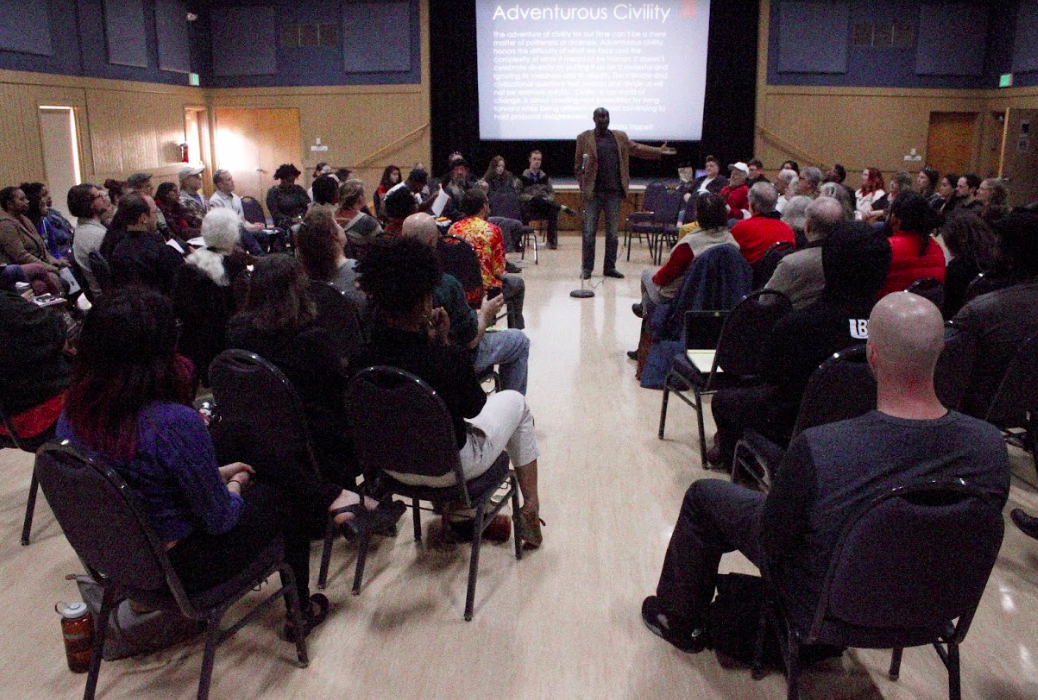
    Arcata mayor Sofia Pereira attends the monthly forum on race and public safety at the D Street Community Center on March 22. Photo by Nick Kemper.

    The City of Arcata gave Pastor Roger Williams the opportunity to facilitate the discussion on race.

    “I’m here because it’s a heart condition of mine, where I want to see people come together. I know it’s not easy, but it’s a passion of mine,” Williams said. “In a potentially charged environment with potentially angry people, with city hall here in the same building and in the backdrop of an unsolved murder, it went well.”

    Williams said that the point of the forum gue was to make people more aware of the fact that we live in a community where racism exists. He wanted to make those unaware of it to address racism in their community.

    “It’s not so much about black folk standing up and talking about race because we’ve been doing it forever,” Williams said. “It’s white folks taking some responsibility for themselves and not just not taking responsibility for being woke, but trying to wake other people. Come with an open mind and with the intent to understand [than] just reply. That’s where grassroots change happens.”

    Community member Paula Jones speaks at the D Street Community Center forum on race and public safety on March 22. Photo by Nick Kemper.

    Community member Erik Rydberg went to the forum, because he felt that the subject of race in this country needs to be talked about everywhere, regardless of how uncomfortable it makes people feel.

    “We need to understand the construct of race,” Rydberg said. “What it means historically in this country and why it was developed by the elite ruling class in this country in order to keep a select few people in control of the apparatuses of society.”

    Rydberg said this discussion matters to him, because he has experienced the injustices people of color have endured in this country, particularly in California.

    “As an indigenous person, the legacy of genocide and the holocaust of the American Indian, especially here in California, is an erased history,” Rydberg said. “[It] makes people who are really proud to be American extremely uncomfortable to talk about what’s transpired here in California, as far as the colonization of my continent.”

    Rydberg was one of the many people who decided to speak out at the forum. He decided to share the realities of racism, because he felt that it would be helpful to hear from an indigenous person’s point of view.

    “It was infuriating to see that the Arcata Police Department did not show up,” Rydberg said. “You’re in a position of authority. You need to be the most educated on this. You’re holding people’s lives in their hands every time you put [on] that belt buckle with your gun in it, every time you hop in your car with your shotgun [or] every time you have an AR-15 with you, with the legal authority to use that force.”

    Rydberg has a message for people who didn’t attend the forum.

    “You can’t stand in solidarity with somebody if you don’t know anything about their culture or their people,” Rydberg said. “Authority figures need to be [the] ones packing these kinds of events to learn about the people whose lives you hold in your hands.”


  • Community gathers for David Josiah Lawson vigil

    Community gathers for David Josiah Lawson vigil

    Lawson’s homicide case is still open.

    Mother of David Josiah Lawson, Charmaine Lawson, drove eight hours to the Arcata Plaza to speak at her son’s vigil to remember, honor and celebrate his life. The African American Center for Academic Excellence organized Lawson’s vigil on Feb. 15.

    “For those of you who are mothers, I drove my baby to school and he came back in a box,” Charmaine said. “It’s not okay, I am not going to apologize for my tears. I am trying to be strong, but it’s hard.”

    Josiah’s homicide case remains open and active. The investigation interviewed 46 individuals that are believed to include all the witnesses who could have seen the fight and events leading up to the homicide.

    The initial review of all the evidence has been finalized with assistance from a retired FBI investigator, Tom Parker.

    Majority of forensic evidence has come back from the Department of Justice. Police are now awaiting a completion of DNA and specialty evidence testing.

    Humboldt State University student Erianna Blackwell said it’s important to come out for support.

    “Not only your people, but the cause,” Blackwell said. “Especially since they still haven’t found the killer.”

    Josiah was murdered 10 months ago at an off-campus house party. The city council held four meetings in 2017 to update the community on the investigation and present strategies on how to improve student safety.

    Michael Fennell, a Lawson supporter, said he’s been wearing his “Justice for Josiah” button for almost 10 months.

    “I didn’t think I would be wearing it for this long,” Fennell said. “I thought it would be solved long ago.”

    With two other children at home, Josiah’s mother told the crowd she was willing to move to Humboldt County to seek justice for her son.

    “If it takes me moving for the police to do their job, I will,” Lawson said. “I don’t care about materialistic things if I have to sell my car [or] my house. I’ll do it for my son.”

    Chairman of the Wiyot tribe, Ted Hernandez, showed up for the vigil and extended a prayer even though he had never met Josiah’s mother.

    “I came to support Charmaine as a parent. I have five children and some have gone to HSU,” Hernandez said. “It is all about the community and supporting the mother. It is a healing process.”

    Each month since Josiah’s death, a vigil has been organized in order to remember his memory and to put pressure on the ongoing investigation to find the murderer.

    HSU journalism major Angel Sylva said she comes every month.

    “I feel tired of having to come out every month,” Sylva said. “I feel like I’m coming out and nothing is being done. I come out regardless.”

    A reward of $40,000 has been offered to anyone with new information leading to the arrest and conviction of Josiah’s murderer.

    Mayor of the City of Arcata, Sofia Pereira, said when the AACAE asked her to come speak at the vigil, she agreed. But Pereira was uncertain on what she was going to say.

    Pereira said to Josiah’s mother, “You have given so much to the community. This is a community you owe nothing to.”

    “As a leader, I am going to fall short at times. I’d rather show up and fall short than to not show up at all,” Pereira said. “If we want true peace, we have to listen to our neighbors and take the situations seriously. I am engaging even though I feel uncomfortable.”

    Pereira has been mayor of Arcata for two months. Her first meeting as mayor was on Dec. 20. The council alternates the position on an annual basis.

    “I felt the gravity of the situation,” Pereira said. “It is not easy to speak in front of people who are grieving and want answers.”

    After the last meeting in October, students requested investigation updates be separated from the student safety discussion and that student safety meetings be held on campus following the October meeting.

    Student safety meetings in November and December were facilitated by students and held on campus. Meetings will continue to be held through the Student Diversity Committee with support from many campus club leaders.

    “My life will never be the same,” Charmaine said. “I can’t even mourn my child, because I have to fight for him. It is taking too long to get results.”

  • HSU student Erin Henry found deceased near Westhaven

    HSU student Erin Henry found deceased near Westhaven

    The 22-year-old missing HSU student Erin Henry was found deceased this morning near Westhaven 12 miles north of Arcata. Henry was reported missing by her roommate on Nov. 30, 2017.

    A CalTrans worker had found a knee scooter along Highway 101 just south of Westhaven. Arcata Police Department was then notified. APD reported to the location and searched the area when they found Henry’s body at a short distance from the highway.

    According to an APD press release, “The preliminary investigation revealed no sign of foul play.”

  • Josiah’s legacy

    Josiah’s legacy

    By Reza Sadeghzadeh and Curran C. Daly

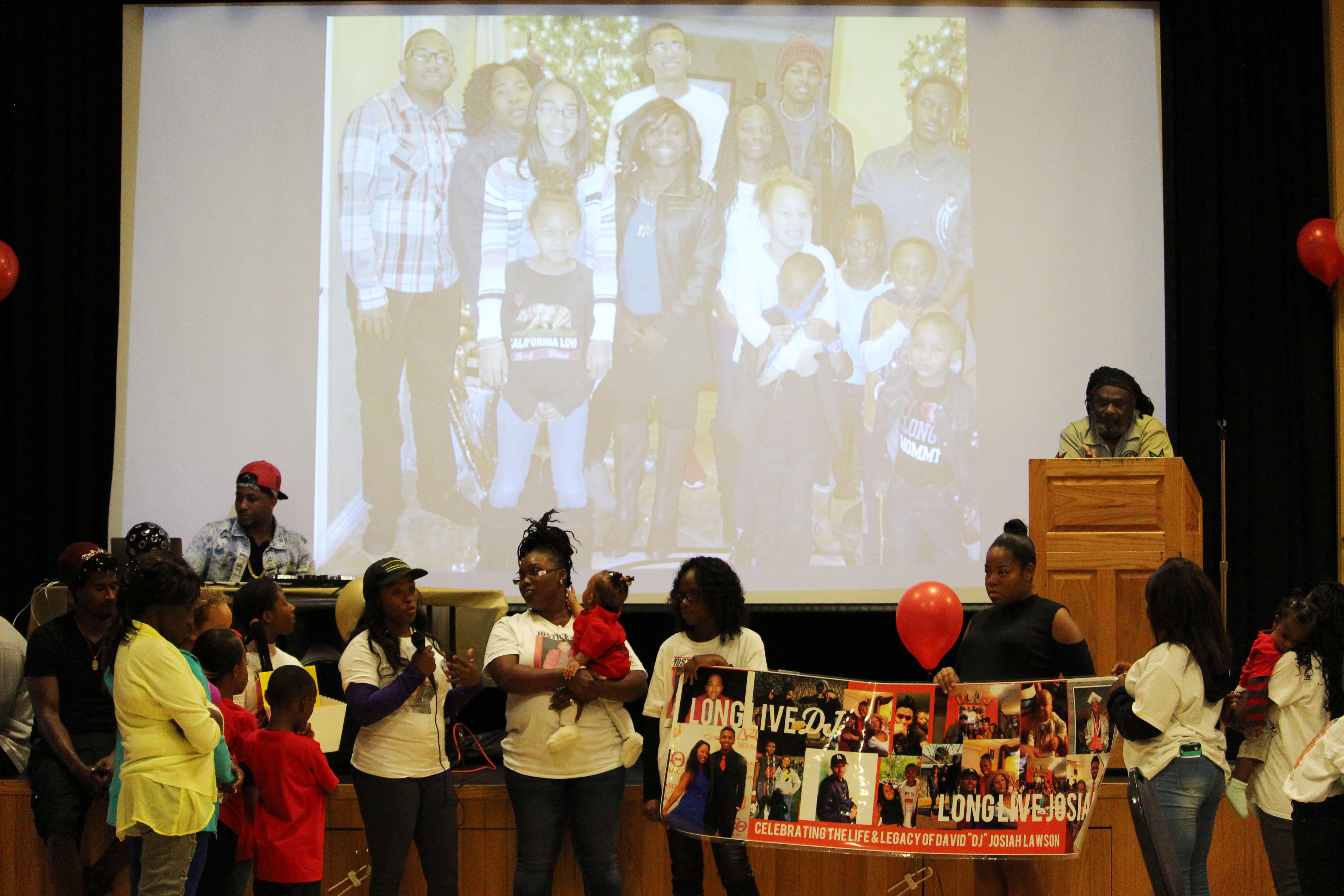
    The Arcata Police Department is still investigating the homicide of Josiah Lawson, five months after his death. Charmaine Lawson, Josiah’s mom, has remained an ever constant presence in Humboldt County while living 14 hours away

    She is currently planning on a fundraiser to open a house for homeless students and community members that she calls, “Josiah Lawson’s house.” Citing Josiah’s desire to help reduce homelessness in Arcata.

    “I wanted to just celebrate DJ’s life,” Charmaine Lawson said. “The fun, energetic person that he was.”

    Charmaine Lawson revealed her fundraising efforts at a five month memorial for Josiah.

    One of the main topics of discussion by those who attended the event was restoring the relationship between the community, the university and students. Especially students of color.

    Barbara Singleton, Sophomore Criminology & Justice major, is the President of the Black Student Union. Singleton is concerned about security in the community.

    Lawson told Singleton to be patient waiting to get justice for Josiah’s case. Lawson said she will not give up on his case.

    “I have to fight for him because he cannot fight for himself, I have to make sure he receives justice,” Singleton said. “If it would have been anyone of us he would have done the same thing.”

    DaMon Thomas, Senior Communications Major, stressed the need for a more accepting community around Humboldt State.

    “The Humboldt State University diversity is growing, but the community is not keeping up,” Thomas said. “There needs to be more awareness, acknowledgement and cooperation.”

    The messages echoed by Josiah’s family and Kenya James, the president of the local NAACP, did not follow on empty ears. The event was attended by City and University officials including Arcata City Council member Sofia Pereira and Humboldt State Provost Alex Enyedi.

    Enyedi and Pereira emphasized some of the ongoing programs that are helping the community and university to achieve that equality in the community. Such programs are GARE (Government Alliance on Race & Equity) and NIOT (Not In Our Town) that are focused on issues of inequality in housing, hiring practices, customer service and first responders.

    The fight is not over. The students and the community have promised Lawson an endeavoring effort to bring justice for Josiah.

    “Josiah’s House is a great wonderful idea to persevere his legacy and help homeless students” said Corliss P. Bennett, Director of Cultural Centers for Academic Excellence. “Students of color can’t find housing, and not because they don’t have money, but because landlords don’t rent to African American students.”

    James said “this horrendous tragedy has been extremely hard on Lawson’s family, but she has proven to be tremendously strong and courageous due to the fact that she has turned this tragic incident into an opportunity to give back to the community.