The Lumberjack


Students Serving The Cal Poly Humboldt Campus and Community Since 1929

Tag: awareness

  • Sovereign Bodies Brings Awareness

    Sovereign Bodies Brings Awareness

    Activist creates new database to track violence against Indigenous women

    Accounts of violence and murder toward Indigenous people are lost in history or left unrecorded. This became an even bigger problem for Indigenous women in places occupied by white men, such as mining or gold rush communities.

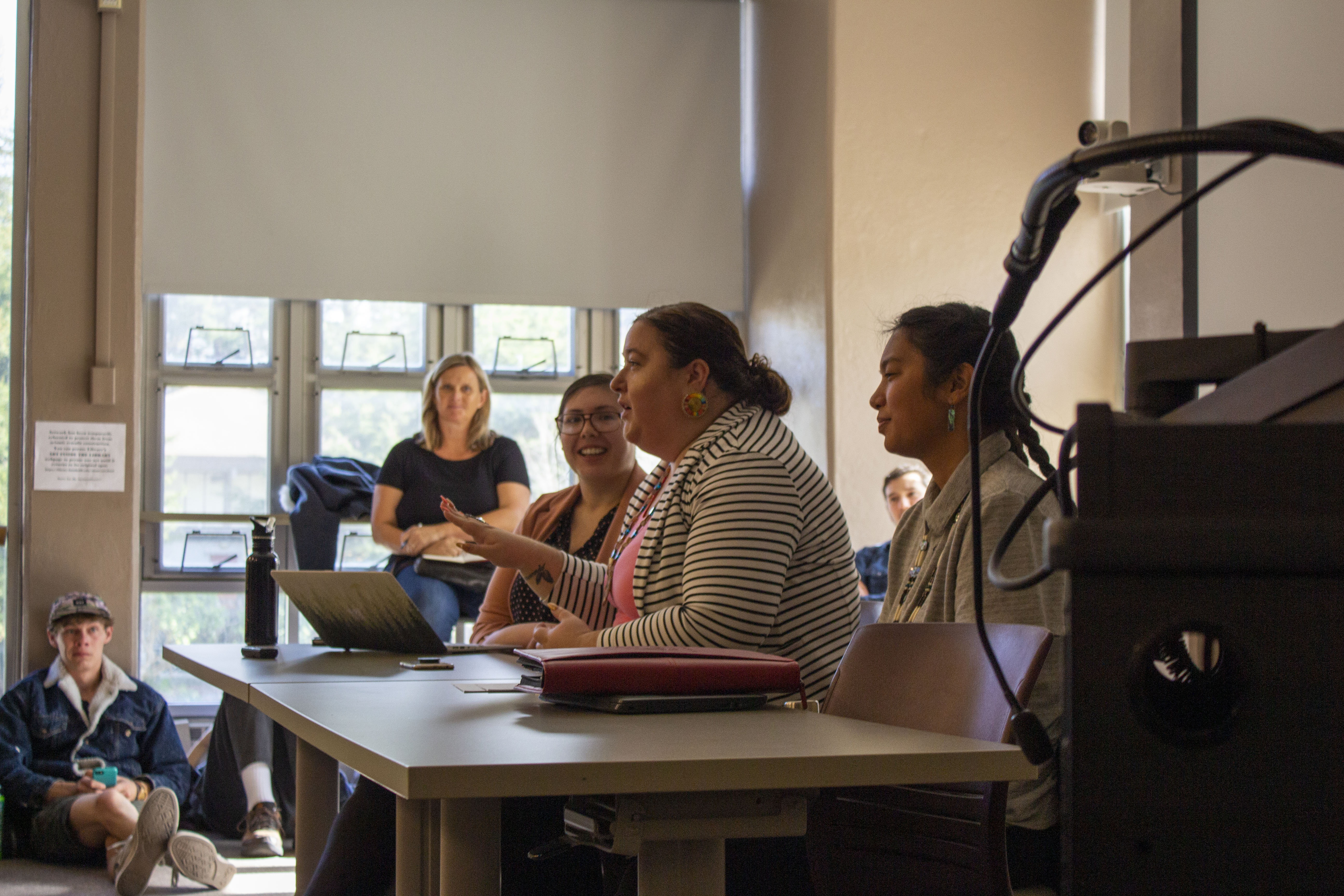
    The Sovereign Bodies Institute was founded about a year ago by Annita Lucchesi, a Native American and activist. Lucchesi realized the need for a database of violence and murder against Indigenous women after needing one, and it not existing.

    “It really bothered me because at that time in my life, I had just escaped a really abusive relationship that almost killed me,” Lucchesi said. “I also was being trafficked through that relationship, so I had a number of experiences where I almost was one of these missing and murdered Native women, so for me it was really personal and it really bothered me that if that had happened to me there was no guarantee that my story would be used to make sure that doesn’t happen to other women or girls.”

    Four years ago, Lucchesi created her own database for missing and murdered Indigenous women, which eventually became the kickstarter idea for the Sovereign Bodies Institute.

    “Humboldt County is amongst one of the highest counties of missing and murdered Indigenous peoples.”

    Chelsea Miraflor Trillo

    Sovereign Bodies Institute’s website says SBI is a home for generating knowledge of how Indigenous communities are impacted by gender and sexual violence and looking into how they can continue to heal and find freedom from such violence.

    Lucchesi has acquired around 4,000 missing and murdered Indigenous women cases in her database. Lucchesi founded SBI with the help of the Seventh Generation fund, an international organization for Indigenous peoples.

    Chelsea Miraflor Trillo, an Indigenous woman and participant of SBI, received her masters from Humboldt State. Trillo continues to work with SBI and families of missing and murdered Indigenous women to advocate awareness towards these issues.

    “Humboldt County is amongst one of the highest counties of missing and murdered Indigenous peoples,” Trillo said. “Students are usually in the area where community awareness and political action happen.”

    According to Lucchesi, Humboldt and Del Norte County hold a third of missing and murdered Indigenous women in California. Lucchesi said the justice system contributes to missing and murdered Indigenous women and the lack of action taken. Lucchesi said Indigenous women are considered non-human, and the justice system refuses to hold non-Native perpetrators responsible.

    Tammy Carpenter is a member of the SBI organization and an HSU alumna. Carpenter was subjected to the mistreatment of Indigenous people personally.

    “I, myself, am a mother of a victim that was murdered,” Carpenter said. “It’s still unsolved as of today, so I like to support the organization for the awareness for all women. Not just Indigenous women. All women.”
  • Tunnel of Oppression demonstrates discrimination

    Tunnel of Oppression demonstrates discrimination

    While Black History Month is in full swing, students who found themselves in Nelson Hall on Feb.15 discovered something a little different.

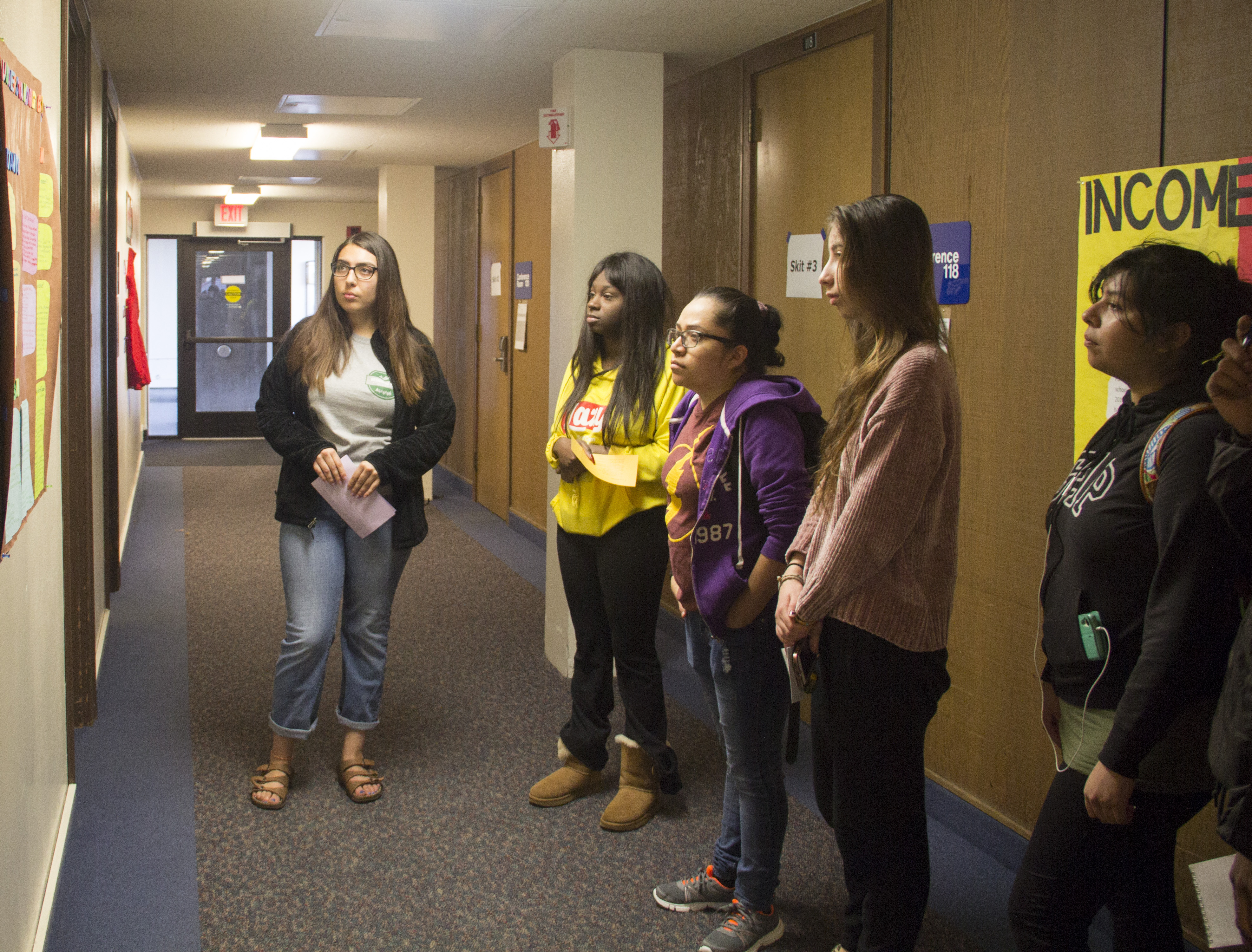
    The Tunnel of Oppression was a demonstration put on by Housing & Residence Life. The tunnel consisted of a series of skits that were meant to spread awareness of different forms of oppression, some that we see every day.

    Sasha Wallace, an area coordinator for Housing and Residence is one of the facilitators of this project.

    “We try to do this every year, but we were unable for the past two years,” Wallace said. “I’m really excited to get it going again.”

    At the start of the tunnel, you are given a guide to lead you through the demonstration and help ensure that anyone who feels uncomfortable can be escorted out.

    The first skit depicted two students walking and conversing in Spanish. A bystander approaches and barrages them with a wall of insults and racial slurs. The interaction ended with the attacker telling the pair to go back to Mexico. The skit was short, but it was something that most people have seen in their lives.

    The second skit was something more relatable for Humboldt State students. Two students were on a computer looking for potential housing options. They get an opportunity to speak to a landlord who sounds assuring that they will get the place. When they arrive to see it, the landlord notices they are a lesbian couple. Immediately, the situation changes when she tells them the place is no longer available.

    Elizabeth Alvarez, an HSU student and the landlord in the previous skit, felt being part of this project would be a good idea.

    “I know there’s a problem with housing discrimination in Humboldt County,” Alvarez said. “I think it plays a huge part as to why HSU students have trouble finding housing.”

    Between the skits, you can look at the various posters on the walls that contain information about different kinds of oppression.

    Another skit showed a young woman at a bar by herself. She is approached by a man who persistently buys her drinks and makes her drink them. Another woman at the bar sees this happening and quickly takes the drunk girl from this man. She sits her down and helps her find a way to get back to her own house. This situation at HSU is often known as a “Check-It” situation.

    Samantha Mariscal, an HSU student and a guide for the tunnel, was excited to be part of this project.

    “It challenges you out of your comfort zone and it makes you think differently,” Mariscal said. “I witness some of these things every day and I just want people to be more aware.”

    The final skit portrayed a student going to a meeting with his career advisor. The student shares his plans to go to UC Santa Cruz to be closer to his single father. He also discloses that English is his second language and he is having some trouble communicating. The career advisor refuses to even make eye contact with the student. Throughout the meeting the advisor is constantly putting him down and telling him to think about more “realistic” options. It gets to the point that the student feels so uncomfortable he asks to see another advisor, to which his request is denied. This skit was unique, as it showed faculty-to-student oppression, which is something a lot of people would not think of.

    The event was in honor of Black History Month, a time designated to recognize the oppression black people face in our country, but was not specifically tailored to the topic.

    At the end of the tunnel, you are taken to a debriefing room where you sit down with another person who lets you unpack everything you just saw.

    Tyler Ramsey, an HSU student, was one of the people helping with debriefing.

    “I’m always talking about social justice and I wanted to debrief so I can hear what other people thought of their experience here,” Ramsey said. “We want to show this to spread awareness. All we can do is educate people and hope they learn.”


  • HSU’s Waste Reduction and Resource Awareness Program offers services to students

    HSU’s Waste Reduction and Resource Awareness Program offers services to students

    By | Kelly Bessem

    School can be a mental and financial struggle, but doing your part to reduce waste on campus doesn’t have to be.  Humboldt State’s student-run Waste Reduction and Resource Awareness Program, also known as WRRAP, has been in operation for almost 30 years.

    The campus services they maintain are free to all students. These services include campus compost bins, water refill stations, zero waste supplies, events such as the clothing swap. Additionally, students can visit the Reuseable Office Supply Exchange House, where students can find free school supplies such as notebooks and writing utensils.

    Environmental science major Crystal Singletari was glad to find out that the ROSE House was there to provide an option other than paying expensive prices for new school supplies. 

    “The first two weeks of school I didn’t have enough binders to reuse and was super unorganized so I went to the bookstore, but they’re so expensive,” Singletari said.

    Rangeland resources major Ishmael Guerrero believes helping to reduce waste is good, but it is often difficult to keep track of waste reduction programs on campus.

    “I’m usually focused on school, work, or sports,” Guerrero said.

    WRRAP is set up to direct students toward reducing waste on campus and in the rest of their lives in simple ways rather than having to figure it out alone. Isabel Sanchez, a business major and natural resources minor has been working for WRRAP for more than two years. Sanchez explained how WRRAP can make waste reduction easier for students to understand.

    “It’s a network that allows for exchanges of waste reduction methods,” Sanchez said.

    Need some encouragement to live a less wasteful campus lifestyle? According to a 2015 estimation, Humboldt State University students collectively dispose of 266,314 pounds of waste on campus each year. That’s about the mass of four humpback whales. Though HSU students always seem to strive for improvement, there is still a whale of a problem.

    Check out WRRAP’s website at http://www.humboldt.edu/wrrap or email their student staff at wrrap@humboldt.edu. The program is there so that reducing waste doesn’t become another daunting school task on your checklist.