The Lumberjack


Students Serving The Cal Poly Humboldt Campus and Community Since 1929

Tag: Big Time

  • Big Time inspires youth in big ways

    Big Time inspires youth in big ways

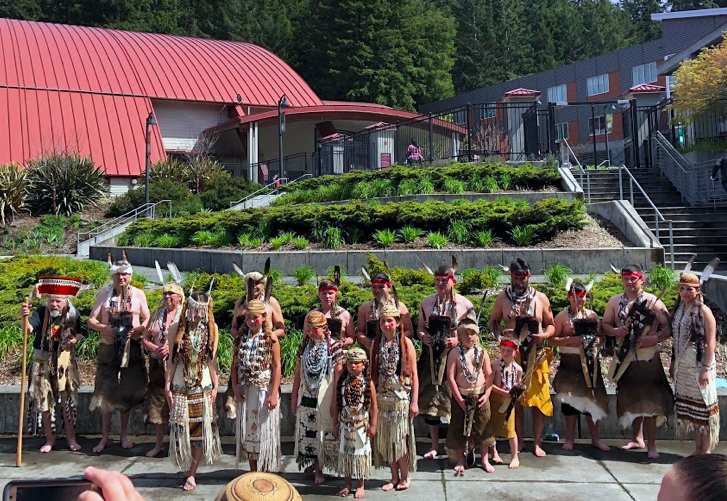
    The Indian Tribal and Educational Personnel Program (ITEPP) hosted their 11th Annual California Indian Big Time and Social Gathering event on April 7.

    Hundreds of people gathered from across California to celebrate and express their cultural heritage inside Humboldt State University’s West Gym.

    Out of those hundreds of people, in particular, were a lot of youth in attendance.

    One of the youth who attended the event was Harmony Taylor. Taylor is 8 years old, and has been dancing for four years.

    Taylor looks forward to attending Big Time every year.

    “I like to dance with the girls I grew up with,” Taylor said. “I only get to see those friends about two or three times a year.”

    Harmony Taylor smiles near the West gym at Humboldt State on April 7. Photo by Garrett Goodnight.

    Cutcha Risling Baldy, Ph.D. is an assistant professor of Native American Studies at HSU, and discussed how Big Time helps inform and empower the youth.

    “It is important because we get to show our next generations that their culture is real and a part of their everyday lives,” Risling Baldy said.

    Arya Mettier, Ph.D., Risling Baldy’s daughter, was also in attendance, and partook in the Women’s Coming of Age demonstration that her mom and many others have been working to revitalize.

    “There’s a lot of people, and you can get a lot of stuff,” Mettier said. “I get to see a lot of different cultures.”

    Sammy and Jon Luke Gensaw are two brothers who have also been inspired by this event ever since they can remember.

    “When I was younger, this was a go-to thing,” Jon Luke said. “I would see people that I haven’t seen all year.”

    The Gensaw brothers created their own non-profit organization, the Ancestral Guard. Through the Ancestral Guard, the Gensaw brothers are able to make direct action on a local and global scale. They recently returned from visiting and speaking at Yale University.

    There were over 60 vendors in attendance along with live demonstrations, a food stand and a catering food truck Los Giles.

    One of the highlights was by far the food. The popular choices were fry bread and Indian tacos, with a line wrapping around the building all day long.

    A restorative vendor at the event was the Indigenous California Language Survival booth. One of the organizers of this booth was HSU assistant professor in Native American Studies, Kayla Begay, Ph.D.

    At this booth, kids were encouraged to share a word in a native language to win a prize.

    “Even if you’ve never heard a native language before, we encourage the children to learn today,” Begay said.

    Humboldt State ITEPP alum Briannon Fraley explained that Big Time gives her children the opportunity to see other cultural representations.

    “Living in a multicultural society, your identity gets lost, and it’s hard to engage,” Fraley said. “This event instills pride and promotes cultural identity.”
     

  • Celebrating Culture and Success at the HSU Big Time

    Celebrating Culture and Success at the HSU Big Time

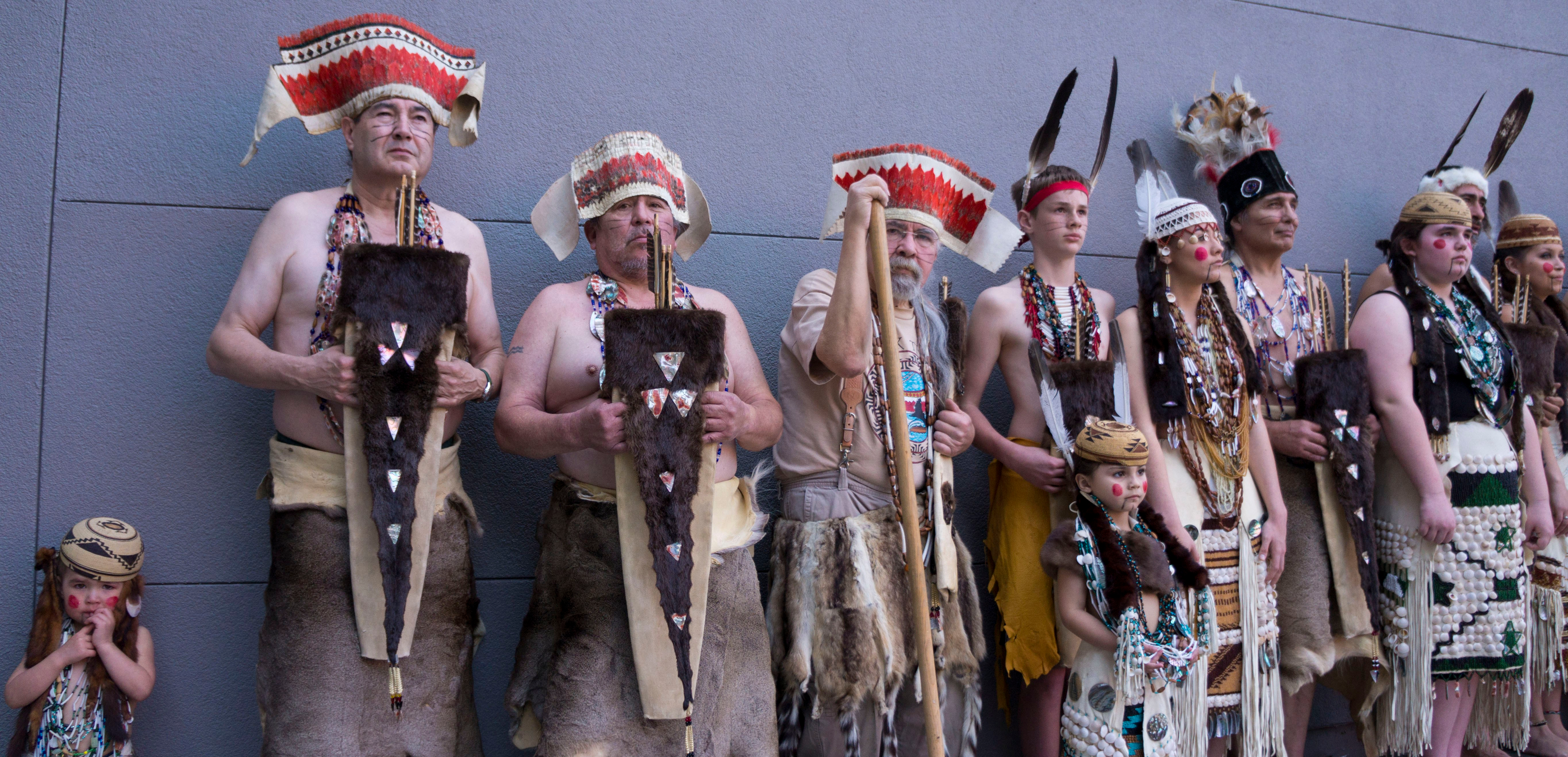
    The HSU Big Time, presented by the Indian Tribal & Educational Personnel Program, is a social gathering with dancing and cultural sharing events. What makes this event unique from other gatherings, is that it takes advantage of the campus to use this event as an educational opportunity for the community. Vincent Feliz, Chumash Master of Ceremonies, explained the songs and prayers during the event and introduced the dance groups from the Santa Ynez Chumash to the Tolowa Nation in Del Norte County. Each dance group also said who they are and where they come from, then lists the songs they sing. Along with the dance demonstrations, there were many cultural sharing events outside the arena that featured men’s and women’s gambling, basket weaving, carving, and a children’s tour of the fish hatcheries.

    Photo by Stella Stokes

    Feliz began the Big Time with a prayer with Julian Lang, a local Karuk storyteller. Then Feliz sang a grounding song with Lyn Risling, a local Yurok/Karuk/Hupa artist.When Feliz introduced the first dancers, the Maidu tribe, he explained they were one of the first tribes ITEPP invited to dance. They invited more tribes to dance and incidentally, Feliz said they decided to bring other California tribes. Chairs surrounded the dance arena in the West Gym, and each dance demonstration brought in a bigger crowd.

    After the Chumash singers finished, Feliz invited the ITEPP alumni and students who are graduating this year to the arena. He called out everyone by each name.

    “People wonder how we treat our introvert Indians,” Feliz said to the crowd. “We call them out.”

    A crowd of 30-40 people came, including some HSU faculty like Pimm Allen, who is one of the coordinators of the Big Time. They were met with a Chumash honoring song to thank them. Earlier that morning, ITEPP hosted an alumni breakfast to honor them.

    Photo by Stella Stokes

    Feliz emphasized the importance of  educated Indigenous people and the need for the Indigenous youth to succeed on a national and state level. On the HSU Fast Facts of the fall 2016 semester, there were a total of 89 students identifying as American Indian which makes up about one percent of the total student population. That population reflects the one percent of the national American Indian population in the U.S. at nearly three million citizens, according to the 2010 U.S. Census. The ITEPP’s mission is, “to facilitate and promote academic success and self-efficacy for primarily Native American Indian students at Humboldt State University.”

    Students in ITEPP like Bryce Baga and Adrian Romo would hang out at the Brero House, where ITEPP is located. They would study, talk to the advisors, or just hang out with other students. Baga also offers beading classes on his free time. He admits that being a double major in Native American Studies and Economics can be difficult.

    “It’s two completely different ways of thinking,” Baga said. “In my NAS classes, it’s all about community and connection. But in Economics, it’s all about-”

    “Supply and demand,” Romo said.

    “Yeah,” Baga said. “Just make money.”

    They were on the table to sell t-shirts to benefit ITEPP. There were more tables that featured non-profits and health programs from United Indian Health Services. The men’s gambling tournament was hosted by a newly founded non-profit called Ancestral Guard, whose goal is to teach Indigenous youth their culture. Founder Sammy Gensaw IV hopes to connect with Chile to fight for their water rights, just as the local tribes are fighting for water rights on the Klamath River. Having a student’s culture validated helps them succeed and help their communities, and the Big Time celebrates that.