The Lumberjack


Students Serving The Cal Poly Humboldt Campus and Community Since 1929

Tag: Biological Sciences

  • Mammalogy and more: the wonders of the Vertebrae Museum

    Mammalogy and more: the wonders of the Vertebrae Museum

    by Emma Wilson

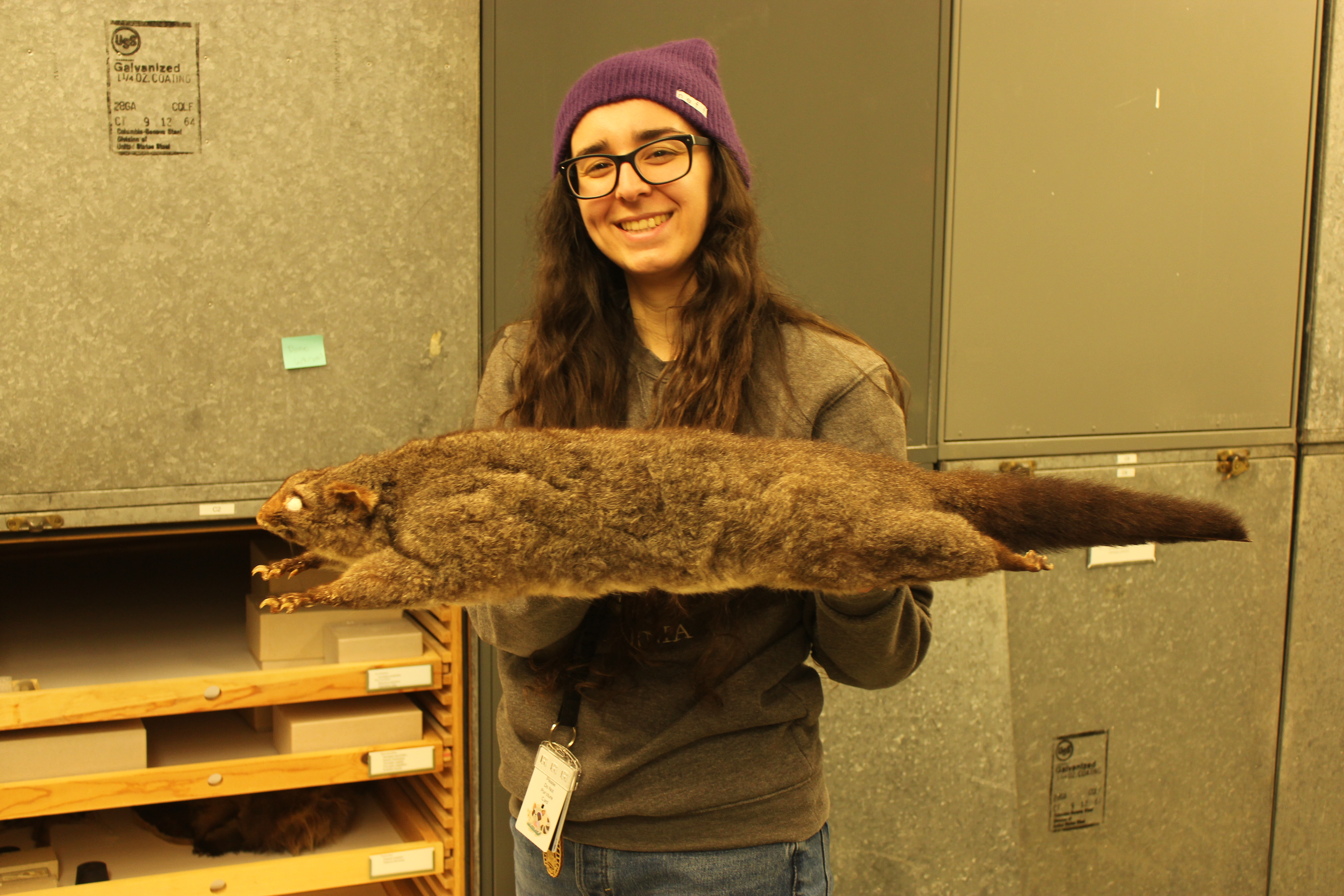
    In the depths of The Science C building, the Vertebrae Museum is home to carefully preserved specimens to help students understand the diversity and evolution of mammals. 

    Dr. Silvia Pavan, a professor at Cal Poly Humboldt and museum curator for the Vertebrae Museum, moved to Humboldt County in Jan. 2022. 

    “I teach mammalogy, which is a popular course a lot of students take in the natural science programs,” Pavan said. “Mammalogy is a class offered that covers lectures and labs. In the lectures, we cover general aspects of mammals, starting with the characteristics of mammals, origin and evolution of mammals. That’s the first part of the three main blocks along the semester.”

    The second block is functional morphology, a branch of biology that deals with the form and structure of organisms and their features. These include integument (hairs, glands and nerves), movement, acquiring and processing food, environmental adaptations mammals have to live in different habitats and communication.

    Finally, in the third part of mammalogy, the lecture covers more ecology, social systems and living in groups. In the mammalogy class, Pavan also talks about conservation and museum science. This includes what they do with museum specimens, and how museum specimens can inform us about diversity, evolution, conservation, ecology and aspects of mammals. 

    Digitalization and making data available online is one goal curators like Pavan are organizing. At the museum, guests can look at which species they have a tissue sample of that could be used to assess DNA sequence and what tissue collections they have. This is going to be part of the database as well so the scientific community can use the museum’s collection.

    “That’s what we are doing now. I think that’s the main thing for the museum, we are trying to make our collections broadly used for everybody,” Pavan said.

    The vertebrae museum is also home to a colony of dermestid beetles. These are tiny little insects that feed on dead animal tissue and clean flesh to the core of the bone.

    “When we prepare a specimen, and you get the flesh, it’s a way of getting the flesh out; they eat the flesh and they leave the bones,” Pavan said. “The beetle’s way of living off the bones and having the skeleton ready for being analyzed.” 

    Alyssa Semerdjian, the collections manager for the Vertebrae Museum, maintains the specimens and helps volunteers get their foot in the door.

    Anyone can volunteer at the Vertebrae Museum on Friday, from 12 p.m. to 5 p.m. If someone wants to come work on something, Semerdjian can show them how to apply.

    “If someone wants to come work on something, I’ll be the person that’s here to get them started and stuff,” Semerdjian said. “If they’ve never done it before, I’ll be the person to walk them through it. My job is general upkeep and database work,”  

    Semerdjian explains why mammalogy (study of mammals) and ornithology (study of birds) classes are important. Classes like these teach students about looking at details in a way that you don’t think about. This is true for anything where you’re looking at really fine-scale features.

    “For birds, specifically, going into that class, the birds are brown, and they fly around. Then as you start to see them, you see that there’s so much more, there’s so much diversity and you can’t go back to thinking that they’re all the same once you’ve seen that they’re different,” Semerdjian said. “Even within that, there’s a couple of things when you look at a bird, you want to look for — big wing, bar, size, shape, whatever — there’s like a list of features and it really taught me to zoom in on those features. You can see the bird for a second and it flies away, and just from having glanced at it, you can figure it out.”

    Having the skill of knowing what features to look for and how to apply them is useful in a lot of different contexts. If you can do that for one category, you can do that for any category. You just need to learn what features to focus on. There are some transferable skills like paying attention to the small details. 

    Knowing about the diversity that’s out there is important. There are people who didn’t know about some of the local species the university had until they checked out mammalogy. The really difficult mammals to find are some rare or endangered ones that people just don’t know about until they’re taught through these courses. 

    “If you want to do research or go into wildlife, taxonomy is important and is a big deal. In a lot of research fields, it ties into evolution and branches off into so many different niche fields that people can go into,” Semerdjian said. 

    Pricilla Ceja, a graduate student at the university, is in the biological science graduate program and is a TA for the mammalogy class with Silvia Pavan for the first time this semester.

    One goal Ceja hopes for in the future of mammalogy classes is to have more animal fieldwork. In zoology, there isn’t much to do with animals other than invertebrates. For bigger mammals, there isn’t really any way to see these mammals up close and alive. 

    “People in my class say, ‘Oh, how come there aren’t live specimens?’ And I’m like, well, there’s no one to take care of them, there is no one to catch them and then there’s nowhere to put them,” Ceja said. “There’s just no room for people to bring in space. There’s just not enough resources for live mammals.” 

    Ceja wants the Vertebrae Museum to be recognized more at the university because they constantly need volunteers. 

    Anyone who finds dead animals that were hit by cars or found deceased can bring them into the museum for research and volunteers. 

    “You’re going to see all the weird little stuff we have. I’m surprised by every lab too. Like I didn’t know we had a fucking wolf!,” Ceja said. “I was like what the heck is this? That is so cool.”
  • Green Thumbs at the Greenhouse

    Green Thumbs at the Greenhouse

    Dennis K. Walker Greenhouse provides a haven for a diversity of plant species

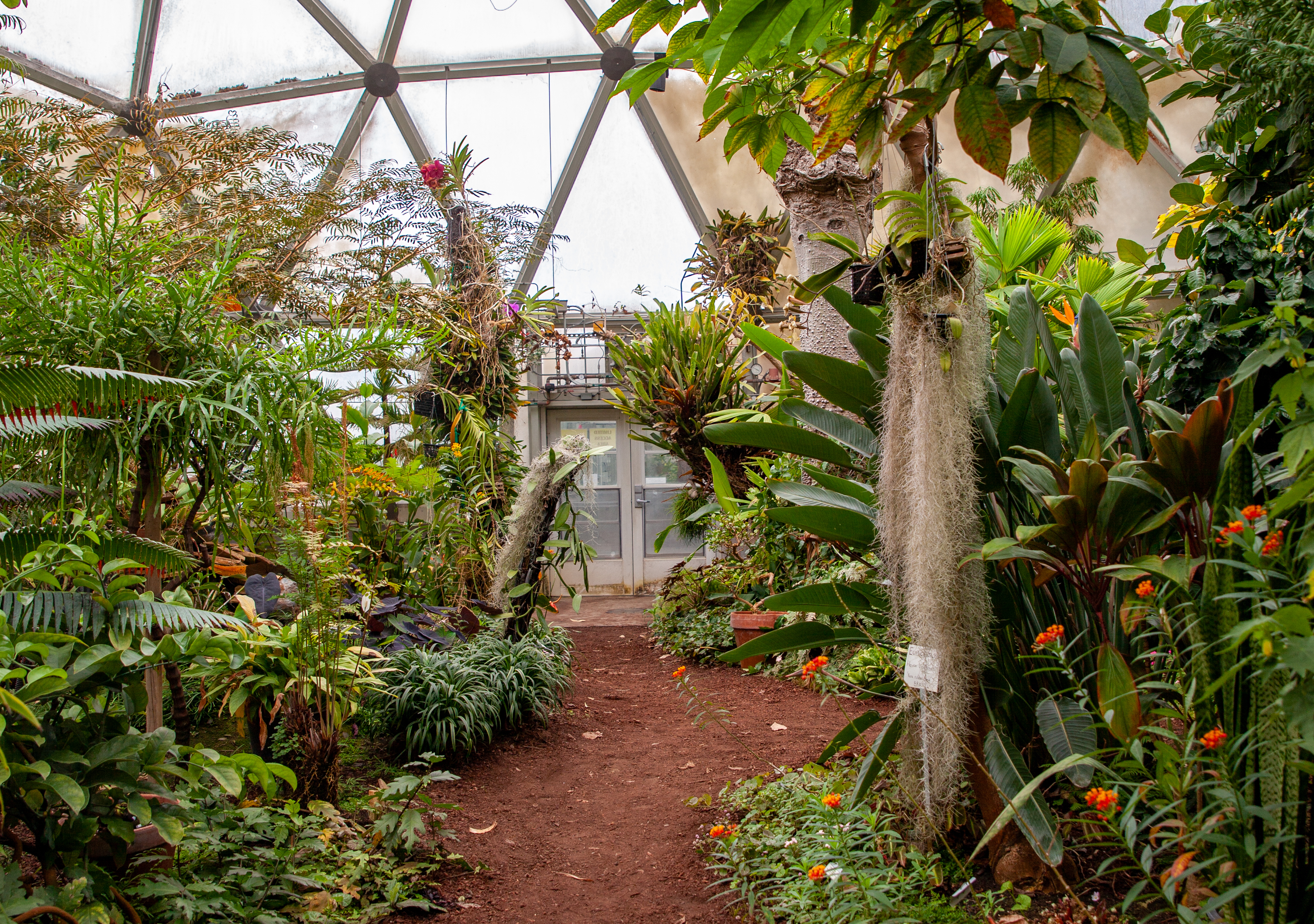
    A sky full of grey clouds smothers the sun and with a chilling breeze even the most layered person shivers down to their toes. One step into the Dennis K. Walker Greenhouse transports you away from the cold into a world of warm, enticing, vivacious plants.

    There are six rooms in the greenhouse: temperate, tropical, desert, fern, aquatic and the subtropical dome. Each room has an appropriate climate and a resident community of plants. Greenhouse manager Brianne Lee, along with student assistants Dabid Garcia and Courtney Harris, maintain the greenhouse at Humboldt State.

    “Essentially, the greenhouse is a living museum,” Harris said. “It’s something that we are trying to preserve here and not kill with love.”

    The large botanical collection contains more than 1,000 species of plants belonging to 187 families. According to the Department of Biological Sciences website, students and faculty studying botany and biology use the greenhouse and its plant life to research and learn.

    Harris, a botany major, said the greenhouse is a magical place, especially since there are only two student positions. After transfering from the College of the Redwoods in 2017 Harris was hired as an assistant.

    “It feels like a unique experience being that this is such a cool staple and an important part of the botany program,” Harris said.

    The job of a greenhouse assistant consists of maintaining the facility and its residents residents, which means sweeping the rooms, hand watering plants, managing pests and propagating plants.

    “Essentially, the greenhouse is a living museum. It’s something that we are trying to preserve here and not kill with love.”

    Courtney Harris

    Garcia, a rangeland resource science major, said that there’s a lot of care and research that goes into the plants, but the goal is to make sure the plants are happy and thriving.

    “Every species needs their own little formula of fertilizer,” Garcia said. “Some require more nitrogen than phosphorus and some others more potassium. We have to do our own research and sometimes that research isn’t available, so we’ll give the plant fertilizer and see how the plant reacts to it. A lot of our plants are really rare in the wild.”

    The trio look out for signs indicating whether something might be wrong, such as droopy leaves and discoloration. The team also checks soil moisture levels, but all plants indicate issues to caretakers in unique ways.

    “The biggest challenge is understanding how each plant reacts and responds to the care that we give it, and adjusting our behavior accordingly,” Harris said. “It requires a tremendous amount of teamwork and communication between us.”

    Harris added that some plants don’t like attention while others, if left alone, will wilt and die.

    Mihai Tomescu teaches plant morphology, plant anatomy, paleobotany and general botany. The trio’s work supports Tomescu in the botany department, as well as supporting the biological sciences. Faculty often use plant specimens during lectures and labs.

    “Plants don’t move, and yet they are exposed to pretty much the same challenges that we are exposed to in terms of surviving. There’s all sorts of stressors. They have to procure their food and because of that, just like other types of organisms, have to have some type of behavior.”

    Mihai Tomescu

    Tomescu said his area of expertise and research is plant structure, including topics like how plants are put together, how they grow, how they look and how their features evolve over generations. Some of his methods include digging deep into geologic time.

    “I know how they grow at the cellular level,” Tomescu said. “So coming from that perspective, I realized that one of the most fascinating things about plants that people don’t realize is that compared to us animals, and compared to what we think of in our culture about aliens, is that plants are more alien to us than the craziest aliens that human imagination has come up with.”

    In his classes, Tomescu has his students visit the greenhouse three to four times a semester for assignments and brings live samples for labs when examining roots, leaves, stems, cells and other internal parts of plants.

    “If you have a big botany program that emphasizes organismal biology, the diversity of plant groups and so on, then it makes sense to have something like this,” Tomescu said. “How else are you to teach your students about the diversity of plants if you can’t show it to them alive.”

    Some people may question the general interest in plants because at the surface they seem not to do anything. But Tomescu said that if you are able to slow down and get pass the green blur of a forest of plants, you’ll come to find some interesting organisms.

    “Plants don’t move, and yet they are exposed to pretty much the same challenges that we are exposed to in terms of surviving,” Tomescu said. “There’s all sorts of stressors. They have to procure their food and because of that, just like other types of organisms, have to have some type of behavior.”

    Plant behavior is what a plant does, including how it grows. According to Tomescu, plants have control of their growth, from the depth of their roots to the direction of their leaves.

    “The plant makes a lot of choices because growing in one direction or another means spending energy,” Tomescu said. “It’s very calculated — not consciously calculated– but basically plants sense their environment very well.”

    In the broader sense, he said that plants make him think. Tomescu hopes more people will become interested in plants since they are so different compared to other life forms.

    “It’s kind of exhilarating to realize that we live next to these super weird organisms,” Tomescu said. “It maintains this fascination that there are these organisms that do the business of living in a very different way from us.”


    The Dennis K. Walker Greenhouse is available to instructors and students in the Department of Biological Sciences, and access is limited by the availability of instructors or greenhouse staff.

    It is open to the public by appointment or when greenhouse staff are available. If you are interested in making an appointment contact Brianne Lee at 707-826-3678 or schedule a visit via email at bms561@humboldt.edu.

  • Let the deceased rest in peace

    Let the deceased rest in peace

    By | Bryan Donoghue

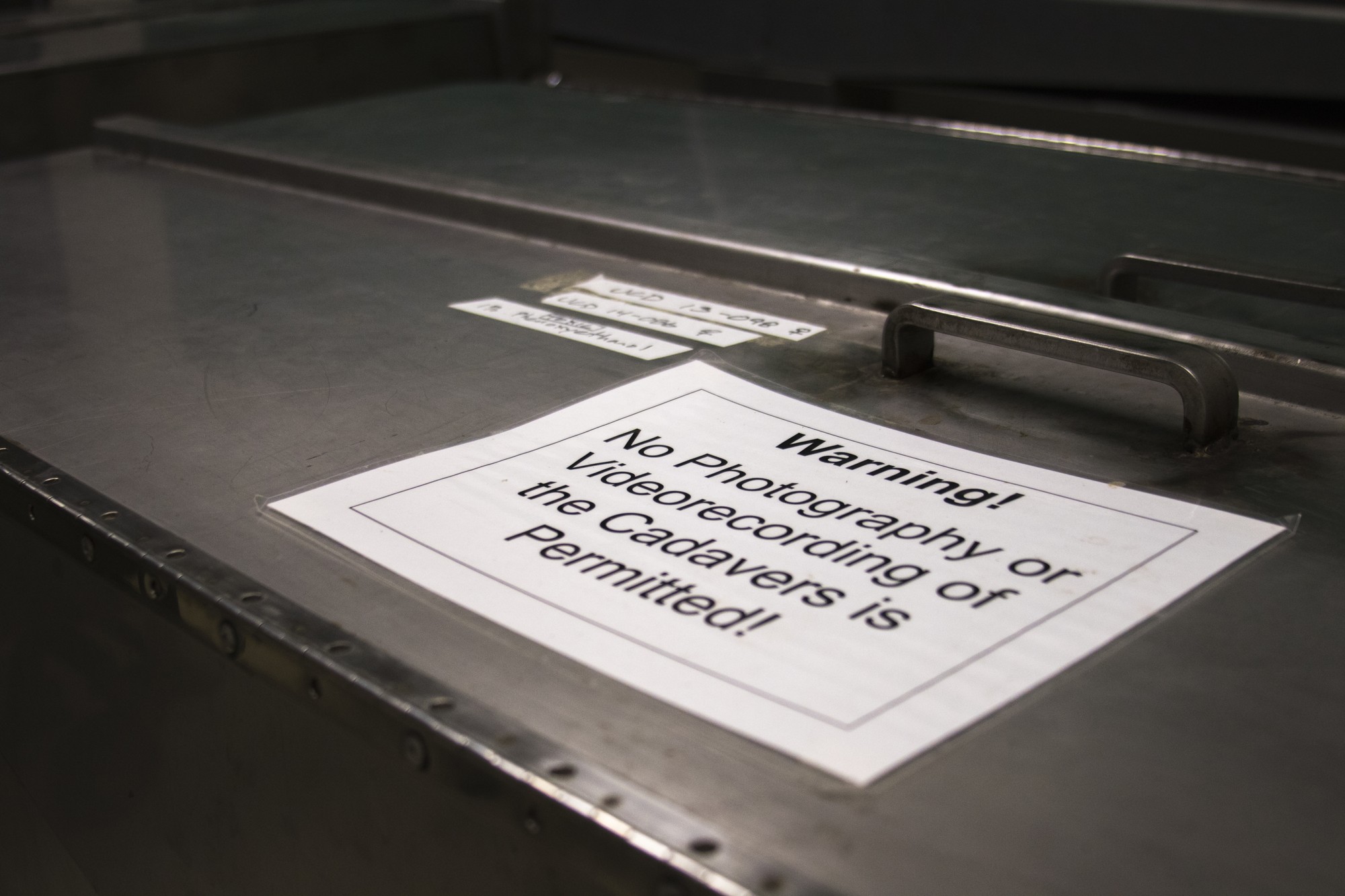
    The Humboldt State University Biological Sciences department rents out four cadavers at a time from UC Davis’s Body Donation Program. John Reiss, a professor of the Anatomy Lab at Humboldt State University explains that cadavers on campus are not allowed to be photographed or shot on video. However, Reiss expresses that he’s seen some interesting things with his class.

    Cadaver Lab-5.jpg
    Skulls of HSU’s Anatomy Lab.

    “Most of the anatomy class here is focused on just learning the normal anatomy, but when something shows up it’s interesting,” Reiss said. “Some of the things we’ve seen are enlarged hearts, associated with congestive heart failure. The heart is extra big.”

    Christopher Mardis-Ruelas is a student who believes in the right to privacy after seeing bodies be dissected. He’s seen some of the private things like an enlarged heart be presented from a donated body.

    “If I was dead, I wouldn’t want people taking pictures of my dead body.” Mardis-Ruelas said.

    Kimberley H. Pipe, the assistant director for the Body Donation Program at UC Davis, talked about why confidentiality is so important. She expresses it in the way of the deceased being a member of your family.

    Cadaver Lab-1.jpg
    John Reiss in HSU’s Anatomy Lab with classroom skeleton. Photo credit: Tyler Boydstun

    “So, think about this. Your loved one, for example let’s say you have a mom who donated to our program, and someone decides to take a picture of your dead mother and then put it up on social media and it’s out there,” Pipe said. “Your deceased mother is, images of her deceased body, are out there on the internet. It’s disrespectful.”

    Videography and photography are strictly forbidden in the

    Cadaver Lab-7.jpg
    John Reiss and Phillip Robinson in the Anatomy Lab at HSU. Photo credit: Tyler Boydstun

    Anatomy Lab. If you visit the lab to see the cadavers, make sure it’s only to pay your respects.