The Lumberjack


Students Serving The Cal Poly Humboldt Campus and Community Since 1929

Tag: birds

  • The Boy and the Heron review: magical on the screen and off

    The Boy and the Heron review: magical on the screen and off

    by Griffin Mancuso

    There is a whimsical quality to seeing a movie in the theater. 2023 was a year with many thought-provoking and conversation-starting films like “Killers of the Flower Moon” and “Barbie.” I rarely go to theaters now, but as an enjoyer of Studio Ghibli films, I had to see “The Boy and the Heron” with the classic theater experience. There is no better place to get the classic theater experience than the Broadway Cinema in Eureka. 

    Like any chain theater, the neon sign on the front had not been replaced in a very long time, leaving only the Y glowing in the dusk. The lobby was filled with the sharp smell of popcorn and the carpets were dull and faded where people had walked. While lacking in staff and attendees, the theater still had its charm in the form of large star lights on the ceiling and orange neon accents around the snack table.

    I settled into my cushy chair just in time for the film to start. “The Boy and the Heron” was enough to bring famed Ghibli director Hayao Miyazaki out of retirement, so I had high expectations.

    Before I continue, a minor spoiler alert for this movie.

    The movie begins with the piercing sound of air raid sirens against a gray backdrop of houses, placing us in World War II-era Japan. We meet our protagonist, a young boy named Mahito living in Tokyo, who loses his mother in a hospital fire on that night. Years later, Mahito’s father marries his late wife’s sister Natsuko and moves them to the countryside.

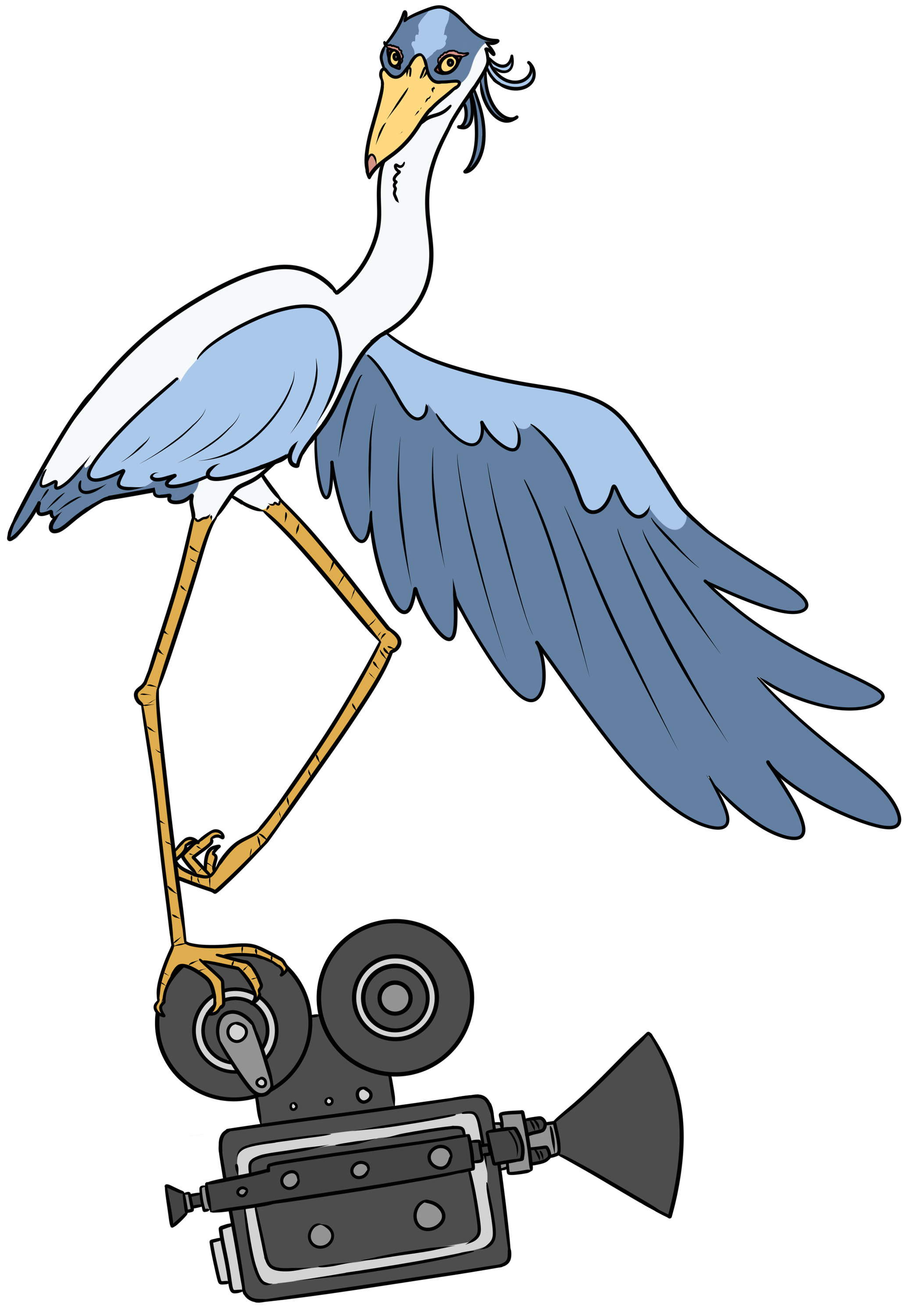
    While trying to adjust to his new life and the loss of his mother, Mahito encounters a strange talking heron who tells him his mother is alive and needs to be rescued from another world. The heron, a mischievous creature who we soon discover is not a heron at all, also traps Natsuko in this alternate world, forcing Mahito to track down the heron and travel to the other world.

    The film tackles themes of family, loss and escapism that mirror Miyazaki’s own experiences. Like many of his films, it is a coming-of-age story that requires the protagonist to embrace fantasy to grow, then let go of it in order to move forward. The parallel world Mahito travels to acts not as a purgatory, but rather as a gateway to many alternative universes. This world contains wild creatures ranging from giant man-eating parakeets to small white blobs called the warawara, which eventually ascend to the human world to be born as human babies. 

    Along his journey, he meets younger versions of the people in his life, including one of the old women living in the countryside house with him and his family. There are so many layers to the world of “The Boy and the Heron” that it feels like a mix of a child playing pretend and a ƒvivid dream.

    The magical wonder of the film didn’t stop at the screen. I’m not sure how it got into the theater, but a small sparrow briefly joined us. It fluttered around the ceiling, adding a bit of immersive surround sound, and the audience couldn’t help chuckling when it settled in front of the projector, leaving a giant bird-shaped silhouette on the screen. It didn’t linger long, but just enough to make me wonder about the irony of its appearance.

    No matter the quality of the story, a Studio Ghibli film never disappoints in the animation category. The characters, while simple in design, move fluidly against meticulously painted backgrounds. Studio Ghibli is famous for preserving the art of hand-drawn animation and drawing on physical media, which helps preserve the detail in the backgrounds. Any use of 3D animation only enhances the magical effects throughout the film, and it is impossible to tell where the hand-drawn animation starts and the 3D animation ends.

    The story itself is complex and the world doesn’t always make sense, but I think it’s meant to be that way. Like most other Ghibli films, the story moves at a leisurely pace and then rapidly picks up the pace in the final act. It is one of Miyazaki’s more esoteric films, which may not appeal to everyone. The meaning behind some of the recurring motifs like birds and fire are up to interpretation, which impacts what each viewer will take away from the film. 

    “The Boy and the Heron” is an individualized experience that doesn’t fully reveal all its secrets. There are story elements that are never explained and blurs between dreams and reality. To fully enjoy the film, viewers will have to put that aside and inhabit the mind of a curious child.

    While not my favorite Ghibli film, I greatly enjoyed my experience watching it at Broadway. As I left, feeling dazed from the visual explosion at the end of the film, two staff members stood near the exit wondering how the bird got inside and where it flew off to. I like to think the bird wanted to appreciate Miyazaki’s work.
  • Sweet Songs, Fancy Feathers, Birds Bang

    Sweet Songs, Fancy Feathers, Birds Bang

    The sex life of a bird is no simple thing

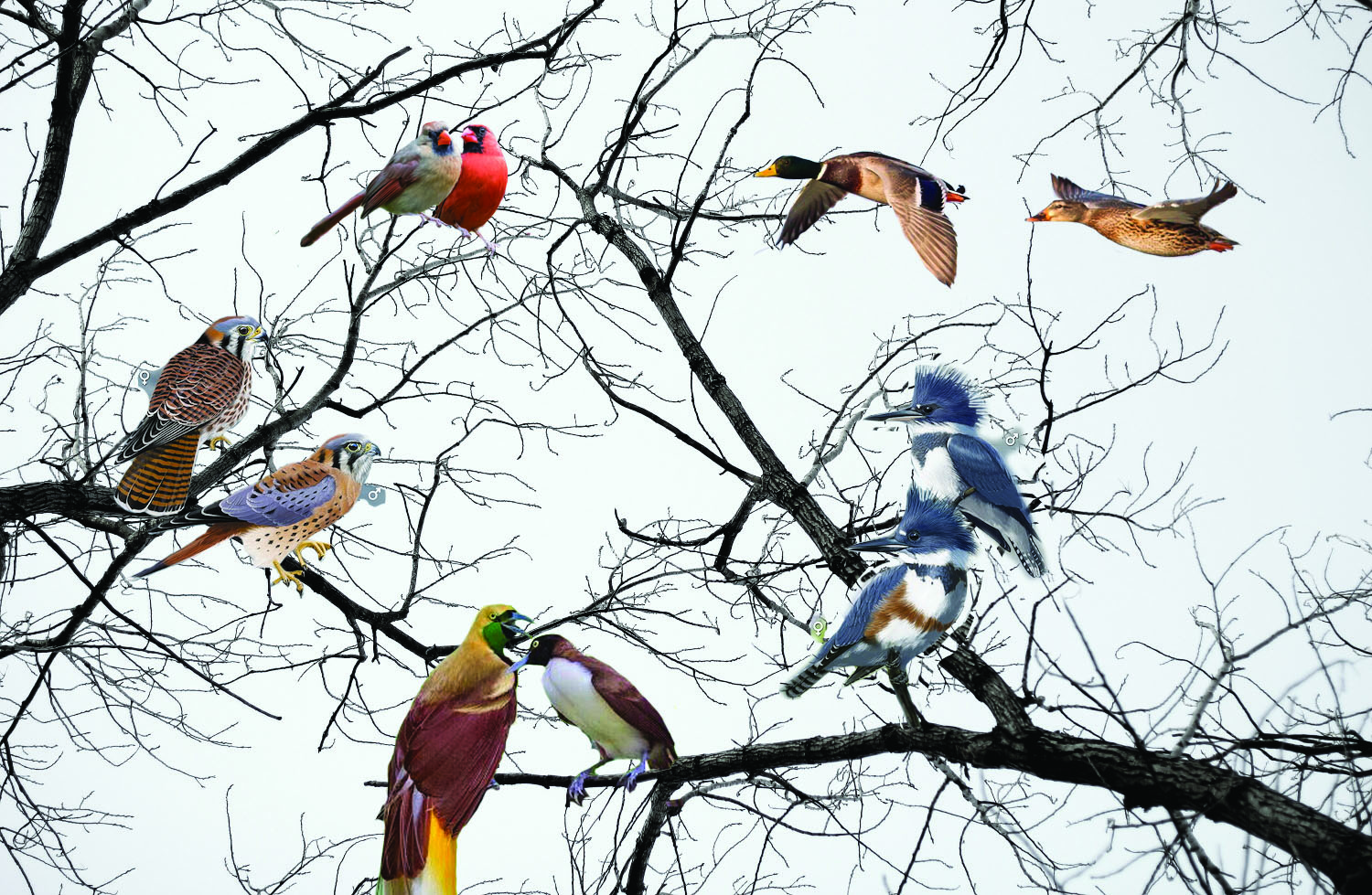
    Sex is a heck of a thing in the animal kingdom. Species of birds, insects, mammals and fish have developed a whole bunch of strategies to get laid. From mating dances to beautiful plumage to carefully engineered bachelor pads, the birds have come up with all sorts ways to strut their stuff.

    Wildlife junior Hannah LeWinter commented on how much effort birds put into reproducing. She remarked on the McGregor bowerbird’s tower—a three-foot-tall structure made of carefully placed twigs, attesting to the bird’s dedication.

    “When we think of animals, we assume they do the basic things like mate and get food and make shelter, but they really do have complex [behaviors] too,” LeWinter said. “They make these intricate structures to impress females to say that they are the best suitors but those structures serve no purpose besides attracting a mate.”

    “We think of animalistic sex of doing it only because you need to reproduce, but there are these animals that create these gestures like a pebble or a structure or a dance.”

    Hannah LeWinter

    Commitment to the craft is just the first step of courtship. The picky female bowerbird inspects her suitor’s structure, carefully judging sturdiness of the construction before joining the male on the forest floor. Then, the show really starts.

    The male bowerbird possesses the ability to imitate sounds and begins a showcase of what he’s learned. His voice can emulate everything from birds and animals in the forest to the sounds of human civilization.

    Once she’s satisfied with his performance, the male begins his dance. A chaotic shuffle from one side of his tower to the other, darting towards the female while flashing a bright orange haircut at her. Once he’s done with his groove, she submits and they do their thing.

    “We like to think we’re the only people or the only species who do that,” LeWinter said. “We think of animalistic sex of doing it only because you need to reproduce, but there are these animals that create these gestures like a pebble or a structure or a dance.”

    The McGregor bowerbird works every year to maintain his tower, but there is no expectation in the species to mate with the same female every year. Jeff Black, a wildlife professor at HSU who studies birds, published a collaborative book with 20 other ornithologists titled “Partnerships in Birds: A Study in Monogamy.”

    “We asked the question, ‘How special are bird partnerships or pair bond?’” Black said. “We asked, ‘How long do mates stay together?’ ‘Are they really faithful?’ ‘Do the faithful ones fare better than the ones that alternate and are less monogamous?’”

    The answer: it depends. Black and his fellow ornithologists quantified bird fidelity on a sliding scale ranging to very faithful to not at all faithful. They also investigated the behaviors between social pairs—pairs who spend their time together raising the young, foraging and nesting together—and genetic, or mating pairs.

    “Birds lay their eggs in a basket,” Black said. “When you look at all the 10,000 different types of birds, some birds even though they’re monogamous, when you look at their babies, the genes come from someone else.”

    “When you look at all the different studies, you can plot out how faithful they are. Swans are 100% faithful, the jays would be about in the middle and other species are just having sex everywhere.”

    Jeff Black

    Faithfulness or lack there of may have a couple of purposes, although the hypotheses are not totally fleshed out. One hypothesis is that, if a female searches for a new male mate, she may be looking for a more fit male than her social partner, and engage in what Black called extra-pair copulation.

    HSU River Ecologist Alison O’Dowd explained fitness is a measure of the ability for an individual to pass on their genes. Similar to natural selection, sexual selection is when a female looks for certain characteristics in their male partner, ranging from vibrant feathers to well constructed towers to perfectly executed dances.

    Black endorsed fidelity in birds. He said in geese and swans for example, more faithful pairs are more likely to successfully reproduce. Their offspring are also more fit for when they’re looking for a mate of their own. There may be a case for faith yet.

    “When you look at all the different studies, you can plot out how faithful they are,” Black said. “Swans are 100% faithful, the jays would be about in the middle and other species are just having sex everywhere.”

  • Pollinator Predicaments

    Pollinator Predicaments

    Climate change affects the lives of birds, butterflies and bees

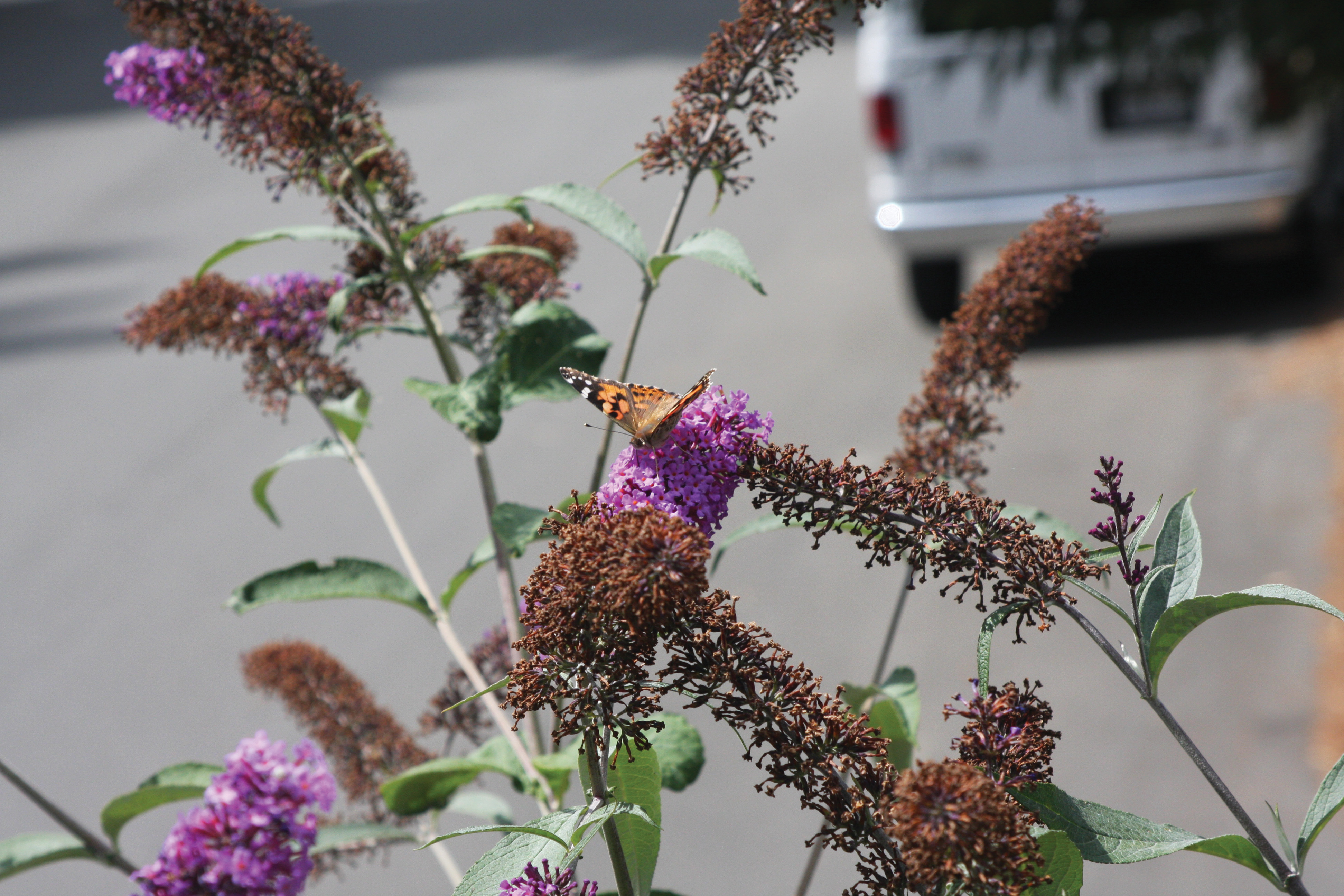
    Pollinators matter! Right under our noses a huge community of ants, butterflies and bees are hard at work to make sure the world gets fed. The climate crisis is turning up the heat on these poor guys, and our many-legged friends are at risk. Here’s some information on how pollinators are still doing their best to help us out.

    A solitary silver bee perches on a yellow flower to drink nectar. Notice the yellow pollen on its legs which it will bring to the next flower it drinks from. | Photo by Rand Rudland

    Flowering plants and pollinators have a unique relationship with one another. Ecologists and biologists pay attention to special events in these organisms’ lives which mark growth and development. The science of studying life events is called phenology.

    Ideally a pollinator will hatch from its egg or develop from its pupa and leave the hive around the same time its flower of choice blooms. The timing of these life events is important because if a bug emerges too early or late, it may miss a plant’s flowering completely. No flower equals no food, and that’s no good.

    After emerging, the pollinator goes searching for nectar. The sweet liquid is energy-packed food for bugs. When a pollinator lands on a flower, it picks up pollen. As it continues to look for nectar, the pollen is shaken off and sticks to other flower’s pistils, the female organ of the plant. Pollen travels down a shaft to fertilize the ovary, which begins to go through mitosis and eventually produces fruit.

    Tayloranne Finch and Melanie Honda are two farmers working on the Bayside Park Farm in Sunny Brae who get to interact with pollinators every day. Without pollinators, their farm would be a bunch of fruitless bushes.

    Finch said the farm was working with the City of Arcata to build a permanent solution, a perennial native pollinator garden. The garden would have year-round plants that local pollinators prefer, supporting the local habitat organically.

    Tayloranne Finch, left, and Melanie Honda, right, are farmers at Bayside Park Farm. They spent a sunny afternoon pollinating corn by walking through the rows, swaying their arms back and forth. Every week is a volunteer friday at Bayside Park Farm on Old Arcata Road in Arcata, CA 95521. | Photo by Collin Slavey

    “We’re installing plants that will be there forever. It makes it easier for pollinators to establish themselves on the farm and it is mutually beneficial for us,” Finch said.

    Small changes in abiotic, or physical non-living factors, can alter life events. There are many changes in an ecosystem that can affect how a plant or pollinator does its job. Dr. Rachael L. Olliff-Yang and Dr. Michael R. Mesler published a paper in 2018 titled The potential for phenological mismatch between a perennial herb and its ground-nesting bee pollinator.

    In the paper they investigate how temperature affects the phenology of the silky beach pea (Lathyrus littoralis) and its main pollinator, the ground-nesting solitary silver bee (Habropoda miserabilis).

    “Temperature best predicted both flowering and bee activity, although soil moisture influenced the timing as well,” the paper said.

    Their findings imply that in the face of the climate crisis, an average increase in temperature may cause the silky beach pea and the solitary silver bee to fall out of sync.

    “Comparison of linear regression slopes of phenology against temperature suggests that bee nesting time is more sensitive to differences in seasonal maximum temperatures, and may advance more rapidly than flowering with temperature increases,” the paper said.

    A bumblebee looking for lunch landed on this flower to get a drink of nectar. The bee will help pollinate nearby flowers as it continues on its flight. | Photo by Collin Slavey

    Olliff-Yang and Mesler said that it’s important to understand what factors influence flowering and pollinator activity. Their investigation into the bee and the pea is just an example of a broader issue in the world.

    Building habitat is invaluable to local animal communities, as shelter, food and water are critical needs for every living organism. The most simple thing to do is to plant native plants in the front yard, as this will attract local pollinators.

    Local nurseries like Mad River Gardens will be more than happy to teach you about native plants and how you can attract and support our flying friends. As active members of the ecosystem, we all need to do our part.

  • Conserve the Birds

    Conserve the Birds

    By | Michelle N. Meyers

    The Migratory Birds of the Americas Conservation Act was enacted by the Senate and House of Representatives on July 12, 2017. U.S. Senators Ben Cardin and Rob Portman introduced the bill as a reauthorization to The Neotropical Migratory Bird Conservation Act. The bill is intended to promote long-term conservation of Neotropical migratory birds and their habitats through a grants program, and so far, it is the only federal U.S grant program available throughout the Americas dedicated to the conservation of migratory birds.

    This slideshow requires JavaScript.

    Projects part of MBACA benefit most of the 386 bird species that breed in the continental United States or Canada and spend the winter in Mexico, Central America, the Caribbean, or South America. In addition, MBACA works to protect over 4.2 mill. acres of bird habitat, spanning across thirty six countries, according to The U.S. Fish and Wildlife Service.

    The North Coast of California happens to be one of richest areas in the country in terms of avian diversity, between some 300 and 350 species of birds can be found from just offshore, all the way to the first inland ridge-line. Humboldt Bay in particular is a vital stop for birds migrating along the Pacific Flyway which is a route used by millions of birds for migration to wintering and breeding grounds. The Bay’s coastal mudflats support some of the highest densities of shorebirds in California, housing 60% of all migrating Black Brant, 23% of all migrating and overwintering Western Sandpiper, 44% of all migrating and overwintering Dublin, and 3.5% of all Long Billed Curlews, just to name a few, but there are several other species of birds protected under the act that migrate to and through Humboldt County.

    MMBirds_Web-5.jpg
    Great Blue Heron with Mallard Ducks at Klopp Lake. Photo credit: Ian Thompson

    The Humboldt Bay Wildlife Refuge, located within the Pacific Flyway, serves as a key migratory stopover and/or wintering area for several species of waterfowl and shorebirds. “The purpose of establishing the refuge was to provide habitat for those birds for their Wintering stopover.” said Kurt Roblek of the Humboldt Bay Wildlife Refuge. “Let’s say for example… Aleutian Cackling Goose, we provide Wintering grounds for that species…whose numbers were very low before the bird was listed.”

    While he was not aware of Migratory Birds of the Americas Conservation Act itself, he says that-

    “We do have projects that will have direct benefits to those species. Such as our White Slough Restoration Project, where we are creating salt marsh habitat along the edges of Humboldt Bay.”

    • How exactly are you creating these habitats?

    “We are actually taking fill material and we are increasing the elevation behind the levees, so when the levees breach, that land will be high enough that it will be salt marsh.”

    • So what happens when it breaches?

    “So once it’s breached… In a few years, through passive and active restoration of that habitat, we will create something that used to exist, but didnt… we’ll bring it back.” Says Robleck. “Pre-human, or pre-white man- In the past, there was salt marsh”

    MMBirds_Web-4.jpg
    Looking out towards Arcata Bay at sunset from the marsh. Photo credit: Ian Thompson

    *

    George Ziminsky of the Arcata Marsh Interpretive Center, board member for the Friends of the Arcata Marsh, and graduate of HSU felt similarly about the necessity of our coastal habitats, stating that “Most migrating birds need mudflats for the invertebrates they eat.” Yet, a lot of the other habitats along the Pacific Flyway migratory birds rely on have been compromised, such as “Down in San Francisco Bay, places have been dyked and filled in so what was normally habitat for food for them, just had soil brought in and dumped on top of it.” He stated that over at the Arcata Marsh they are doing what they can to “create a more diverse habitat” and “restore what was taken away.” He also expressed that the city actually has been very involved in their efforts to restore the salt marshes.

    “A Lot of the areas west of I Street was being used for agricultural land, 15 to 20 years ago, and the City of Arcata has removed part of the levee and took out the tide gate.”

    As of now, The Arcata Marsh, includes around 307 acres of mixed habitat and serves as a solid foraging place for birds on their winter stopover. “The shorebird numbers are in the hundred of thousands in the winter” says Ziminsky

    *

    Jim Clark The Redwood Region Audubon Conservation Director and 4 time president, who graduated from HSU some 40 years ago, states that The MBACA is “the key conservation act that dictates everything from development to hunting,”

    Yet when it comes to avian conservation, “A Lot of it is advocacy,” says Clark. “So we look at the act as backups to those principles. We largely are reactionary, we try to be proactive.” He feels that public awareness, “Going beyond just birdwatching, but understanding a need to protect migratory birds.” plays a vital role in habitat and species conservation. His hope is that one day people will see “that little yellowish’ bird with the black top, Wilson’s Warbler, actually migrates 1000’s of miles. I think that would be an outstanding thing if all the people saw it, better understood what it has to go through to have a life.”

    “About 5 years ago we had seeds of varied thrush, and you wonder why this happens” says Clark

    “If you don’t protect the birds, there won’t be any birders, because there won’t be any birds to watch, to put it bluntly.”

    • How can the public get involved in bird conservation?

    “Be aware of what they can do on an individual basis for birds”

    He recommends “putting reflective strips on windows so you don’t get bird strikes.” In addition, he advises that we also not leave garbage out on the street because it’s attracting crows and ravens, which have now become quite a nuisance. He says that “40 years ago when I was going to HSU I had to get in a car and go over the first ridge inland to see one or two ravens. And now their thick because they’ve learned that where humans live, there’s stuff to eat.”

    In regards to what he has done to keep birds coming to his home, he says “in our yard we have planted red alders, it’s a native tree, and they get infected with little leaf hoppers which the warblers love to eat, sparrows love them too, they need them during nesting season.” In addition he states that he’s “planted native grass instead of the typical lawn.”

    We can also do our part by “Carrying out invasive, non native plants, encouraging native plants that provide food for birds at the right time of the year.” On the same note, “rat ladders” as he calls them, in reference to Ivy in particular, he states, “let’s rats go up into the trees and eat birds eggs” says Clark “The rats love Ivy, they love Pampas grass, and they love Himalayan Blackberries. All 3 of those plants are non native invasive plants.” Yet the birds aren’t the only ones affected by the fuzzy creatures according to Clark, “When you consider rats it’s also a public health issue.”

    • What issues do you see having the greatest effect on the community now or in the near future?

    “I think we’re going to be looking in the future to sea level rise and how that is going to affect the natural environment and how we’re going to live with that natural environment when we have to change our urban planning to accommodate that sea level rise, and it’s already happening.”