The Lumberjack


Students Serving The Cal Poly Humboldt Campus and Community Since 1929

Tag: BLM

  • Unpacking Black Joy with Kirby Moss

    Unpacking Black Joy with Kirby Moss

    By Carlina Grillo

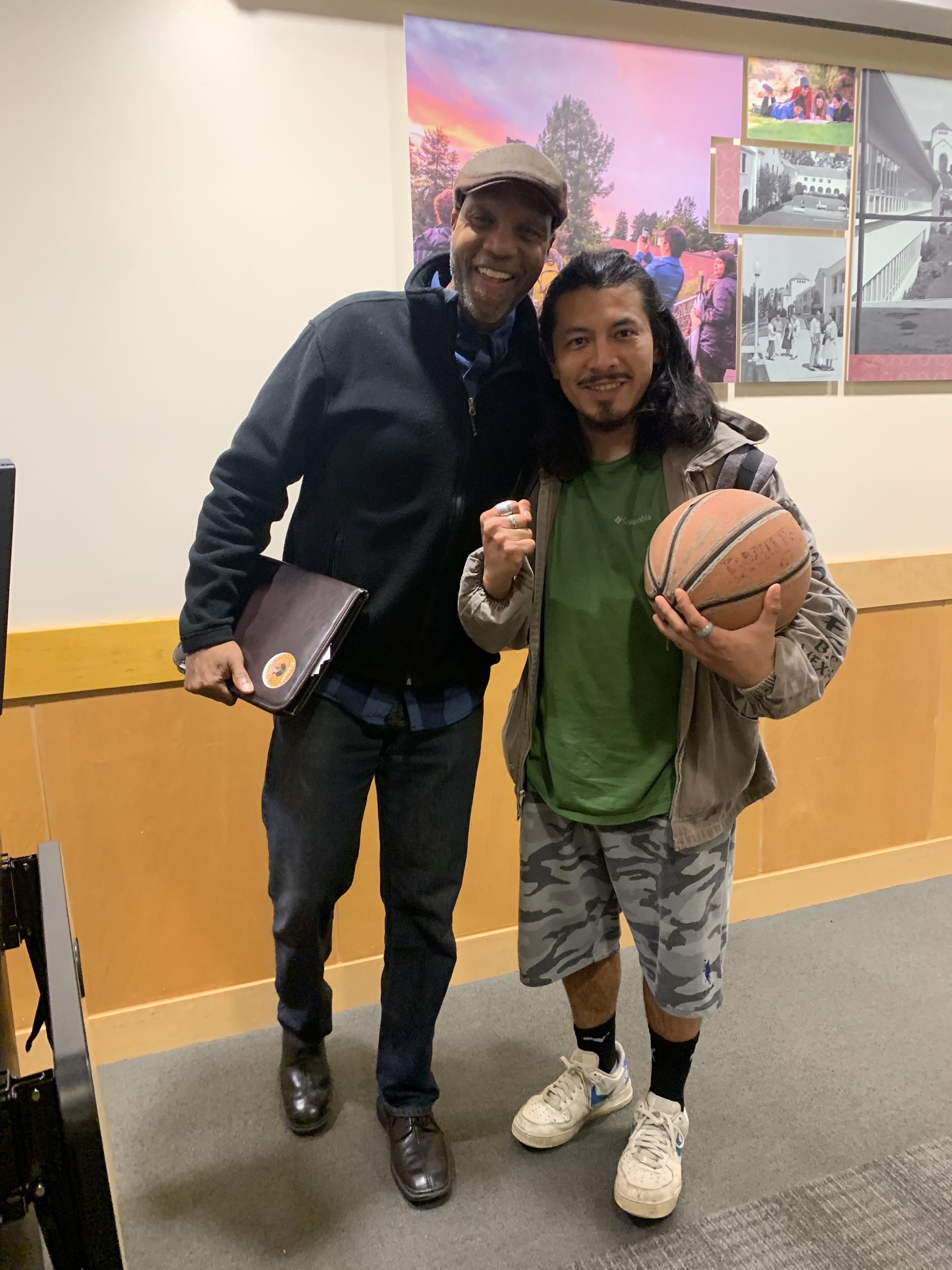
    If money is the root of all evil, when do people feel joyful about it? Kirby Moss, a professor and head of the journalism department at Cal Poly Humboldt, asked nearly 20 students and community members last Tuesday, Feb. 13. It left people stumped. 

    Topics discussed were Black representation in the media, feelings around finances and money, how to navigate being a first generation student while saving money for college, and hypotheticals about splurging on a life experience or saving and investing said money. 

    Rather than lecturing, Moss guided a conversation by asking plenty of thought-provoking questions. 

    “We’re in college, this is an academic setting, this is a setting of intellectual exploration. Do you think we should be learning more about money or not?” Moss said. “This conversation today is about money, but it’s not about material stuff. It’s about autonomy, it’s about options.”

    Aundrea All’love is a community member and business owner who was invited to share their experiences. One experience they have as a Black business owner is balancing mental health and community value, while still recognizing their worth and being paid a sustainable amount. 

    “From going from homeless, to some stability, to slowly growing my business now, the biggest shift I did was to focus on what brings me joy. Having faith in my ability and understanding my value,” All’love said. “I have been choosing more opportunities to make money and less scrumping down on my savings.”

    Jeremiah Keys is a sophomore at Cal Poly Humboldt who shared experiences about college being the foundation for the rest of his life. 

    “It’s not just going to be college then careers. It’s like college, then another college, then career and then struggles in between those things, but I’m still going to get through it,” Keys said. “Providing for my family and friends suits me, because I love doing it. That’s the expression that we love. Do something that suits you, but don’t push yourself to where you end up judging yourself more and more and more, and not looking at all the good that you’ve already done and all the good you can possibly do in the future.”

    This event was a part of a month-long series of events for Black Liberation Month, held by The Umoja Center for Pan African Student Excellence. For more information on upcoming events the Umoja Center can be found on Instagram at @umojahumboldt.

    “Money is not power. It’s all about us,” Moss said.
  • Umoja Center helps people make friends

    Umoja Center helps people make friends

    by Dezmond Remington

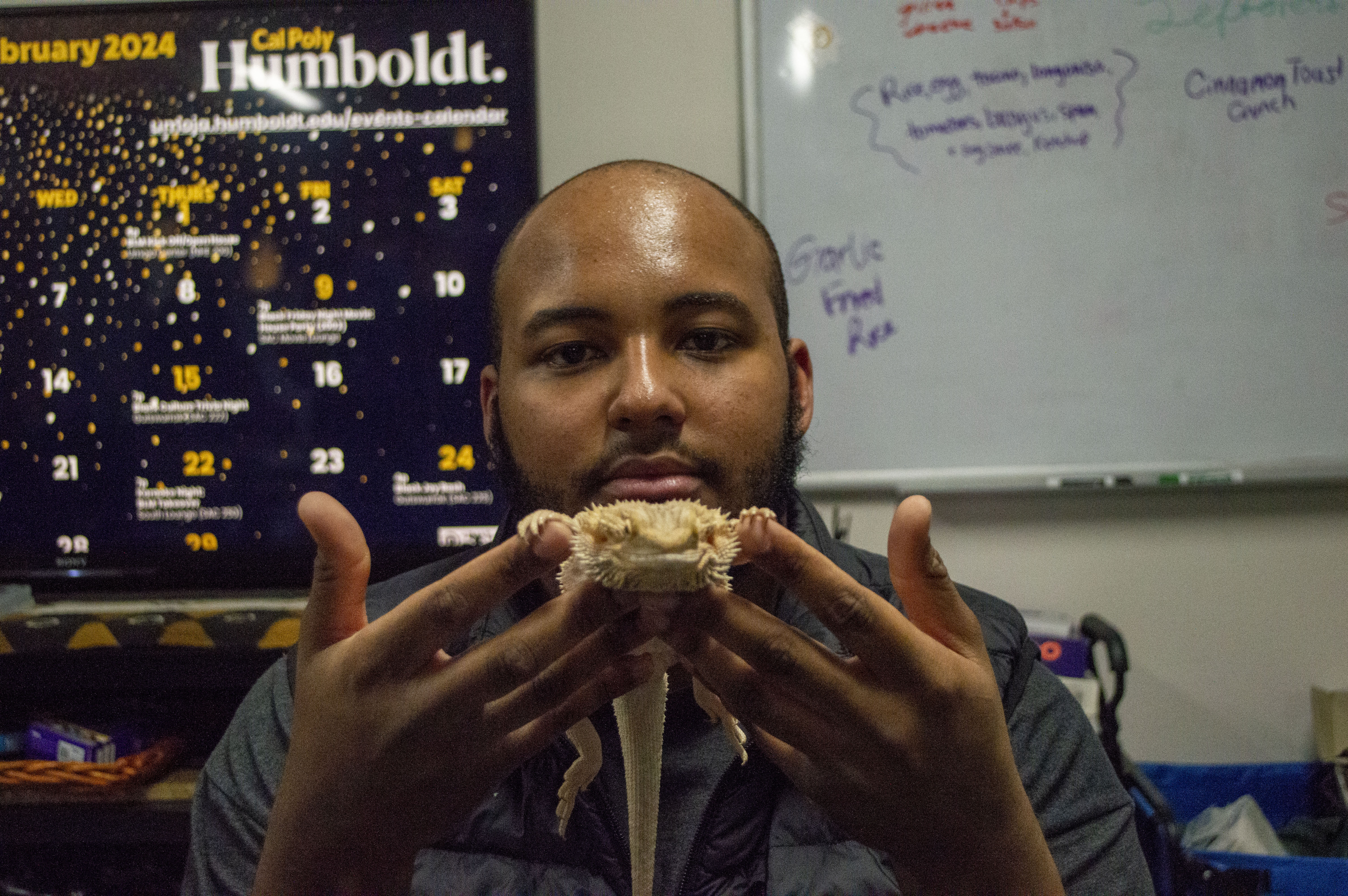
    Tigger doesn’t have any stripes. He isn’t furry, and his jumping skills are horrible. His scales are nice and smooth, and his facial hair rivals a 19th century president’s. Tigger the bearded dragon is just one of many attractions people at the Umoja Center can offer.

    The Umoja Center for Pan-African Student Excellence, located in Nelson Hall East, kicked off a month of events for Black Liberation Month on Feb. 1 with an open house. 

    Student art and photos of Black activists, athletes, musicians, and historical figures line the walls from floor to ceiling. “I love my melanin,” said one sign. A box with loanable art supplies sits at the front desk, free for anyone to use.

    The center hosts many events, such as discussions about Black joy and movie screenings or even a Black trivia night. The center also offers academic advising and computers students can use, but the most important thing most students take from the center is community.

    Many Black students have found community at the Umoja Center — a difficult thing to do when, according to the Cal Poly Humboldt website, only 3% of students at Humboldt are Black. Delaena Montes, a student assistant at the center, said it’s a place she could feel like herself.

    “It’s an open space,” Montes said. “I can reach back to my roots here, my background. I felt like it was somewhere I could be myself. It’s freedom at a very white school. Having a place to escape is a great feeling. I feel comfortable here.”

    Kamar Little holds Tigger the bearded dragon at the Umoja Center Feb. 1. Photo by Dezmond Remington

    Jerry Turner, Tigger’s owner, agrees. He found the center when he was a freshman last year. He’s a mechanical engineering major with a lot of coursework, so having a place to relax and make friends is important to him. 

    “It’s a family,” Turner said. “That’s the best way I can put it… all of my friends I’ve met here, at the Umoja Center. It’s just beautiful.”

    Ryen Price joined the Umoja Center last year after living in the Sankofa House, the Black culture-focused dorm in Cypress. She started coming to the Umoja Center to meet other Black students. She said she’s made a lot of good friends, the type she has potlucks and in-depth discussions with.

    “I love how different we are, but also how similar,” Price said. “We’re like a family here.”

    Montes is surprised more students don’t show up to the center, as well as other culturally-focused programs such as the Indian Tribal & Educational Personnel Program or El Centro, located down the hall from the Umoja Center.

    “People should know about these places,” Montes said. “There’s a lot of culture up here [in Nelson Hall].”

    That doesn’t surprise Kamar Little, a Student Advisory Group for Equity representative at the Office of Diversity, Equity, and Inclusion. Little works to connect students with those centers.

    “I’m making them a bigger name,” Little said. “I’m letting people know things exist. There have been instances where people have never heard of [the programs].”

    Price said anyone curious or doubting should lay those worries to rest and visit the center.

    “People ask themselves, ‘[am I] black enough?’” Price said. “It’s the right place. Don’t think. You’re always welcome here. Don’t be shy, just come.”

  • Humboldt State Students Stand Up And Stand Out Against Racism

    Humboldt State Students Stand Up And Stand Out Against Racism

    Actions are being taken to bring about change in a country dominated by racism and police brutality

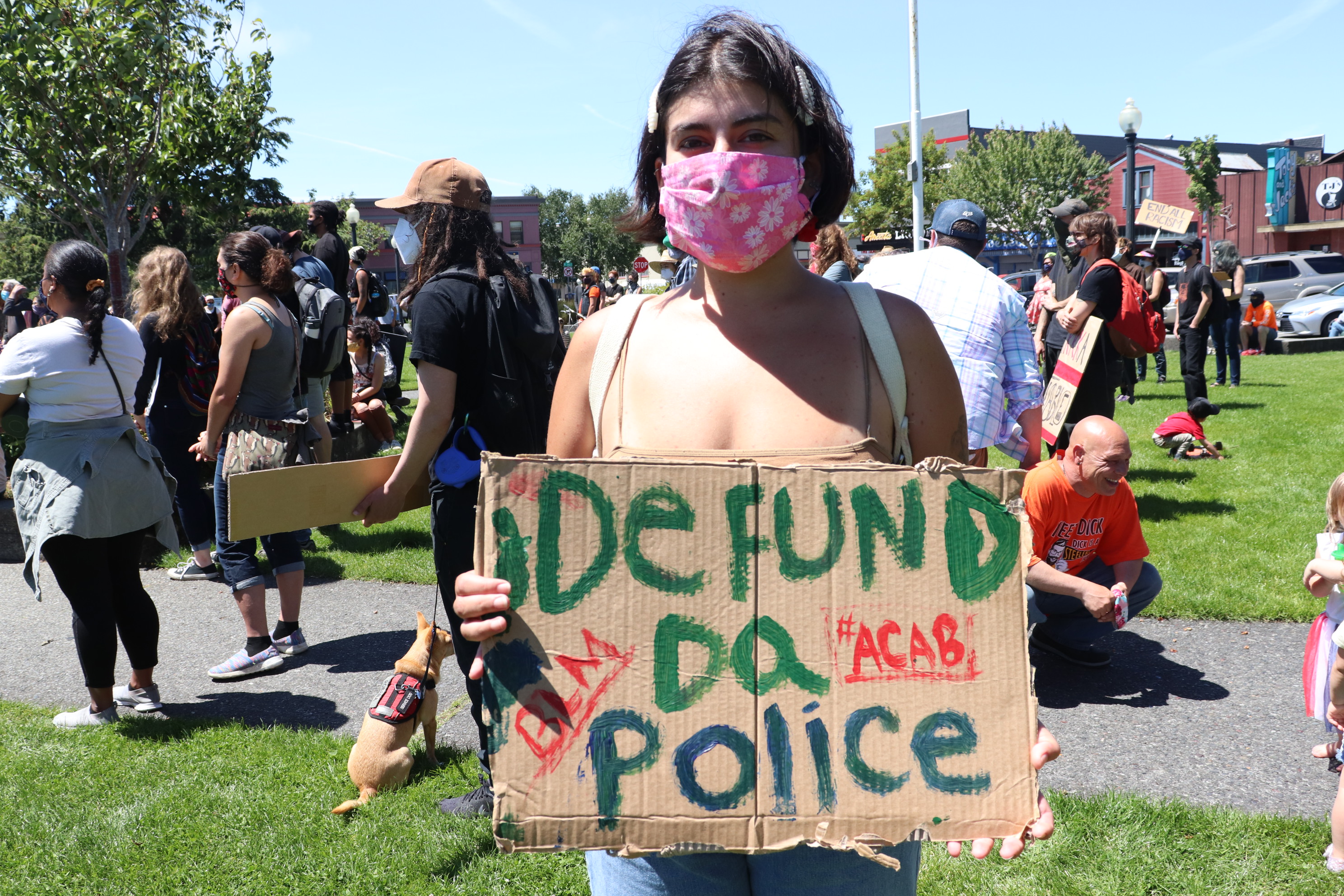
    Fueled by the Josiah Lawson case and the George Floyd murder, Humboldt State University students are taking to the internet and the streets in protest of systemic racism. Students and community members alike are actively displaying their pent-up anger and fear surrounding being marginalized.

    Kiara Mixon, a fourth-year psychology student, has been trying to educate herself and those around her about what’s going on. Namely, she has been sharing different resources with people who are unaware of the Black Lives Matter movement and watching documentaries about racism to get a deeper insight into it.

    While she hasn’t really been going out in the streets and protesting, she has still seen both sides of the movement.

    “I see people who are of color protesting and, truthfully, it means a lot that those people are standing up when it’s an issue for them as well,” Mixon said. “But I’ve also had people who aren’t really speaking up or haven’t said anything or don’t really have a personal opinion on the matter and that makes me a little bit uncomfortable because you never know where they’re standing.”

    Senior psychology major Edwin Rosales has become more outspoken and animated in the wake of the revamped BLM movement. He lives with his mother’s side of the family and has gone back and forth with them about everything going on.

    “After talking with them, it’s kind of difficult to talk to them about it because they’re very, you know, still in the olden ways and are very ignorant about it,” Rosales said. “So, I’ve had to be outspoken about it and be like ‘You know what? You’re not understanding the cause’ or having to explain to them what it is.”

    Rosales has carried his new-found, forthright persona around racism into the land of social media as well.

    “I never really posted about that stuff,” Rosales said. “I’m not helping if I don’t say anything, and so if I am posting about something, maybe someone will read it and maybe someone will help in some way.”

    Julianne Blandford is a senior majoring in child development. She is feeling a lot of mixed emotions in the midst of the string of racist events that have occurred from the George Floyd murder to the leaked video of three HSU students making racist taunts toward Black people. She is attending protests and doing everything she can to move the conversation about racism along.

    “It is my time to sit down and listen and also stand up for those who can’t speak,” Blandford said.

    Blandford recognizes her own status but also wants to work with those who are being suppressed.

    “I’m seeing it as an opportunity to continue to create change, create a more peaceful place to live, create new systems that aren’t founded upon racism, and a world where no-one has to live in fear,” Blandford said.

    “We need to redistribute resources and really build communities.”

    Dr. Ramona J.J. Bell

    Dr. Ramona J.J. Bell, a critical race and gender studies professor, believes that there are a number of factors to look at that are feeding into a racist America.

    “We’re a country where we put so much money into our military, but there’s people without health care, so we concentrate on, you know, defending the country,” Bell said. “But we have to reconfigure and reimagine what that really means to defend the country, to defend America.”

    Bell emphasized the importance of unifying communities in a country where the opposite is happening at the hands of the police.

    “We need to redistribute resources and really build communities,” Bell said. “When you are killing black folks in communities and the police are killing us, that’s not building our community — that’s killing our community. So we have to look at ways in which we can build America because our country was built off the backs of Black people, particularly during the Holocaust of enslavement.”

    Bell recognized a need for change in America when it comes to race and embraced the protests that have spawned from it.

    “We have to revisit America’s notion of belonging and we have to revisit race in America,” Bell said. “There’s never been a real conversation about race and racism in America. And I think the protests going on all over the country, all over the world are telling us something’s wrong and it needs to be fixed.”

    More than anything, Bell emphasized that we are all in this fight together, no matter the color of your skin.

    “That’s part of the fight. That’s part of the struggle to get people to understand that Black lives matter,” Bell said. “It’s about letting us be free to live lives like America has promised.”

  • Congress plays the game of environmental legislation

    Congress plays the game of environmental legislation

    By Kelly Bessem

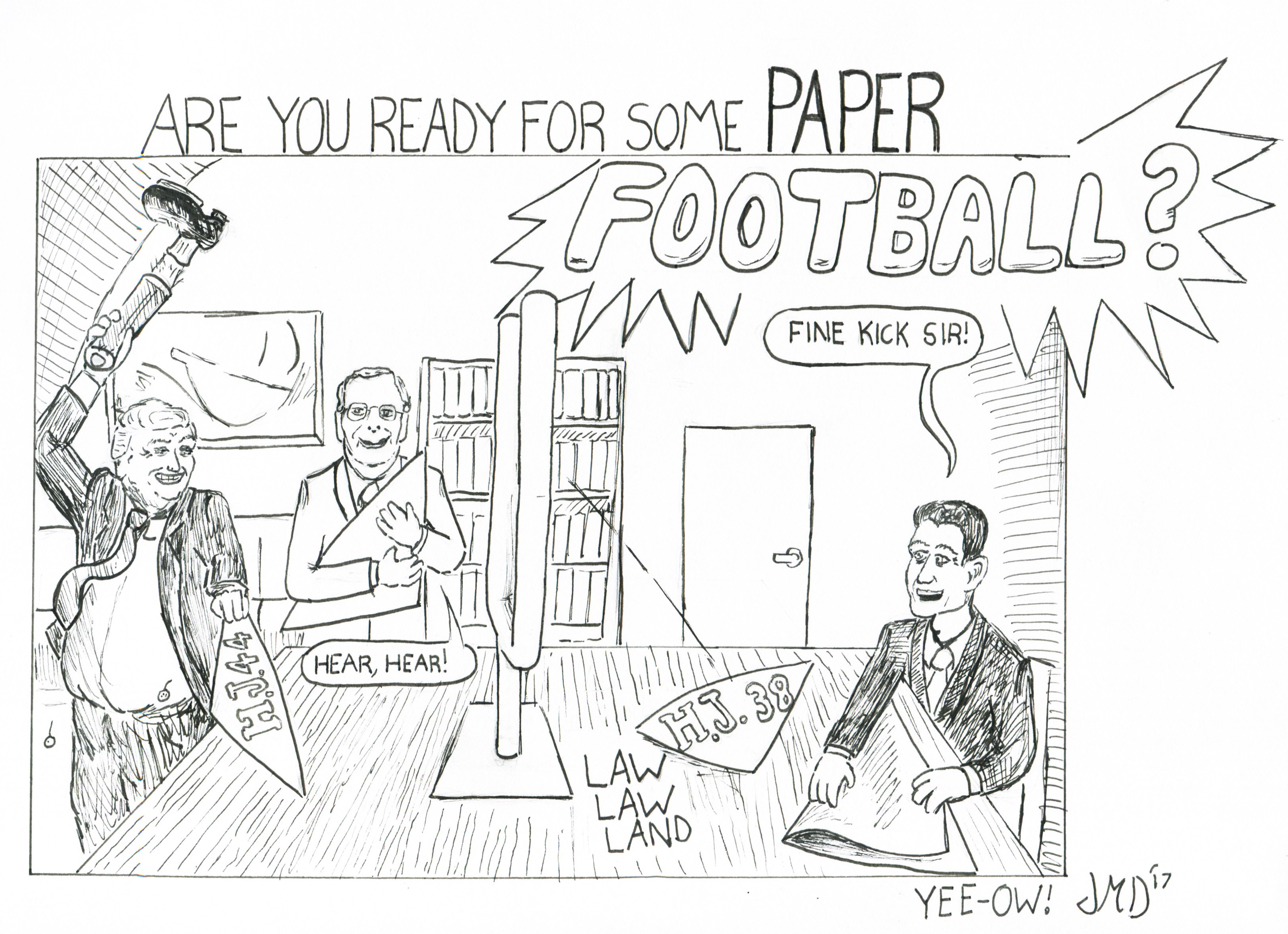
    President Donald Trump stated he would cut 70 percent of agency regulations according to an article by Forbes. A new strategy being employed by Congress, makes this plausible and has environmental regulations in its crosshairs.

    With congress having a Republican majority, the  Congressional Review Act has allowed Congress to rush large-scale rule elimination. According to the House Committee on Natural Resources, the Congressional Review Act is a law that allows Congress to expedite purging agency rules. It was originally made to improve Congress’s oversight of federal agencies and states that no rules substantially similar to those purged can be issued in the future.

    The White House website cites using the Congressional Review Act to overturn “burdensome compliance requirements that force jobs out of our communities and discourage doing business in the United States.”

    In contradiction to this is the 2016 Office of Management and Budget report on federal regulations. It shows the benefits versus costs of the Environmental Protection Agency regulations to be a 4-to-1 ratio.

    According to the Congress website, environmental regulation affected by the Congressional Review Act includes the following:

    • Signed by the president: Reversal of the Stream Protection Rule and a rule calling for the disclosure of payments made by resource extraction issuers (H.J.Res.38 and H.J.Res.41).
    • In line to be signed by Trump: Disapproval of rules that allow the Bureau of Land Management to make regional land management plans (H.J.Res.44).
    • Moving through the Senate and House: Disapproval of the rule that reverses policy protecting predators on Alaska’s national wildlife refuges (H.J. Res. 69) as well as a rule that requires oil and gas producers to reduce natural gas waste and emissions (H.J. Res. 36).

    This only includes legislation related to the Congressional Review Act. It does not include the long list of pending environmental bills. These include everything from a bill to terminate the Environmental Protection Agency (H.R.861) to a bill that will eliminate the current renewable fuel standards (H.R.1314).

    There is an information section on the House Committee on Natural Resources’ website related to the policy protecting predators on Alaska’s national wildlife refuges (H.J. Res. 69). Within this exists an entire section entitled “‘Bull Poop’ Talking Points.” Terminology such as this suggests that the Congressional Review Act is not being used in a serious way to further the interests of the general public.

    Over 60 days have passed since Trump became president. The Congressional Review Act can only be used for rules submitted to Congress or the Government Accountability Office within the past 60 days. In theory, the time to use the Congressional Review Act would be over for “midnight” regulations passed at the end of Obama’s presidency.

    In 2014, a report on agency regulation was released by Curtis W. Copeland, a former government specialist for the Congressional Research Service. It showed that, in 2014, up to 50 percent of agency rules had not been submitted properly. All of these improperly submitted rules are still subject to the Congressional Review Act, meaning that there are still plenty of plays to be made.