The Lumberjack


Students Serving The Cal Poly Humboldt Campus and Community Since 1929

Tag: budget forum

  • Polytech Budget Forum breaks down $433 million spending plan

    On Jan 28, a Polytech Budget Open Forum was hosted by the Budget, Finance, and Reporting Working Group. The forum broke down how funds for the Cal Poly transition would be distributed.

    The Budget, Finance, and Reporting Working Group is composed of 15 campus and community members. While their membership overlaps with the University Resources & Planning Committee (URPC), they are responsible for the oversight and management of $433 million and $25 million in collaboration with Cal Poly Humboldt’s Chief of Staff and Provost.

    The forum was held to clarify any questions community members may have had. This discussion came before a proposal outlining the polytechnic transition was to be submitted to the Chancellor’s office on Monday. The funds for this proposal are currently held central at the Chancellor’s Office, which means that the Budget & Finance Team must make an annual request to disperse those funds to the university. Their initial request that was made in Fall 2021 was approved, however it was on the condition that they present financial planning updates to the Chancellor’s Office every January and July.

    Executive Director of Budget & Finance Amber Blakeslee broke down an overview of the $25 million Polytechnic Spending Plan to the attendees.

    “Collaboration is really at the heart of what we’re doing. The polytechnic transition is being implemented with a $25 million plan. This is being spent over a six year period,” Blakeslee said. “This is an iterative planning process. These plans will continue to be refined as we go.”

    The updates to the prospectus are intended to reinforce polytechnic prosperity in the first two years (2021-22 and 2022-23) in areas such as faculty for program development, staffing, information technology, recruitment, advising, infrastructure, e.t.c. One of the working group’s goals is to launch and sustain new academic programs in Fall 2023. Previously, students had uncertainties of what tuition rates would look like as we make the transition to polytechnic.

    “Tuition rates are set at a system level, not a campus level. Becoming a polytechnic would not increase tuition.” Blakeslee said.

    The Budget, Finance, and Reporting Working Group also tried to highlight the change from the prospectus in terms of cause and impact. Investments to faculty and staff and are central to their planning, and additional investments are to be made in the future.

    “We’re actively hiring 16 new positions to help out with the plan’s new buildout,” Blakeslee said. “The marketing and rebranding is everything.”

    Thirteen staff positions have recently and are currently in the process of being filled, with additional recruitments forthcoming. In the initial planning estimate, the Budget and Finance Team is working to implement a total of $2,993,000 in ongoing expenditures for year 1 (2021-2022). Meanwhile, they are also refining plans for a total of $8,469,000 in ongoing expenditures in year 2 (2022-23). This is to align with iterative planning needs.

    If you have polytechnic related questions or ideas, you can email poly@humboldt.edu or reach out to the applicable implementation team.
  • Humboldt State University budget crisis

    Humboldt State University budget crisis

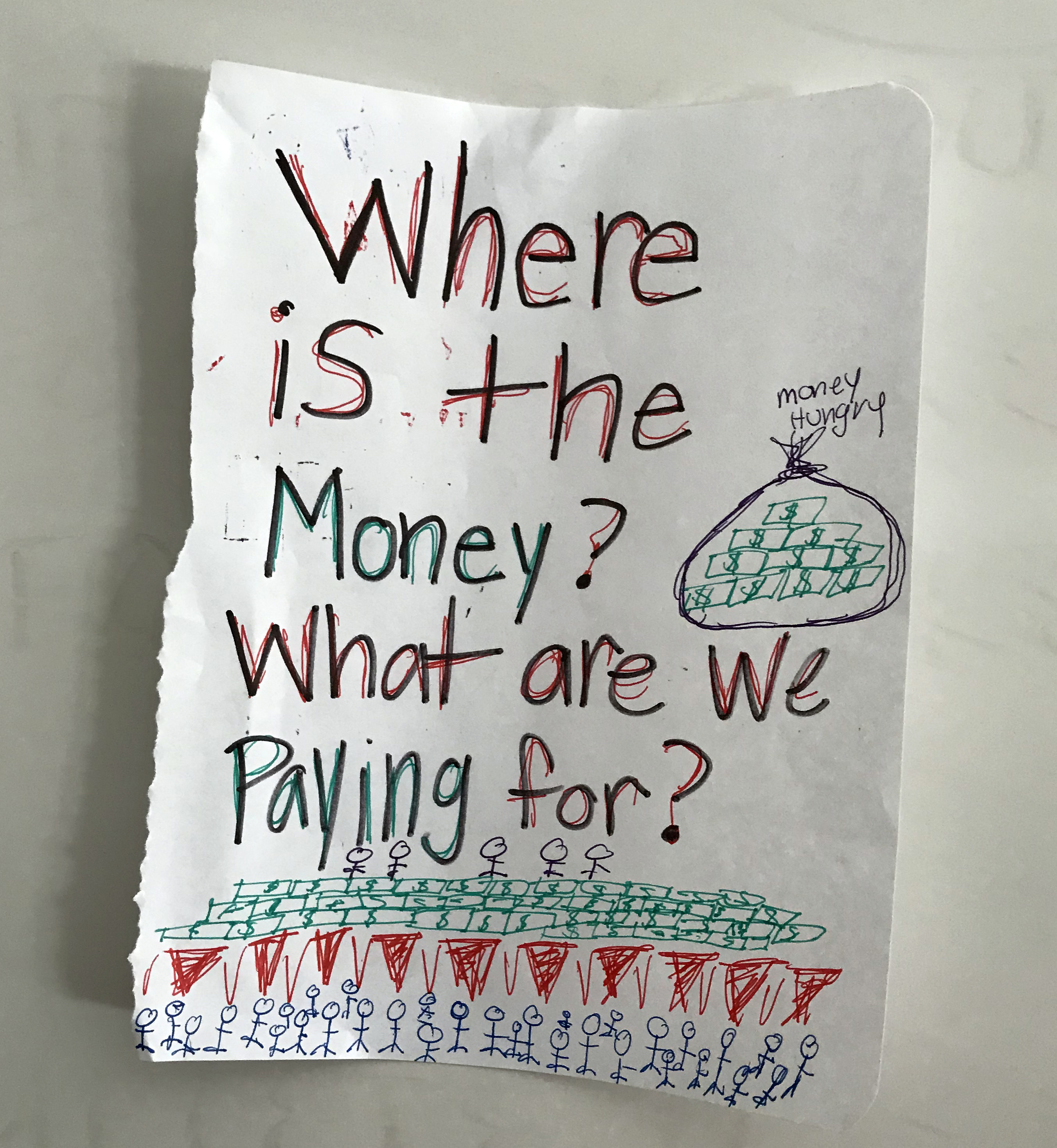
    Humboldt State University held an open budget forum on Feb. 2 to discuss the threatening budget situation that could put the university in a potential crisis.

    Shortly after the forum, HSU President Lisa Rossbacher sent a message to the campus community:

    “In short, HSU’s budget situation has worsened over the course of this year due primarily to ongoing deficit spending in some areas, unfunded increases in salary and benefits, a continued decline in enrollment and projections based on the recent state budget for 2018-19 proposed by the governor,” Rossbacher said.

    Rossbacher wanted students, faculty and staff to take away a few things from the budget forum.

    First, a sense of the position that we’re in and the history of how we got here. Rossbacher wanted to make clear that it’s not anyone’s fault. This crisis has been ongoing from decisions made 10 to 30 years ago.

    “I want people to understand the situation that we’re in, the importance of working as a community to address it and solve the problems now,” Rossbacher said. “All of us that were involved in the discussions and planning are acutely aware of the impact the decisions will have on people… employees, potentially on students.”

    “We’re trying to do this with care and compassion,” Rossbacher said.

    Beth Eschenbach is the chair of environmental resources and engineering. She doesn’t quite know how the budget cuts will affect her.

    “I think everybody is afraid of saying what they’re really going to do,” Eschenbach said. “What I fear, they keep telling the academic side to save money, but the only way to save money is to teach fewer classes.”

    Zack Pitnick, environmental studies major, is a senior at HSU. He was one of the three students that showed up to the budget forum.

    Pitnick decided to come to the forum after hearing about it from his environmental studies professor. Pitnick wanted more of a student input in the discussion.

    “There needs to be a lot more transparency and [student] involvement,” Pitnick said. “I think there still does need to be cuts to higher up faculty salary. If they are so focused on this budget deficit, that should be the first thing to start instead of the very last resort.”

    Alex Enyedi, provost and vice president for Academic Affairs for Humboldt State, described the financial crisis in a nutshell.

    “It’s a simple overspending of the budget, and the next steps are to identify and trim back where spending is too much,” Enyedi said. “For example, we’ve got certain areas where we’re deficit spending, so we need to stop the deficit spending and that will help us with our budget.”

    Enyedi went on to say the problem is solvable, but it’s going to take combined efforts to solve.

    “It’s not the students’ problem,” Enyedi said. “It’s the administration, the staff and faculty’s responsibility to figure this out and we’re on it. This is a high priority, [and] we don’t have sufficient reserved dollars to be able to keep on covering the deficit spending.”