The Lumberjack


Students Serving The Cal Poly Humboldt Campus and Community Since 1929

Tag: butterflies

  • Pollinator Predicaments

    Pollinator Predicaments

    Climate change affects the lives of birds, butterflies and bees

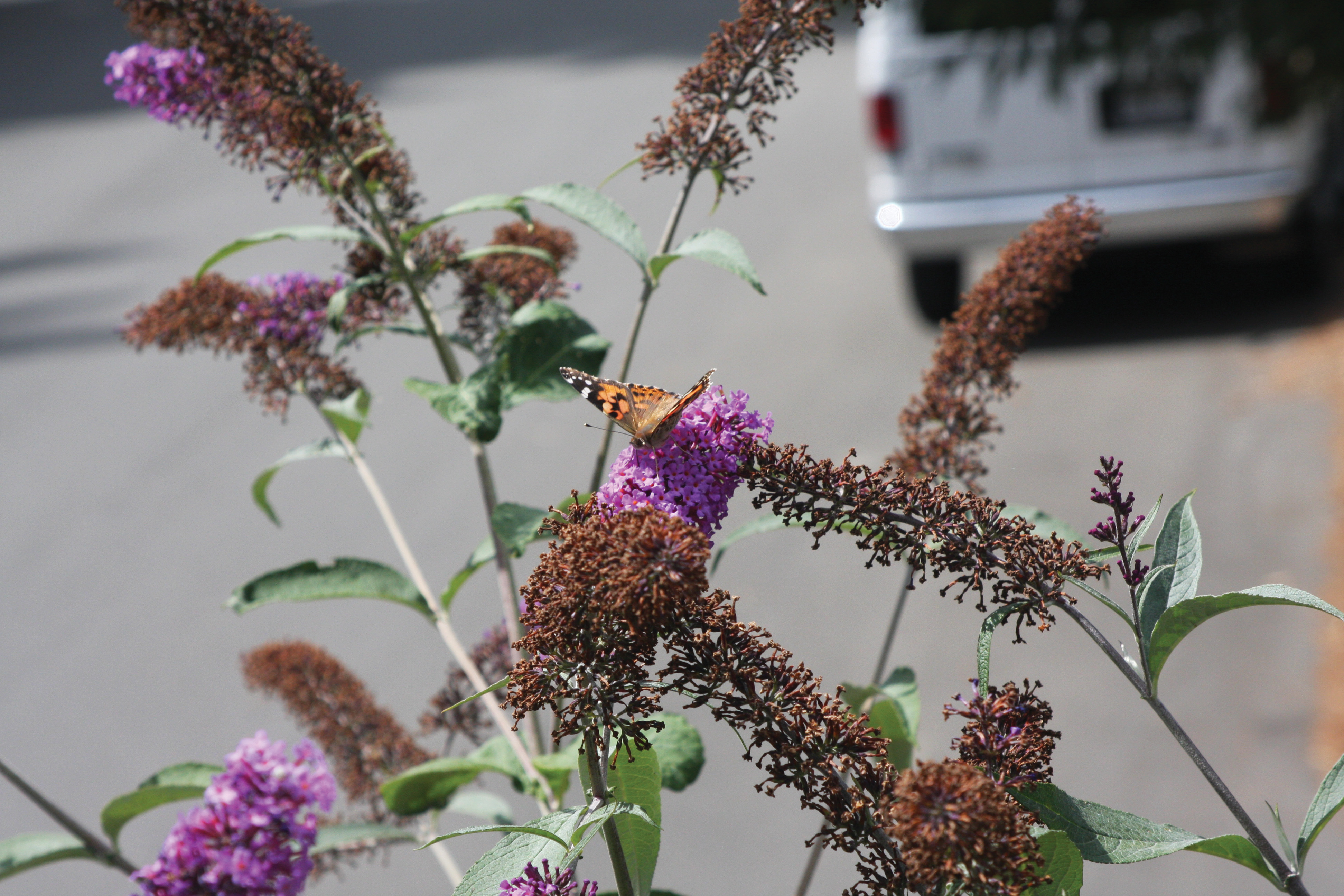
    Pollinators matter! Right under our noses a huge community of ants, butterflies and bees are hard at work to make sure the world gets fed. The climate crisis is turning up the heat on these poor guys, and our many-legged friends are at risk. Here’s some information on how pollinators are still doing their best to help us out.

    A solitary silver bee perches on a yellow flower to drink nectar. Notice the yellow pollen on its legs which it will bring to the next flower it drinks from. | Photo by Rand Rudland

    Flowering plants and pollinators have a unique relationship with one another. Ecologists and biologists pay attention to special events in these organisms’ lives which mark growth and development. The science of studying life events is called phenology.

    Ideally a pollinator will hatch from its egg or develop from its pupa and leave the hive around the same time its flower of choice blooms. The timing of these life events is important because if a bug emerges too early or late, it may miss a plant’s flowering completely. No flower equals no food, and that’s no good.

    After emerging, the pollinator goes searching for nectar. The sweet liquid is energy-packed food for bugs. When a pollinator lands on a flower, it picks up pollen. As it continues to look for nectar, the pollen is shaken off and sticks to other flower’s pistils, the female organ of the plant. Pollen travels down a shaft to fertilize the ovary, which begins to go through mitosis and eventually produces fruit.

    Tayloranne Finch and Melanie Honda are two farmers working on the Bayside Park Farm in Sunny Brae who get to interact with pollinators every day. Without pollinators, their farm would be a bunch of fruitless bushes.

    Finch said the farm was working with the City of Arcata to build a permanent solution, a perennial native pollinator garden. The garden would have year-round plants that local pollinators prefer, supporting the local habitat organically.

    Tayloranne Finch, left, and Melanie Honda, right, are farmers at Bayside Park Farm. They spent a sunny afternoon pollinating corn by walking through the rows, swaying their arms back and forth. Every week is a volunteer friday at Bayside Park Farm on Old Arcata Road in Arcata, CA 95521. | Photo by Collin Slavey

    “We’re installing plants that will be there forever. It makes it easier for pollinators to establish themselves on the farm and it is mutually beneficial for us,” Finch said.

    Small changes in abiotic, or physical non-living factors, can alter life events. There are many changes in an ecosystem that can affect how a plant or pollinator does its job. Dr. Rachael L. Olliff-Yang and Dr. Michael R. Mesler published a paper in 2018 titled The potential for phenological mismatch between a perennial herb and its ground-nesting bee pollinator.

    In the paper they investigate how temperature affects the phenology of the silky beach pea (Lathyrus littoralis) and its main pollinator, the ground-nesting solitary silver bee (Habropoda miserabilis).

    “Temperature best predicted both flowering and bee activity, although soil moisture influenced the timing as well,” the paper said.

    Their findings imply that in the face of the climate crisis, an average increase in temperature may cause the silky beach pea and the solitary silver bee to fall out of sync.

    “Comparison of linear regression slopes of phenology against temperature suggests that bee nesting time is more sensitive to differences in seasonal maximum temperatures, and may advance more rapidly than flowering with temperature increases,” the paper said.

    A bumblebee looking for lunch landed on this flower to get a drink of nectar. The bee will help pollinate nearby flowers as it continues on its flight. | Photo by Collin Slavey

    Olliff-Yang and Mesler said that it’s important to understand what factors influence flowering and pollinator activity. Their investigation into the bee and the pea is just an example of a broader issue in the world.

    Building habitat is invaluable to local animal communities, as shelter, food and water are critical needs for every living organism. The most simple thing to do is to plant native plants in the front yard, as this will attract local pollinators.

    Local nurseries like Mad River Gardens will be more than happy to teach you about native plants and how you can attract and support our flying friends. As active members of the ecosystem, we all need to do our part.
  • Oh my butterflies

    Oh my butterflies

    By | Lauren Shea

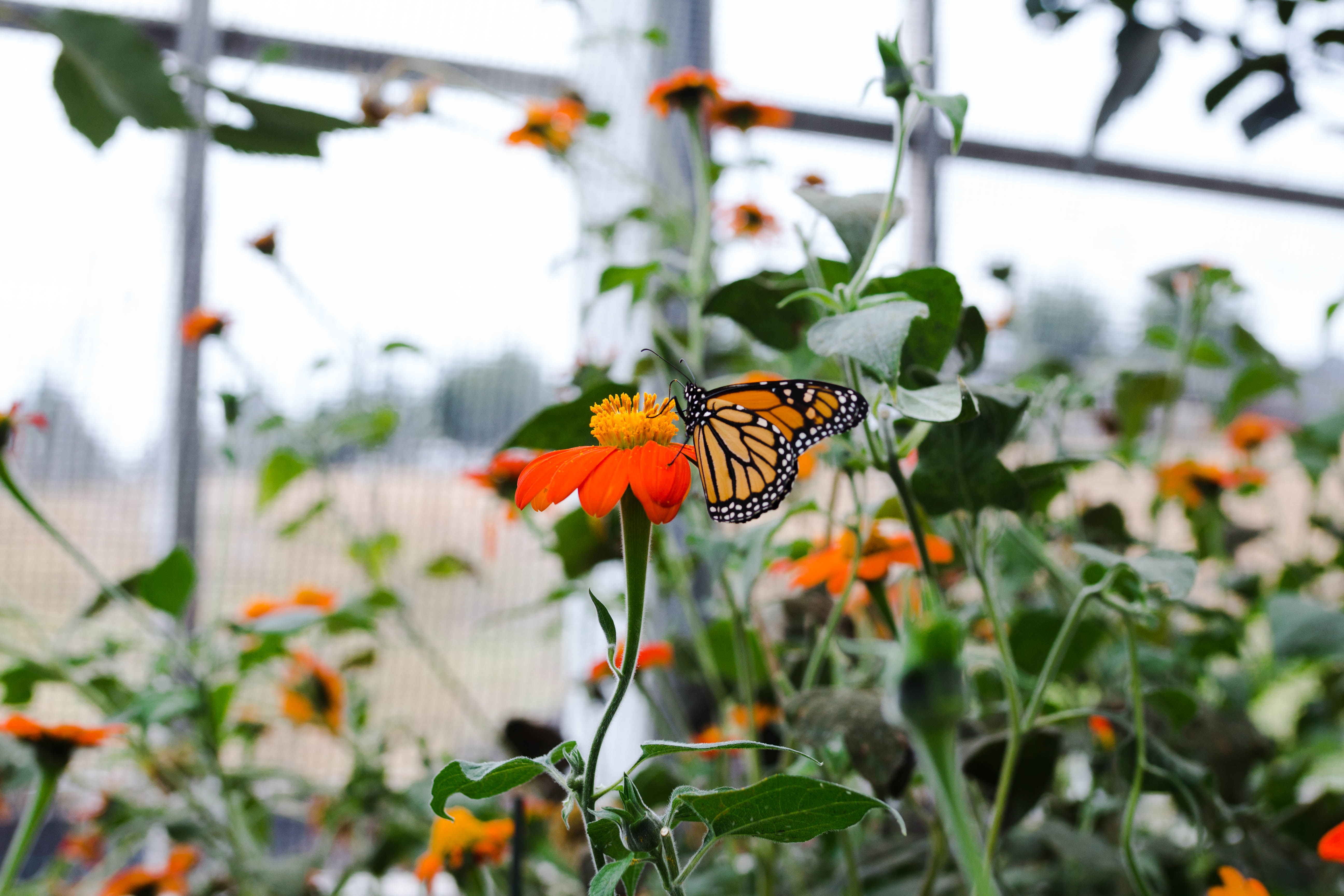
    Butterflies galore! Experience walking around butterflies at the Butterfly House. The Humboldt Botanical Garden opened its very first Butterfly House on July 1st. The project was designed to help educate people with an interest in butterflies, gardeners and families with children. People from all ages have visited the Butterfly house to see the life cycle of the butterflies native to the area.

    The life span of a butterfly takes place in four stages: egg, caterpillar, chrysalis and butterfly. There are four kinds of butterflies in the Butterfly House including painted ladies, western swallowtails, red admirals and monarchs.

    LSBF2
    A display of different types of butterflies. Photo credit: Lauren Shea

    Ibby Gerner, Volunteer Coordinator for The Humboldt Botanical Garden, talked about the response to their first Butterfly House.

    “There has been almost 2,500 people visiting the Butterfly House since it opened it July,” Gerner said. “We’ve had a great response to the garden. Both adults and children have come to see the Butterfly House.”

    Terry Kramer, the Site Manager at the Humboldt Botanical Garden, talked about her experience with the Butterfly House and the visitors.

    “People are really excited and want to learn more about the Butterflies,” Kramer said. “One of the most unique qualities from this Butterfly House compared to others is that people can walk around with the Butterflies and see them up close.”

    The Butterfly House consists mostly of Mexican sunflowers to provide nectar for the butterflies and milkweed for breeding. Many people in the area have removed milkweed from their yards. In most recent years, the population of monarch butterflies have been decreasing due to lack of habitat, loss of milkweed and pesticides.

    LSBF4
    The Butterfly House is located in the greenhouse at the Humboldt Botanical Garden. Photo credit: Lauren Shea

    “The amount of monarch butterflies is down by 80 percent,” Kramer said.

    Mary Gearheart, Garden Designer for The Humboldt Botanical Garden, created the design for the Butterfly House including picking the right plants for the butterflies and also volunteers at the Butterfly House.

    “It’s amazing how many people come from out of the area,” Gearheart said. “Just the other day, there were people visiting from upstate New York and visitors from Australia.”

    LSBF1
    Red admiral butterflies attracted to the white information pages inside the Butterfly House. Photo credit: Lauren Shea

    There are plans to set up a garden outside where the Butterflies will be set free at the end of the month. The Humboldt Botanical Garden is hoping to start a butterfly garden outside year-round to help increase the population of butterflies and give them a safe habitat to live in.

    “We would like to create a garden of milkweed, Mexican sunflowers and other butterfly friendly plants right next to the sunflower garden,” Gearheart said.

    The Humboldt Botanical Garden is applying for a grant that would allow for an intern to work in the Butterfly House for next year. They’re also hoping to set up more school trips to the garden to educate children.

    There is a $3 suggested donation fee to help support the Butterfly House. It’s open from Wednesday to Sunday 12p.m. to 4p.m. and will be open till the end of September. There are many volunteer opportunities at the Butterfly House and the Humboldt Botanical Garden. For more information, you can call the Humboldt Botanical Office at (707) 442- 5139 or email the office at hbgf@hbgf.org.