The Lumberjack


Students Serving The Cal Poly Humboldt Campus and Community Since 1929

Tag: campus center for appropriate technology

  • CCAT begins reconstruction project

    CCAT begins reconstruction project

    by Emma Sjostrom

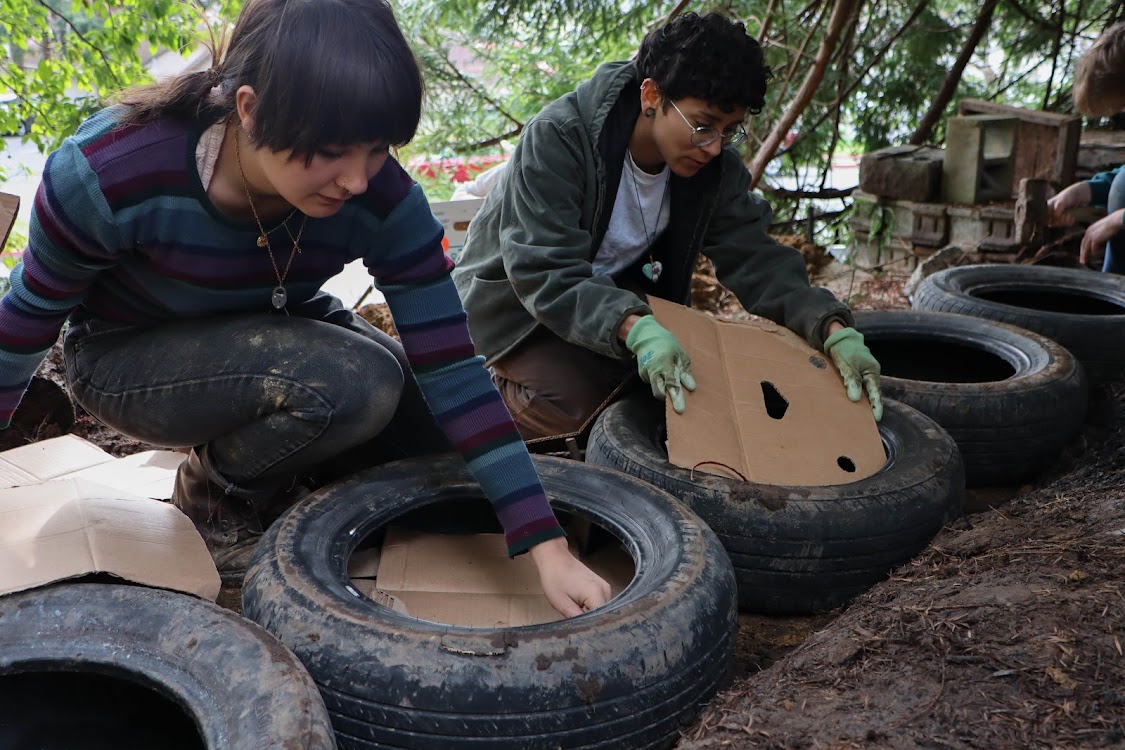
    The Campus Center for Appropriate Technology began construction of a tire retaining wall in their on-campus garden at Buck House. Constructed by CCAT directors, instructors and volunteers, the retaining wall is part of CCAT’s project to rebuild the existing Reclamation Station structure located in their garden. The structure has served as storage for students to donate and access reclaimed building materials. 

    Made from used tires, the retaining wall is needed to support the sloped landscape where the structure is located. Following the wall’s completion, project managers and volunteers are working towards utilizing natural building materials to complete the project. 

    The goals of the rebuild are to increase usage of reclaimed materials through safer and easier access. With a budget of $1,000, the project is proposed to be completed by May 5th of this year. 

    Spearheaded by project organizer Maddy Hunt, the project is aimed at promoting sustainable practices and techniques as well as serving as an example of utilizing appropriate technology in construction projects. 

    “The shed uses natural building methods which are focused on using reclaimed materials, minimizing ecological impact, and inviting community participation,” Hunt said.

    Plans for the rebuild include construction of a wall made of hempcrete, a natural alternative to concrete. CCAT intends to collect data on usage of the material within Humboldt County in an effort to understand and demonstrate the feasibility of hempcrete to address housing needs within the community.

    External Co-director James Lara added that CCAT’s overall goal is to encourage sustainable resource and energy use.

    “We are in a live-in demonstration home for sustainability and to live lightly on the Earth,” Lara said. “It’s about engaging students to have more experience with sustainable living.”

    Construction of the retaining wall is nearly complete, and project organizers expect to continue the groundwork for the structure in the next coming weeks with the help of students and volunteers. Hunt aims for the project to be a practical example of the organization’s goals.

    “It can be a demonstration for Cal Poly Humboldt,” Hunt said. “Especially for us to demonstrate [sustainability building] here at CCAT. It’s going to be a really cool way for us to connect with that and to be a part of that process.” 

    Hunt added that the project has potential for showing the university and surrounding community the viability of natural building, noting the relatively quick project timeline.

    A soon-to-be graduate from the Environmental Studies program, Hunt mentioned that the reclamation project is the culmination of what she has learned in her degree. 

    “It’s equally stressful as it is gratifying to be putting theories into action, and seeing it come together as not only a completed project in the end, but also as a network of people working towards a sustainable future,” Hunt said.More information on the project and techniques being used can be found at www.appropedia.org/CCAT_reclamation_station_2023. Those interested in aiding in the project’s completion are encouraged to participate in CCAT’s Volunteer Friday events, which occur weekly from 10am-12pm and 1-4pm. More information can be found on the organization’s website at ccat.humboldt.edu/ and Instagram @ccat.humboldt.
  • Pigs Compost on Campus

    Pigs Compost on Campus

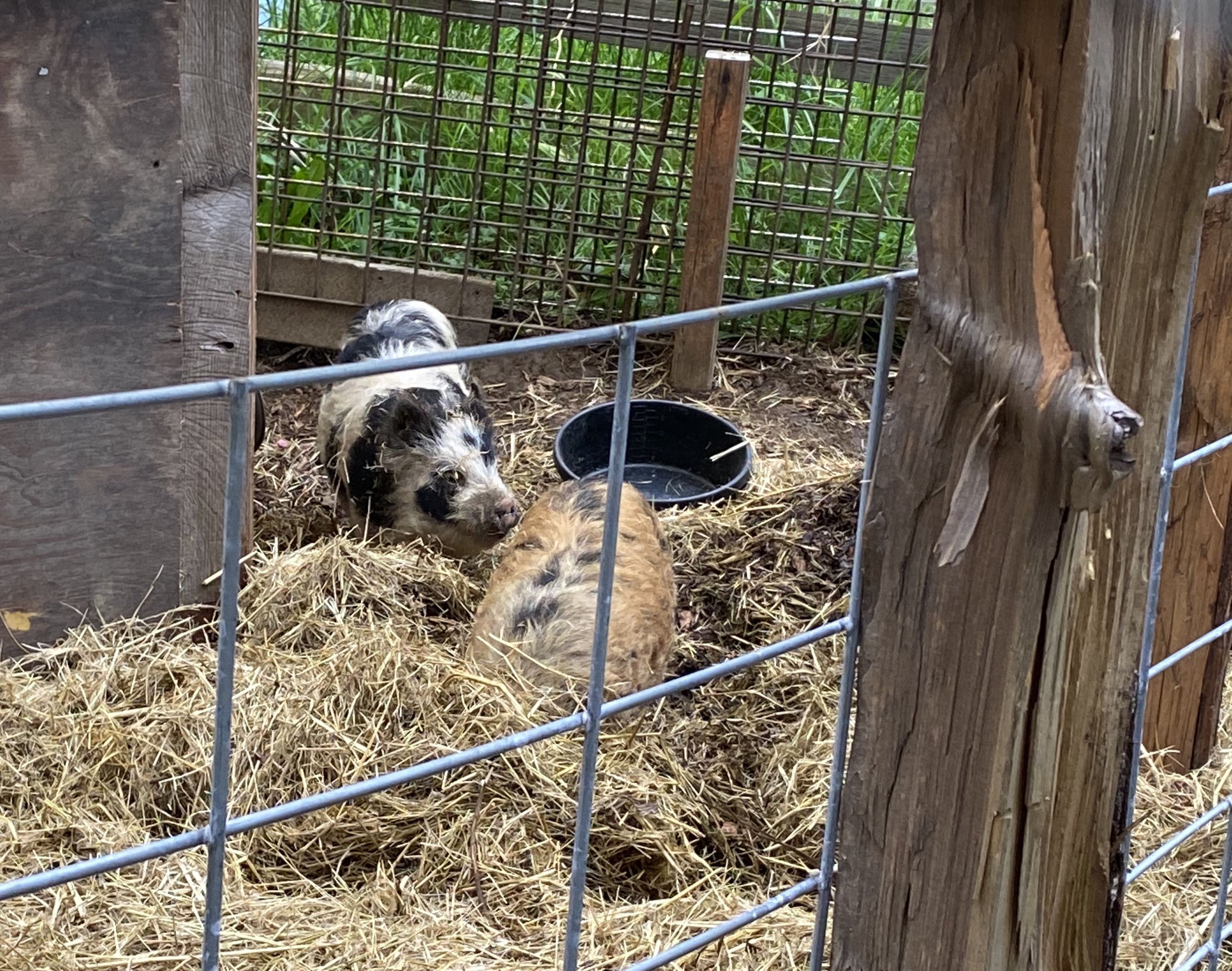
    A few weeks ago, two little piggies went wee-wee-wee all the way home to the Campus Center for Appropriate Technology. On-campus dining services like The J are working with CCAT by delivering their compost to feed the pig project. Instead of the food waste going to the bin, it can fill the bellies of the pigs.

    CCAT acquired the two baby kunekune pigs from Tule Fog Farm in an attempt to reduce Humboldt State’s organic carbon footprint.

    Ben Nguyen, the primary animal caretaker, farmer, project manager and a co-director of CCAT, explained that, depending on their nutrient demand, the pigs will eat as much or as little as they need in order to maintain healthy growth.

    “Usually what we pick up from The J is around 10 pounds of food a day,” Nguyen said.

    The kunekune pig is a small grazing pig that can survive on a low-calorie diet and can weigh anywhere from 150 to 400 pounds. Although different breeders may breed for a smaller size, the pigs from Tule Fog Farm average around 200 to 300 pounds, making them the ideal size for an on-campus composter.

    The pigs will probably be on campus at CCAT eating food waste for the next semester unless someone wishes to keep the project going through the summer and so-on, since Nguyen will be graduating in May.

    Some students are against keeping the pigs and are seeking to purchase the pigs and send them to a sanctuary. But for now, after the completion of the project, the pigs are arranged to be returned back to Tule Fog Farm.

    Before they were adopted by CCAT, Shail Pec-Crouse, Tule Fog Farm owner and farmer, introduced the pigs to a diverse diet. Tule Fog Farm pigs ate compost as a nutritious supplement to their natural grazing diet of fresh grass.

    “We take kitchen waste from a couple of local restaurants like Slice of Humboldt Pie and Los Bagels,” Pec-Crouse said.

    Pigs are omnivores and need a diverse diet consisting of grains, fats, protein and greens. This diverse diet makes them an excellent option for getting rid of food waste or any organic waste in general.

    According to Oxymem, a DuPont brand, when food waste is thrown in the trash and decays unnaturally among plastic and other non-biodegradable things in landfills, a toxic liquid called leachate is produced, which has a high ammonia concentration that isn’t easily biodegraded. Compost solves this problem by keeping biodegradable materials out of landfills so that it can continue its life cycle and be returned to the ground naturally.

    Robert Just, a local livestock veterinarian, described the relationship between human trash and pig diets as an evolutionary interaction. He explained that since humans and pigs have lived symbiotically for so long, their gut biomes may have adjusted to eating our over-ripe food waste.

    Pigs have digestive tracts that are unique to livestock animals, but are similar to the human gut. They have one simple stomach, just like people. Pigs are omnivores and need a diverse diet consisting of grains, fats, protein and greens. This diverse diet makes them an excellent option for getting rid of food waste or any organic waste in general.

    “Pigs aren’t indestructible though,” Just said. “And they are still susceptible to illness from molds and some fungus, but this can be easily avoided by cooking the food into a slop.”

    This project is one more step towards increasing sustainability on campus and problem-solving to reduce food waste.

  • CCAT Poised to Pig Out

    CCAT Poised to Pig Out

    CCAT plans to keep pigs on campus to reduce food waste

    Humboldt State University’s Campus Center for Appropriate Technology plans to house two pigs on campus as soon as next week.

    CCAT will loan the pigs from the Tule Fog Farm in Arcata for the duration of the fall semester. CCAT plans to feed the pigs food waste from HSU’s J dining hall.

    Jacob Gellatly, environmental resources engineering major and former CCAT Co-Director, helped lead the project from concept to reality.

    “We want to show how animals can be raised in a residential environment, and how you can use urban byproducts such as food waste to raise animals in an urban setting,” Gellatly said.

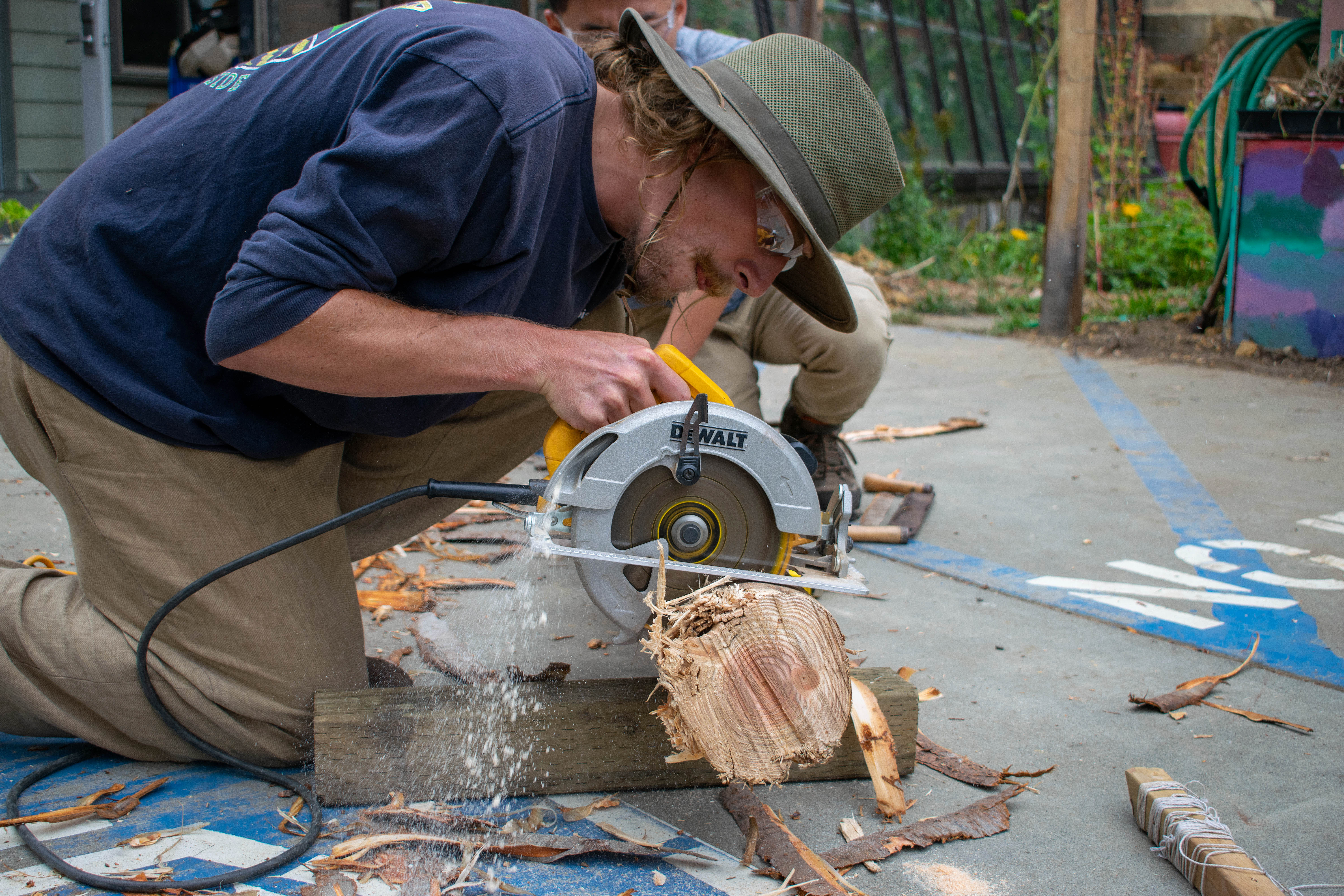
    EnvironmentalRresource Engineering majors Jacob Gellatly (right) and Kong Vang (left) prepare a log on Sept. 6 to be used for the roof of a pig pen. | Photo by James Wilde

    The plan to house the pigs began last fall when students in the CCAT Student Club vocalized interest in keeping animals on campus. CCAT contacted Shail Pec-Crouse from the Tule Fog Farm in Arcata. Pec-Crouse recommended pigs as the most viable animal.

    “The easiest animal for us to raise would be pigs,” Gellatly said. “The reasoning for that is—a big thing is predators. So it’s a lot harder for something to come and get a hold of a pig as opposed to a chicken.”

    As part of their plan, CCAT realized they could feed the pigs food waste from the J. While CCAT couldn’t feed the pigs food thrown away by customers of the J, CCAT could feed the pigs pre-consumer waste, such as food trimmings or spoiled foods not suitable for people.

    “Another goal with the project was how can we divert food waste on campus,” Gellatly said. “And with that we can feed almost, and in some cases, their entire diet from food waste that’s at the school here.”

    Once CCAT decided to loan the pigs from the Tule Fog Farm it needed approval from HSU’s Associated Students, Institutional Animal Care and Use Committee, Facilities Management, Risk Management and an environmental health and safety specialist.

    The pig pen-in-progress on Sept. 6. CCAT plans to house two pigs in the pen for the duration of the fall semester. | Photo by James Wilde

    Humboldt State’s IACUC reviews the use of animals on campus to ensure the animals are treated humanely under the requirements of federal and state law. College of Natural Resources Associate Dean Rick Zechman, who chairs IACUC, said the IACUC proactively reviews and inspects over 100 animal-involved projects on campus each year.

    “There’s varying kinds of emotional feelings about the use of animals, and that’s respected and honored in the system of review,” Zechman said. “And that’s why the Animal Welfare Act was developed, to prevent mistreatment of animals. And I think, you know, in our committee, that’s sort of our first principle.”

    While Zechman could not comment on the details of CCAT’s proposal, which is still pending, CCAT has worked over the last year to assuage concerns raised by various HSU faculty.

    CCAT started by building a pig pen out of reclaimed wood from a local logging operation in Fieldbrook. CCAT has since integrated plans for a roof to prevent flooding of the pen and security to prevent people from getting harmed by the pigs.

    In the long run, Gellatly hopes the project might convince the University to keep animals around for good.

    “Big picture, I would like the school to see this and see, with what we’re having to deal with—getting rid of all this food—we could be raising meat for the school and have locally-produced meat with a byproduct of our current dining system,” Gellatly said.

    Environmental Rresource Engineering majors Jacob Gellatly (right) and Kong Vang (left) working with a log for the pen. | Photo by James Wilde

    CCAT’s plan to house pigs has only recently become known to the wider HSU campus. Saraí Escalante, psychology graduate student and president of HSU’s Vegan Club, sees the value of reducing food waste but wonders about the sustainability of the project.

    “I think the underlying problem is that we see them as a convenience, as objects, so we see them as a tool to help us fix a problem or make our problems or our lives easier,” Escalante said. “And from a sustainability point of view, you still waste a lot of water in all of the slaughter process and the cleaning up of the meat. In that way, it wouldn’t be sustainable.”

    Escalante said she’s considering starting a fundraiser to purchase the pigs and send them to a sanctuary instead of a slaughterhouse. However, Escalante said she plans to talk with CCAT to exchange thoughts, as she does like the idea of reducing food waste on campus.

    Gellatly, for his part, noted that the current plan as registered with Tule Fog Farm and IACUC is for CCAT to house the pigs only for the rest of the semester.

    “I think it’s, in theory, possible for them to buy the animals from the farmer if that’s something they’re inclined to do,” Gellatly said. “But, as far as our scope goes with the IACUC, once the project’s done, we’re taking the animals back to the farm and that’s where it ends for us.”

    The project’s beginnings are dependent on approval from IACUC, but the pigs could arrive at CCAT as early as the week of Sept. 8 through 14.