The Lumberjack


Students Serving The Cal Poly Humboldt Campus and Community Since 1929

Tag: cannabis

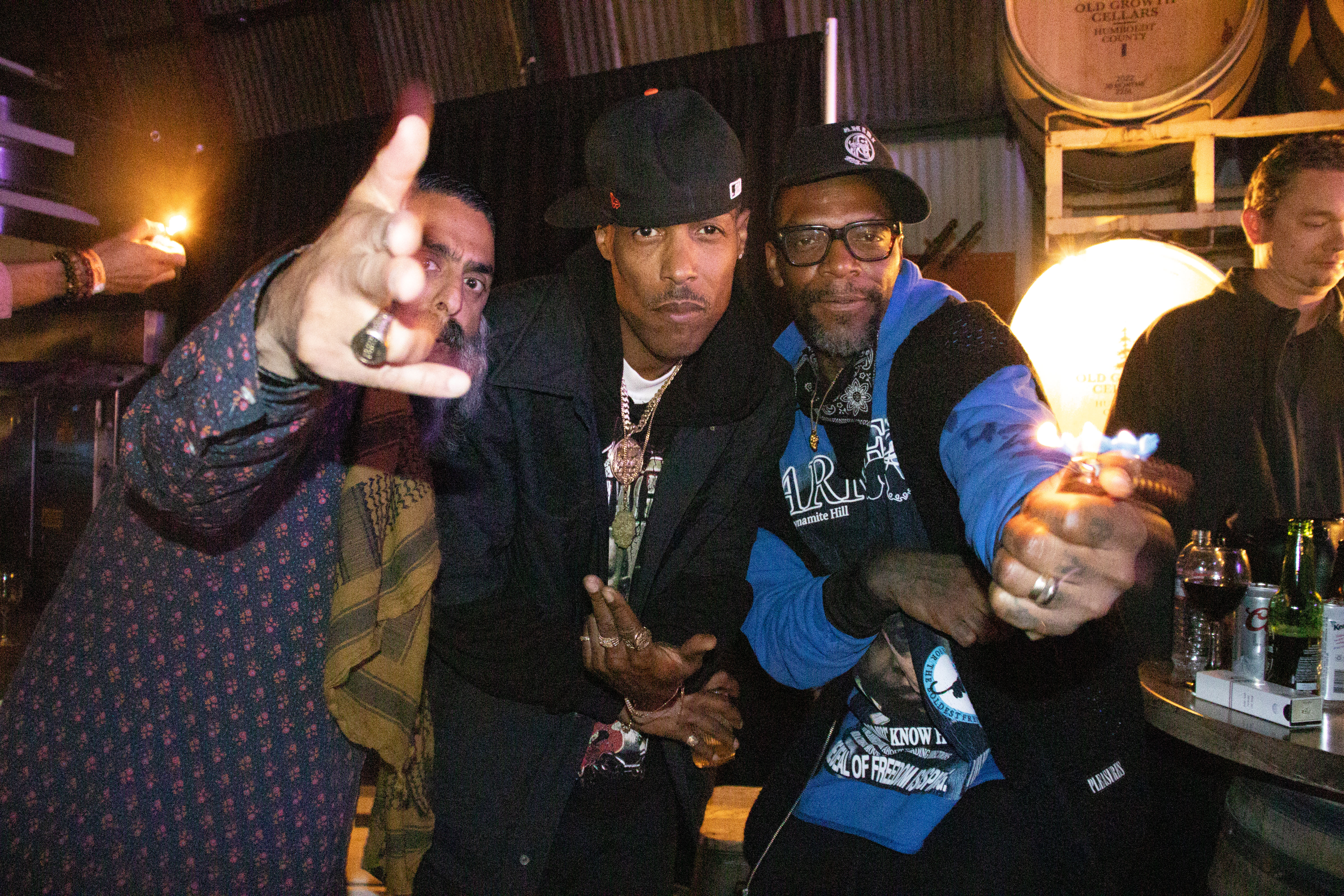
  • Khalil Ferguson speaks on the obstacles to equity and a fair cannabis market

    By Georgina Munoz-Villanueva

    The Cannabis Studies Program at Cal Poly Humboldt hosted a discussion on achieving social equity in California with United Core Alliance’s President and CEO Khalil Ferguson on March 22. 

    Ferguson is a social equity advocate, author, a business law and marijuana law student at Pacific’s School of Law, owner of a cannabis dispensary and the face of the United Core Alliance, a non-profit organization founded by social equity advocates, that works with communities affected by the war on drugs. 

    Ferguson spoke about the role of the legislative and constitutional limits, including California’s Proposition 209, in hindering equity efforts. The measure eliminated affirmative action programs in public employment, education and contracting and made it illegal for the government to show preferential treatment based on race, sex, color, ethnicity, or national origin.

    “The civil rights movement was asking to ban discrimination based on that,” Ferguson said. “I don’t think that’s a drawback, but it poses a hindrance when it relates to wanting to solve issues such as how to get more women involved in the market.” 

    In the cannabis industry, affirmative action will sometimes look like state-wide licensing systems with a quota that would grant a certain percentage of licenses to racial minorities, allowing them access to capital and social mobility. Nationally, according to the Diversity, Equity and Inclusion in the Cannabis Industry special report, racial minorities account for less than 16% of cannabis business ownership, while also accounting for more than 40% of the total U.S. population. In places like Illinois, Black and Hispanic cannabis majority owners comprise only 1% of the industry. 

    “The issue of this decade is how to include diversity, equity and inclusion in programs, jobs, houses, services, etc.,” Ferguson said. “It’s kind of frustrating […] to talk about racial justice because we all want racial justice, […] but how can you be passionate about it without knowing what your constraints are?” 

    Following the legalization of marijuana in California, AB-1793 was passed into law, which automatically dismissed or reduced all marijuana convictions that disproportionately targeted Black and Brown communities during the war on drugs. Equity programs were created to address these impacted communities, but created more problems. 

    “[Equity] has been over-inclusive,” Ferguson said. “There are folks in North Hollywood who haven’t been impacted by the war on drugs who qualify for social equity benefits.”

    Ferguson talked about equity programs across California, and acknowledges that while Sacramento’s Resolution 2018-0323 has its pitfalls, he still uses it as a reference when compared to other equity programs. He believes Los Angeles’ cannabis equity program, for example, is one of the worst equity programs, as it requires applicants to have a commercial lease in the city before applying for a cannabis business license. The average office lease in Los Angeles costs around $45-$55 per square foot. 

    Humboldt County’s equity program, Project Trellis, has come under fire for similar issues as many cannabis farmers, some of which faced decade-long sentences in the 90’s for growing marijuana, find themselves unable to qualify for the program. 

    “That’s inequitable in itself,” Ferguson said. 

    Social equity advocates are now trying to argue for a more narrow definition of what equity would entail. 

    “I have to say that social equity is not a monolith,” Ferguson said. “Social equity is also easily challengeable because of the restraints that are erected by Prop 209. So, as an advocate, our job and your job is to be very innovative with how we can get around that.” 

    More information on Khalil’s work can be found at United Core Alliance and Khalil Ferguson’s website. 
    https://khaliljferguson.com/

  • Weeding out the OG’s

    by Monica Robinson

    Authentic champagne is created in France, highly acclaimed wine comes from Napa and Humboldt County stands as the central hub for premium cannabis. 

    Measure A, also known as the Humboldt Cannabis Reform Initiative (HCRI), is a voter initiative scheduled to appear on the March 5, 2024 ballot in Humboldt County. If approved by voters, this measure would introduce 38 pages of new rules and restrictions to all existing cannabis farmers operating legally in Humboldt.

    Origins of HCRI

    The HCRI spawned from a conflict between Kneeland residents and a neighboring cannabis farm concerning water resources and traffic. Mark Thurmond and Cal Poly Professor Emerita Betsy Watson took charge as proponents, collaborating with people in other areas of the county. 

    A petition circulated, highlighting the protection of the environment and small cannabis farmers, along with preventing large scale cannabis farms. After reaching 7,000 signatures, the measure qualified for the ballot. 

    Notably, the 38-page initiative was drafted by a San Francisco law firm, Shute Mihaly & Weinberger, which was submitted on March 4, 2022, and did not undergo public review or receive public input. If passed, Measure A cannot be altered or amended from its original form, requiring a ballot initiative for the next elections. 

    Current legislation

    Due to the impact of changing market dynamics and statewide legalization of cannabis, Humboldt County revamped its legal framework. The Humboldt Board of Supervisors (BOS) enacted two land use ordinances, starting with the Commercial Medical Marijuana Land Use Ordinance in 2016 and the Commercial Cannabis Land Use Ordinance in 2018. 

    Both followed public scrutiny with many stakeholders including cannabis cultivators, environmental groups, neighborhood organizations, as well as county and state officials for implementation. Further refinements were made in 2020 to enhance the framework’s efficacy. 

    “These changes have successfully reduced the overall environmental footprint of the industry and strategically relocated many [cannabis] farms to agricultural land,” said Executive Director of the Humboldt County Growers Alliance (HCGA), Natalynne Delapp. 

    Delapp explained how the county has experienced an 89% decline in cannabis farms since 2015, decreasing from 15,000 illegal grows to 775 legal permitted farms, with an estimated 1,000 illegally still operating.To obtain cultivation permits, applicants must display the serviceability of their farms’ access roads, reduce neighborhood impacts and ensure water sourcing methods are environmentally sustainable. 

    At a BOS meeting on June 27, 2023, the Director of Planning, John Ford, explained the agencies subject to review include the county Department of Public Works, Department of Environmental Health, along with state and federal agencies owning public land, California Department of Fish and Wildlife, Regional Water Quality Control Board and often surrounding tribes.

    Foggy fine print

    The initiative would modify the county’s General Plan, which serves as the primary guide for land use planning in Humboldt. Delapp said this revision would replace a significant portion of the existing county cannabis regulations, which took eight years of robust public process.

    The initiative is “unworkable and would be devastating to the [local] cannabis industry,” said Attorney Paul Hagen from the North Coast Environmental Law Office.

    A restriction of one active permit per cultivator could leave additional permits for activities void. 

    “If Measure A passes, the seed of [Humboldt] cannabis tourism will die before it has a chance to root,” said Founder of Humboldt Cannabis Tours, Matt Kurth. 

    Annual expiration of cultivation permits would make reapplication necessary. The vagueness of the renewal process creates ambiguity regarding public hearings for renewal applications. Ford explains in the Amended Analysis that conducting public hearings annually for permit renewals is inconceivable. Furthermore, renewal on any outstanding complaints would be prohibited regardless of validation. 

      The HCRI broadly defines expansion as “any increase in the number or size of structures connected to cultivation,” including environmental improvements. In relation, farms must be located on two-lane paved roads, challenging the hundreds of farms currently operating on dirt roads. According to a technical memorandum provided by LACO Technologies engineering department for the county in 2020, upgrades would range from $170,000 to $280,000 per mile.

    Cultivation of cannabis includes drying, curing, grading and trimming, requiring a ‘processing’ license which would also be prohibited. 

    Additionally, farms would be capped at 10,000 square feet, including a discretionary review for  any expansion over 3,000 square feet. 

    Out of sight, out of mind

    In an effort to explain why class II whitewater rapids rivers are being de-watered, Watson provided a map of permitted cannabis farms. She said there were 1200 active cannabis permits with an estimated 300 non-operational due to the overproduction of cannabis statewide from price drops. 

    “In 2022, the south fork of the Eel [river] ran dry, and Freshwater Creek did not have enough water for the park to have its annual swimming hole,”said Watson.“The ordinance in place now calls for 2400 more [permits], for a total of 3600.” 

    Watson added that the initiative would cap the number of permits at 1200. 

    According to the HCRI Amended Analysis by the Humboldt County Planning and Building Department on June 27, 2023, there are 1,027 active permits, with 210 of them being newly approved. Areas with prime agricultural land are concentrated with retirement, remediation and relocation permits, which were redirected from environmentally sensitive areas.

    “This is prohibition masquerading as environmentalism,” Delapp said. 

    A controversial summary, due to letters filed back and forth between HCRI’s attorney and the county’s Planning Department of the HCRI analysis, refers to geological studies, stating “the initiative’s groundwater protection measures are unnecessary because average per-acre groundwater recharge in Humboldt County is high, even during drought years.”  

    Currently, there are no environmental groups in the county endorsing the initiative or taking sides. 

    “The current ordinance is the best in the country, maybe even the world,” a confidential source from a local environmental group said.

    Lawsuit

    As of  Oct. 11, 2023, the HCGA and seven cannabis farmers filed a lawsuit at the Humboldt County Court, alleging the petition of the HCRI did not include the complete initiative text, as required by law. It also contests false and misleading information in the petition. As a result, the lawsuit seeks the removal of the initiative from the ballot to protect the integrity of the election process.

    If you are not a registered voter and want to participate, go to http://registertovote.ca.gov. The last day to register is Oct. 23, 2023.

  • Cannabis festival “Cannifest” brings buds together

    Cannabis festival “Cannifest” brings buds together

    by Andrés Felix Roméro

    As the sun was setting on the Eureka Waterfront, a few people in their boat called out to the festival-goers on the shore. Through shouts across the water, they requested some weed to enjoy on their aquatic cruise. One kind gentleman was more than happy to oblige and passed along a joint to one of the boatmen who swam to shore on his boogie board. This was just one of many instances of communal actions and feelings present at the 2023 Cannifest, which ran from Sept. 9th-10th.

    For the first time since the pandemic, a cannabis-centric festival returned to Humboldt county with the three-day celebration of the plant and the culture surrounding it through Cannifest. Primarily run and organized by Joe Moran and Steve Gieder, the festival was a hit to those who love to spark, smoke, eat and other methods of enjoying weed. There was no lack of colorful and engaging sights with plenty of music, food, art, activities and of course, cannabis.

    Day 1

    For some, the Cannifest celebrations began not in Humboldt, but on Friday, Sept. 9th in San Francisco. The Roast and Toast bus tour aspect of Cannifest was helmed by the founder of Humboldt Cannabis Tours, Matt Kurth. He acted as the group’s tour guide, spouting fun facts about the surroundings, as the bus reenacted the pilgrimage many people took following the San Francisco Summer of Love in 1967.

    Photo by Andrés Felix Roméro. Snail-Nail Dab Company representative shows off his dab rig that is powered by his Bigfoot statue.

     “There’s always a group of people where mainstream society doesn’t work for them,” said Kurth. “Because Summer of Love only lasted three months and fell apart, some of the people still wanted to find a new way of living because they needed it. So, they started the Back to the Land Movement, leaving the city and going to try to find new ways of living out in the country. The first cheap land was northern Mendo and southern Humboldt, that’s why [the people] stopped there”

    The bus made stops at Santa Rosa dispensary OrganiCann and the Hopland restaurant Rock Seas. At these stops, the passengers happily shared their buds with each other. The passengers ate lunch and took dabs with fruit pairings to enhance the turpentines. Self-described gonzo journalist Cameron Hussain described the desire for community that many of the passengers and cannabis lovers carry, and the importance of accurate representation of the cannabis community.

    “We are contributing to the narrative of the culture just by being here,” said Hussain. “[The community has] been so long underground, we are hungry to connect and enjoy this plant we all love.”

    The bus made its final stop for the day at the Red Lion hotel in Eureka so that the passengers could get ready for the first true party of the weekend, the Cannifest Gala at the historic Eureka Theater. At the Gala, there was cannabis history trivia, the winners of the Cannifest competitions were announced, and the night ended with performances by local artists such as Flow J. Simpson, Eli Fowler, and Object Heavy. 

    Day 2 and 3

    Event Highlights

    The Cannifest Festival properly kicked off Saturday, Sept. 9th. Even for any seasoned festival goers, it would be difficult to experience everything the venue and 50-plus booths had to offer. The backdrop of the Eureka Waterfront was soothing to those wanting to enjoy delicious, diverse food from taco trucks and soul food booths with a calm breeze. A favorite by many was a locally owned Native women business, Frybread Love, which offered fry bread topped with lettuce, sour cream, ground beef and chili beans.

    Besides people sitting and laughing while eating, many community aspects of the event were present thanks to the constant sharing of cannabis between everyone. Everywhere you looked, there were smiling people passing smoking blunts and joints. Plenty of booths offered free dabs to anyone who came by. One gentle soul only known by Big L was rolling free blunts for any passerby to enjoy. 

    Photo by Andrés Felix Roméro. Festival-goer dressed as a stoner icon, Towlie from South Park, enjoys quality time with his class piece.

    The ability to enjoy the event was diverse. Those with a Sativa high could enjoy the music and dancing, and those with an Indica low had plenty of comfortable seats to enjoy. Katie Dalmasso attended Cannifest after just returning from Burning Man, and remarked how the festival was great to reset following the hectic desert festival.

    “What a beautiful way to decompress, coming to a cannabis festival right after [Burning Man],” said Dalmasso. “It’s kind of the same feeling [as Burning Man] but more relaxed, everyone getting together as a community and having fun and supporting each other.”

    In many aspects of cannabis culture, feelings and desires for healing are present, which was case-and-point with the arts at the event. Many who were dancing at one of the two stages looked carefree and happy in their outfits that were peak Humboldt. Festival-goers were treated to music by Hip-Hop legendary duo Dead Prez, and Grammy-award winning Reggae rapper Kabaka Pyramid. 

    Healing and Community Aspects

    Besides music, plenty of other art forms were present. There was a series of amazing murals painted with a variety of different techniques as part of an art competition centered on social justice. Other amazing mediums included dancing, paintings on large canvases, and a glassblower doing his work live. There were plenty of activities to participate in, such as massage chairs, yoga and even a mobile barber.

    Not suprining to Humboldt and Cannabis culture, the event was welcoming not just to bipeds, but to our four-legged canine friends. As diverse as the arts were in Cannifest, dogs of all breeds and sizes accompanied their owners. One individual brought his best friend Roscoe, and also found healing and solace through cannabis culture following a tumultuous childhood, was Jake “Big Jake” Lawrence, a judge for Cannifest and the founder of the non-profit MedVets.

    “My parents used to sell methamphetamine to the cops, I grew up in hell-on-earth, [what] I’ve been through makes most grown men cry,” said Big Jake. “This entire community is part of my larger family. It’s really about the community and supporting the community as a whole that helped [Cannifest] actually exist.”

    These feelings of hegemony, community, and love was the endgame of Cannifest founder and executive director, Steve Gieder.

    “I think it’s important [we have events like Cannifest] because of so many reasons,” Said Geider, “but one of them is bringing people together socially. The way that we do things like dancing, eating and partaking [in this community]. When people dance together and get loose it takes us back to being primal. It brings us back to who we really are as people and can be and can be an opportunity for people to get comfortable expressing themselves in all these different ways, and that helps us learn and grow together.”

  • Trespassing cannabis grows threaten natural spaces

    Trespassing cannabis grows threaten natural spaces

    By Krisanne Keiser

    The environmental impacts of legal and illegal growing operations are not well understood by many of the residents of Humboldt County, however, it is important that we are aware of how extractive industries impact the environment and all its relatives.

    “The rush mentality is what founded Humboldt County…people act like that was a long time ago and we have definitely moved on, [that] we’re this very green friendly place, we’re liberals, we’re leftists,” said Department Chair of Native American Studies, Cutcha Risling Baldy (Yurok/Hupa/Karuk). “This is how people think of Humboldt County, but what founded us is this Gold Rush and we have been rushing ever since…so after the Gold Rush ‘well, gold didn’t make us enough money, lets rush any kind of minerals that we can get’ and then after that ‘well that didn’t make us enough, let’s rush timber’…and I think we’ve been rushing since 1849.”

    Assistant professor of Native American Studies Kaitlin Reed (Yurok/Hupa/Oneida) is the author of “From Gold Rush to Green Rush.” In the book, she illustrates the correlation between the destructiveness of the Gold Rush period and the marijuana industry in Humboldt County (Green Rush).

    Reed’s presentation “Cannabis & Environmental Justice in Humboldt County,” explains that environmental injustice comes into play when settler-colonial infrastructures further dispossess and exploit Indigenous lands for capital gain.

    The marijuana industry perpetuates settler-colonial harm by damaging sensitive ecosystems and cultural areas that Indigenous peoples rely on for survival and health. Just like the Gold Rush, marijuana cultivation poses many threats to Native peoples who rely on the land and rivers for their livelihoods.

    According to Reed, trespass cultivation, in which growers illegally occupy public or tribal land to cultivate their grow sites, is the most harmful type of growing operation.

    “These types of grows are most frequently associated with the most severe environmental impacts,” Reed said.

    Trespass growers hike into the mountains and hills to clear-cut a crop site, which has a devastating impact on the sensitive biodiversity of that natural place. These growing sites are chosen for cover and secrecy, so it’s more likely that a grow sites will disturb highly sensitive bio-diverse ecosystems.

    In addition to clear-cutting, growers use and bring certain supplies that are horrible for the environment. These include soil that contains noxious chemicals, herbicides, and insecticides that are released into the earth as well as garbage, plastics, batteries, homemade invasive structures, vehicles, petroleum products, etc.

    Additionally, chemicals and other contaminants left by growers poison wildlife species like the West Coast Fisher. Reed explained that rodenticide is an over-the-counter rat poison which causes animals to bleed out internally after consumption.

    Research wildlife ecologist Mourad Gabriel led a study in 2015 that examined rodenticide poisoning in the West Coast Fisher population. It was concluded that between 2012 and 2015 the federally threatened species faced an increased number of deaths due to exposure to rodenticide poisoning from illegal pot farms.

    Reed explained that rodenticide is usually a slow death, and causes animals to be easy prey for predators. This creates a vicious cycle where the poison gets passed from animal to animal. It’s easier for predators to catch an animal that is slow and weak, and so the contamination process continues through the predator who consumed the poisoned prey.

    Indigenous communities are also heavily impacted by trespass grows. During our interview, Reed relayed a story that she heard from the Yurok tribe in which they located several abandoned trespass cultivation sites on their land.

    One site had a shocking one hundred five-gallon buckets,overflowing with human feces. Growers will often defecate in rivers, streams, and tributaries. Because marijuana cultivation requires a significant amount of water, the water levels become extremely low, magnifying the effect of those contaminates. Tribal members who consumed the contaminated water were struck with E.coli, including a Yurok Tribal Chairman.

    “We ingest the water from our rivers. We’re salmon people, we depend on the fish in those rivers,” said Reed. “In a western framework, there’s a distinction between human beings and nature … settler colonial resource extraction perpetuates violence not only against the landscape but it also perpetuates violence against Indigenous bodies because we depend on that landscape.”

    Yurok tribal members are afraid to go out on the land to gather food and other cultural resources in fear of accidentally walking into a grow site, according to Reed. Typically, grow operations are dangerous and harbor some threatening people who will do what they must to protect their crops, including acting violently.

    “From a trespass cultivator’s perspective, your goal is to remain undetected. You don’t want anyone to find out what you’re doing or where you are,” Reed said. “It makes little difference if there’s an FBI agent approaching your grow or if it’s an eighty-year-old woman looking for hazelnut sticks.”

    She expounded that Indigenous peoples have many reasons to access their ancestral territory: to gather, practice ceremonies, pray and manage landscapes. However, doing so has led to tribal members being subjected to violence from trespass growers.

    “There have been stories of tribal members being held at gunpoint because they’ve accidentally stumbled upon a grow,” she continued, “I’ve had people tell me they are scared to go down certain roads in broad daylight because of trespass cultivation.”

    Today, around 60% of the marijuana grown in California is grown on public or tribal lands, and the responsibility of cleaning up environmental degradation left by growers falls to Indigenous communities.

  • Stoners Bake Snacks with Scientific Hacks

    Stoners Bake Snacks with Scientific Hacks

    Finding more creative ways to use cannabis

    Edibles or cannabis-infused foods are a common way to consume marijuana. The process of making edibles, just like baking brownies, is a science. The primary psychoactive compound in marijuana is called cannabinoids. When making edibles, you infuse a fat with cannabinoids to activate the chemical.

    Mark Wilson, a Humboldt State University professor with a Ph.D. in microbiology, genetics and toxicology explained that cannabinoids are fat soluble and don’t break down in water.

    “Some substances are water soluble and some substances are fat soluble,” Wilson said. “THC is primarily composed of carbon-carbon bonds and carbon-hydrogen bonds, so it can’t interact well with water, but it can interact well with fats and oils.”

    This characteristic of THC, tetrahydrocannabinol, limits what can be turned into an edible. THC can’t steep in hot water for weed tea. Marijuana would need to be steeped in hot milk instead, where the THC would break down and bond with the milk fats.

    “Things that dissolve into our fat tend to remain in our system much longer. That is, they slowly diffuse into fat, and slowly diffuse out. The fat acts as a sort of absorption compartment. That makes it detectable in drug tests for weeks.”

    Joseph Szewczak

    Many people use butter as the main fatty ingredient in edibles. Dairy-based fats are a good option for infusing cannabinoids, but lactose-free alternatives are also solid options, including coconut and olive oil. Bacon fat can absorb cannabinoid infusions too, if you’re looking for a savory option.

    Joseph Szewczak, an HSU professor who studies and teaches comparative physiology and physiological ecology explained the physical changes to the body when people eat cannabis-infused fats rather than smoking cannabis plants.

    “Things that dissolve into our fat tend to remain in our system much longer,” Szewcxak said. “That is, they slowly diffuse into fat, and slowly diffuse out. The fat acts as a sort of absorption compartment. That makes it detectable in drug tests for weeks.”

    Whether inhaled or eaten, the THC enters the blood stream and messes with brain-cell functions in a unique way. Since THC is shaped like a chemical in the brain, the brain recognizes the chemical and allows to alter normal brain function. That chemical usually tells brain neurons to rest, but THC forces the brain to keep firing, which leads to deep thoughts, increased creativity and anxiety.

    In light of these effects, it’s important to understand what’s going to happen after eating an edible. First, since the body takes some time to digest edibles and since their THC is stored in fat, the high lasts longer. Second, the nature of THC and marijuana may lead to discomfort or anxiety, or may lead to creativity and fun, but that’s dependent on many factors.

    Co-Director of the Humboldt Institute for Interdisciplinary Marijuana Research Josh Meisel is researching the significance of set and setting, or who you’re with and where you are, and how those things impact a high.

    “People’s negative experiences may be influenced by edible use,” Meisel said. “But set and setting may be as influential or more influential than the psychoactive properties of the substance itself.”

  • Connecting Cannabis and Cancer

    Connecting Cannabis and Cancer

    New study links smoking cannabis with testicular cancer

    Those attending Humboldt State University who smoke marijuana regularly may want to rethink their habit.

    Marijuana is the most widely used drug in the United States, and a large part of its popularity as a recreational narcotic comes from the perception that it has very few, if any, long-term health effects. There are, in fact, several positives that are associated with the drug, such as help with depression or anxiety, easing of muscle soreness and a reducing of the number of seizures experienced by people with epilepsy.

    “When you combust any plant, you’re creating significantly more carcinogens.”

    Dr. Jeffrey Chen

    However, despite its positive effects, a recent study conducted by the Journal of the American Medical Association has identified a link between marijuana use in people with male reproductive organs and an increased risk of testicular cancer. The study explained that burning marijuana (which is necessary to smoke it), like burning any plant, triggers the release of carcinogens, which, in this case, may lead to testicular germ cell tumor.

    “When you combust any plant, you’re creating significantly more carcinogens,” Dr. Jeffrey Chen explained to Science Alert.

    The study also analyzed potential connections between recreational marijuana use and lung cancer, oral cancer and head and neck cancer. However, JAMA did not find any connections to any of those cancers.

    The meta-analysis in the data collected by JAMA is specific to white men, leaving out a large part of the global population. Many of their findings also date back as far as 1973.

    There also isn’t a direct causality from marijuana to cancer over a wide range of the population. The American Association for Cancer Research has identified many of the victims of cancer as having used marijuana heavily. However, there is still no evidence of other variables, who else might be at risk or other drugs that might increase or minimize said risk.

    These studies so far are limited in the information they provide, and should not be taken as the final word on any and all links between cannabis and cancer. However, it does contribute to the ongoing discussion of the health effects of the drug, and those who do use it may want to sit up a little straighter and take some notice.

  • Marijuana Legalization is a Race Issue

    Marijuana Legalization is a Race Issue

    Marijuana laws are enforced unequally and minority communities bear the brunt of the consequences

    Many states have voted on the legalization of marijuana, a schedule one drug, and 11 states have legalized recreational cannabis. Weed is now a large source of legal income in the U.S.

    Forbes shows that the top three states where recreational marijuana is legal profited over $4 billion in 2018 on cannabis sales. But according to a 2010 study by the American Civil Liberties Union, states waste over $3 billion a year in weed-related arrests.

    We believe states waste more time and taxpayer money by not legalizing and decriminalizing weed. Law enforcement often enforce weed laws unequally, with more arrests in underprivileged neighborhoods, which are often filled with people of color. According to the ACLU, black people are four times as likely than white people to be arrested for marijuana possession despite similar usage rates.

    We are fed up with blatant inequality and discrimination.

    In July 2016, a Minnesota police officer shot and killed black 32-year-old Philando Castile in his vehicle. The Minnesota Bureau of Criminal Apprehension investigated the case, and was told by the officer that he “feared for his life” due to the smell of marijuana and Castile’s lack of concern for the child in the vehicle. This ended in the officer’s acquittal.

    While most states don’t keep data for marijuana possession by Latinx individuals, New York City’s data shows that the Latinx community has the same rate of use as black and white individuals, but recent data shows that marijuana possession is the fourth most common cause of deportation.

    It’s obvious that many of those affected by these ludicrous laws are from black and brown communities. And it may be relevant to note that there is political gain to keep it this way, as many people who have been arrested for marijuana can no longer vote.

    This war on drugs, specifically the war on marijuana, is a war on communities of color. Children are left without parents and people are locked up for years on minor counts. And yet, even when white people commit similar crimes the punishments are all too different.

    Opioid addiction is at an all time highs in the states. It has largely affected white communities, but the amount of arrests is no where near that of other cultural communities when marijuana is involved.

    If treatment and repercussions are unequal, we need to understand that the system is flawed. When one group is given more freedom to make mistakes than another, it seems that there is a hidden agenda at work to keep white communities more prosperous.

    Drug laws are just one example of discriminatory regulations within the United States. Data shows that law enforcement agencies often treat people of color differently, our laws only add tension to the problem.

    As of now, 10 states plus Washington D.C. have legalized recreation marijuana and an additional 20 allow medicinal use. These states should quickly look into decriminalizing the drug fully. If we take steps to free individuals locked up for minor drug possession charges and use the money saved to focus on bigger issues, then we take one major step toward reforming the country’s unjust system.

    It may be a slow process, but it’s one that needs to happen now.

  • Let’s Talk about Cannabinoid Hyperemesis Syndrome

    Let’s Talk about Cannabinoid Hyperemesis Syndrome

    The more I reveal my situation to other cannabis consumers, the more I realize most stoners have the same thing

    The heave of a sore stomach and the splat of foamy, green sludge is how I start most of my days.

    Throughout the last year, morning puking became an unwanted habit I couldn’t avoid. I dismissed nausea and vomiting as another anxiety symptom, but I soon discovered the near-daily episodes I had were caused by something unsuspecting.

    Chances are if you’re a consistent consumer of cannabis, you’ve developed an intolerance to the drug that so many claim heals all.

    Cannabinoid hyperemesis syndrome is a condition that entails constant vomiting brought on by long-term cannabis use. There are multiple phases of CHS in which symptoms may intensify, if preventative measures aren’t taken.

    The first phase is called the prodromal phase, which can last from months to years depending on the frequency of your cannabis use. In this first, neutral phase people with CHS experience nausea and occasional vomiting.

    Before discovering what CHS was I thought I could remedy my nausea by self-medicating with marijuana, but doing so undoubtedly increased my intolerance to the drug.

    “I stopped eating breakfast because I could never keep anything down and lunches disappeared as I was too busy with classes to have time to eat.”

    The second phase is called the hyperemetic phase. It’s reached when users continue to treat their symptoms with more marijuana use. Some people with CHS often find relief from their symptoms by taking hot showers.

    In my experience with this phase, my morning nausea trailed throughout the day which led me to alter my eating habits to avoid the chance of puking.

    Due to my new eating schedule, I noticed changes in my weight. I stopped eating breakfast because I could never keep anything down and lunches disappeared as I was too busy with classes to have time to eat. However, I felt ravenous by dinnertime. Which, understandably, is not the best way to maintain a healthy body.

    Within the second phase of CHS, symptoms do not dissipate if actions aren’t taken. This phase can last years if one doesn’t decrease cannabis use or completely drop the drug. According to a report on cannabinoid hyperemesis syndrome by Ceadars-Sinai, only after a CHS sufferer ends their use of cannabis will they experience relief from all symptoms.

    This isn’t a plea for those who smoke to stop, nor am I advocating for the use of marijuana. I want to warn you that a plant that seems beneficial to numerous health issues can still cause damage to your body, especially if used daily for years.

    CHS and its symptoms aside, you can definitely be allergic to cannabis, and you can get sick from it depending on its quality. No matter the quality of your cannabis or if you think you aren’t allergic, CHS can still be in your near future if you aren’t mindful of your habits.

    The more I reveal my situation to other cannabis consumers, the more I realize most self-labeled stoners are dealing with CHS too.

    While nausea and vomiting can be symptoms of several other conditions, CHS can be diagnosed through the process of elimination of other conditions and through testings suggested by your physician.

  • The future of plastic: Hemp

    The future of plastic: Hemp

    Packaging is ingrained in our lives in some form or another. Whether it’s packaging for food, mail orders or gadgets it’s all very excessive and often made from non-recyclable plastics. Another contributor to the plethora and plight of plastic packaging pollution is pot.

    The cannabis industry is adding to the plastic pollution epidemic that’s choking our planet with chemicals and micro-plastics through the numerous layers of required yet redundant cannabis packaging.

    If you’re 21 and up, chances are you’ve tried legal marijuana in California, whether it’s from a dispensary or elsewhere. Have you ever noticed the amount of packaging a couple buds requires?

    The January 2018 enactment of Proposition 64, the Adult Use of Marijuana Act, brought new regulations on the way dispensaries must package their products. Childproof resealable bags and prescription pill-like bottle caps have been implemented in addition to individual cannabis cultivator and distributor packaging.

    Unfortunately, aspects of waste weren’t considered in the packaging portion of Prop 64.

    All the layers of brand and protective packaging are an immense and detrimental waste, but an alternative may save the day, if only used ubiquitously.

    That alternative, hemp-made plastics.

    Hemp plastics are non-toxic, biodegradable, durable and versatile. There are even food and pharmaceutical-grade hemp plastics out in the market.

    Hemp itself is a variant of the Cannabaceae family, which houses the psychoactive Sativa and Indica plants as well as the low-THC-producing Cannabis Ruderalis.

    The main difference hemp has over cannabis is, of course, the lack of cannabinoids like THC and CBD. These cannabinoids are what make Cannabis Sativa and Indica drug-producing plants, whereas hemp isn’t valued for psychoactivity and medicinal aspects since it has none.

    Hemp is still highly practical. Like its THC-containing cousins, hemp grows relatively quickly and can be harvested for use after four months. In comparison to the cultivation of cotton, hemp needs about 50 percent less water to grow.

    When it comes to the decomposition of hemp plastics versus traditional plastics, there’s no competition. It takes an average plastic bottle roughly 450 years to decompose whereas hemp plastic can biodegrade within six months, given the proper environment.

    Hemp has long been a valued production plant as it’s fibers are strong and can create fabric, paper and concrete.

    Industrial hemp has woven itself in and out of the United States’ history since the Colonial Era when citizens were legally required to cultivate hemp as part of war efforts.

    The U.S. government previously recognized hemp as distinctly different than marijuana. However, since the Controlled Substance Act of 1970, industrial hemp has substantially withered. While it’s still used for small scale production, it isn’t being used to its full potential.

    Plastics from hemp can make anything from homes, cars, toys, electronics and cosmetics. The opportunities for hemp plastics don’t end at cannabis dispensaries. Why can’t hemp-made plastic be the new plastic?

    If one tiny portion of our oil use is diverted away from the production of traditional plastics and replaced with hemp the reverberation of that change can make a sizable impact to prevent further plastic pollution.

  • The future of Humboldt County is dope

    The future of Humboldt County is dope

    Cannabis advocates discuss marketing ideas and the future of weed in Humboldt

    The future for Humboldt county is dope and those in the cannabis industry got together to brainstorm ways to market what some consider “the dopest dope you’ll ever smoke.”

    A panel of cannabis professionals held a discussion on the future of the industry March 28 at the Humboldt Patient Resource Center’s Connection studio in Eureka. One of the panelists was Siobhan Danger Darwish, owner of Blessed Coast Farms and the first person in the state to receive a growing permit.

    [perfectpullquote align=”right” bordertop=”false” cite=”Siobhan Danger Darwish” link=”” color=”” class=”” size=”17″]“We need to capitalize on the name Humboldt and the fact that we have been doing this for generations.”[/perfectpullquote]

    “Who has a better story line than Humboldt county? No one, use that guys,” Darwish said. “We need to capitalize on the name Humboldt and the fact that we have been doing this for generations. We need to educate on sun-grown cannabis.”

    Darwish stressed the importance of social media and its potential to reach a wide audience. She runs Instagram and YouTube accounts called Grow Sisters where she provides tutorials on how to “grow your own” and other cannabis-related DIY projects.

    IMG_0025.jpg
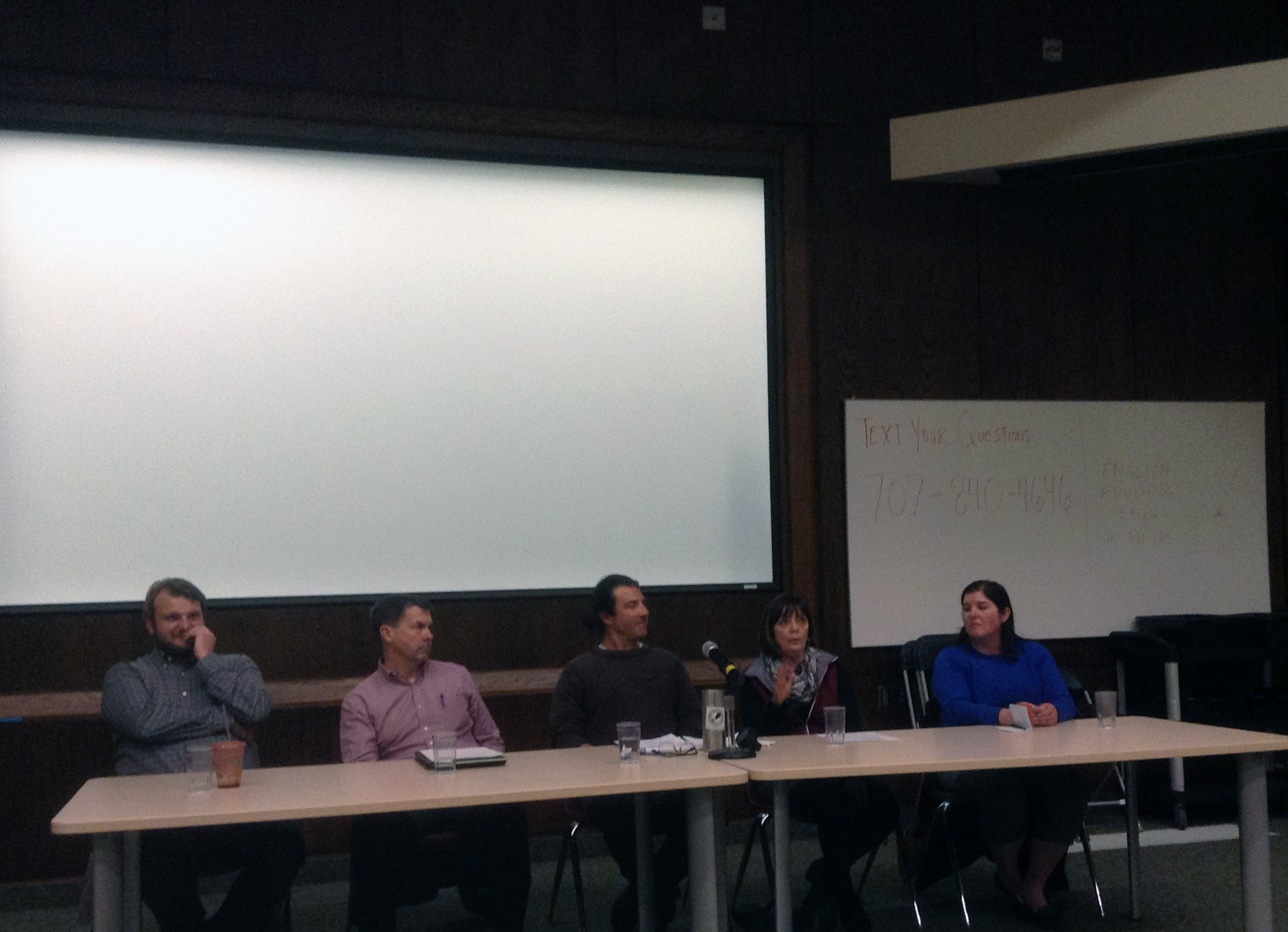
    Dr. Whitney Ogle of HSU kinesioolgy, Brian Willkomm of HPRC, Rachel Moore of Humco Office of Economic Development, Siobhan Danger Darwish of Blessed Coast Farms and Terra Carver of Humco Growers Alliance answer questions from moderator Jess Columbo during a cannabis public education forum in Eureka on Thursday March 28. | Photo by T.WIlliam Wallin

    Darwish is “a second-generation, black-market cannabis farmer” and decided to come to the legal side of the cannabis world in 2016. Darwish stressed that the future for Humboldt county cannabis farmers is collaboration.

    “Let me come to your farm, I will smoke your product,” Darwish said. “I will tell my 65,000 followers what your product tastes like.”

    IMG_0019.jpg
    HPRC held a public forum on cannabis education that included members of the cannabis industry on March 28. | Photo by T.William Wallin

    Darwish went on to stress the importance of educating the public about sun-grown cannabis and how businesses and dispensaries should sponsor small farmers. Bryan Willkomm represented HPRC at the panelist table and has said that HPRC has been working closely with farmers since their beginning in 1999. Willkomm said that the future of cannabis in Humboldt county is “bright and beautiful,” but those in power have to step up.

    “For a future regulations standpoint, we need a tasting room,” Willkomm said. “I can’t have you sample something without buying $40 of it. So, allowing farmers to have some sort of tasting or events, will really help bring more exposure to our farms and community.”

    IMG_0031.jpg
    Mariellen Jurkovich became manager of HPRC in the late 90s and since 2004 the acting director. | Photo by T.William Wallin

    Willkomm said he believes the future of cannabis is linked with ecotourism for Humboldt county and that cannabis can be used as an amplifier for those experiences. He went on to say that the county administrators need to focus on transportation access, with an emphasis on airport and road infrastructure to help alleviate the isolation of Humboldt county. Rachel Moore represented the Humboldt County Office Economic Development at the panelist table and stressed the importance of Project Trellis in Humboldt’s cannabis future.

    [perfectpullquote align=”left” bordertop=”false” cite=”Jaleel Abdul-Ali” link=”” color=”” class=”” size=”18″]“The main way to help out in terms of legislation is to vote. We need to let people know that yes, your vote does matter.”[/perfectpullquote]

    Project Trellis was implemented on March 12 as way for the county to help farmers negatively impacted by prior marijuana laws. Project Trellis will allow $340,000 in micro grants for farmers as well as $1.19 million in funds for a Humboldt county cannabis marketing scheme with a focus on markets in San Francisco, Los Angeles and San Diego.

    “Part of Project Trellis is to listen and engage in dialog, so we can help inform the process,” Moore said. “The supervisors are interested in protecting the Humboldt brand. That is an important piece. We are here to be a part of the conversation.”

    IMG_9948.CR2.jpg
    Professor Whitney Ogle of HSU kinesiology and Brian Willkomm of HPRC discuss marketing and research cannabis in Humboldt County with moderator Jess Columbo during a cannabis public education forum in Eureka on Thursday March 28. | Photo by T.WIlliam Wallin

    Jaleel Abdul-Ali, an HSU student majoring in kinesiology, attended the event to offer insight as a patient and consumer.

    “The consumer can help out in terms of advocating for the whole industry,” Abdul-Ali said. “The main way to help out in terms of legislation is to vote. We need to let people know that yes, your vote does matter.”

  • The Eel River and cannabis

    The Eel River and cannabis

    The Green Rush took a toll on the Eel River’s health

    Cannabis farms have been polluting the Eel River since the Green Rush began. There is sediment eroding and fertilizer running off into the river and the attached streams. Water is also being siphoned off from the streams and river to use on large grow operations.

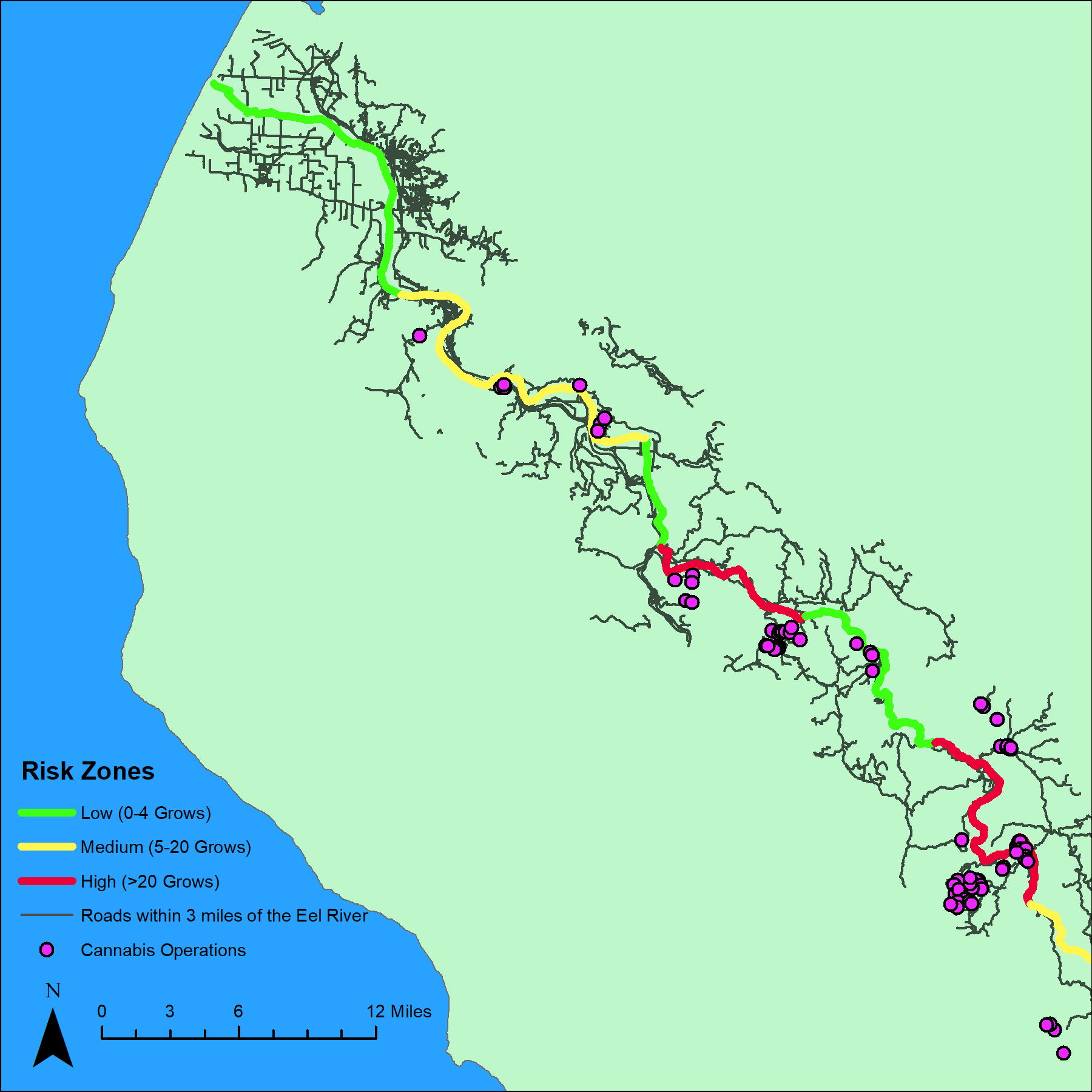
    There are some sections of the Eel River that are at high, medium, and low risk of being polluted by illegal cannabis farms. This map lays out sections that are at those different levels of risk. All of the grows shown are within three miles of the Eel river.

    The sediment that is eroding due to the grow operations building roads that they do not maintain. They are also clear cutting a lot of the redwoods which held the sediment in place. This sediment falling into and settling in the river is causing it to flatten out and become shallow.

    This takes away the salmon’s favored habitat of deep, cold water. The fertilizer is causing algae bloom to occur that is very toxic for the salmon. It causes them to become diseased and die off. The grows are also siphoning off too much water, to the point of the river running dry in some seasons. This makes it hard for salmon to migrate from the ocean, up the Eel River, and to the streams where they lay their eggs.

    Cannabis becoming legal will allow the government to regulate the fertilizer used, maintain roads and minimize the impact of clear cutting, and regulate the amount of water being siphoned out. These regulations will keep the Eel River beautiful and protected.

  • Queen Bee of CBD body care

    Queen Bee of CBD body care

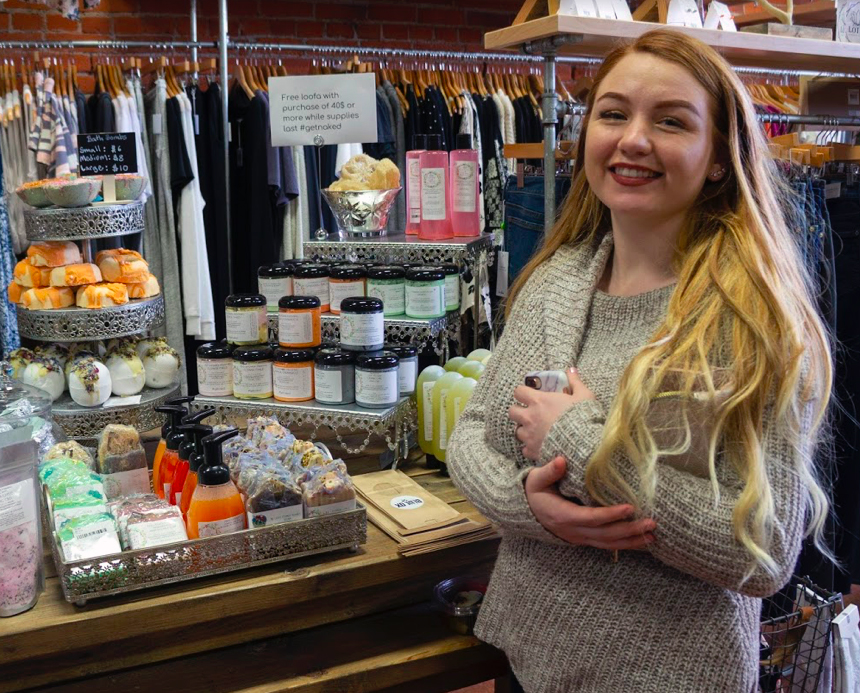
    Natural soap line Queen Bee Naturals’ biggest fan is Shannon Kraucyk. Kraucyk met the creator of Queen Bee in high school, where the two became friends and have kept in touch ever since. When she learned her friend was starting a soap line, she was one of the first to try the soaps and she loved them.

    “I’m personally in love with her bath bombs,” Kraucyk said. “It hasn’t affected my eczema, unlike those with harsh fragrance.”

    Violet Crane, 23, started making soap and a plethora of other body products in 2016.

    Crane uses natural materials and fragrances, but her line is known for its CBD oil. Cannabidiol, according to Project CBD, “is a cannabis compound that has significant medical benefits […] and can actually counteract the psychoactivity of THC.” Crane heard and read of its many benefits and healing abilities, and wanted to try it in her products.

    Starting with soap, Crane’s products expanded to bath bombs, shower gel, bubble bars, massage oil, lip balm and other fun products like shower frosting (a fluffy moisturizing shower soap) and “sugar daddy,” which is a body scrub.

    “I think that’s it,” Crane said, speculating the vast varied line of products she has made over the past two years.

    Crane then remembered her face and hair masks, nearly all products made with CBD oil from Humble Roots Medicinal.

    Currently, she sells Queen Bee Naturals at Zen in Arcata, Blue Ox Boutique and Otto + Olive in Eureka. She also has a Facebook page with over 1,100 fans and a group with 1,750 members, where she can directly sell her products, as well as share sneak peaks of her upcoming products. In addition, her fans can post their hauls of her items and bathtub pictures of her bubbly colorful products.

    Having a lot of fans takes dedication and help. Crane not only has a successful small business, she also has two children. Her partner, Danny Corrales, helps her balance her work and family life.

    “I make everything,” Crane said. “He delivers everything and helps with the kids.”

    Their 3-year-old daughter, Ariel, is used to sitting in the car on their weekly ride from Ruth Lake to Humboldt for product delivery. Crane recently had her son, Benjamin, two months ago, and quickly went back to making new products.

    This included a collaboration with Lost Coast Roast, a local coffee roasting business known for their cold brew coffee that she loves. She contacted them, and after talking, she started making soap with their coffee grounds.

    One of the obstacles Crane faced when making her products was copycats. She brought her items into a former friend’s shop to sell. Later, that person started making nearly identical items with CBD oil and using the name Crane put on her items, “CBDQUEEN,” as the name of her product line.

    Crane was then accused of not using legal CBD oil in her products by that person. To prove to that person and her customers, Crane took the CBD oil she uses to the Leaf Detective, a Eureka business that tests cannabis potency. She learned that it contained less than 3 percent THC, and a second test proved to be nearly 0 percent THC.

    “I was hurt at first,” Crane said, “but I’m focusing on bigger things for myself.”

    Crane wants Queen Bee Naturals to grow, not just in Humboldt, but possibly beyond Northern California.

    She wants to have a warehouse with employees to make her products so she could spend more time with her family.

    With the legalization and acceptance of cannabis in California, Crane would like to expand her line to legally put THC in her products and put them in her future dispensary. Queen Bee Naturals is only growing from here.

  • Cannabis industry faces new era

    Cannabis industry faces new era

    Cannabis town hall.

    The Humboldt State Department of Politics hosted the 14th annual Schaub Memorial Lecture on local politics titled “The Transition to Legal Cannabis,” on March 26. John Meyer, the chair of the HSU politics department, presided the panel discussion.

    The four panelists were Hezekiah Allen, executive director of California Growers Association; John Ford, Humboldt County director of planning; Mariellen Jurkovich, director of Humboldt Patient Resource Center and Linda Stansberry, a journalist at the North Coast Journal.

    Tony Silvaggio, HSU sociology professor and Humboldt Institute for Interdisciplinary Marijuana Research contributor, served as the moderator.

    The California voters approved the Adult Use of Marijuana Act on Nov. 8, 2016. The California state legislature approved the Medical and Adult Use of Cannabis Regulation and Safety Act in 2017. However, local and city governments can ban cannabis business within their jurisdictions. In Jan. 2018, the state of California licensed marijuana facilities sold state licensed, distributed and produced marijuana.

    “Certainly the transition from illegal, unregulated to regulated, legal cannabis in the state of California is a very complex one that is riddled with all sorts of political considerations,” Allen said.

    Three California state departments are in charge of licensing and regulating cannabis commerce. The California Department of Consumer Affairs regulates and licenses retail sales, distribution and testing. The California Department of Public Health oversees manufacturing and the California Department of Food and Agriculture is responsible for cultivation.

    “First and foremost, California grows way more cannabis than we consume here. The state’s estimate is that we produce 15 million pounds and that we consume 2.5 million pounds. That is a huge disparity,” Allen said.

    John Ford is an HSU alumnus. Ford talks about cannabis farmers expectations being part of the legal system.

    “I think [the farmers] expectations were that ‘It shouldn’t be too hard to permit what I have already been doing,’” Ford said.

    Cannabis farmers found out about local taxes, state and county permits.

    “2,300 applications that were submitted to the county almost simultaneously, literally choked the system,” Ford said.

    The local community and economy are reliant upon cannabis.

    “Then, there’s Humboldt County, who has an economy to protect, a reputation and an identity to protect. This industry is important for jobs, for economic growth and yes, taxes,” Ford said.

    Ford spoke about other places in California being better suited for cannabis cultivation with flatter land, pre-existing greenhouses and better weather, places close to markets and transportation with abundant access to investment capital.

    Mariellen Jurkovich talked about working together as a community.

    “Arcata is willing to work with you. Eureka is willing to work with you. We need to work together as a community. This is our industry,” Jurkovich said.

    Stansberry is concerned about the economic ramifications that were not anticipated.

    “We are going through a really painful growth period,” Stansberry said.

    Nick Thomas is a political science major at HSU and thinks slowing big business down will help the local economy.

    “We need to make sure that a lot of the major industrial-sized grows get pushed back for five years. That is step number one,” Thomas said.

    Thomas referred to Allen’s statements on the importance of small farmers and how it is about the community.

    Allen spoke about policy, cultural and financial barriers.

    “Honestly, folks don’t have the means to move forward,” Allen said.

    Allen pointed out that the market incentive is not there.

    “Of 2.5 million pounds of cannabis consumed in state in California, only 600,000 pounds are sold by regulated retailers. The other 1.9 million pounds of cannabis consumed in state is sold on the unregulated market. There is no point in getting a license now. The market isn’t there,” Allen said.

  • Speaker from Melbourne talks cannabis

    Speaker from Melbourne talks cannabis

    Jenny Williams, a professor at the University of Melbourne, spoke with Humboldt State economics students on Feb. 19 about her findings in a 15-year study of the effects of cannabis users and their choice of job professions.

    “In today’s age, cannabis use is something that is socially acceptable,” Williams said. “Today, more of the population who start using cannabis are young, between the ages of 14-18.”

    In Williams’s study, 49 percent of 1,000 male high school seniors used cannabis. Within that 49 percent, most of them either stayed in low-wage jobs after graduation or continued their academic career.

    Williams’s study also shows theories that cannabis users have a present mindset.

    “Users of cannabis are more willing to go into lower wage jobs,” Williams said. “This potentially leads to users being less likely to complete their education.”

    Brea Smith, a student at Humboldt State, said marijuana use is likely going to increase due to the recent legalization in California.

    “I won’t be surprised if the number of younger users increases in a couple of years.” Smith said.

    Eureka resident Jacob Rice has been a cannabis user for years.

    “I wanted a job for the sake of getting money,” Rice said. “I guess the study is accurate in some way, but I would take it with a grain of salt.”

    Williams plans on conducting a similar study to look into female high school seniors.

    “Socially, cannabis has become more acceptable than it was years ago,” Williams said. “I think it’s important to look at a students’ financial wellbeing in the long term when it comes to long-term cannabis use.”

  • Don’t go missing

    Don’t go missing

    By | Reza Sadeghzadeh

    Humboldt County reported 352 people missing in 2015, and according to ABC News, “That’s more people missing per capita than any other county in California.”

    It would be fair to say that the black market of the cannabis industry is a probable reason behind the high rate of missing people in our county.

    Students and “trimigrants” become vulnerable when they decide to go in the hills to trim, which subsequently makes them dependent on their “employer” without any recourse.

    “Students from the nearest college, Humboldt State University, return from a summer of trimming marijuana buds with takes of being forced to give their boss a blow job to get paid,” said Shoshana Walter of The Huffington Post. “During one harvest season, two growers began having sex with their teenage trimmer. When they feared she would run away, they locked her inside an oversized toolbox with breathing holes.”

    Money is a huge factor for many college students and cash-paying trimming gigs can help tremendously. But you must be aware of the potential outcomes.

    Consider these following things before trimming for a grower:

    First and foremost, who are you going to be trimming for and how well do you know them? It is not wise to trim for a stranger, so make sure you know who you are dealing with.

    “We have Russian mafia up here, we have Mexican mafia up here and we have Asian triad gangs up here, because the marijuana industry is money,” said Humboldt County Sheriff’s deputy Greg O’Rourke.

    Most HSU students are not informed about the involvement of these criminal organizations in Humboldt’s cannabis industry, which is why it is important to know who you are trimming for.

    If you decide to go in the hills for a trimming gig, make sure you know where the farm is located. Also, let a friend or family member know about your plan prior to your departure.

    In all fairness, some growers are law-abiding citizens and treat their trimmers with decency, but that might not always be the case. That’s why you should be cautious before accepting any job offers. If you don’t, there is a chance you might go missing.


  • This week in STEM Oct. 24

    This week in STEM Oct. 24

    By | Bryan Donoghue

    Embed from Getty Images
    One of the things that makes weed worrisome is its impact on developing brains. A new study presented at the World Psychiatric Association found that teens who smoke pot are more likely to suffer from psychosis. The results show that people who used cannabis before 18 developed schizophrenia 10 years earlier than other people who didn’t smoke. For every year the teens smoked weed, symptoms of psychosis rose 21 percent annually.

    Source: Scientific American, Newsweek, Vice

    Embed from Getty Images
    You can really use Google Earth to find anything, even discovering something ancient. Over the past decade, Google Earth has been used to identify thousands of burial sites dispersed around Saudi Arabia. Recently, archaeologists used the application to uncover around 400 stone structures called “gates” in the Arabian desert. The researchers believe it may have been built by nomadic tribes anywhere from 2,000 to 9,000 years ago.

    Source: New York Times, Popular Mechanics, Forbes

    Embed from Getty Images

    Climate change isn’t just affecting sea level, but it’s also harming coffee production. Coffee needs specific temperatures to grow properly and is highly likely to have pests. To combat diminishing coffee production, researchers are cross-breeding coffee plants to create a brand new strain. With most of the coffee around the world grown close to the equator, the newest coffee strain resists climate change and is named after the countries that produce our espresso beans. Out of seven new variety hybrids, Centroamericano is the new breed of coffee bean that can best withstand rising temperatures and decreasing rainfall while still producing a large quantity of quality coffee.

    Source: The Times, The Denver Post, Phys.org

    Embed from Getty Images

    Soldiers stuck in the snow will soon have some high tech underwear made of special fabric to combat the threat of sweat freezing. The light fabric uses nanowires, tiny wires of silver, to form a mesh across cotton. The silver reflects body heat back to someone’s skin helping with insulation. To help with sweat, the underwear also has hydrogel beads, a polymer that absorb up to 40 times their weight in water. This will help keep the troops warm for the winter.

    Source: Science News for Students, Business Insider