The Lumberjack


Students Serving The Cal Poly Humboldt Campus and Community Since 1929

Tag: Centers for Disease Control and Prevention

  • Myths and Truths of Surgical Face Masks

    Myths and Truths of Surgical Face Masks

    Mirage of safety causes mask supply to plummet and xenophobia to reemerge

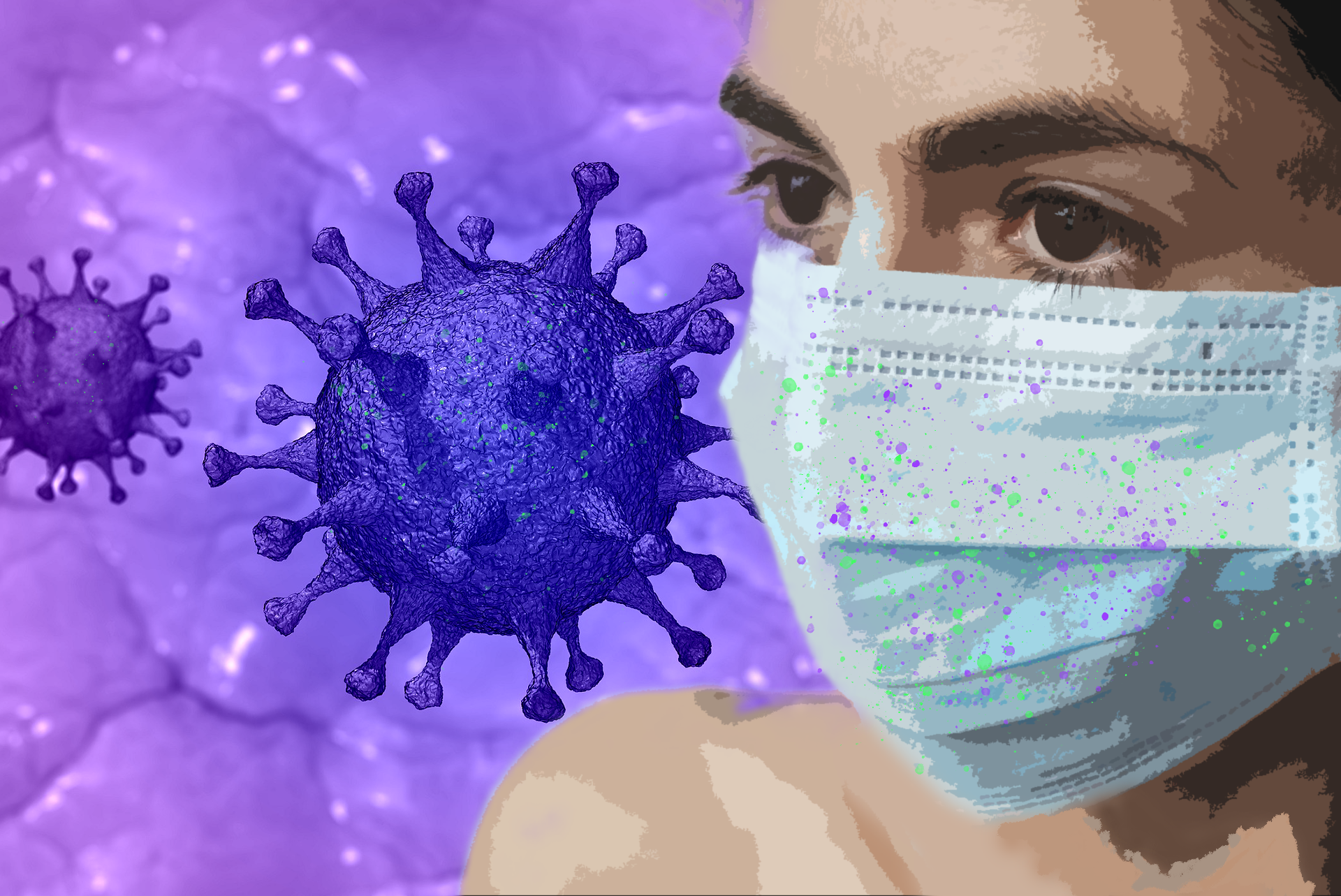
    The emergence of everyday people using surgical masks amidst the COVID-19 pandemic has caused mass misinformation and the perpetuation of xenophobic ideas.

    Myth: Surgical masks make you immune to COVID-19

    Typically found on hospital workers and sick personnel as a safety barrier, surgical masks are almost regarded as invincibility devices, protecting the body from outside pollutants and threats. The implied purpose of surgical masks is to protect patients from the secretions of a doctor’s mouth or nose during surgical procedures or to protect doctors and nurses from infected patients. Either way, a basic surgical mask prevents the exchange of bodily fluids, not air particles. Surgical masks are often mistaken as invincible shields against all viruses and bacteria.

    Surgical masks show no evidence of prohibiting the inhalation or contraction of the virus that causes COVID-19. The COVID-19 virus particles are too minuscule to be stopped by a surgical mask barrier. According to the Centers for Disease Control and Prevention, “most facemasks do not effectively filter small particles from the air and do not prevent leakage around the edge of the mask when the user inhales.” In no way do surgical masks prevent or obstruct contaminated air.

    While surgical face masks are virtually pointless against COVID-19, N95 filtering facepiece respirators are different. These masks are personally fitted to the face and “filter out at least 95% of very small (0.3 micron) particles, capable of filtering out bacteria and virus particles,” according to the CDC. These masks are typically worn by hospital and treatment personnel that come in direct contact with infected patients. N95 masks prevent the inhalation of micro-particles.

    Truth: Surgical and N95 masks are running low

    Due to the personal fitting of each N95 mask, they begin to degrade overtime depending on their usage, storage and environment. The assigned expiration date and high demand due to the current pandemic has resulted in an unexpected shortage in supply. Doctors are now reusing their masks, but they risk contamination due to degrading components affecting the protection and performance of the mask. Government administrations are requesting N95 donations as well as demanding some occupations to give up their assigned mask for medical workers.

    While N95 masks are needed most, surgical masks are running low as well. Infected patients wearing masks benefit surrounding parties by limiting exposure of emitted particles into the air. The pandemic panic has misinformed the public to go buy surgical masks when patients and medical workers need them most.

    Myth: DIY masks provide reliable protection

    YouTube and social media platforms are advertising do-it-yourself face mask tutorials in response to the shortage in surgical mask supply. The misinformation has continued as people attempt to protect themselves with faulty protection materials. Bras and bonnets to sandals and plain cloths are being cut and trimmed to replicate surgical face masks. But, as previously mentioned, surgical face masks provide no protection against COVID-19 virus particles. Any alteration of store-bought or recycled material will have the same, if not less, protection against COVID-19 than a surgical mask.

    Truth: Mask usage has reignited xenophobic ideas

    Surgical masks provide zero protection from contracting COVID-19, but they have effectively reignited xenophobia. It’s completely normal for the mind to want to assign a face to an infected COVID-19 individual or picture what a threat would look like out of caution. Assuming someone wearing a face mask has the virus and extending that assumption past the mask, to their race or ethnicity, is disgusting, racist profiling. In a time of crisis, people should be exercising neighborly behavior and picking one another up, not perpetuating racist, profile-based assumptions on others in an attempt to accuse others of the chaos. It’s unproductive and invasive.

  • Don’t lose your head

    Don’t lose your head

    By | Bryan Donoghue

    A concussion doesn’t entirely mean hitting your head hard. Concussions happen often, and there are a multitude of adverse side effects from a concussion that can disable a person biologically. In cases where a concussion needs to be thoroughly examined and diagnosed, the North Coast Concussion Program (NCCP) at Humboldt State University is there.

    LN_consussion
    Graphic by Lora Neshovska

    A statement from the program’s homepage says that the NCCP treats thousands of Humboldt and Del Norte residents every year. This not only includes local community members and Humboldt State residents, it extends to 11 regional high schools, as well as youth and adult sport leagues.

    The Centers for Disease Control and Prevention state that a concussion is a, “type of traumatic brain injury, or TBI, caused by a bump, blow, or jolt to the head that can change the way your brain normally works.”

    It continues to state that although concussions are not usually life threatening, their effects can be serious. Those effects are what the NCCP primarily study, and based of the needs of different concussed patients, the Student Disability Resource Center (SDRC) is willing to accommodate each student individually.

    “We do work well together,” said Kevin O’Brien, the director of Student Access Services.

    O’Brien explains that students are usually first seen at the health center at Humboldt State and then referred to the North Coast Concussion Program. Based off the assessment report, O’Brien and the SDRC evaluate the impact of the concussion of the student’s academic work and authorize specific accommodations based on the results.

    “It’s going to vary according to the severity of the concussion, the impact of that on a student, whether it causes them headaches, visual disturbance, it depends on the issues that arise from the concussion and the length of time,” O’Brien said.

    O’ Brien says generally with a concussion, the basics to help yourself are to reduce reading, bright lighting, and to increase the amount of rest you get.

    “Basically you are trying to rest the brain so it can heal itself,” O’ Brien said. “So reduce cognitive activity, studying, reading, bright lights, all of those things.”

    If you do have a concussion, it’s imperative to work with the SDRC advisors and your professors to construct a regimen. They collaborate to help build you back up and get you into regular study habits again.

    “They are going to need an accommodation maybe as simple as us conferring with their faculty,” O’Brien said. “Working with the faculty on what the expectations might be, and how long this is going to take, and how can we best ensure that the student can make up work missed.”

    Humboldt State recently hosted a guest from the University of Pittsburgh Medcial Center on Thursday, Sept. 28. Dr. Anthony Kontos spoke about research pertaining to psychological, neurocognitive, and neuro-motor aspects related to concussions. Most importantly, he advocates safety, as well as concussion prevention and treatment.

    “There’s risk in all activities, And then if somebody has something, they got to do something about it. It can’t just be, ‘okay, you have a concussion,’ Kontos said.

    Kontos says to seek whatever care and follow up, because that’s how we prevent the effects of an injury from becoming worse.

    “We do know that if you’re an adolescent and you get hit, there’s a likelihood that your developing brain is more at risk than, say, a really young kid or an adult,” Kontos said.

    According to Kontos, you shouldn’t let that affect your participation in sports. Mainly, you have to learn to play sports correctly and how to participate safely.

    “That’s really the key here, doing sports as safe as possible and allowing kids to be active,” Kontos said.