by Griffin Mancuso
There is a whimsical quality to seeing a movie in the theater. 2023 was a year with many thought-provoking and conversation-starting films like “Killers of the Flower Moon” and “Barbie.” I rarely go to theaters now, but as an enjoyer of Studio Ghibli films, I had to see “The Boy and the Heron” with the classic theater experience. There is no better place to get the classic theater experience than the Broadway Cinema in Eureka.
Like any chain theater, the neon sign on the front had not been replaced in a very long time, leaving only the Y glowing in the dusk. The lobby was filled with the sharp smell of popcorn and the carpets were dull and faded where people had walked. While lacking in staff and attendees, the theater still had its charm in the form of large star lights on the ceiling and orange neon accents around the snack table.
I settled into my cushy chair just in time for the film to start. “The Boy and the Heron” was enough to bring famed Ghibli director Hayao Miyazaki out of retirement, so I had high expectations.
Before I continue, a minor spoiler alert for this movie.
The movie begins with the piercing sound of air raid sirens against a gray backdrop of houses, placing us in World War II-era Japan. We meet our protagonist, a young boy named Mahito living in Tokyo, who loses his mother in a hospital fire on that night. Years later, Mahito’s father marries his late wife’s sister Natsuko and moves them to the countryside.
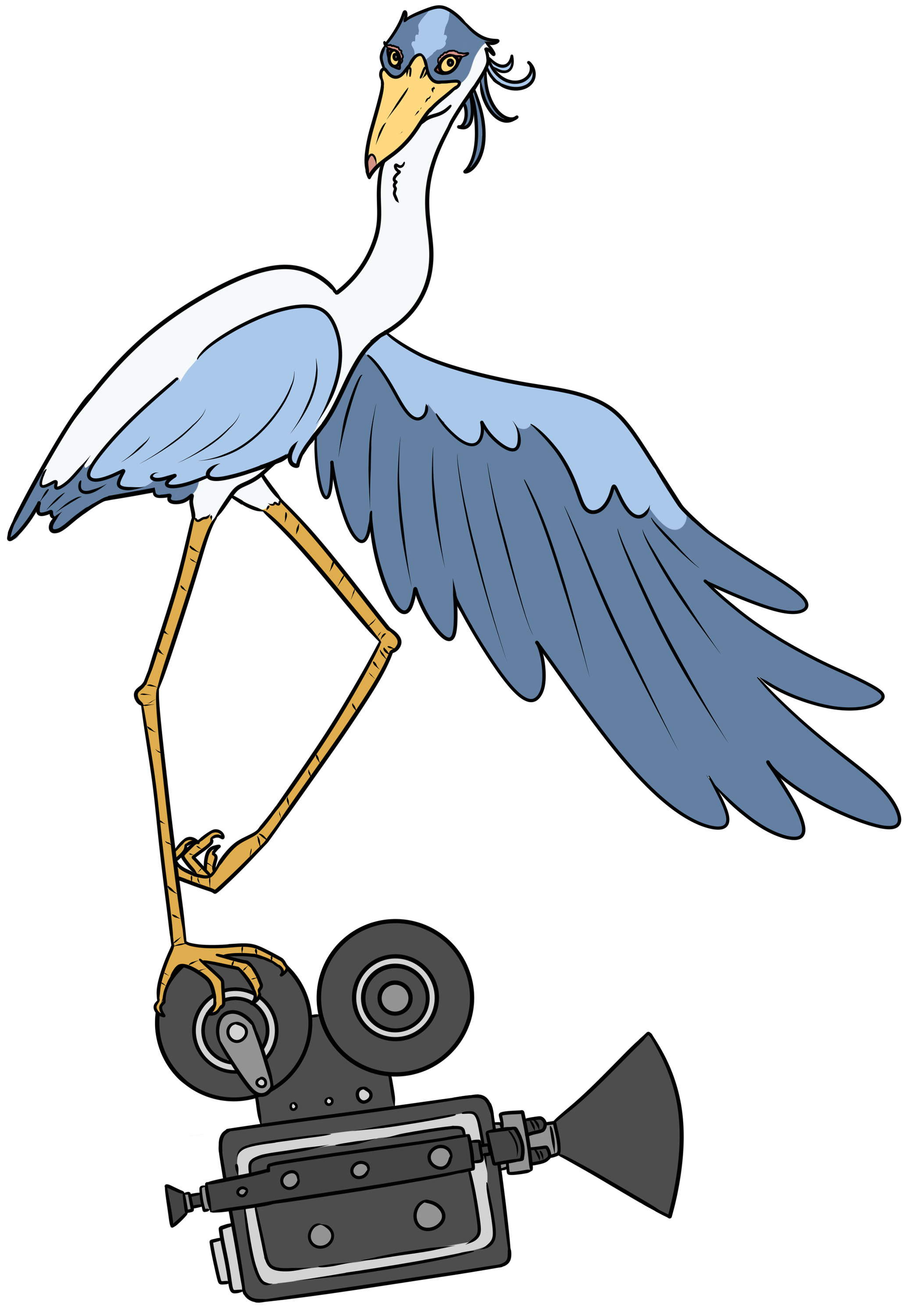
While trying to adjust to his new life and the loss of his mother, Mahito encounters a strange talking heron who tells him his mother is alive and needs to be rescued from another world. The heron, a mischievous creature who we soon discover is not a heron at all, also traps Natsuko in this alternate world, forcing Mahito to track down the heron and travel to the other world.
The film tackles themes of family, loss and escapism that mirror Miyazaki’s own experiences. Like many of his films, it is a coming-of-age story that requires the protagonist to embrace fantasy to grow, then let go of it in order to move forward. The parallel world Mahito travels to acts not as a purgatory, but rather as a gateway to many alternative universes. This world contains wild creatures ranging from giant man-eating parakeets to small white blobs called the warawara, which eventually ascend to the human world to be born as human babies.
Along his journey, he meets younger versions of the people in his life, including one of the old women living in the countryside house with him and his family. There are so many layers to the world of “The Boy and the Heron” that it feels like a mix of a child playing pretend and a ƒvivid dream.
The magical wonder of the film didn’t stop at the screen. I’m not sure how it got into the theater, but a small sparrow briefly joined us. It fluttered around the ceiling, adding a bit of immersive surround sound, and the audience couldn’t help chuckling when it settled in front of the projector, leaving a giant bird-shaped silhouette on the screen. It didn’t linger long, but just enough to make me wonder about the irony of its appearance.
No matter the quality of the story, a Studio Ghibli film never disappoints in the animation category. The characters, while simple in design, move fluidly against meticulously painted backgrounds. Studio Ghibli is famous for preserving the art of hand-drawn animation and drawing on physical media, which helps preserve the detail in the backgrounds. Any use of 3D animation only enhances the magical effects throughout the film, and it is impossible to tell where the hand-drawn animation starts and the 3D animation ends.
The story itself is complex and the world doesn’t always make sense, but I think it’s meant to be that way. Like most other Ghibli films, the story moves at a leisurely pace and then rapidly picks up the pace in the final act. It is one of Miyazaki’s more esoteric films, which may not appeal to everyone. The meaning behind some of the recurring motifs like birds and fire are up to interpretation, which impacts what each viewer will take away from the film.
“The Boy and the Heron” is an individualized experience that doesn’t fully reveal all its secrets. There are story elements that are never explained and blurs between dreams and reality. To fully enjoy the film, viewers will have to put that aside and inhabit the mind of a curious child.
While not my favorite Ghibli film, I greatly enjoyed my experience watching it at Broadway. As I left, feeling dazed from the visual explosion at the end of the film, two staff members stood near the exit wondering how the bird got inside and where it flew off to. I like to think the bird wanted to appreciate Miyazaki’s work.