The Lumberjack


Students Serving The Cal Poly Humboldt Campus and Community Since 1929

Tag: Clam Beach

  • 8 of the best local places to safely visit

    Local destinations around HSU to get your adventure on during the pandemic

    (Photos by Elise Fero)

    Trust me as someone who has had COVID-19, it’s better to be in quarantine than to catch the virus and be isolated alone. So what do you do with your spare time? If you have any sort of adventurous spirit, this is the list for you. In no particular order, here is eight of the best places to go to while attending Humboldt State University.

    1. Redwood National and State Parks

    On a cold day in Redwood National Park, the forest is filled with sounds of rain hitting leaves of every individual plant

    While this is a farther location 29 miles north of campus, it’s absolutely worth the drive. This is one of the coolest and most beautiful places I’ve ever been. The area has multiple hiking trails, beaches, a canyon of ferns, and of course, the world’s tallest tree, Hyperion. If you like National Parks, go scratch this one off your list. Not only is it breathtaking, but it’s also where parts of Jurassic Park and Star Wars were filmed. It crosses between Humboldt and Del Norte Counties and protects 45 percent of the remaining coastal redwood trees. This location is an endless adventure that you can return to and still find something new.

    2. College Cove

    Waves crash against rocks where anemone and starfish live at College Cove as people walk dogs and throw frisbees in September

    College Cove is located in Trinidad about 13 miles away from campus. This location has brilliant blue water surrounded by forested boulders. Visitors walk on the beach, and some surf. You’ll also find a plethora of dogs! There are tiny pools of water where anemone and starfish live. Lots of studying to do? Bring your work here. Homework with a view while listening to the sound of waves is unmatched.

    Melanie Guillen is a freshman film major who finds serenity at College Cove.

    “I’m not really a beach person but it’s more secluded than the others,” said Guillen. “I like it.”

    3. Clam Beach

    The sun sets and the tide leaves seafoam scattered across Clam beach on Sept. 24

    This beach is closest to campus and only a short drive headed north, toward McKinleyville. The sand is soft and warm, perfect for finding sand dollars. Watch for jellyfish washed on the shore, that goes for most beaches. While it’s not surrounded by trees, looking back behind you is the forest and beautiful fog. This area is also phenomenal for sunsets and changes in the tide.

    Freshman wildlife major James Lara said he loves Clam Beach for the picturesque views.

    “I like the little dunes it has, it’s pretty cool. It’s very pretty for stargazing,” said Lara. “The water’s pretty low so you can go pretty far into the waves and be safe.”

    4. Arcata Community Forest

    If you want to explore the forest, this location is a lovely place to start. You can find loads of mushrooms. I even found a mushroom in the shape of a heart! Remember to always research and double check when foraging. The forest hosts large trees, tall and wide. There are multiple paths to take, great areas to jog or bike. There’s often people around, but you can find a little oasis within your path. At the top is Redwood Park with a friendly playground and picnic area.

    5. Moonstone Beach

    This beach looks straight out of a fairytale. Located in Trinidad, this beach is on the scenic coast and has a boardwalk. The beach is the perfect local vacation spot. The views are breathtaking, and a large stream of water flows through the sand, leaving a perfect wading area and play space for children. The beach is dog friendly, as well. Sunsets are magical, the waves are great for surfing and there are restaurants nearby. A perfect combination!

    6. Agate Beach

    Waves bring new stones in as people search for the perfect agate at Agate Beach

    Another location in Trinidad, Agate beach is located at Patrick’s Point State Park and has a campground for those interested. You do have to pay $8 for day-use but it’s well worth the expense. This beach is exactly what the name says. You’ll find people looking through all the pebbles on the beach, and you should, too! It’s also a spot to watch wildlife and be completely engulfed by nature. You shouldn’t swim here, but you can take long walks on the beach. It’s a beautiful area, and not too crazy busy. Take some time for yourself, bring a picnic basket and have a good beach day.

    7. Avenue of the Giants

    Of all of the listed locations, this is the farthest from campus at 40 miles north in Humboldt Redwoods State Park. If the name didn’t intrigue you, the description will. Imagine every post you see on Instagram or Pinterest with a van in the middle of the road surrounded by extremely tall trees, I know you know the ones I’m talking about. Those are here. The redwoods surround the road, looking like a magical pathway through 31 miles of epic perfection. Some of the trees are over 300 feet tall, and one tree is almost 1,000 years old!

    8. Forest paths around HSU

    Plants hang over a cliff to show their roots and reach for the sun underneath redwood trees allow the paths around HSU

    If you don’t drive, no worry! Stick to the paths that are connected to campus. You can find all sorts of mushrooms, ferns and creeks. This area is easy to access and absolutely beautiful. Students are usually the only people exploring, but sometimes you’ll see someone else jogging. The area is perfect for walking your pet, biking, running, or just enjoying the views. This is also the spot where I have been able to find the most banana slugs. They love blackberry bushes!

    Undeclared freshman Natalie Barber laughed with her friends, Guillen and Nicole Velazquez, about going on spontaneous adventures on the paths around HSU.

    “One day you’ll be like you guys wanna go hiking? Yeah okay! Let me get my bag ready,” said Barber.
  • Snowy plovers fight for protection

    Snowy plovers fight for protection

    Humans act as primary threat to the endangered bird species

    A snowy plover egg sits in a small burrow on Clam Beach. A raven creeps up on the lonely egg and pecks it in half. The scavenger slurps up the egg’s contents and flies away before the father arrives back at the nest.

    Alexa DeJoannis, President of the Redwood Region Audubon Society, gave a speech on the endangered snowy plover Friday Jan. 18 at the Arcata Marsh Interpretive Center. She began studying birds in southern California with the burrowing owls. DeJoannis later moved up to Humboldt County and applied to Humboldt State University for a master’s program. DeJoannis graduated with a Master’s in Wildlife. While there, her ornithology professor, Mark Colwell, introduced DeJoannis to researching snowy plovers. She has been in love with them ever since.

    “I only study cute animals,” DeJoannis joked.

    Many people use nature as a getaway from their stressful lives. The Humboldt Dunes are a great example of a peaceful place to take a stroll. The dunes are also an important place in our environment. Her speech discussed how the dunes slow wind and break storms when they crash in from the ocean. Dunes protect our roads and homes from these weather conditions.

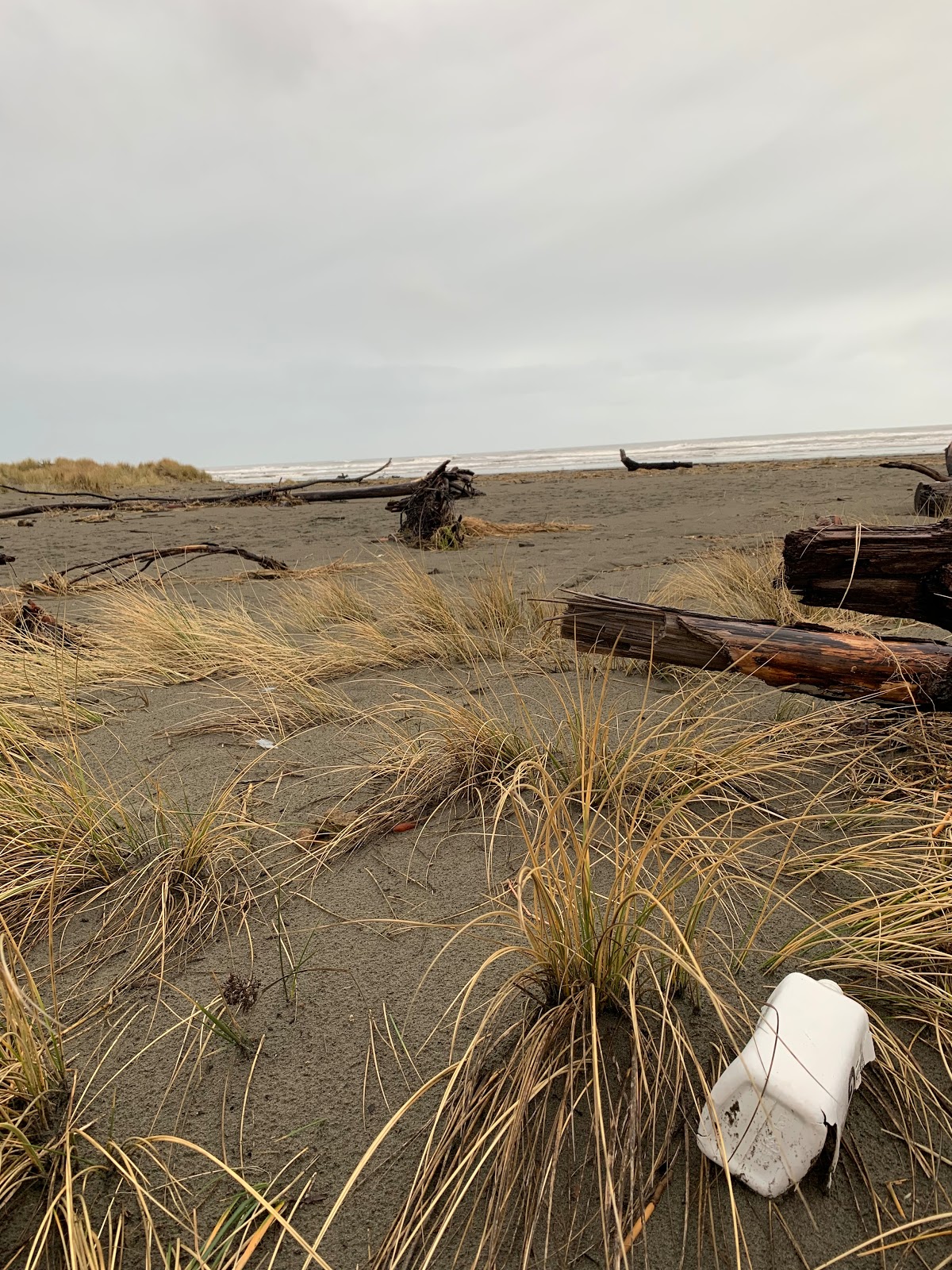
    Snowy plovers also rely on the dunes as their home. They dig holes in the sand to use as nests. Since snowy plovers are semi-migratory, they spend a lot of time at their nests. DeJoannis emphasized how snowy plovers rely on their eyes to find food and watch for predators. The beach is their preferred habitat since it’s nice and open. Unfortunately, European beach grass is taking over their ecosystem. Snowy plovers are being blinded by this invasive plant species, making them vulnerable to predation.

    DeJoannis also discussed how people have a huge impact on the endangered snowy plover. Human litter has helped corvids, which are birds of the crow family thrive. Beaches became an attractive home for corvids such as ravens and crows because of this litter issue. Those large numbers of clever birds then began attacking the plover nests. Corvids found that a snowy plover egg is much tastier than the trash they were eating.

    “Everybody deserves protection from predators,” DeJoannis explained.

    Many nests have been destroyed by people not watching their steps. Snowy plovers nest right on the sand and expertly disguise their nests from predators. Therefore, many people are unaware that these creatures are right beneath their feet. People can look for small scoops in the sand with speckled eggs laid inside.

    Snowy plovers like to have shells or wood around the nest to distract a predator’s eye from their eggs. It is important to keep an eye out for snowy plovers themselves. Plovers have grey, brown backs and tops of their head with a white belly all year round. Their plumage then changes during breeding season, Feb. to Sept. This is when they develop a black stripe above their eye and on their necks. These stripes are usually more pronounced on the male snowy plovers who are trying to impress a female.

    “That’s evening wear,” DeJoannis said.

    Restoration efforts have been focused on pulling invasive grass. Native species of plants like beach strawberry are planted. Snowy plovers can easily see over shorter native plants. Fences have been put up around plover nesting sites during breeding season to prevent the destruction of plover nests. People can also listen to experts and become educated on the issue themselves. If humans work together to protect the little guys, the snowy plover may just have a chance.

  • Goodbye Moonstone, hello rising sea levels

    Goodbye Moonstone, hello rising sea levels

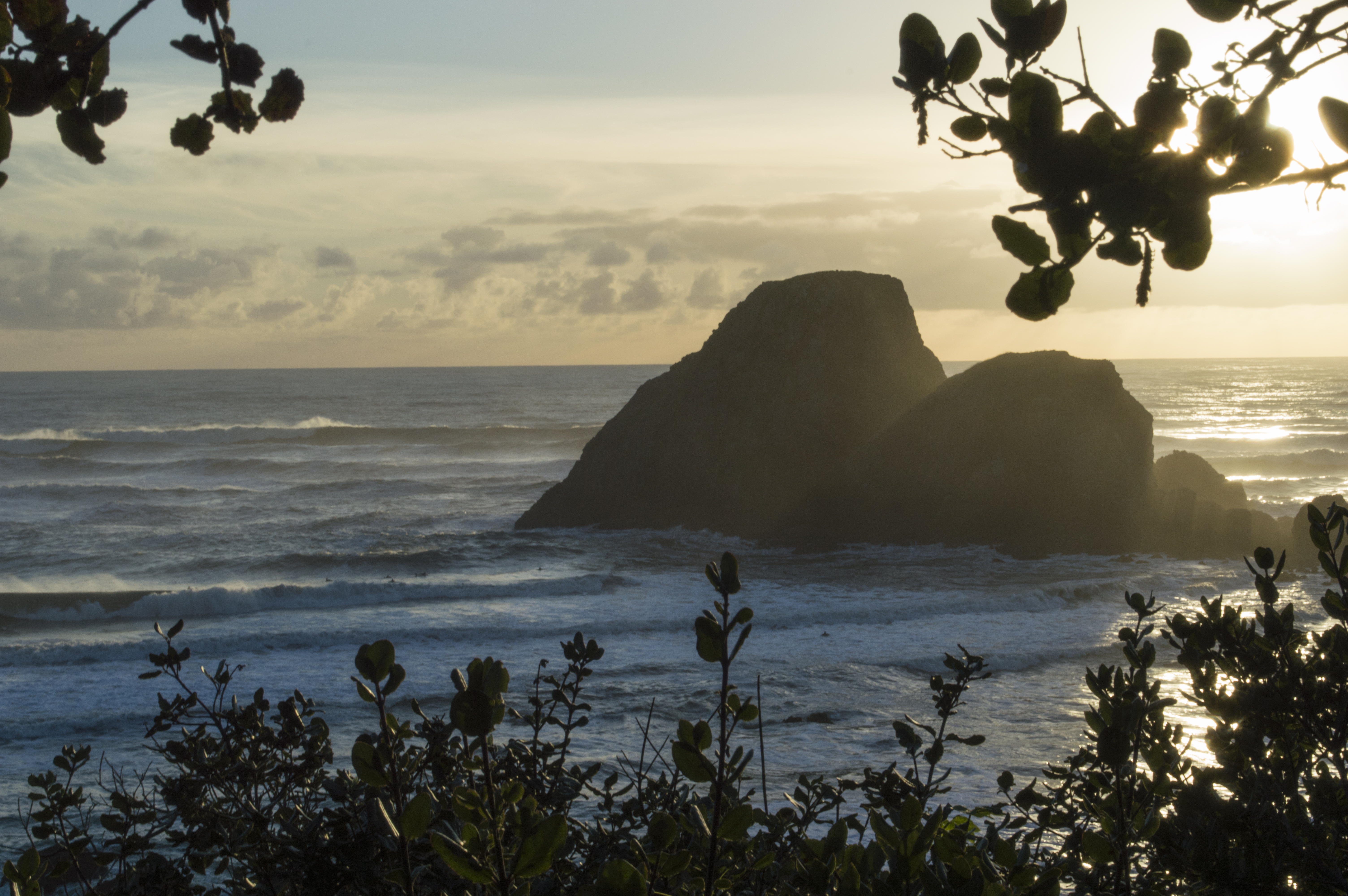
    Picture Moonstone Beach. The sun is setting, creating a silhouette of Camel Rock against a watercolor sky of vibrant pinks and oranges. The ocean is at peace, beautifully calm and picturesque. Now imagine the beach in fifty years or so.

    Moonstone Beach is gone.

    Due to rising sea levels and changing weather patterns, the beach at Moonstone no longer exists.

    Jennifer Savage, the California Policy Manager for Surfrider Foundation, was able to paint a picture of what Moonstone Beach will look like when we fast forward a couple years.

    “It’s not miles and miles of wide open beach on the north side, so I’d imagine that the modeling would predict that the Camel Rock area and the Moonstone area would be the first to disappear,” said Savage. “Then Clam Beach going down toward the Mad River mouth, because it’s wider and broader, may last a little bit longer.”

    moonstone
    Graphic by Kyra Skylark

    A representative for the Surfrider Foundation and an avid surfer and wave lover herself, Savage works to keep the waves clean and preserve the oceans and coastlines worldwide.

    “Essentially, even if we have just a few inches of sea level rise, it’s a vertical. It’s not just the oceans getting closer, it’s that they’re getting taller,” said Savage. “How that affects different places depends on the geography, the weather patterns, the ocean’s current patterns, and a lot of different things.”

    The repercussions of climate change can only be predicted to a certain extent, but there are numerous studies and research constantly happening to determine how our oceans are being influenced and how the could be affected in the future.

    “With Moonstone Beach, we already know that during the King tides the beach is completely covered,” said Savage. “The King tides give us a pretty good preview of what the future will look like.”

    Daniel O’Shea an Oceanography professor specializing in Geological Oceanography was able to provide greater insight on the King tides.

    “The King tides are a play on the words spring tides,” said O’Shea. “Every two weeks, we get what are referred to as spring tides around the new and the full moon, where the tides spring up higher.”

    “Around the winter and summer solstice, we get the highest and the lowest tides of the year, and those are called the King tides,” said O’Shea.

    The King tides show the physical changes to the coastline we can expect in the coming years as climate change continues to alter sea levels.

    “They’re [the King tides] going to be the normal high tide in 15-30 years,” said O’Shea.

    What we currently consider the extreme high tides will become our new normal, and the changes are coming faster than we can anticipate.

    Kim McFarland, the Executive Director of Friends of the Dunes explains how the dunes are being impacted by climate change.

    “We’re doing a climate ready study through the U.S. Fish and Wildlife services, it’s a climate change resiliency study,” said McFarland.

    By measuring how the sand dunes are moving and reacting to changes in the climate, researchers can predict how the environment will change and how far back the dunes will travel.

    “What they’re looking for is how the sand moves through the dunes, because during the winter time when it is wet the sand doesn’t move as much,” said McFarland. “What does happen is we have winter storms, and the storm surges are getting more frequent and more intense and that’s most likely a result of climate change.”

    As the climate changes and sand is continually displaced and moved from the foredune backwards, the dunes themselves will move backwards, potentially displacing buildings and homes near the area.

    As sea levels rise it’s not just the beaches and the local natural environment that will be affected, homes and businesses will be greatly impacted.

    Eventually, individuals with homes and business in the Humboldt Bay will have to be relocated. Homes within the King Salmon area are often flooded during the winter high tide times, so as sea levels rise, those residing within the area and areas nearby will have to move.

    “The key thing is to identify the most vulnerable places and what kind of infrastructure exists in those places and then figuring out what can be moved,” said Savage.

    As we continue to impact the environment, predicting the outcomes of climate change in the ocean and along the coast is very imprecise.

    “What we do know is that the sea is rising and we are not going to be able to stop it, at best we will be able to slow it down,” said Savage. “We’re not preparing for it fast enough.”