The Lumberjack


Students Serving The Cal Poly Humboldt Campus and Community Since 1929

Tag: climate crisis

  • CAP 2.0: The plan to make Cal Poly Humboldt carbon-free

    by Liam Gwynn

    On Jan. 28, Cal Poly Humboldt released an ambitious draft updating the Climate Action Plan. This updated plan promises to have the school completely carbon neutral by 2045. If CAP 2.0 is accepted, the school will implement changes to reduce carbon output and create an ecologically healthier environment.

    Changes would include phasing out gas and replacing it with electric power, implementing new carbon offset projects, introducing a zero-waste plan, and making several changes to transportation on campus. The final draft of the plan will be submitted this April. The budget is not yet finalized, however, if the plan is signed off, it will cost anywhere from 4.4 million to 5.5 million.

    The Climate Action Plan started in 2016 to lower greenhouse gas emissions to levels last seen in the ’90s. They succeeded at that plan in 2020 and started their planning for Cal Poly Humboldt’s next goal, complete carbon neutrality by 2045. This plan came about after The 100 Percent Clean Energy Act of 2018 passed in California, requiring all California businesses to have 100 percent clean energy by 2045.

    Morgan King is a climate analyst at Cal Poly Humboldt and the author of CAP 2.0. For him, this new plan is about more than just meeting the requirements set by the state.

    “We are in the midst of a climate crisis and we understand that climate change events and disasters are already having an impact on our communities, our ecosystems, and our infrastructures,” King said.

    Graphics courtesy of Facilities and Management

    According to King, the main climate threats Humboldt faces are rising ocean levels, wildfires, and extreme weather conditions. These threats are daunting and King is under no illusion that the school has the ability to singlehandedly stop them.

    “Even if humanity took big steps today to curb our burning of fossil fuels, we’re still going to see these climate impacts for many years to come,” King said. ”So we need to start planning and preparing now.”

    Despite the ominous threat of climate change looming in the distance, plans like CAP 2.0 show that there are still people willing to make drastic changes to soften the damage humanity has caused.

    “We are starting to see that resilience and climate protection are becoming part of the culture at this campus,” King said ”We are seeing a greater level than ever before of engagement around these issues.”

  • Environment Takes Center Stage at Huffman Town Hall

    Environment Takes Center Stage at Huffman Town Hall

    Huffman talks greenhouse gases, sea level rise, salmon and more

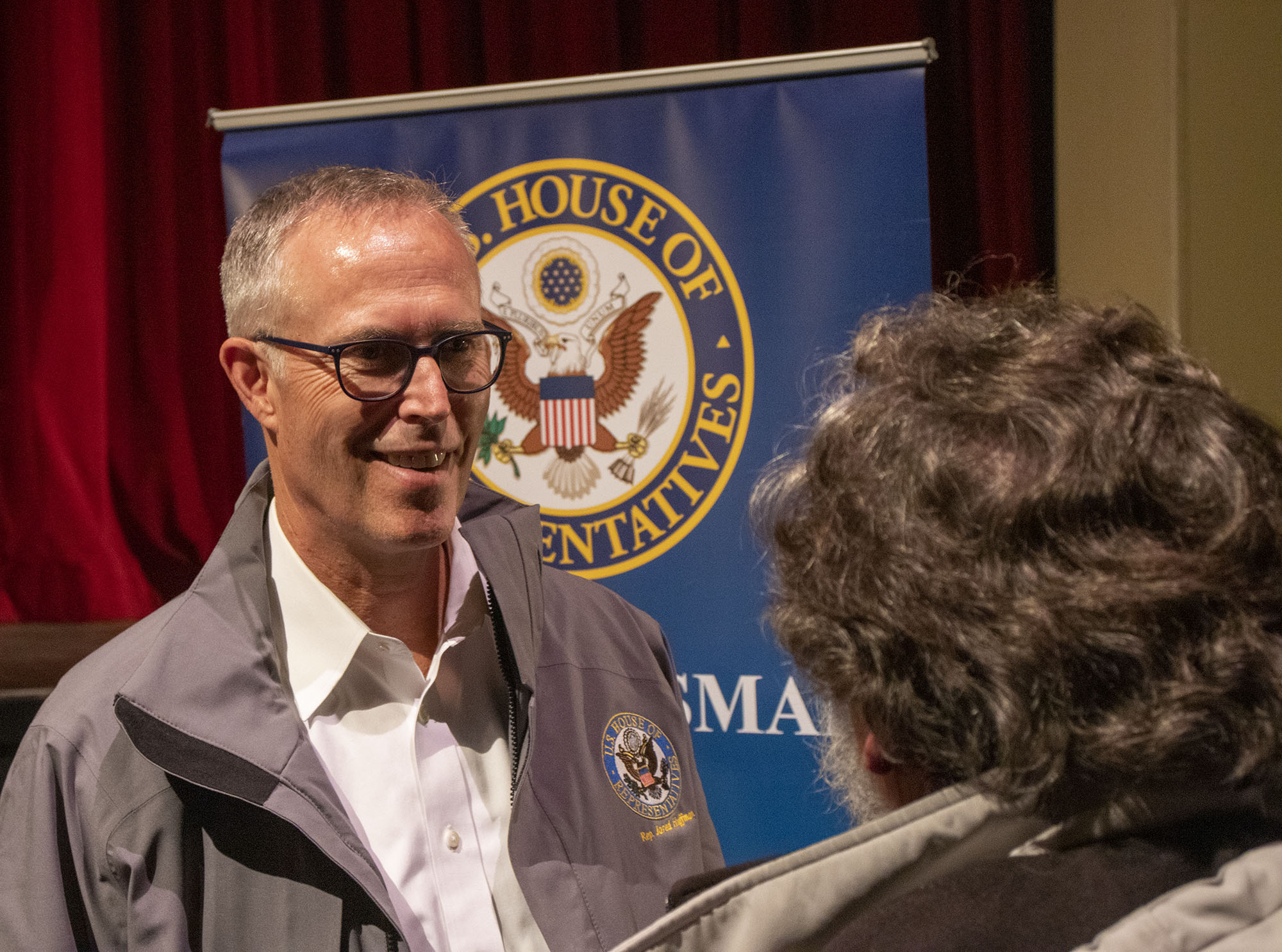
    Jared Huffman, representative to California’s Second District, held a town hall at Eureka High School on Feb. 21 to engage his Humboldt constituents. After touting the progressive platform he’s pushing in Washington, D.C., Huffman answered questions spanning from immigration reform to the 2020 election—but the prevailing concerns surrounded the climate crisis.

    “You got about a decade—less than a decade—to dramatically transform the global economy to put us on a path of decarbonization that gets us to net-zero greenhouse gas emissions by the year 2050,” Huffman said.

    Huffman sits on the House Select Committee on the Climate Crisis along with 14 other representatives. Authorized in January of last year, the committee is set to release policy recommendations on March 31. The report will steer the current and upcoming Congress on legislation regarding the changing climate.

    “Sea level rise and resiliency in coastal communities like this are just a huge part of the climate crisis. We are gonna have to do a lot of planning and prioritization for critical infrastructure.”

    Jared Huffman

    Several Humboldt residents questioned Huffman about protecting infrastructure from rising sea levels. Much of the county would be at risk if the sea rose. Low bridges and roadways are at risk as well as economic infrastructure like fisheries and farmland.

    “Sea level rise and resiliency in coastal communities like this are just a huge part of the climate crisis,” Huffman said. “We are gonna have to do a lot of planning and prioritization for critical infrastructure.”

    Huffman also sits on the Transportation and Infrastructure Committee. Huffman aims to focus some of the funding for infrastructure on coastal communities that would be impacted by rising seas.

    Some audience members expressed concern about Pacific Gas and Electric’s role in California’s power supply. After months of sporadic power outages, many Californians are looking at the possibility of de-privatizing the utility company.

    “I’d be fine if [PG&E] were reinvented into some type of not-for-profit entity as well,” Huffman said. “It would be nice to take that profit motive out of the situation to convert it from an investor-owned utility, where they gotta meet Wall Street’s expectations, to something that was publicly-owned or possibly a cooperative.”

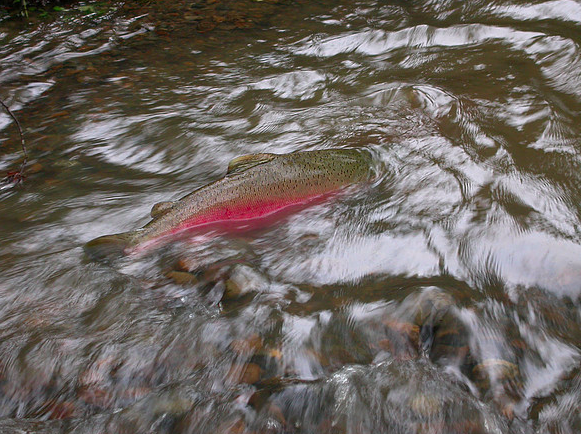
    Huffman then shifted his focus to the diversion of water from the tributaries that feed into the Trinity River to farmland in the San Joaquin Valley. The Trump administration is working to release a new biological opinion that will allow for significantly more water to be diverted from flowing down the Trinity. This would override the previous finding that diversion of water would drastically impact the salmon population.

    A similar decision was made by the Bush administration in 2001. Restrictions on the natural flow of water down the Klamath River led to the mass salmon kill in 2002.

    Huffman is hoping to hold the previous finding up long enough for a new administration and Congress that would prioritize protecting native species.

    “You get the picture, right?” Huffman said. “The deck is pretty stacked right now against protecting our rivers and fisheries here on the North Coast. And it’s a fight I will continue to fight.”

  • Warriors of Rainbow Ridge

    Warriors of Rainbow Ridge

    In between the Humboldt Redwoods State Park and the King Range National Conservation Area lies Rainbow Ridge, a hidden treasure connecting the redwoods to the sea. 

    About an hour south from Humboldt State University lies Rainbow Ridge, a fairy tale forest with 300-foot tall trees covered in lichen and moss. Fungi grows in all shapes, sizes and colors. Rare and endangered animals lurk; the agarikon, the pine marten, the Pacific fisher, the spotted owl, Coho salmon and Sonoma tree vole. The endangered Coho salmon return here to spawn.

    “It is really important that we save the remainder of old growth. It is all that we have left,” conservation consultant for the Lost Coast League, Gabrielle Ward said. “We need to look at how we can help preserve and maintain landscape connectivity so that animals can continue to move across landscapes and not be isolated.”

    Rainbow Ridge is a combination of coastal Douglas fir trees and mixed-hardwood forest along the north fork of the Mattole River. Inside of Rainbow Ridge’s 18,000 acres of forest and meadows lies 1,100 acres of old growth coastal Douglas fir trees.

    Rainbow Ridge is “one of only two old growth Douglas fir forests that have been unentered and untouched, and the only one in California,” Joe Seney, a HSU lecturer in forestry and wildland soils, said.

    “There are very few remaining tracks of old growth Douglas fir anywhere along this part of the California coast,” Seney said.

    The Lost Coast League is a group of citizens from the Mattole watershed and they have been in land acquisition, litigation and conservancy since the early 1970s. The Lost Coast League has acquired and protected thousands of acres of forest since their inception.

    “The goals of the Lost Coast League are to study, survey, understand and preserve and restore this forest,” Ward said.

    The Lost Coast League hopes to acquire and restore Rainbow Ridge. The Rainbow Ridge is privately owned by the Fisher family, who is known for their GAP clothing stores. The Lost Coast League intends to purchase Rainbow Ridge from the Fisher family.

    The east border of Rainbow Ridge is adjacent to Humboldt Redwoods State Park, which holds Rockefeller Forest within it that has the largest contiguous old growth redwood forest in the world.

    The west border of Rainbow Ridge is the King Range National Conservation Area. The purchase and preservation of Rainbow Ridge would connect the world’s largest redwood forest with the ocean, creating a wildlife corridor to remain throughout time.

    “If the Fisher family would recognize the treasure value of Rainbow Ridge and what kind of legacy they could leave, they could create a Fisher Forest standing adjacent to Rockefeller Forest. This is something that could last throughout time,” Michael Evenson, vice president of the Lost Coast League, said.

    The advantages of this biodiverse forest close to HSU provides unique opportunities. The Lost Coast League would like to see the University of California’s nature preserve program or Humboldt State’s College of Natural Resources utilize Rainbow Ridge for research.

    “By looking at what is left we can understand what the rest is supposed to look like,” Ward said.

    There is the potential for new discoveries on Rainbow Ridge, especially in fungi. Agarikon is a fungus found growing on Rainbow Ridge with medicinal properties that can treat antibiotic resistant tuberculosis.

    “There is a vast opportunity for students to be a part of the solution. Looking at fire regimes and restoring portions of the landscape that have been [logged] in the past, and it does have some deep carbon sinks,” Ward said.

    The Cascadia Temperate Rainforest spans from Southern Alaska to Southern Humboldt and is the largest carbon sink on the planet.

    “The only deep carbon sinks left in the United States are along the coastline of this Cascadian Temperate Rainforest,” Ward said. “It’s all that we have left, we can’t continue to fragment this endangered ecosystem.”

    Paulo Sweeney, a forest defender, addresses Humboldt Redwood Company’s inconsistencies in forest practices.

    “Humboldt Redwood Company sets aside high conservation areas that they are not going to log at that time. They aren’t going to log the area now but that does not mean that it is protected from being logged in the future,” Paulo said. “These are key places for restoration.”

    During Earth Week from April 16-22, HSU will be having talks, films, demonstrations and workshops on environmentally sound practices and sustainability.

    Paulo will be having a question and answer period on April 19 after the film “If a Tree Falls” in Forestry Room 201 from 3-4:30 p.m., as part of the documentary day hosted by the Climate Crisis club for Earth Week. Come and learn more on forest defense in the community, climate change, ecological collapse and student involvement in direct action.