Students living on-campus concerned as Humboldt County enters the red COVID-19 tier
Students living in dorms, on-campus at Humboldt State University received a sliver of the college experience offered in a normal semester.
Eli Farrington, an undeclared freshman, came to HSU to escape an unhealthy home-life and an unsafe place to live during the pandemic.
“I think it’s pretty safe [here], compared to where I came from, which is Oakland,” Farrington said. “Which is way less safe in terms of corona.”
Farrington enjoys having a triple suit all to himself, but he’s nervous about sharing common areas and only goes into the kitchen to do his laundry. Having little in common with his dorm mates, Farrington spends much less time interacting with people than he expected on a college campus.
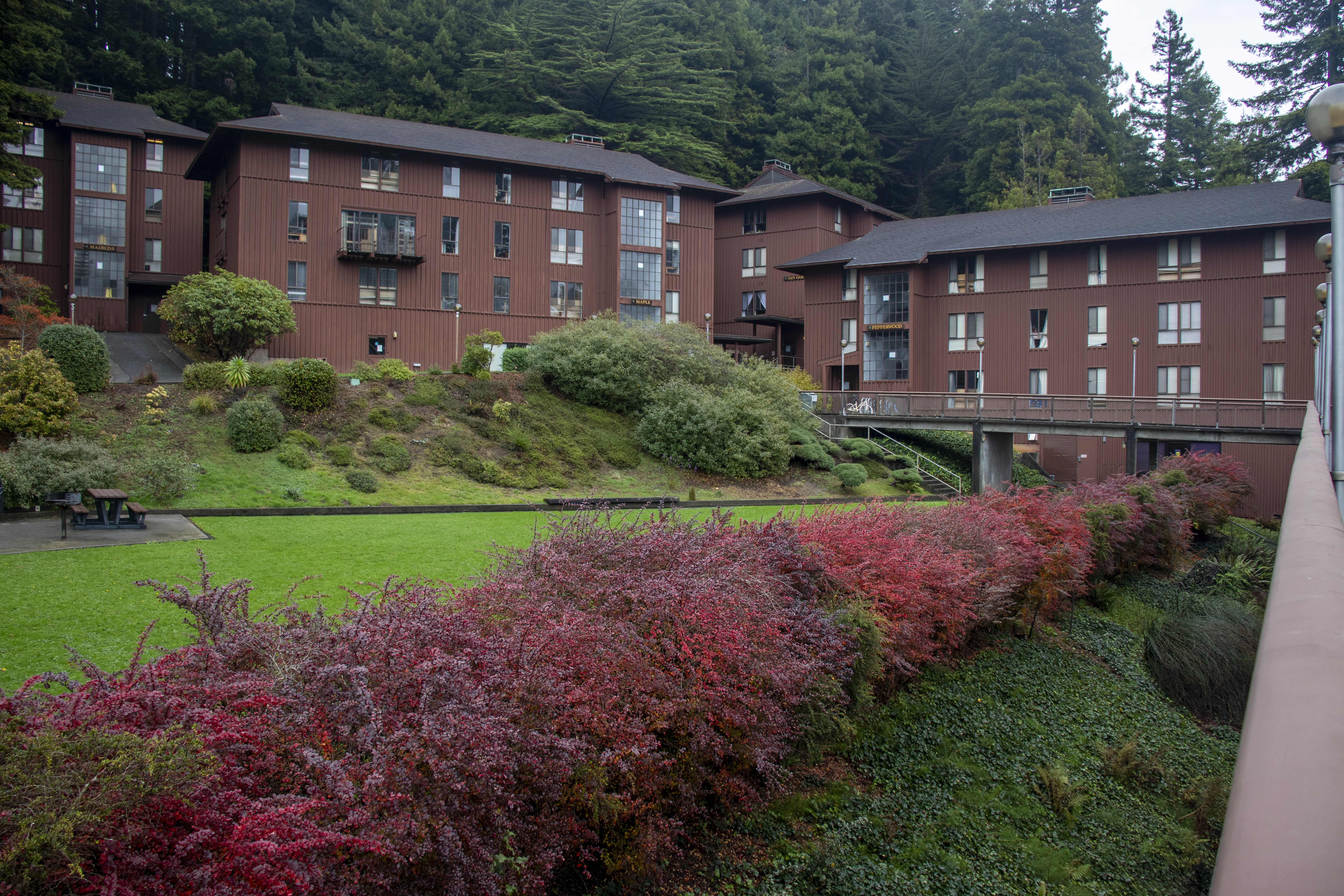
“They put me in Tan Oak, which is the student athlete dorm and I’m not a student athlete at all,” Farrington said. “I don’t really have any friends in my dorm.”
His appreciation for the nature surrounding campus, having friends from Oakland that came to HSU this year and family tension, Farrington plans to continue living on campus in the spring.
“I’d rather be here than stuck at home with my parents and also [a lot] of my friends have gone off to college too so there’s nothing really waiting for me at home,” Farrington said.
Lake Mcleod, a political science major, is another freshman experiencing college life behind a screen of a laptop. Mcleod came to campus intending to live every ounce of the traditional college experience as possible.
“Being here is helping me experience new things,” Mcleod said. “Personally, for me, back home is a different phase that I’ve moved on from. So, being here, I’m able to grow into the person that I really wanted to be.”
Given that the university has restricted student interaction opportunities this semester, Mcleod feels more of an emphasis should be placed on the behavior of students on campus.
“I feel like most people are staying as safe as possible but I’ve still seen huge groups and things that are a little questionable,” Mcleod said. “Which the university can’t control everybody, but I feel like it could be a bit better in terms of restrictions.”
Mcleod’s main concern is the lenient testing regulations for students who leave the area and interact outside of their bubble.
Students living in the dorms were only tested upon arrival back in August. All testing and quarantining currently operates under an honors system but, Mcleod has personally met people who’ve broken it.
“Random people that I’ve talked to have said ‘oh yeah, I’ve been here and there’ and it doesn’t sound like they’ve been tested when they come back or they haven’t really been social distancing,” Mcleod said.
Mcleod was also bothered by HSU hosting San Jose State University’s football team earlier in the semester. Considering how dorm students are restricted to host guests from other areas of housing and no more than two people are allowed at a table in the J’s dining area.
“I feel like it was hypocritical in a lot of ways,” Mcleod said. “Having a whole football team here from a different county, from [a place with high cases], for them to come over here where we had low cases, that didn’t really sit too well with me and a whole bunch of other people I know.”
River Ruiz, a political science major, has been living in the dorms for the past three semesters. His biggest reason for returning this semester was his on-campus job with HSU dining services. His experiences this semester led him to begin searching for other employment opportunities.
“They need to make a lot of improvements,” Ruiz said. “The population is dwindling a lot, so the current workers, they like overload [them].”
Ruiz will be making separate trips home to Southern California for Thanksgiving and Christmas because he needs to work between the holiday breaks.
“It’s just crazy,” Ruiz said. “Cause you’re scared that you might come in contact with someone and you can’t go home because you have to quarantine.”
No longer having the same access to extracurricular activities, Ruiz is grateful to have work as a distraction from school, despite the risks and drawbacks of this semester.
“I know a lot of people that live on campus and go to school, they just stay here all the time and they don’t really have a good college experience,” Ruiz said. “[This semester is] kind of depressing, but it’s a depressing time and everybody’s getting through it.”