The Lumberjack


Students Serving The Cal Poly Humboldt Campus and Community Since 1929

Tag: Community service

  • César Chavez Day with YES

    César Chavez Day with YES

    by Eddie Carpenter

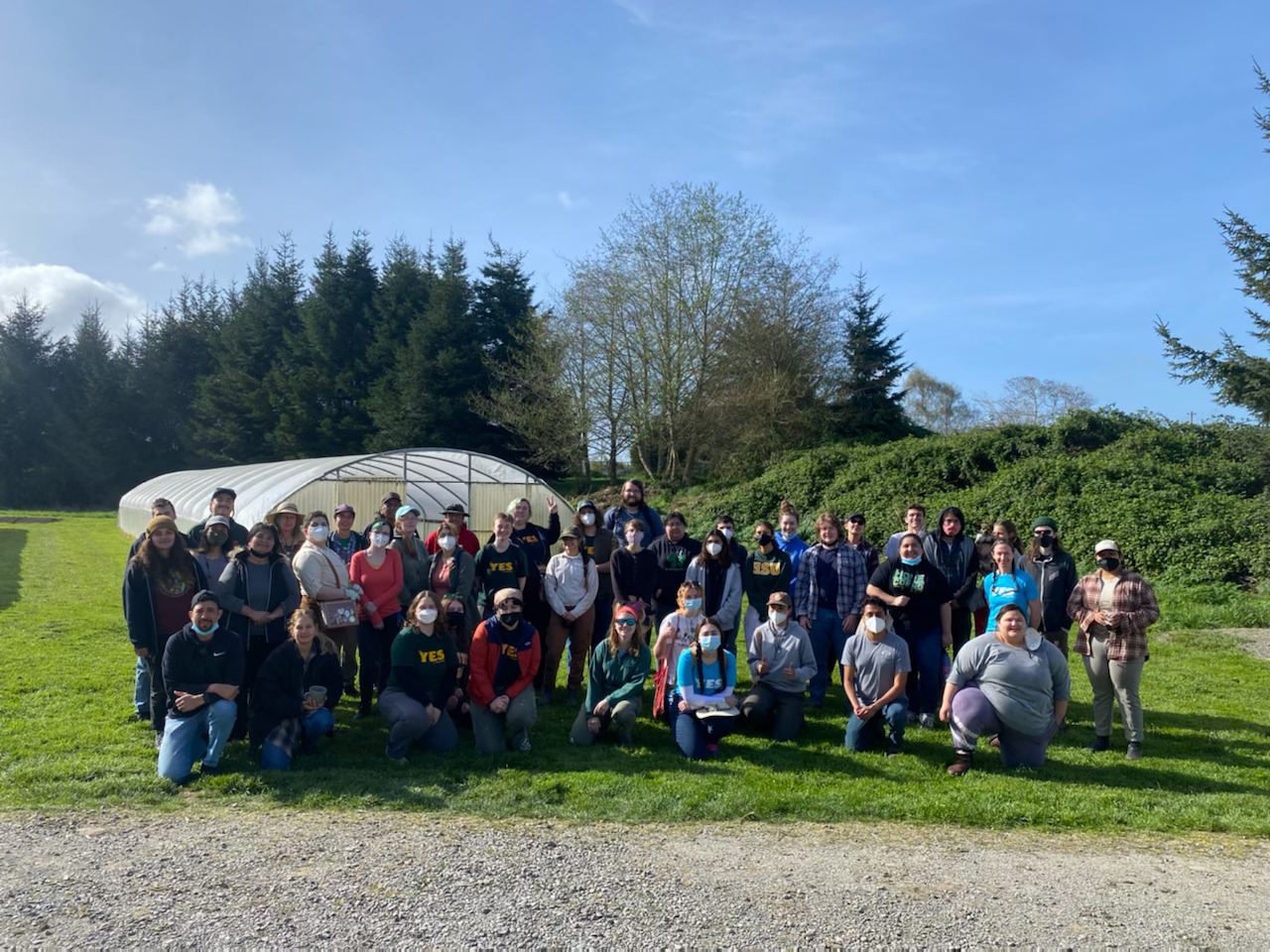
    In honor of César Chavez Day, the YES program hosted a volunteer event at the Potawot Community Food Garden in Arcata. It had an amazing turnout with a whopping 40 volunteers in attendance, caressed by the sunny blue skies and the refreshing Humboldt breeze.

    We were assigned tasks by being divided into five groups. I was grateful to be a part of a group that planted beds of squash. We did everything from scratch, laying out layers of black cover material across the four rows to keep the weeds from robbing the plants of their nutrients. We also covered the tops of the rows with white cloth.

    Gardening skills have practical value in my daily life. Prior to this experience, I had been a volunteer at Potawot through a program called the Intertribal Agriculture Council. Potawat’s head gardener Ed Mata gave me a handbook about gardening and I was mentored by a professional development specialist named Elaini Vargas.

    Maybe I was a little rusty on the terminology, but basic knowledge about soil health has since been ingrained into the recesses of my brain. I learned in a soils class that if you live in a mild climate, it’s estimated that it took 200 to 400 years for 1 centimeter of the soil to form. Vargas’ and Mata’s teachings directly impacted the mindset I had going into the YES serve-a-thon on César Chavez Day.

    Youth Educational Services (YES) is a collective on campus that provides students with opportunities to volunteer at local school and community sites. One of their goals is to connect hands-on service and in-class learning with awareness of the injustices and oppressions experienced by those they serve. Actions sometimes speak louder than words. Making donations and saying nice things about a cause is totally different from donating your time and bodily energy to a cause.

    According to mentalhealth.org, helping others can possibly help make you happier as a person. Through volunteering, I was able to make temporary connections through teamwork and group communication. This gave me a sense of community and made me feel like I belonged to a noble cause.

    If you want to see change in your self-esteem, you might want to consider doing good deeds, so we can manifest the world into a better place. Indeed, an outward reflection of finding happiness can in turn make you a happy person.
  • Thorns hurt but friends are forever

    Thorns hurt but friends are forever

    These three campus clubs serve the community for good

    Humboldt State University has a multitude of clubs who participate in community service. This week’s focus is on the Natural Resources Club, Campus Center for Appropriate Technologies and the Redwood Chapter of Environmental Educators and Interpreters.

    Environmental Science student and Natural Resources ‘Club Homie’ Alexander Mouriten talked about a recent invasive Himalayan blackberry removal project at Fern Canyon.

    “I gotta say, the thorns hurt but getting to work with my friends made that nothing,” Mouriten said. “I enjoyed it. I always enjoy volunteering.”

    Mouriten said he volunteers for the field work, the experience and the gratification of a good honest job.

    Early on Saturday mornings, the Natural Resources Club meets in front of the Natural Resources building before heading out for their weekly restoration service project. The Natural Resources Club does invasive plant removal, trail building and habitat restoration on a regular basis. Food and coffee are provided to keep up morale, and the club welcomes all students to join.

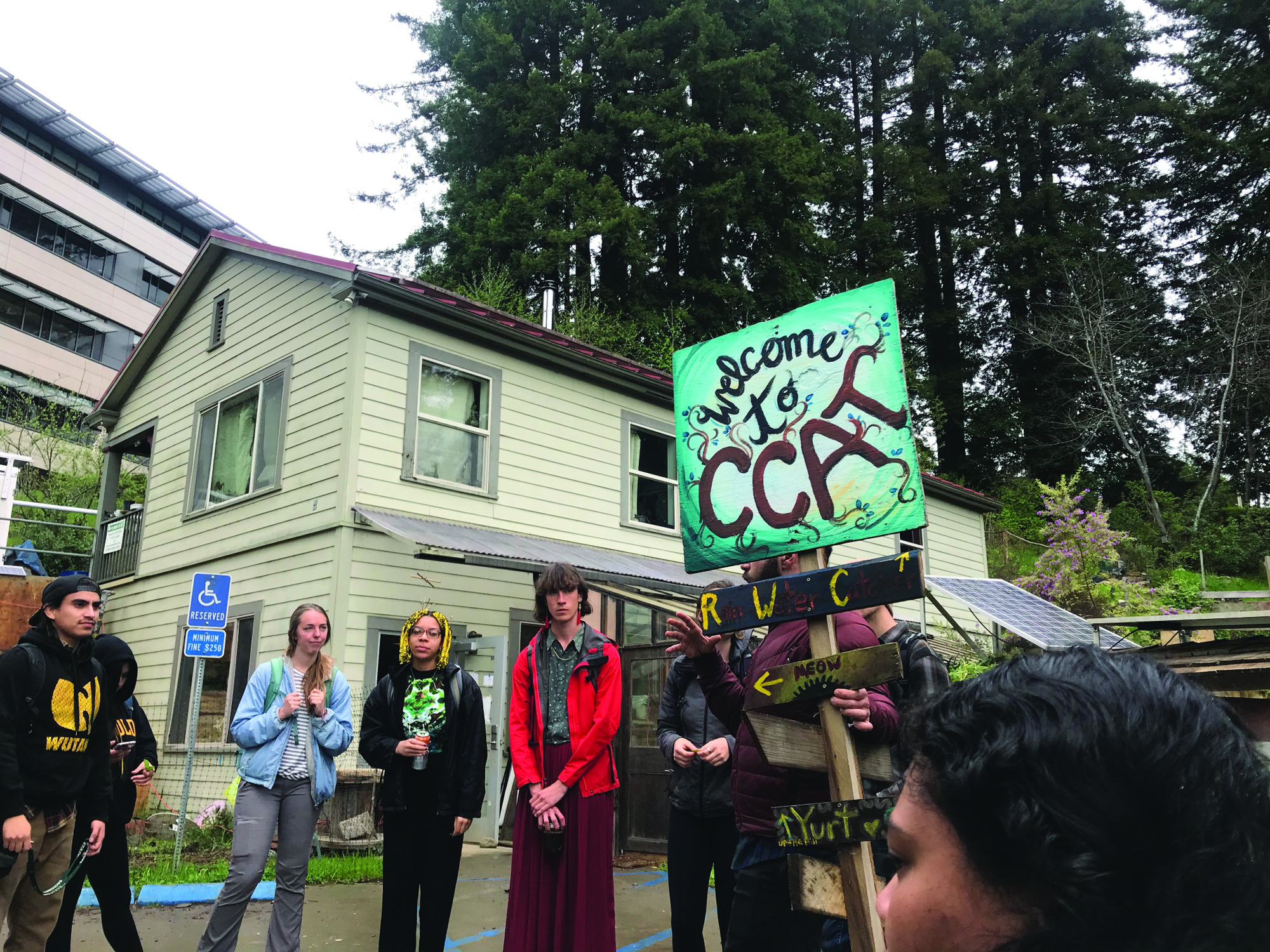
    The Campus Center for Appropriate Technologies, CCAT, is built on environmentally-friendly means. CCAT often creates opportunities to volunteer and provides students with hands-on experience with unique technology.

    Sebastian Forward is the sustainable gardener at CCAT. Forward is working on an ethnobotanical gardening project to educate people about the science and history of food domestication. Forward said he believes everybody who works at CCAT is here for the community.

    “CCAT is a source of information and education in the community,” Forward said. “Every Friday is our signature volunteer Friday. Everyone is always enjoying their talking and enjoying their time.”

    Volunteer Fridays are a really good opportunity to get involved with the CCAT community. CCAT invites environmentally conscious people who have sustainable technology ideas to come to the house and make their ideas come to life. Visitors will be met with a welcoming attitude. Just ask what you can do to help.

    To have a healthy community, the community must serve itself. Every weekend, community service projects pop up across the nation. Projects rely on volunteers who offer their time to improve habitats, clean up streets and improve their communities. Participating in community service gives volunteers the opportunity to help improve the place they live while offering the chance to create a special bond with whomever they serve.

    IMG_5099.jpg The Redwood Chapter of Environmental Educators cleans up for Coastal Clean Up Day. | Photo by Collin Slavey

    The Redwood Chapter of Environmental Educators and Interpreters, RCEEI, excells at explaining challenging topics to the community in approachable ways. The club serves young community members often, with events like their annual March 4 Parks.

    Brighton Hayashida is the vice president of RCEEI. He said March 4 Parks is an opportunity for students to serve young members of the community.

    “Kids are really excited about March 4 Parks,” Brighton said. “Just the fact they’re outside is important. The biggest thing is that we made nature relatable to kids.”

    RCEEI communicates environmental knowledge by interpreting it. Scientific interpretation is similar to language translation. Instead of language, RCEEI talk about science in a way everybody can understand. It’s a valuable tool for inspiring people to volunteer to serve their community.

    Service is one of the United State’s defining values. From the beginning of the nation, Americans have been volunteering their time and energy for selfless progress. In 1736, Benjamin Franklin founded the first volunteer fire department. In 1865 William and Catherine Booth form the Salvation Army, which would become one of the largest volunteer organizations in the nation. Finally in 1961, President John F. Kennedy founded the Peace Corps which created volunteer opportunities across the world.

    “And so, my fellow Americans: ask not what your country can do for you—ask what you can do for your country,” President John F. Kennedy said.