The Lumberjack


Students Serving The Cal Poly Humboldt Campus and Community Since 1929

Tag: cultural appropriation

  • Drake, the Genre-Hopping Superstar, Does It Again

    Drake, the Genre-Hopping Superstar, Does It Again

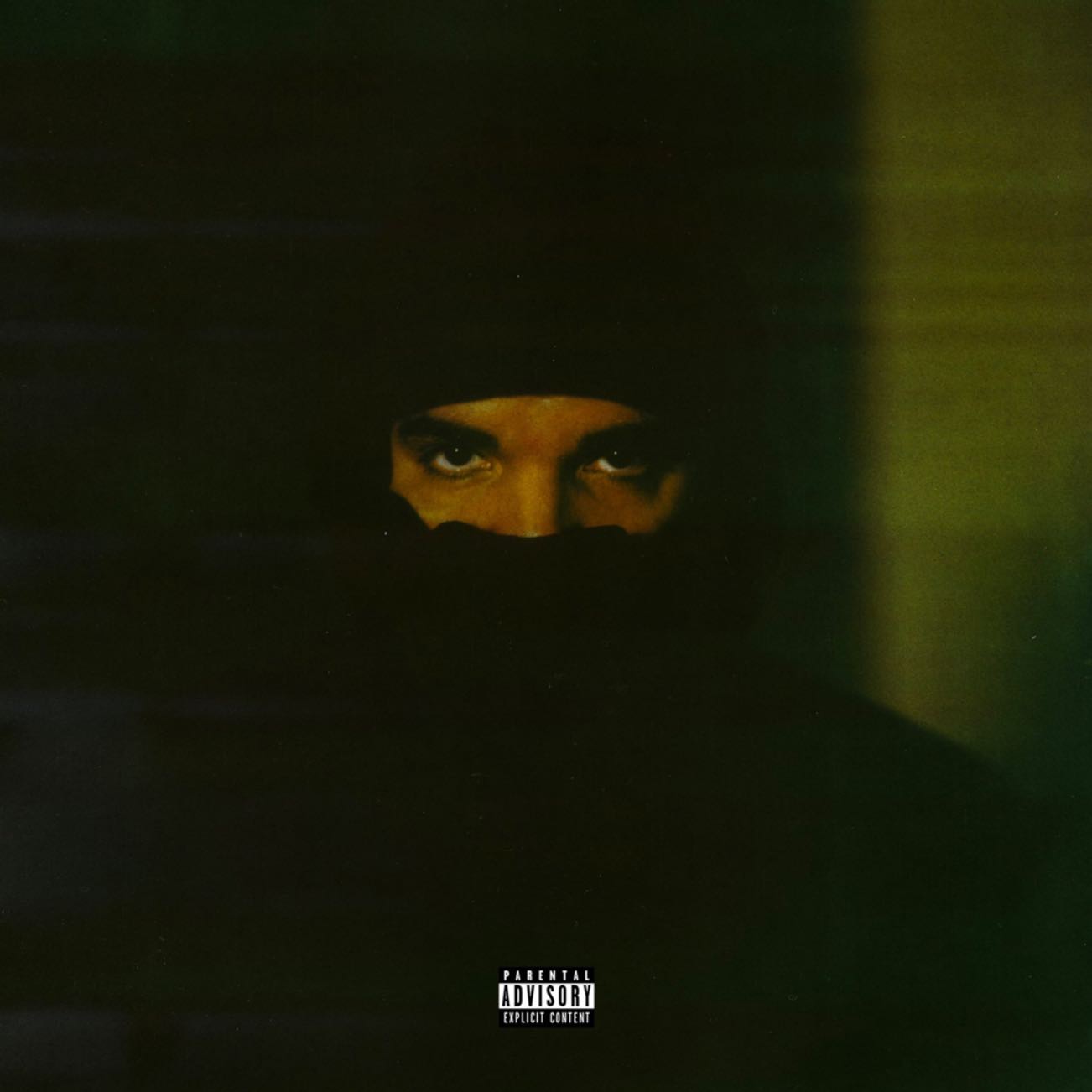
    Drake drops surprise project, “Dark Lane Demo Tapes”

    Nearly two years following the release of his last commercial project, “Scorpion,” Drake is back with more music than ever. Surprising fans April 30, Drake hopped on Instagram to announce his upcoming sixth studio album, set to be released this summer. He also announced a new mixtape, “Dark Lane Demo Tapes,” that dropped hours after.

    Ashton Pomrehn is a Humboldt State University alumnus from the psychology department. His thoughts on Drake have dramatically changed over the course of Drake’s decade and a half long career.

    “I love Drake,” Pomrehn said. “I tried to hate on Drake early in his career but he’s put so much good music out that I’m excited for anything he puts out.”

    Kathleen Madrid is an environmental resources engineering major at HSU. She’s not the biggest Drake fan but she is heavily invested in the hip-hop genre and enjoys watching it evolve.

    “I will say that I think he has been really influential,” Madrid said. “Drake really brought a different topic of discussion to hip-hop. Males are not traditionally encouraged to express their feelings and I think Drake gave young men that voice.”

    Despite his undeniable contribution to the industry, Drake has received heavy criticism in the past over cultural appropriation of different regions’ music, beginning with his 2016 single “One Dance.” Despite featuring one the genre’s prominent artists, WizKid, Drake’s 10-minutes with afrobeats were seen by fans of the genre as a Hollywood actor taking the Broadway stage. The song was also a blend of Jamaican dancehall music – a style that Drake sprinkled throughout “Views” and his “More Life” playlist, without ever featuring an artist from the genre. Drake continued to catch flack for appropriation of UK Grime on “More Life,” however, the project features several guests from across the pond.

    “There is a fine line between appropriation and appreciation. Paying homage or showing love may be necessary, but I think it’s more important to educate yourself before you participate in another culture’s genre.”

    Kathleen Madrid

    Drake set the tone for a possible new release in late Dec. 2019, with the track, “War,” taking the sound of the United Kingdom’s take on drill music and running with it. Similarly, on the song “Demons,” Drake hops on a New York drill beat, this time providing guest spots for the artists that popularized the genre. However, the missing presence of the recently-deceased leader of the movement, Pop Smoke, is heavily felt on the track.

    Madrid acknowledges that Drake is in a tough position, but it’s ultimately his own decisions that repeatedly put him there.

    “Cultural appropriation is a muddy concept,” Madrid said. “There is a fine line between appropriation and appreciation. Paying homage or showing love may be necessary, but I think it’s more important to educate yourself before you participate in another culture’s genre.”

    In this new release, Drake pays his respects to some of the most prominent cities in modern hip-hop on “Dark Lane Demo Tapes,” with tracks like “From Florida With Love” and “Chicago Freestyle.” The later track was originally paired with the song “When To Say When” and released on Leap Day earlier this year as a music video. “When To Say When” samples one of Jay-Z’s most-famous tracks, “Song Cry,” and some of the footage from the video was shot outside the Marcy Projects where Jay-Z grew up.

    Despite mixtapes almost always receiving significantly less care and budget than studio albums, when it comes to top-tier artists like Drake, fans still expect top-tier material. With features from Future, Young Thug and Chris Brown on the track list, fans will be let down to find out Young Thug only receives half a placement on the chorus of “D4L.” Chris Brown only provides a handful of background vocals on “Not You Too” and of Future’s two verses on the project, his better performance is significantly shorter. Despite consistently creating a dominant presence on songs where he is featured as the guest, including “Life Is Good,” “No Guidance” and “Going Bad,” Drake has proven unwilling to provide artists with a fraction of space on his own records.

    With an entire album on the horizon, a number one record with “Toosie Slide” and a classic track with “Losses,” Drake fans have nothing to complain about – drill fans, however, are a whole other story.

  • Fake soldiers and cultural appropriation

    Fake soldiers and cultural appropriation

    By | Phil Santos

    There’s no point in explaining cultural appropriation to the military community. This isn’t because it’s futile, but rather the opposite. I served in the Navy for long enough to say that the military community has an intimate understanding of what cultural appropriation is, particularly when it’s their culture. But there’s a possibility that they don’t know this is the case as the military doesn’t come up in these conversations.

    Cultural appropriation is hard to explain because there’s not really a definitive line where it is or isn’t happening. But in short, it’s when one culture takes elements from another culture without permission. It’s problematic for a number of reasons. Two of them are that cultural appropriation creates a type of cultural reverse engineering. It allows others outside a culture to benefit from the identities that don’t belong to them.

    With cultural appropriation, it’s important to ask who is doing the taking and why. Most of the time, the culture that takes is the dominant culture (mainstream society), while the culture which is taken from is usually a marginalized culture (Indigenous, Black, Asian and so on). The result is a dominant culture that rejects marginalized cultures at large, except for select elements that become attributed to or “reinvented” by the dominant culture. Translation: /rock-n-roll is attributed to white people, but its pioneers were Black.

    A more individualized example of cultural appropriation is easier to understand when we consider a specific kind of imposter. In 2009, under the guidance of James Arthur Ray, three people died during a “sweat lodge ceremony” he held in Sedona, Arizona. Imposters like Ray cherry pick elements of various cultures to sell to others in the form of “spiritual retreats” or “healing ceremonies.” They may call themselves a “medicine woman” or a “certified shaman.” They often go as far as claiming the culture they appropriate.

    This is where the military comes in. Ask someone in the military how they feel when someone pretends to be a veteran or active duty member. The responses you’re likely to get will echo the conversations surrounding the topic of cultural appropriation. The military community even has its own term for this: Stolen valor.

    Stolen valor happens when people pretend to be military members or lie about their military background. If you search “stolen valor” on YouTube, you’ll find plenty of videos showing military members confronting imposters who have appropriated their identities. Putting yourself in the shoes of a soldier who lived through war makes it easy to understand why stolen valor is outright wrong. The imposter didn’t earn the uniform, they didn’t go to war, so they should take it off. They might want to be part of military culture, but they’re not. They have no place pretending like they are.

    If stolen valor is so easy to understand and relate to, what’s the hiccup with cultural appropriation? I think it’s because people understand and respect military culture more than other marginalized cultures. But they are all cultures, and one isn’t better than the other. You can say being Asian isn’t the same as being a soldier. This is the same as saying that cultures are different from one another, which is obvious and redundant. If you can understand why no one should wear a fake Medal of Honor, you understand why no one should wear a fake headdress. They both hold cultural significance that no one else is entitled to. So if you ever find yourself having difficulty explaining cultural appropriation, a comparison to the military might be what you need.

  • My culture is NOT a costume!

    My culture is NOT a costume!

    By | Reza Sadeghzadeh

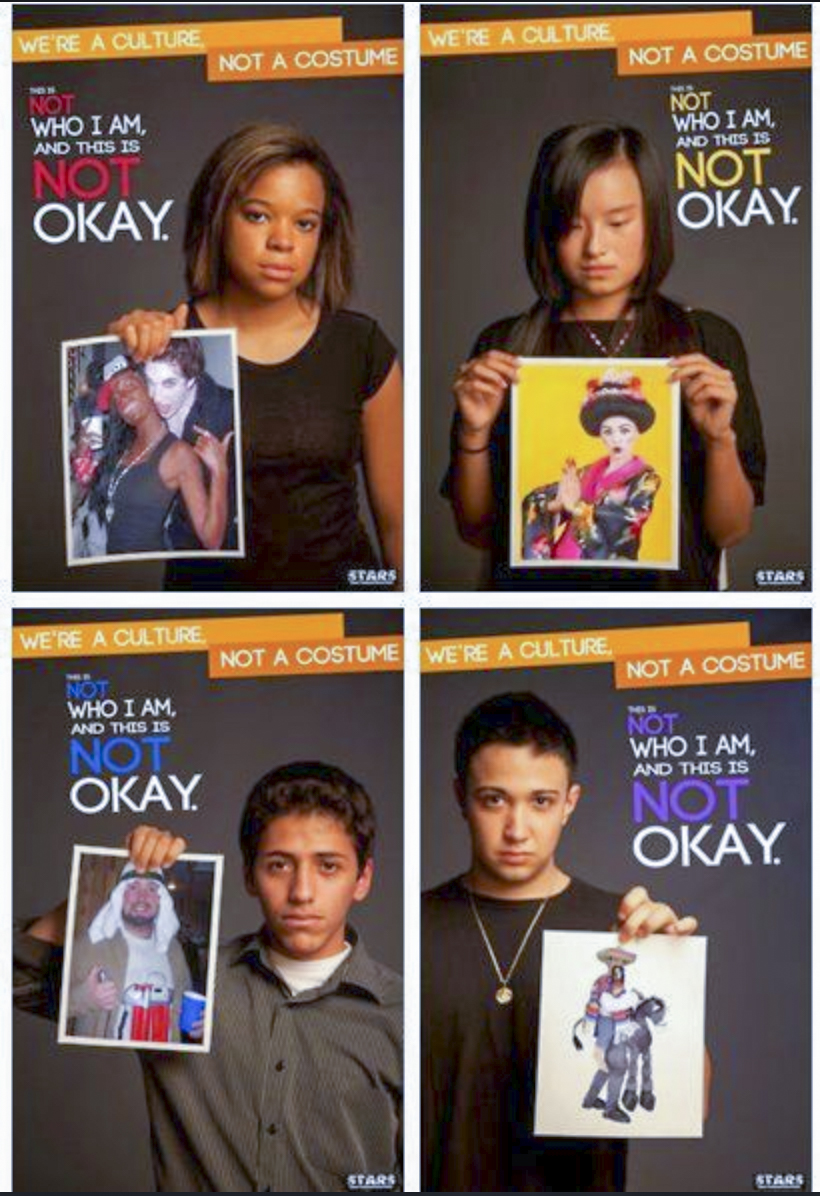
    Some people might think it’s sexy to wear a Pocahontas costume for Halloween or funny to dress up like a Muslim wearing a thawb with a fake bomb strapped to their chest.

    But ask a Native American woman if she thinks it’s sexy to dress up like a subordinate Disney character where Native Americans are portrayed as a second-class citizens. Ask her if she thinks it’s sexy to dress up like Pocahontas when Native American women have the highest rate of rape and assault.

    Ask Mohammad Maleki, a former HSU student from Iran, if it’s funny to dress up like a stereotypical Muslim suicide bomber when he was unable to come back to America during Trump’s travel ban earlier this year.

    Those who like to use other people’s cultures as costumes might claim that they are only choosing to dress as such just for the sake of Halloween. They’ll add that they don’t mean to promote racial stereotypes. But their intention is irrelevant.

    That is why the My Culture is Not a Costume campaign has been brought to our campus with the endeavor of students like Deema Hindaw to raise awareness about this issue.

    “My goal with this campaign is to show people that cultural appropriation is not a joke,” said Hindaw. “The culture of others shouldn’t be a costume that one gets to wear for a night.”

    Hindaw and other students from the MultiCultural Center have also put together a workshop to inform others about the distinction between cultural appreciation and appropriation.

    My Culture is Not a Costume is a nationwide movement. It is not just about a costume, it is also about “putting on other people’s skin for that one night as a prop,” said Elizabeth Phillips, a Communication student at HSU. “And at the end of the night, you get to take it off and maintain your privilege while other people have to deal with their cultural reality… the reality that our society has viewed skin color in a hierarchy.”

    Every culture is beautiful and slightly different from one another. But at the end of the day, we are all humans who want the same things in life. Cultural appropriation is a systematic ideology implemented by those who are advocates of racial segregation and the scandalous rhetoric of “divide and conquer.”

    Cultural appreciation is a framework for solidarity, because it helps us admire our cultural differences that is used as guidance for a healthy dialogue regarding race. Finally, culturally appropriated costumes discourage us from having any type of healthy dialogue about our different cultures.