The Lumberjack


Students Serving The Cal Poly Humboldt Campus and Community Since 1929

Tag: Dining Services

  • Indigenous Foods Festival highlights the importance of food sovereignty

    Indigenous Foods Festival highlights the importance of food sovereignty

    by Krisanne Keiser

    On a bright sunny Saturday morning, students, faculty, and local tribal peoples came together to celebrate the Rou Dalagurr Food Sovereignty Lab & Cultural Workspace at the Indigenous Foods Festival. The event was held on the Cal Poly Humboldt campus on April 16 and was part of a month-long Food Summit that is focused on educating students, staff, and the public about food sovereignty. The event featured special featured films, keynote speaker presentations, and numerous outdoor volunteer opportunities working with plants and learning thoughtful ways to gather that respects Indigenous self-determination of land.

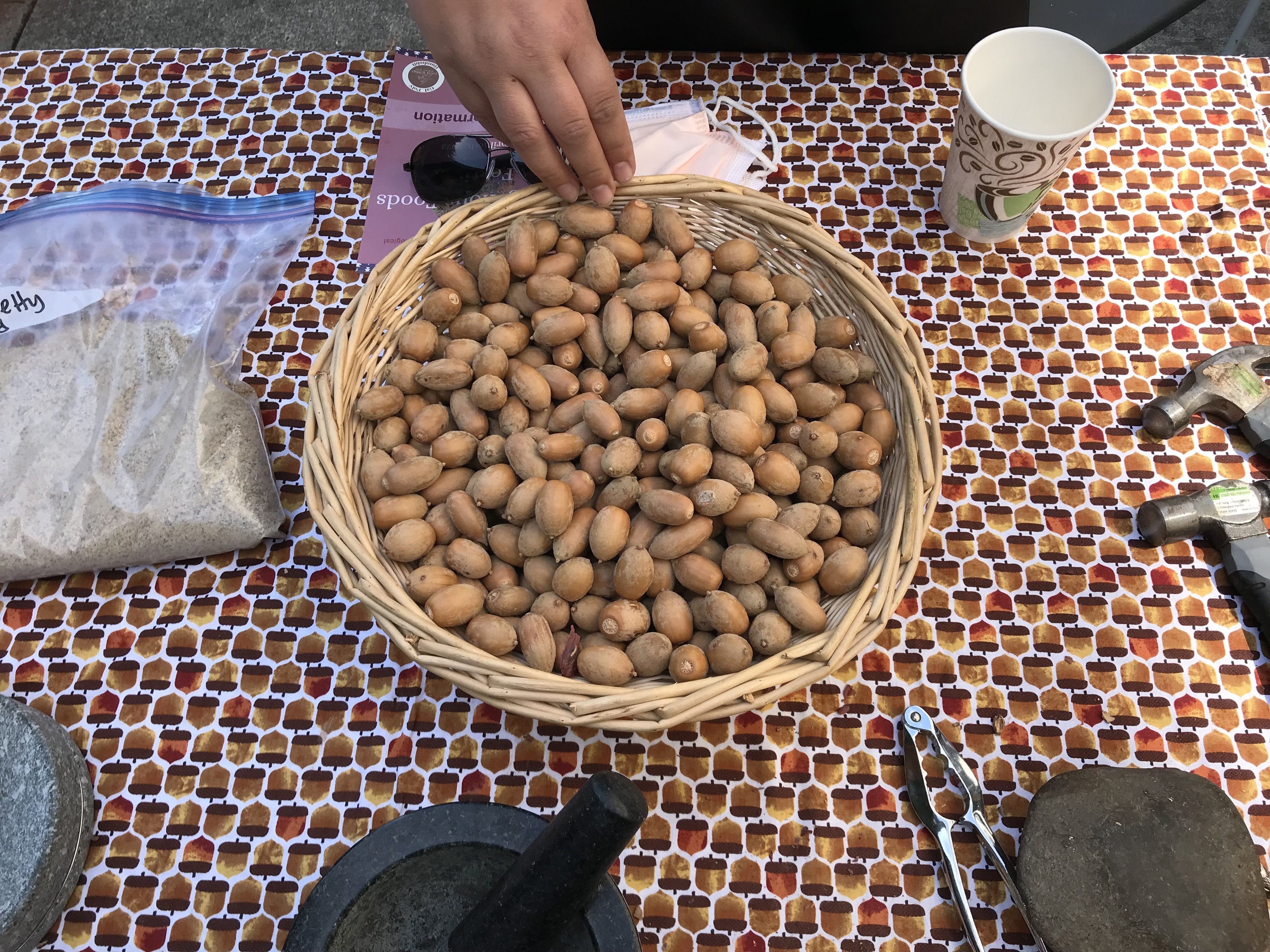
    Several speakers presented in the Native American Forum, each giving information about their respective organizations and how they are practicing food sovereignty. One event hosted by the California Indian Museum & Cultural Center was incredibly informative. Executive Director Nicole Myers-Lim led the presentation and discussed the projects their native youth are working on as part of the museum’s Tribal Youth Ambassadors program. One of those projects was creating acorn bites, which was an idea that came from one of the youths, and was being sold during the event. I must add that they were extremely delicious!

    During the presentation, Myers-Lim reminded the audience that in order to practice food sovereignty, there are several elements to consider such as land access, settler laws and regulations within park systems, as well as handling public harassment and racism when gathering on public lands. Additionally, the monetization and over-harvesting of natural foods such as abalone have prevented their tribe— the Pomo Tribe— from utilizing this natural resource, which is a large part of their culture.

    “Our Pomo food that we love is abalone…we can’t eat abalone right now but when abalone was harvested, it was overharvested,” said Myers-Lim. “We’re really trying to educate non-native communities that this is our cultural resource; we need it for the continuity of our culture. It doesn’t have to be sold for $70 dollars on a plate at Oma’s in San Francisco.”

    Another aspect that Myers-Lim highlighted was how native youth had gradually lost interest in gathering natural foods and resources due to being subjected to harassment by the public. At one point the racism and harassment became so severe that the youth feared practicing their traditional gathering activities at local parks on local trails. To help mitigate this issue, the Native Youth Program created an educational card pamphlet called the ‘Culture Card: Tribal Member Educational Handout’ to give to park visitors who questioned, disturbed, and accused them of harming the environment while they were gathering. The culture cards discuss the cultural significance of traditional harvesting and gathering as well as explaining how and why gathering is a healthy activity. It also highlights gathering and harvesting permits.

    “We’re out there praying and giving gratitude to the plants that are sustaining us and so to be accused of abuse is ironic,” said Myers-Lim. “After hundreds of years of the abuse that’s happened through the Gold Rush, the wildfires and the dams and everything else.”

    If that wasn’t harmful enough, the program also has to obtain special 24-hour permits before gathering which is just another hoop to jump through.

    “We have to work with them to have ancestral gathering rights that are recognized throughout the state,” said Myers-Lim. “As tribes we need to advocate for that through our consultation policies and try to change that on those levels.”

    Past Cal Poly Humboldt chemistry major, Sunny Rojas (Yurok/Karuk/Apache) stated that his people were not equipped to consume processed foods, and doing so has caused much damage to the health of his community.

    “It has a devastating effect on Americans and my people…we never ate like that in the past and our bodies are not quite equipped to deal with a lot of things that are surprisingly allowed in our food,” said Rojas.

    He expressed that one of his goals as a chemistry major was to learn more about the components of the earth, people, and the contents of America’s food.

    “I wanted to try and find some way to help this poisoned food system we have in America right now,” said Rojas.
  • Why do Cypress residents need an All Access meal plan?

    by Shane Jarvie

    I find it extremely redundant that Cypress residents are required to own an All Access meal plan. When I’ve asked school officials why they’re needed, they’ve just responded, “Cypress residents are required to have one of the All Access meal plans. Upperclassmen living areas that do not require a meal plan are College Creek and Campus Apartments, both of which have shared kitchen areas.”

    I’m a junior who’s lived on campus for three years now, and Cypress has the best kitchen out of every residence hall I’ve seen. Yes, even better than the one in College Creek apartments. Having lived in College Creek apartments as a sophomore, I’ve found that Cypress has more counter space and many more cabinets for storage space. The Cypress kitchen has offered my suitemates and I enough room and resources to cook for 20+ people once a week for Cypress eighth floor’s “family dinners,” where both sides of the floor come together for a weekly feast.

    A suite on Cypress can house up to twelve students, so I’d understand if we were required to have a meal plan due to the number of suitemates who share the kitchen. However, I can’t understand why we’re required to have an All Access meal plan.

    As a student working in the housing department as a Resident Student Services Assistant, I’ve had the opportunity to study each housing option and meal plan that the school offers. The more I learn, the less it makes sense that Cypress suites require an All Access meal plan.

    For anyone who isn’t aware how the on-campus meal plan system works, here’s a quote directly from the Meal Plans page on our campus housing website: “All living areas require a meal plan except College Creek and Campus Apartments. Residents of the Hill, Canyon, Cypress and Creekview Suites are required to have one of the All Access meal plans. Residents of Creekview Apartments are required to have any one of the meal plans.”

    The cheapest All Access meal plan is the 5-day All Access plan. It’s $5,000 per academic year, and contains all access meals to the J five days a week, including 300 Flex dollars and 66 or 62 meal exchanges per semester. (The housing website says 66, the dining website says 62.)

    One of the alternative meal plans that I’ll be using as a comparison is the Lumberjack 125. This meal plan that Cypress residents don’t have access to costs $3,500 per academic year, provides 125 meals in the J (which is honestly still more than enough J food for me), has 525 flex dollars, and 31 meal exchanges per semester.

    As someone who isn’t impressed with the food that Chartwells has to offer at the J, I’d much rather have the Lumberjack 125, which has 225 more flex dollars and costs $1,500 less per year!

    If I can’t convince school officials that Cypress residents should have access to the other meal plans available, I at least want an adequate answer to why we shouldn’t.

  • Cal Poly Humboldt campus hosts Food Summit

    Cal Poly Humboldt campus hosts Food Summit

    by Angel Barker

    A three-week-long Food Summit is on campus, and you’re invited. On-campus organizations El Centro, HEIF, Umoja Center, the Food Sovereignty Lab, Oh Snap!, WRAPP, and La Comida Nos Une all collaborated to make this event happen.

    Liszet Burgueno, Developmental Manager for the Humboldt Energy Independence Fund (HEIF) and environmental resource engineering major, talked about the nature of the event.

    “The Food Summit is a collaborative event where multiple campus organizations came together to start conversations about food justice, food sovereignty, and to give people food,” Burgueno said.

    The first week was about the general topics to introduce people to the issues of food sustainability and justice. This week is about jobs and exploration in the food industry, and next week is about environmental justice and social justice.

    HEIF is funding the Food Summit according to Katie Koscielak, Cal Poly Humboldt’s sustainability analyst and advisor for the event.

    “The campus has done other food summits, but not in several years, and this is the first one funded by HEIF,” Koscielak said.

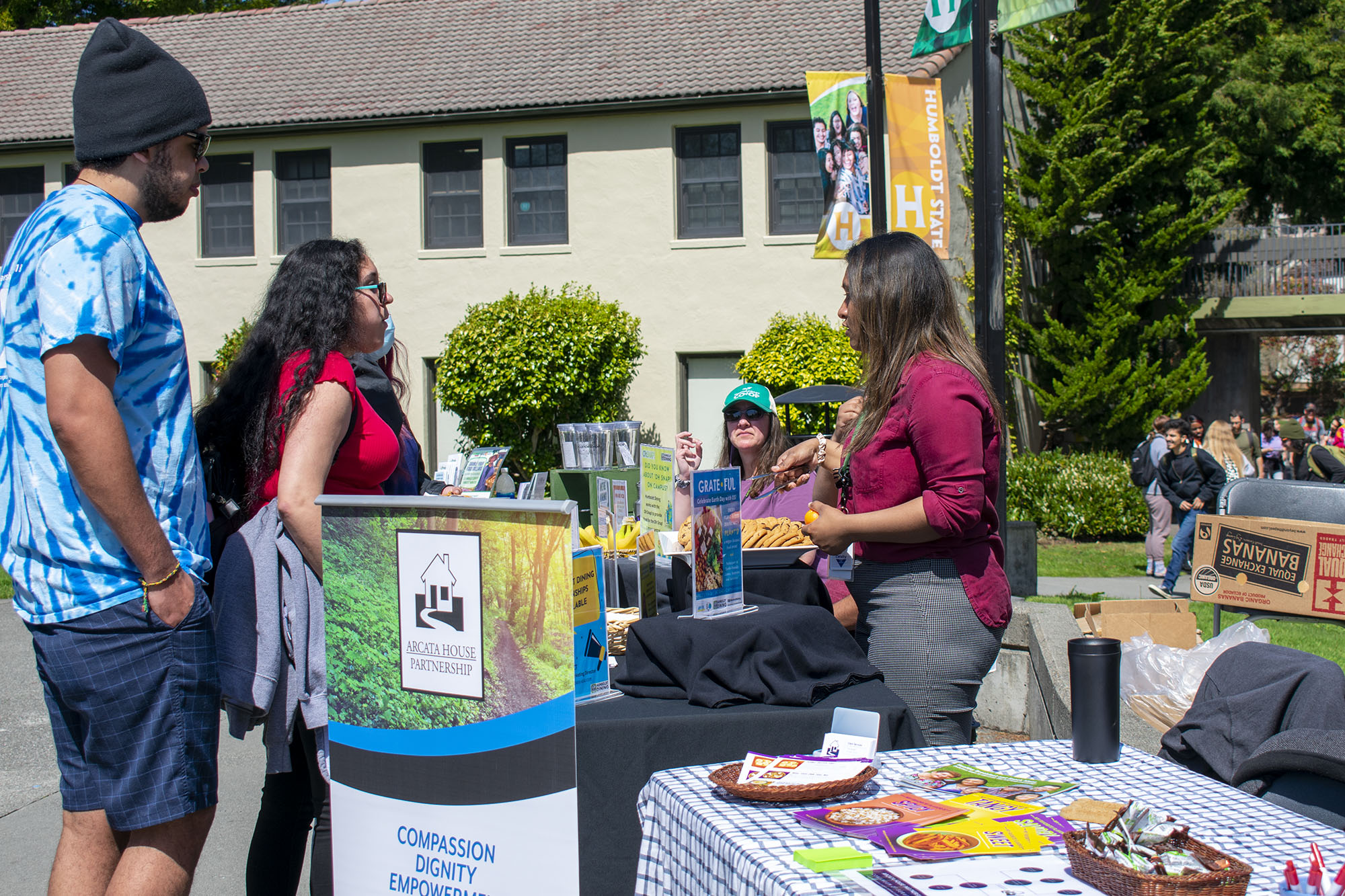
    Photo by Angel Barker | Katie Koscielak, sustainability analyst for the campus, and Liset Burgueno, development manager for HEIF and environmental resource engineering major at the table for HEIF at the food summit on April 6.

    HEIF funds sustainability projects on campus through instructionally related activities fees that students pay for each semester. Past projects have included water refilling stations, compost bins, lots of lighting upgrades throughout campus, hand dryers, and many more. These projects take effect when students submit proposals to the organization.

    “Last semester, El Centro came to HEIF and submitted an idea paper, where they wanted to get reusable utensils,” Burgueno said.

    Darin Torres, criminology and journalism major, pitched the idea this semester for a food summit. Torres spearheaded the ideas and planning, and after months of collaborating with many campus groups and local organizations, the event planning has been successful.

    “I am really proud of what we’ve done so far,” Torres said. “Education is power.”

    This event is not only to educate, but to get students involved with interactive events to help make the planet a better place. This event is really important to Torres, as food insecurity is a huge part of the greater Humboldt community.

    “We have issues with indigenous cultures’ food not being respected,” Torres said. “Food is a major insecurity in Humboldt County, we have students who face hunger and homelessness so much. So we just wanted to incorporate it all into the food summit.”

    “We have regenerated, and hopefully it will continue,” said Fernando Paz, coordinator for El Centro.

    According to Paz, the event itself is, a way to really reflect on our carbon impact in terms of food that we use.

    This Thursday, April 14, there will be a film screening of Gather hosted on Zoom, and on Friday there is a plant tour on campus and an opportunity to volunteer at Bayside Farm. Many more events are also scheduled throughout the week. To find the whole event schedule, go to https://lcae.humboldt.edu/food-summit.

    “This event is made for you in mind, it was made for students, by students,” Torres said.

  • Plastic Bottled Beverages Still Offered On Campus

    Plastic Bottled Beverages Still Offered On Campus

    In spite of the successful campaign to phase out single-use water bottles, Humboldt State has yet to remove plastic bottled beverages from campus

    Almost 10 years have come and gone since Humboldt State University took back the tap and did away with single-use water bottles on campus.

    Overall HSU is known to lead the way in sustainability across the California State University system. In spite of being further ahead in the sustainability game than most campuses, HSU still offers a variety of beverages for sale packaged in single-use plastic.

    HSU Dining Services Director Ron Rudebock said they have gotten a fair number of comments over the last couple of years regarding plastic products and on phasing out plastics completely.

    “We have been working with vendors to obtain their products in a reusable or compostable or recyclable package and vendors are changing their package materials,” Rudebock said.

    The California State University system passed an anti single-use plastic policy in December 2018.

    Four of the five campus responsibilities listed under the policy have set deadlines.

    The first is the elimination of single-use plastic water bottles by Jan. 1, 2023. HSU met this requirement in 2011. The second is the elimination of plastic straws no later than Jan. 1, 2019. HSU eliminated plastic straws during the fall 2017 semester.

    The third responsibility listed, also set for January of this year, was the elimination of single-use plastic carryout bags. HSU stopped using plastic bags back in March 2014. The fourth deadline, and last with a time requirement, was the elimination of single-use polystyrene (e.g. STYROFOAM™) food service items no later than Jan. 1, 2021. HSU eliminated Styrofoam to-go containers over 10 years ago and the campus is working to eliminate it in any pre-packaged items.

    The final goal of replacing single-use plastic items with materials that are reusable, locally compostable and/or recyclable doesn’t list a specific deadline.

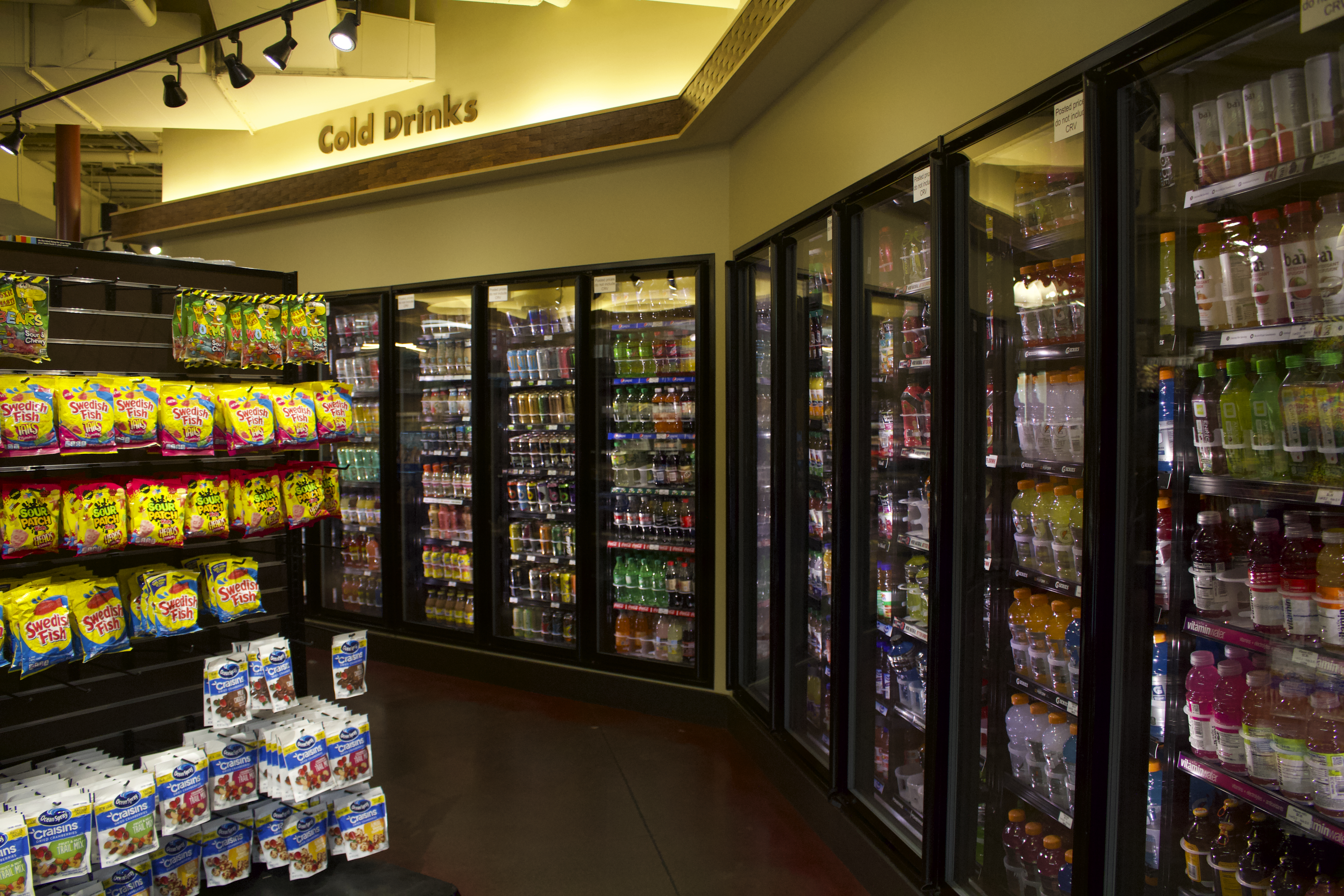
    A variety of some of the single-use plastic bottled beverages offered. According to Rudebock, much of the decision to continue to sell single-use plastic drinks is because of consumer choice. | Photo by Megan Bender

    Rudebock said this specific change is a challenge. The Depot, the College Creek Marketplace, the Cupboard and vending machines still offer plastic bottled beverages on campus.

    “We would like to see a faster adaption but with this guideline having no deadline and with the current collapse in the recycling market I do not see this becoming feasible in the next year,” Rudebock said.

    Dining services has made some efforts in providing more glass or aluminum options. The J, for example, has a beverage cooler that is all aluminum and glass, has eliminated single use plastic containers and has single-use packaging that is compostable or recyclable.

    However, other locations haven’t been able to make the same change as effectively because of the demand for products that happen to also be in plastic bottles.

    “We’ve been working with a lot of our vendors and pushing, trying to get more either glass or aluminum containers.” he said.

    Rudebock said Dining Services also goes out of their way to order aluminum and glass alternatives whenever possible from specific companies and brands like Coke or Pepsi.

    “It kind of comes down to consumer’s choice,” he said. “Consumers can help by purchasing products that are in reusable, compostable or recyclable packaging and not requesting products that are not in reusable, compostable or recyclable packaging.”

    Students have pushed back against the university in the past, questioning its dedication to environmental responsibility over their business ties with PepsiCo.

    As reported in the Lumberjack and the North Coast Journal, in 2017 HSU made efforts to meet student’s demands to closer align with its dedication to social, economic and environmental issues by re-evaluating a 40-year-long partnership with PepsiCo.

    Under the contract PepsiCo funded HSU with around $58,000 worth of athletic scholarships in exchange for pouring rights. Pouring rights allowed PepsiCo to reserve 80% of HSU shelf space for their products.

    Students also made the argument the set up was not fair to local businesses.

    In spite of being in a budget deficit and the loss of scholarship funding, HSU did not renew the pouring rights contract and let it expire at the end of June 2017.

    HSU was the first California public university and third national public university to phase out water bottles.

    The University Center and Dining Services stepped into to help with some of the lost resources.

    Rudebock said they managed to fund a majority of the lost scholarship money but leaves the decision of how the scholarships are dispersed up to the school. This way the UC and Dining Services are not directly funding athletics or any specific department.

    The university still does business with PepsiCo but under different rebate-based agreements. Dining services also stopped carrying Aquafina water bottles, a brand owned by PepsiCo as a result of the nationally recognized Take Back the Tap campaign.

    Under the Waste Reduction & Resource Awareness Program, students began efforts to Take Back the Tap at HSU starting in 2009. The student lead group and Dining Services worked to phase out the sale of single-use water bottles in 2011 as is the primary focus of the campaign.

    As a result, HSU became the first California public university and third national public university to phase out water bottles. Dining Services initially explored an alternative by offering boxed water.

    “At first we thought they were upset with the plastic water bottles, but they said ‘No no, just the water,’” Rudebock said. “It was more about the idea of selling packaged water.”

    Before HSU removed water bottles on campus, TBTT calculated that HSU’s annual bottled water demand “required approximately 43 barrels of oil per academic year” and in turn was “releasing 35,000 pounds of carbon dioxide into the atmosphere.”

    HSU now owns two Hydration Stations and has 16 water fill stations on campus.

    Environmental Science & Management Professor James Graham and his geospatial students created an interactive map of HSU that includes where to find water fill stations on-campus as well as other resources.

    The locations of all water stations on HSU’s campus according to the Sustainability project. These locations include the two Hydration Stations.

    Sustainability Director Morgan King said Facilities Management worked with students help create the map.

    “We worked with [Graham’s] students to develop layers for sustainability attributes,” King said. “Including water filling station locations, bike parking locations, recycling and compost bin locations.”

    Anyone can access the map by visiting HSU’s sustainability website. The map key is listed in a drop down menu that offers different types of resources on campus. Under the sustainability option, users can check the box of the information they’re looking for.

    Rudebock said Dining Services remains attentive to the needs of the students and the possibility of selling less plastic-bottled products.

    “Every journey begins with a step,” Rudebock said. “The less plastic containers that students buy helps change the need for that product.”


    The California State University system’s single-use plastic policy passed in December 2018 includes four policy changes that have deadlines, but the fifth and final goal of the policy doesn’t list a deadline.

    • Eliminate single-use plastic water bottles by January 1, 2023. HSU has already met this requirement as of 2011.
    • Eliminate plastic straws no later than January 1, 2019. HSU eliminated plastic straws during the fall 2017 semester.
    • Eliminate single-use plastic carryout bags no later than January 1, 2019. HSU eliminated plastic bags in March 2014.
    • Eliminate single-use polystyrene (e.g. STYROFOAM™) food service items no later than January 1, 2021. HSU eliminated Styrofoam to-go containers over 10 years ago and are working to eliminate it in any pre-packaged item
    • Replace single-use plastic items with materials that are reusable, locally compostable and/or recyclable.

    To find out more about HSU’s Zero-Waste Initiatives, WRRAP and TBTT visit the WRRAP homepage.

  • Students help each other with J Points

    Students help each other with J Points

    Humboldt State student Austin Sani marches into the College Creek Marketplace with his friends and intends to do some damage. Sani has almost 2,000 J Points and he wants to buy as many items as possible for himself and his friends, because he is trying not to let his meal plan go to waste.

    “I wish I had known there was a way for me to donate these points to help other students,” Sani said. “I definitely would have done that.”

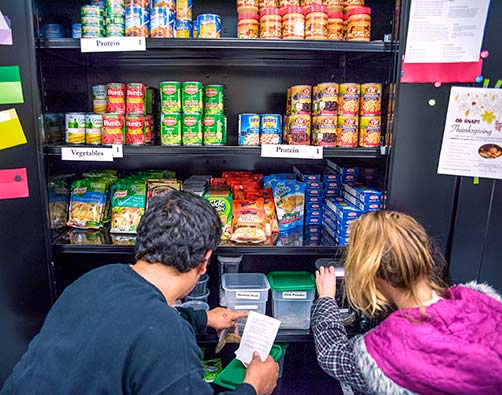
    Sani was not aware of the J Point donation program that started back in 2009. This was an opportunity for students who found themselves with extra points at the end of the semester. They were able to donate their points to be used to buy food for the Oh SNAP! food pantry on campus.

    This year, the program has been revamped by Oh SNAP!, with the help of a $77,000 grant from the California State University. This grant is part of a system-wide initiative to better address the basic needs of students across the state.

    Students will now be able to donate their points to be used by other students wherever J-points are accepted.

    “The donated points will be put into a pot that faculty and administration will be able to give out to students in $30 increments,” Raven Craig, a peer health educator for HSU’s Health and Wellness Services, said.

    Craig runs Oh SNAP!, and has a very critical role in making sure the donation program runs smoothly on campus.

    “People have been asking for something like this for years, so I am very pleased that we are able to make it happen,” Craig said.

    Students are able to visit the pantry or The J cafeteria to donate points. Already, $2,500 in points have been collected from donations and aid from the grant.

    Oh SNAP! has been collecting donations this week from students who have an excess amount of points.

    “I think this is a great program, and Dining Services really supports it,” Ron Rudebock, the Director of Dining Services at HSU, said. “It is really great to see students getting help, as well as seeing students donate to help their peers.”


  • Convenience costs

    Convenience costs

    By | Curran Daly

    Getting food on campus is convenient for students, yet comes with an additional price. Humboldt State Dining food is more expensive than food bought at Safeway in Arcata and WinCo in Eureka.

    Chris Bautista has been at Humboldt State for three years and eats on-campus for the convenience.

    “Some things are expensive, but some things are not,” said Bautista, while holding a three dollar cupcake. “Eating here is more convenient so I just eat here.”

    Prices
    Graphic by Curran C. Daly

    Humboldt State is far from the cheapest option for food in the area. When compared to Winco and Safeway, Humboldt State is almost always the most expensive option for many quick grab options for food.

    Humboldt’s beloved Yerba Mate teas are $3.39 on campus when paying cash versus $2.22 at Winco and $2.49 at Safeway.

    Director of Dining Services, Ron Rudebock, wants students to know that due to Humboldt’s small size compared to national chains the price we pay for food is higher.

    “Safeway and Winco beat our prices,” said Rudebock. “At Winco, sometimes, we can find things for sale at a cheaper price than we can buy them wholesale.”

    Humboldt might not be able to beat all the prices of other local retailers, but the money spent at HSU stays at HSU. Rudebock also wants students to understand all the places that their money goes after they spend it at an on-campus location.

    “Food sold on campus helps pay for operating costs of the UC Center,” said Rudebock. “Money spent here on campus stays on campus.”

    According to the 2016-2017 Fiscal Budget for the University Center, Dining’s annual intake from food sales of more than 12 million dollars accounts for 74.8 percent of total revenue for the University Center. Despite the large in-take, Dining’s gross profit is only around $700,000 after paying for food cost, employees, and other operating costs.

    While Dining contributes the most amount of money to the University Center’s revenue, it also must pay its many student employees who make up the majority of HSU Dining’s staff.

    “We only have 28 full-time employees between our various locations,” said Rudebock. “Without student employees, we couldn’t operate.”

    The excess money from the Dining’s revenue goes towards keeping prices down across campus for other University Center organizations such as Center Arts, Center Activities, and the Student Rec Center.

    Ameer Abdullah, a transfer Recreation Major, believes that keeping food affordable is key when serving the college community.

    “It’s college it should always be affordable,” said Abdullah. “The food should be better if we are paying so much for it.”