The Lumberjack


Students Serving The Cal Poly Humboldt Campus and Community Since 1929

Tag: Dining

  • Students are dining in during the COVID-19

    Students are dining in during the COVID-19

    Students survive COVID-19 by cooking for themselves and avoiding college cafeteria

    Whether they live on or off-campus this semester, students are facing new challenges in just about everything they do and dining is no exception. Meal plans are offered to students living on the campus at a steep price, but this semester students have resorted to cooking for themselves.

    Humboldt State University botany major, Zeen Vincent, purchased a mini-meal plan but finds cooking in his dorm more affordable and enjoyable.

    “It’s just easier to cook at home and just buy groceries once a week than it is to go out and eat all the time.” Vincent said.

    Although the pandemic has turned trips to the grocery store into an uncomfortable mission, Vincent hasn’t allowed it to affect him much. When he does prepare food, it’s often raw ingredient based meals or snacks.

    “I’ve been making a lot of sandwiches,” Vincent said. “I am making burgers tonight so that’s kind of special. I usually don’t eat that on a daily basis.”

    HSU freshman, Jesse Barragan, lives on campus and has the green meal plan which is recommended for students who plan to cook on the weekends. Barragan eats at the J cafeteria weekly but is forced to occasionally cook when the J lacks in vegan options.

    “Sometimes for dinner they may not have a lot of options,” Barragan said. “Maybe like a few sautéed squash and rice but usually it is good.”

    With more vegan and vegetarian options than most places, Barragan is able to eat well on a budget. Barragan’s meals involve easy-cooking in his dorm kitchen, using mostly veggies and produce.

    “Lately I’ve been eating a lot of potatoes, squash, tomatoes and salads,” Barragan said.

    Although most students who came back to campus moved in at the end of Aug., HSU junior Vanessa Odom, stayed to pursue a work opportunity on campus.

    “There were no dining services,” Odom said. “The J and everything closed back in March after spring break.”

    Odom discovered they could acquire free food from the Oh SNAP! program. Receiving mostly raw foods, Odom took the opportunity to sharpen their cooking skills.

    “I really enjoy cooking for myself,” Odom said. “Obviously it’s a life skill to have and I’ve learned a lot about different kinds of cooking.”

    Richard Shilts is a sophomore at HSU and has a job at Domino’s Pizza in Eureka. He applied shortly after moving back to Humboldt and has been working as a delivery driver since July.

    “I work just about every day of the week,” Shilts said. “I work about 30 hours. I was working like 40 before school started.”

    Shilts’ main concern is work interfering with his education but the job pays too well to quit. Unfortunately, Shilts puts up with customers that are unwilling to abide by COVID-19 protocol, putting himself at a powerless, higher risk of getting sick.

    “I can’t do anything about it,” Shilts said. “I just have to deliver to them.”

  • Humboldt State’s Hybrid Instruction Request Approved for Fall Semester

    Humboldt State’s Hybrid Instruction Request Approved for Fall Semester

    On May 21, Humboldt State University sent out an email announcing that it would be submitting a proposal to the CSU system requesting for a hybrid learning environment where there would be a mixture of face-to-face and online instruction. June 6, another email was sent out confirming that HSU would be able to operate virtually and in-person as needed.

    According to the official HSU email, “the University’s academic program has perhaps the highest proportion of courses with a hands-on component in the CSU.”

    About a quarter of all HSU courses involve labs and other activities and experiences that can’t really translate online and half of those course sections are able to be taught in-person this upcoming fall.

    Regarding all other courses that involve less tangible experiences, like lectures and seminars, they will continue to operate online.

    Following the acceptance by the CSU system, HSU can now ramp up its thorough planning process beginning this summer. HSU is also considering a return to a fully online learning environment if things worsen. For now, it will be a hybrid of face-to-face and online instruction.

    As for the details of HSU’s plan for the fall semester:

    Health and Safety

    Steps will be taken to ensure the health and safety of people on campus like limiting capacity and mandating face coverings for all who step foot on HSU turf.

    Social Responsibility

    Students and faculty will be expected to be socially responsible when returning to campus and remain vigilant in keeping themselves safe.

    Schedule

    Courses taught in a face-to-face manner will start and finish with virtual interactions to go over safety measures, and all face-to-face parts of courses will start after the initial virtual interaction and end on Nov 6. just in time for the second virtual interaction.

    Housing

    The combined capacity in HSU’s residence halls will not exceed 1000 students and students will be placed in single-occupancy rooms. Dates and times for moving in will be spread out.

    Dining

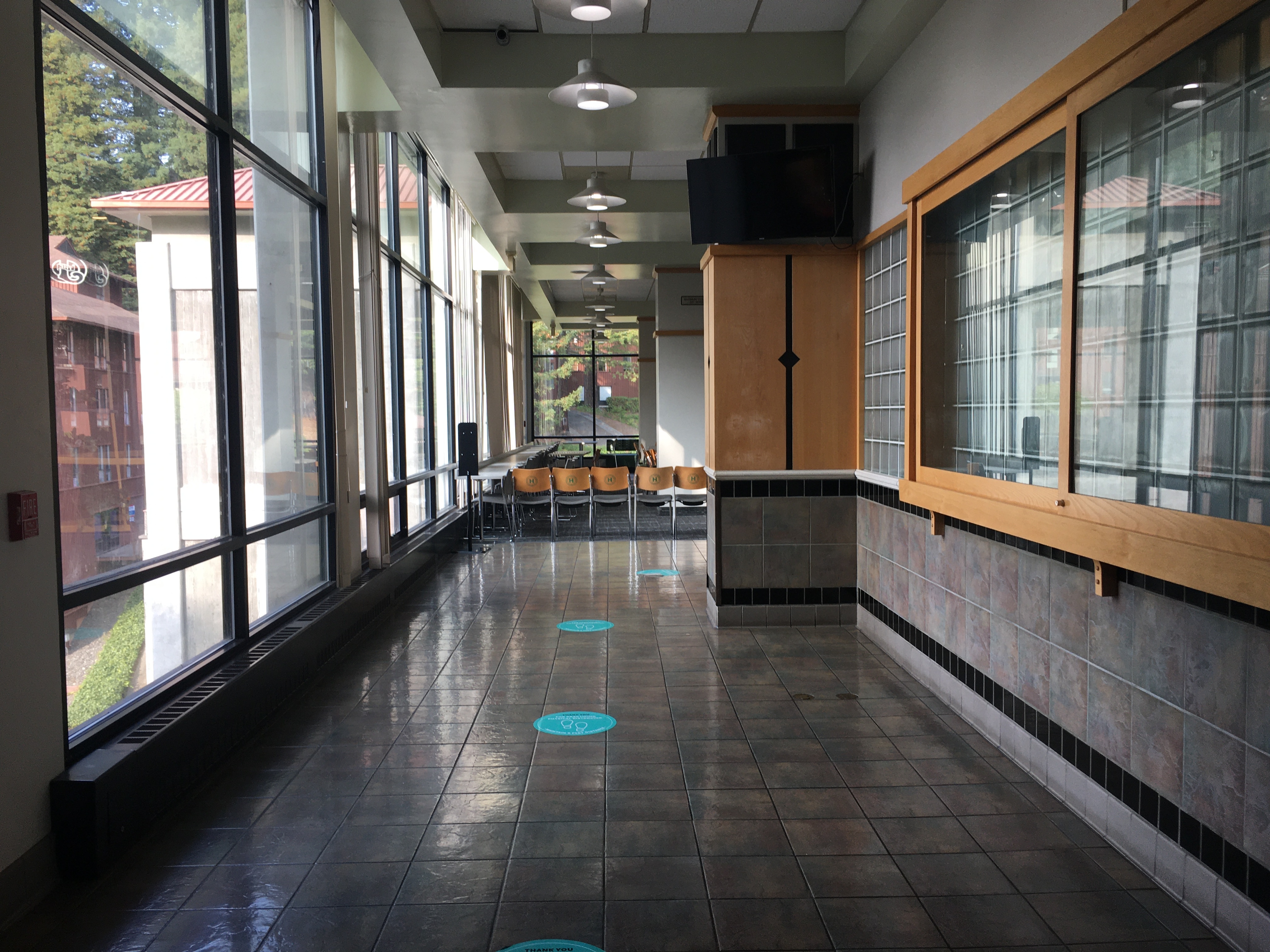
    Dining services will not be as frequent on campus. Takeout and food-delivery will be available to students but buffet-style and self-serve food will not be.

    Faculty and Staff

    A majority of employees will continue to telecommute. Workers deemed essential will come back to campus to work more regular hours. Employees over the age of 65 will continue to telecommute as well.

    Athletics and Recreational Activities

    HSU will enact a four-stage plan intended to gradually allow student-athletes and related staff to come back to campus. The availability of recreational activities will increase in conjunction with the availability of recreational activities in the county.

  • Mondays are no longer meatless

    Mondays are no longer meatless

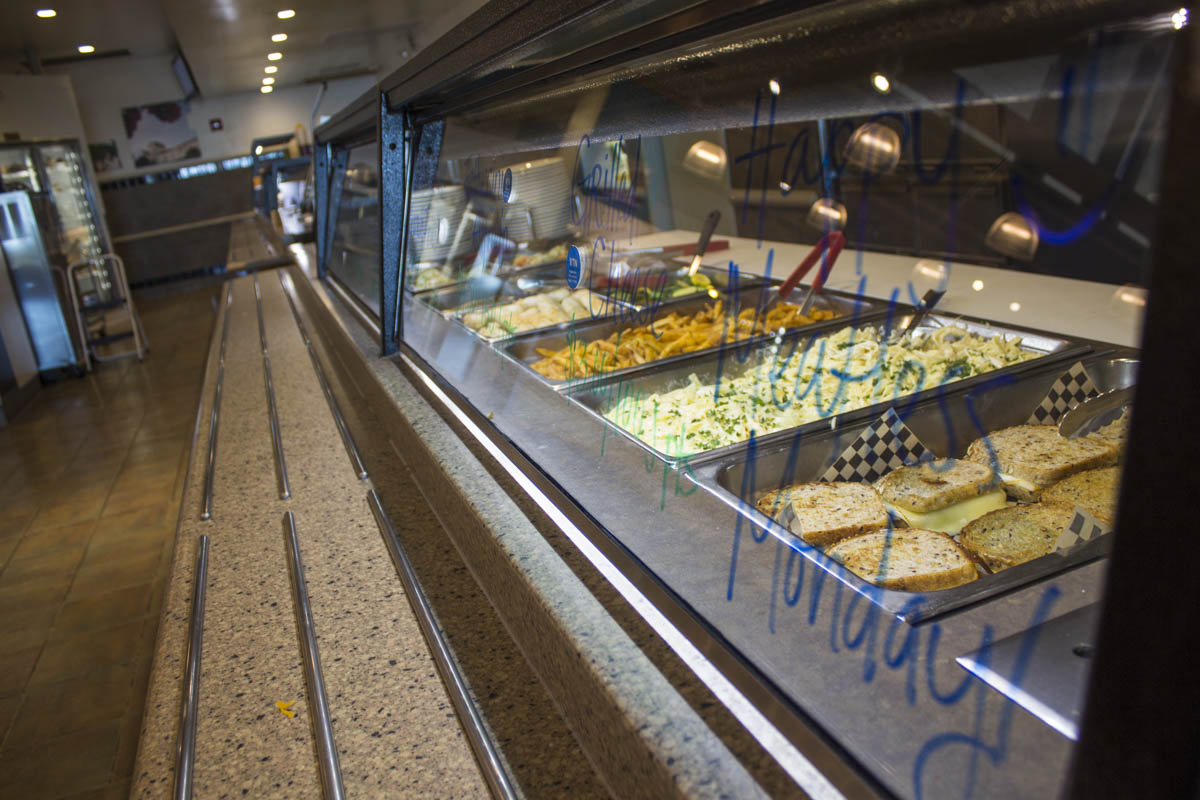
    No more Meatless Mondays. They will now become Pollo-pescetarian. HSU Residence Hall Association decided last Monday, Oct. 9th by a unanimous vote to incorporate white meat into Monday’s dining services, and add more vegan and vegetarians options throughout the week to compensate. Chicken, turkey and fish will now be served at the J cafeteria on Mondays.

    IMG_9911.jpg
    Students getting food from the J cafeteria on a meatless Monday. Photo credit: Ahmed Al-Sakkaf

    “We came to a vote last week, instead of one whole day for vegetarian and vegan options, we’re going to incorporate it more throughout the week,” Destiny Mendoza, sitting President, said.

    Meatless Monday is an international movement that launched in 2003. Its goal is to reduce global meat consumption by 15 percent. In Spring of 2015, about 700 HSU students signed a petition in support of Meatless Mondays. RHA then voted to implement Meatless Mondays at the J starting Fall 2015.

    Ron Rudebock, director of Dining Services said that the foot traffic in the J has dropped by 15 percent on Mondays compared to compared to other weekdays.

    RHA National Communication coordinator Nicole Laureano said that besides the dip in sales at the J on Mondays, dining services didn’t see an increase of sales anywhere else on campus.

    “The big question was where are people [students] going to eat? Are they not eating? Are people starving themselves? Or leaving campus in order to get what they want?” Laureano said.

    IMG_9880.jpg
    The J food servers behind a counter waiting to serve students. Photo credit: Ahmed Al-Sakkaf

    Many students around campus dislike Meatless Mondays at the J cafeteria. Cynthia Godinez, a student coordinator who works at the J cafeteria, hears students complain and express their frustration about Meatless Mondays.

    “Students come in and they literally roll their eyes and scoff because they hate Meatless Mondays,” Godinez said. “People complain about Meatless Monday all the time… I hear it, I hear it.”

    A large amount of the food served on Mondays is dairy-based and contains a lot of cheese, making it hard for students who are lactose intolerant to eat at the cafeteria.

    “They [students] want to see less cheese,” Mendoza said. “We had Ron from Dining come in and we told him to lay off the cheese.”

    Godinez thinks that the food served on Meatless Monday isn’t healthy as it contains large amounts of fat.

    “You’ll think something like Meatless Monday is healthy, but it’s not healthy, it’s all cheese. It’s very heavy greasy food,” Godinez said.

    IMG_9941.jpg
    Harrison Cole on a meatless Monday making a salad at the J cafeteria salad bar. Photo credit: Ahmed Al-Sakkaf

    With the dip in the number of students going to the J on Mondays, a lot of food went to waste said Godinez.

    “A lot of food goes to waste because of Meatless Mondays,” Godinez said. “We [Dining services] waste a bunch of food, we waste a bunch of money.”

    Last year, chefs from People for the Ethical Treatment of Animals (PETA) visited HSU and suggested changing Meatless Mondays to include some meat. This was to avoid steering students away from the J on Mondays and avoid making them feel excluded.

    The changes made are open to reevaluation and change.

    “If this is not the solution then we’ll reevaluate,” Mendoza said, “it’s not set and stone. Nothing is set and stone.”


  • Convenience costs

    Convenience costs

    By | Curran Daly

    Getting food on campus is convenient for students, yet comes with an additional price. Humboldt State Dining food is more expensive than food bought at Safeway in Arcata and WinCo in Eureka.

    Chris Bautista has been at Humboldt State for three years and eats on-campus for the convenience.

    “Some things are expensive, but some things are not,” said Bautista, while holding a three dollar cupcake. “Eating here is more convenient so I just eat here.”

    Prices
    Graphic by Curran C. Daly

    Humboldt State is far from the cheapest option for food in the area. When compared to Winco and Safeway, Humboldt State is almost always the most expensive option for many quick grab options for food.

    Humboldt’s beloved Yerba Mate teas are $3.39 on campus when paying cash versus $2.22 at Winco and $2.49 at Safeway.

    Director of Dining Services, Ron Rudebock, wants students to know that due to Humboldt’s small size compared to national chains the price we pay for food is higher.

    “Safeway and Winco beat our prices,” said Rudebock. “At Winco, sometimes, we can find things for sale at a cheaper price than we can buy them wholesale.”

    Humboldt might not be able to beat all the prices of other local retailers, but the money spent at HSU stays at HSU. Rudebock also wants students to understand all the places that their money goes after they spend it at an on-campus location.

    “Food sold on campus helps pay for operating costs of the UC Center,” said Rudebock. “Money spent here on campus stays on campus.”

    According to the 2016-2017 Fiscal Budget for the University Center, Dining’s annual intake from food sales of more than 12 million dollars accounts for 74.8 percent of total revenue for the University Center. Despite the large in-take, Dining’s gross profit is only around $700,000 after paying for food cost, employees, and other operating costs.

    While Dining contributes the most amount of money to the University Center’s revenue, it also must pay its many student employees who make up the majority of HSU Dining’s staff.

    “We only have 28 full-time employees between our various locations,” said Rudebock. “Without student employees, we couldn’t operate.”

    The excess money from the Dining’s revenue goes towards keeping prices down across campus for other University Center organizations such as Center Arts, Center Activities, and the Student Rec Center.

    Ameer Abdullah, a transfer Recreation Major, believes that keeping food affordable is key when serving the college community.

    “It’s college it should always be affordable,” said Abdullah. “The food should be better if we are paying so much for it.”