The Lumberjack


Students Serving The Cal Poly Humboldt Campus and Community Since 1929

Tag: discrimination

  • Affirmative Action Vs. Quotas

    Affirmative Action Vs. Quotas

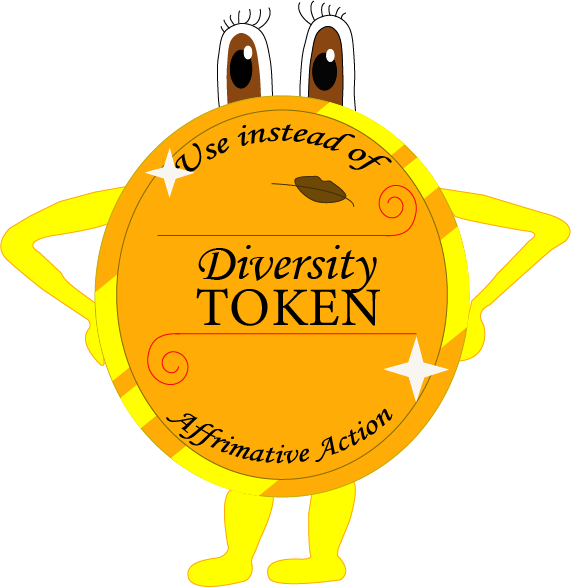
    There’s a massive difference between affirmative action and quotas

    Reverse discrimination does not exist. Discrimination is discrimination. Now that we got that straight, let’s learn the difference between affirmative action and quotas, also known as tokenism.

    Affirmative action is an effort by institutions to improve educational and economic opportunities for underrepresented groups and communities.

    Quotas force diversity without factoring in actual inclusion. The pathetic attempt to meet numerical goals to appear diverse. This would be considered discrimination. This is actually unconstitutional.

    Affirmative action does not mean that a university or employer is only making their decision based on race, ethnicity or gender. That is also discrimination.

    Affirmative action is taking the necessary steps to improve diversity and inclusion within the institution. This includes dismantling the deeply ingrained discrimination within the educational system and the workplace. Affirmative action takes time. Quotas are a quick fix that fixes absolutely nothing but pretends as if it had.

    We are all aware that proposition 16 did not pass. The proposition would have allowed California’s institutions to consider race, ethnicity, and gender when making decisions on hiring and admission by using affirmative action policies. This prop was attempting to reverse the affirmative action ban that took place in 1996 with proposition 209.

    This was meant to destabilize the lack of inclusion, and figure out ways to attract more members of underrepresented groups such as women and BIPOC. Of course, they need to be qualified. That’s the whole point of affirmative action.

    Let’s say there are two individuals applying for the same position, an example is the marketing director of a company. Imagine their resumes are identical, they have the same level of experience, graduated top of their class, perfect interviews, etc.

    One applicant was a white man from Los Angeles and the other applicant was a black woman from Atlanta. Using affirmative action, the employer should hire the black woman because her voice may be the voice they need at the table to move their company forward. That is affirmative action, it’s taking the necessary steps to be inclusive and open your eyes to expanding to various walks of life, not just one specific group of people.

    Now quotas, which are very different, are very problematic. It’s like a quick fix to diversify the workplace or the institution. Having and keeping a numerical goal is a problem. Saying that their company needs to have at least 10 percent BIPOC and 15 percent women is not okay, under any circumstances. When quotas are put into place, inclusion is not happening.

    When these quotas are not being met, the employer or institution may end up bringing on underqualified individuals just to meet their mark. This helps no one.

    This extends to tokenizing employees as well. An example of this would be Bon Appetit. Employees of color, specifically Sohla El-Waylly, the assistant food editor, went public saying that she was constantly being used as the face of diversity. She was being pulled into random photoshoots and continuously being asked to show up in cooking videos. Yet, she wasn’t paid for any of it. She was being used by the editor, Adam Rapoport, to make the staff look diverse and inclusive when in fact, that was not the case. It was a quick fix.

    Please, do not tokenize photographs, orientation videos, or the institutions or workplaces at all.

    Regarding universities and colleges, there would have been various programs resulting from affirmative action. Thomas Peele, Edsource investigative reporter, wrote a piece explaining what affirmative action was and an explanation on prop 16. Peele touched a bit on CSU’s and how this would impact the colleges.

    “Outgoing CSU Chancellor Timothy P. White said the ability to use affirmative action policies would have let the system address “a fundamental opportunity gap” that Black, Latino, and Native American students face by providing targeted scholarships and programs to help them stay in school and achieve a four-year degree,” Peele said.

    One way that we can put affirmative action into place is by recognizing that there needs to be a change. There needs to be representation present in order to attract people from different backgrounds. Everyone’s culture needs to acknowledged and respected. This includes religion, traditions, language and even holidays. Keep in mind not everyone relates to you.

    Don’t be afraid to receive criticism or feedback on how you can improve.

    Prop 16 not passing in California was a huge mistake. I hope that we can educate others on what this actually means and how it can improve institutions.
  • My Hair is Not a Dress Code Violation

    My Hair is Not a Dress Code Violation

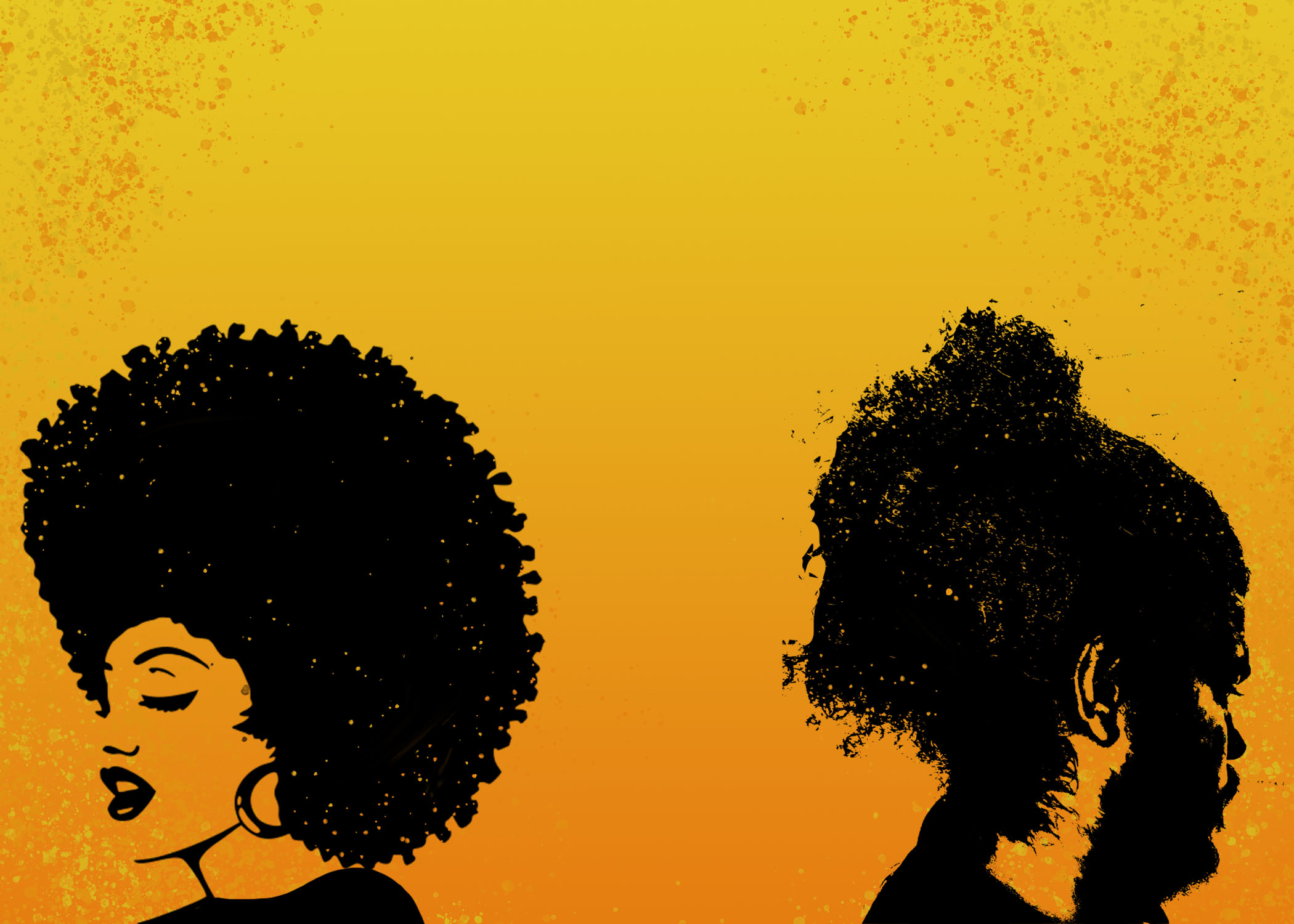
    Natural hairstyles are often shunned, but these hairstyles keep hair healthy while representing cultures

    “You would look so pretty if you straightened your hair,” is something I heard a lot growing up. So much so that for two years I straightened my hair everyday. It took three years of haircuts and deep conditioning treatments to get my hair back to normal.

    That comment along with others like, “Your hair gets in the way,” seem small but take a toll on an individual’s self esteem. A lot of care goes into textured hair. Someone tearing it down hurts.

    “It’s discouraging to know that there are not a lot of people that like or can handle your hair,” Humboldt State University student Dimitri Mark said.

    There are still some schools in the United States that ban natural hairstyles such as braids or dreadlocks because they violate dress codes. I’m not sure how they violate dress codes—these hairstyles keep your hair back and can even keep your hair healthy.

    In 2018, a video surfaced on the internet of a 16-year-old boy crying as his dreadlocks were cut off for him to participate in his wrestling match—it was either that or forfeit.

    Hair comes in many different textures, lengths and colors, and should always be taken care of and accepted. Hair doesn’t get in the way. Get over it and stop trying to pick on people of color.

    Girls have also been suspended, sent home or given detention in Boston, Atlanta and Terrytown, Louisiana for their hairstyles.

    At the 2015 Oscars, Zendaya sported dreadlocks to go with her hairstyle. Giuliana Rancic, a host on “Fashion Police,” wasn’t a fan of Zendaya’s locks, which she said smelled “like patchouli oil and weed.” This comment almost led to the end of Rancic’s career. Rancic’s prejudiced words hurt, and they caused a riot against her.

    The reason natural hairstyles such as big curly hair, afros, dreadlocks, braids and twists are a problem is because they’re considered dirty. Things like accents are considered dirty too, unless they’re coming from a blue-eyed, white boy. Many places in Africa, Italy, and Greece once considered braids to be a sign of wealth. Braid-making hairdressers were worshiped and highly trusted.

    It’s understandable why schools have certain dress codes, but hair shouldn’t be part of them. If a school said I had to have my hair in a ponytail everyday, I’d probably fight it everyday and then get kicked out. Hair comes in many different textures, lengths and colors, and should always be taken care of and accepted. Hair doesn’t get in the way. Get over it and stop trying to pick on people of color.

  • Marijuana Legalization is a Race Issue

    Marijuana Legalization is a Race Issue

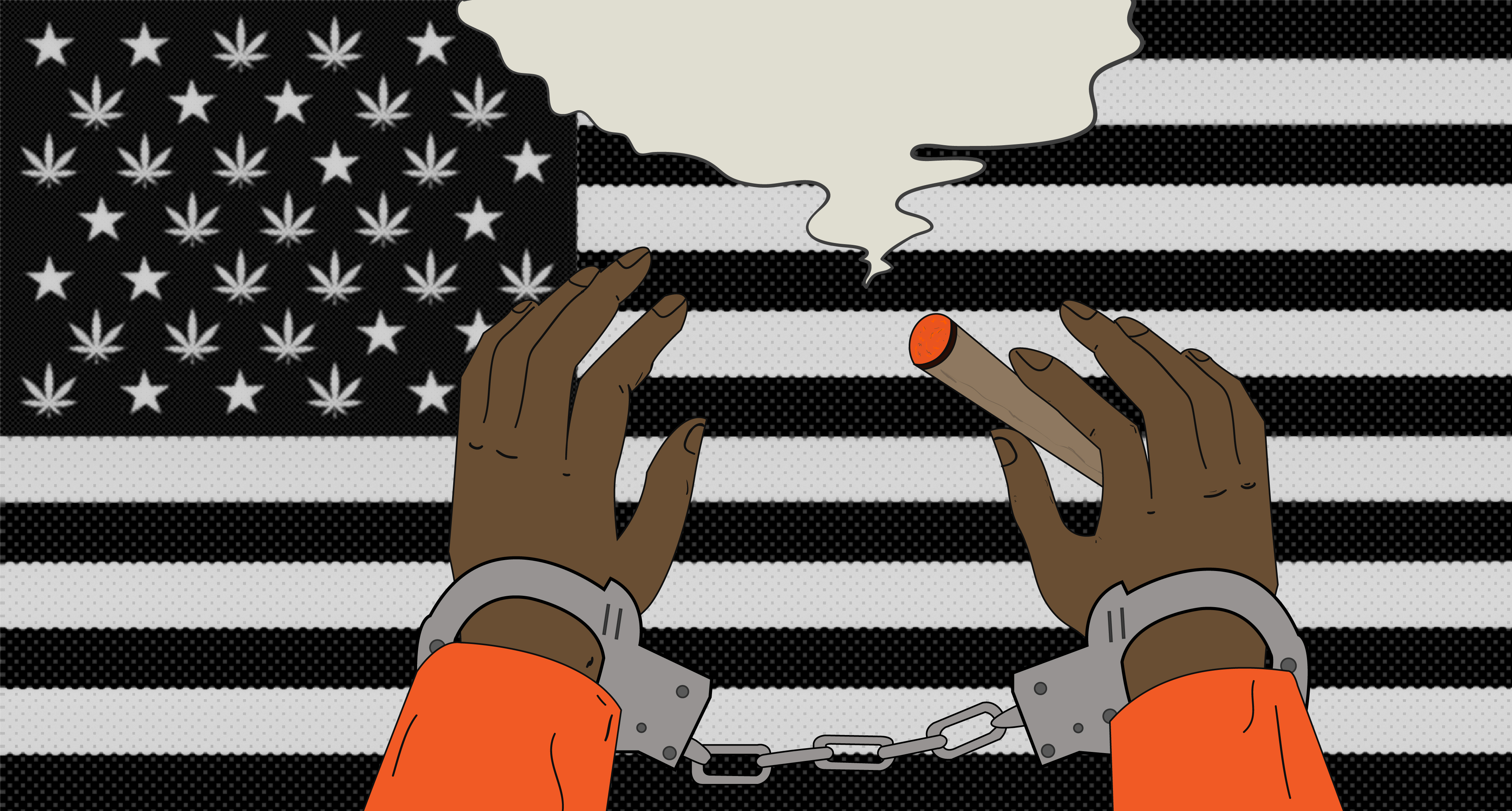
    Marijuana laws are enforced unequally and minority communities bear the brunt of the consequences

    Many states have voted on the legalization of marijuana, a schedule one drug, and 11 states have legalized recreational cannabis. Weed is now a large source of legal income in the U.S.

    Forbes shows that the top three states where recreational marijuana is legal profited over $4 billion in 2018 on cannabis sales. But according to a 2010 study by the American Civil Liberties Union, states waste over $3 billion a year in weed-related arrests.

    We believe states waste more time and taxpayer money by not legalizing and decriminalizing weed. Law enforcement often enforce weed laws unequally, with more arrests in underprivileged neighborhoods, which are often filled with people of color. According to the ACLU, black people are four times as likely than white people to be arrested for marijuana possession despite similar usage rates.

    We are fed up with blatant inequality and discrimination.

    In July 2016, a Minnesota police officer shot and killed black 32-year-old Philando Castile in his vehicle. The Minnesota Bureau of Criminal Apprehension investigated the case, and was told by the officer that he “feared for his life” due to the smell of marijuana and Castile’s lack of concern for the child in the vehicle. This ended in the officer’s acquittal.

    While most states don’t keep data for marijuana possession by Latinx individuals, New York City’s data shows that the Latinx community has the same rate of use as black and white individuals, but recent data shows that marijuana possession is the fourth most common cause of deportation.

    It’s obvious that many of those affected by these ludicrous laws are from black and brown communities. And it may be relevant to note that there is political gain to keep it this way, as many people who have been arrested for marijuana can no longer vote.

    This war on drugs, specifically the war on marijuana, is a war on communities of color. Children are left without parents and people are locked up for years on minor counts. And yet, even when white people commit similar crimes the punishments are all too different.

    Opioid addiction is at an all time highs in the states. It has largely affected white communities, but the amount of arrests is no where near that of other cultural communities when marijuana is involved.

    If treatment and repercussions are unequal, we need to understand that the system is flawed. When one group is given more freedom to make mistakes than another, it seems that there is a hidden agenda at work to keep white communities more prosperous.

    Drug laws are just one example of discriminatory regulations within the United States. Data shows that law enforcement agencies often treat people of color differently, our laws only add tension to the problem.

    As of now, 10 states plus Washington D.C. have legalized recreation marijuana and an additional 20 allow medicinal use. These states should quickly look into decriminalizing the drug fully. If we take steps to free individuals locked up for minor drug possession charges and use the money saved to focus on bigger issues, then we take one major step toward reforming the country’s unjust system.

    It may be a slow process, but it’s one that needs to happen now.

  • Seasonal Work Discrimination

    Seasonal Work Discrimination

    When companies refuse to hire temporary workers, desperate times call for dishonest measures

    Many students seem to have a hard time finding a summer job. In my experience, those who struggle the most are the students that go to college away from home and return only for the three months of summer. Unfortunately, I am one of those students.

    According to the National Center for Education Statistics 81% of part-time undergraduate students are employed at the same time they’re enrolled in school, and a large percentage of these students also look for work during their time off.

    These college students often depend on a summer job to help pay for their schooling and basic needs. To qualify for a minimum wage job, it takes more than just filling out an application and waiting for an interview. Companies want reliable workers that plan to stay for more than just three months and don’t seem to consider summer seasonal workers.

    A lot of companies look at training someone for only a couple months of work as a waste of time. There are some companies that do hire students for the summer but more often than not, they only give you a minimal amount of hours per week. It is almost like they are already preparing for you to leave as soon as they hire you which creates an uncomfortable work environment.

    “I had eight interviews with jobs that paid minimum wage and not a single one hired me. McDonald’s even sent me a rejection letter.”

    For me, last summer was tough. I had eight interviews with jobs that paid minimum wage and not a single one hired me. McDonald’s even sent me a rejection letter. It was at that point that I realized I made the mistake of telling these companies that I would only be around for the summer. But it shouldn’t be that way, I shouldn’t have to lie just to provide for myself during those three months.

    Many students not only work to provide for themselves but for their families as well. Some young adults need to support their parents, children and even their siblings. I think companies don’t understand the dependance that college students have on a summertime job. It is a time for us to worry about work only, whereas during the school year there is more than just our eight-hour shift on our mind.

    Companies should come up with plans for seasonal hires no matter the kind of job. Whether or not there is an influx or outflow of individuals, summer is a season of change. Many people use the few months of warm weather as time for vacation, families are out out for summer and in California summer is prime tourist season.

    This summer, I switched up my technique. During interviews, I said I was a new transfer student in the area and sure enough, I was hired in no time. Working all day, every day can be stressful but not being able to find work is a different kind of stress.

    Being in an environment where you aren’t welcomed doesn’t feel good. There are college students all across the country who go homeless because they don’t have enough money and then on top of that, can’t seem to find a job.

    Though it shouldn’t be this way, it seems the thing to do when applying for a summer job is to tell the company that you’re there to stay. College students are often young adults trying to get a handle on their responsibilities and it is unfortunate that the world has persuaded us to lie in order to survive.