The Lumberjack


Students Serving The Cal Poly Humboldt Campus and Community Since 1929

Tag: energy

  • Cal Poly Humboldt signs contract for installation of two megawatts of solar 

    Cal Poly Humboldt signs contract for installation of two megawatts of solar 

    University expects the new microgrid will provide about 25-30% of current annual campus electricity needs

    by Brad Butterfield

    Striving for sustainability and nestled in among the indomitable redwood giants of Northern California, California’s new polytechnic signed a contract on Feb. 2 for two megawatts of solar and three Tesla megapack batteries, which are expected to supply 25-30% of the university’s current annual electricity usage. Not yet immune from fossil fuel energy dependence, the university used 13,723,403 kWh of electricity and 922,559 Therms of natural gas, resulting in a combined 8,215.37 metric tons of carbon dioxide equivalent (MTCDE) of emissions during the 2022-23 academic year. The new microgrid/solar project is a tremendous step towards the university’s goal to become carbon neutral by 2045 and will change Cal Poly Humboldt’s energy portfolio for decades to come.

    Where does Cal Poly Humboldt currently get its electricity?

     Where a significant portion of Humboldt County purchases its energy from Redwood Coast Energy Association, Cal Poly Humboldt has opted to purchase electricity from Shell Energy, North America. This choice in energy procurement by the university is made possible by Cal Poly Humboldt’s direct access (DA) purchase of electricity, in congruence with 13 other DA CSU’s. “DA provides retail choice to customers by allowing them to purchase electricity directly from an Electric Service Provider (ESP),” according to the California Public Utilities Commission website. With DA, Shell, North America provides the energy, then that energy is transported by PG&E to Cal Poly Humboldt campus. DA is lottery based and allows universities to choose the most cost efficient energy option, rather than the county supplied utility in any given area. The negotiation of this DA energy procurement is handled by the chancellor’s office and allows Cal Poly Humboldt to access electricity at a competitive rate thanks to the aggregated 13-campus negotiation carried out by the CSU. While renewable energy sourcing is important, it has to be carefully balanced against the university’s broad range of financial needs, according to Cal Poly Humboldt’s Energy Manager Andrea Alstone. “As the Energy Manager, obviously, I want to use as little energy as possible and make it as renewable as possible. But, I also realize that costs are real and it’s kind of a zero sum game,” Alstone said. “What we’re spending on electricity means that we’re not spending on other things that the campus needs; we really want to be conscientious of that fact.” Importantly, CA Senate Bill 100 will require renewable energy and zero-carbon resources to supply 100 percent of electric retail sales to end-use customers by 2045. Californian’s are on a one-way road to renewable energy.“[Energy] use in California has to be 100% renewable by 2045. So, as a direct access customer, we will meet those standards, but there are other entities that are doing that sooner. “The choice to purchase from Shell, North America comes, primarily, down to cost – a fact not surprising nor impressive to environmental science and management senior Rain Lopez. “This school is a government institution, which is basically a business that is clearly more interested in maximizing its profits and reducing meaningful spending… so, it’s not surprising that the school made this choice,” Lopez said. Environmental science and management Junior Brooke Douglass put things more bluntly. “Shell is an evil company that has committed many environmental injustices,” Douglass said.

    The Carbon Cost of Purchasing Energy from Shell

    The university’s choice to purchase from Shell, North America has real world impact, as they do not source as much of their energy from renewables as Redwood Coast Energy Authority. Shell, North America sources its electricity from 34% renewables, (Biomass & Biowaste, Geothermal, Eligible Hydroelectric, Solar, Wind) whereas RCEA sources from 50% renewables. This gap is in large part due to the differing goals of each energy provider. Shell, North America looks to obtain the cheapest electricity possible for its customers, while still meeting California’s current renewable energy requirements, according to Alstone.“Whereas RCEA is more community focused and it’s like, ‘what does our community want and how can we meet that?’” Alstone said. “Cost is important, but it’s not the only factor in their decision.” 

    A (natural) gas need

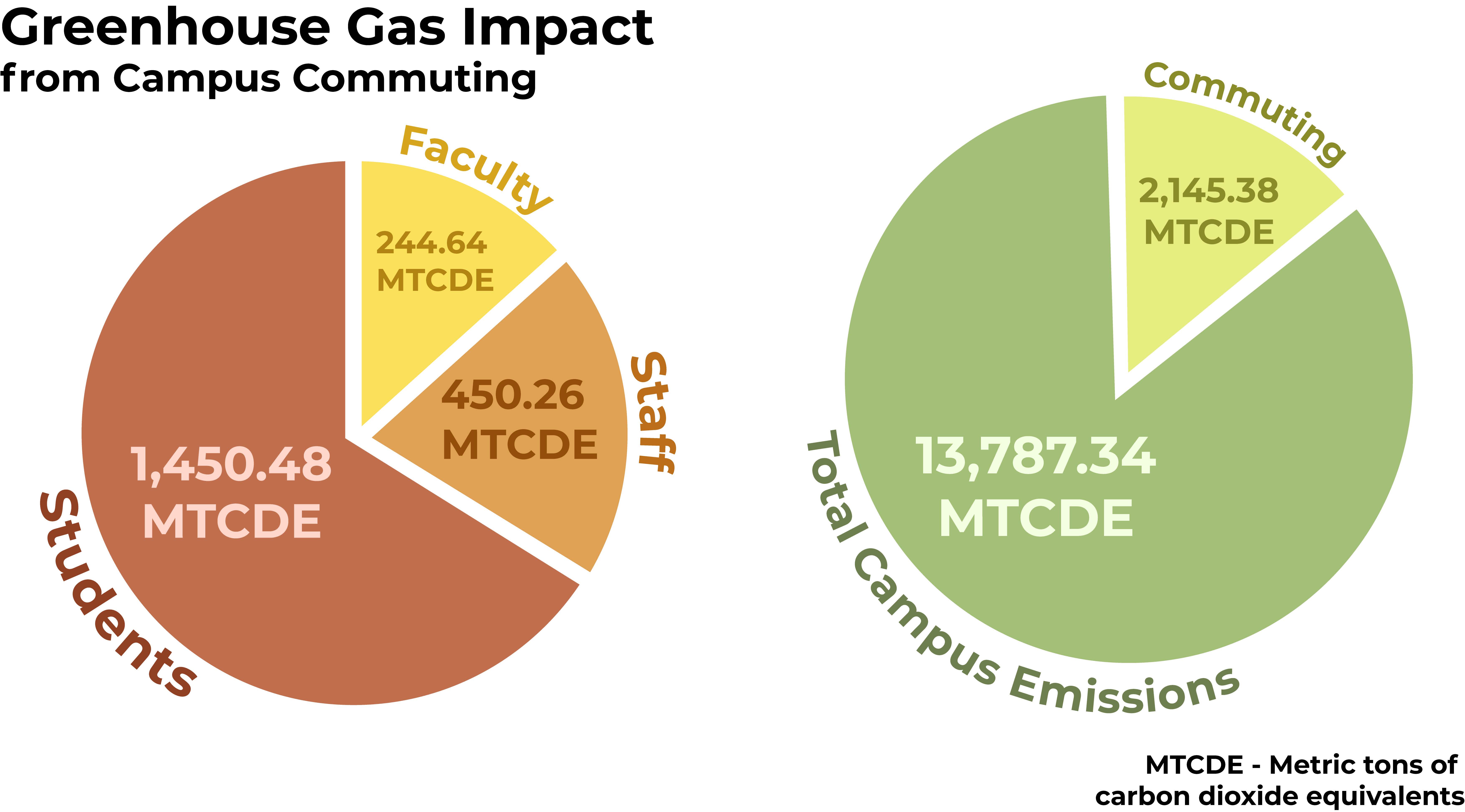
     Importantly, when talking about total campus energy consumption, electricity is only half the equation – actually, it’s exactly 35% of the equation, with the majority of energy consumption on campus coming from natural gas. The university’s main account for natural gas is with the Department of General Services, a branch of the CA government. Perhaps surprisingly, campus use and cost of electricity is a near perfect mirror image of its natural gas use and cost in 2022-2023, where electricity accounted for 35% of total energy usage on campus, but 61% of total energy cost. Natural gas accounted for 65% of total energy used but only 39% of overall energy cost. Cal Poly Humboldt, being the northernmost CSU, has a much greater need to heat its buildings as compared to other CSU’s. The necessity of heating its buildings nearly year round contributes to Cal Poly Humboldt’s ranking as 2nd highest in ‘campus gas purchased’ out of the 23 CSU’s, for the ‘22-’23 academic year, (when natural gas usage is normalized per-square-foot) according to the CSU energy dashboard. This equates to 0.46 therms/SF natural gas usage at Cal Poly Humboldt, only out-gassed by Cal State Fullerton. When thinking about MTCDE emissions, it’s incredibly important to factor energy efficiency into the equation. “If someone told me I had an infinite amount of money to spend on things, before I started spending them on more renewable energy, I would make things more efficient,” Alstone said. Meaning, the best way to obtain sustainability is to not require said energy in the first place. A better insulated building with triple pane windows requires less overall energy to heat and is thus more energy efficient, which of course leads to the dilemma of whether to allocate money towards infrastructure efficiency projects or towards renewable energy generation, i.e. solar panels. In 2022-23, Cal Poly Humboldt used 6.8kwh of electricity per square foot at a rate of $1.49/SF. Total campus emission for ‘22-’23 was 13,787.34 MTCDE, equivalent to 31,889 barrels of oil, according to university Climate Action Analyst Morgan King. That’s a substantial consumption of fossil fuels, no matter how one looks at it. For some students, this speaks to a disconnect between the university’s green-marketing and the campus’ actions. “Humboldt likes to claim it’s green though and it’s superficial… I think that being ‘green’ is a political buzzword,” Lopez said. “An institution of this size, regardless of having a relatively ‘small student body’ should have more resources to support its ‘green programs.’”

    Solar energy on the horizon

    The contract signed with EDP Renewables North America Distributed Energy on Feb. 2 means the university will not own, maintain nor pay for the installation of the solar system, however there will still be initial costs. Roof replacements are necessary for buildings that will be receiving solar panels, and sites on campus receiving the microgrid components will need to be prepared. The facilities yard, for example, is going to house three Tesla shipping-container-sized batteries. In total, the campus will have two megawatts of solar when the project is complete, which is about the max number of panels the university can physically support, currently.  “I want as much as [solar] we can have, and that’s kind of the max given the roofs in the parking lots and the fact that we’re kind of physically constrained,” said Alstone.The battery will provide a peak power of 5.8MW and a total energy of 11.5MWh. Battery capacity is crucial to the systems function as a reliable microgrid.“If everything went out, we’d need a battery which can start our energy system from zero, so we’ve oversized the battery,” Alstone said.Annually, the solar system is expected to produce 3,300MWh of solar – with a guaranteed production of 2,866MWh. This equates to about 25-30% of the university’s current annual electricity usage. In addition to making strides to lower campus greenhouse gas emission, the solar is also expected to save the university money, in multiple ways. As per the contract with EDPR, the university will pay the company for the electricity generated by the solar, but at a much lower rate than the university currently pays for electricity from Shell, North America.“It will end up lowering our bill,” Alstone said. Additionally, thanks to the Inflation Reduction Act, the solar system will also save the university money through hand-me-down tax benefits.“The [tax] benefit will be passed on to the owners of the solar, EDPR, and they in turn pass it on to us in the form of lower electricity costs,” Alstone said.  Another positive aspect to the contract with EDPR is a guaranteed minimum amount of electricity. If they don’t meet the minimum, then EDPR will pay the difference to the university, according to Alstone.Due to the need to install the solar arrays in multiple parking lots across campus, the installation will likely need to take place during the summer break, so as not to irritate the difficult parking situation on campus any further.“We anticipate the canopies will be installed over existing parking spaces Summer 2025 when classes aren’t in session with temporary, minimal impact to parking, “ said Aileen Yoo, Director of News and Information for the university.Cost savings, reduced reliance on fossil fuels for energy, no installation or maintenance cost – this is sounding like a killer deal. Naturally, there are two ways of looking at things.“In an ideal, ethical world, the university would invest in these solar panels as owners, [then] source and promote local unionized workforce for photovoltaic product repair, which would boost your local economy and probably reduce overall maintenance costs…” Lopez said. “But again, universities are businesses and will not operate from a place of long-term vision, just immediate costs.” In any case, the contract signing and soon-to-come microgrid and solar system seem a justified time for Cal Poly Humboldt to raise arms in victory – and that they are. “The microgrid project not only showcases Cal Poly Humboldt’s longstanding commitment and investment into sustainability, but it captures the spirit of what we do here: educate students who can help solve the world’s most pressing problems by providing a real-world example of the benefits of microgrids and how they work,” Yoo said.

  • So You Want to Compost

    So You Want to Compost

    Composting can be one of the most beneficial ways to handle waste

    Learn the steps to compost.

    Every Wednesday, the trash bin, filled with whatever waste was tossed during the week, goes to the curb to be picked up by Recology and shipped off to a landfill.

    Forty percent of the waste that ends up in landfills is food waste, according to Recology. This can include raw scraps from food preparation, old sandwiches left to rot and unwanted leftovers. When food scraps end up in a landfill, the material is not just waste, it’s being wasted.

    “The average American generates 4.4 pounds of garbage a day,” the Recology site says. “Don’t let your food scraps go to waste.”

    Illustration by Collin Slavey

    It’s a big deal if food waste gets tossed into landfills. Besides taking up space in our already overwhelmed landfills, food waste doesn’t decompose properly in such settings. For example, an apple that falls above ground breaks down into useful nutrients like nitrogen, which enriches the soil. Underground the apple isn’t able to break down.

    Buried in a landfill, the apple is in an anaerobic environment, meaning that it is starved of oxygen. Anaerobic decomposition creates some nasty byproducts. The most malicious of these byproducts are methane and liquid leachate. Both of these are pollutants with consequences.

    “Fortunately, avoiding these pollutants is simple. Just compost it,” international waste management firm ToWaSo said. “Food and yard waste can be reused and turned into nutrient rich compost. Composting exposes the green waste to oxygen, allowing it to decompose as it would in nature.”

    Humboldt State does compost food waste. According to an email from TallChief Comet, the director of sustainability, energy and grounds keeping with Facilities Management, HSU compost is managed in two ways. The Waste Reduction and Resource Awareness Program manages the composting bins on campus, while food waste is diverted from dining services.

    “The on-campus composting process is handled by WRRAP and is using the material from the public compost bins scattered around campus,” Comet said in an email. “This material goes into an Earthtub composting vessel, located at Facilities Management and processes about 10,000 lbs (5 tons) of material per year.”

    “The average American generates 4.4 pounds of garbage a day. Don’t let your food scraps go to waste.”

    Recology

    “The food-waste diverted from all the dining locations on campus is collected by FM waste and recycling staff into a large pre-composting container,” Comet said. “About every three weeks it is transported by Recology (a local waste hauler) to a vermicomposting facility in Dows Prairie run by The Local Worm Guy.”

    Comet emphasized that it is important to keep contamination out of the materials’ stream, and if someone is in doubt about whether or not to compost, trash it.

    “The best effort students can make is to not generate waste in any form to begin with,” Comet said. “For compostable waste they can achieve this by not purchasing more than they will use/consume during the anticipated period.”

    But composting may very well be appropriate. Composting may seem like an intimidating, tedious and smelly thing to do, but with a bit of practice it becomes second nature. Working with local resources like the Campus Center for Appropriate Technologies can help prepare a student for their own compost bin.

    Jacob Gellatly, an active member of CCAT, recommended that students learn about composting.

    “Before a student starts composting they should learn a few things,” Gellatly said. “It is critical to get educated on the process of composting. Learn the recipe.”

  • Divesting for a sustainable future

    Divesting for a sustainable future

    Years ago, the movement to move away from fossil fuels was at the forefront of the public eye. Marchers organized and protests took headlines, screaming for change citizens demanded organizations eliminate their support for unsustainable energy practices.

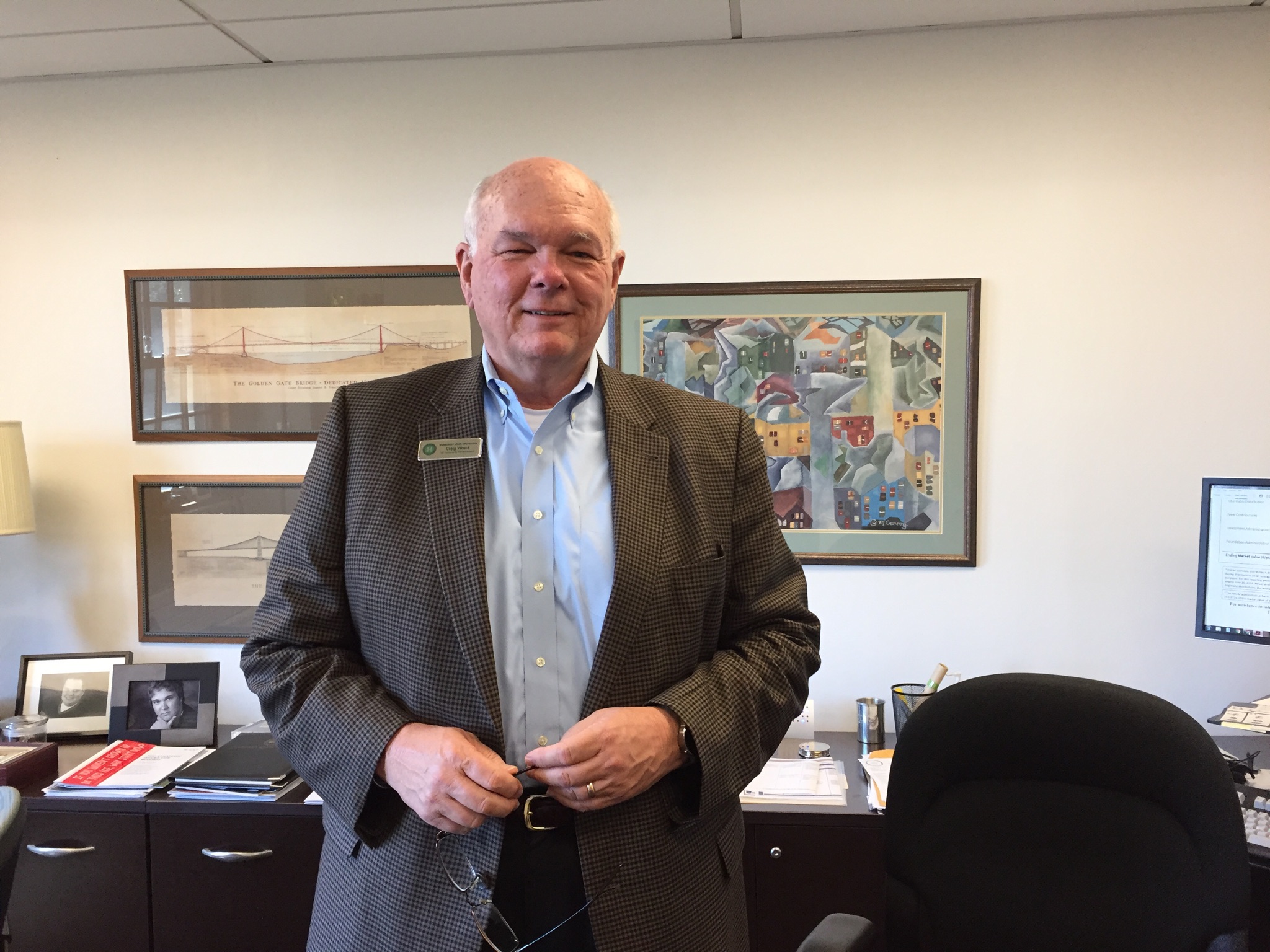
    In the spring of 2013, a group of Humboldt State students approached Craig Wruck, the Vice President of the HSU Advancement Foundation, to discuss eliminating the university’s investments within the fossil fuel industry and other concerning sectors.

    “Four years ago, the students came to us, and it was during the whole run up to the fossil fuels divestment movement,” said Craig Wruck. “Humboldt State has been very good about socially responsible investing since the foundation was reconstituted, so we never had separate investments and we had never owned separate stocks. It would have been easy for us to say, ‘Good news, we’ve already divested, we don’t own any Texaco stock, because that was literally true.”

    Yes, HSU was not directly invested in fossil fuels. However, indirect mutual funds held ties to the fossil fuel industry. This is what the students wanted to change.

    “Our endowments as of the end of last year totaled about 30 to 31 million, and those are contributions over the last thirty years or so. They are then invested, and they are invested in what are called institutional funds, but are actually mutual funds. That’s not unusual for an endowment of our size. We just aren’t big enough to pick individual stocks, we get better diversification and lower costs if we invest in these institutional funds.”

    Sorting through the details of the institutional funds was not an easy decision at first.

    “It was a real risk for the foundation board, because they’re programed to get the best return they can,” said Wruck.

    It took over a year to compromise and for the board to begin the process of divesting from the mutual fund investments that had ties to fossil fuels. The Advancement Foundation and the students worked to find the best compromise environmentally and financially.

    “It’s an interesting argument. Whether the best way to force change in the corporate world, in terms of utilities and energy production, is to stop investing in it,” said HSU President Lisa Rossbacher.

    Rossbacher was also a member of the Foundation board, and debated the next step in divesting from fossil fuels.

    “Do we stay invested and use the fact that we are shareholders to argue from within, or do we make an even more dramatic statement and divest,” said Rossbacher. “We are in the process of divesting.

    The board decided, at the encouragement of the students, to look into the indirect mutual funds and their ties to fossil fuels.

    “We, [the Advancement Foundation] decided to take on the more complicated work of looking into the investments that the mutual funds own and trying to figure out how to green those up,” said Wruck. “Nobody had done that before.”

    According to an article written by Annette J. Penny, a HSU grad and one of the students who originally approached the foundation about divesting, they were finally able to agree on the next steps towards divesting in late 2014:

    1. “To create a new SEROP fund in which donors can rest assured knowing their donation is being invested only in portfolios that align with their own personal Environmental and Social Governance Criteria views.
    2. To move 10% of the existing $26 million portfolio (so $2.6 million) within 12 months of SEROP fund implementation into funds guaranteed to not have holdings in any of our concerning sectors. (HSU’s definition of “concerning sectors” was expanded to include all energy and utility stocks rather than just fossil fuels in order to steer clear of any unintentional fossil fuel investments. Under this definition, 7.5% of HSU’s portfolio is invested in concerning sectors.)
    3. To create a SEROP Investment Challenge which involved massive fundraising for increasing divestment capacity. For every $500,000 that is raised into the SEROP fund, another 10% will be moved. And once we’ve raised $5 million, HSU may be able to go completely Fossil Free!”

    From there, things began to move faster and the Humboldt State Investment pledge was created. Below are the ten agreements stated in the pledge, provided by the 2014 press release on the HSU Investment pledge:

    The Humboldt State University Advancement Foundation will:

    1. Define Socially or Environmentally Concerning Sectors (“Concerning Sectors”) in a broad, bold way so as to include:

    • Energy – extraction, distribution, refining and marketing (i.e. Oil, natural gas, coal and related/supporting industries);
    • Utilities – electricity generation (i.e. Utilities utilizing carbon-based fuels);
    • Aerospace/Defense, Alcohol, Tobacco, Gaming and Casino industries. Revisit definition and revise as appropriate over time.

    2. Continue to abstain from any direct investment in Concerning Sectors.

    3. Monitor and report on the value of indirect investments in Concerning Sectors.

    4. Make reasonable attempts to reduce the size of indirect investments in Concerning Sectors, provided any divestments are consistent with the Foundation’s fiduciary requirements.

    5. Define Socially or Environmentally Responsible (“SER”) organizations, projects or assets initially as ones which are environmentally friendly (i.e. reduce the levels of atmospheric C02) or improve the health and well-being of our community members. Revisit definition and revise as appropriate over time.

    6. Actively seek offsetting investment opportunities in SER organizations, projects or assets.

    7. Invest directly in SER organizations, projects or assets provided that:

    • Investments meet the Foundation’s fiduciary requirements and policies.
    • Investments support the stated HSU mission, vision and values.

    8. Monitor and report on the value of direct investments in SER assets and active investments in SER organizations or projects.

    9. Monitor and report on the value of obvious indirect investments in SER organizations, projects or assets.

    10. Create a SEROP Fund (with appropriate policies) and actively seek donations of funds and assets that could be used to support Humboldt’s SEROP Pledge.

    Since the Humboldt Investment pledge was created, HSU has taken actions to be more sustainable and environmentally responsible.

    “The Humboldt Investment pledge does a couple things,” said Wruck. “We define socially concerning sectors much more broadly than anyone else. So we have always tried to minimize our investments in alcohol, tobacco, firearms, gaming, that sort of thing. We decided to add the entire energy sector and the entire utilities sector.”

    Eliminating investments in both the energy and utility sectors was a huge step for the university.

    “As we debated it we realized, ‘What’s the point of divesting in fossil fuels if you still own utility stocks that have power plants that burn coal,’” said Wruck. “So we decided to just eliminate both of those sectors. That has an impact on investment return, although we are three years in now and our investment return is as good as it’s ever been.

    Deciding to divest from the energy and utilities sectors was not the easiest decision, but it was the next step in the university’s commitment to environmental accountability.

    “A lot of schools have said, ‘Well you know, we’d love to step away from investing in petroleum and other fossil fuels, but we’re worried about what the impact of that would have on our endowment holdings,” said Rossbacher. “Our job is to increase those resources, that then can help the university. We divested and [still] have a really strong return on investment.”

    The endowments the university receives funds numerous programs on campus, in addition to providing individual scholarship funds to students.

    “Endowments are created by donors who give us money, and their direction to us is that we are to invest it and distribute the investment profits, but try to maintain it as a permanent fund,” said Craig Wruck. “So we try to maintain a little bit for inflation each year and then make distributions off of that.”

    There was the possibility of having a much weaker investment return after divesting.

    “They (financial advisors to the foundation) advised us that we would probably suffer about a 10th of a percent loss because we were going to pay attention to these sectors,” said Wruck. “It didn’t work that way, we have had our second best year ever as of June 30th.”

    Since this process began in 2013, the foundation has made significant progress in divesting from concerning sectors.

    “The portfolio itself is totally divested, the equity portfolio has totally divested about a fifth of it. It’s a balance, you don’t get as good investment return if you exclude utilities and energy, so we want to protect the investment return and continue to green up the portfolio.”

    Another main focus for Wruck and the Advancement Foundation is to invest more in environmentally sustainable practices and programs.

    “About a year ago the board members decided to raise money for what they called a ‘Go Green fund,’ to support students working on projects that contribute to a sustainable environment, and they just met their goals,” said Rossbacher.

    During the first few weeks of the semester, the Go Green fund’s reached its goal, and the fund was considered successful enough to continue.

    “We are just this year launching the Go Green interns,” said Wruck. “That’s money that the foundation raised, it’s a little over $100,000, and it’s being used to employ students to do sustainability work on campus.”

    The Climate Action Plan was also fully completed last year, planning out the next steps to create a more sustainable campus. A group of students have been chosen to work on the project alongside the newly formed campus-wide Sustainability Committee.

    “Working through the Office of Sustainability, [the students] are getting paid for their work and their job is to implement the campus’s sustainability plan, [also known as the Climate Action Plan,]” said Wruck.

    Students took the initiative, first bringing the question of divesting to the foundation in 2013. Since then, numerous actions have been taken to carry out the ideas originally

    “We wouldn’t have done this if the students hadn’t brought it to our attention. We were doing good, we were doing socially responsible investing the right way, but we wouldn’t have taken this extra step had the students not encouraged us to do that,” said Wruck.

    Students are the ones who prompted this change, and they did so simply because they cared about the environment and the university. In the article Annette J. Penny released back in 2014, she explains why she needed to fight to divest.

    “So why did I push so hard,” wrote Penny. “Because prioritizing the people and planet over profits is always the right thing to do. Because “Green Funds” are up and coming, allowing for quick growth in fund diversity. And because I can’t stand the thought of one day telling my daughter that I didn’t do everything I could to keep the planet healthy and alive for her to enjoy like we are lucky enough to do today.”

    She was right to push. Since the issue was first discussed we have begun the process of divesting, the Climate Action Plan was created, the Sustainability Committee was formed, and the target for the Go Green Fund was met.

    “We can do both, we can support the green efforts that are so aligned with the values of this institution and still increase the rate of return on our investments,” said Rossbacher.