The Lumberjack


Students Serving The Cal Poly Humboldt Campus and Community Since 1929

Tag: Ethnic Studies

  • Umoja Center helps people make friends

    Umoja Center helps people make friends

    by Dezmond Remington

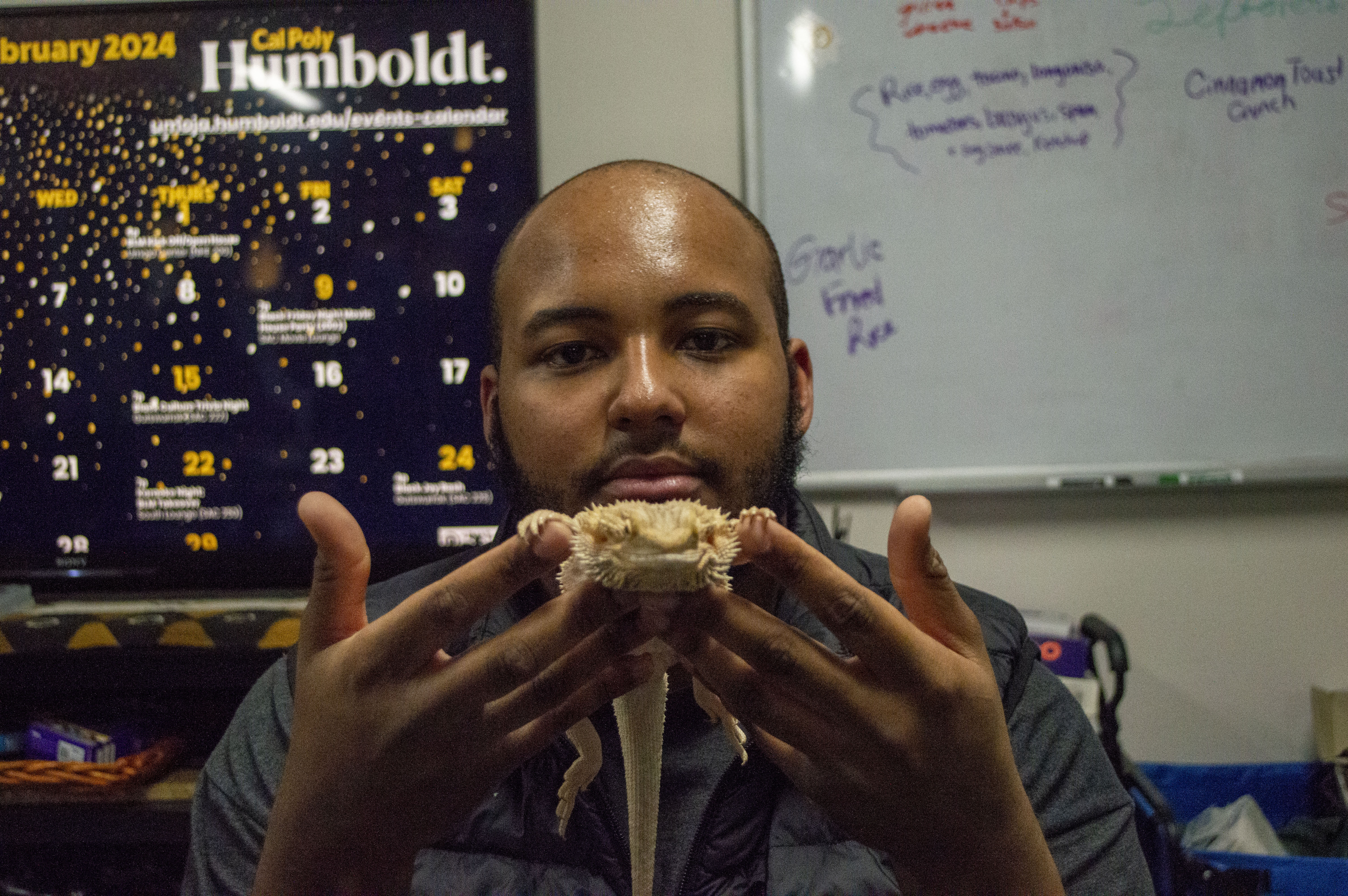
    Tigger doesn’t have any stripes. He isn’t furry, and his jumping skills are horrible. His scales are nice and smooth, and his facial hair rivals a 19th century president’s. Tigger the bearded dragon is just one of many attractions people at the Umoja Center can offer.

    The Umoja Center for Pan-African Student Excellence, located in Nelson Hall East, kicked off a month of events for Black Liberation Month on Feb. 1 with an open house. 

    Student art and photos of Black activists, athletes, musicians, and historical figures line the walls from floor to ceiling. “I love my melanin,” said one sign. A box with loanable art supplies sits at the front desk, free for anyone to use.

    The center hosts many events, such as discussions about Black joy and movie screenings or even a Black trivia night. The center also offers academic advising and computers students can use, but the most important thing most students take from the center is community.

    Many Black students have found community at the Umoja Center — a difficult thing to do when, according to the Cal Poly Humboldt website, only 3% of students at Humboldt are Black. Delaena Montes, a student assistant at the center, said it’s a place she could feel like herself.

    “It’s an open space,” Montes said. “I can reach back to my roots here, my background. I felt like it was somewhere I could be myself. It’s freedom at a very white school. Having a place to escape is a great feeling. I feel comfortable here.”

    Kamar Little holds Tigger the bearded dragon at the Umoja Center Feb. 1. Photo by Dezmond Remington

    Jerry Turner, Tigger’s owner, agrees. He found the center when he was a freshman last year. He’s a mechanical engineering major with a lot of coursework, so having a place to relax and make friends is important to him. 

    “It’s a family,” Turner said. “That’s the best way I can put it… all of my friends I’ve met here, at the Umoja Center. It’s just beautiful.”

    Ryen Price joined the Umoja Center last year after living in the Sankofa House, the Black culture-focused dorm in Cypress. She started coming to the Umoja Center to meet other Black students. She said she’s made a lot of good friends, the type she has potlucks and in-depth discussions with.

    “I love how different we are, but also how similar,” Price said. “We’re like a family here.”

    Montes is surprised more students don’t show up to the center, as well as other culturally-focused programs such as the Indian Tribal & Educational Personnel Program or El Centro, located down the hall from the Umoja Center.

    “People should know about these places,” Montes said. “There’s a lot of culture up here [in Nelson Hall].”

    That doesn’t surprise Kamar Little, a Student Advisory Group for Equity representative at the Office of Diversity, Equity, and Inclusion. Little works to connect students with those centers.

    “I’m making them a bigger name,” Little said. “I’m letting people know things exist. There have been instances where people have never heard of [the programs].”

    Price said anyone curious or doubting should lay those worries to rest and visit the center.

    “People ask themselves, ‘[am I] black enough?’” Price said. “It’s the right place. Don’t think. You’re always welcome here. Don’t be shy, just come.”
  • The Ethnic Studies Bill is a Blessing

    The Ethnic Studies Bill is a Blessing

    Ethnic Studies will thankfully become mandatory for all California State University students – as it should be.

    College is meant to be the epi-center of uncomfortable conversations, meeting people we normally wouldn’t and learning about the world. How does one go through college and not participate in education regarding the systemic oppression impacting those around you?

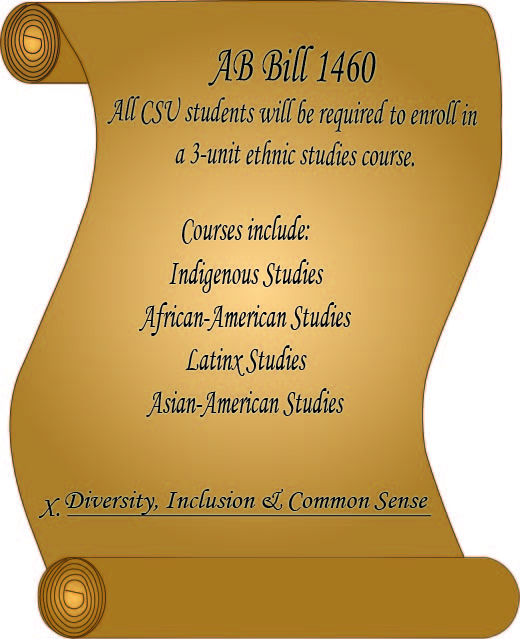
    Assemblywoman Shirley Weber proposed Assembly Bill 1460, which requires all enrolled California State University students take a 3-unit ethnic studies course.

    Governor Newsom signed the bill on Aug 17.

    This was a monumental decision to be made because ethnic studies require students to learn about various cultures’ histories, struggles and successes.

    Since we were in grade school, we learned about Christopher Columbus discovering America, that Thanksgiving was when the pilgrims and Native Americans sang kumbaya while eating turkey and potatoes, and that George Washington had wooden teeth. The history we were taught when we were younger was just one point of view, one perspective, and that was the white man’s point of view.

    I didn’t even learn about my own Black history until I attended college and took an African-American History course. That’s when I learned that Christopher Colombus did, in fact, not discover America, because he never made it to what is now considered America. He came across the Caribbean and was rescued by the natives because he was found drowning. I think we all know what he did after that. The first Thanksgiving was pretty much the pilgrims killing the majority of the native Indians, pillaging their land and then having a feast on it. Now George Washington’s teeth? They were actually made of hippo ivory and his own slave’s teeth. Great guy.

    Taking ethnic studies courses will force you to unlearn the lies you were taught growing up and relearn the facts, the stories, the culture and how it all impacts these groups today. It doesn’t take a rocket scientist to know that people of color had a history of oppression that still takes place to this day. Denial of that is pure ignorance.

    We need ethnic studies more than ever. With various protests going on nationwide, there should be no excuse as to why you wouldn’t know what each one stands for. From Black Lives Matter movements to ICE detention centers, and from racist COVID-19 statements to Indigenous lands being destroyed, we need to acknowledge what has been happening and understand that it is not okay. This is where the necessary education comes in.

    Lucky for us, Humboldt State University has an amazing ethnic studies program run by phenomenal professors. From the introductory courses to the Dialogue on Race, having these conversations are extremely important and should have been mandatory a long time ago.