The Lumberjack


Students Serving The Cal Poly Humboldt Campus and Community Since 1929

Tag: Eureka Police Department

  • It’s not just the Capitol Police

    It’s not just the Capitol Police

    As the world watched from their televisions on January 6, we witnessed scenes unfold before our eyes that were, to many, unimaginable: supporters of President Trump swarmed the steps of the U.S. Capitol Building, then proceeded to break in and advance as far as the Senate Chamber. 

    In the build up to the attack, Trump and his allies delivered speeches near the White House reaffirming his baseless claim that the election was fraudulent and that they must fight to overturn the election results.

    As rioters made their way past the barricades and through the doors, one thing was clear: at the time of the attack, there were few attempts made by police to stop the rioters. This comes as a sharp contrast to the Black Lives Matter protests that took place just this past summer, in which peaceful protestors were frequently met with violent police intervention.

    According to The Armed Conflict Location & Event Data Project that took place May 1 to November 28, 2020, Black Lives Matter protesters were significantly more peaceful than right wing groups, but law enforcement resorted to using force in 51% of Black Lives Matters demonstrations they engaged with, while only restoring to using force in 34% of right wing demonstrations they interacted with during the same period. 

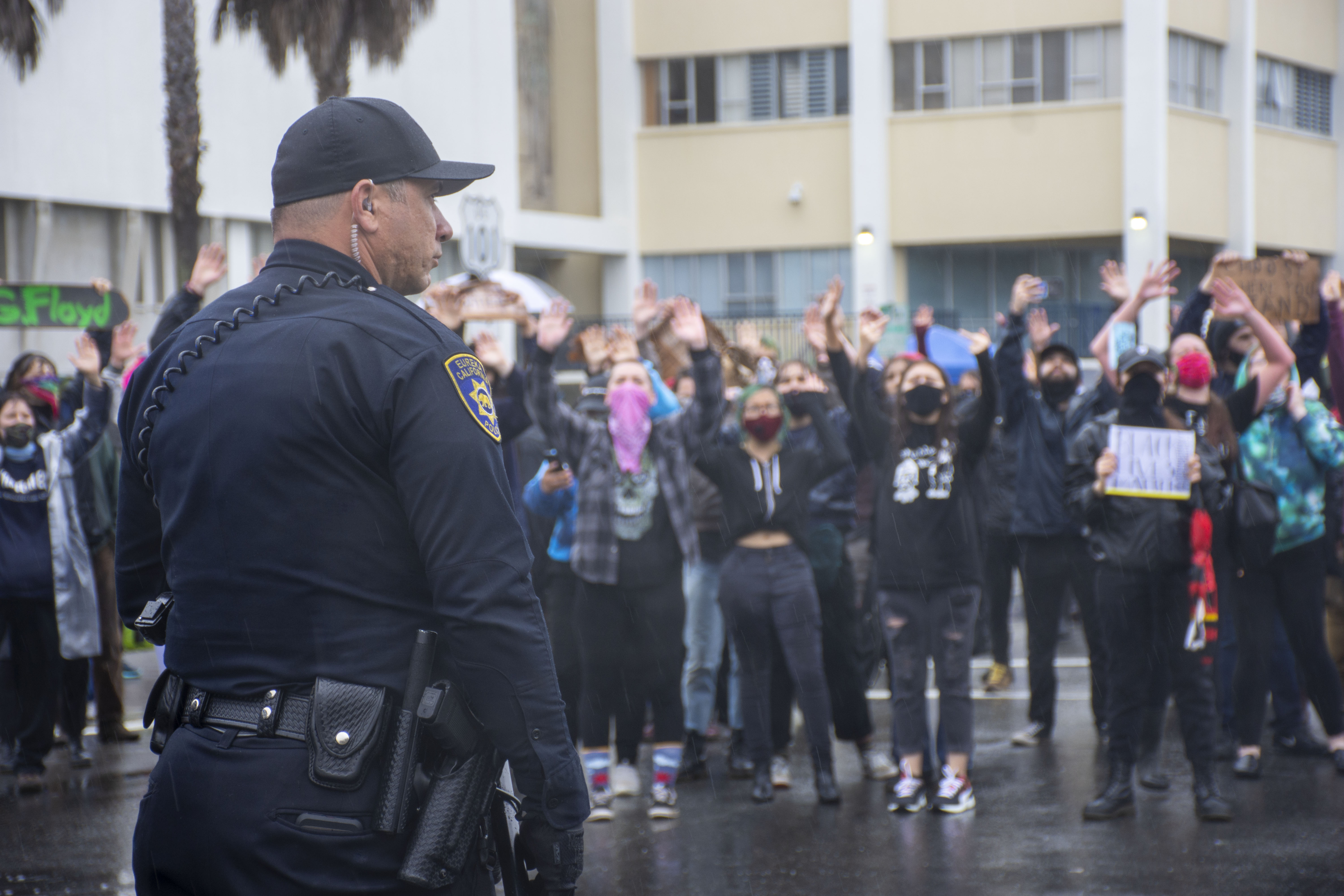
    These statistics confirm what many activists already knew. The Lumberjack has documented the Eureka Police Department using more force against protesters in Eureka this past summer than the capitol police used when an attack was made against the capitol. The police use more force against journalists documenting protests than when right wing groups raided the capitol building. 

    On January 6, it took the National Guard four hours to deploy from the D.C. Armory from the time that the mob began making their way from where Trump was speaking. In contrast, in June at the height of the Black Lives Matters protests, there were about 1,700 National Guard members from Washington D.C. alone who were mobilized to respond to the demonstrators. 

    The feeble response from authorities in Washington D.C. to the attack on the Nation’s Capital is another undeniable example of racial biases that remain alive and thriving in this country. Our police protect white domestic terrorists and continue to endanger the lives of Black protesters advocating to have their voices heard and their equality recognized. 

    It is a message to all of the activists who choose to speak out against police brutality and all the journalists who cover the efforts of activists. Even here in Humboldt County activists face police brutality for daring to ask for an end to police brutality. Meanwhile, police open the gates across the country for violent extremists. The department might be different, but the institution is the same.

    It will take a dramatic institutional change in how the country approaches law and law enforcement to begin to dismantle the structure of white supremacy. The attack on the capitol showed the world that the institutions of law in D.C. need to change, but we have the same institutions here at home. Humboldt needs to change, too.
  • How Non-Lethal are Less Lethal Weapons

    How Non-Lethal are Less Lethal Weapons

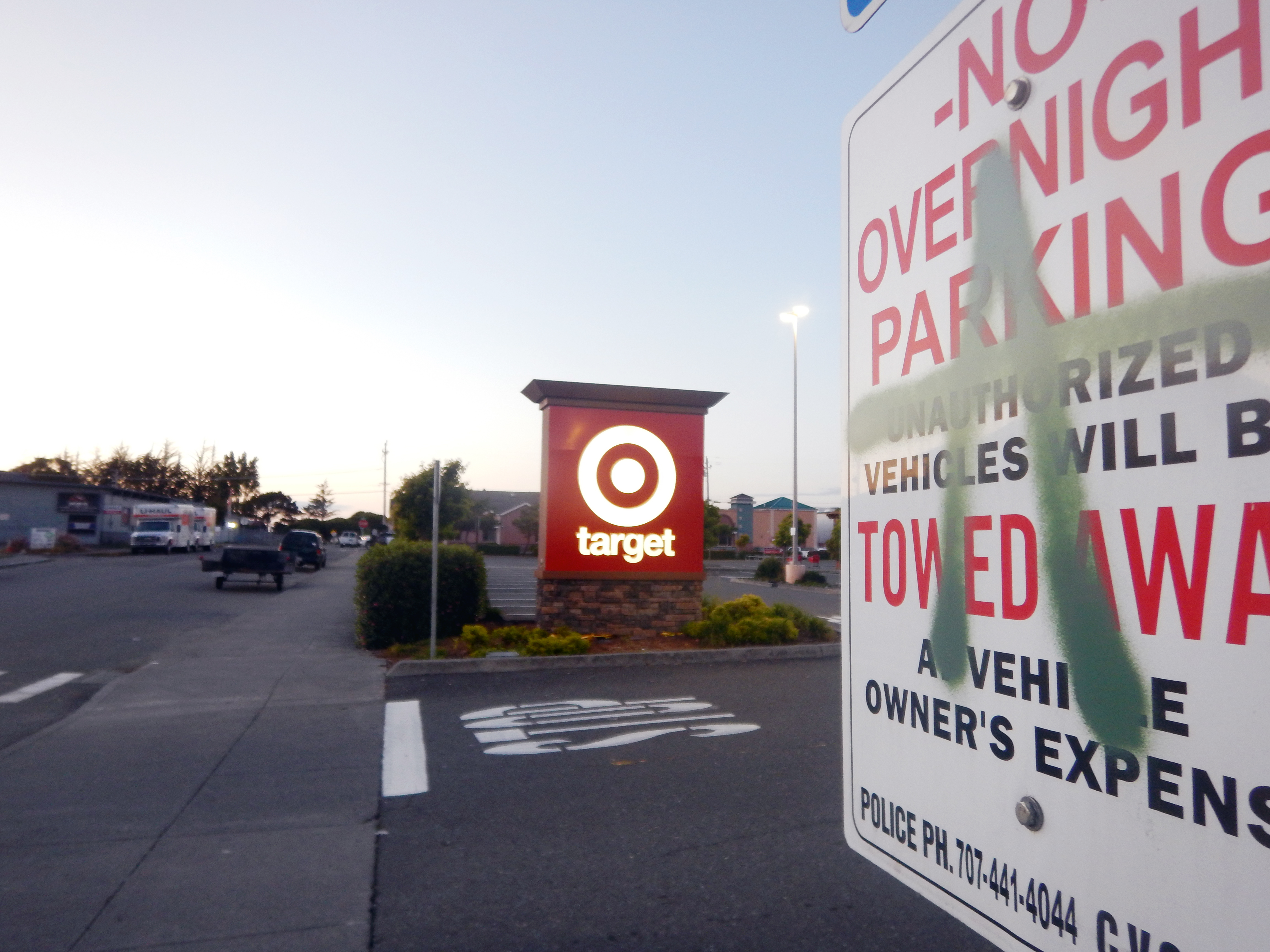
    Protestors injured by non-lethal weapons in Eureka following protests against police brutality.

    On May 31 in Eureka a protest against police injustice ended late into the night with officers using pepper-spray projectiles to assist in the arrest of an individual suspected of vandalism. An additional protestor was arrested for attempting to prevent the first arrest.

    Several protestors attempted to pull the individual out of police custody. This resulted in police firing on the rest of the crowd. Capt Brian Stevens of Eureka PD addressed the incident to the public in a video posted to Lost Coast Outpost.

    “Given the escalating circumstances and the safety risks to the officers … They began firing [pepperball projectiles] into the ground in and around the crowd trying to back the crowd off,” Stevens said.

    Sam Papavasilliou, a 22-year-old Humboldt State University student and former Lumberjack writer, was in attendance that night and was among 30 or so protestors fired on by police. Papavasiliou described how the crowd was cut off in the front and back by several police vehicles while passing by Dutch Bros on the north side of Eureka.

    Officers first addressed the crowd to tell them they would be attempting to arrest an individual suspected of vandalism. At 10:33 p.m. this attempted arrest was met with resistance from several protestors.

    “One protestor got shot in the ear with [a pepperball]. They were bleeding and they were really yelling at the officer that they didn’t do shit and they said ‘I can’t hear right now,’” Papavasiliou said.

    Pepperball rounds are amongst a large host of “non-lethal” weapons used to disperse crowds deemed riotous. Pepperball rounds are designed to explode on impact leaving a cloud of OC (oleoresin capsicum), the same ingredient used in pepper spray. It is advised that they are not aimed at the eyes, face, throat, or spine as death has occured when these inappropriate areas have been fired on.

    Rubber bullets are another method of crowd control that fall under a classification of “non-lethal” weapons known as KIPs (Kinetic Impact Projectiles) along with bean bag rounds, pellet rounds, and sponge rounds. In their assessment of “non-lethal” weapons and their safety The Physicians for Human Rights organization argues that “At close ranges, levels of lethality and patterns of injury of some KIPS become similar to those of live ammunition. At longer ranges, KIPs are inaccurate and indiscriminate. Some KIPs are lethal in close range and ineffective at longer distances which make safe use difficult.”

    The problem really comes down to KIPs being too inaccurate at longer ranges to correctly target individuals and areas of the body they are aiming for, and that the injuries sustained at close range can penetrate the skin, break bones, fracture the skull and explode the eyeball.

    Police also rely on chemical irritants (CIs) for crowd dispersal, namely tear gas and pepper spray. Pepper spray is made of a chemical derived from peppers that inflames the afflicted area on contact causing the burning sensation.

    “Officers and deputies were on scene with more or less paintball guns that shoot a paintball projectile that is filled with a powdered OC,” Stevens said.

    Symptoms after exposure to these agents include temporary blindness, respiratory inflammation, increase in heart rate and blood pressure. People with respiratory or heart conditions are at an increased risk of more serious injury or death.

    Other “non-lethal” weapons include pepper spray, bean bag rounds, tear gas and flash bangs just to name a few. When used correctly, these weapons are a less dangerous alternative to shooting people with actual guns, but mistakes in their applications can leave victims with wide ranges of injury.

  • MLK march in Eureka

    MLK march in Eureka

    The sun shined bright and warm on the morning of Jan. 21 as nearly 200 people showed up at the Humboldt county courthouse to commemorate the legacy of Dr. Martin Luther King Jr. The event was put on by Centro del Pueblo, Justice for Josiah, NAACP and the Seven Generation Fund for the Rights of Indigenous People. Nathaniel McGuigan, a senior majoring in biology, was there to show his support.

    “I am here to commemorate the radical legacy of Martin Luther King and to further demand justice for the family of Josiah Lawson,” McGuigan said.

    The event kicked off at 10:30 a.m. with a speech from Yurok tribal elder Jene L. McCovey. McCovey blessed the event and acknowledged some of the problems currently happening in the country such as the family separation policy and the migration problems at the U.S/Mexico border. The event at the courthouse featured a number of speakers from a variety of organizations. Renee Saucedo, volunteer organizer for Centro del Pueblo, was the first to take the stage after McCovey’s blessing and spoke of some of the problems people of color in Humboldt face.

    “There is still racial profiling, racial bias, poverty and homelessness,” Saucedo said to the crowd. “By us being here today, we are showing that we are going to continue to fight to change these things.”

    IMG_3153.JPG
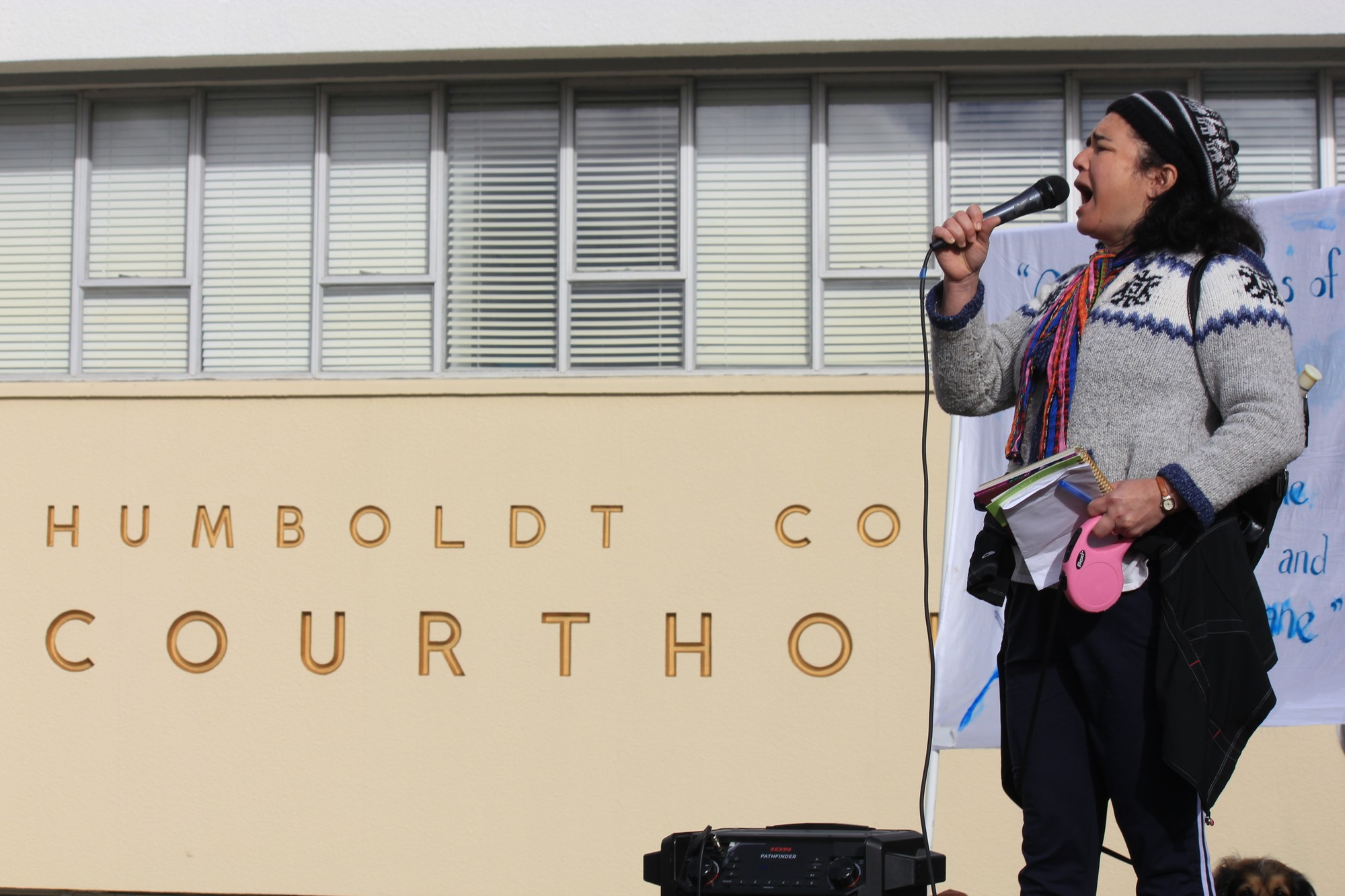
    Deema Hindawi sharing her experiences in Humboldt County on Jan. 21. Photo by Freddy Brewster

    Deema Hindawi, a junior majoring in criminology and justice studies, also gave a speech detailing her experiences here in Humboldt. Hindawi spoke of micro-aggressions and how students of color feel othered in the community. Charmaine Lawson, mother of the late Josiah Lawson, was also in attendance and gave a riveting speech.

    “I stand here still waiting for justice to be served and I’m not going anywhere,” Lawson said to a cheering crowd. “When we send our children to college, we want them to come back alive.”

    Lawson also demanded justice for Corey Clark and Garret Rodriguez; both victims of unsolved murders here in Humboldt. After the speeches a march took place, ending at the Adorni Center on Waterfront Drive in Eureka. The chiefs of police for Eureka and Arcata were in attendance, as well as Fifth District Supervisor Steve Madrone and Allen McCloskey, Union Leader for the National Health Care Workers. Brian Ahearn, chief of police for the city of Arcata, said that he attended the event at the invitation of Steve Watson, Eureka’s chief of police.

    “I’m here to build solidarity and to recognize Martin Luther King Jr., to remember Josiah Lawson and all victims of violence,” Ahearn said. “Today is about healing and continuing the process.”

    IMG_3229.jpeg
    MLK marchers cross 3rd and L Street in Eureka on their way to the Adorni Center on Jan. 21. Photo by Freddy Brewster

    Ahearn is fairly new to the area and has come in amidst a number of resignations from local law enforcement; most of whom have been involved with the Lawson case. Ahearn has expressed a desire to build bridges and to tear down barriers between the community and law enforcement. Chief Steve Watson of Eureka PD expressed similar desires.

    “I am here to support our community coming together,” Watson said. “Events like this are good to build bridges. I long for the day that these uniforms we have on are not feared.”

    Correction: A previous version of this article listed McCovey as a Wiyot tribe member. (Updated 9:25 a.m. 1/24/19)