The Lumberjack


Students Serving The Cal Poly Humboldt Campus and Community Since 1929

Tag: faculty

  • Teamsters union strikes against unfair labor practices and bad faith bargaining

    Teamsters union strikes against unfair labor practices and bad faith bargaining

    by Andrés Felix Romero

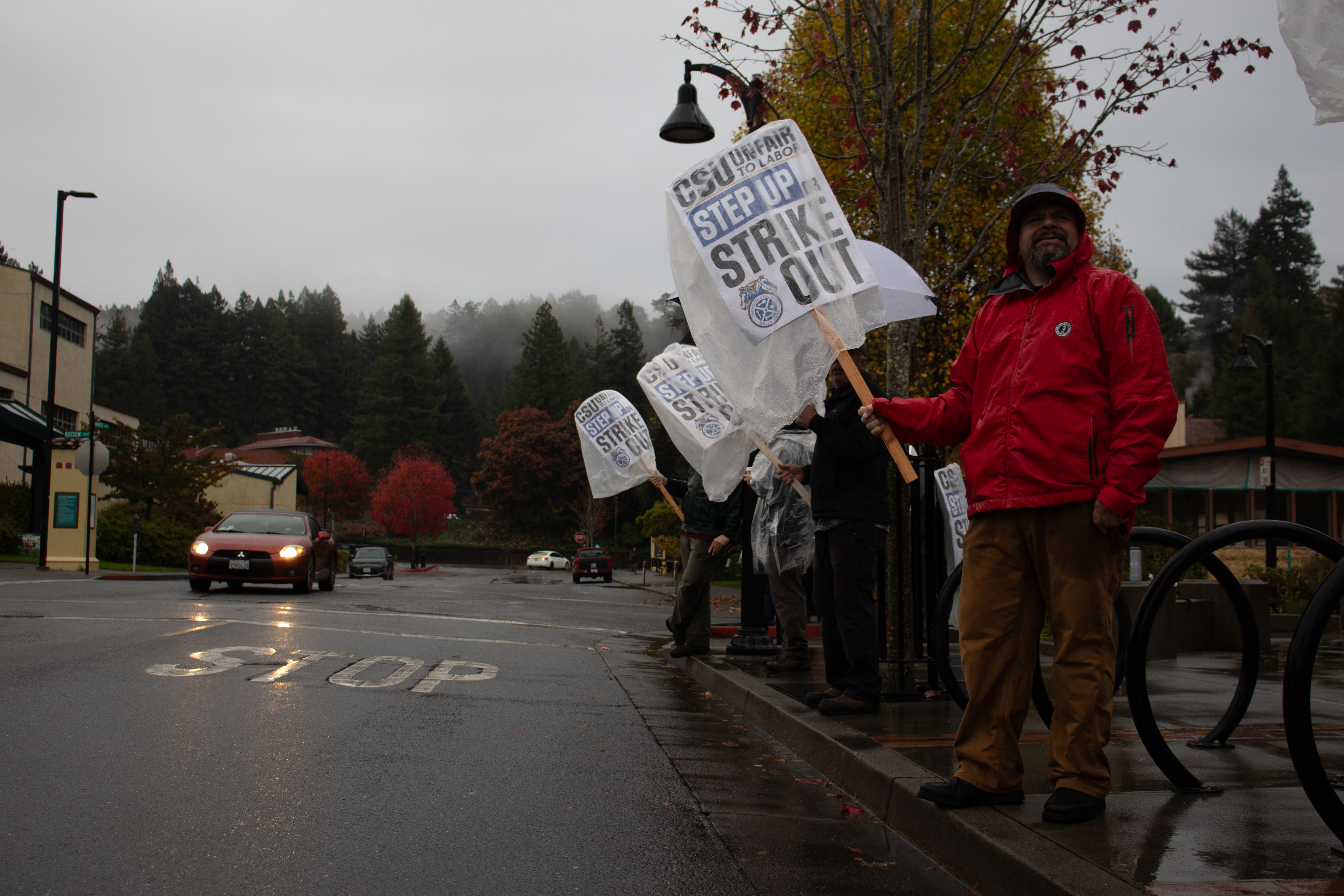
    Beginning at 5:30 a.m. in the cold rain on Nov. 14, members of Teamsters 2010 began their one day strike picketing outside of the College Creek Marketplace, the Library Circle and the parking lot of the J. It was the first official strike by any California State University union for the first time in 28 years, and the one day demonstration was performed by the other Teamster 2010 chapters across all 23 CSU campuses. The union members adapted to the weather by bundling up, sporting Teamster 2010 rain ponchos and covering their picket signs with plastic coverings. 

    The union’s picket line had two main goals. One, to establish that the unions are ready and willing to strike. Locksmith for Housing and Teamster member, Phil Bradley, said that the Teamsters are ready for more strikes.

    “The one day strike today is to show the CSU we are serious about this, and to come to the table and bargain with us,” Bradley said. “It’s to show that we have the resolve to do this if that’s what it comes down to. If they don’t show up and start working with us, we’re gonna have to do a longer strike.” 

    Teamsters 2010 represent skilled trade laborers across the CSU system such as plumbers, painters, mechanics and electricians. Campus painter Jeff Robinson shared his thoughts on how campus will be impacted if the Teamsters decide to strike for a longer period of time in the future.

    “Say you have a rainy day,” Robinson said. “You have old buildings on campus, so you’re getting leaky calls that aren’t getting attended to. [You’ll get] clogged toilets, lights that are out, or the heat’s not working.”

    The second goal is for the Teamsters to draw attention to unfair labor practices.

    “[We want] to bring awareness that the CSU has been conducting unfair labor practices,” Bradley said. “There’s rules on what the [CSU] can and can’t do such as, retaliation, delaying, and bargaining in bad faith.”

    Maintenance lead Daniel Bouchard crosses the street in the rain in front of the Jolly Giant Commons parking lot. Photo by Griffin Mancuso.

    The Teamsters have expressed frustration at what they feel are continued practices of bad-faith bargaining by the CSU Chancellor’s office.

    “[The bargaining team for the Chancellor’s office] show up to meetings completely unprepared, and they keep canceling negotiating sessions,” Bradley said. “They’re basically just doing whatever they can to delay and obstruct.”

    Although the primary focus of the strike wasn’t financial, some on the picket line highlighted their grievances with a lack of an adequate wage-increase structure. Campus Building Service Engineer Steve Brands felt lucky that he was able to receive some increase in wages during his time employed with the CSU, but he feels frustrated that his colleagues haven’t had the same opportunity.

    “We used to have a very defined step-structure,” Brands said. “As long as you were getting good evaluations and things were going well, you got the raises until you moved to the top of the range. And now, nobody really moves through the range.”

    Teamsters such as campus automotive mechanic Ryan Moore explained how they have struggled with a lack of increase in wages, especially as inflation continues to rise

    “I live out towards Willow Creek and I have kids to commute to school and sports,” Moore said. “Fuel and [groceries] goes through the roof just trying to raise a family. I never thought I’d actually be out on the picket line here at the college.”

    On Nov. 9, Cal Poly Humboldt released a statement addressing the Nov. 14 strike. The message clarified to the campus community that the Humboldt and other CSU campuses have contingencies in case of an event such as a strike. As promised in the email, the Humboldt campus remained open and operational on the day of the strike. The email also promised to not pay any of the employees who participate in the strike. The email also asks the campus community to remain patient as the Chancellor’s office continues the bargaining process with the Teamsters 2010 and the other CSU unions.

    The Teamsters weren’t the only union on the picket line that day. Members of California State University Employees Union (CSUEU) were there with picket signs and chanting alongside the Teamsters. The California Faculty Association (CFA) also showed solidarity that day. Some members joined the picket line and some faculty even refused to host class. CFA Faculty Rights Chair and philosophy lecturer Loren Cannon is excited to work alongside other lecturers.

    “CFA is fully in solidarity with the teamsters right now, and with our other sister unions,” Cannon said. “We’re all in this together. Without the teamsters doing their work, without teachers doing their work, without staff doing their work, this place can’t run. And so we are together, supporting each other’s rights to a fair contract to make sure that we don’t have unfair labor practices.”
  • First fall for fresh Cal Poly Humboldt Admin

    First fall for fresh Cal Poly Humboldt Admin

    by Andres Felix

    Three new individuals with years of experience in education and community service have been selected for the roles of Dean of Students, Dean for the College of Extended Education and Global Excellence, and the Vice President of Enrollment Management and Student Success. Hailing from all corners of the nation, these leaders are here to accept the challenge to provide support to the academic institution and its community from their respective roles and offices. 

    Dr. Mitch Mitchell – Dean of Students

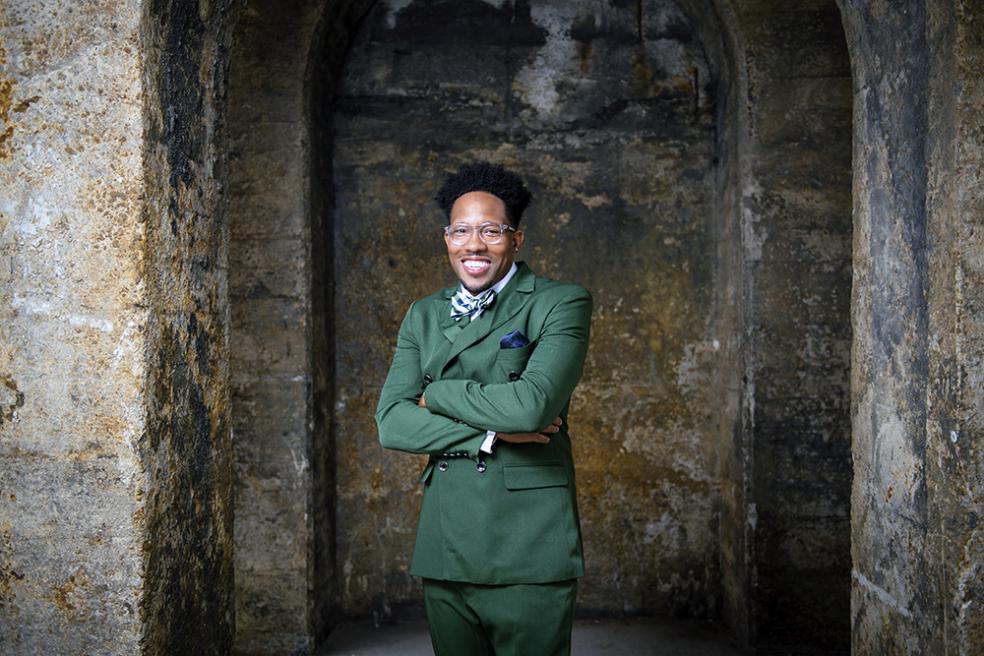
    Fresh Dean of Students (DOS), Dr. Mitch Mitchell, began his position in Spring of 2023. He made his first major appearance in his role in the commencement ceremony. Mitchell wants to provide support to the students in any way he can to ensure their best chances of success.

    “[My focus is] anything outside of the academic environment,” said Dr. Mitchell. “What students are thinking, what they’re passionate about, what they’re feeling, what they’re doing. I help cultivate whole students that are holistic that can go out and make a difference in this world.”

    Dr. Mitchell wants to focus on supporting and expanding cultural centers on campus such as ITEPP and Umoja, as well as ensuring that this community is safe for students to be able to get their education and enjoy themselves.

    “My goal is to make Cal Poly [Humboldt] the best place to live, learn, and thrive,” said Dr. Mitchell. “It’s ok to be your authentic self and be different. You’ll find people here that are part of your community here, so this is a place for everybody.”

    Dr. Mitchell came of age with many of the odds stacked against him.

    “I grew up with a survivor mentality,” said Dr. Mitchell. “I grew up in [Washington] D.C. during a tumultuous time, the height of the crack epidemic and it was the murder capital.”

    Dr. Mitchell credits his introduction to higher education and the guidance of his fraternity brothers to smoothing out his rougher edges, and for providing a space where he felt safe to be his authentic self.

    A lover of the outdoors, Dr. Mitchell wanted to come to Humboldt due to the lovely nature in the area. When he first visited Humboldt in Spring of 2023, he fell in love with the energy of the area. He noted that it wasn’t just the redwood backdrop, but the people of Humboldt that added to his love of this community.

    “From the moment I stepped into Humboldt County, I felt the energy and people pouring into me.” said Dr. Mitchell. “When you come here and you feel the energy and you feel the love, it changes you, and you realize the difference from [other communities] is that it’s really an oasis here.”

    From his first visit to the campus in April 2023, many noted his sharp suits and outfits, many of which have the school colors. When asked about his style, Dr. Mitchell explained that dressing sharp is essentially in his DNA.

    “Fashion is an art form and a way to express yourself,” Dr. Mitchell explained. “It’s like music, it’s like painting. I will say that the [artform] is in my bloodline. My grandfathers on both sides were really some fly people. My father specifically had monogram collared shirts with his initials on them. I would say [fashion is] in me, and it’s on me.”

    Dr. Cindy Bumgarner – Dean for the College of Extended Education and Global Engagement

    Photo courtesy of Cal Poly Humboldt.

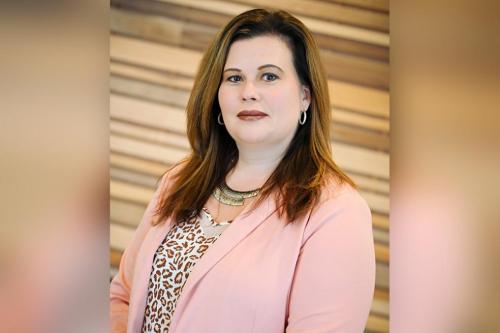
    Coming off a position as Assistant Vice Provost for the Division of Undergraduate Education at UC Berkeley, Dr. Cindy Bumgarner became the Dean for the College of Extended Education and Global Engagement (CEEGE) on July 1st. 

    Dr. Bumgarner and her office focuses on supporting international students and students who study abroad through Global Engagement by offering immigration service support and academic counselors. On the side of Extended Education, Dr. Bumgarner supports graduates in their professional career, as well as students that are returning to their degree following a hiatus. 

    “I would imagine that some [students] just had life circumstances or needed to go out and do some work,” said Dr. Bumgarner, “or had something happen in their family, and they just really want to get back and complete their degree.”

    On top of this, Dr. Bumhgarner and her office are working on developing certificates from the college such as one in IT. Although she has many tasks, she is excited to rise to the challenge. It’s this opportunity for growth and previous vacations to the Humboldt area while teaching at CSU Chico that drove Dr. Bumgarner to take up a position on this campus.

    “[Humboldt] was a spot for me to cool off [from Chico in the summers], but I got to know the community and always sort of paid attention to what was going on the campus,” Dr. Bumgarner explained. “So the idea that I could bring a bunch of knowledge and positively contribute to a campus trying to reaminge itself just really appealed to me.”

    Dr. Bumgarner is no stranger to intensity, challenge, and being under pressure. In her early college days, Dr. Bumgarner competed in Division I basketball for Indiana State University. It was this time as an athlete that she developed tenacity to prepare her for future challenges.

    “The piece I learned from sports,” said Dr. Bumgarner, “is that when you set some goals,  even if they’re not fully defined, if you know, ‘I want to help more, I want to do more, I want to contribute more,’ that can lead you in interesting ways.”

    These lessons helped her as she was working on her undergraduate degree as well.

    “In the educational process it was transformative to me,” said Dr. Bumgarner. “As a young poor kid, to realize that this undergraduate degree was going to completely change my life, and it did.”

    Dr. Chrissy Holliday – Vice President for Enrollment Management and Student Success

    Photo courtesy of Cal Poly Humboldt.

    The honor of being Cal Poly Humboldt’s newest Vice President goes to Dr. Chrissy Holliday. Although she began her term in the position in January this year, this is her first fall on the Humboldt campus. In her role as the Vice President for Enrollment Management and Student Success, she is leading the team behind admissions, and continuing to support students that choose Humboldt as their campus to study.

    “[We] make sure that our current students have the best experience they possibly can,” said Dr. Holliday, “and they successfully get to graduate and have their careers after that.”

    Currently, Dr. Holliday is focusing on the growth of the new Cal Poly, and ensuring the infrastructure is available to sustain that growth. By renovating housing and dining, she aims to improve students’ overall academic experience. Overall, Dr. Holliday wants students to feel at home on the Humboldt campus, similar to how she felt at home in the community when she arrived at Humboldt.

    “[Humboldt] feels like home,” said Dr. Holliday. “I want our students to have that same feeling. A lot of what we’re doing is looking at everything from recruitment all the way through graduation and asking, ‘how can we make this a better experience for our students?’”  

    Dr. Holliday is originally from North Carolina, just outside of Charlotte. For most of her education career, she has been steadily moving westward, working at South Carolina and then Colorado. The opportunity for challenge and growth at Humboldt pushed her to come to Arcata.

    “[Cal Poly] Humboldt is poised for growth and greatness in a very different way than most higher-ed institutions right now,” said Dr. Holliday. “It really is the opportunity to be part of something different to help strategize how we serve all students in California.”

    Besides professional reasons, Dr. Holliday also had personal reasons to take up a position at California’s newest Cal Poly.

    “This place spoke to me a lot,” Dr. Holliday said. “I came here, smelled the ocean…growing up in the South, I had spent a lot of time on the coast. I told my husband that [Humboldt] smells like home.”

    Outside of Dr. Holliday’s professional life, Dr. Holliday has a love for the horror genre. Her passion began with books through authors such as Christopher Pike and Stephen King. Her husband later helped to develop a fondness for horror films. One of Dr. Holliday’s favorite horror villains is Damien Thorne of The Omen.  

    In addition, Dr. Holliday  is also an avid fan of music and concerts. One of her favorite experiences with live shows was seeing Nirvana and the Red Hot Chili Peppers perform at the same music festival. Dr. Holliday’s personal favorite show to date was Five Finger Death Punch. Even today, Dr. Holliday tries to make time for music.

    “I’m going to one of my bucket list shows later this fall,” said Dr. Holliday. “I’m going to go see Rob Zombie and Alice Cooper!” 

  • Faculty union challenges TimelyMD

    by Tucker Caraway

    In the print version of this article, Dr. Loren Cannon was referred to as a psychotherapist. He should have been identified as the Cal Poly Humboldt CFA President.

    An Unfair Labor Charge has been filed against the Cal Poly Humboldt Board of Trustees on November 8th due to violations found in their contracting with Timely MD. The Public Employee Relations Board found the University in violation of government codes regarding the failure to notify Unions in contracting decisions. 

    The charge was originally filed back in October 2021 by the California Faculty Association after being made aware a contract was signed with Timely MD without their knowledge.

    “They signed this contract before meeting with CFA, the union that represents counselors, and that’s a big no-no. That’s the basis of our unfair labor practice charge,” said Loren Cannon, president of the Humboldt chapter of the California Faculty Association.

    Timely MD, also known as TimelyCare, is a Texas based counseling provider that works in conjunction with CAPS.  They provide 24/7 counseling support as well as individual counseling sessions during breaks and outside business hours. 

    “I’ve heard when you try to get an in person appointment, they refer you to TimelyCare,” said Chelsea Rios-Gomez, intern for Students for Quality Education. 

    TimelyCare has been available to Cal Poly Humboldt students since March 2022 after switching from the platform ProtoCall due to complaints of long wait times. 

    “If you’re in a mental health crisis, you don’t want to wait online. So they were looking to have something to improve that. But in doing so, they contracted with a company that isn’t just doing emergency counseling, they’re doing regular counseling, which is a union job,” Cannon said. 

    Outsourcing union jobs to out of state entities not only puts faculty at a disadvantage, but also poses a new risk to students engaging with TimelyCare. 

    “You will be finding good counselors. Not all of the counselors there are going to be bad.

    But there are some counselors, some faith based counselors, more specifically Christian counselors, who are perpetrating harm to our students,” said Rios-Gomez.

    Timely MD, while not a Christian organization,  offers faith based counseling services to Christian universities and has a working partnership with the Council for Christian Colleges and Universities. 

    “We’re outsourcing union jobs, and we’re also outsourcing responsibility for our students’ wellbeing,” Cannon said.

    Texas is a state with a reputation for anti LGBTQ+ policies and practices. Five years ago, Gavin Newsom Passed Assembly Bill 1887, which prohibits state-funded travel to Texas and 23 other states with discriminatory LGBTQ+ policies and practices. 

    “We can’t even fly to Texas for an academic conference because we’d be putting money in the Texas economy,” said Cannon. 

    Thanks to legal loopholes in state jurisdiction, students logging into TimelyCare who, for example, would want to file a Title IX lawsuit, would have to do so in Tarrant County, Texas.

    “The Council for Christian Colleges and Universities actively argues that religious colleges should be able to receive federal funding, and to be able to discriminate against LGBTQ+ students, basically saying they are not protected under title 9,” said Cannon. 

    Students for Quality Education, who work in coordination with the California Faculty Union, has been made aware of an array of discriminatory encounters on on the platform. 

    “It’s a lot of invalidating of trans identities and queerness in terms of pushing Christinaity in that way,” said Rios-Gomez.

    When it comes to addressing the needs of the Cal Poly Humboldt community, Cannon said it’s important for unions to be involved in contracting these services, so CAPS can find vetted counselors that actually understand the needs of the community they’re involved in. 

    “What is the most important thing is to value the people doing the important work on our campus,” Cannon said. 

    As of November 8th, the Board of Trustees has 20 days to respond to the complaint charges by proving they didn’t violate labor laws and union members rights. 

    “The fact that it went forward from that initial step is that the people at the PERB must think that our charge has merit, and I’m not a lawyer, but it’s pretty cut and dry without talking to us and without negotiating it,” Cannon said.

  • Reese Bullen Gallery features faculty artwork

    Reese Bullen Gallery features faculty artwork

    by Nina Hufman

    The Staff and Faculty Exhibition is now open at the Cal Poly Humboldt Reese Bullen Gallery, featuring artwork created by members of the art department.

    The exhibition will run until Oct. 15. It features a variety of mediums from all of the divisions of the art and film departments. Isabela Acosta, a gallery attendant and art history major, was excited about the variety of work presented. 

    “It’s literally every faculty member from every art sector, and they’re presenting their work here which is super cool,” Acosta said. “You have jewelry, ceramics, sculptures, paintings, some videos, there’s some digital art that’s really cool. It’s just like a whole nebula of stuff.” 

    Photo by Angel Barker | Sarah Whorf’s “Palm to Pine”, 2005 at the Reese Bullen Gallery on Friday. The piece is a photo screen print construction.

    Students were excited to see their teachers’ work in a gallery setting. Jack Miklik, an English major, talked about the importance of featuring faculty work.

    “They’re practicing artists and teachers,” Miklik said. “It’s good to like, look and see if you enjoy the work that your instructor is making. I think it’s like one of the more important shows as students for us to see in the art department.” 

    Many of the artists featured in the exhibition were heavily impacted by COVID-19. Their works feature themes of isolation and a desire for connectedness. 

    “A lot of this work I think was done during like COVID so when you read their little manuscripts they just talk about like what they were doing during COVID and what came out of it,” Acosta said. 

    Dave Woody, a photography and film lecturer, has two pieces in the gallery. “Gabe” and “Madeline” are both silver gelatin prints created in 2022. In the card next to his work, Woody discusses how the pandemic has impacted his art.

    Photo by Angel Barker | Sarah Whorf’s “Palm to Pine”, 2005 at the Reese Bullen Gallery on Friday. The piece is a photo screen print construction.

    “The lessons learned during that period of isolation really helped me to value the time that I do have with friends and strangers,” Woody wrote. “These photographs included in this show feel reflective of my current state of thinking about images of people- a desire to connect and to embrace the beauty and mystery of life.”

    Dan Molyneux, a lecturer specializing in ceramics, also wrote about his experience of the pandemic. His featured work “Chroma Teapot” is part of a series of ceramic teapots that were created during the pandemic. 

    “As a ceramic sculptor, it became important to focus on this series of teapots/ewers over the course of the pandemic,” Molyneux wrote. “These are abstract vessels that project an idea of function rather than functionality itself but served me as a touchstone of sharing and community during a very isolated time.”

    COVID-19 was not the only subject of the faculty artworks. Sondra Schwetman, an associate professor who specializes in sculpture. Her piece “Witness” was created in 2019 from fabric, pigment, and steel. In her description of the piece, Schwetman writes about how her work embodies the themes of the female experience. 

    “My current body of work addresses the ambiguous space between reality and fiction where the female form and therefore females often dwell,” Schwetman wrote. “The works in this series concentrate on psychological, religious, cultural, and social issues that impact women everyday such as: reproduction and reproductive rights, illness and COVID-19, class systems, colonization, compliance, silence, and war.” 

    Marilyn Koch, a visiting faculty member who specializes in jewelry and small metals, discussed the concept of “self” in her two featured works, “We are a colony,” and “Year 30: Age Badges.” The pieces utilize unique mediums like hair and synthetic teeth.

    Photo by Angel Barker | Sarah Whorf’s “Palm to Pine”, 2005 at the Reese Bullen Gallery on Friday. The piece is a photo screen print construction.

    “It is egocentric in nature and at first glance, coyly uses replicas of the human body to simultaneously repel and entice us,” Koch wrote. “Beyond the skin, teeth, or hair, are themes of ephemeral youth, community, social norms, and a prominent objective: A desperate attempt to define the Self.”

    A wide variety of mediums and subject matter means that there is something that everyone can connect with. 

    “My favorite piece is this painting over here and it’s called ‘From palms to pines.’ It’s just about moving from SoCal to up here,” Acosta said. “There’s like the map of Los Angeles and Orange County that goes into the map of Humboldt County.”“Gina [Tuzzi]’s paintings are really nice,” said Martin Lopez, an economics and studio art major. “And the cars, the ceramic cars, are pretty sweet. Yeah, that shit’s tight.”

  • New arts faculty hit the scene

    New arts faculty hit the scene

    by Jasmin Shirazian and Jack Hallinan

    With the recent upgrade to a California Polytechnic, many changes have been occurring on campus. Among these changes is the addition of new arts faculty members Justin Maxon and Sarah Lasley.

    Justin Maxon is a photographer and educator who grew up on the Hoopa Reservation and in Eureka. He moved to Santa Cruz to attend Cabrillo College, where he had his first experience with photography in an academic setting. 

    “I wanted to do environmental science, and then I took a darkroom class and I was just like, ‘this is it,’” Maxon said. “I already loved photography, but I didn’t actually think that I could do it, then as soon as I took that class, I was like, ‘this is what I have to do.’”

    As an artist, Maxon’s focus lies in community based work that has an impact. Although he has a background as a journalist, he considers himself a documentary photographer who prefers to work on long term projects. Maxon’s recent work “A Field Guide to a Crisis” is an ongoing project in collaboration with people residing in sober living homes in Eureka. The work focuses on flipping the narrative of those dealing with substance abuse disorders by “repositioning them as experts in how to survive crisis.” Maxon brings this philosophy of community-based work to the classroom when he teaches his Professional Practices class. 


    “A lot of the folks in the program are like, ‘I wanna work in a specific communal context…’ Well, that can be your art form,” Maxon said. “How you collaborate with people, and the aesthetics of that collaboration and how that is visualized [can be art].”

    This semester Maxon is teaching Darkroom Photography I, Digital Photography I, and Professional Practices in Art. 

      Sarah Lasley, an award winning filmmaker, has joined Cal Poly Humboldt’s film department. Lasley previously taught at the Yale School of Art for over a decade, and later at the University of Texas San Antonio. Lasley is now a part of the Lumberjack family, teaching FILM 378, a digital production workshop showing students the ropes of video and film editing.

    Lasley has had her work featured in several film festivals, including the world-renowned AVIFF Cannes FIlm Festival in France. 

    Lasley has been creating art of all mediums from a very young age, though she began her filmmaking journey in 2006 during her time at Yale School of Art, where she was attending school for painting. 

    “A month into the painting program, I stopped painting and I picked up a video camera,” Lasley said. “Growing up, I had a VHS camcorder, and I would make stop motion animations with my Barbie dolls, so motion had always been in my groove.” 

    Lasley’s most well known film, “How I Choose to Spend the Remainder of my Birthing Years,” is a solo film she created during the COVID-19 quarantine lockdown, in which she replaces Baby in “Dirty Dancing.”

    “I had just moved alone, at the age of 38, to a city where I knew no one, away from everyone, as a single woman,” Lasley said. “I was like, I guess this is it. This is it for me, I’m going to just focus on being alone, and I was feeling down on myself, so I put on Dirty Dancing. I thought, ‘You know what would be so funny?’ To remove the 16 year old who’s romancing the 30 year old, and put like a 40 year old in there.”

    Lasley, who has been in the arts for over a decade, knows the struggles of being a student trying to get their foot in the door of the industry. 

    “Just never quit… going into an industry like film, you’re going to have so much burnout because there are big pockets of long hours,” Lasley said. “You can burn out fast, but what you can’t do is let go of making your own work and your own side projects.”

    Lasley currently has two upcoming screenings for her new film, “Welcome to the Enclave,” a contemporary think-piece on the different reactions received by the Black Lives Matter movement. The showings will be held at the Burb Contemporary in Sacramento, California and The MAC in Dallas, Texas.

  • Humboldt State’s Hybrid Instruction Request Approved for Fall Semester

    Humboldt State’s Hybrid Instruction Request Approved for Fall Semester

    On May 21, Humboldt State University sent out an email announcing that it would be submitting a proposal to the CSU system requesting for a hybrid learning environment where there would be a mixture of face-to-face and online instruction. June 6, another email was sent out confirming that HSU would be able to operate virtually and in-person as needed.

    According to the official HSU email, “the University’s academic program has perhaps the highest proportion of courses with a hands-on component in the CSU.”

    About a quarter of all HSU courses involve labs and other activities and experiences that can’t really translate online and half of those course sections are able to be taught in-person this upcoming fall.

    Regarding all other courses that involve less tangible experiences, like lectures and seminars, they will continue to operate online.

    Following the acceptance by the CSU system, HSU can now ramp up its thorough planning process beginning this summer. HSU is also considering a return to a fully online learning environment if things worsen. For now, it will be a hybrid of face-to-face and online instruction.

    As for the details of HSU’s plan for the fall semester:

    Health and Safety

    Steps will be taken to ensure the health and safety of people on campus like limiting capacity and mandating face coverings for all who step foot on HSU turf.

    Social Responsibility

    Students and faculty will be expected to be socially responsible when returning to campus and remain vigilant in keeping themselves safe.

    Schedule

    Courses taught in a face-to-face manner will start and finish with virtual interactions to go over safety measures, and all face-to-face parts of courses will start after the initial virtual interaction and end on Nov 6. just in time for the second virtual interaction.

    Housing

    The combined capacity in HSU’s residence halls will not exceed 1000 students and students will be placed in single-occupancy rooms. Dates and times for moving in will be spread out.

    Dining

    Dining services will not be as frequent on campus. Takeout and food-delivery will be available to students but buffet-style and self-serve food will not be.

    Faculty and Staff

    A majority of employees will continue to telecommute. Workers deemed essential will come back to campus to work more regular hours. Employees over the age of 65 will continue to telecommute as well.

    Athletics and Recreational Activities

    HSU will enact a four-stage plan intended to gradually allow student-athletes and related staff to come back to campus. The availability of recreational activities will increase in conjunction with the availability of recreational activities in the county.

  • Letter to the Editor: Reflections on 30 Years at HSU

    Letter to the Editor: Reflections on 30 Years at HSU

    Where we were, what went wrong & how we build a brighter future

    This is a letter to the editor from Humboldt State University Education Department Chair Eric Van Duzer, Ph.D. It has been edited only for minor punctuation and grammar style preferences.

    As I reflect back on nearly 30 years at Humboldt State University, first as a student and then for the past 20 years as a faculty member, I wanted to share some of the thoughts that I have about HSU’s current situation and where the campus might go from here.  

    As a student I experienced a remarkable education where faculty were fully invested in my intellectual and personal development. There were so many opportunities to explore areas of interest and develop new ones. I have spent many hours trying to encapsulate the nature of the schooling I experienced in a way that would really represent the experience. 

    The best analogy I have been able to come up with was that HSU offered a graduate education to undergraduates. The small classes typical of graduate school encouraged faculty to fully invest in their student’s growth. The university, set so far from the oversight of CSU headquarters in Long Beach, offered a great deal of flexibility to shape our experiences. 

    This would be impossible today. In those days HSU had the third smallest class sizes in the 23 campuses of CSU. But more than that, it had a unique faculty ethos that reflected nearly 100 years as a student-focused institution that exalted excellence in teaching above all else.  

    I was the first student CEO of the Institute of Industrial Technology, a self-supporting club that allowed us to use the skills and knowledge we were developing to grow in business acumen, engage in manufacturing and light construction on campus as well as conduct experiments for local agencies. In its second year, Bill Wilkinson used the institute to earn enough profit making desks for campus offices that it paid for several pieces of expensive equipment for the department.

    This would be impossible today. In those days HSU had the third smallest class sizes in the 23 campuses of CSU. But more than that, it had a unique faculty ethos that reflected nearly 100 years as a student-focused institution that exalted excellence in teaching above all else.  

    Faculty came to campus because this is where they wanted to spend their career. Unlike most universities where faculty play academic hopscotch building their resume through research reputations and earning ever-higher salaries as they bounce from college to college, HSU faculty built their reputations on teaching.  These were inherently local reputations, not very valuable if one wanted to move on, but rather a reflection of the values and attitudes associated with a culture of excellence in the service of students’ intellectual growth.

    As anyone who has worked with university budgets will tell you, graduate education is expensive.  That is why through the first 100 years, the administration and other services were done on a shoestring. It was common for a variety of upper administrative positions to be filled by faculty who served temporarily. Staff was thin and overworked and processes were slow and inconsistent. 

    What happened? In the early 2000s the CSU was facing the onslaught of a Generation X student bulge. Chancellor Charles Reed decided the best strategy to deal with this situation was to homogenize campuses so that if a student could not get into Sacramento State because it was impacted, they could simply go to another campus and get a similar experience. 

    Yet, the campus, with significant leadership from the faculty, focused its significant resources on classroom instruction, and through that dedication, produced exceptional graduates who were deeply committed to HSU when they graduated. 

    I remember an administrator in the early years telling me that he had been in a restaurant on the East Coast and overheard a group of students talking at a nearby table. He was so impressed with their sophistication and the values they held he found out where they came from and immediately applied for a job at HSU. 

    He was the first person hired under then-president Rollin Richmond to manage our enrollments in the early 2000s. The diversity on our campus is a credit to him and Richmond, who reached out across the state to bring in students from urban areas. Sadly he became disillusioned and left. So did most of the faculty leaders. 

    What happened? In the early 2000s the CSU was facing the onslaught of a Generation X student bulge. Chancellor Charles Reed decided the best strategy to deal with this situation was to homogenize campuses so that if a student could not get into Sacramento State because it was impacted, they could simply go to another campus and get a similar experience. 

    Shortly thereafter the upper administration received inflated titles and significant raises in an apparent effort to reduce resistance. Then the attack on the faculty began.

    Naturally, faculty on campuses such as HSU who were proud of their traditions and niche identities resisted. Fiercely. At one point, three campus presidents, including Rollin Richmond, suffered through votes of no confidence by their faculty as they implemented this strategy. 

    To achieve the required changes in the face of faculty resistance, campuses, including Humboldt, began shifting to a corporate structure of top down management. Faculty who had held a privileged position in campus life were systematically reduced to workers with only a symbolic voice in campus decisions. The administration turned its focus inward towards improving the functioning of the bureaucracy. They eliminated administrators such as Rick Vrem, an ethical provost, who refused to implement changes that hurt the traditional focus on instruction.  

    Vrem was replaced with a provost who had no such compunction. Shortly thereafter the upper administration received inflated titles and significant raises in an apparent effort to reduce resistance. Then the attack on the faculty began. Nearly 80 faculty positions were eliminated over several years and during the same time period, a similar number of new staff positions were created and filled to support administrative functions. 

    Over the majority of the intervening 15 years, budget reductions for academic programs have been the norm: reductions in staff, program availability and courses. This year it was a 6% cut, last year another and many like it before. The funds have been shifted to an ever-expanding variety of administrative initiatives. 

    Now we sound more like a parks and recreation office than a university. Come for the redwoods, the beaches, the bike riding—that is wonderful and I love it, but it is not why people pick a university.  

    We spend nearly 68% of our budget on administration and campus facilities. Despite the results of a study commissioned by Rollin Richmond’s administration that showed the two most important factors that cause a student to come to HSU are quality of education and availability of the program they are interested in, both have been repeatedly attacked, sliced and diminished.

    It is surprising that no one seems to notice that every time we cut academic programs, fewer students want to come here. And when fewer students come here, the budget suffers and HSU responds by cutting academic programs even more severely—a cycle the faculty in 2004 described as a “death spiral.” 

    As we address our current crisis and try to figure out what we need to become in order to grow back to a sustainable enrollment, we might want to engage in some soulful reflection. What would cause a 20-year-old to come to a place five hours from major centers of civilization and spend four years with us? What do we have to offer them that is so valuable, so different from what they can get at any of the other CSU campuses which are closer, cheaper and offer a great deal more college life in the community? 

    We stopped selling the small classes and close academic relationships with faculty when the hypocrisy became too much to bear as campus priorities shifted. Now we sound more like a parks and recreation office than a university. Come for the redwoods, the beaches, the bike riding—that is wonderful and I love it, but it is not why people pick a university.  

    When I arrived here as a faculty member in 2000 we had one staff member, John Filce, doing institutional research. He was wonderful and badly overworked. I am sure he still is. Now we have nine staff members listed in the directory in the Office of Institutional Effectiveness, including a vice president. I am sure their work is valuable, but to pay for it we had to cut 64 class sections. 

    Today, we are an organization of inflexible rules and their keepers.

    We have proliferated the bureaucracy, which is unfortunately necessary to achieve top-down control of a professional organization. Had our leadership studied industrial technology with me, they would know what companies in the 1970s learned: that this form of management is ineffective and inefficient in a professional organization. 

    To achieve control requires monitoring, which in turn requires more staff. For a top-down organization, where the vast majority of employees serve at the will of their manager, fear prevents innovation and compliance is key. Before the shift to this model, administrators were problem solvers. In fact, the standing joke in those days was that everything was an exception. Faculty, staff and administrators had the flexibility to serve the needs of students even when it required bending the rules. 

    Today, we are an organization of inflexible rules and their keepers. It has greatly diminished the effectiveness of the organization and its ability to make decisions that best serve our students. The resulting bureaucratic culture has seen a proliferation of forms, rule books and rigid adherence to often dysfunctional orders.

    This is no way to run a university. Perhaps a grocery store, but not an organization of 500 highly educated experts with thousands of years of collective experience. Top-down decision-making, particularly when the president and upper administrators are drawn from institutions that do not share the culture and values of the campus, is inherently poor compared to what would be possible if faculty once again had a meaningful voice in campus affairs.  

    No student has ever come to HSU because we have a wonderful registrar’s office or because the president’s office is fully staffed.  These only matter when they impact the quality of the education a student receives. 

    The proof of this is apparent everywhere at HSU. When Rollin Richmond came, he had no interest in what made HSU special. Like a white suburban principal coming to a school in Watts, he thought he knew what needed to be done to remake the university into his vision of a modern institution. That ignorance has cost us immeasurably. Today we face the consequences. The failure to fundamentally change direction of subsequent presidents has simply deepened the mess. We now have a new president, perhaps we can find a new vision. 

    In my view there are two key concerns that need to be addressed from a rational and values-driven perspective. First, an effective budget model that allows funding to follow enrollment is essential to support growing programs while shifting resources to where they will best serve student needs and interests. This can refocus the campus on providing the service/product students come here for—classroom instruction—and it is essential.  

    There are so many amazing faculty and academic staff here. They are people with a heart for their students, struggling in a system that constrains and conflicts with their efforts. Let their voices guide the future and we may yet have one worth celebrating.

    No student has ever come to HSU because we have a wonderful registrar’s office or because the president’s office is fully staffed.  These only matter when they impact the quality of the education a student receives. 

    Second, we have to decide how we are going to rebuild the excellence we once were known for in our student’s academic programs.  The day Rollin Richmond refused to give the Outstanding Faculty Award to a physics professor (selected by the faculty based on his ability to delight and inspire students) because that professor had not published, is the day we snuffed out the soul of the old HSU campus. 

    Now we need to find out what animates us in ways that provide an experience worth the isolation, cost and struggles required to live in this remote community. Redwoods are not enough; we need a reinvestment in education. 

    I am retiring from HSU at the end of this May. I am sad to see what has happened to my university. There are so many amazing faculty and academic staff here. They are people with a heart for their students, struggling in a system that constrains and conflicts with their efforts. Let their voices guide the future and we may yet have one worth celebrating.

  • Letter to the Editor: This Bus Driver Misses Students and Faculty

    Letter to the Editor: This Bus Driver Misses Students and Faculty

    A note from a local bus driver longing for a crowded bus again


    This is a letter to The Lumberjack from local bus driver Mark Condes. The letter has been edited only for grammar and punctuation.

    I drive a bus around Arcata, California. I frequent the Library Circle and the 14th Street & B intersection. Lately, on very infrequent occasions, I drop off an HSU student at one or the other. But this has been dwindling down to rare moments. I’m writing this because I just wanted to say that I miss all the students and faculty who have been my passengers for over a year now.
    .
    I miss making the rounds on LK Wood down to Camp Curtis, rolling out to Sunny Brae for my three stops there, the long drive down to Greenview Market to pick up the handful of students and a professor in that little corner of Arcata, and out to the Valley West loop where we scoop up the largest busload of students along Alliance and Foster streets, packing them in like sardines, as we like to say, with a call out to the back of the bus, “Do we have room for just ONE more?”
    .
    I’m a lucky person lately because I’m still working, still driving all over town. During these times, we only run what’s called the ‘Orange’ route. No more Red, no more Gold, just a mashup of both.
    .
    Truth be told, I feel a bit unlucky also. While we still pickup a handful of Townies going about their ‘Essential Needs’ business, nothing replaces all the bustling energy, the fantastic smiles, the mix of voices of my student riders.
    .
    I suppose I’m getting to the point, or heart, of the matter… ‘My’ student riders.
    Maybe I’m just a softie. I know I’m not some old lonely guy grasping at any human interaction, desperate for some validity that I still exist and matter. But yeah, I suppose I’ve formed an attachment at some level. Perhaps it’s a mix of all things that make me who I am, that have allowed me to feel some level of connection with the younger people heading off to HSU and their open road to the future.
    I have had the pleasure of watching my own kid go through the same process and life experience of college, and that was just a few years ago. I’m sure there’s a relationship here also.
    .
    While I ride around, one large circle each hour… hour-after-hour, I will often feel that tinge of loss, that nudge of sadness as I reflect on how alive this lumbering conveyance once felt, and now how hollow and empty it’s become.
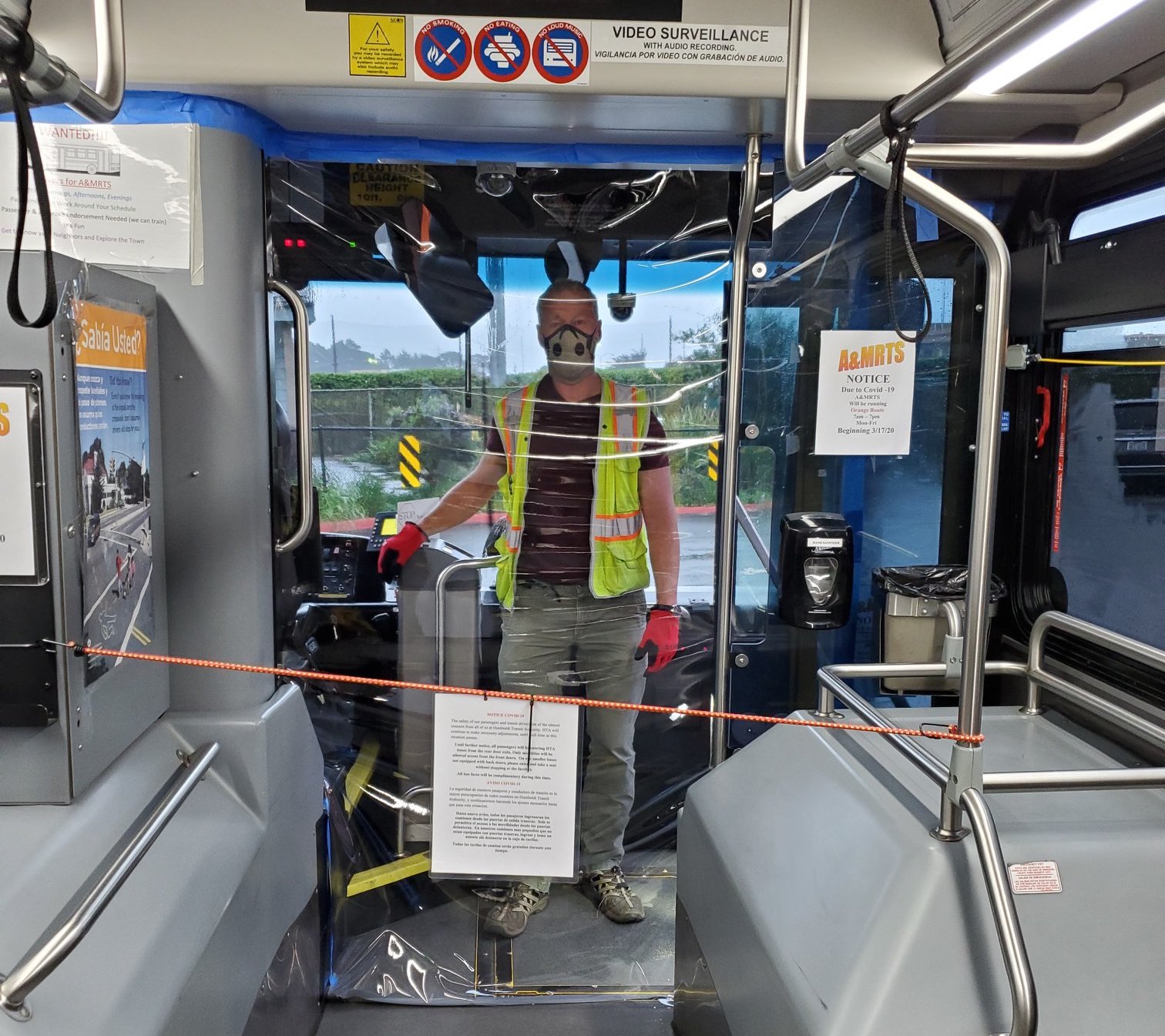
    And then there’s that other factor, an anomaly I hope… the separation of driver from passengers via a vinyl wall. So impersonal, a clear Berlin Wall, if I may.
    .
    As I arrive at each stop, in particular the ones where I would pick up students, I still pause while glancing out in the distance. I find myself looking for those waving arms, that transition from a walk to a full-bore run, as a student realizes they may miss their bus ride to school. I grew to know a number of them well enough that I could only grin and patiently wait for them to arrive, panting, fumbling for their student ID to swipe once they clambered up inside. 
    .
    I realize school will return to business in the future, and students will once again ride the bus. Yet, as with so many derailed aspects of our lives currently, there’s no firm date on when that will take place.
    .
    So I drive. I still take in those sweeping views as I top Union Street on my way to the Parkway Apartments, coax the bus up steep grades, and round the circle at the HSU Library. And when I pick up a familiar student, I still take off my sunglasses, pull down my mask, and with a smile call out through my plastic membrane, “Good Morning!”
    .
    From time-to-time as I roll through town, I catch a glimpse of a former, frequent student rider or professor, who no longer rides the bus. 
    In those transitory moments, we may glance each other’s way at just the right instant. As recognition unfolds, so do the smiles, the nods, the waving of the hands, and I am granted a brief respite from the isolation imposed upon me by this COVID-19 experience.
    .
    While I am grateful to still be working, still driving, I am even more grateful for all the friendly smiles, the greetings, the eye-rolls, headshakes, and laughter over my bad jokes and puns, that I experienced these past semesters. I wonder how ‘My’ students are doing, how they are faring during these trying times… I care.
    .
    I look forward to life resuming in a more normal manner, and the days of a busload of students once again bringing their energy, excitement, and friendliness through the doors.
    I honk and wave whenever I see students in graduation caps and gowns getting their pictures taken by the gates of the university. I shake off that bit of sadness and drive on.

  • Lost Lumberjacks

    Lost Lumberjacks

    By Curran C. Daly

    Sadly, a few members of the Lumberjack family will not be returning to HSU this fall.

    John Vayo

    John Vayo_Web
    Photo provided by Humboldt Area Center for Harm Reduction Facebook page.

    John Vayo passed away on July 2, 2017. He was entering his last year in the undergraduate Social Work program.

    “John struck me as a ‘would give you the shirt of his back’ kind of person—this is not a phrase I use very often—I found that hopeful and inspiring. John was deeply committed to the values and practices of harm reduction and, though he had already done a lot of good, would have gone on to shape our human service community in seriously positive ways,” said Ronnie Swartz, Social Work department chair and a personal friend of Vayo’s.

    Vayo will be missed around campus and in the community. He was an avid outdoorsman and volunteered with the Humboldt Area Center for Harm Reduction. Vayo is survived by his son Aiden. Vayo was 38 years-old.

    Michelle Lane

    Michelle Lane, Business, professor, portrait,
    Photo provided by Humboldt State Business Department.

    Michelle Lane passed away on August 7, 2017. She was an Associate Professor in the university’s School of Business.

    “Michelle was very pleasant and always smiling. She was always helping students and faculty beyond what was necessary,” said Hari Signh, professor and department chair of the School of Business. “Her most important legacy was helping the students succeed.”

    Lane helped launch the M.B.A. program for the School of Business five years ago. She was a big advocate for sustainability. Lane loved animals and was on the Board of Directors for the Sequoia Humane Society. She is survived by her husband, three children and three grandchildren.

  • HSU takes back the night

    HSU takes back the night

    By Charlotte Rutigliano

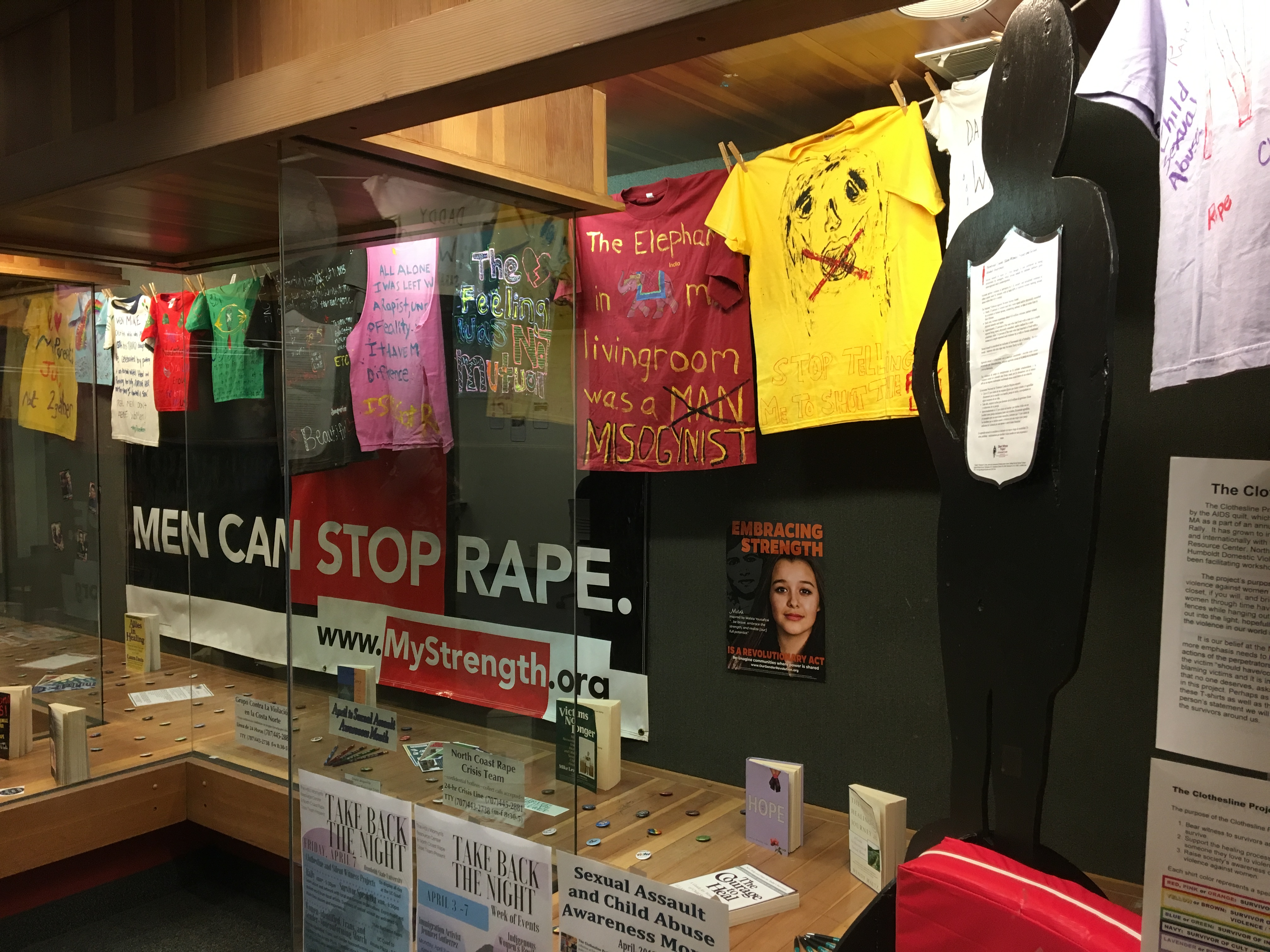
    Students, faculty and members of the community came out to the Kate Buchanan Room this past Friday to show their support for survivors of sexualized violence.

    One student who came out to show support was graduate student Irene Vasquez.

    “I think it’s wonderful that the university cares about the students and is spreading awareness like this,”  Vasquez said.

    The university has been the host of the take back the night events since the mid-1980’s. Take Back the Night was co-sponsored by the North Coast Rape Crisis team and the Women’s Resource Center.

    Paula Arrowsmith-Jones, Community Outreach Coordinator for the North Coast Rape Crisis Team,  said that these events have been going on since the 1970s but have been held on and off campus since the mid-1980s.

    “Back in the 70s women were told not to go certain places at night without a male chaperone,” Arrowsmith-Jones said. “Because if something happened it fell on the women. These events were created to reclaim everyone’s right to go somewhere and not get hurt.”

    According to Arrowsmith-Jones, it’s important for the university to hold events like this because there is so much shame, secrecy and denial that surrounds sexualized violence, it’s about raising awareness for those who don’t think it happens. CFR69 - TBTN 1

    Take back the night student coordinator and graduate student Ariel Fishkin said we are living in a rape supported society, where individuals are taught that “rape culture” is okay and where victim blaming is too common.

    “I have experience with sharing,” Fishkin said. “People don’t realize that it’s a systemic thing that’s why we have these events.”

    Take Back the Night was part of a week long event to let survivors know that they are believed. The week long event took place during sexual assault awareness month.

    “Sexual violence is so prevalent,” Arrowsmith-Jones said “we want to show people affected that they are supported, we have counselors at all the events to help.”

    The university does have a lot of student activism with Check It, Peer Health Education, and the Women’s Resource Center. Fishkin hopes to continue to bring awareness to this issue as a campus to the community.  

    Sophomore zoology major Katie Marks said it is amazing that the university is doing this because she knows people who have experienced sexualized violence and she wants to be a part of the change for a world without violence.

    “Hopefully this will inspire other universities and communities to change too,” Marks said.