The Lumberjack


Students Serving The Cal Poly Humboldt Campus and Community Since 1929

Tag: financial security

  • Student debt is coming faster than you might have thought.

    by Ian Vargas

    If you’re anything like me, there’s no way you can afford to pay for college on your own: you’ve probably got student debt. While you’re still taking classes, it feels like you don’t have to worry about it because graduation could be years away. It’s always looming on the horizon, far enough away that it seems like you’ll probably have it under control by the time you’ve actually got to deal with it.

    I am in my last semester as an undergraduate, so that horizon is closing in real quick for me and it’s scary as hell. My current debt is just shy of $20,000, which is slightly lower than the national average, but still by far more money than I than I’ve ever made at a job.

    Ideally college would help with that, but considering the job market, that’s no guarantee.That leaves me and many others with crushing debt in the position of having both a huge amount of uncertainty about what we’re going to do after college and a huge amount of certainty that whatever it is won’t be sufficient to not be living on the bare minimum.

    I appreciate my education. I plan on continuing it into graduate school, but this system feels as if it’s built more to place you into a position of permanent debt than to provide an education to people.

    Even if you’re lucky and don’t end up missing payments, you’re still paying about 10% of your income, and if you aren’t then you can rack up extra fees and put yourself even further back. On top of that are the countless other ways that you end up gouged for money while still enrolled like expensive but mandatory meal plans or fees for services that, depending on the current level of COVID lockdown, may not even be available to the students using them.

    According to educationdata.org, the average monthly payment for someone with a mid-paying job and in the same category of debt as myself is $393 over the course of six years, which is currently more than I even get per paycheck at work.

    These debts are what keeps people from buying homes or starting any kind of family. Ideally this whole thing should be free and improve peoples’ lives instead of operating off of a profit motive at all. But that’s a fight that seems like it will take way longer than any of us will be able to see through to the end.

    As students, we need to press for more scholarships and grants for students. Ones that don’t incur years of debt, and push back harder against tuition hikes that force students to either abandon their education or take out more loans. Otherwise, college becomes the exclusive domain of people who already have money, even more so than it already is.
  • Humboldt Degree Value Lowest in CSU System

    Humboldt Degree Value Lowest in CSU System

    Georgetown study shows HSU graduates receive lowest pay over 40 years

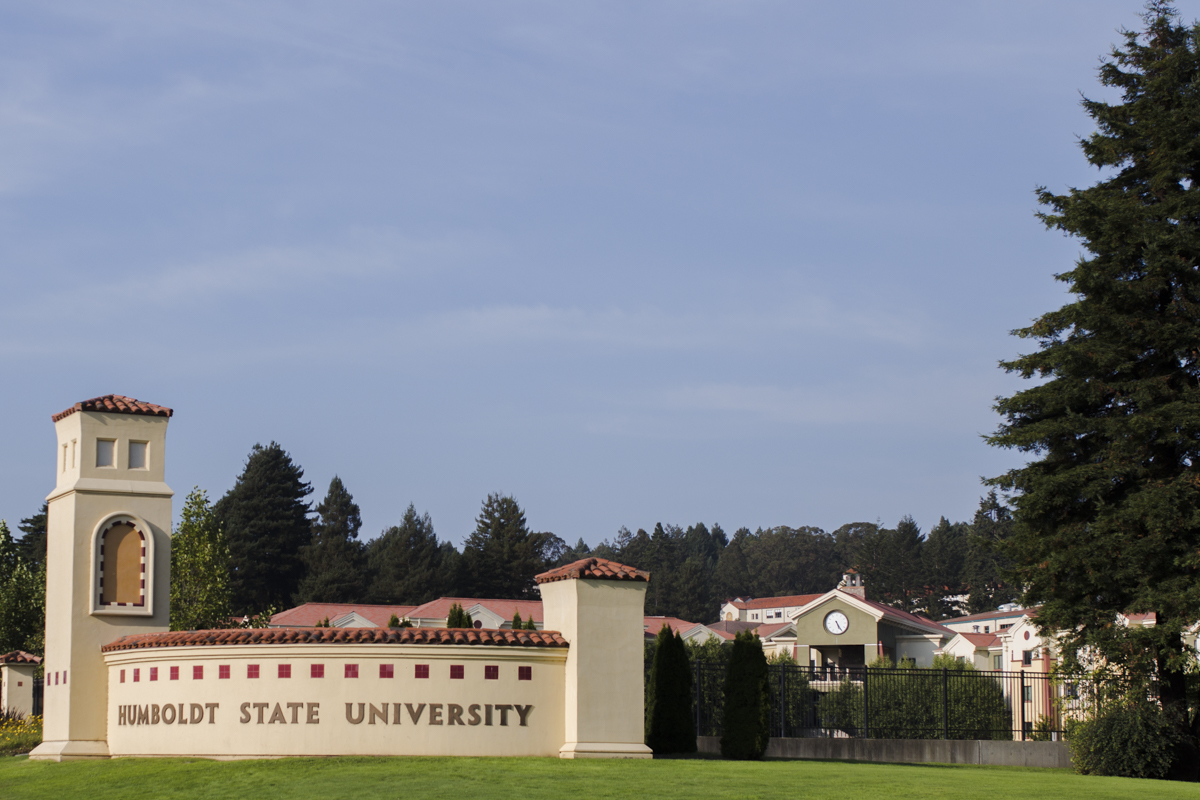
    Humboldt State University has the lowest earnings for graduates out of all 23 California State Universities, according to a recent Georgetown study.

    The study said the average HSU student makes $752,000 within 40 years after graduating, which makes HSU the lowest earning CSU on the list. The average for other CSUs was around $1 million. For comparison, Chico State students reportedly made $1,018,000, while CSU Los Angeles students averaged $1,019,000.

    The study measured the value of a college degree in net present value. According to the study, NPV is how much a sum of money in the future is valued today. According to Telegram.com, “this metric includes costs, future earnings and the length of time it would take to invest and earn a certain amount of money over a fixed horizon.”

    “I believe it’s very important to think about the fact that the 30, 40, 50 years of a person’s working life are a lot more satisfying if it’s a job you enjoy and allows you to do the things you are passionate about.”

    Alison Holmes

    This fixed horizon is split into increments of 10, 15, 20, 30 and 40 years. This number is calculated by subtracting the amount of money a person can make at a minimum-wage job over that same time period, as well as taking into account student loans. This number contrasts against working a job that doesn’t require a degree. The result is the return on one’s investment.

    Alison Holmes, associate professor in the Department of International Studies at HSU and a participant in the development of the career curriculum for the arts and humanities, believes the study isn’t taking enough into account.

    “The frame of this research is clearly about size of income over the years after graduation,” Holmes said. “And while I would never say that is unimportant, I believe it’s very important to think about the fact that the 30, 40, 50 years of a person’s working life are a lot more satisfying if it’s a job you enjoy and allows you to do the things you are passionate about.”

    40-Year-Net-Present-Value-of-Degree

    Gina Kelble, an HSU freshman who sees herself going into environmental law, expects to make a decent living.

    “I’ll probably end up going to [University of Colorado] Denver or CU Boulder for grad school,” Kelble said. “I have connections back at home through past internships, so those will be stronger than my Humboldt ones.”

    Kelble is confident in her ability to get into grad school and dodge the bullet of making the average income of an HSU graduate.

    “The study also makes the point that it’s about knowing yourself or, put another way and as I say to students, choices have consequences,” Holmes said. “There is nothing wrong with wanting money, if that’s lots and lots of money or just basic financial security. But you need to be clear that jobs have a pay scale. As a society we can work to get better pay for people, but for now, it is important to think about jobs with a very clear understanding of the pros and the cons of that choice.”

    Holmes said that while money is a necessity, it stands among many others things that should be taken into account.

    “As long as we send students into the world prepared to do what they want to do and always striving to fulfill their amazing potential, I am not going to spend too much time worrying about a study based on a scale based on the size of a paycheck,” Holmes said.