The Lumberjack


Students Serving The Cal Poly Humboldt Campus and Community Since 1929

Tag: flowers

  • Beautiful bearded irises

    Beautiful bearded irises

    by Nina Hufman

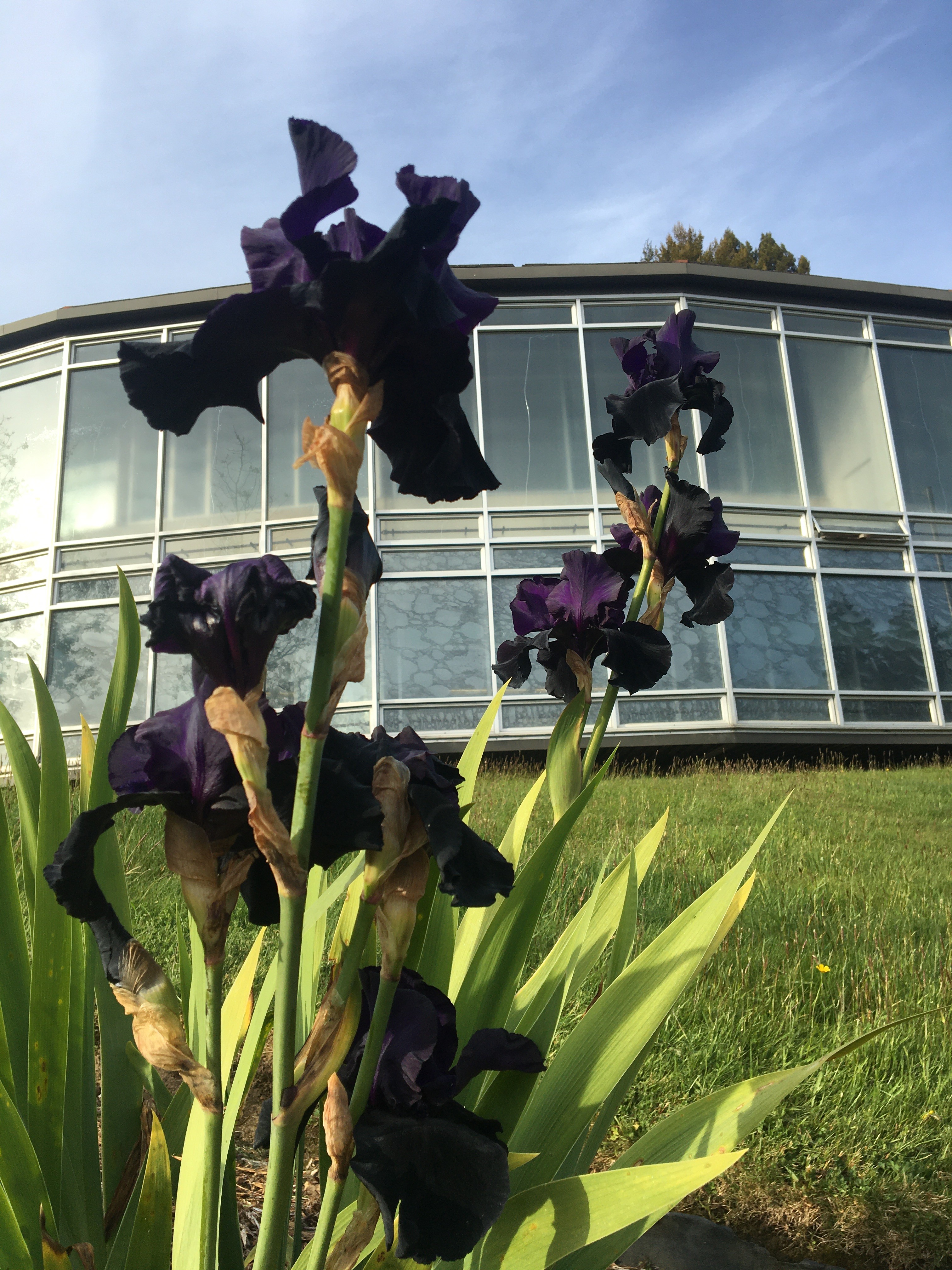
    These deep purple petals belong to the bearded iris. In Greek, “iris” means rainbow. The flowers were named after the messenger goddess who traveled using rainbows. Indeed, irises come in a variety of color variants including yellow, orange, peach, pink, black, white, blue, and purple. The deep purple variant pictured here is called Raven’s Girl. The scientific name of the bearded iris is Iris germanica.

    Irises have two types of petals. Three petals curve downwards from the center of the flower and are called falls. Three petals stand upright from the flower’s center and are called standards. The two types of petals can be different colors or the same color on an individual flower. Irises have wide, flat, blade-shaped leaves and tall, bare stems.

    Irises can be identified based on whether they grow from bulbs or rhizomes. PlantInstructions.com says that rhizomes are horizontal stems that grow underground, branching out from the parent plant, just below the surface of the soil. Rhizomes can be dug up and used to propagate new plants. A bulb is also a modified stem, but it does not grow directly from the parent plant. Most irises grow from rhizomes.

    According to GardenFundamentals.com, Irises that grow from rhizomes can be further categorized based on whether they are bearded, crested, or beardless. A beard is a fuzzy patch of hairlike extensions on each fall near the center of the petal, and a crest is a raised section of tissue located in the same place as the beard. If a flower has neither a beard nor a crest, then it is considered beardless.

    Most of the larger iris species, including the bearded iris, are native to the Mediterranean, North Africa, and Asia. According to the U.S. Forest Service, there are 28 species of iris that are native to the United States. It is illegal to pick or disturb irises on national forest land.

    Irises bloom multiple times a year. Their beautiful flowers can be seen on our campus throughout the summer.
  • Magnificent Magnolias

    Magnificent Magnolias

    by Nina Hufman

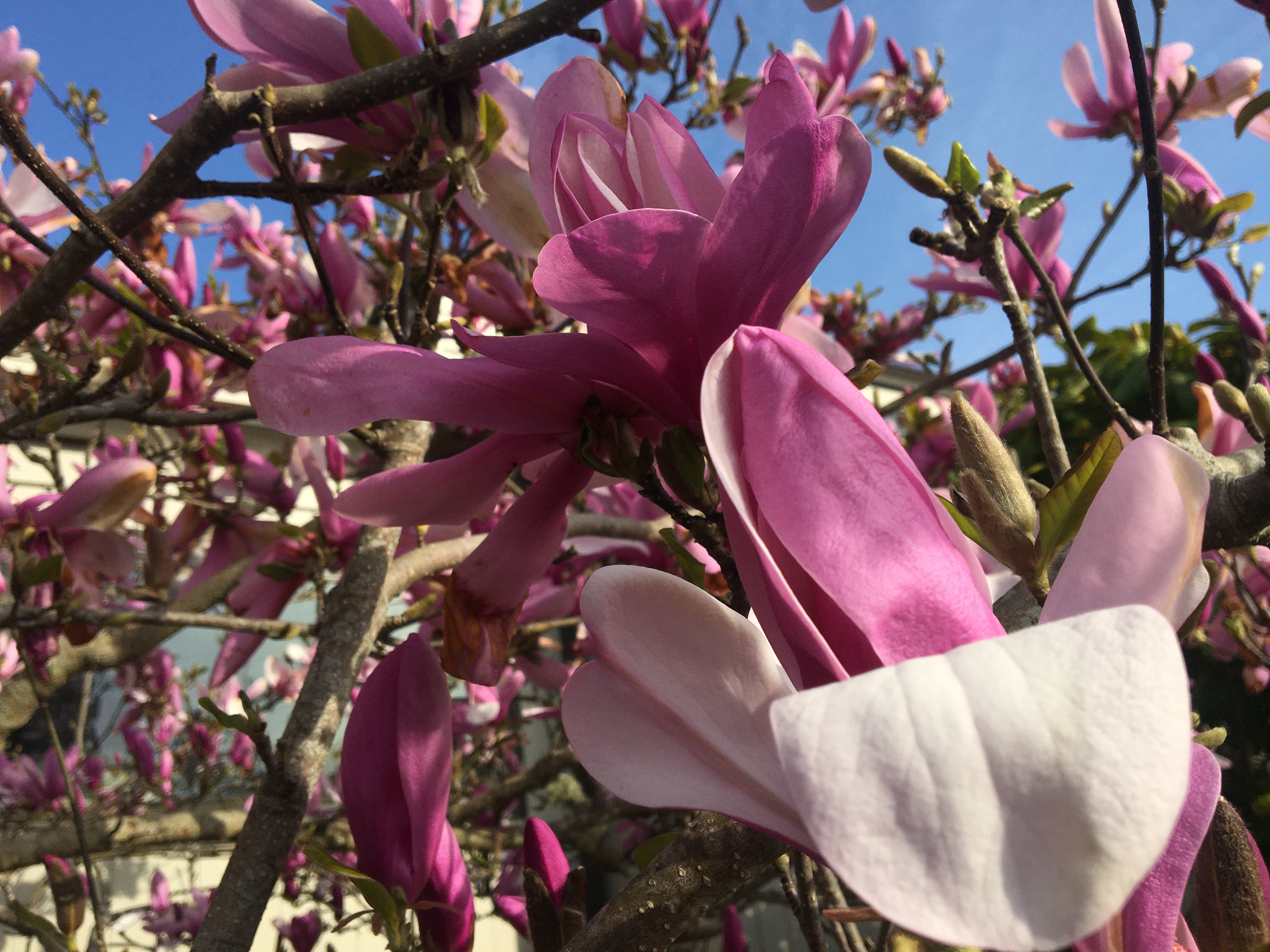
    Chinese magnolia trees all over campus have been shedding their flowers, covering walkways in a blanket of magenta and white petals. Their cup-shaped petals range in color from pink to lavender-purple, with white interiors.

    Like other species of magnolia, the Chinese magnolia (Magnolia soulangeana) has large, fragrant blooms that grow singularly at the ends of each branch. Because it generally blooms in early spring, the flowers are vulnerable to late freezes.

    According to the Missouri Botanical Gardens, the tree blooms from late March to mid-April before the foliage comes in. It can then bloom sporadically throughout the rest of the growing season. The leaves turn from green to yellow in the fall before the tree sheds them for the winter.

    Magnolias are considered small trees. According to the North Carolina Extension Gardener, the trees can grow to be 33 feet tall but usually are between 20 and 25 feet tall. They have a sporadic, multi-trunk, shrubby growth pattern. Their bark is dark or light gray in color and has a smooth texture.

    The Chinese magnolia has a simple leaf type, with alternating veins. The leaves are oblong shaped and have a margin that extends up the entire length of the leaf. Hairlike structures, or indumentum, are present on the leaves. These hairs help the plant to absorb water and deter predators.

    This tree is a hybrid cross between two other magnolia species, M. denudata and M. liliflora. According to Lake Forest College, the hybrid was created by Etienne Soulange-Bodin, an officer in Napoleon’s army who later became a horticulturist. The tree was created in France in 1814.

    Though the trees may bloom the rest of the spring and summer, they are currently giving their most beautiful display. Go out and see the magnificent Chinese magnolia today.

  • Fragile trillium flowers on the forest floor

    Fragile trillium flowers on the forest floor

    by Abraham Navarro

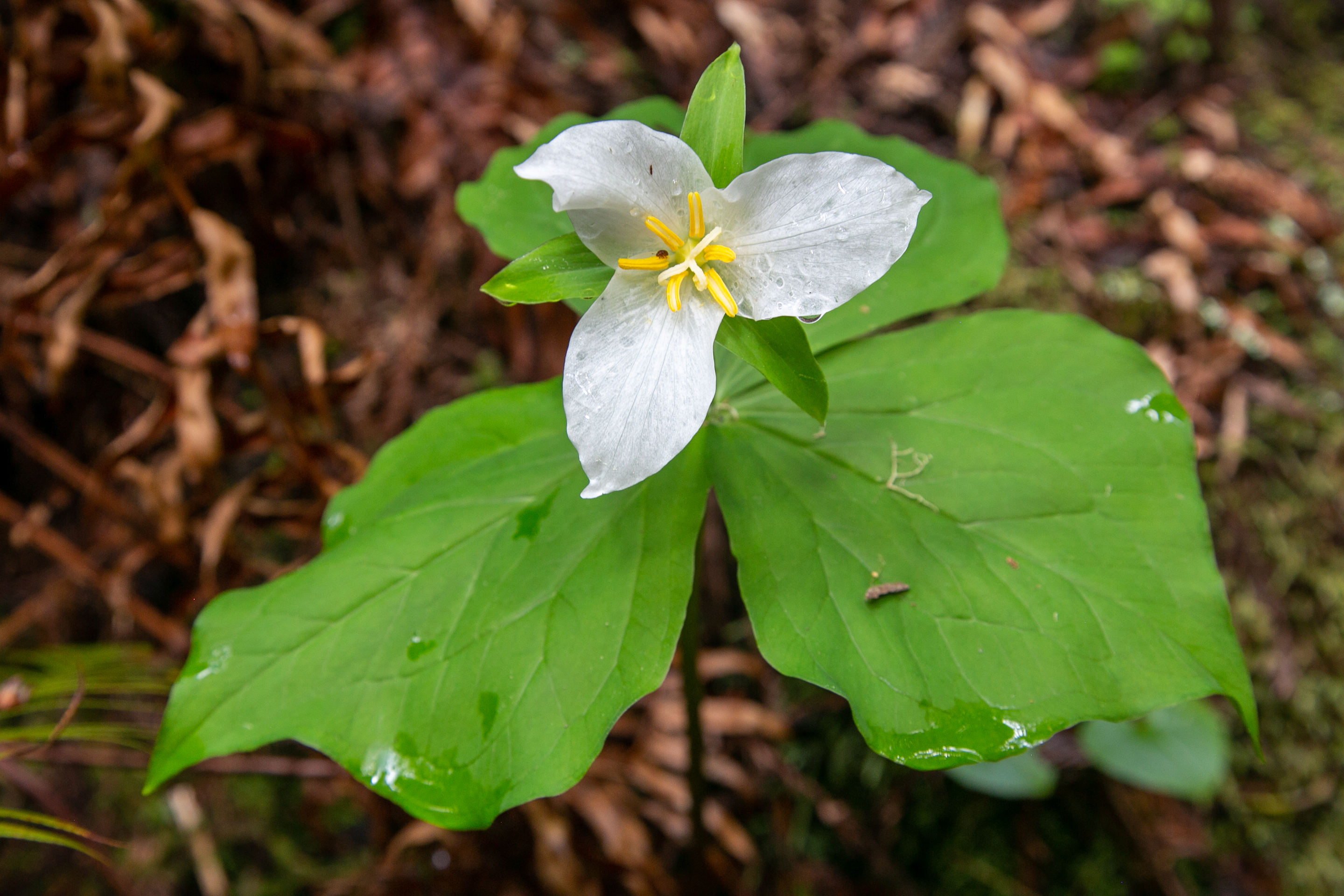
    Wandering through the underbrush in the Arcata Community Forest as the daylight slips away, some of the last plants you can make out against the blur of darkening foliage are the pale white faces of Pacific trillium (Trillium Ovatum) looking back at you.

    A hallmark of spring in the redwoods, these small white flowers dot the alien ferns in the community forest along trails and sometimes even right in the middle of them.

    Trilliums are easy to identify. Their name comes from the latin word tres meaning three, referring to the symmetrical three sets of leaves, petals and sepals that can be found on all 43 species of trillium, 38 of which can be found in North America.

    According to the U.S. Forest Service, several species of trillium contain chemical compounds called sapogenins that have been used medicinally through the ages as astringents, coagulants, expectorants, and uterine stimulants. This is evidenced in common names given to some trilliums such as birthwort or birthroot.

    The Pacific trillium is widespread across the Pacific Northwest and the northern Rocky Mountains. Although it might be tempting to pick the pretty white blooms along the path, experts advise against damaging the delicate flowers.

    Dr. Erik S. Jules, professor of botany and ecology at Cal Poly Humboldt who specializes in plant ecology, said that the Pacific trillium is not endangered, and that it’s doing quite well in the Arcata Community Forest. It is, however, sensitive to disturbances.

    “Like the trampling associated with the frisbee golf course in the forest,” Jules said. “So they tend to be less abundant right in those immediate areas.”

    Trillium are ephemeral bloomers, which means they flower for a short period of time and go dormant until the next year. Trilliums live for up to 70 years, and damaging them can compromise their ability to bloom again.

    “Picking them generally doesn’t kill them, but will definitely reduce their ability to grow and flower the following year, so people should never pick the plant or flower,” Jules said.

  • Gander at these Geraniums

    Gander at these Geraniums

    by Nina Hufman

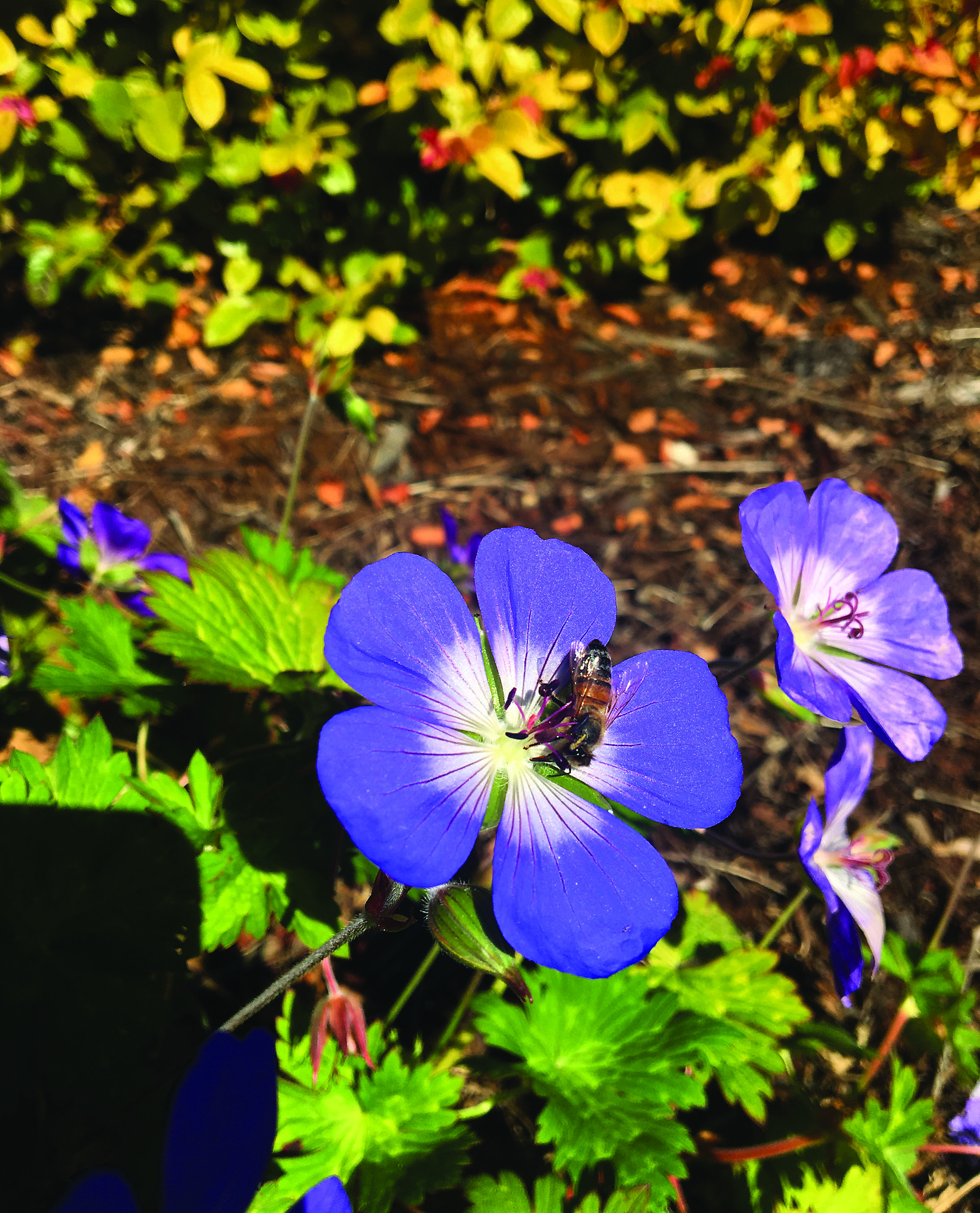
    These lavender-blue blooms belong to the Wallich geranium, also known as the Wallich cranesbill. The full scientific name of this species is Geranium wallichianum. The flowers pictured here are of the Buxton’s Blue variety, distinguishable by their purplish-blue petals with pale centers and purple veins.

    Like other species of geranium, Wallich geranium flowers have five petals and five sepals, the green leaf-like structures surrounding the petals. The plants grow low to the ground and have wide leaves with three to five lobes. Another noticeable feature of these flowers is their dark purple stamens, or pollen organs, that project from the flowers’ centers. Stamens are usually present in multiples of five. The National Gardening Association says that Wallich geraniums are pollinated by various insects including honeybees, bumblebees and butterflies.

    According to the Missouri Botanical Garden Association, Wallich geraniums are native to highland regions in the Himalayas from Afghanistan to Kashmir. These hardy plants can grow at elevations up to 3500 meters. The Buxton’s Blue variety is a result of a naturally occurring, whole plant mutation and was discovered by Sylvia Morrow in 1999. This particular variant received a U.S. Plant Patent in 2010.

    Wallich geraniums belong to the herbaceous family Geraniaceae. This group of flowering plants is characterized by low-growing foliage, lobed leaves, and floral features such as petals, sepals and stamens in multiples of five.

    According to nativeplants.org, members of Geraniaceae either actively eject their seeds or use hook-like structures to grip onto the fur of animals in order to disperse their seeds. In addition to geranium, the Geraniaceae family includes the genuses Erodium and Pelargonium.

    Wallich geraniums can be seen in several places in the Cal Poly Humboldt campus, including in the flower bed in front of the theater building. These plants bloom throughout the spring and summer, so we can look forward to seeing these lavender-blue blossoms in the months to come.

  • Red Rhododendrons rustle in Spring breeze

    Red Rhododendrons rustle in Spring breeze

    by Nina Hufman

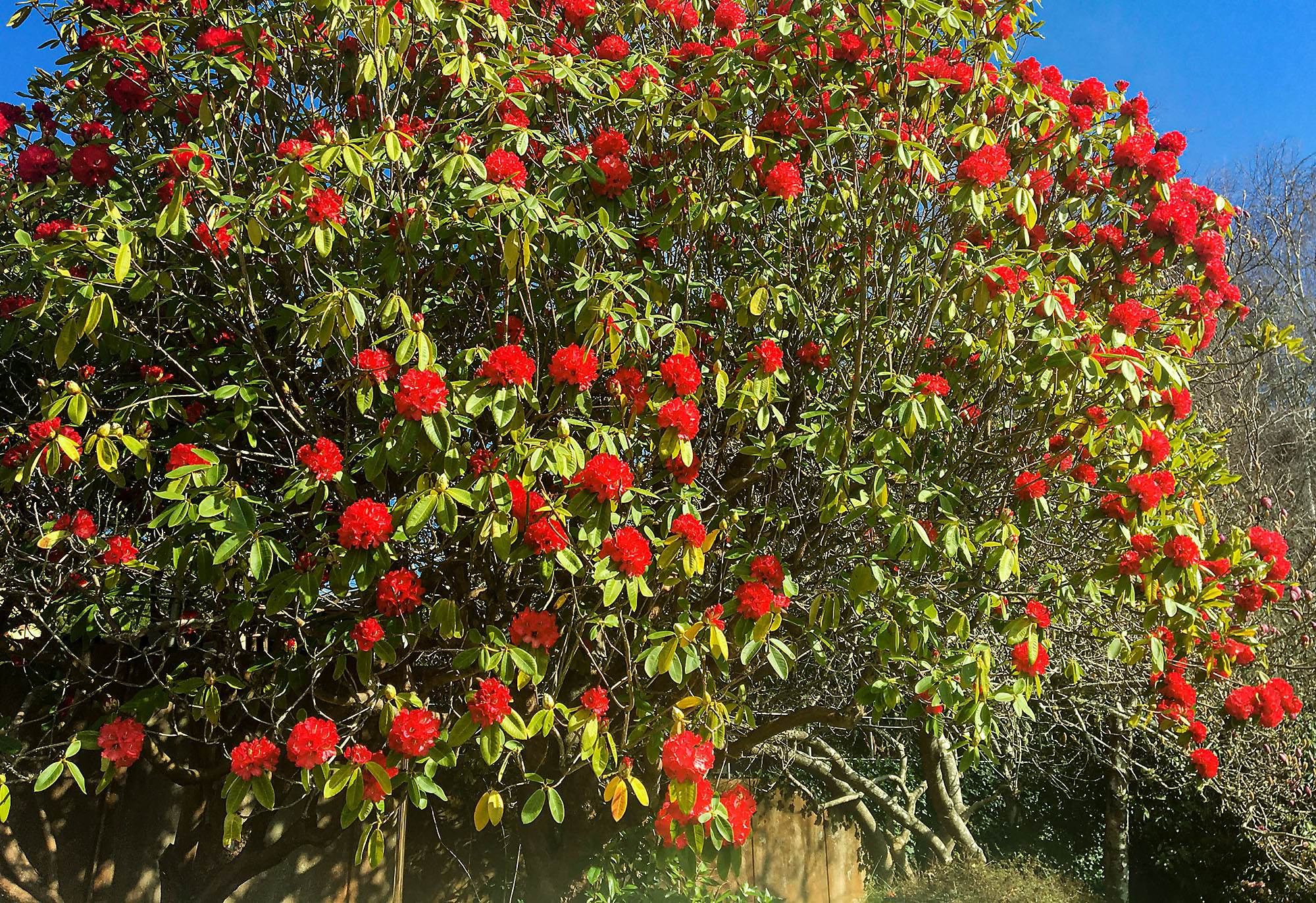
    One of the most noticeable flowers on the beautiful CPH campus is the Rhododendron. The scientific name of this particular species is Rhododendron delavayi. According to the American Rhododendron society, the plants are native to India, Burma, China, Thailand, and other regions of Eastern Asia. This species of tree is identifiable by its bright red blossoms and elliptical-shaped leaves.

    Dense indumentum, or hairlike structures, cover the underside of the plant’s leaves. These help the plant to absorb water and discourage predation by insects.

    Photo by Nina Hufman. Bright red Rhododendron blossoms on the tree between the theatre and art buildings on Feb. 15, 2022.

    Rhododendrons are members of the Ericaceae, an expansive family which also encompasses cranberries, blueberries, and huckleberries.

    Despite the inclusion of these common edible fruits, many other members of this family are known to contain toxic compounds. According to the study ‘Phytochemicals and Biological Activities of Poisonous Genera of Ericaceae in China,’ “the toxic ingredients in the poisonous genera are mainly tetracyclic diterpenes, which exhibit toxic effects on the digestive, cardiovascular and nervous systems.”

    The study also states that these poisonous plants’ traditional use in Chinese medicine makes them a good candidate for further scientific study.

    According to the National Capital Poison Center, honey produced by bees from rhododendron nectar can concentrate the various toxic chemicals. The effects of poisoning by this method include disorientation, mouth irritation, nausea, and vomiting, leading to it’s colloquial name, “Mad Honey.”

    Rhododendron trees can be seen in multiple places on the Cal Poly Humboldt campus including the area between the theater and art buildings, where the above photos were taken. They are considered early bloomers, usually producing flowers from late February to May. Go out while they’re still blooming and enjoy the beautiful, bright red rhododendron.

  • Before You Forage: Nasturtiums

    Before You Forage: Nasturtiums

    Pretty flowers offer a punch packed with nutrition

    Foraging for your own sustenance is both rewarding and enjoyable. With grocery store shelves low on most necessities like fruits and vegetables, you can still find satisfying snacks out in nature.

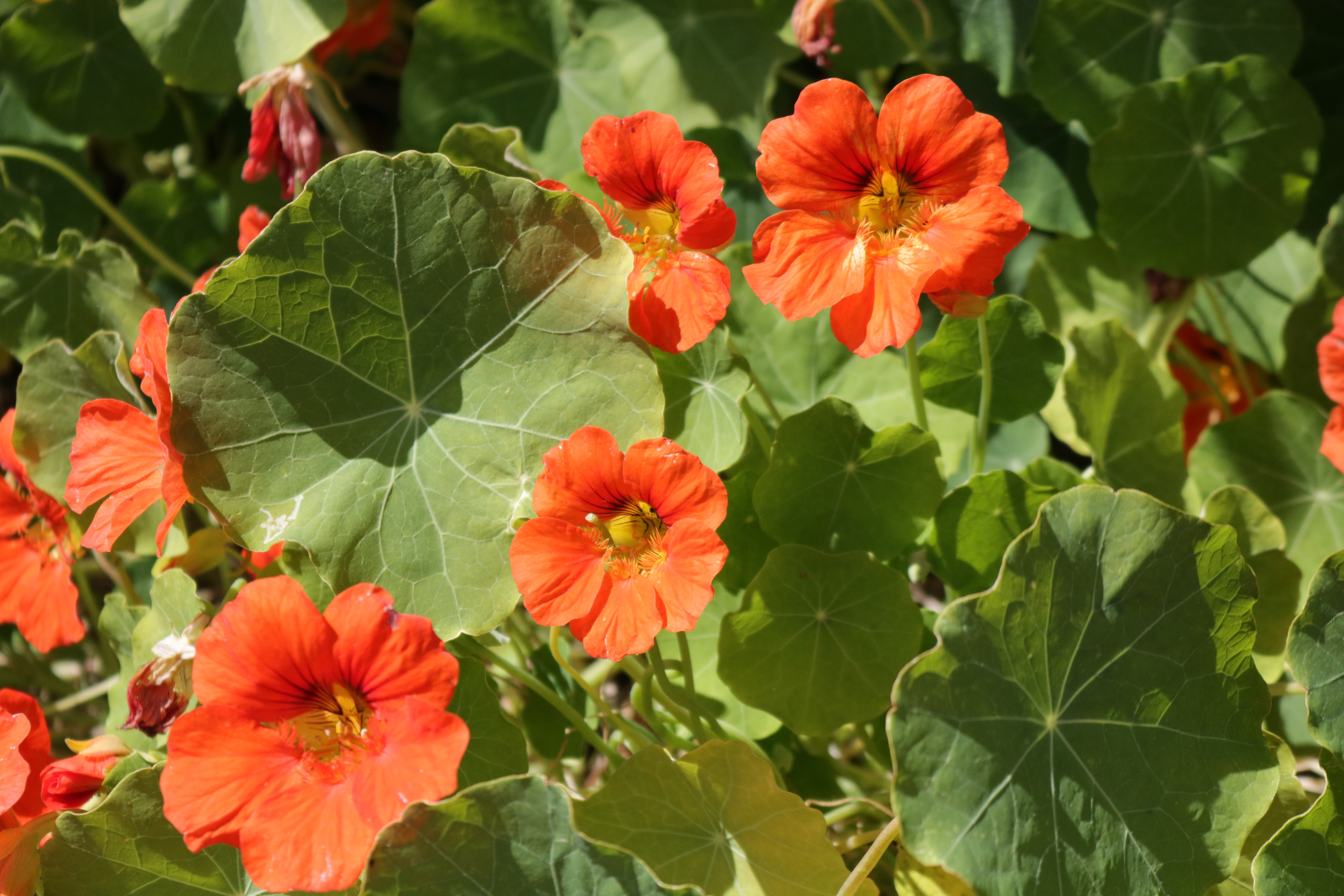
    According to Encyclopedia Britannica, nasturtiums are a type of flowering herbaceous plant in the tropaeolaceae family. These green, circular-leaved and orange, red or yellow-petaled plants are edible flowers and foliage.

    While nasturtiums may be hard to find in the wild as they’re native to Central and South America, they can easily grow in home gardens just about anywhere.

    Early spring is the perfect time to start cultivating your own nasturtiums, and you can simply order seeds online to get started. Nasturtium seeds, when dry, look like tiny, brown walnut shells with wrinkled surfaces. When fresh, they are pale green and have a slightly smoother texture. Fresh seeds are edible as well and often pickled and used as caper substitutes.

    A great way to prepare nasturtium for your first taste is in a salad with cucumbers, mandarin oranges and spinach with a light vinaigrette dressing.

    Once fully grown and blossomed, the sprawling, vine-like nasturtium plant offers a bounty of vitamin C if consumed. Not only are these plants aesthetically pleasing, the amount of nutritional value packed into the entire nasturtium is astounding, as they contain vitamins B1, B2, B3, and magnesium, iron and calcium.

    This plant has a peppery, mustard-like taste and can be used as an alternative to potent arugula leaves or mustard greens in salads. You can eat the whole plant, which is said to be similar to the taste of watercress.

    A great way to prepare nasturtium for your first taste is in a salad with cucumbers, mandarin oranges and spinach with a light vinaigrette dressing. Or if you’re bold enough, try the leaves and petals on their own after a thorough rinse.

    Beyond the beauty and nutrition of nasturtiums, this plant also offers antibiotic and antibacterial properties. These plants are by no means a way to cure colds, the flu or COVID-19, but can offer slight relief. Nevertheless, according to a study published in the Open Microbiology Journal, these plants were found to contain antimicrobial effects and can be safely used in the food industry as an antibacterial oil on foodborne bacteria.

    So get your hands on some nasturtium seeds and get to planting. Soon you’ll have a garden full of the edible and nutritional plant.

  • Humboldt in bloom

    Humboldt in bloom

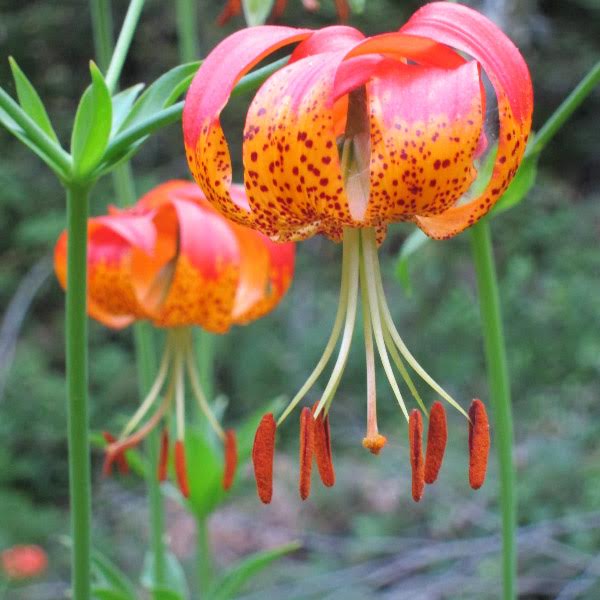
    Native to Humboldt, the Humboldt lily blooms up and down the coast. Photo by Kym Kemp

    Spring breathes fresh life into Humboldt County. Pollen travels in the wind as bees are looking for flowers to pollinate. Given the diversity of flowers in Humboldt County, it’s safe to assume there will be a large number blooming in the upcoming months. According to humgardens.com, a website on gardening in Humboldt, the latter part of February just gave us our last taste of winter. This means many flowering shrubs and trees have begun to bloom, though the temperature may still drop to the mid-to-upper 20s. The California Department of Parks and Recreation shows a list of state parks that host a variety of blooming wildflowers for the spring.

    Closest to Humboldt State University and five miles north of Arcata you can visit Azalea State Reserve, home to beautiful bunches of azaleas that bloom in April and May.

    For a more extensive trip, 50 miles north of Eureka lies Prairie Creek Redwoods State Park. The California Department of Parks and Recreation notes, “careful observers in the park will find beautiful but elusive orchids among the ancient redwood groves as well as more prominent displays of rhododendrons along the parkway in late March through May.”

    Lastly, pack your things for a small road trip. Humboldt Redwoods State Park is 60 miles south of Arcata and generally provides wonderful displays of wildflowers along the Avenue of the Giants. Visitors will find native Humboldt lilies and orchids in late March to April and dogwood trees in April into early May, depending on the warmth of spring.

    Flowers on Humboldt State’s campus are starting to bloom as well.  

    The Humboldt State campus hosts various non-native flowers coming into bloom. By walking through campus, you can see forget-me-nots, azaleas, cherry blossoms, tea tree flowers, and lily of the nile. There are many more that are still coming into bloom as well.

    Michael R. Mesler is an HSU botany professor with a focus in pollination biology.

    “Once the rain starts and you can see the beautiful campus flora, it certainly makes you feel more positive about life,” Mesler said.

    Mesler also notes that even though the campus forest is beautiful, the local gardeners do a wonderful job and work really hard to maintain the flora on campus.

    “But everybody thinks that, not just botanists,” Mesler said.