The Lumberjack


Students Serving The Cal Poly Humboldt Campus and Community Since 1929

Tag: forestry

  • LOGGING THEIR HOURS ‘JACKS SHARPEN THEIR AXES        

    LOGGING THEIR HOURS ‘JACKS SHARPEN THEIR AXES        

    By Alex Anderson

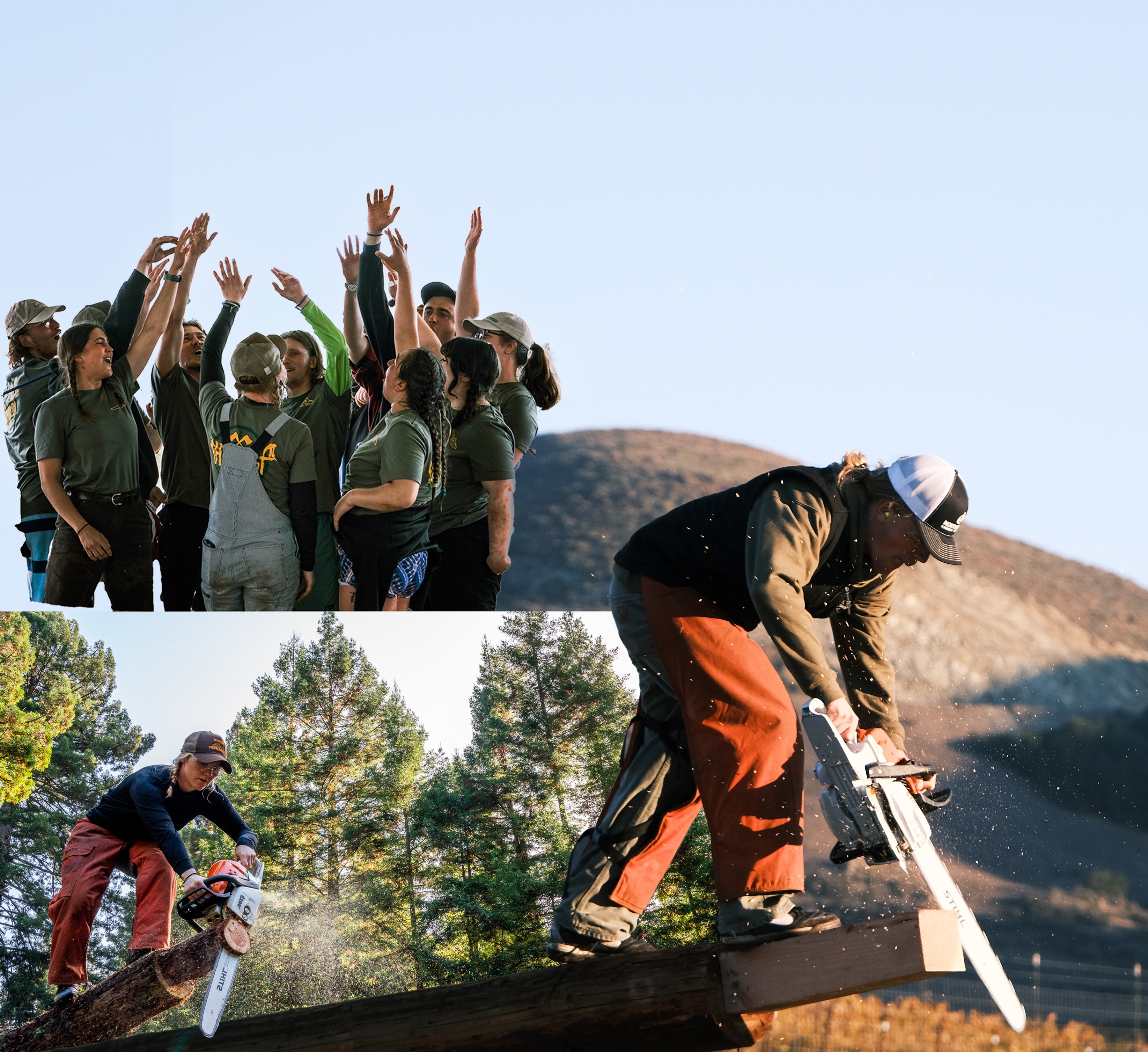
    Over 150 logging competitors will soon descend upon Humboldt swinging axes, climbing trees and firing up their saws. They’re coming to compete at the 84th Annual Association of Western Forestry Clubs (AWFC) competition, a special opportunity to showcase what makes Humboldt logging sports unique. 

    After about a year of planning, Cal Poly Humboldt’s logging sports team is excited to host the AWFC competition for the first time in 10 years, in conjunction with the Redwoods Region Logging Conference (RRLC). The competition is free and open to the public, taking place at Redwood Acres Fairgrounds on March 13 through March 16. Zoey Cardoza, president and captain of Cal Poly Humboldt’s logging sports team, is excited for the team to host the event this year. 

    “We’re expecting over 180 competitors coming from 10 western schools,” Cardoza said. “We’re bringing 31 students to compete, which is wild, and it’s gonna be really fun. I just want them to have the same opportunities that I’ve had and be able to compete in a competition that everybody else has strong passions for, learn something new about themselves and hopefully about the sport too.” 

    Logging sports is far from any typical sports club seen on university campuses. Deeply intertwined into the history of Cal Poly Humboldt and surrounding community, logging sports keeps the tradition alive. The team strives to open their doors to everyone with interest, not limiting themselves to forestry majors. Cardoza aims to create a safe space for people to try something new with logging sports. 

    “I think a lot of people assume that, you know, we’re logging sports, we’re all foresters,” Cardoza said. “We’re not. We have economics majors, psychology majors, and English majors. We welcome any and all walks of life. I think that’s what makes us unique too, is that you don’t have to be a certain shape, size or have a certain passion. If you want to try it, come out and try it.”

    While the club is open to all educational backgrounds, the team does serve a vital role in preparing students who are interested in forestry careers following school. Ed Laskey, a forestry student and second year logging sports competitor, explained how being on the team also provides an essential space for learning safe practices with modern and traditional logging skills. 

    “I would say just practicing valuable working skills using the axes, the cross cuts and chainsaws because I’ve worked with chainsaws before and it’s good to have a big group of people that you can learn from to do safe operation,” Laskey said. “And help others to learn how to use these tools in a safe way.” 

    Cameron Wallace, a forestry student at Cal Poly Humboldt and logging sports competitor, explained what sets logging sports apart from other sports on campus. 

    “It’s more niche,” Wallace said. “There’s a little more inherent risk. It really lets me get involved with my friends in forestry and in a way that I wouldn’t normally be able to… at the end of the week you’re tired, you’re done with sitting in the library all week and you’re just [ready to] go out into the woods with your friends to use chainsaws and axes. Do what we’re learning about in a natural environment with your friends, and it’s a good way to get outdoors, that’s part of the fun.” 

    Humboldt’s logging team is another place where students find a supportive community. Team members look forward to showcasing their skills and comradery at upcoming competitions.

    “I would say it’s special because you meet a lot of cool people,” Laskey said. “The friendships that you make are really cool. Whenever you’re at a competition and you’re competing in an event, you have the whole team, because usually it’s only one thing going on at a time. So the whole team is able to go there and watch you and cheer for you. That’s super special.”
  • New science major is absolutely fire

    New science major is absolutely fire

    By: Griffin Mancuso and Emma Wilson 

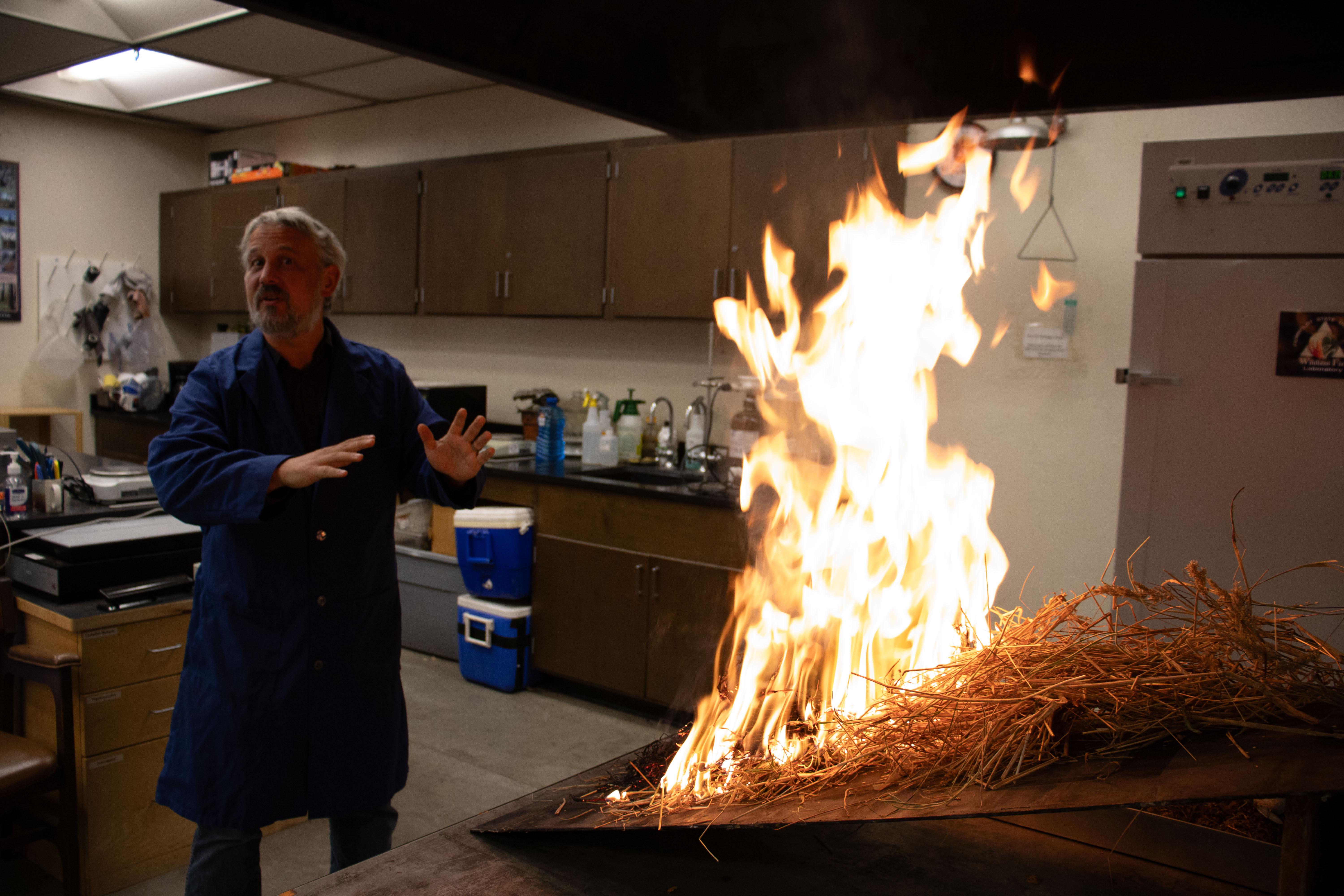
    Anti-fire policies and climate change have resulted in wildfires running widespread in Northern California. Forests are in need of experts who can understand the power of fire and its beneficial effects, and channel them into sustainable practices. Cal Poly Humboldt’s polytechnic transformation has resulted in a new addition to the Forestry, Fire and Rangeland Department to meet this need: applied fire science and management, B.S.

    The major explores multiple disciplines and perspectives of fire management, including local Indigenous knowledge and practices. Students will learn about prescribed burnings, how fire exclusion policies have impacted forests and how to use fire to promote biodiversity. 

    This major can lead to careers in fire ecology, fire departments, prescribed burning organizations and more. Students in fire science can also expect a plethora of summer jobs and internships to be available to them.

    However, students who are applied fire science majors do not qualify to take the Registered Professional Forester exam in the state of California. 

    Erin Kelly has been the department chair of Cal Poly Humboldt’s Forestry Fire and Range Land Management since the start of the 2023 fall semester. She emphasized the high demand for foresters and fire ecologists in California.

    “Employers are looking for natural resource managers, people who can apply their scientific knowledge to the ground and also people who can educate others about things like fire management,” Kelly said. “So, we are really in the position of meeting California’s needs in terms of land management, and I think that’s a really cool thing.”

    Fundamentals of Fuel and Fire and Fire Ecology existed prior to the new fire science major, but Fire Behavior and Effects and Fire Weather have been made into their own classes this semester. Additionally, an applied fire internship class will be available.

    Jeffery Kane is a faculty member in the forestry department and has been working as a professor at Cal Poly Humboldt for 12 years. He described the possible careers students can explore with the internship program.

    “Most folks will work for the Forest Service, either fighting fires or doing prescribed burning fuels management stuff, or some will work for CalFire,” Kane said. “Others have worked for nonprofit organizations that are involved with fuels management or prescribed burning…it’s basically, ‘Go out, get experience.’” 

    David Greene, a professor who has researched plant regeneration for several decades, teaches the fire ecology class. Students in fire science classes can expect to go on field trips that allow for hands-on learning and explore the different aspects of the field. Students in Applied Fire Use and Policy will have the opportunity to participate in prescribed burnings.

    Photo by Griffin Mancuso. David Greene describing an oak germinate’s ability to reach mineral soil beneath layers of leaves.

    “There’s lots of tribes around here that don’t have the capacity to run their own burn. Some like the Karuk and the Yurok can, but others like Bear River – they just don’t have anybody, so they’re often inviting us to go up and do one for them,” Greene said. “Jeff [Kane’s] happy to go do it because he wants the students to get as much training as possible, because California’s embarking on a prescribed burning campaign.”

    Mykie Root, a freshman and forestry major with a concentration in wildland fire management, has enjoyed the practical learning approach and field trips in their fire science courses, compared to reading textbooks in high school.

    “Coming out here and being able to go on these field trips and be able to actually, you know, get into the stuff and be hands on and actually be able to see the trees, you know, take the bark apart, be able to look at all of the rings individually and count them,” Root said. “It’s a lot easier to learn when you’re actually out in it than in a classroom, which is what I prefer. I don’t like being in a classroom. It makes me antsy.”

    Recently, students in Fire Ecology visited the 2022 Six Rivers Forest fire site to document conifer germinates and pine cones in the area that had appeared since the fire. Grayson Voorhees, a freshman majoring in forestry with a minor in fire ecology, took on the task of climbing a steep slope to gather data.

    “Initially we were trying to document the distance from the road to the first green tree to measure the density of the fire, like how far it spread uphill, and that was roughly 150 meters,” Voorhees said. “And that also spread along a transect line, and along the transect we were counting germinate gray pine species.”

    Faculty and students in applied fire science are hoping to destigmatize fire, promote sustainable fire management practices, and combat anti-fire sentiments and policies.

    Root explained how banning prescribed burns entirely allows for leaves to build up and ruin seed beds, resulting in deforestation.

    “When fires come through and actively get rid of all the bad, dead leaves and things that just pile and pile up, leaving for, you know, plants to be able to grow,” Root said. “The fires will come through, burn everything and there’ll be wonderful plant beds for seeds to just be able to pop up and come back. So, fires are really good for us. They’re actually, they’re really good for the forests, and we need them.”

  • Lumberjacks Host Logtoberfest

    Lumberjacks Host Logtoberfest

    Logging sports club invites competition for an axe amount of fun

    On Nov. 16, the Humboldt State Logging sports club held its annual Logtoberfest. This year they got to compete against schools including University of California, Berkeley, University of Nevada, Reno and Shasta College.

    In previous years, Logtoberfest was more of a practice session for HSU logging sports. This year HSU decided to make their event an open invitational and welcomed other university logging sports teams.

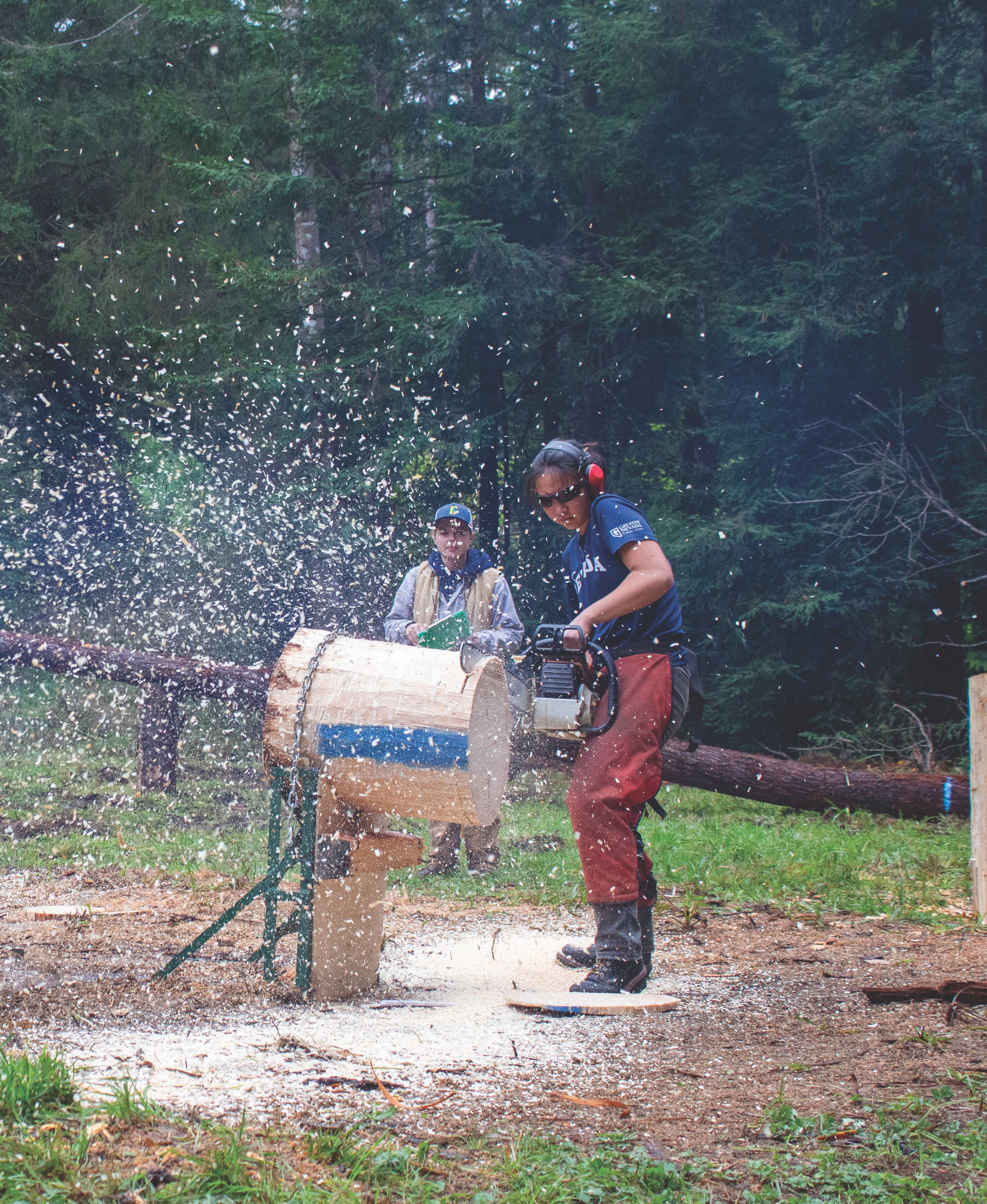
    Sounds of axes chopping and chainsaws revving echoed as those involved gathered around to show off their woodcutting skills. But the event was about more than just cutting wood. Logging athletes and their familiarity with each event provided entertainment while still ensuring safety.

    Vice President of the club and HSU forestry major Sophia Ackerman was in her third year competing in Logtoberfest. She was happy to see the arrival of the traveling schools and the growth of her logging team.

    “Our team has gotten bigger,” Ackerman said. “Logtoberfest in the past has been more like practice scrimmages against ourselves to get ready for competitions really early in the season.”

    Ackerman spoke highly about one event in particular: the obstacle pole. This event required an individual to carry an active chainsaw up a tilted log and cut off a portion of it.

    Another event called the horizontal chop involved a person positioning their feet on a log as they land multiple strikes until it breaks. Feet are exposed, but an important safety feature includes metallic footwear and chain-mail shin guards, so that in the event a contestant misses their intended target, no one is seriously injured.

    “Because it is extremely dangerous, if you glance out you can chop your leg. You gotta be comfortable with chopping and really good with the axe.”

    Jace Hunt

    Ackerman participated in the horizontal chop event and wasted no time chopping the log against her Shasta College opponent. Upon completion, Ackerman sat and took a break as she watched and cheered on her opponent to finish strong. Sportsmanship among the logging athletes has allowed them to form a bond of endless support for each other.

    Wildlife conservation major Jace Hunt competed in an event called the vertical chop, and after multiple swings from his axe, Hunt delivered a final blow to the log sending wood chips flying in every direction.

    Despite constant sawdust and wood chips flying everywhere, maintaining an uninterrupted line of sight was a goal the athletes thrived for. However, there were some participants that saw the flying chips as a motivational obstacle.

    Not only does swinging an axe demand physique but it demands discipline to assure that team members avoid inflicting bodily harm. Although this is Hunt’s second Logtoberfest, he did not compete in last year’s axe-wielding events.

    “You have to be on the team for a full year before you can do the vertical chop,” Hunt said. “Because it is extremely dangerous, if you glance out you can chop your leg. You gotta be comfortable with chopping and really good with the axe.”