In only the second half of the second year of the Dunes Climate Ready Study, the project is already providing researchers with interesting data. This projected five-year study is expected to provide a better understanding of sediment movement along the Eureka littoral cell, a 32-mile stretch of coastline from Little River north of McKinleyville, down to Centerville beach.
Friends of the Dunes’ director Kim McFarland provided insight into how the project originated and what stage the study is at currently.
McFarland explained how collecting topographical data in specific locations along the transect will allow researchers to map sand movement through the dunes under different vegetative conditions, and eventually determine how this affects dune structure.
“They are able to put all of this [data] into a computer and see the actual contour of the dune and how it changes over time,” McFarland said.
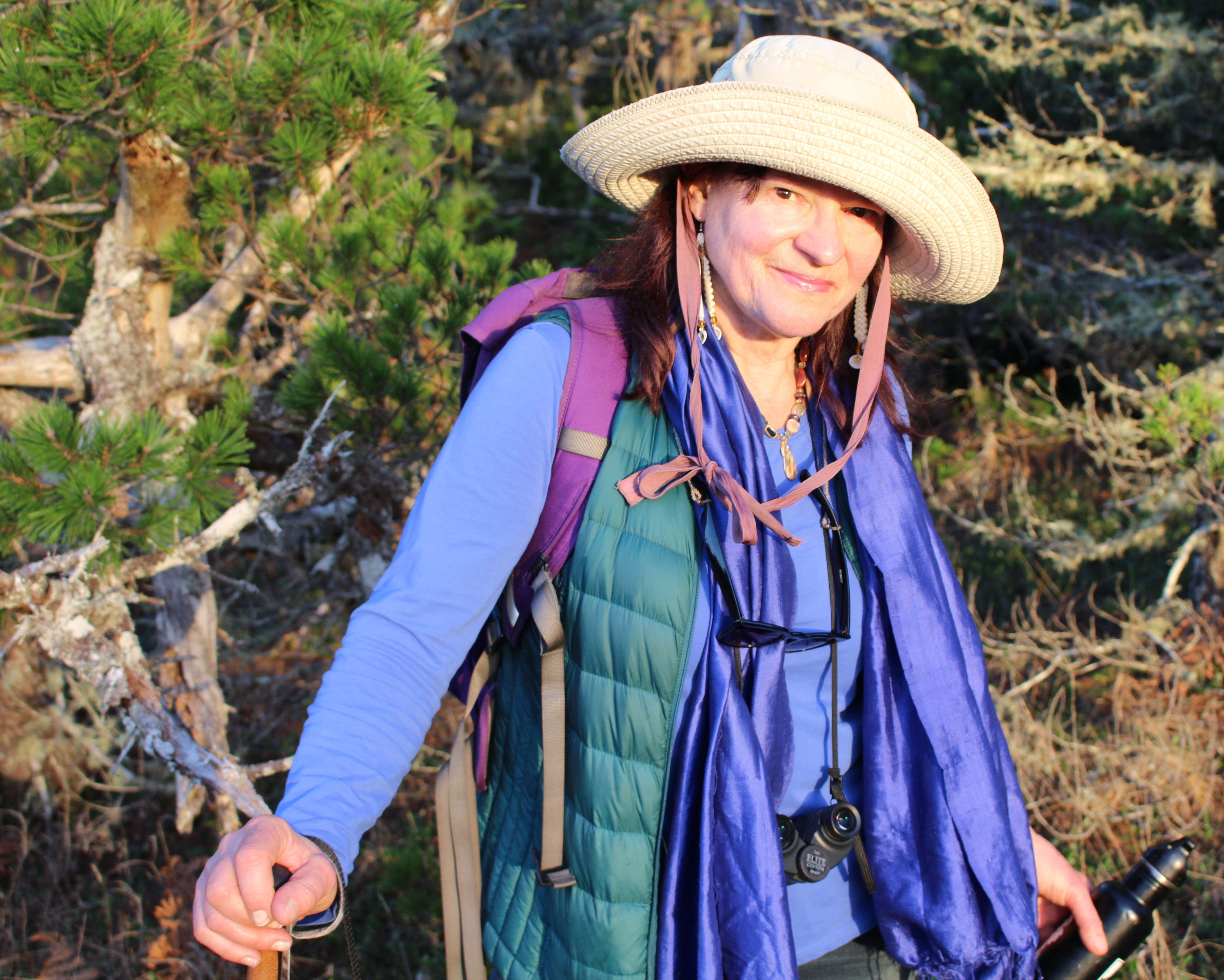
Andrea Pickart, a coastal ecologist with the U.S. Fish and Wildlife Service, and Ian Walker, a geomorphologist teaching at Arizona State University, are leading the Dunes Climate Ready Study.
They wanted to do “a bigger picture study on dune restoration and the implications of that for climate change, climate variability impacts and resilience of the dune system to ongoing erosion and future sea level rise,” Walker said.
Pickart and Walker started out by doing a few basic experiments on air flow and sand transport and how those maintain the dune systems. From there, they worked to get funding to expand their studies on dune restoration applying to multiple institutions in the hopes of starting a new in depth study.
In 2015, the California State Coastal Conservancy awarded Friends of the Dunes a $249,000 grant to fund the first two years of the Dunes Climate Ready Study.
“The objective was to better understand the effects of climate change and sea level rise on coastal dunes…to assess vulnerabilities arising from the impacts of sea level rise and assist the community in preparing for those impacts,” Pickart said.
Originally, the main focus was to establish a monitoring system for the regional beach-dune environment. The first step was to determine the placement and setup close to 60 transects along the 32-mile stretch of coast.
“We are taking these profiles of dunes all along that 32-mile stretch of dunes… we are taking topographic vegetation profiles,” Walker said. “It’s a way of looking at the beach and the foredune…just behind the foredune, the real land-ocean interface and seeing what kind of sand movements or sand exchange happens between the beach and the fordune.”
At the end of the five-year study the data will be used as a model response to sea level rise under different circumstances.
The first survey began on Jan. 4, 2016, and will continue for the duration of the study. Measuring the wind flow and sediment transport is one of the main focuses of the study, but examining how the native versus non-native plants interact with the dunes is also extremely important in order to understand the relationship between these two variables in the dunes environment.
“There’s different components to this research, and one component of it is how native plants versus non-native plants affect the movement of sand from the beach into the foredune and then the backdune,” Pickart said.
Invasive plants play an interesting role in altering the physical processes of wind flow and sediment transport. Foredunes produced from invasive vegetation are different than foredunes with native vegetation.
“The primary non-native species we have here is a non-native beachgrass, which grows much more densely than our [California] native dune grass,” Pickart said. “But they are both grasses that trap sand and allow dunes to build.”
Data from this study is still being collected and will be a part of the research over the next couple of years.
“What we’ve seen to date is that after removing the over-stabilizing European beach grass, we have, in fact, observed that the sand budget has been reconnected between the beach and the backdune,” Pickart said.
“In other words, we’re seeing movement of sand all along the beach and into the back dunes, and that was part of our hypothesis, that native plants would allow for more free movement of sand over the top of the foredune and into the backdune.”
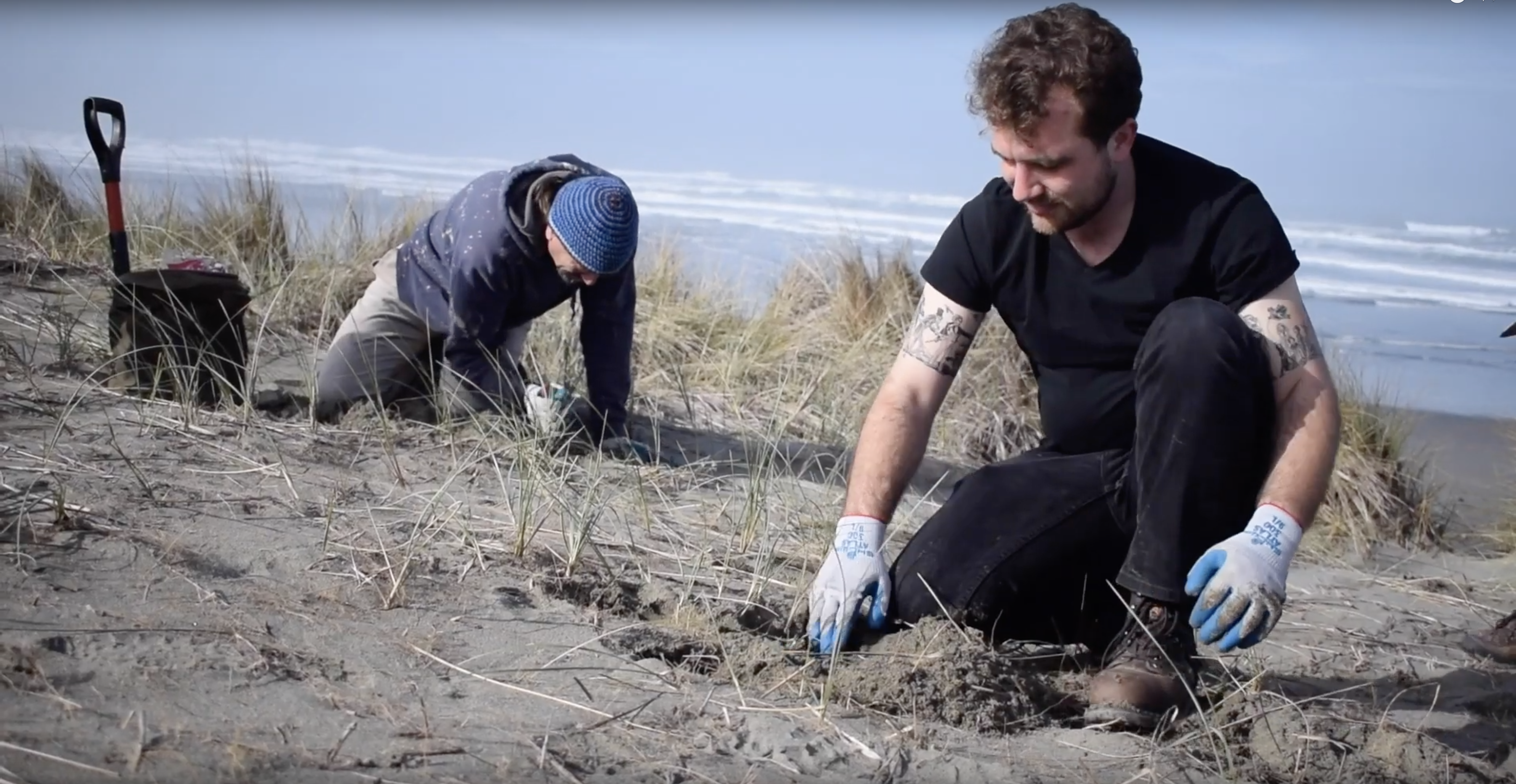
European beachgrass is the main inhibitor of sand movement. For this reason, Friends of the Dunes works to have volunteers remove the invasive species, allowing sand to move more freely between the beach and the foredune.
The sands freedom will allow the translation of the foredune: “which is the movement of the foredune inland and up in elevation as sea level rises,” Walker said.
“Basically, we know that the European beachgrass traps more sand. The experiment is whether having the native plants allow more sand to bypass is going to facilitate this inland translation of the foredune,” Pickart said.
European beach grass, also known as Ammophila, is a main inhibitor of sand movement. Because of this, Friends of the Dunes works to have volunteers come and remove the invasive species allowing sand to move more freely between the beach and the foredune.
Another branch of the study has been the creation and monitoring of two different adaptation sites. These sites are meant to help determine the desirable planting composition that allows for sand transport.
“The experiment is whether having the native plants allow more sand to bypass is going to facilitate this inland translation of the foredune,” Pickart said.
The sites are often used as to house smaller pilot studies to provide answers to some of the more specific detailed questions, for example, how grain size affects sand movement, the impacts of the upward migration of a foredune, how herbivory affects sand transport and multiple other experiments.
There are many different collaborators such as the Wildlands Conservancy, students from the University of Victoria and HSU students and staff. The adaptation sites will continue to provide a wealth of information throughout the study, helping to answer specific questions on dune structure and sand movement.
With the study still less than halfway into their five-year projection, there is still a lot of research to be done. But from the data seen so far, the Dunes Climate Ready Study has the potential to alter how researchers view dune restoration and the impacts of climate change.
To learn more about the Dunes Climate Ready Study, you can visit the page dedicated to the study on the Friends of the Dunes site HERE! The page contains an archive of quarterly updates on the study if you are interested in learning more about it, or if you simply want to stay updated on the most recent research.
If you would like to be apart of the dune restoration projects to combat native species and climate change visit the Friends of the Dunes volunteer page, HERE!
This story was updated on Feb. 1, 2018 from its original publication on Jan. 15, 2018 per request by the author.