The Lumberjack


Students Serving The Cal Poly Humboldt Campus and Community Since 1929

Tag: gabrielle sturm

  • How to Communicate With A Science Skeptic

    How to Communicate With A Science Skeptic

    The year 2020 proved to be the year of difficult and uncomfortable conversations. Topics about politics, race, and inequality in the United States have come to the forefront of daily conversations on a much wider scale than before. Some may see this as an awakening that spread across America, leading to positive political and social reform. Therefore we, as Americans, must keep these conversations going.

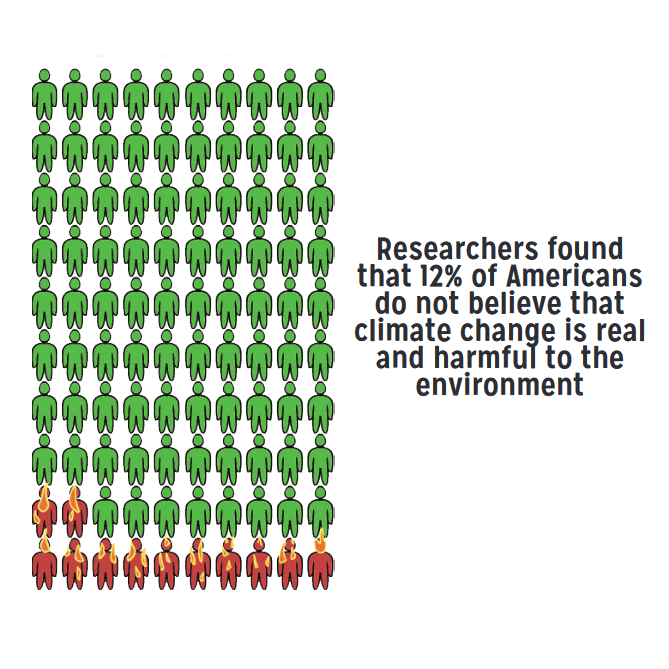
    In a nationally representative survey conducted in 2019 by the Yale Program on Climate Change Communication and the George Mason University Center for Climate Change Communication called “Climate Change in the American Mind” researchers found that 12% of Americans do not believe that climate change is real and harmful to the environment. While this seems like a fairly small percentage of people, it comes to a grand total of about 39 million people.

    Thirty-nine million people who disregard accurate data, ignore signs of environmental degradation, and refuse to believe the world’s leading climate scientists. The world can no longer afford science skepticism. How do we persuade this many people– more than the entire population of Canada– to change their worldviews?

    Environmental Communication Professor Jennifer Ortega believes that the solution may lie in a shift in the way we communicate with climate change skeptics.

    “Climate change is so big,” Ortega said. “In every community it looks very different as to how they are supposed to address it. If we talk about how there is, say, a disruption in this hydrological process, people are more inclined to be like, ‘Oh, what does that mean?’”

    The problem with the constant preaching of “we need to solve climate change” is that people do not know where to begin with that sentiment. The destruction of the Earth is often seen as an insurmountable problem which often leads to either complacency or outright denial. This is because, well, it is hardly possible to wrap our human minds around something as colossal as an entire planet in need of help.

    Creating viable, tangible solutions to smaller scale issues has the potential to both give people hope and convince skeptics that these problems are truly occurring. Ortega suggests that leaving the term climate change completely out of the conversation when trying to convince people to take action may be an effective route. People become turned off by the phrase, so keeping them engaged with local issues such as disruptions in a hydrological process or the benefits of electric cars in a city may be more constructive. Language is key.

    Environmental Studies Alumnus Miles Kinman agrees with this sentiment.

    “It is important to show people how climate change would impact their lives and the area in which they live,” Kinman said. “Sometimes the effects of climate change don’t seem real because the conversation often revolves around far off places such as the Amazon forest. Reframing the conversation in a way that makes people feel more connected to the problem of definitely a necessary step in trying to help people understand climate change is real.”

    Environmental studies student Emily Dreyer believes that climate change skepticism is one of the most pressing issues in the United States.

    “I think it’s an issue because it can disrupt the dominant narrative of environmental education,” Dreyer said. “Therefore, pressing issues aren’t supported enough and no change occurs. We are running out of time to save our planet and move towards total sustainability and any skepticism disrupts that process.”

  • How a Local Clean Energy Microgrid Could Transform California

    How a Local Clean Energy Microgrid Could Transform California

    A new project in Humboldt County is paving the way for clean energy operations throughout the rest of California. After two years of planning, construction of the Redwood Coast Airport Renewable Energy Microgrid is set to begin in April of this year.

    A microgrid is decentralized from the larger energy grid. It is able to become its own “island.” It ensures that power can be restored to a specific area during emergency situations even when the larger energy grid is down, such as during a public safety power outage. A notable component of the RCAM is that it is entirely run by renewable energy, operating off of solar power, making it even more appealing to the area.

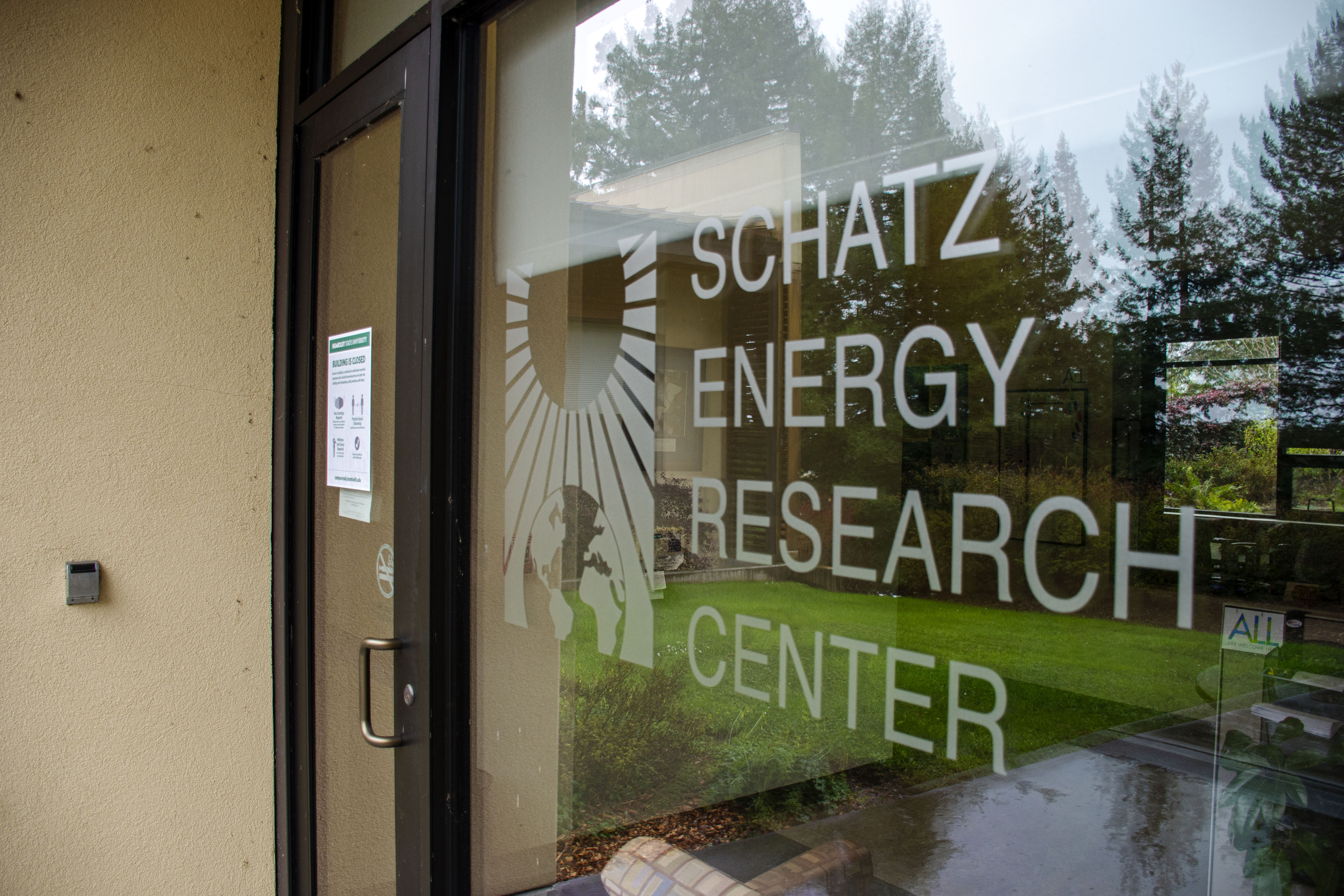
    The prime contractor and lead technology integrator for this project is Humboldt State University’s very own Schatz Energy Research Center. The RCAM will be the first-ever multi-customer microgrid in Northern California.

    Environmental Science Professor Jack Murphy said that in his opinion, the clean energy microgrid is a great idea for two reasons.

    “The first is just that it contributes to the decarbonization of our electrical generation, and that’s good,” Murphy said. “Less carbon dioxide going into the atmosphere is good and humanity needs big clean energy projects ASAP. The second reason it’s a great idea is that the airport could be critically important during regional disasters such as tsunami or earthquake, and having a microgrid operable when the grid is down would be hugely important.”

    Another important goal of the RCAM project is to create a template for the construction of other clean energy microgrids across the state. By partnering with PG&E and the Redwood Coast Energy Authority, the microgrid will be an example for the rest of California of the policies, tariff structures, and operating procedures that are involved with a project like this.

    “The RCAM project has led to the development of PG&E’s recently proposed Community Microgrid Enablement Program,” David Carter, principal engineer for the Schatz Energy Research Center said. “CMEP creates a process and a path for other eligible communities to deploy front-of-the-meter, multi-customer microgrids that will provide resilience to critical facilities.”

    With the details of the successful project documented, other communities can use it as a technical guide for the construction of new microgrids. Reducing the use of fossil fuels in a state that has the second highest amount of annual carbon dioxide emissions in the entire country is an exciting step forward toward combating climate change. The RCAM project demonstrates that it is possible for a community microgrid to be powered by 100% renewable, solar energy.

    When asked about the work of the Schatz Energy Research Center, HSU alumnus Kyle Powell said that he is continuously inspired by the various sustainability efforts that come out of the university’s programs.

    “Humboldt State as a whole does a great job of promoting sustainability and clean energy throughout all of its programs,” Powell said. “It’s one of the main factors that brought me to the university, and it continues to influence my life on a daily basis.”

  • Update on HSU’s Climate Action Plan

    Update on HSU’s Climate Action Plan

    As Humboldt State students prepare to graduate, they take a pledge before they walk across the stage and receive their diplomas.

    “I pledge to explore and take into account the social and environmental consequences of any job I consider and will try to improve these aspects of any organizations for which I work.”

    The university makes it clear they want all students to take sustainability into account throughout their careers, but does the school itself practice what it preaches?

    The answer to this question by many standards is yes.

    In 2017, a Climate Action Plan (CAP) was put forth by HSU in order to integrate climate change and sustainability into the curriculum, conduct more research on climate change and resiliency, and reduce the direct and indirect greenhouse gas emissions of the school.

    The plan also includes strategies to curb emissions from energy and utilities, transportation, and waste. This is just a small fragment of what the 26 page plan aims to achieve.

    The most ambitious aspect of the CAP was to reduce the university’s emissions to complete carbon neutrality by 2030, and begin on a carbon negative path thereafter. This course of action comes with progress reports that include an update on the implementation of the CAP’s 55 strategies used to lower greenhouse gas emissions.

    The last report was released in November of 2019, and it states that out of the strategies, 45% were completed, 18% are in implementation, 22% are in development, and 15% are not yet started. While the school is making significant progress, the ambitious goal of reaching carbon neutrality was pushed back to 2045.

    The university budget cuts caused by the COVID-19 pandemic have not had a significant impact on the progress of the CAP.

    “Many of those initial strategies that were completed [in the CAP] were zero to moderate cost (e.g., policy or procedural changes or non-construction related),” Morgan King, climate action analyst for HSU, said. “But some projects requiring a large initial capital outlay (e.g., solar, electric vehicle charging) did not move beyond an initial exploratory phase in part because of funding, but that was an issue before the pandemic.”

    Some of the goals in the 2019 progress report include a reduction in facility and fleet greenhouse gas emissions to 1990 levels by the end of 2020, a further reduction in emissions to 80% below 1990 levels by 2040, and an achievement of carbon neutrality by 2045.

    King is drafting an update to the CAP which the university is calling the CAP 2.0. “We currently have leadership actively engaging with sustainability into all facets of the university,” King said. “So I am optimistic that we will be able to push forward some of the more capital intensive strategies in the CAP 2.0. For example, the campus is already pursuing a microgrid with solar and battery storage, which is a critical element to building resilience and drawing down emissions.”

    The university practices sustainability throughout its curriculum as well. Environmental Studies Associate Professor and Department Chair Dr. Sarah Ray emphasizes the importance of environmental awareness in a social justice based interdisciplinary curriculum.

    “The work of Katie [Koscielak] and Morgan [King] in sustainability is cross-cutting; they go beyond the facilities box and are doing what has to happen on all campuses of merging academics and facilities much more intensely,” Ray said. “The biggest thing we can do to achieve this even better is to continue to center the conversation around social and racial justice– how might those lenses shape what we do environmentally? What and whose traditions are we hoping to sustain, and how do we know what approaches are best for the environment?”

    Environmental studies student August Andrews says that he sees various ways in which environmental awareness is presented by the university outside of the classroom.

    “I definitely see HSU doing so outside of the courses they offer,” Andrews said. “HSU is not only known for its environmental curriculums but, simultaneously, it seems to be rapidly striving to be as ‘green’ of a university as possible, which is inspiring.”