The Lumberjack


Students Serving The Cal Poly Humboldt Campus and Community Since 1929

Tag: gardening

  • César Chavez Day with YES

    César Chavez Day with YES

    by Eddie Carpenter

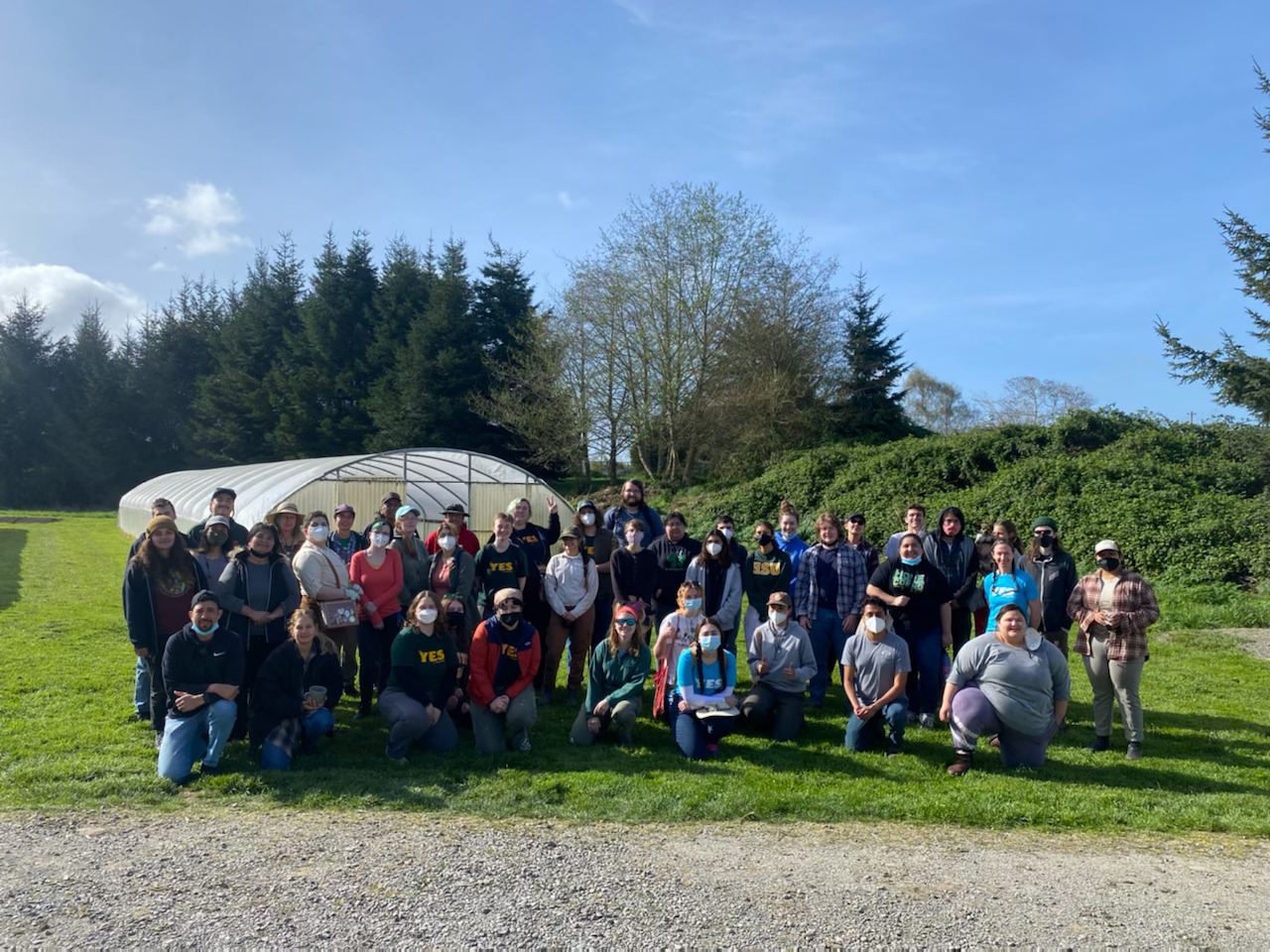
    In honor of César Chavez Day, the YES program hosted a volunteer event at the Potawot Community Food Garden in Arcata. It had an amazing turnout with a whopping 40 volunteers in attendance, caressed by the sunny blue skies and the refreshing Humboldt breeze.

    We were assigned tasks by being divided into five groups. I was grateful to be a part of a group that planted beds of squash. We did everything from scratch, laying out layers of black cover material across the four rows to keep the weeds from robbing the plants of their nutrients. We also covered the tops of the rows with white cloth.

    Gardening skills have practical value in my daily life. Prior to this experience, I had been a volunteer at Potawot through a program called the Intertribal Agriculture Council. Potawat’s head gardener Ed Mata gave me a handbook about gardening and I was mentored by a professional development specialist named Elaini Vargas.

    Maybe I was a little rusty on the terminology, but basic knowledge about soil health has since been ingrained into the recesses of my brain. I learned in a soils class that if you live in a mild climate, it’s estimated that it took 200 to 400 years for 1 centimeter of the soil to form. Vargas’ and Mata’s teachings directly impacted the mindset I had going into the YES serve-a-thon on César Chavez Day.

    Youth Educational Services (YES) is a collective on campus that provides students with opportunities to volunteer at local school and community sites. One of their goals is to connect hands-on service and in-class learning with awareness of the injustices and oppressions experienced by those they serve. Actions sometimes speak louder than words. Making donations and saying nice things about a cause is totally different from donating your time and bodily energy to a cause.

    According to mentalhealth.org, helping others can possibly help make you happier as a person. Through volunteering, I was able to make temporary connections through teamwork and group communication. This gave me a sense of community and made me feel like I belonged to a noble cause.

    If you want to see change in your self-esteem, you might want to consider doing good deeds, so we can manifest the world into a better place. Indeed, an outward reflection of finding happiness can in turn make you a happy person.
  • Gangsta Gardener plants power

    Gangsta Gardener plants power

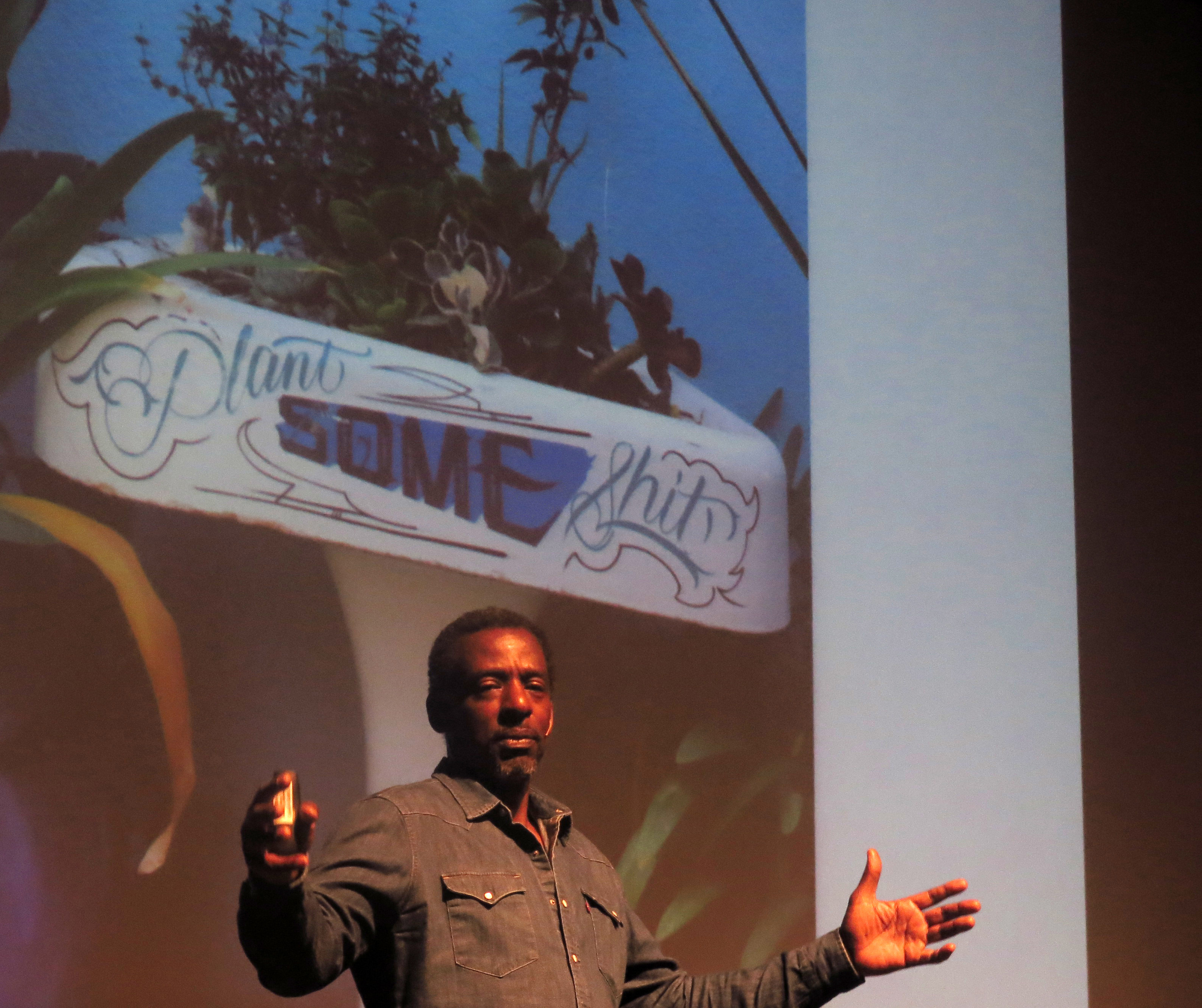
    “There is no justice, it’s just us,” Ron Finley, also known as the Gangsta Gardener, said. As a community leader in South Central Los Angeles, Finley works to take back his community by transforming urban areas into community gardens. Last week, Finley visited HSU to explain his guerrilla gardening activist methods and shared his story.

    Ron Finley’s journey began while searching his hometown for an apple that wasn’t covered in shellac eight years ago. He was faced with an arrest warrant from the city of Los Angeles for planting a tomato plant on the strip of land in front of his house. Finely’s responding petition has since grown into a grassroots movement based in food sovereignty, or people’s ability to grow their own food.

    During his talk at Humboldt State University on Feb. 13, Finley said South Central Los Angeles has limited access to fresh produce. Fresh options come in glossy packaging of all kinds. On the corner of each street, there’s a gas station or fast food.

    “It’s food injustice. It’s apartheid,” Finley said, referring to the areas access to healthy food choices. “There is no justice, it’s just us.”

    Finley connects this food injustice with kidney failure and gang violence. The self-proclaimed Gangsta Gardener sees the answer in a total upheaval of society’s systems.

    “Redesign everything,” Finley said. “Reevaluate everything. If shit isn’t working, fix it.”

    His foundation, the Ron Finley Project, is working to uplift and build communities through the soil. Volunteers throughout California are planting community gardens in elementary schools, vacant lots, homeless shelters and anywhere else that is devoid of nature.

    As reported extensively by National Public Radio, gardening is a clinically proven antidepressant and fosters a relationship with the natural world. This is especially relevant in urban areas where access to the environment is systemically limited.

    In his talk at HSU last week, Finley broke down these barriers to environmental equity. He explained that underserved areas are exactly that, underserved and forgotten by the system.

    Finley went into detail on how the systems we have in place are set up to benefit the powerful and perpetuate oppression. He equates it to an indoctrination of thought from birth that causes injustice to become our normal, because we see it every day.

    “How do we learn to value the shit that we value?” Finley said. “We don’t value our food. We don’t value the people that grow our food. We value all of this dumb shit that we’ve been told to.”

    Finley’s guerilla gardening activist methods are based in a belief that if a problem exists, so does the solution. Faced with a glaring problem that those in power are just ignoring the oppressed, Finley went out and did what he could do to fix it.

    This fight for food sovereignty has planted its roots here in Arcata as well. There are people here working to make healthy food available to HSU students and the community at large. One of these people is Ryan Sendejas, the community garden coordinator at Campus Center for Appropriate Technology, who has found inspiration in Finley and other urban gardeners.

    “We do have a lot of local farmers and gardeners who are spreading good food and good knowledge here,” Sendejas said. “Speaking as a student, it’s hard to gain access to that food.”

    Nic Martin, an environmental science and management junior, calls himself a lazy hippie gardener. He tends to his own sustainable garden and preaches a reciprocal relationship with the land as a way to bridge the gap to healthy food.

    “Gardening is like having a pet,” Martin said. “You get back what you give. It’s an independent dependency, and you’re learning while you’re improving. It’s healthier, and so much better for your body and your mind. You actually have something you worked for and saw grow.”

    There are countless people tapping into this art of growing food. Finley is not the first and certainly not last guerilla gardener, but he has made a name for himself by breaking down barriers and rewriting laws.

    Finley’s parting message at the talk was one of self-motivation. He said you are your own leader and you shouldn’t let others fight for you.

    “Fight for your motherfucking self,” Finley said.