
The Lumberjack


Students Serving The Cal Poly Humboldt Campus and Community Since 1929

Tag: gas

  • Ask Evergreen: Fretful Fueler

    Ask Evergreen: Fretful Fueler

    Ask Evergreen is a weekly advice column by the students of the Lumberjack.

    Each week we answer anonymous questions sent in by readers about anything and everything.


    Dear Evergreen,

    Is driving to Eureka for Costco gas worth it?

    Dear Fretful Fueler,

    Gas prices in California are some of the highest in the nation, with prices often spilling over $4.00 a gallon, but Costco offers some of the cheapest gas.

    Costco is a popular gas supplier, and here in Humboldt we are fortunate to have one locally. But although Costco gas is an option in the area, it’s not accessible to all.

    To get gas from Costco you must have a membership or a Costco gift card. As someone who doesn’t have a Costco membership, I can’t say for certain that Costco gas is the best alternative.

    For those who can afford the $60 yearly subscription, it makes sense to go to Costco if you’re already using their other services. However, if you plan on getting a membership just for a gas discount, I wouldn’t suggest it.

    If you aren’t a heavy commuter then Costco gas definitely isn’t a good source for fuel. According to Business Insider, the price of a membership won’t be paid off with your gas savings until you gas up around 37 times.

    Costco gas stations are also notorious for having chaotic waiting lines and times. If you do consider Costco gas, be mindful of the time of day you head over, as rush hour times are often busier. It would be counterproductive to wait upwards of 10 minutes for gas while idling in your car wasting fuel.

    If you aren’t inclined to fuel up at a Costco gas station, there are other places you can gas up at. You can find local gas prices with the site and app GasBuddy, which can help you shop around for the best option.

    In Arcata, the cheapest gas can be found at the Patriot station for $3.87 a gallon on Giuntoli Lane. In Eureka, the most affordable gas is from the Costco station which is currently $3.49 a gallon.

    Happy gassing!

    Sincerely,

    Evergreen


    If you have any questions you’d like to send in, email us at contactthejack@gmail.com. We won’t publish any names and you don’t need to use one.
  • War on the Horizon? Iran Blamed for Oil Field Attacks

    War on the Horizon? Iran Blamed for Oil Field Attacks

    United Nations pointed to Iran after Houthi rebels initially claim Saudi Aramco attacks

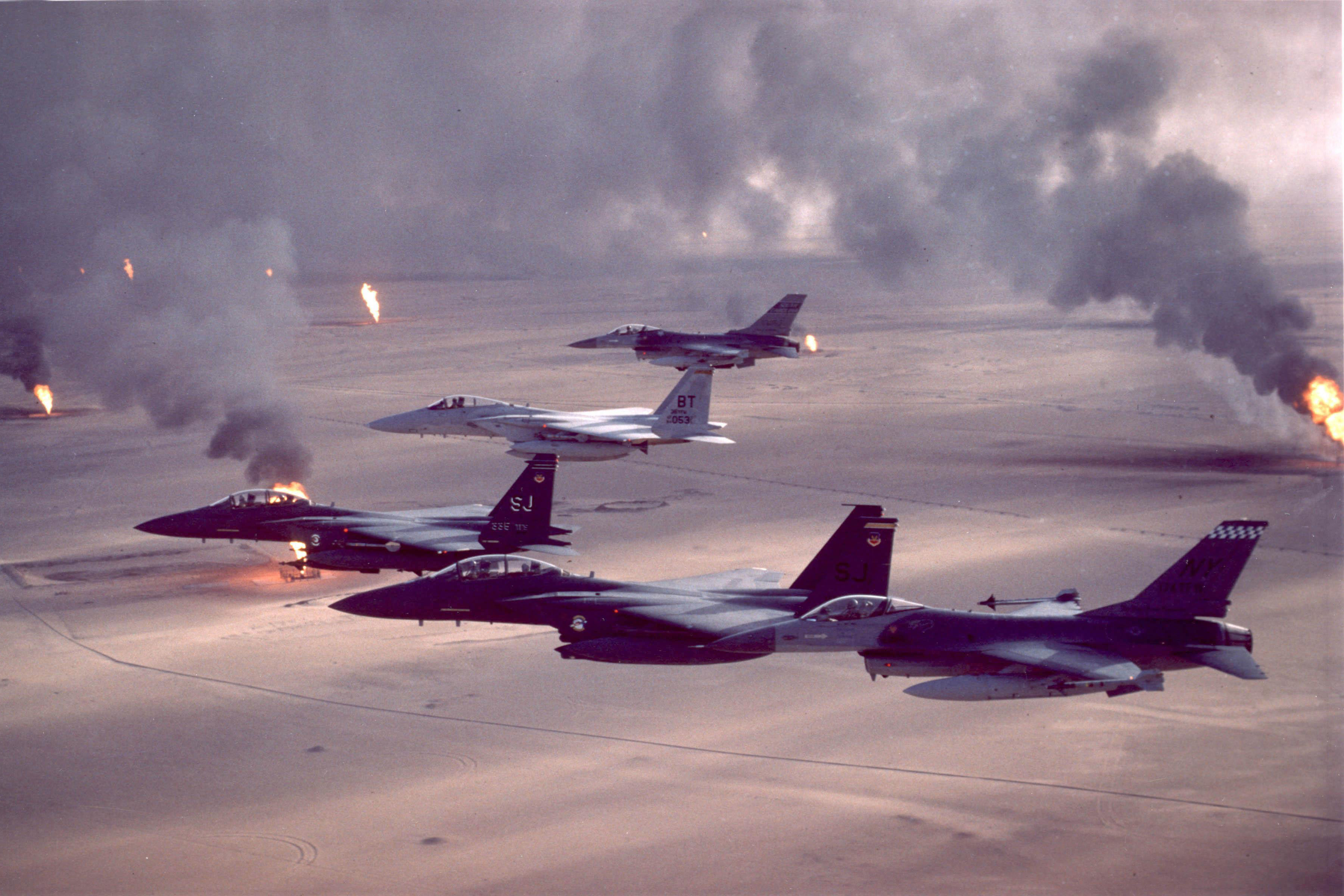
    On Sept. 14, drones attacked two of Saudi Aramco’s oil plants and the United States quickly pointed fingers at Iran as the perpetrator, sending military aid to Saudi Arabia.

    Iranian-backed Houthi rebels initially claimed the attack as their own, reporting that they sent missiles from Yemen, but U.S. Secretary of State and former CIA Director Mike Pompeo were adamant that Iran was to blame for the attacks on the Abqaiq and Khurais oil facilities. Pompeo commented on the incident during an episode of CBS’s “Face the Nation.”

    “No reasonable person doubts precisely who conducted these strikes,” Pompeo said. “And it is the intelligence community’s determination that it is likely the case that these were launched from Iran.”

    Iran drew global attention by targeting Saudi Arabia, the world’s oil exportation leader. In an interview on 60 Minutes, Crown Prince of Saudi Arabia Mohammad Bin Salman put the attack in context.

    “This attack didn’t hit the heart of the Saudi energy industry, but rather the heart of the global energy industry,” Bin Salman said. “It disrupted 5.5% of the world’s energy needs; the needs of the U.S. and China and the whole world.”

    Iran and Saudi Arabia both continue to try to gain influence in the Middle East, and the ongoing conflict in Yemen proves that while they may not want full-scale war, neither side fears conflict.

    After meeting with President Donald Trump and his national security team, U.S. Secretary of Defense Mark Esper explained Trump’s approval of military support in response to Iran’s aggression during a press conference at the Pentagon.

    CNN’s coverage of US Secretary of Defense Mark Esper and Gen. Joseph Dunford announcing the United States sending troops to Saudi Arabia.

    “It is clear based on detailed exploitation conducted by Saudi, United States and other international investigative teams that the weapons used in the attack were Iranian-produced, and were not launched from Yemen as was initially claimed,” Esper said. “All indications are that Iran was responsible for the attack.”

    Esper added that in response to the attacks and a Saudi call for help, the U.S. will deploy defensive forces focused on air and missile defense.

    At the United Nations General Assembly, the leaders of Germany, France and the U.K. released a joint statement concurring with the U.S.

    “It is clear to us that Iran bears responsibility for this attack,” the statement said. “There is no other plausible explanation. We support ongoing investigations to establish further detail.”

    Trump said the U.S. also employed economic measures against Iran.

    “We have just sanctioned the Iranian National Bank,” Trump said. “That is their central banking system and it’s going to be at the highest level of sanctions.”

    CBS News coverage of Trump’s announcement of new Iran sanctions on national bank.

    However, President of Iran Hassan Rouhani has denied Iran’s fault. Rouhani called the attack a retaliation from Yemen for unwanted outside influence.

    “The people of Yemen are forced to respond to all the violations and the flood of weapons from U.S. and Europe toward Saudi Arabia and the United Arab Emirates,” Rouhani said in a televised press conference in Ankara. “They cannot show legitimate defense in the face of their country being destroyed.”

  • Potential pipeline meets resistance

    Potential pipeline meets resistance

    Story by | Emily Owen

    Since the 1970s, a Canadian-based energy company called Veresen Incorporated has been working on a plan to build a pipeline to carry natural gas through Southern Oregon, just 200 miles north of Arcata. After being repeatedly turned down, documents are currently being prepared to be re-submitted with the expectation of eventual approval. 

    According to Veresen Incorporated’s website, the Pacific Connector Gas Pipeline is proposed to be 232 miles long, cross under five major rivers and result in the clear-cutting of up to 30 miles of forest. At $7.5 billion, the project is worth twice as much as the Dakota Access Pipeline and is being praised for its potential in economic benefit.

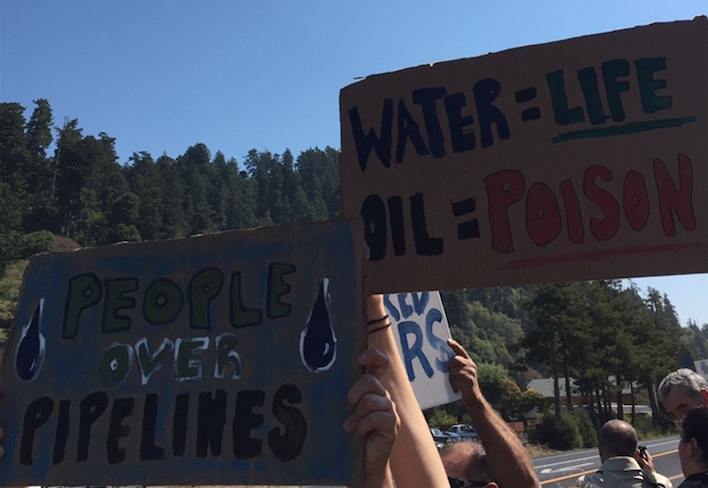
    When Leonard Perry heard about the Pacific Connector Gas Pipeline and that sections were going to pass through the Klamath River, he readied himself for the fight he knew was coming. Perry, an 18-year-old student attending College of the Redwoods, is a founding member of a group known as Humboldt Water Protectors. The group, now called Sacred Seeds, has made it their main goal to protect the abundance of natural resources in and around Humboldt County.

    “We see what’s happening to the world, what’s happening in our own backyard, and people are waking up,” Perry said. “We all drink water. This isn’t a party issue, we need to start looking out for our brothers and sisters. The minute we start coming together there’s change.”

    Mouth of the Klamath River in the fall. Photo by Emily Owen.

    The HSU Environment and Community Club is organizing an on-campus event titled Water is Life: The Standing Rock-Klamath Connection to publicize and spread awareness of the potential Pacific Connector Gas Pipeline. The event will happen on March 4 in the Kate Buchanan Room from 12 to 6p.m. and will shed light on interconnectivity behind the movement for clean and safe water.

    Francesca Gallardo and Yojana Miraya, both graduate students in the environment and community program, are coordinating outreach for the event. Gallardo sees the potential to unite these communities and cross boundaries through building coalitions.

    “These movements are for everyone,” Gallardo said. “We are fighting the biggest fight of our lives. It is time for everybody and anybody to step up.”

    Miraya is from an indigenous tribe in Peru and recognizes the parallels in the global struggle to protect natural resources. 

    “Leaders aren’t working for the communities” Miraya said. “Educating people will bring consciousness and the parts of society that are marginalized can come together.”

    Cutcha Risling-Baldy professor of Native American studies at HSU, is Karuk, Yurok and an enrolled member of the Hoopa Valley Tribe, thinks of pipelines as last resort efforts from the nonrenewable energy industry to stay relevant in a world relying on a failing system.

    “There’s a Gold Rush mentality of wanting to make as much money as possible no matter what the consequences are,” Risling-Baldy said. “That’s why we need to always include an indigenous perspective. Native people consult with the land and we see those connections. You can’t account for the way nature plays with your best plans.”

    Risling-Baldy stressed the importance of divesting from companies and organizations that fund nonrenewable infrastructure. 

    “We’re finding out that people think with their money,” Risling-Baldy said. “The government is actively working against the people so you need to speak with your money. Take it out.”

    Michael Hinrichs, Director of Communication for the Pacific Connector Gas Pipeline, acknowledges the opposition that is growing and wants to assure people that the project is meeting all environmental standards set by the federal government.

    “We’re trying to avoid the impacts that people are worried about,” Hinrichs said. “I would encourage people with concerns to make them known.”