The Lumberjack


Students Serving The Cal Poly Humboldt Campus and Community Since 1929

Tag: Government

  • Giovanni Guerrero Aims to Promote and Protect Campus Resources

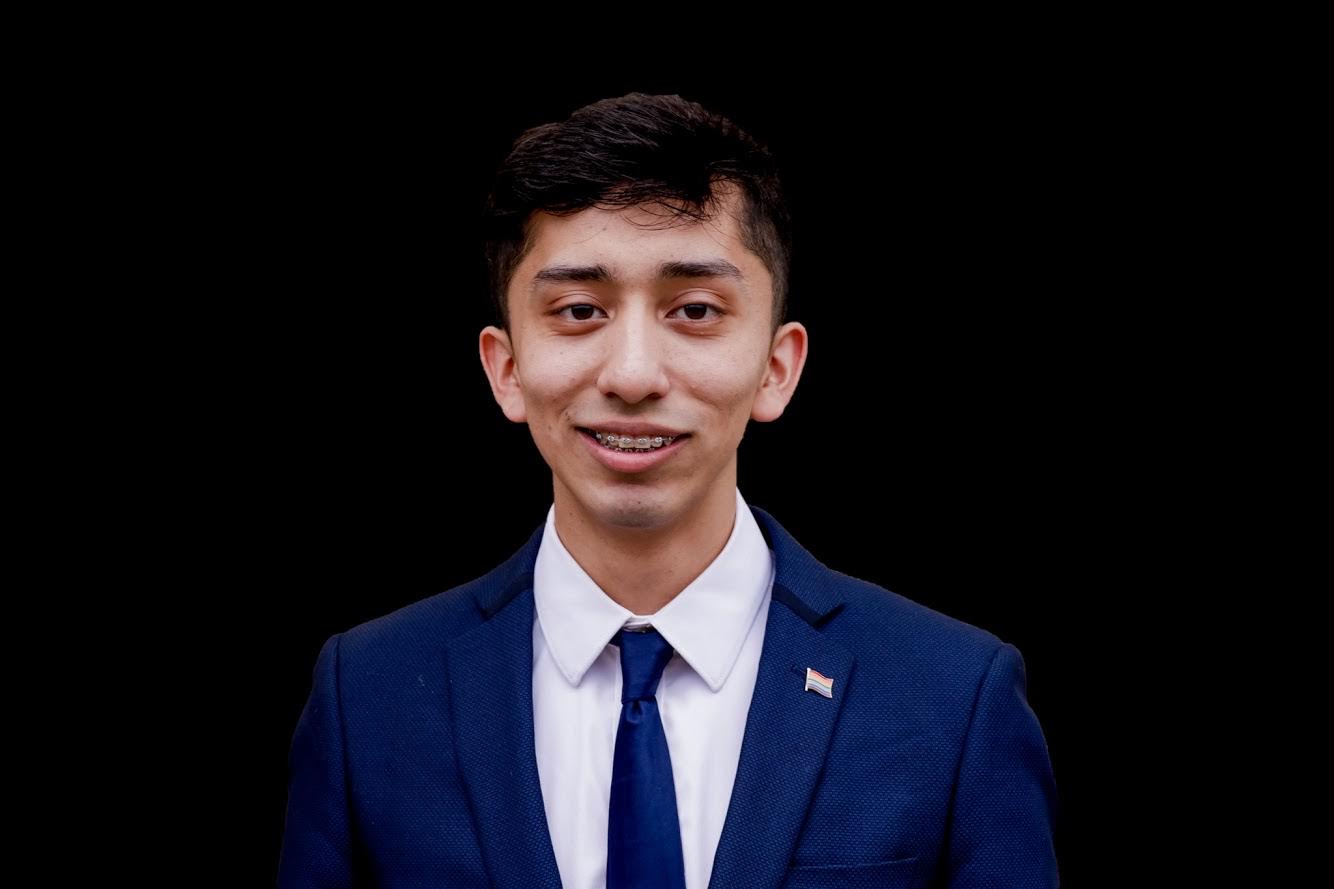
    Giovanni Guerrero Aims to Promote and Protect Campus Resources

    Giovanni Guerrero makes his case for the Associated Students presidency

    Born and raised in southern California, Giovanni Guerrero is an openly gay, first-generation Latinx student. Coming to the end of his junior year, this is Guerrero’s first time running for a position with Associated Students, and he’s aiming straight for the top—the presidency.

    While Guerrero lacks a background with AS, he might make up for with a background working with the Federal Government. Last summer, he attended an internship with the Bureau of Land Management Eastern States division in Washington D.C. The division is an office of the BLM, a branch of the Department of the Interior. He spent time working with fellow interns in a geospatial segment of the Eastern States division—work that involved collaborating on several projects simultaneously.

    As an environmental science major, Guerrero brings preservation into the discussion as the foundation of his platform.

    “We have resources on this campus that help those students. And I think it’s very essential that we prioritize those resources and make sure that those resources aren’t seeing drastic reductions.”

    Giovanni Guerrero

    “We have some terrific resources on this campus, but over the next two years we’re gonna be facing $20 million in budget reductions, and that’s a big, scary number,” Guerrero said. “Those reductions will probably come in the form of student interests. So, it’s very important that we recognize the challenges that we’re gonna face, and we’re very vocal about it so that we can protect important resources.”

    Humboldt State University is home to many students in need, including those facing housing and food insecurities, as well as mental health issues.

    “We have resources on this campus that help those students,” Guerrero said. “And I think it’s very essential that we prioritize those resources and make sure that those resources aren’t seeing drastic reductions.”

    Guerrero advocates for more energy to be spent on the promotion of these resources. One idea is to feature a ‘program of the week’ on the HSU homepage because the current navigation system does little to support them.

    “I really wanna focus on promoting what Humboldt State has to offer,” Guerrero said. “Because our resources can’t serve the students that they’re meant to serve if they don’t know they exist.”

    “I think he would be a great leader because he understands the complexities in debates, that sometimes we have to find productive ways to maintain arguments we can’t end, and because he is so eager to make HSU a better place for students who feel left out.”

    Aaron Donaldson, debate team coach

    As the only upcoming senior running for the position, Guerrero has the most respective experience on the HSU campus and the challenges faced by its students.

    “I’ve been very fortunate to experience different areas around campus,” Guerrero said. “It’s really opened up my perception to how diligently students are working.”

    As well as working for Recreation Sports on campus, Guerrero also worked at the J. He’s also involved in several student clubs including the running, climbing and debate clubs.

    Aaron Donaldson, coach of the debate team, praised Guerrero as a genuine, sympathetic listener.

    “I would describe Gio as thoughtful, careful as an advocate and a good student,” Donaldson said. “I think he would be a great leader because he understands the complexities in debates, that sometimes we have to find productive ways to maintain arguments we can’t end, and because he is so eager to make HSU a better place for students who feel left out.”

    If elected president, Guerrero intends to improve HSU’s social media. That way students interested in attending the university will know what the campus has to offer. He advocated that all students take advantage of the opportunities at hand, especially clubs.

    “His ability to anticipate, plan for and respond to issues in dynamic and creative ways makes him an asset to any group or team he chooses to be a part of.”

    Katherine Earle, Recreation Sports

    “Clubs have really helped me to connect with other people, and I think they’re really essential to building community on campus,” Guerrero said. “That leads to retention as well. If you feel connected to your campus and where you live and where you study, then you’re more likely to stay.”

    One of Guerrero’s bosses at Recreation Sports, Katherine Earle, spoke highly of his performance.

    “Gio has already proven himself to be an effective leader while working for Rec Sports at HSU,” Earle said. “His ability to anticipate, plan for and respond to issues in dynamic and creative ways makes him an asset to any group or team he chooses to be a part of.”

    Another priority for Guerrero, as president, would be to ensure the security of student jobs.

    “A lot of students depend on those jobs and I think the more opportunities we have on campus, the more attraction we will get at HSU, and more retention,” Guerrero said.

    One of the biggest short-comings of AS, according to Guerrero, is active student engagement.

    “You could probably go up to any student on this campus and ask them, ‘Do you know what an Associated Student does or who they are?’ And they’ll probably tell you ‘No, I have no idea.’”

    Guerrero wants to create avenues to engage with the student body and inform them on what’s going on at an administrative level and within AS.

    Guerrero said this will help prioritize what students want from AS. If he wins, Guerrero is aware he has his work cut out for him, and he said he’s up for the task.

    “I’ve faced a lot of different barriers and a lot of different challenges, and just in general, it’s really helped me to be a resilient person,” Guerrero said. “And I think that’s the key to success. Cause you’re gonna face a lot of obstacles throughout life, and have to learn how to handle those obstacles.”
  • Decision Time for DACA

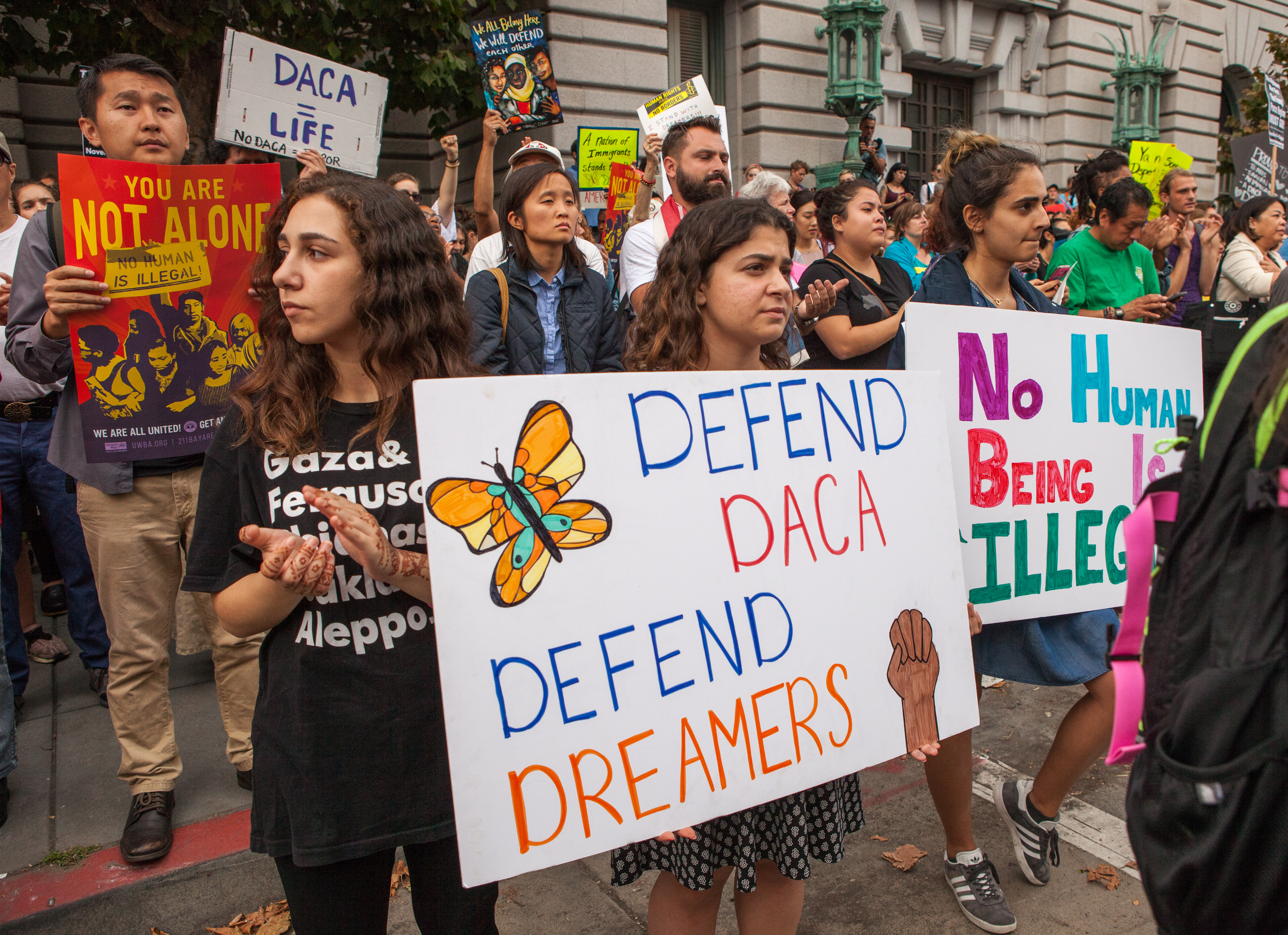
    Decision Time for DACA

    Supreme Court set to determine future of over 700,000 people

    The Supreme Court of the United States heard oral arguments on Nov. 12 that will determine the future of more than 700,000 immigrants brought to the United States by their parents as children.

    The Court’s decision isn’t expected until sometime next year, possibly as early January or as late as the summer. The majority decision will likely depend on Chief Justice John Roberts’ decision, as the remaining four liberal justices and four conservative justices are expected to vote in support of and in opposition to DACA, respectively.

    Eighty minutes of oral arguments sustained a packed courtroom on the legality of the rescission of the Deferred Action for Childhood Arrivals policy. Three to four million immigrants that live in the United States arrived illegally as children. DACA protects about 700,000 of those immigrants from deportation and makes them eligible for work permits.

    The DACA program, which requires that recipients renew their status every two years, is currently only accepting renewals, not new applications.

    Seiri Aragon, a 27-year-old DACA recipient, advises first generation, low-income students for Academic Talent Search at Sonoma State University. Aragon, who was born in Oaxaca de Juárez, México and came to the United States in 1997 at age five, said in a phone interview that she has no choice but to pay close attention to the news surrounding DACA.

    “It’s kind of hard not to pay attention,” Aragon said. “Because it’s a real, big part of my life, and so anything that could jeopardize my life here definitely should be of some importance to me.”

    Aragon went to high school in Petaluma before completing undergraduate programs at Santa Rosa Junior College and SSU. She then went to the University of Texas to complete a master’s program.

    Aragon signed up for DACA when it first came to be in 2012. While Aragon has doubts about the logistics of how a mass deportation could take place in the event of DACA’s rescission, she acknowledges that individual DACA recipients could easily be targeted and deported.

    “For a really long time I thought that because we were kids, we would be given a chance,” Aragon said. “But I feel like both Republicans and Democrats in government pretty much just use students like me, kids like me or folks like me as pawns in their political game. As soon as you realize that, you just get so discouraged that at some point you’re just like, ‘Well, if they want to throw me out, they’ll throw me out.’”

    Solicitor General Noel Francisco argued in support of DACA’s rescission in the courtroom. Francisco said DACA “maintained in perpetuity a program that actively facilitated violations of the law by hundreds of thousands of individuals.”

    “For a really long time I thought that because we were kids, we would be given a chance.”

    Seiri Aragon

    Francisco suggested that an executive action ordering the government not to enforce the law had questionable legality. Francisco also reminded the Court that DACA was never intended to be permanent.

    “DACA was always meant to be a temporary stopgap measure that could be rescinded at any time, which is why it was only granted in two-year increments,” Francisco said. “So I don’t think anybody could have reasonably assumed that DACA was going to remain in effect in perpetuity.”

    Francisco argued that a ruling on DACA’s actual legality would be unnecessary. Instead, Francisco believed that President Donald Trump’s attempted rescission of DACA in 2017 was legal and should be allowed to go forward—thus eliminating any need to rule on DACA itself.

    Attorney Theodore Olson argued against the rescission of DACA. Olson said such an impactful rescission necessitated a review by the Court.

    “The decision overturned a five-year enforcement policy of deferred action that had enabled DACA recipients under other unchallenged laws and regulations to apply for employment authorization, seek driver’s licenses and other benefits,” Olson said.

    While Justice Neil Gorusch acknowledged what he called “sympathetic facts,” Gorsuch and Justice Brett Kavanaugh questioned Olson’s stance.

    “What’s the legal limiting principle you’d have this Court adopt?” Gorsuch asked.

    Olson returned to his initial point on the significance of DACA.

    “All we’re saying is that it should be subject to review in the context of the big picture,” Olson said.

    When asked if Olson believed that the executive had the power to rescind DACA, Olson said “yes.” Thus, Olson’s argument rested on doubts of the explanation behind the rescission.

    President Barack Obama put DACA in place in 2012 as an executive action after Congress failed to pass the Development, Relief and Education for Alien Minors Act. The DREAM Act offered a path to citizenship for some immigrants brought to the United States as children.

    With DACA, Obama intended to give Congress time to come up with permanent immigration legislation. No such legislation has come to fruition, and in 2017, President Donald Trump attempted to rescind DACA.

    The Trump administration has called DACA illegal and unconstitutional, but lower courts have disagreed. In June, the Supreme Court agreed to hear the case to determine if the rescission of DACA was legal.

    About 11 million total undocumented immigrants lived in the United States in 2017, according to the Pew Research Center, and about 100 undocumented students currently attend Humboldt State University, according to an August press release.

    HSU released a statement Nov. 21 detailing its commitment to DACA and undocumented students. The release noted HSU’s resources available for undocumented students, including a clinic scheduled for Dec. 6 and 7 in which the Coalition for Humane Immigrant Rights will cover the DACA renewal fee for the first 20 renewals.

    “We would like to firmly reassert our commitment to being an inclusive campus which provides access and support for all students, staff, and faculty members within our HSU community,” the release said.

    The future for DACA recipients if the policy is rescinded is uncertain. The Department of Homeland Security website has a list of frequently asked questions regarding DACA’s rescission.

    Economic-Impact-of-DACA-Rescission-2

    “Current law does not grant any legal status for the class of individuals who are current recipients of DACA,” the site says. “Recipients of DACA are currently unlawfully present in the U.S. with their removal deferred. When their period of deferred action expires or is terminated, their removal will no longer be deferred and they will no longer be eligible for lawful employment.”

    The site says that once a DACA recipient’s status expires, their case will not be “proactively” provided to Immigrations and Customs Enforcement unless they receive a notice to appear in immigrations court. According to the site, this policy may change at any time without notice.

    In an analysis conducted following Trump’s move to rescind DACA in 2017, the bipartisan political organization FWD.us estimated that removing DACA recipients from the workforce would cost $460 billion in gross domestic product over a decade.

    When asked what she will do if DACA gets rescinded, Aragon paused.

    “I don’t know,” Aragon said. “I really don’t know. I’m just looking out for allies at this point.”

    Aragon said that while having DACA is a privilege compared to other undocumented immigrants, she, like Olson, pointed out that a large part of the program is providing basic citizen privileges like being able to file taxes or apply for driver’s licenses.

    “The privilege is to bring equity to essentially what we are, which is American,” Aragon said.

    For the next few months, DACA recipients across the United States, including Aragon, will await the word of the nine justices. Aragon said she hopes for DACA’s reinstatement, at the very least.

    “I feel like I’m asking for crumbs,” Aragon said. “Because at this point, I’m so disappointed that I’m like, ‘Can you just, one, not take away the program, and two, maybe reopen it to people who qualify?’ That’s it, that’s all I want.”

  • Trump Watch (March 22 to March 28)

    Trump Watch (March 22 to March 28)

    By | Bryan Donoghue

    According to a review of court cases, government and legal documents, and an interview with a former federal prosecutor, Donald Trump and his company repeatedly turned to wealthy Russians from former Soviet republics. Trump, his company, and partners have been linked to at least 10 wealthy former Soviet businessmen with alleged ties to criminal organizations or money laundering.

    Source: USA Today

    President Trump signed an executive order on Tuesday that’s intended to unwind most of President Obama’s climate-change legacy, celebrating the move as a way to promote energy independence and to restore thousands of lost coal industry jobs. The order also covers a suite of narrower but significant Obama-era climate and environmental policies, including lifting a short-term ban on new coal mining on public lands.

    Source: The New York Times

    Summer Zervos, a former contestant on Trump’s reality TV show, “The Apprentice” sued Trump last year before his Jan. 20 inauguration for groping and pressing his privates against her in 2007. President Trump wants to derail the defamation suit by claiming immunity through his job as the nation’s commander-in-chief, according to court papers made public Tuesday.

    Source: New York Post

  • Editorial: Where is our President?

    Editorial: Where is our President?

    By | The Lumberjack Editorial Board

    Oh where, oh where, oh where in the world is Humboldt State University President Lisa A. Rossbacher? President Rossbacher has been at best unavailable, and at worst dismissive and non communicative with The Lumberjack. The Lumberjack works to engage with and provide a voice for the HSU community.

    By deciding not to engage with The Lumberjack, Rossbacher is deciding not to engage with her campus community.
    As the president of Humboldt State University, Rossbacher is in charge of supporting the campus community. A key component of delivering that support is communicating with and being available to the campus media.

    Just like any governmental official, Rossbacher is held accountable to the public through the media.

    The Lumberjack has time and time again reached out to Rossbacher for comments on the ongoing athletic deficit, the recent tuition hike, and even parking with not one response.

    The Lumberjack is not only a media outlet but a mandatory class for all Journalism majors. Shutting out The Lumberjack also shuts out the 40 students who take the class every semester from having an opportunity to complete well-sourced, informative stories.

    In doing this, she fails to reinforce HSU’s mission to support its students educational opportunities.
    Failing to communicate with the media distorts the facts, it leaves people confused, and it fails to promote transparency — the chief responsibility of a community’s leader.
    On occasion, we students gather and sing, shout and even march to support the issues that are important to us; however, the one thing that has been missing during all this time is the voice of our university leader President Rossbacher.
    The Lumberjack staff would like to hear from President Rossbacher. The student body deserves a chance to hear from the president within the pages of its own, historic newspaper.
    We need a president that is present.

    One that shows up for the student body not only in making policy, but in communicating what steps, if any, are being taken to protect students and Humboldt State University’s values.