The Lumberjack


Students Serving The Cal Poly Humboldt Campus and Community Since 1929

Tag: grant

  • Grant reinvigorates rangeland restoration

    Grant reinvigorates rangeland restoration

    by Gabriel Zucker

    On Aug. 23, 2023, the University of California and the state of California announced they would be awarding over $80 million in climate action grants. These grants will find solutions that directly address state climate problems. In total, the grant is funding 38 projects across California, involving over 130 communities, California Universities and industries, while also taking perspectives from local tribes.

    Justin C. Luong, is a new forestry, fire, and rangeland professor at Cal Poly Humboldt. He previously worked as a restoration coordinator at the Cheadle Center for Biodiversity and Ecological Restoration, where he is still currently a research affiliate. He is also a leader in the conservation community, working in key leadership positions in the California Native Grassland Associated, Big Sur Land Trust, and the Ecological Society of America’s Restoration Ecology Section. He was awarded a $1.5 million California Climate Action Seed Grant. He named his grant proposal, “Establishing drought resilient grassland restoration networks in California.”

    According to Luong’s grant proposal, biodiverse grasslands are a key part of California’s ecosystem and economy. These habitats take up 25% of California, offering services like flood mitigation, ecotourism and forage production, while also being the foundation of the ranching economy. Currently, most grassland restoration projects use easily cultivated species that are known to work, but do not give any future benefits. This not only creates biodiversity loss, but also ignores the need for adaptation in a changing climate.

    “We find that practitioners across the entire state tend to be using the same seven species, even though California Grasslands support thousands of native species,” Luong said. “The reason people use these same seven species is because they know they’ll do well and that they’ll be successful… they have to use those species because there’s no other information about these less common species.”

    Luong is taking a three pronged approach to his research. First he is creating an online database called, The Grassland Restoration Action, Science, and Stewardship Network (GRASS-Net) focused on seed sharing and education. He is also studying three different grassland sights around California, taking data from the soils, looking at climate adaptive characteristics, and finding out what the best combination of plants are for the location. Lastly, he is conducting greenhouse studies by looking at samples from the sights, and is conducting research on different grassland species’ ability to survive a changing climate. His goal is to create a climate aware toolbox to help future projects with drought resilient plant selection and site assessment. 

    “Those three things all go together to help inform restoration projects across the state,” Luong said. “To better understand when we should use climate adaptive plant sourcing or when we should use locally sourced plants.”

    Luong is working in collaboration with the Bureau of Land Management, Cal Poly San Luis Obispo, CSU Chico, California Department of Fish and Wildlife, Hedgerow Farms, Mattole Restoration Council, Pepperwood Preserve and California Native Grassland Association, Point Blue Conservation Science, UC Irvine, UC Santa Barbara, Watsonville Wetlands Watch and the Wiyot Tribe. He is also working with another Cal Poly Humboldt professor Kerry Byrne, and is taking on five graduate and undergraduate students to help him with his research. 

    Graphic by Griffin Mancuso

    Field study

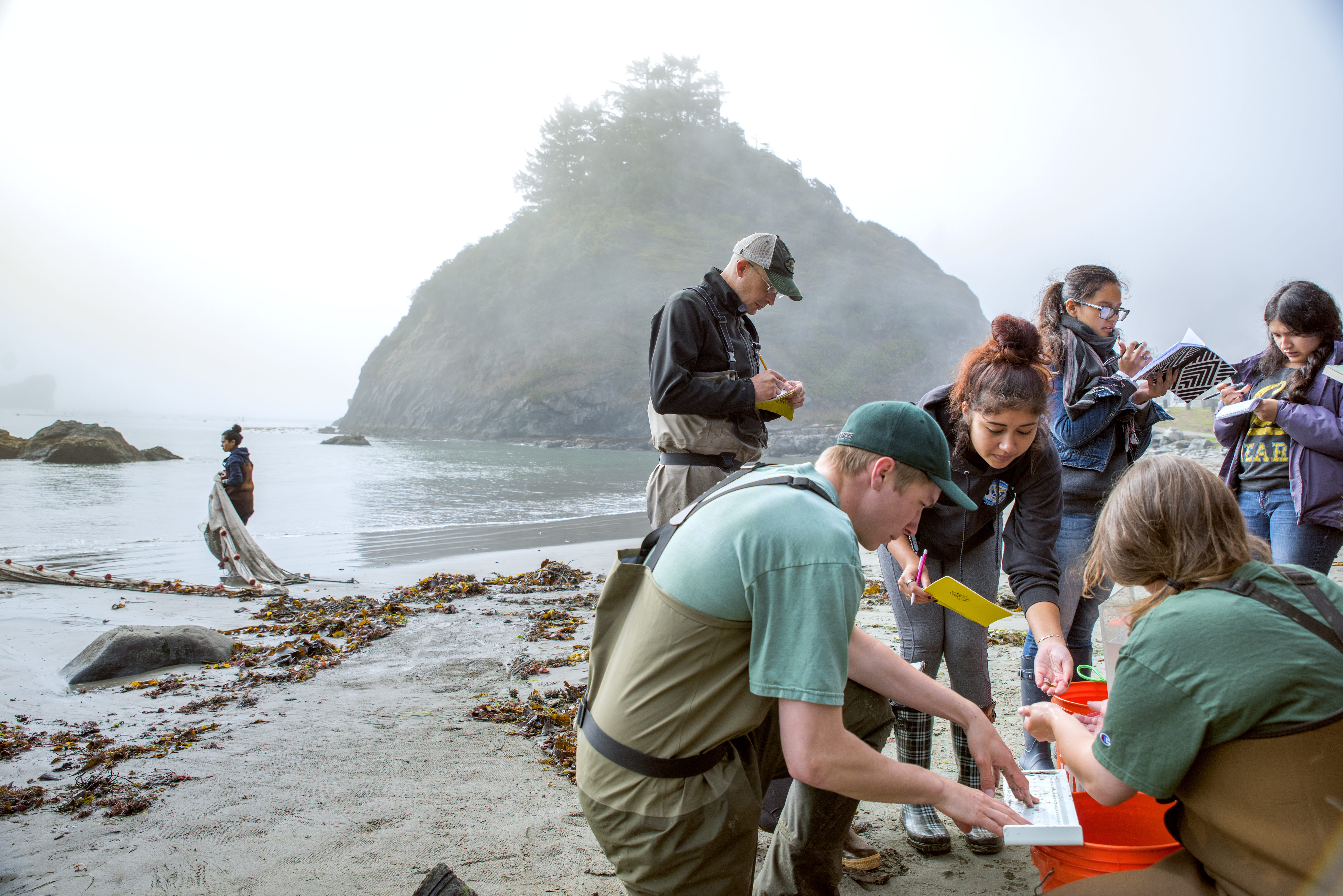
    Luong is conducting field studies across three sites in California. Focusing on lesser known species that are currently not used in grassland restoration.

    “I am working with my grad student to evaluate site characteristics, the climate, the soil, and all the plants that occur at those different sites at three different Grasslands across the state,” Luong said.

    Byrne, an associate professor in applied ecology at Cal Poly Humboldt is working closely with Luong on his field research. 

    “We’re going to be collecting information or characterizing both plants and roots and soils at three sites,” Byrne said. “The Coastal prairie from up here in Humboldt, our central site is going to be in Sonoma County, and then our southern site is down near San Luis Obispo.”

    Ernesto Chavez-Velasco is a national resources graduate student at Cal Poly Humboldt. He has worked with Luong before when they both attended UC Santa Cruz and is working on his graduate thesis while working with his old mentor.

    “We’re looking at soil and climate and their neighboring plants essentially. We’re seeing how all of those three things affect the plants we’re studying,” Chavez-Velasco said. “The goal of this is to generate a lot more information for plants that aren’t really used in restoration.”

    Byrne’s said that they will be using a standardized protocol across all three sights. 

    “We’ll collect some soils that we bring back to the lab for analysis,” Byrne said. “We’re going to look at root production or root biomass across all those sights.”

    The goal of this research, according to Chavez-Velasco, is to understand how the species react in different environments across a giant gradient.

    Greenhouse study

    Luong is also doing greenhouse research on campus. By focusing on environmentally resistant species, he is finding the best species for an ever changing climate and environment. Specifically, he is conducting a Lethal Drought 50 (LD50) Experiment.

    “Essentially, when 50% of the plants in a pot die from drought, we measure their soil moisture levels and we see at what level do these plants experience death?” Luong said. 

    Byrne is a big part of the greenhouse study, focusing on plant traits and culturally relevant plants to the local tribes.

    “We’ll collect some soils that we bring back to the lab for analysis,” Byrne said. “Then we’re going to look at root production or root biomass across all those sights, using a standardized protocol.”

    The Grassland Restoration Action, Science, and Stewardship Network (GRASS-Net) 

    GRASS-Net is the final step in Justin Luong’s project. He wants to create a website with information that all grassland restoration projects can use, no matter the location. The website will include climate-smart protocols, information and tools to help with drought-resilient plant selection, and an increased access to rarer plants, native to the area. 

    “We’re working with that Grassland Restoration Network to do essentially interdisciplinary work,” Luong said. “We’re first starting with conducting interviews and surveys with practitioners from across the state to best understand engagement methods to engage people in a network, and how to get people to actively participate for the network to continue to persist over time. We also talked to them about how we could share knowledge and about species selection; about what species do well.”

    A problem a lot of scientists have is how to communicate their findings to the masses, while also collaborating with multiple agencies and people. 

    For Chavez-Velasco, this is the first time he is engaging with people in the field as a graduate student, not just conducting research.

    “I feel more involved with engaging practitioners and communicating and sharing,” Chavez-Velasco said.

    The idea of communication in the field is not new to Luong. He understands the shortcomings of scientific communication and teaches his students how to communicate their ideas.

    “When you get into the workforce, you can’t choose who you’re interacting with,” Luong said. “You have to know how and learn how to interact with everyone to be effective in your position. Ecology is [the] absence of people, and we can’t understand ecological responses without understanding human responses.”

  • HSU establishes a collaborative space for Latinx STEM disciplines with ¡Échale Ganas!

    HSU establishes a collaborative space for Latinx STEM disciplines with ¡Échale Ganas!

    ¡Échale Ganas! is a $249,000 grant that was awarded to Humboldt State University to support hands-on learning and career advancement for Latinx students in STEM disciplines.

    The grant was named for the Mexican expression, ¡Échale Ganas! as it translates to “throw some life into it,” roughly similar to English expressions, “just go for it” or “give it your all.” The program hopes that by identifying the grant through this expression, it will enable and empower Latinx students to pursue opportunities that will further their learning and careers in natural resources.

    ¡Échale Ganas! provides students with an array of opportunities through a couple of main components. This consists of supporting two graduate STEM Promoters, providing a number of valuable learning sessions, and offering research internships to Latinx undergraduates.

    The promoters serve as a key component to the program as they use their academic and work-related experience to mentor Latinx undergraduates majoring in natural resource sciences.

    The grant was awarded to Wildlife Professor Matt Johnson and Fisheries Biology Professor Rafael Cuevas-Uribe, in collaboration with Fernando Paz of El Centro Académico Cultural.

    “El Centro works diligently to help students succeed in their respective major and academic disciplines,” Paz said. “In particular with STEM majors, we provide a cultural context that helps students persevere through courses that can be foreign and alienating.”

    Paz obtained his undergraduate through a double degree in history and ethnic studies from Humboldt State, as well as his Masters in social sciences a few years later.

    During his time as a student, he felt as though his path and the challenges he faced toward graduation were unique and different from those of many of his peers. He was consistently aware of the different perspectives he was able to contribute within his classes.

    Samantha Chavez and Laura Echávez are both graduate students studying wildlife at HSU and are the first two promoters for ¡Échale Ganas!

    “I’m hoping that my work as a promoter will inspire students to break out of their shells and believe in themselves and their abilities to succeed in this field,” Chavez said.

    Chavez said that she wishes that she would’ve tried to access established Latinx spaces during her undergraduate study because it was increasingly harder to make these types of connections once she entered the workforce. She explains that the the unique situations that seasonal field work brings intersects with one’s culture, so it is best to talk it through with a friend in a similar situation.

    The ability to learn and have access to other Latinx students of all different levels of experience is the primary goal of ¡Échale Ganas! Connecting these students within STEM disciplines is especially important as it allows them to feel supported in a field where they are predominantly underrepresented.

    The revelear sesiónes are a critical role within the collaboration process between the STEM Promoters and undergraduate students.

    Sarah Bacio, an academic and career advisor at HSU, attended both of the sessions last semester.

    “It’s really valuable to have that student experience and know what folks have done in the steps that they’ve already taken,” Bacio said as she spoke to those in attendance of the first revelear sesióne on Oct. 14.

    The Academic and Career Advising Center, along with other offices on campus, provides ¡Échale Ganas! with a number of valuable resources that coincide with the helpful tips that are given by the STEM promoters from their personal experiences.

    “The great thing about undergrad is that so many similar people gather in one place,” Chavez said. “So there’s no easier time for students to be able to find peers who are like-minded and share the same cultural background.”

  • New Grant Spurs CAPS Growth

    New Grant Spurs CAPS Growth

    CAPS will provide 36 more appointments per day by next year

    On Jan. 9, the California State University Office of the Chancellor gave Counseling and Psychological Services a grant of $150,000 under the California Budget Act of 2019 to provide Humboldt State University students with more counseling services to combat mental health issues.

    Director of Counseling and Psychological Services and Associate Director of Student Health and Wellbeing Services Jennifer Sanford was closely involved in the acceptance of the grant.

    “I’m most excited about the pilot project to get innovative programs off the ground that’s focused on high-risk students,” Sanford said. “In developing this program we will be doing some specialized training that we’re doing research on now to launch next year.”

    “Mental health doesn’t get the recognition that it should. When you’re not mentally well, your body reacts to that. If you’re stressed out, you’re only going to make it worse. More people should pay attention to it.”

    Danele Quijas

    Lobby areas will be built to hold more students and allow for an increase in counseling appointments. The grant will also fund two new therapy offices in the Behavioral and Social Sciences building, which will allow therapists to extend their hours. More tables and chairs will be added to the waiting areas to eliminate standing-room-only appointments. Construction will begin this summer.

    The funds are expected to help students learn life skills, cope, regulate stress and manage moods. CAPS says improving these areas can improve class attendance, retention in school and promote graduation. With anti-stigma campaigning, CAPS hopes to make students feel comfortable talking about their problems.

    Danele Quijas, a 22-year-old biology major, said students don’t pay enough attention to their mental health.

    “Mental health doesn’t get the recognition that it should,” Quijas said. “When you’re not mentally well, your body reacts to that. If you’re stressed out, you’re only going to make it worse. More people should pay attention to it.”

    A pilot project of $25,000 was also accepted by CAPS and will allow the growth of an intensive treatment program for high-risk students with disabling and chronic mental health issues. This treatment plan will include individual and group therapy as well as the highly-researched dialectical behavior therapy. CAPS hopes to continue this growth by providing other California State Universities with the tools to rebuild their own programs to be as effective as possible.

    Casey Pederson, a senior majoring in business marketing, said HSU should do more to make resources clearly available to students.

    “In a case like this with mental health, there can never be too many resources—so I definitely think it would help,” Pederson said. “I also think a big issue about it is getting people to know. Like I said, I had no knowledge that this was happening, and the big thing with mental health is the lack of knowledge and getting help. And there are resources available.”

  • New Grant Lends Helping Hand

    New Grant Lends Helping Hand

    Mental health grant seeks to address adverse childhood experiences in Humboldt

    A new $5 million grant from the U.S. Department of Education will be placing Masters of Social Work students at Humboldt State University in Eureka City Schools and Del Norte County schools as stipend workers.

    “The grants themselves are funding positions at Eureka City Schools and also the Del Norte Unified School District,” Director of Field Education at HSU’s Department of Social Work Yvonne Doble said. “It’s actually a full time benefited position that’s being brought on at the school side to support our students.”

    Announced Nov. 20, the funds will come from the U.S. Department of Education Mental Health Service Professional Development Program.

    Nearly $1 million of the grant will be going to Humboldt State to help support the students and get them prepared for applying for the Pupil Personnel Services Credential, which is necessary for social work students to be hired by schools.

    “A large portion of that is coming specifically for the stipends for the students,” Doble said. “We plan to offer a class for stipend recipients, where they will receive faculty guidance and support regarding school social work practice.”

    The grant will be placing Masters of Social Work students at HSU in varying levels of schools throughout Del Norte and Humboldt Counties.

    “It looks like we are going to have eight students this next fall, maybe more, and that will move up to 13 to 15 students by year four of the grant,” Doble said.

    Locally, students face higher than normal rates of Adverse Childhood Experiences in Humboldt and Del Norte.

    “Our region, for a number of reasons, has California’s highest ACEs rates in Humboldt and Del Norte County,” Jack Bareilles, the Northern Humboldt Union High School District grants administrator and an author of the grant, said. “You’re looking at approximately a third of all kids are being raised in families with four or more of the ten ACEs. So there is just a real need for that here, and I believe that’s one of the reasons we got funded.”

    ACEs can include things like alcohol and drug use or violence in the home, housing insecurity and food insecurity.

    “Locally, there is a real need for support for students and support for families,” Bareilles said. “Social workers are uniquely qualified to provide, and that being said, we actually have a real shortage of social workers in the schools. It’s just something that we haven’t had before.”

    Bareilles said the shortage comes from the lack of PPS credentials for students, and also because social workers, which are different from counselors and school psychiatrists, are mainly used in larger cities. Now, the PPS credential will be offered at HSU.

    “Kids and schools and families will be helped, and when push comes to shove, that is the most important thing.”

    Jack Bareilles

    “The role of school social workers is to really help address social and emotional needs of our students,” Doble said. “It’s not just about academic counseling. It’s about providing resources to children and families. It’s about providing opportunities to developers, opportunities to repair harm that’s occurred.”

    Bareilles said doing social work in school systems differs greatly from social work in other categories because the public schools operate under different processes than normal organizations.

    “Having these interns work two days a week for a whole year working in a high school or middle school or elementary school, they will emerge from their MSW program with a real sense of, ‘Oh this is how schools work,’” Bareilles said. “So whether or not they are employed as a school social worker or some other child-serving social worker, they will really have a better ability of connecting the dots and getting kids what they need.”

    Bareilles said the grant is a huge win for mental health support in Humboldt County and will help provide many troubled youths with the resources and personnel that they need.

    “Kids and schools and families will be helped, and when push comes to shove, that is the most important thing,” Bareilles said.

  • Humboldt State Plans Annex Update for Children’s Center

    Humboldt State Plans Annex Update for Children’s Center

    HSU to repurpose Trinity Annex building into larger Children’s Center with $8.6 million grant

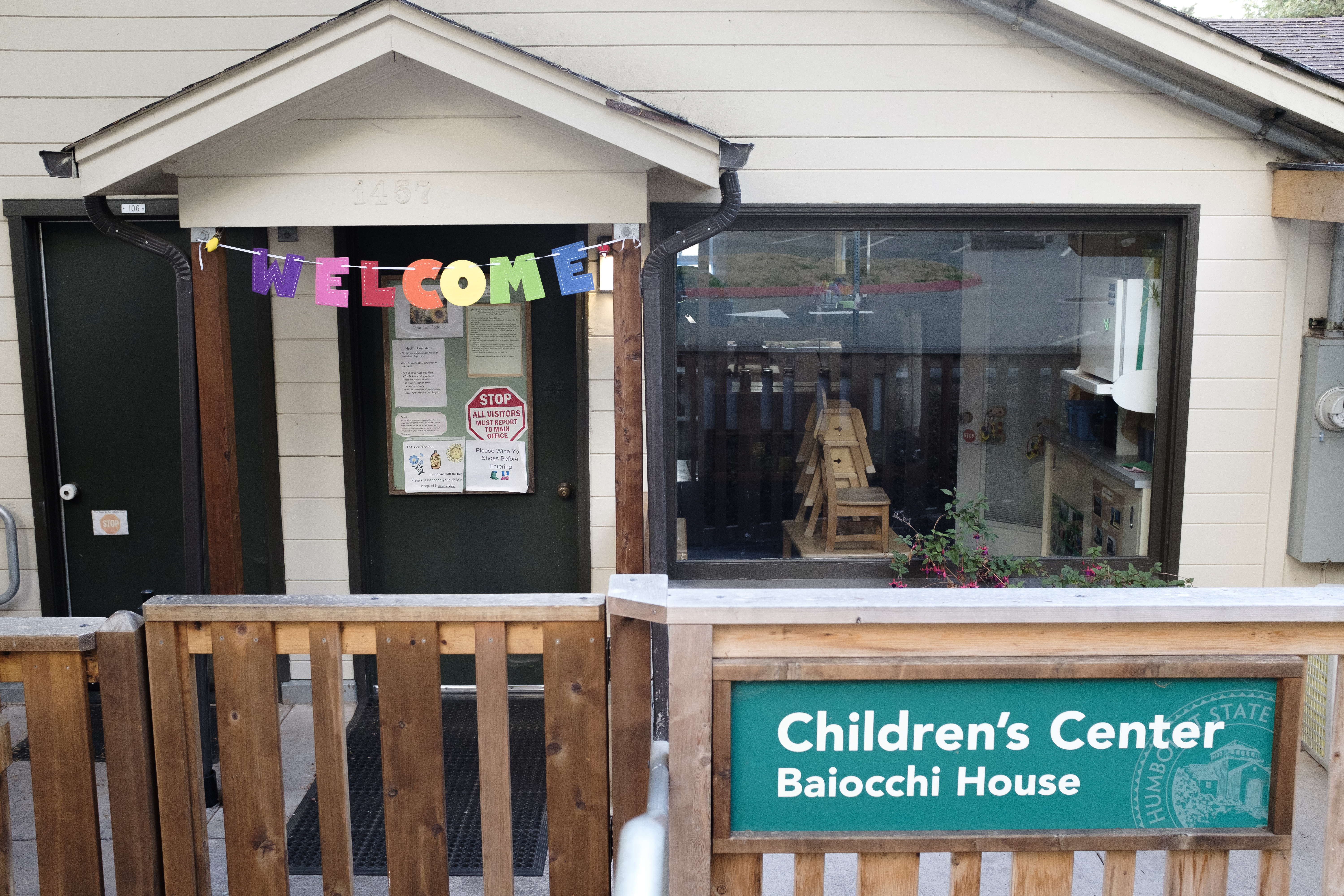
    Starting this semester, Humboldt State University will begin to redesign the Trinity Annex building at the corner of 14th and B streets into an updated facility to house a new Children’s Center. The current Children’s Center facility will continue child services until it moves in 2021.

    “We want folks that are going to be in the building to give feedback as to what it should look like,” HSU Associate Vice President of Student Success Steven St. Onge said.

    St. Onge, who oversees the Children’s Center, said the design phase of the new building will explore increased space, updated playgrounds, manipulative toys, dynamic crawling textures and additional infant care. The education program will not change, but the physical space will be improved.

    The staff responsible for the design held a recent meeting to develop ideas for the ideal facility. Staff will meet again later this semester to draft blueprints.

    The Children’s Center Administration building is located above the Children’s Center. | Photo by Michael Weber

    “I think we’re switching from the facility impacting the programto the program impacting the facility,” St. Onge said. “Which I think is a good step forward.”

    The redesign is funded by an $8.6 million allocation to HSU from a statewide grant for California State Universities. Betty Wilson, Children’s Center Program Director said the facility is limited by its budget.

    “We are constantly searching out new funding streams to help create better experiences,” Wilson said in an email.

    The Children’s Center daycare and education programs are regularly funded by Associated Students (both state and federal grants) and the university itself. This one-time grant will allow for a new facility.

    “There are 86 students in the Children’s Center, about 60% are children of HSU students. The rest are a combination of faculty, staff and community members’ children.”

    Steven St. Onge

    The current buildings that house the Children’s Center have reached maximum capacity for the number of children.

    “Right now, we’re limited by what the facility can give us,” St. Onge said. “The room size dictates how many children can be in a room, as well as the staff ratio.”

    The sign-up process for the programs begins with a wait list that prioritizes current HSU students.

    “There are 86 students in the Children’s Center, about 60% are children of HSU students,” St. Onge said. “The rest are a combination of faculty, staff and community members’ children.”

    Infant care is the most demanding service the Children’s Center provides because they require more attention than toddlers. St. Onge said the ratio of care for infants compared to toddlers is three to one.

    “It’s harder to find someone who will watch infants,” St. Onge said. That’s probably the largest wait list in that particular room.”

    Bikes are parked in one of the playgrounds of The Children’s Center on Sept. 9. The playground sports multiple textures for kids to walk on. | Photo by Michael Weber

    According to St. Onge, the new facility will improve operational efficiency. Currently, there are five buildings housing five different age groups. Each building has its own space, equipment and toys for its respective age group. The new facility will consolidate these spaces, improving efficiency.

    St. Onge said the design phase will be tied closely to the childcare and early education programs. The Children’s Center and St. Onge did not explicitly state ways the recent grant will benefit the children and parents of the program. St. Onge said the academic aspect of the Children’s Center will remain the same.

    “I think it’s exciting for the younger kids that will experience that new facility,” St. Onge said.

    One main function of the Children’s Center is to provide a place for students, faculty, staff and community members to drop their kids off when they are busy at school or work.

    According to Humboldt State Now, a recent survey conducted by the Campus Center for Rural Policy found that childcare improves student retention rates and work environments. Wilson said that the Early Head Start Grant allows parents to spend more time on schoolwork.

    A Harbert Roofing truck parked at the Humboldt State University Annex on Sept. 9, 2019. The Annex will be refurbished into a new Children’s Center. | Photo by Michael Weber

    “Family Service Coordinator Amy Pires-Moore helped to fulfill annual goals which the families create,” Wilson said. “By doing this, she is able to create a secure emotional base for the families to be able to succeed academically as some of their daily concerns can be taken care of.”

    The other main function of the Children’s Center is providing care and education to the children and student workers. They are accredited by the National Association for the Education of Young Children.

    The NAEYC website says, “The accreditation process provides a framework for self-study, external evaluation and improvement in the quality of teacher preparation programs.”