The Lumberjack


Students Serving The Cal Poly Humboldt Campus and Community Since 1929

Tag: health center

  • HSU Health Center Remains Open

    HSU Health Center Remains Open

    Students on campus can still reach out to medical services

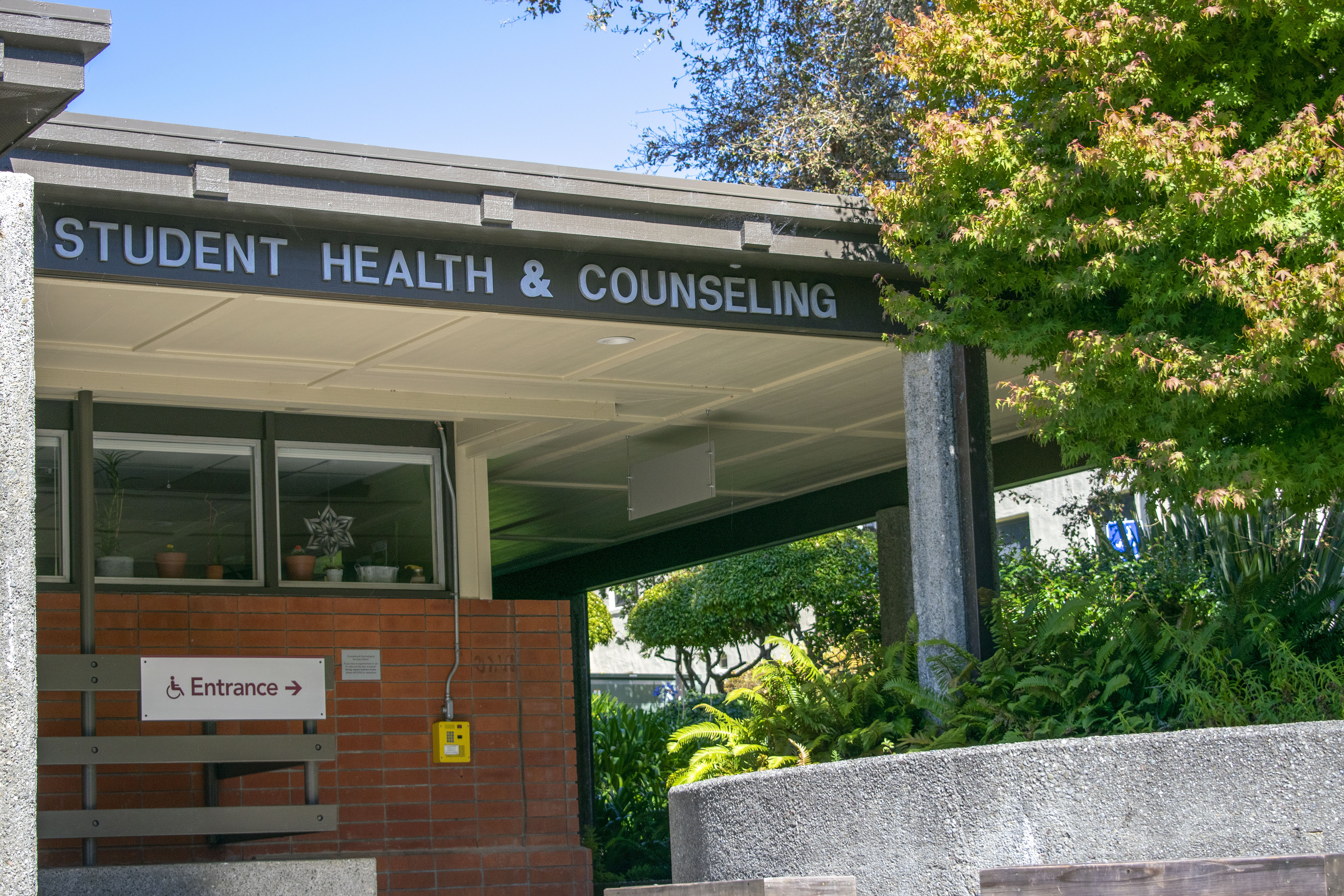
    The Humboldt State University campus is closed to the public, but the Student Health Center expects to remain open for the remainder of the semester to help any students remaining on campus. The health center is limiting face-to-face contact as much as possible, but is still helping students without physical appointments when possible.

    “We’re doing everything we can to help minimize the risk of exposure for students and Student Health and Counseling staff by limiting as much face-to-face contact as possible,” HSU Director of News and Information Aileen Yoo said. “For emotional support, for instance, students can talk to a CAPS counselor over the phone and, in most cases, if preferred, Zoom.”

    The Health Center is still offering other essential services like prescription refills and COVID-19 testing.

    “For those who are sick or suspect they have COVID-19, we have urged them to call before visiting the health center,” Yoo said. “When it comes to COVID-19, our main focus is assessing the student and collecting swab samples if we think that’s necessary.”

    “It is normal to have ebbs and flows with your mood and productivity levels but if you get “stuck” in a dark space for an uncomfortably long time, consider reaching out to get help such as from a counselor at CAPS.”

    Jennifer Sanford, director of Counseling and Psychological Services and associate director of student health and wellbeing

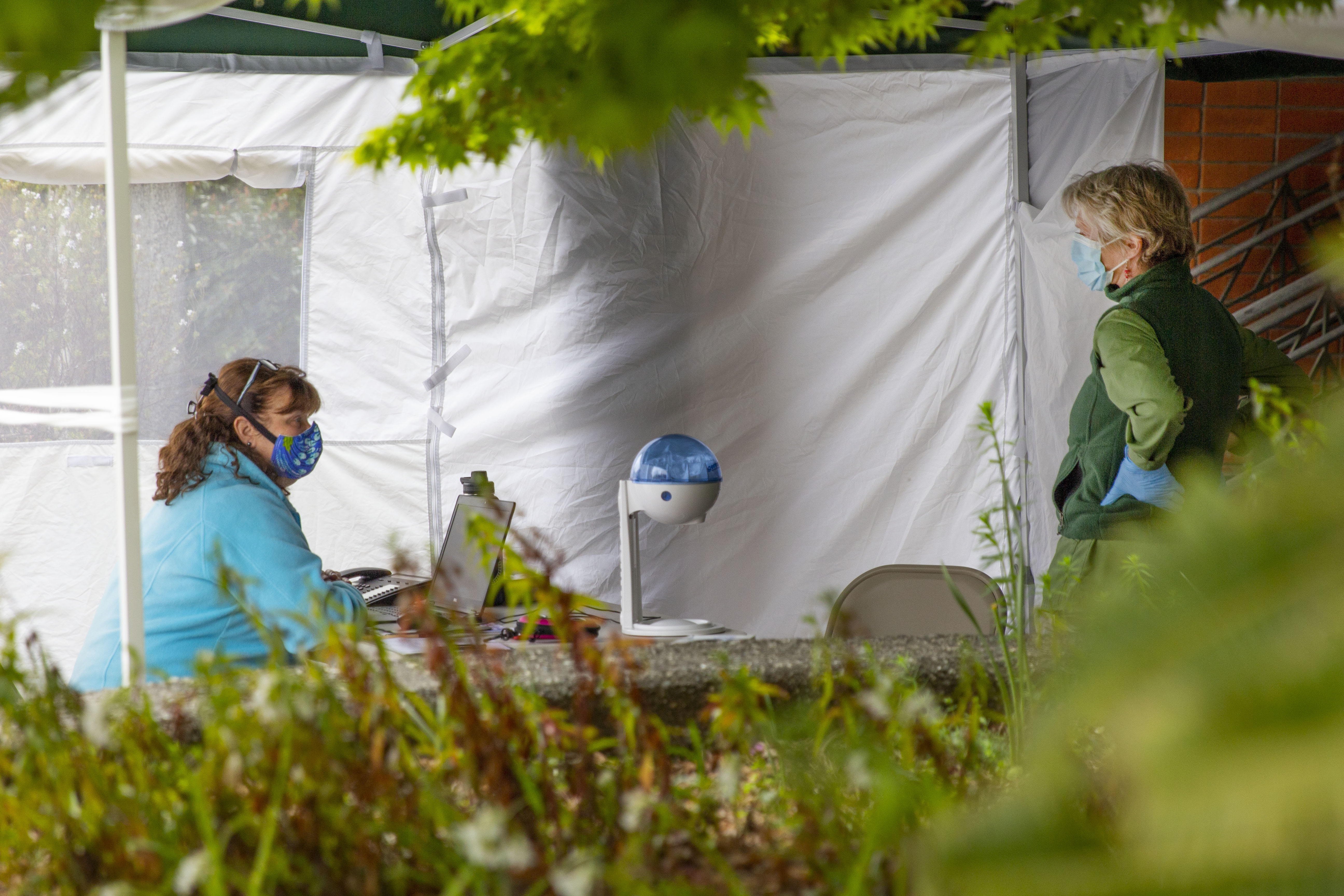
    The Health Center set up white triage tents in front of the building to help students check in and get assessed. If a student tests positive for COVID-19, the Health Center will work with county health services to make sure the student gets the treatment they need.

    During a pandemic, the disease itself isn’t the only medical problem facing students. The Center for Disease Control warns the stress of a pandemic can cause or worsen mental health problems, and recommends calling a health care provider if symptoms persist.

    The Director of Counseling and Psychological Services and Associate Director of Student Health and Wellbeing Jennifer Sanford asked students to consider reaching out to Counseling and Psychological Services if they feel their mental health is deteriorating.

    “Pay attention to how your thoughts and attitudes in any given moment are impacting your mood and overall wellbeing,” Sanford said. “Talk with others, connect. It is normal to have ebbs and flows with your mood and productivity levels but if you get “stuck” in a dark space for an uncomfortably long time, consider reaching out to get help such as from a counselor at CAPS.”

    Sanford said that this can be an uncertain time, but it’s important to see social distancing as community care.

    “The reality is that in our physical distancing, we are displaying compassion and care for our elderly and medically compromised,” Sanford said. “We are allowing our healthcare system to better manage the flow and care of patients, and we are caring for ourselves by lessening our own risk.”

  • Happy Birthday, Graduation is Canceled

    Happy Birthday, Graduation is Canceled

    An account from an HSU senior living on campus

    I woke up on St. Patrick’s day—my birthday—to sobbing. My roommate was curled up on her bed, across the room, crying her eyes out. She cried for half an hour, if not more, because she’d just received the Humboldt State email canceling our graduation and asking students to leave campus if they were able. An achievement she has been working toward for seven years and one I have been busting my ass off for four years was all taken away in seconds. 

    Instead of celebrating and going to the bars—in true St. Paddy’s day fashion—I spent the day in quarantine having to tell my family to cancel their plane tickets and Airbnb reservations because I wasn’t going to be able to walk. 

    As one of the students left on campus, it’s strange, to say the least. When my roommate and I go for walks or head to get food from OhSNAP!, the university looks like a nightmarish scene from some dystopian novel. Usually, the only people you’ll find walking around campus are construction workers, nurses or other essential HSU staff. Every once in a while there’s the odd student or two, using what little resources are left available on campus.

    In front of the health center, a tent is set up to greet all students where they sanitize their hands and grab a face mask before being allowed to enter the building—even students who just need to pick up medication from the pharmacy. 

    The only students allowed to be seen at the health center are those who show severe symptoms like a fever, sore throat or difficulty breathing. But for those of us who need regular prescriptions through their pharmacy, be it for anxiety medication, emergency inhalers, birth control pills or other medications they offer, we can still access the pharmacy during their posted hours. 

    In my opinion, this is one of the most concerning aspects of COVID-19. Students and community members cannot be tested through campus for the illness unless they are extremely sick, which leaves carriers with less severe symptoms to go untested.

    Before campus was closed, my roommate and I came down with a cough and fatigue that wouldn’t seem to go away so we decided to visit the health center to see what was wrong, maybe a bit paranoid that we might have contracted the coronavirus somehow. But who isn’t a little paranoid during this pandemic? 

    We were seated outside and only admitted into the entrance of the health center one-by-one. A blood pressure monitor, thermometer and other equipment were set up in the hallway, with two nurses wearing masks and gloves. We were given masks, examined and told that, unfortunately, if we did not show severe symptoms, they were unable to test us. 

    In my opinion, this is one of the most concerning aspects of COVID-19. Students and community members cannot be tested through campus for the illness unless they are extremely sick, which leaves carriers with less severe symptoms to go untested.

    My roommate and I were told we had post-viral infections and given medicine to treat that, but the truth is, we could very well have had the illness and not known because of arbitrary rules only allowing people very ill to access tests.

    I’m still sad that graduation was canceled and I know that it’s a momentous accomplishment that I will never get back. But it’s more important to me that we keep people safe than having the chance to walk across the football field to accept a degree. 

    There are “asymptomatic” carriers of COVID-19, meaning there might be tons of people in the area infected with the coronavirus without any knowledge they are sick. There might be people who have mild symptoms who are unable to be tested and are unintentionally spreading illness because they think they aren’t that sick. We aren’t only putting the health of students at risk by not testing those concerned they might have the illness, we are endangering the nurses and doctors who are still working through the health center, members of the community that students might come into contact with while grocery shopping or performing essential tasks during quarantine. 

    But this isn’t only a concern in Arcata. The reason behind such arbitrary testing rules is because, as reported by The New Yorker, there is a critical shortage in medical equipment necessary to perform tests. This is why those who are extremely ill are being prioritized over people who don’t show as many symptoms. We simply do not have the resources to test everyone, so people infected with the illness are falling through the cracks, living their normal lives and potentially spreading the illness because they are unaware they even have it.

    While those who are sick, but not sick enough, cannot get tests, celebrities who show no symptoms of COVID-19 are allowed to be tested, leaving medical professionals, sick patients and community members to wonder if their lives are less important than the rich.

    I’m sitting in my dorm right now going a bit stir-crazy, still trying to find things to do to occupy my time while I practice social distancing in quarantine. Last week, my roommate and I painted canvases to pass the time. I started learning embroidery because I was that bored and today I went to my Zoom English class, then spent the day writing and watching movies with my roommate. We’ve downloaded TikTok just to pass the time.

    I’m still sad that graduation was canceled and I know that it’s a momentous accomplishment that I will never get back. But it’s more important to me that we keep people safe than having the chance to walk across the football field to accept a degree. 

  • Mental Health at Humboldt State

    Mental Health at Humboldt State

    HSU’s CAPS is working to combat mental health concerns among HSU students

    Rates of attempted suicide in Humboldt County stand far above national and state averages, according to Humboldt State University Health Center Director Brian Mistler, Ph.D.

    “Suicide attempt rates in Humboldt County are nearly twice the national and California averages,” Mistler said in an email response facilitated by HSU Communication Specialist Grant Scott-Goforth. “And HSU students face greater systemic barriers to access health care than in other more affluent and less isolated parts of the country.”

    An estimated 40% of HSU students felt elevated levels of depression according to a 2016-2017 Healthy Minds Study led by Daniel Eisenberg, Ph.D of the Healthy Minds Network, which performs web-based mental health surveys on college students.

    Eisenberg has been leading an analysis of student mental health at all 23 California State Universities. In the 2016-2017 analysis of HSU, an estimated 42% of students had elevated levels of anxiety, while an estimated 4% of students attempted suicide in the last year.

    Mistler tied Humboldt County’s lack of expert services to mental health.

    “…HSU students face greater systemic barriers to access health care than in other more affluent and less isolated parts of the country.”

    Brian Mistler, Humboldt State University Health Center Director

    “Mental health is a critical basic need and it’s tied to others like having enough food, shelter and physical health care and safety,” Mistler said in the email. “Psychological needs become more important as chronic resource insecurity increases.”

    Mistler clarified that HSU’s relatively high rates of mental health conditions do not appear to be caused by Humboldt itself.

    “From what we know today, the increased needs among students appear to be present on the first day,” Mistler said in the email. “That is, it’s not caused by being here.”

    Mistler added that many HSU students may arrive with a history of limited health care access.

    “It’s also true that many students arrive at HSU having not had access to their fair share of health and counseling services in the past,” Mistler said in the email. “It’s clear from all the data that HSU’s team of health experts do a phenomenal job of helping those students who choose to seek help.”

    Counseling and Psychological Services Staff Psychologist and Outreach Coordinator Dr. Elizabeth McCallion in a CAPS office on Oct. 1. McCallion said most students who visit CAPS report positive experiences. | Photo by James Wilde

    HSU Counseling and Psychological Services Staff Psychologist and Outreach Coordinator Dr. Elizabeth McCallion is one of the experts working to help students.

    McCallion hopes to mitigate the stigma around mental health.

    “Mental health support doesn’t just have to be for when you’re having severe symptoms,” McCallion said. “It can be a way of just generally taking care of yourself. Kind of like preventative health care.”

    McCallion said CAPS is working to meet students where they are, including through library SkillShops and outreach by Multicultural Specialist Cedric Aaron.

    McCallion praised HSU’s mental health services but did acknowledge a lack of services in the surrounding community.

    “I think in terms of the counseling center, the counseling center does a wonderful job with that support,” McCallion said. “In terms of our community, there is a need for additional mental health care. But that’s not just mental health, that’s health care in general because of where we live.”

    Both McCallion and Mistler emphasized that those students who do use HSU’s services see verifiable benefits.

    “Dozens of studies confirm that medical and counseling services reduce the risk for students of catastrophic outcomes, help with anxiety and depression, and increase the chances of students graduating,” Mistler said in the email. “If there’s a message here, it’s to encourage people to use the available resources.”

    Mistler noted that HSU’s outreach efforts have produced an increase in student visits to counseling services of about 5% each year.

    Mistler also pointed out that students that receive counseling show improved retention rates and a higher likelihood of graduating.

    Mistler and Eisenberg plan to prepare a CSU-wide analysis of mental health in spring 2020, which they hope will provide more information on the state of student mental health.


    Per the CAPS website: You can reach a CAPS therapist by phone at all hours at (707) 826-3236. In emergency situations, you should call Humboldt County Mental Health at (707) 445-7715 or dial 911.

    You may also reach the National Suicide Prevention Lifeline at 1-800-273-8255.