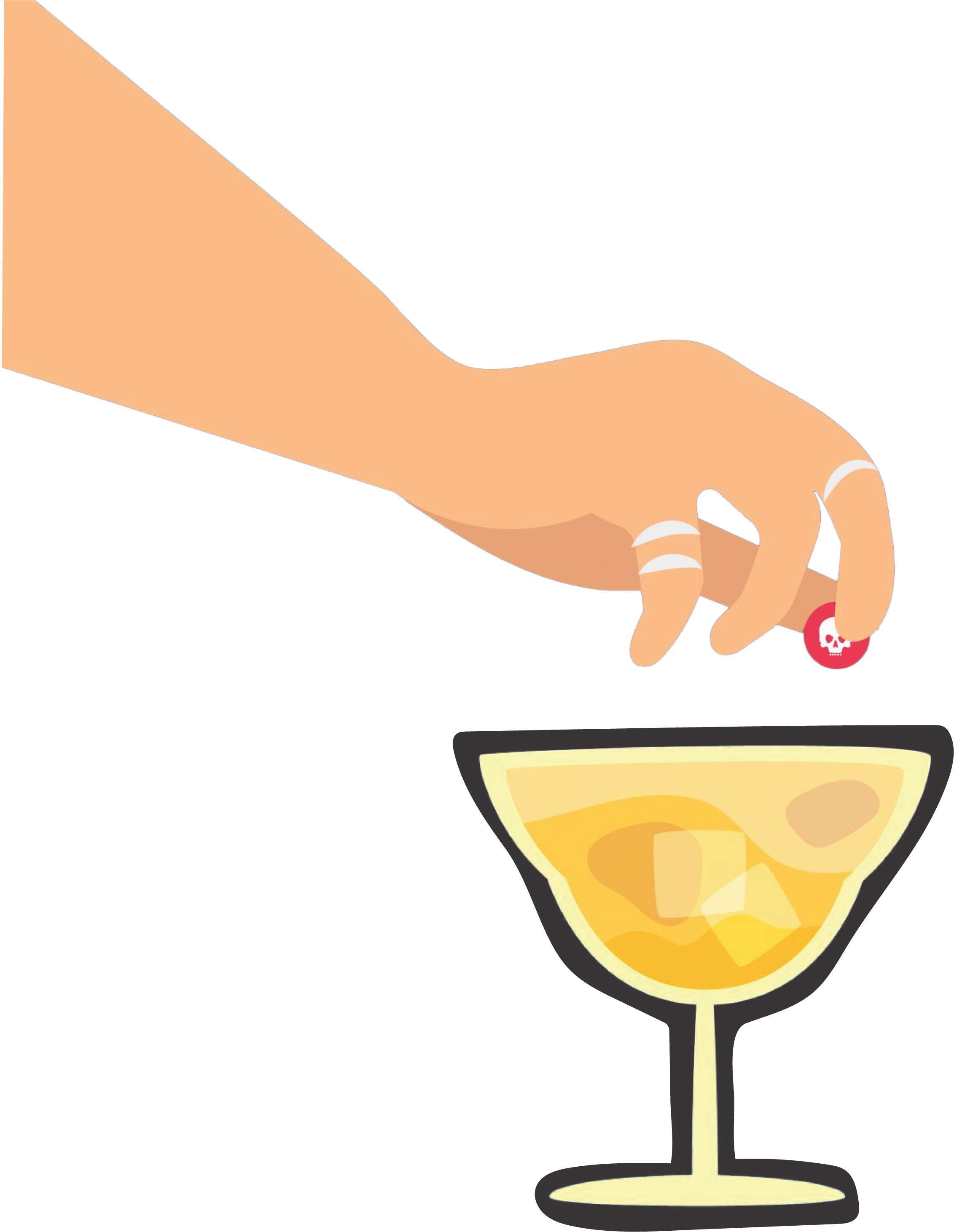
Despite the fact I had only had two drinks throughout the entire night, I very quickly felt unwell and more drunk than I have ever been in my entire life. The fact is, if you are roofied, you often have very little time between drinking and realizing that you are not well. It comes on quickly and you may find someone promising to “help you.” I realized then I had been roofied. The scariest part about that night is I don’t remember half of it.
What exactly is a roofie though? Roofies, or being roofied, is the slang term for the date rape drug called Rohypnol, officially known as flunitrazepam. Easily popped into and dissolved in drinks, the sedative causes memory loss, drowsiness, and sometimes even the loss of consciousness. Only one tablet can impair you for up to 8-12 hours. Combined with alcohol, it makes for an intensified effect.
As cliche as it sounds, don’t ever leave your drink unattended. Sometimes, you need to be even more careful of those around you that are your so-called friends. It’s not that I didn’t not trust who I was with – I had my friends and dormmates with me, but we had been party hopping on Halloween night, drinking and accepting drinks from wherever they came from. Truth is, I still have no idea how I got roofied. This wasn’t a blackout just from too much alcohol, this was a new experience clearly resembling the effects of being roofied.
Staying safe while out on the town starts with prevention. Consider bringing cup covers next time you go out partying. Cup covers prevent someone from getting the opportunity to slip pills, powders, or other substances into your drink without you knowing. I understand you may feel silly pulling out something that resembles a condom for your cup but remember, self defense begins with prevention. The Check Your Drink CYD test strips are another way to prevent being roofied. This is an easy-to-use rapid drink spiking test that detects ketamine, rohypnol, and GHB from only a few drops of your drink.
It’s not like this experience has deterred me away from drinking or the occasional partying, especially now that the drinking I’m doing is legal. However, it has made me think to just be a little more careful and aware of my surroundings because of what can happen.
If I can bring awareness and prevention methods to just one person, I’d be happy with that. Nobody deserves to have their drink tampered with and potentially taken advantage of.
“Wrap it before you tap it.” We’ve all heard that before.
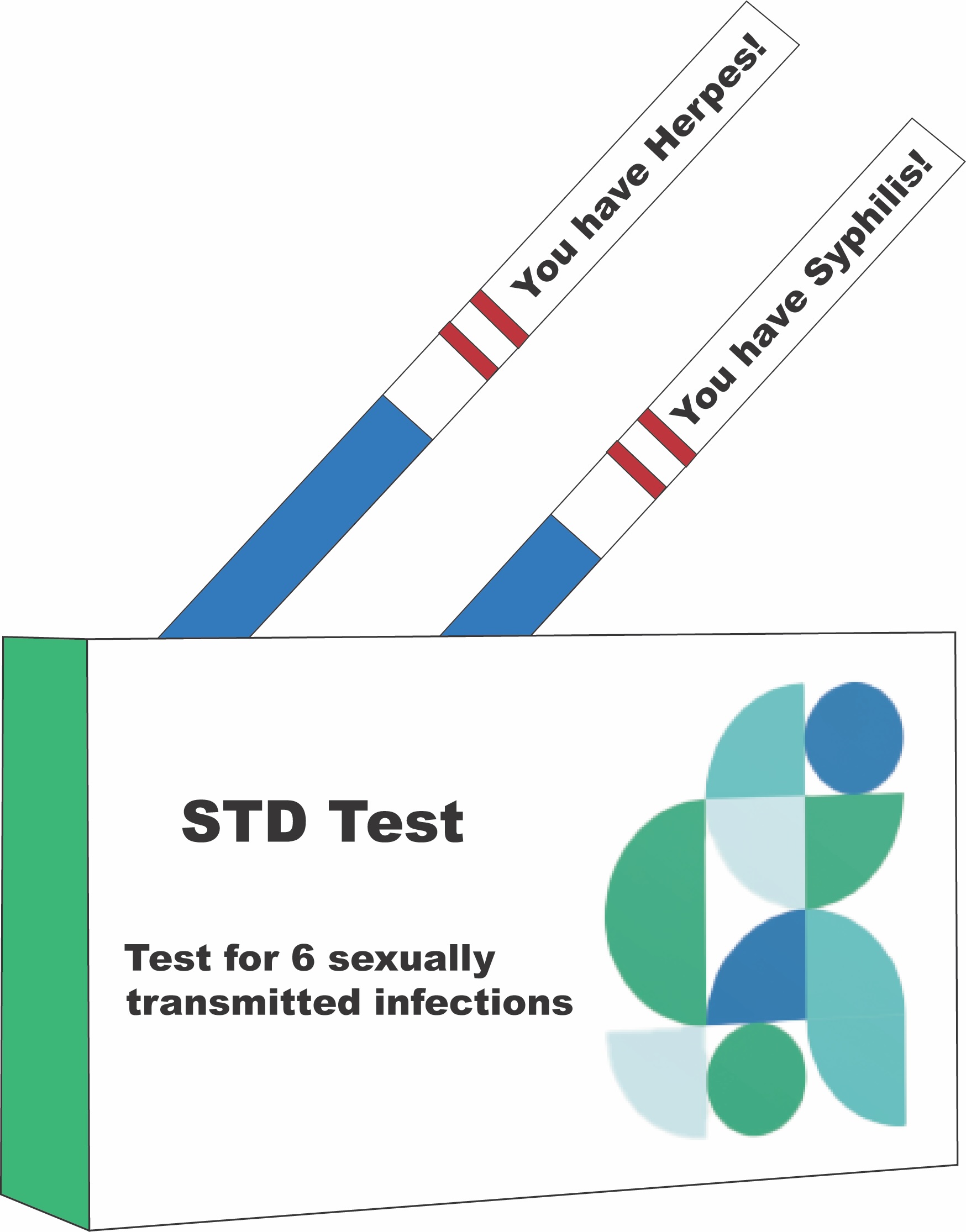
Condoms and other forms of contraceptives help prevent the spread of sexually transmitted infections and diseases. However, condoms don’t protect you from all STIs, such as herpes, genital warts, syphilis and mpox, which can be spread from skin-to-skin contact.
According to the Center for Disease Control, more than 2.5 million cases of chlamydia, gonorrhea, and syphilis were reported in the United States in 2022.
Humboldt’s Student Health Center offers information and counseling in a safe, confidential setting. They offer PAP smears, breast exams, and other sexual health screenings, pregnancy tests and even medication abortions. At the health center, they screen, test, and treat sexually transmitted infections (STIs) as well. As far as keeping safe, they also provide many contraceptive options such as long acting contraception, birth control pills, patches, rings, condoms, and much more.
If you’re concerned about privacy with sexual health and need resources, you can sign up for the family pact card to access these services in person at the health center.
Cal Poly Humboldt also has the Peer Health Education Center in the Recreation and Wellness center (RWC). They offer free harm reduction supplies, condoms of all kinds, emergency contraception, narcan and test strips, menstrual products and more.
There are many ways you can maintain sexual health. Practice consent; remember an enthusiastic and informed yes means yes. Communicate with your partner and explore your body, discover what you like and share that with your partner(s). Be safe and protect yourself and your partner(s) against sexually transmitted infections and unwanted pregnancy.
Most importantly, get yourself tested and educate yourself about the risks of having unprotected sex. Don’t be afraid to ask questions and communicate with your partner(s).
San Jose State’s football team steals on-campus resources from student body
***Editor’s note: SJSU football program was tested in congruence with Mountain West conference guidelines***
Humboldt State University’s administration continues to ignore the health and well-being of paying students and surrounding community members by selfishly prioritizing university funding and money opportunities.
On Oct. 2, San Jose State University’s football team arrived at HSU to utilize the field and training facilities. The team of 141 players, coaches and staff members are expected to social bubble, strictly quarantine with one another, on campus in Redwood Hall. Redwood Hall stands in the middle of campus, between the Student Health Center and the Depot, making it an unavoidable place for students on campus to pass by.
In addition, HSU students were notified via school wide email of the university deal less than 24 hours prior to SJSU’s arrival.
First and foremost, this deal did not involve the approval from either county’s public health officers. Since March, HSU has maintained a relatively low COVID-19 case count with only 11 confirmed cases. SJSU falls within Santa Clara County, and as of Oct. 6, has 50 confirmed cases.
The team is expected to self-patrol and monitor their own health. They will be tested once a week throughout their stay at HSU, which directly violated SJSU’s athletic conference guidelines provided by Mountain West.
The Mountain West Conference demands athletes be tested three times a week. If a test comes back positive, further testing is done to confirm the positivity. SJSU brought their own testing equipment, however, the heightened risk of contracting the virus extends beyond the student body and permeates into the town of Arcata.
There has been no confirmation of how long SJSU’s stay will be. Hearsay declares a week, but pictures of arriving Spartan football players holding flatscreen TV’s and luggages of equipment says otherwise.
Student facilities will cater to SJSU during their stay, closing off access to the Redwood Bowl from HSU athletes and students while also extending the Student Recreation Center hours beyond usual scheduling. A ‘no access’ sign currently hangs outside the gate entrance of the Redwood Bowl, HSU claims the sign is to contain SJSU’s football team and limit cross infection.
HSU students have been repeatedly denied access to on-campus resources, classes, labs, studios and housing since the beginning of the pandemic. However, SJSU was able to rent out the Redwood bowl, SRC and on-campus housing facilities and resources immediately. HSU is renting out campus resources we either don’t have or refuse to offer to students.
Administration stated that SJSU will be paying for all facilities, housing and resources being used during their stay. However, current resources occupied by SJSU at this time are paid for by student fees. Students believe the funds should be redistributed back to their accounts for a fair way to compensate for the loss of access.
It’s clear that this decision to move SJSU to HSU was made last minute and without the permission or acknowledgement of HSU students. HSU administration has proven time and time again that the students’ safety isn’t a top priority. The motivation to cut out students from participating in their own university outweighs the value of students altogether.
HSU continues to treat our campus like it’s closed or empty, forgetting an entire student body population of 6400 people.
Students stay home this semester with concerns of health and quality of education.
In the midst of the global pandemic, Humboldt State University students have chosen to stay home and attend classes virtually or not at all this semester, citing living expenses, health concerns and quality of education as factors in their decisions. Given most classes will only be offered virtually this semester, there’s much less incentive to be present on campus.
Ahead of their return, the HSU health department informed students of the risk in coming back to campus and the new safety protocol including wearing masks, practicing social distancing and a mandatory COVID-19 test followed by two weeks of self-quarantine upon arrival.
Calista Tutkowski, an environmental science major, is one of the students staying home and continuing her education online. Tutkowski’s family lives in Colorado and she decided coming back to campus wasn’t worth the risk. In her time on campus, Tutkowski made lots of friends that were also from out of state/from all over the country
“All of them coming back to one place felt like a recipe for disaster,” Tutkowski said.
While Tutkowski’s lab-classes were deemed deserving of in-person instruction this semester, her concern outweighed her desire to return.
“It just wouldn’t feel like a safe environment,” Tutkowski said.
In Colorado, she’s employed as an essential worker and frequently has to interact with customers that don’t abide by social-distancing protocols. Tutkowski also has the financial advantage of staying in her parents home and avoiding the cost of out-of-state tuition with the cost of housing in California, it wasn’t worth her return.
“It’s like pulling teeth with some people,” Tutkowski said. “I could just be making money here if I stayed home.”
Oliver McVay, a psychology student, online learning was never an option. The shift to online-instruction last semester in response to the initial outbreaks of COVID-19 cases, students like McVay, who suffers from a learning disability, were left to fend for themselves.
“There wasn’t a lot of face-to-face stuff,” McVay said. “It was more just, here’s the assignment, turn it on canvas by this day at this time.”
McVay experiences difficulty teaching himself the material and felt he wasn’t receiving the education he paid for, so he decided to take the year off.
“Last semester, I didn’t really learn anything from my online classes,” McVay said. “I just felt like it wasn’t benefiting me.”
Former HSU student, Chase Ervin, also found learning online too challenging in the spring and decided not to return for the fall.
“I knew that online schooling was going to be difficult,” said Ervin. “I went from like all A’s to all B’s and C’s.”
Students like Ervin and McVay require a proper learning environment to tap into their potential.
“I was lacking a lot of focus,” Ervin said. “There were a lot of distractions at home that I wouldn’t necessarily have at school.”
Whether students patiently await their return to the classroom or carry on pursuing an online education, it’s clear the virtual teaching methods do not benefit or cater to all students.
Students on campus can still reach out to medical services
The Humboldt State University campus is closed to the public, but the Student Health Center expects to remain open for the remainder of the semester to help any students remaining on campus. The health center is limiting face-to-face contact as much as possible, but is still helping students without physical appointments when possible.
“We’re doing everything we can to help minimize the risk of exposure for students and Student Health and Counseling staff by limiting as much face-to-face contact as possible,” HSU Director of News and Information Aileen Yoo said. “For emotional support, for instance, students can talk to a CAPS counselor over the phone and, in most cases, if preferred, Zoom.”
The Health Center is still offering other essential services like prescription refills and COVID-19 testing.
“For those who are sick or suspect they have COVID-19, we have urged them to call before visiting the health center,” Yoo said. “When it comes to COVID-19, our main focus is assessing the student and collecting swab samples if we think that’s necessary.”
“It is normal to have ebbs and flows with your mood and productivity levels but if you get “stuck” in a dark space for an uncomfortably long time, consider reaching out to get help such as from a counselor at CAPS.”
Jennifer Sanford, director of Counseling and Psychological Services and associate director of student health and wellbeing
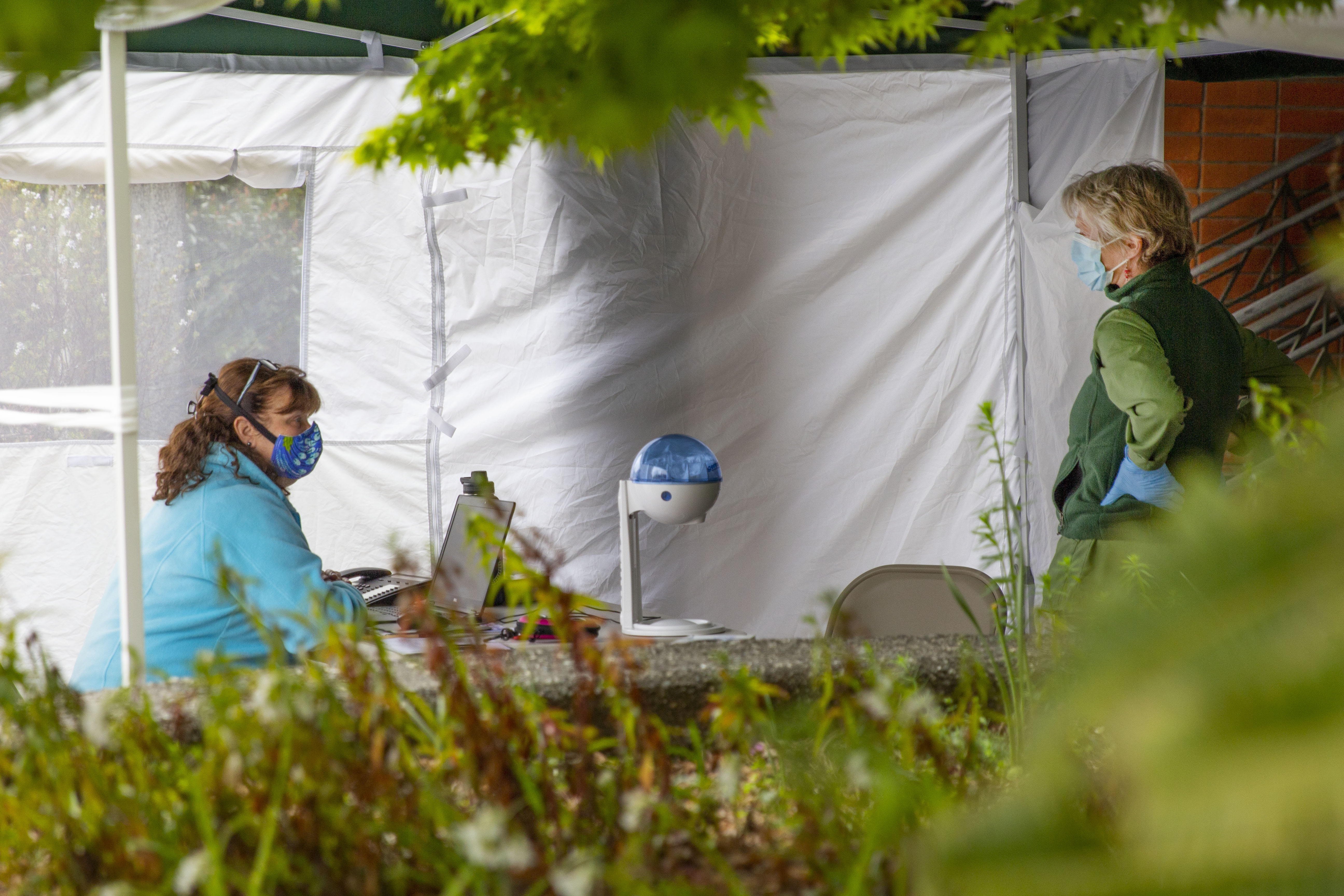
The Health Center set up white triage tents in front of the building to help students check in and get assessed. If a student tests positive for COVID-19, the Health Center will work with county health services to make sure the student gets the treatment they need.
During a pandemic, the disease itself isn’t the only medical problem facing students. The Center for Disease Control warns the stress of a pandemic can cause or worsen mental health problems, and recommends calling a health care provider if symptoms persist.
The Director of Counseling and Psychological Services and Associate Director of Student Health and Wellbeing Jennifer Sanford asked students to consider reaching out to Counseling and Psychological Services if they feel their mental health is deteriorating.
“Pay attention to how your thoughts and attitudes in any given moment are impacting your mood and overall wellbeing,” Sanford said. “Talk with others, connect. It is normal to have ebbs and flows with your mood and productivity levels but if you get “stuck” in a dark space for an uncomfortably long time, consider reaching out to get help such as from a counselor at CAPS.”
Sanford said that this can be an uncertain time, but it’s important to see social distancing as community care.
“The reality is that in our physical distancing, we are displaying compassion and care for our elderly and medically compromised,” Sanford said. “We are allowing our healthcare system to better manage the flow and care of patients, and we are caring for ourselves by lessening our own risk.”
Looking to the past to learn about the present pandemic
There’s a saying that goes something like, “In order to prevent future mistakes, we should look to the past for guidance.” While this current pandemic may be new to all of us, humans have gone through this before. Some of the more recent pandemics include the SARS virus, the H1N1 virus, Ebola and HIV.
The term pandemic is defined as something “occurring over a wide geographic area and affecting an exceptionally high proportion of the population.” Obviously, the current COVID-19 virus fits into this category. While some of the aforementioned pandemics did not enact a devastating, history-altering toll on Humboldt County, another pandemic did.
From 1918 to 1920, the Spanish flu swept across America, resulting in an estimated 675,000 deaths according to the U.S. Department of Health and Human Services. The first official report of the Spanish flu in California was reported Sept. 27, 1918, just two weeks after an outbreak on the East Coast. By November 1918, the total cases throughout the state hit about 115,000—overwhelming doctors and government officials from north to south.
One of three doctors that helped Spanish flu patients in the Ferndale area.
Although Humboldt County sits in an isolated area protected by the “Redwood Curtain,” the area was soon amassed in its own troubles combatting the illness. Humboldt County had a population of about 37,000 people with Eureka holding around 12,000. The Spanish flu resulted in around 200 deaths (although it is thought to be much higher) and thousands grew ill.
In 2012, Humboldt State alumnus and McKinleyville native Jeff Benedetti-Coomber wrote a detailed history of the impact the Spanish flu had on Humboldt County. For it, he was awarded the Charles R. Barnum History Award by HSU’s history department. For his research he scoured through old newspaper clippings for primary source documentation. He read academic analysis on how the Spanish flu affected the entire nation and he cited Matina Kilkenny, a researcher and local author for the Humboldt Historical Society who also wrote about the impacts the Spanish flu had on Humboldt County.
What prompted Benedetti-Coomber to focus on the Spanish flu was its lack of local research. As his peers decided to look into European history, he decided to focus his attention on the effects locally.
“I was walking through the graveyard in Arcata and noticed a family of graves, not necessarily related to the [Spanish] influenza but it got me thinking about what effects the flu may have had because it was around the same time,” he told me over the phone from his place in Los Angeles. “Once I started researching it I saw how it did affect the county and I was pretty amazed.”
Benedetti-Coomber’s senior thesis, titled “Death In the Redwoods: The Effects of the Spanish Influenza on Humboldt County,” spans 30 pages and breaks down how each town dealt with the outbreak. He highlights what preventative measures seem to have worked and where officials, the public and the media went wrong and what they got right.
“It’s just like today when you tell people to do something and they kind of resist. A lot of people had that with the Spanish influenza and it was a reason a lot of people died, because they didn’t take it seriously.”
Jeff Benedetti-Coomber
Some of the highlights from his research that still stand out to him are how Eureka initially closed all schools, which flooded the streets with children. They soon changed their minds and brought the kids back into the school to try to quarantine the children. Another nugget of research that sticks out in his mind has to do with masks and the public’s initial reluctance to wear them.
“It’s just like today,” Benedetti-Coomber said, “when you tell people to do something and they kind of resist. A lot of people had that with the Spanish influenza and it was a reason a lot of people died, because they didn’t take it seriously.”
When the Spanish flu hit Humboldt, the United States was in the middle of World War I and young men from Humboldt were signing up to join the war effort. There were war rallies and large gatherings of people throughout the towns in Humboldt in the fall of 1918 as the Spanish flu began to creep in.
“Although the Great War was still the main focus in Humboldt County, more and more citizens were beginning to take notice of the spreading pandemic,” Benedetti-Coomber wrote.
Some of the newspapers in Humboldt at that time seem to have downplayed the seriousness of the Spanish flu. Benedetti-Coomber points to an ad that was in the Humboldt Standard by Vicks VapoRub that was “disguised as an article… and it assured readers that the [Spanish flu] was ‘Nothing new simply the Old Grippe and la Grippe that was the epidemic in 1889-90.’”
Benedetti-Coomber wrote that it is believed the Spanish flu was brought to Humboldt County by locals traveling to other parts of the state to help care for sick family members and then returning before symptoms started to show. By mid-October 1918, reports of the Spanish flu were starting to pop up in the local newspapers.
“The Humboldt Times also reported that there were roughly 150 cases in Eureka by [Oct. 22] and hospitals were short staffed. Doctors were so busy they did not have the time to report new cases or treat the majority of their patients.”
Jeff Benedetti-Coomber
“The Humboldt Times and Humboldt Standard newspapers offered daily accounts of what was happening,” he said, adding that they also seemed to not care about the Spanish flu at first.
On Oct. 12, 1918, four cases were reported in the Humboldt Times and those infected were quarantined in a “‘safe house’” on 8th Street where they could be quarantined and cared for,” Benedetti-Coomber wrote.
At first, the mayor of Eureka downplayed the danger to the public, but two days later, five more people were infected. By Oct. 22, 1918 there would be more than 150 cases and one death.
“According to the Humboldt Times, Mrs. Garber Dahle was the first person in Humboldt County to die from the deadly virus,” Benedetti-Coomber wrote. “The Humboldt Times also reported that there were roughly 150 cases in Eureka by [Oct. 22] and hospitals were short staffed. Doctors were so busy they did not have the time to report new cases or treat the majority of their patients.”
Action to combat the Spanish flu across the county began to take root. Arcata was the first town to pass a requirement that all residents had to wear a mask while out in public, and by Nov. 7, 1918, the entire county was required to do so. Emergency hospitals were soon established across the county with some residents offering up their homes for the infected.
Arcata escaped the pandemic with only four deaths, but the same can’t be said for Eureka and especially for the logging camps in the remote areas of the county. The number of cases grew in the urban areas, and by Oct. 23, 1918, the logging camps were left to fend for themselves.
“Logging camps and small towns were informed by the newspapers and from local physicians that they would have to face the Spanish Influenza on their own as all of the county hospitals were completely full,” Benedetti-Coomber wrote while citing a Humboldt Times article titled “Influenza Increases Alarmingly in Two Days.”
Young women wearing masks in Humboldt County.
But one logging camp was able to escape the pandemic with no cases at all. In her article, “Missing Faces,” Matina Kilkenny reported how Carl Munther set up a quarantine system for his workers who decided to go into town. (Kilkenny’s article has a number of great photographs of life in Humboldt County during the Spanish flu.)
“Munther required every person returning to camp… to stay four days in a tent he’d pitched some distance from the workers’ cabin,” Kilkenny wrote, adding that the returning workers were also required to work and eat separately from their peers. “Thanks to their boss, very few men chose to leave the Barrel Company camp and not one case of influenza occurred there.”
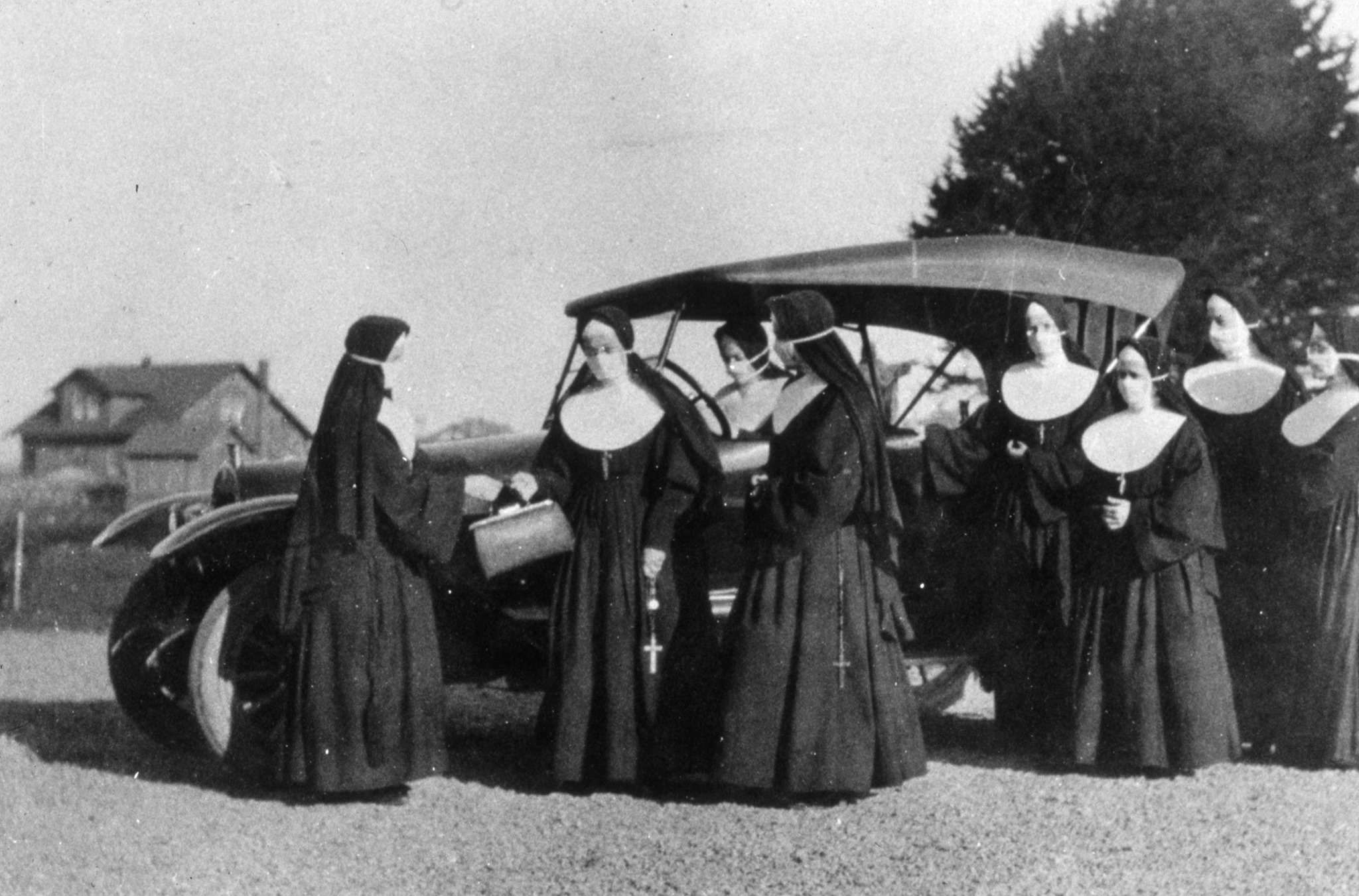
Sisters of St. Joseph wearing masks during the Spanish flu. The sisters helped many patients in Humboldt from 1918-1920.
Throughout her research, Kilkenny was able to find where a number of hospitals were set up across Humboldt. There was a Red Cross Hospital in Korbel, Arcata, Blue Lake and Eureka. Kilkenny also came across an interview between a member of the Sisters of St. Joseph of Orange in Eureka and a man named Brad Geagly. Kilkenny wrote the following:
“[Mother Bernard] sent [the Sisters] out in twos, in cars provided by the Red Cross. She armed each Sister with a kit containing camphor and sweet oil, castor oil, and mustard plasters. Into the homes… the sisters came, arriving at seven o’clock and leaving at the end of a 12-hour shift, to be replaced by two other Sisters. They would attend first to the adults….They would bathe the delirious victims completely, rubbing their chests deeply with the camphorated oil. Mustard plasters would be applied, and then the sisters would wrap the sick tightly in whatever woolen material they could find; then they would tend the children. Once they had been bathed and medicated, the sisters turned to washing linens or cleaning house. They fed their charges warmed milk and broth prepared from the food furnished by the Red Cross.”
Kilkenny noted that, generally, it was the poor who were admitted into the hospitals, while the more well-off were cared for in their homes. Because of this the actual tally for those infected and the deaths attributed to the Spanish flu is unknown. Kilkenny also points out how the Native American tribes were hit hard by the Spanish Flu as well.
“Of the [11] Native Americans whose deaths are on record at the County Courthouse, five were from Table Bluff, two from Hoopa, one from Miranda, one from Orleans, one from Requa, and one was a laborer at Korbel,” Kilkenny wrote. She also noted evidence that many Native Americans often refused treatment by White settlers around this time period.
Kilkenny was also able to find county death records from that time and noted that between Sept. 1, 1918 and April 1919, 175 Humboldt residents died with 91 of them between the ages of 20 and 40.
And so what can we learn from this history?
There is evidence that social distancing works by the example set by Carl Munther at his logging camp and how travel throughout the state can spread the virus. We can see how hospitals were eventually inundated with those infected with the Spanish flu and how staff were stretched thin. We can also see how it is important to get ahead of a pandemic and try to prepare as much as possible.
Humboldt County seems to be doing just that. They have recently distributed around 30,000 pieces of personal protective equipment to first responders and medical staff across the county. Humboldt State chipped in and prepared 1,250 COVID-19 test kits. Also, as I’m sure you are aware, we are in a “shelter in place” order that was enacted to help stop the spread of the virus and to give medical staff the ability to fight the virus without being overwhelmed.
Towns across Humboldt are also doing their part to help prevent an outbreak. Trinidad passed a moratorium on all short-term rentals and added some pretty forceful consequences to anyone who breaks it.
“Over the course of the meeting, council members added some teeth to the resolution with language saying that a single violation may result in the City revoking a proprietor’s short-term rental license for up to a year,” the Lost Coast Outpost’s Ryan Burns recently reported, adding that the county may consider a similar measure.
A stained glass piece by Humboldt artist Colleen Clifford.
As this thing progresses, we are all going to have to make some sacrifices, but we’ll get through it. Help out the elderly and the immunocompromised if you can. Help out each other by not going out or attending pretty much any gathering of any number of people.
Let’s all work together — but at least six apart — to help “flatten the curve.”
CAPS will provide 36 more appointments per day by next year
On Jan. 9, the California State University Office of the Chancellor gave Counseling and Psychological Services a grant of $150,000 under the California Budget Act of 2019 to provide Humboldt State University students with more counseling services to combat mental health issues.
Director of Counseling and Psychological Services and Associate Director of Student Health and Wellbeing Services Jennifer Sanford was closely involved in the acceptance of the grant.
“I’m most excited about the pilot project to get innovative programs off the ground that’s focused on high-risk students,” Sanford said. “In developing this program we will be doing some specialized training that we’re doing research on now to launch next year.”
“Mental health doesn’t get the recognition that it should. When you’re not mentally well, your body reacts to that. If you’re stressed out, you’re only going to make it worse. More people should pay attention to it.”
Danele Quijas
Lobby areas will be built to hold more students and allow for an increase in counseling appointments. The grant will also fund two new therapy offices in the Behavioral and Social Sciences building, which will allow therapists to extend their hours. More tables and chairs will be added to the waiting areas to eliminate standing-room-only appointments. Construction will begin this summer.
The funds are expected to help students learn life skills, cope, regulate stress and manage moods. CAPS says improving these areas can improve class attendance, retention in school and promote graduation. With anti-stigma campaigning, CAPS hopes to make students feel comfortable talking about their problems.
Danele Quijas, a 22-year-old biology major, said students don’t pay enough attention to their mental health.
“Mental health doesn’t get the recognition that it should,” Quijas said. “When you’re not mentally well, your body reacts to that. If you’re stressed out, you’re only going to make it worse. More people should pay attention to it.”
A pilot project of $25,000 was also accepted by CAPS and will allow the growth of an intensive treatment program for high-risk students with disabling and chronic mental health issues. This treatment plan will include individual and group therapy as well as the highly-researched dialectical behavior therapy. CAPS hopes to continue this growth by providing other California State Universities with the tools to rebuild their own programs to be as effective as possible.
Casey Pederson, a senior majoring in business marketing, said HSU should do more to make resources clearly available to students.
“In a case like this with mental health, there can never be too many resources—so I definitely think it would help,” Pederson said. “I also think a big issue about it is getting people to know. Like I said, I had no knowledge that this was happening, and the big thing with mental health is the lack of knowledge and getting help. And there are resources available.”
Indigenous Peoples’ Week provided an opportunity for the community to not only recognize native culture but learn about it
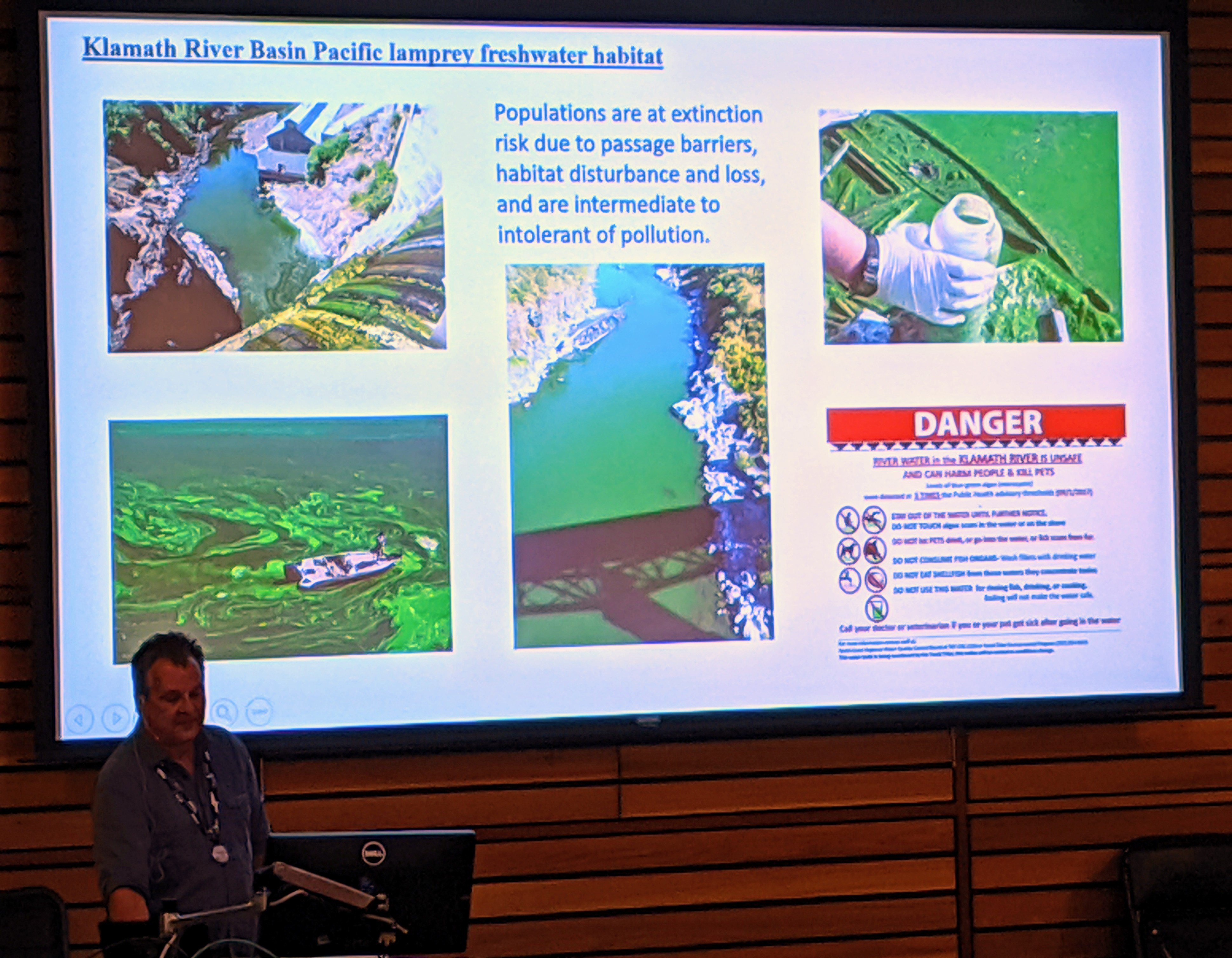
Last Thursday Yurok Tribe member Keith Parker, a Humboldt State alumnus and fisheries and molecular biologist, gave a presentation on campus about the Klamath River, his work on Lamprey eels and the local ecosystem.
As a tribal scientist, Parker gets to use his traditional knowledge from his Yurok heritage combined with his master’s degree from HSU to conduct field and lab work. The Klamath River is significant to the Yurok Tribe, as Yurok translates to “downriver people.”
“I have a spiritual and innate connection to the land,” Parker said. “It’s not just a study subject for me, it’s not just empirical data. I have skin in the game, literally.”
“I have a cultural connection. I live off that river, my kids eat off that river, we eat the salmon, the sturgeon, the lamprey, the elk, the deer and we harvest the roots.”
Keith Parker
Parker feels that his upbringing along with his academics makes him a better and more effective scientist. It is more than just conducting research for him, as he continues to learn and then teach others about a topic he feels passion for.
“I have a cultural connection,” Parker said. “I live off that river, my kids eat off that river, we eat the salmon, the sturgeon, the lamprey, the elk, the deer and we harvest the roots.”
The river has a rich history in native lore, being home to other tribes including the Karok and Modoc long before the earliest settlers came west. But in more recent years, the river has taken a decline in health.
Some of the causes can be attributed to the damming of the river, preventing the water from flowing properly and allowing harmful algae to grow. Specifically cyanobacteria, commonly known as blue-green algae.
The North Coast Regional Water Quality Control Board and the Humboldt County Department of Health & Human Services send out broadcast warnings, cautioning people to avoid swimming in areas that contain the algae.
In July 2018, the Humboldt County Department of Health & Human Services issued a news release stating, “The presence of cyanobacteria has been previously confirmed in some water bodies within Humboldt, Mendocino and Lake counties including the South Fork Eel River, Van Duzen River, Trinity River, Clear Lake and Lake Pillsbury. It is difficult to test and monitor the many lakes and miles of our local rivers. Most blooms in California contain harmless green algae, but it is important to stay safe and avoid contact.” “It isn’t just a loss of biodiversity when you see a river system like that slowly dying, it’s a loss of cultural heritage as well.”
Another effect of the damming is that the salmon find it much harder to swim to and from the ocean, which slowly harms the surrounding wildlife.
“It isn’t just a loss of biodiversity when you see a river system like that slowly dying, it’s a loss of cultural heritage as well.”
Keith Parker
“Those fish leave as juveniles and they go out to the ocean and they come back later on in life much larger in size,” Parker said. “They then spawn and die, all those marine-derived nutrients that are in their flesh are absorbed into those forests.”
Yurok culture is linked to the river in many ways, including using it for transportation and trade. The Yurok tribe would trade items downstream, from the ocean, as they looked to collect larger deer and elk from deeper in the mountains.
“A lot of our people, even now, they’re breaking out in rashes from putting their hands in the water and taking the fish out,” Parker said. “The females of the tribe often weave baskets from roots they harvest from the water’s edge as well, and part of the method is sucking on the roots to soften them up so they can weave baskets and more. They are being affected as well.”
The Lamprey eels used to thrive, and were something that the natives could smoke and preserve as their food throughout the winter. They used handmade eel hooks, which the men make by hand and include carvings that are personal to each individual.
“When the women harvest those roots from this nasty river edge, when they’re making them they keep them in their mouth and they soften them up with their saliva while they’re making their basket, and they’re getting poisoned,” Parker said. “It isn’t just a loss of biodiversity when you see a river system like that slowly dying, it’s a loss of cultural heritage as well.”
One part-time psychiatrist working six hours a week.
Students at HSU are facing a healthcare shortage. Brian Mistler has been the director of the Student Health and Wellness Services for two years.
“I spent the first week on the job really understanding it,” Mistler said. “Students have been telling me weekly how the wait times are increasing and how we need more staff.”
There is one part-time psychiatrist working six hours a week on HSU’s campus.
“Students have trouble getting their medication,” Mistler said. “They have to wait two or three months to see the psychiatrist. Right now, it’s March and he’s booked for the rest of the year.”
Mistler says local hospitals and open door clinics are backed up, and they do not have extra capacity.
“When we send a student off campus often times that means the student just doesn’t get care and then they are forced to leave school,” Mistler said.
There is no Kaiser facility within five hours of Humboldt County.
“We’re isolated,” Mistler said. “Other universities solve this is by sending students off campus to a local hospital.”
Delays in regular facilities maintenance are affecting the current state of the health center. Mistler said the temperature inside certain areas of the facility overheat.
“The lab where we do our blood tests overheats, because the heating doesn’t flow right in the building,” Mistler said. “The temperature gets too hot and we have samples that have to be stored at a specific temperature in order to test.”
Mistler said the student health center building is 20 percent over capacity.
“There is not enough room to hold the staff,” Mistler said.
There are multiple solutions to the healthcare shortage being discussed. One option is telepsychiatry. Telepsychiatry is a video conference with an outsourced psychiatrist in a different location.
“Students would come in the health center, sit in front of a large screen and have a conversation with a psychiatrist who is somewhere else in California,” Mistler said.
“The psychiatrist will work with our team on campus. The student will be able to walk down to the pharmacy and pick up their prescription.”
Health Education and Clinic Support lead Mira Friedman supervises the clinical peer health educators on campus. The peer-to-peer service helps with the clinic’s wait times.
“It allows our medical providers to see more students with complex issues,” Friedman said.
The clinical peer educators are not physicians. They are paired up with a medical provider if they have medical questions. Each peer educator is paid minimum wage.
Clinical peer educators work a minimum of 10 hours and a maximum of 20 hours a week. Friedman holds weekly staff meetings as well as an individual weekly check-in with the clinic’s peer educators.
Kelsey Meusburger, a clinical peer educator since August of 2017, says she feels empowered helping students.
“I only talk to students who are not showing signs of symptoms,” Meusburger said. “When they show signs of symptoms I refer them to the Gold Clinic.”
The Gold Clinic is reserved for more urgent matters.
The state of the student health center building was designed 60 years ago and has not been updated. The building needs to have repairs made in order to function.
“The front of the building where the roof is rotting,” Mistler said. “We had to replace a beam, [and] that’s why there is construction outside.”
There are two separate fees that go toward health services. One fee is for the physicians, the second is for the health center facilities. Both fees are being proposed to increase in order to improve the current healthcare conditions.
“It would cost about $66 per student per semester to repair. For another $10, a brand new health center could be built,” Mistler said. “It seems like a much better idea than spending a lot of money fixing the current health center.”
The Student Fee Advisory Committee is helping to decide the best way to adjust the health fees and increased funding.
“We can’t provide better service in the current space, [because] we’ve outgrown it,” Mistler said. “Part of the reason we’ve outgrown it is because health services aren’t just the services we provide. Other things that are tied to health is physical, mental and other basic needs.”
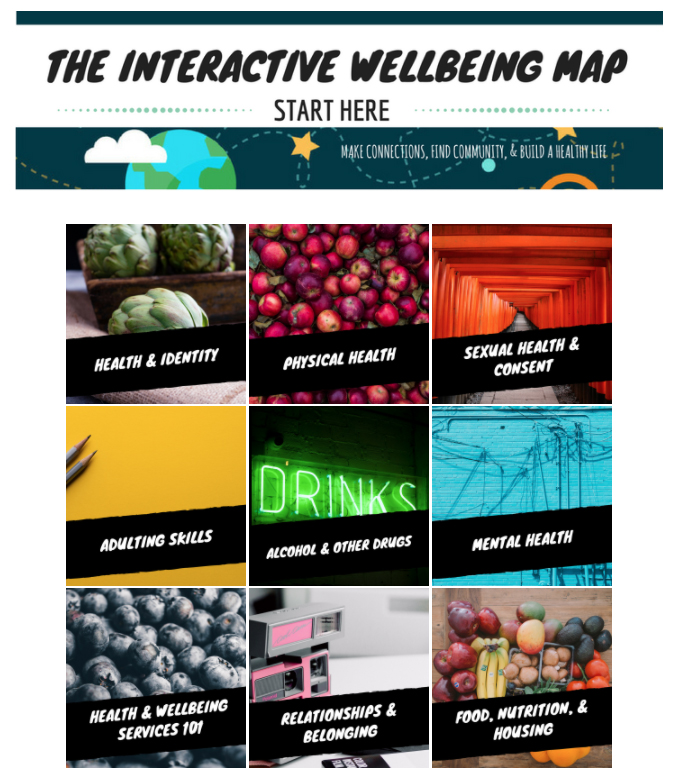
After being in development for over a year, Executive Director of Student Health & Wellbeing Services Dr. Brian Mistler, Health Educator Ravin Craig, and a team of peer health educators have created an interactive online tool to guide students toward a healthier lifestyle and habits as well as campus support services.
Mistler said that the interactive wellbeing map is to help students make connections, find a community and start building a healthier lifestyle at Humboldt State.
“Health is not a linear process, there is no start or end on our journey to build positive relationships with our body and community,” Mistler said.
According to Mistler, the team intentionally designed the introductory quiz to target the primary health and wellbeing-related obstacles in a way that was approachable and helpful to students from top to bottom.
“The BuzzFeed-style quiz is an easy entry point that most students are comfortable with,” Mistler said.
The wellbeing map is broken down into nine different topic areas; health and identity, physical health, sexual health and consent, adulting skills, alcohol and other drugs, mental health, health and wellbeing services 101, relationships and belonging, and food, nutrition, and housing.
According to Mistler, the modules focus on frequently identified health concerns, such as a sense of belonging, sexual health, friendships and romantic relationships, nutrition and food, trouble relaxing, financial wellness and much more.
“Each topic area is a map to get students connected to the resources they need to be successful at HSU, though it isn’t designed to list all of the student support services on campus,” Mistler said.
Students can access the online tool by visiting wellbeing.humboldt.edu
This website uses cookies to improve your experience. We'll assume you're ok with this, but you can opt-out if you wish. Cookie settingsACCEPT
Privacy & Cookies Policy
Privacy Overview
This website uses cookies to improve your experience while you navigate through the website. Out of these cookies, the cookies that are categorized as necessary are stored on your browser as they are essential for the working of basic functionalities of the website. We also use third-party cookies that help us analyze and understand how you use this website. These cookies will be stored in your browser only with your consent. You also have the option to opt-out of these cookies. But opting out of some of these cookies may have an effect on your browsing experience.
Necessary cookies are absolutely essential for the website to function properly. This category only includes cookies that ensures basic functionalities and security features of the website. These cookies do not store any personal information.
Any cookies that may not be particularly necessary for the website to function and is used specifically to collect user personal data via analytics, ads, other embedded contents are termed as non-necessary cookies. It is mandatory to procure user consent prior to running these cookies on your website.