The Lumberjack


Students Serving The Cal Poly Humboldt Campus and Community Since 1929

Tag: healthcare

  • Humboldt’s heinous healthcare

    Humboldt’s heinous healthcare

    by Valen Lambert

    Humboldt is a quaint place – too quaint to have reliable healthcare. My experience with the healthcare infrastructure here has been ridiculous compared to the more populated places I’ve lived. 

    This isn’t to say that our healthcare workers aren’t working hard. In fact, they’re overworked because there is a shortage of nurse practitioners (NPs) and physicians. Up until 2020, a California state regulation limited one physician to supervise no more than four NPs. With Humboldt’s shortage of physicians, this law directly impacted our health care centers’ ability to hire more NPs, resulting in a lack of health care workers. However, in 2020, AB 890 was passed, allowing NPs to work independently without physician supervision if they meet the required criteria to provide sufficient care. There are people who disagree with AB 890, believing that it will not serve people who need more specialized, significant care. 

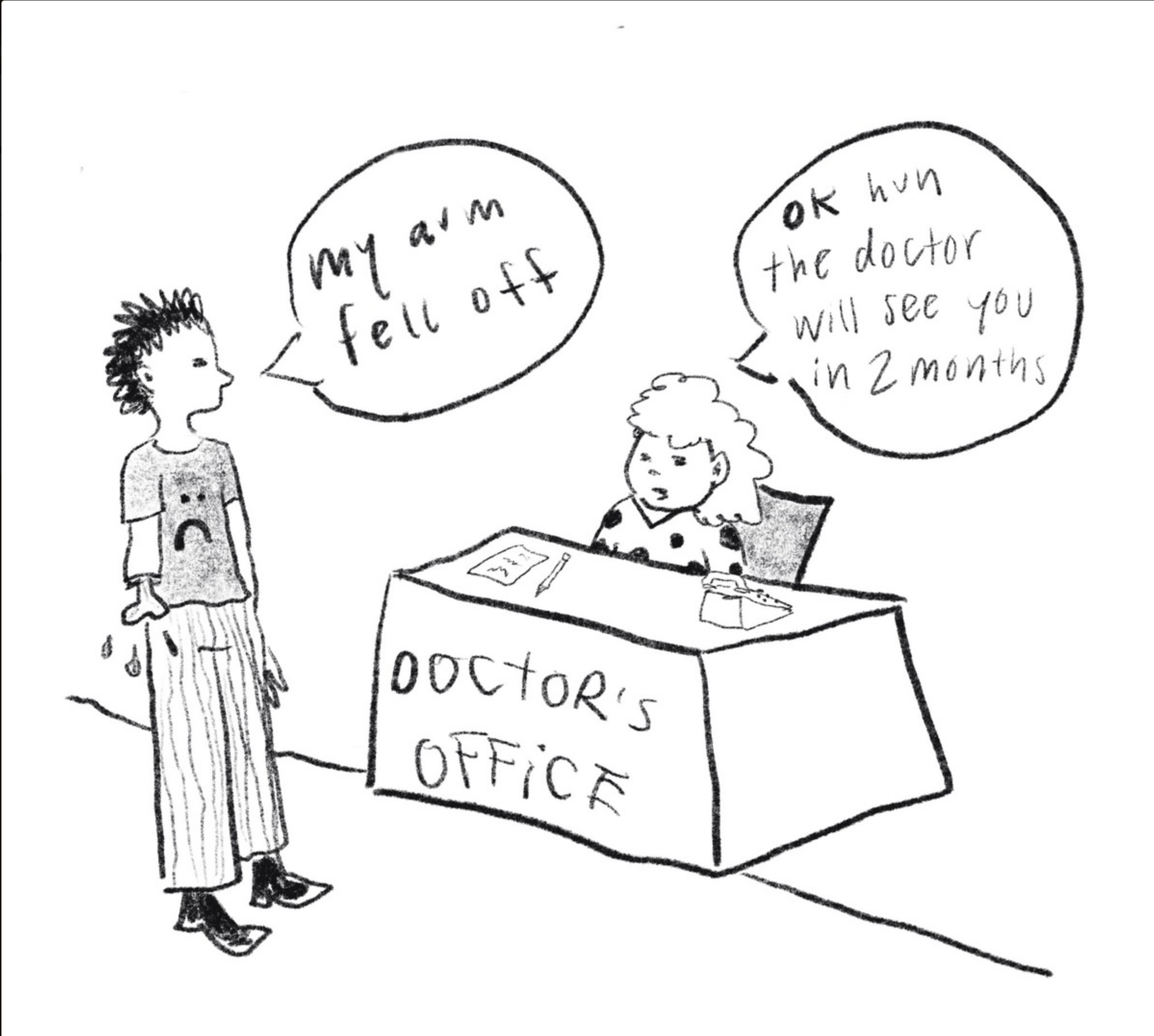
    Despite the passing of AB 890, Humboldt is still recovering from its shortage of healthcare providers. It is apparent in the way that I have to wait two months for a doctor’s appointment, and in how I was turned away from urgent care because they had already met max capacity by noon. 

    I am one of the 36% of people in this county who get their health coverage through the government funded Medi-Cal. Another 30% get support through Medi-Care, which is for seniors or people with disabilities. That means over half of Humboldt’s population is vying to be seen by the few primary care clinics that take government issued insurance, most of which often aren’t accepting new patients because they’ve reached capacity. 

    I got lucky and was able to find a provider taking new patients, but it doesn’t surprise me that my appointment for a first visit was scheduled to be two months away. I was hoping to get a referral to a physical therapist for a shoulder injury. What would I do if I had a really pressing issue? The urgent care in Humboldt is a nightmare. If you’re lucky to get there before they’ve reached capacity for the day — in which case you’d have to come back the next day — then you’d be waiting three to four hours to be seen. This in no way reflects the hard-working personnel of these facilities, but is a side-effect of understaffed rural healthcare systems.

     If you look at the reviews for the urgent cares and hospitals in Humboldt, they tend to get a lot of negative reviews and low star ratings, usually for wait times and inaccessibility. I’ve never been one to care much about reviews but when it comes to my local hospital, that’s something I’m sure we’d all prefer to read positive reviews for. Arcata’s local Mad River Hospital unfortunately has two-and-a-half stars on Google reviews, mostly from people waiting several hours for walk-in care at the emergency room, giving up, and eventually driving to St. Joe’s in Eureka, which has even less stars.

    Thankfully, here on campus we have the Student Health Center. It’s decent, cheap, and won’t have you waiting hours on end while your bone is popping out of your skin and you’re bleeding out on the curb. 

    Don’t even get me started on trying to find a dentist in Humboldt that takes Medi-Cal. The only dentist office that does is in Eureka and is usually not accepting new patients. Many folks with Medi-Cal have to go to Redding or Santa Rosa to get the dental care they need. You best believe I’ve been flossing since I’ve moved here. 

    I love Humboldt, but my experience with healthcare here has been disheartening. What does it take to bring more health practitioners to Humboldt? How do we fix this problem? I’m wearing my helmet, seatbelt, taking all my vitamins, being so safe I’d make my mother proud – I sure as heck don’t want to be delusionally waiting around for acute care.

  • Our Societal Structure is Slipping

    Our Societal Structure is Slipping

    With the pressures of the pandemic mounting, people are stuck with an impossible choice

    On Friday, May 1, around 100 people gathered in front of the Humboldt County Courthouse to demand the reopening of businesses deemed non-essential by the government. With signs like “Every Business Is Essential,” it is clear that the protesters are not being properly supported during this time of crisis.

    The government’s attempts to mitigate the spread of the virus have been controversial with over a million reported cases so far. Social distancing is the most effective measure we can take to prevent unnecessary deaths since the swab test is inaccurate and limited at the moment. Unfortunately, mandatory lockdowns and halts to employment in order to support social distancing efforts have left many without jobs and a way to earn a steady, livable wage.

    “This crisis is really illustrating both the violence of inequality and also the need for another economic system.”

    Thomas Piketty

    Everyone has a wide range of debts, rents and other expenses to pay for during this time. If we want to prevent the spread of the virus we need to support disenfranchised workers, not force them back into unsafe working conditions. With 59% of Americans living paycheck to paycheck, for those keeping track at home, the percentage cuts for units is not reasonable to expect them to be able to handle all of their expenses with a one-time stimulus check of $1,200. The writer of the book “Capital in the Twenty-First Century” and economist Thomas Piketty believes that a pandemic like this holds the potential to change dominant narratives about how we should organize our society and build our economy.

    “This crisis is really illustrating both the violence of inequality and also the need for another economic system,” said Piketty.

    The Americans most impacted by the pandemic are going to be the poorest, most vulnerable members of our society. For as long as our country has existed, so has the divide in quality of life, poverty, and access to government assistance in times of crisis.

    We need a societal structure that values every life.

    Due to our country’s reliance on employer-based healthcare, every company that is forced to lay off its workers in this necessary time of crisis is creating large swaths of vulnerable, uninsured people. The natural response is to want to go back to work and blame the government for taking away your insurance and employment so you can continue to provide for yourself and your loved ones. The only problem is that we have a virus on our hands, so one is forced to either ignore the dangers of returning to work or slowly drain themselves financially as the dues of existing in our society add up. This is not a fair choice nor a choice we should have to make.

    This is our societal structure functioning as it was designed to. When healthcare is tied to employment and to wealth, we are nudged into believing our right to exist is tied to employment and to wealth. When certain marginalized groups are underemployed or possess less wealth, our system is tacitly stating that those groups are worthless.

    We need a societal structure that values every life. That means universal healthcare, education, job guarantees, housing and access to technology. Without universal healthcare, there isn’t a solid system for distributing care during a pandemic, and the right to one’s own life is decided by socioeconomic status. Without job guarantees, people are set adrift during emergencies, not knowing if they will be able to get back to work after it’s all over. Without universal housing, a pandemic can leave many unsure if they will have a roof over their head in a month’s time. Without access to technology, some will lose education, jobs, communication with the outside world and entertainment to occupy the time.

    But more than all these things, we need a structure that prioritizes us. If everything starts falling apart because of one pandemic, maybe it wasn’t the most stable structure to begin with. An economy that does better when its workers die is like a car that goes up in value when it kills the passenger. The structure should exist to support you. This pandemic is exposing our economic structure for what it has always been. A burden that crushes the marginalized and the vulnerable. A $1,200 check, a rent freeze and a free face mask are only small band-aids on a gushing head wound. Normal, everyday life is why everything is falling apart in the first place.

    All we can do is build a system that protects every person within it and values life from the ground up. A system that lets numbers of people die will die along with them. It is a system bound to fail.

  • Telehealth Looks to Fill Gaps Left by Pandemic

    Telehealth Looks to Fill Gaps Left by Pandemic

    Telehealth has a chance to make a name for itself in the US

    Many physicians and patients aren’t likely to want to or be able to do face-to-face appointments for now and into the foreseeable future. In the midst of this, a potential solution lies in telehealth.

    Telehealth—also known as telemedicine—involves the interaction of medical practitioners and patients through virtual means. Doctors and other physicians can attend to more serious matters in-person while remotely prescribing and treating other, less critical patients.

    “I think people are gonna be more and more open to going to the doctor full-time via telehealth if not doing a follow-up visit. I think that we’ve made more progress in the last six months than we have in the last six years and I think it’s only gonna go this way forward.”

    Jacob Horn

    Jacob Horn is the managing director at Vivo HealthStaff in Dublin, California. A Humboldt State University graduate, Horn now contracts with various medical clinics and offers immediate telehealth solutions for more rural communities. He projected a lot of growth for telehealth.

    “Before this COVID-19, it was very meager, to say the least—it was underutilized,” Horn said in a phone interview. “I think people are gonna be more and more open to going to the doctor full-time via telehealth if not doing a follow-up visit. I think that we’ve made more progress in the last six months than we have in the last six years and I think it’s only gonna go this way forward.”

    Horn detailed what he sees to be the benefits of telehealth.

    “I think it will address provider burnout,” he said. “I think it will increase patient satisfaction because now they have a wider access of care. I think it will also make the insurance companies happy because follow-up visits might not cost them as much. But also, the patients will see, hopefully, a savings by seeing their doctors at home for low-acuity visits.”

    Kate Schiff, a physician assistant in the HSU Student Health Center, is trying to incorporate telehealth into her practice in a multitude of ways.

    “For the most part, we are utilizing the phone for triage, evaluation of new problems, and management of existing problems and conditions,” Schiff wrote via email. “We are also managing most of our medication refill requests this way.”

    Schiff also uses Zoom video calls to conduct business.

    “We do have the capability to have Zoom visits which we are primarily using for mental health visits at this time,” she wrote. “Counseling and Psychological Services is using the phone and Zoom to provide individual and group therapy for students.”

    Dr. Caroline Connor, a local physician, wasn’t sure how regular telehealth would become in the future.

    “I think it’s gonna bring more accessibility to healthcare, especially for seniors, in Humboldt County but also to the HSU students.”

    Jacob Horn

    “The question is—how regular it’s going to be—is gonna be a very interesting story that has not yet been written,” Dr. Connor said. “If I was still in practice, how many of my patients would still be coming in? Now, most patients, if they had the choice, would rather see you in person, I think. But you wonder—busy millennials, if they want to get an appointment, will they just start making telemedicine appointments? And how is that gonna be incorporated into the daily life of a physician? I have no idea.”

    Speaking of busy millennials, HSU students are no stranger to the lack of healthcare in Humboldt County. Horn said telehealth could help fight that shortage.

    “I think it’s gonna bring more accessibility to healthcare, especially for seniors, in Humboldt County but also to the HSU students,” he said. “We have a massive shortage, we have long waitlists and a lot of people are leaving the county for certain specialty care. I think in the next year, that will switch up—you’ll be able to have more resources at your disposal in Humboldt County due to telehealth.”

    Connor said nursing students in HSU’s revitalized program could take advantage of telehealth to connect with remote specialists.

    “Let’s say somebody is going through nursing school and they have to learn a little about the intensive care unit—there might not be enough educators in Humboldt County about nursing intensive care units,” Connor said. “So, maybe they’ll have telemedicine education.”

  • New Grant Spurs CAPS Growth

    New Grant Spurs CAPS Growth

    CAPS will provide 36 more appointments per day by next year

    On Jan. 9, the California State University Office of the Chancellor gave Counseling and Psychological Services a grant of $150,000 under the California Budget Act of 2019 to provide Humboldt State University students with more counseling services to combat mental health issues.

    Director of Counseling and Psychological Services and Associate Director of Student Health and Wellbeing Services Jennifer Sanford was closely involved in the acceptance of the grant.

    “I’m most excited about the pilot project to get innovative programs off the ground that’s focused on high-risk students,” Sanford said. “In developing this program we will be doing some specialized training that we’re doing research on now to launch next year.”

    “Mental health doesn’t get the recognition that it should. When you’re not mentally well, your body reacts to that. If you’re stressed out, you’re only going to make it worse. More people should pay attention to it.”

    Danele Quijas

    Lobby areas will be built to hold more students and allow for an increase in counseling appointments. The grant will also fund two new therapy offices in the Behavioral and Social Sciences building, which will allow therapists to extend their hours. More tables and chairs will be added to the waiting areas to eliminate standing-room-only appointments. Construction will begin this summer.

    The funds are expected to help students learn life skills, cope, regulate stress and manage moods. CAPS says improving these areas can improve class attendance, retention in school and promote graduation. With anti-stigma campaigning, CAPS hopes to make students feel comfortable talking about their problems.

    Danele Quijas, a 22-year-old biology major, said students don’t pay enough attention to their mental health.

    “Mental health doesn’t get the recognition that it should,” Quijas said. “When you’re not mentally well, your body reacts to that. If you’re stressed out, you’re only going to make it worse. More people should pay attention to it.”

    A pilot project of $25,000 was also accepted by CAPS and will allow the growth of an intensive treatment program for high-risk students with disabling and chronic mental health issues. This treatment plan will include individual and group therapy as well as the highly-researched dialectical behavior therapy. CAPS hopes to continue this growth by providing other California State Universities with the tools to rebuild their own programs to be as effective as possible.

    Casey Pederson, a senior majoring in business marketing, said HSU should do more to make resources clearly available to students.

    “In a case like this with mental health, there can never be too many resources—so I definitely think it would help,” Pederson said. “I also think a big issue about it is getting people to know. Like I said, I had no knowledge that this was happening, and the big thing with mental health is the lack of knowledge and getting help. And there are resources available.”

  • Culture Connects with Nature and Wellbeing

    Culture Connects with Nature and Wellbeing

    United Indian Health Services provides health and wellness services for Native Americans throughout Del Norte and Humboldt County

    When you’re sick with cold sweats, a cough and a runny nose, being home with someone who loves and cares for you is the ideal situation. Those feelings of comfort, security and warmth are at the core of the United Indian Health Services and their mission of healing the mind, body and spirit.

    Elizabeth Lara-O’Rourke, the community health and wellness division director for the Potawot Health Village in Arcata, talks about the different realms of wellness UIHS strives for when treating their clients.

    “Being able to meet the many needs of our clients is really important for overall wellness,” Lara-O’Rourke said. “It’s not just physical wellness, but also spiritual wellness and we really try to include a strong cultural component in the services that we provide.”

    UIHS is a collaborative program between various local tribes within the Humboldt and Del Norte counties that provide medical services along with community and wellness outreach specifically for Native Americans, whether they are local tribe members or not.

    “We work to heal mind, body and spirit. Culture is a part of that. Art can support the healing process.”

    Andre Cramblit

    There are seven clinics – Xaa-wan’-k’wvt Clinic in Smith River, Taa-’at-dvn in Crescent City, Elk Valley Office in Crescent City, Hop’-ew Puel in Klamath, Weitchpec Libby Nix Community Health Center, Potawot in Arcata and Tish-non in Fortuna that collectively serve 1,200 active clients. However, Tish-non is closing down its Fortuna location on Oct. 25 and relocating to Eureka where they will reopen their clinic on Dec. 2.

    “The environment here is about bringing people home, making people feel comfortable and offering an environment that offers a family atmosphere,” Lara-O’ Rourke said. “So we really try to have that not just with our clients but also with our staff.”

    Twenty-three-year-old Winona Vigil is a front office assistant for Potawot. She graduated from Humboldt State in 2018 with a bachelors degree in psychology and a minor in kinesiology. She works as the receptionist and is the first face and voice that clients meet and greet upon entrance. Vigil says she likes the work and also appreciates helping out clients that come through the doors or those who call seeking aid.

    “All my coworkers and everyone who works here is super supportive,” Vigil said. “And working with the clients, they are all usually friendly. They’ve got life stories and it’s interesting getting to hear them.”

    UIHS offers basic medical, dental, vision, behavioral health and pharmacy services. The availability of health services differs from each clinic and programs such as Title IV Elder Nutrition help deliver food to American Indian elders.

    Andre Cramblit, traditional resources specialist for the Potawot Health Village, says that by including cultural components, whether it’s through art, displaying traditional items or hosting cultural events, like the Harvest Party and youth summer camps, there are opportunities for Native Americans to connect with their heritage.

    “We work to heal mind, body and spirit,” Cramblit said. “Culture is a part of that. Art can support the healing process.”

    “People need to make decisions that are right for them. Not necessarily what the provider thinks is right, but what that client feels is the right decision for them because in healthcare sometimes there isn’t a right answer.

    Elizabeth Lara-O’Rourke

    Other traditional resources include various methods of recovery such as inviting traditional healers, sweats and supporting language classes.

    Lara-O’ Rourke says that another theme of UIHS is that health of the environment equals the health of the people. The organization highly values and honors the connection that Natives have with the earth, water, plants and animals.

    Whereas other health facilities or healthcare providers might separate mind, body and spirit, Lara-O’ Rourke said that for UIHS it’s interconnected and that knowledge is important for their clients to make the best decisions.

    “People need to make decisions that are right for them,” Lara-O’Rourke said. “Not necessarily what the provider thinks is right, but what that client feels is the right decision for them because in healthcare sometimes there isn’t a right answer. It is what is best for that person, and only that person can decide that.”

  • Humboldt State faces healthcare shortage

    Humboldt State faces healthcare shortage

    One part-time psychiatrist working six hours a week.

    Students at HSU are facing a healthcare shortage. Brian Mistler has been the director of the Student Health and Wellness Services for two years.

    “I spent the first week on the job really understanding it,” Mistler said. “Students have been telling me weekly how the wait times are increasing and how we need more staff.”

    There is one part-time psychiatrist working six hours a week on HSU’s campus.

    “Students have trouble getting their medication,” Mistler said. “They have to wait two or three months to see the psychiatrist. Right now, it’s March and he’s booked for the rest of the year.”

    Mistler says local hospitals and open door clinics are backed up, and they do not have extra capacity.

    “When we send a student off campus often times that means the student just doesn’t get care and then they are forced to leave school,” Mistler said.

    There is no Kaiser facility within five hours of Humboldt County.

    “We’re isolated,” Mistler said. “Other universities solve this is by sending students off campus to a local hospital.”

    Delays in regular facilities maintenance are affecting the current state of the health center. Mistler said the temperature inside certain areas of the facility overheat.

    “The lab where we do our blood tests overheats, because the heating doesn’t flow right in the building,” Mistler said. “The temperature gets too hot and we have samples that have to be stored at a specific temperature in order to test.”

    Mistler said the student health center building is 20 percent over capacity.

    “There is not enough room to hold the staff,” Mistler said.

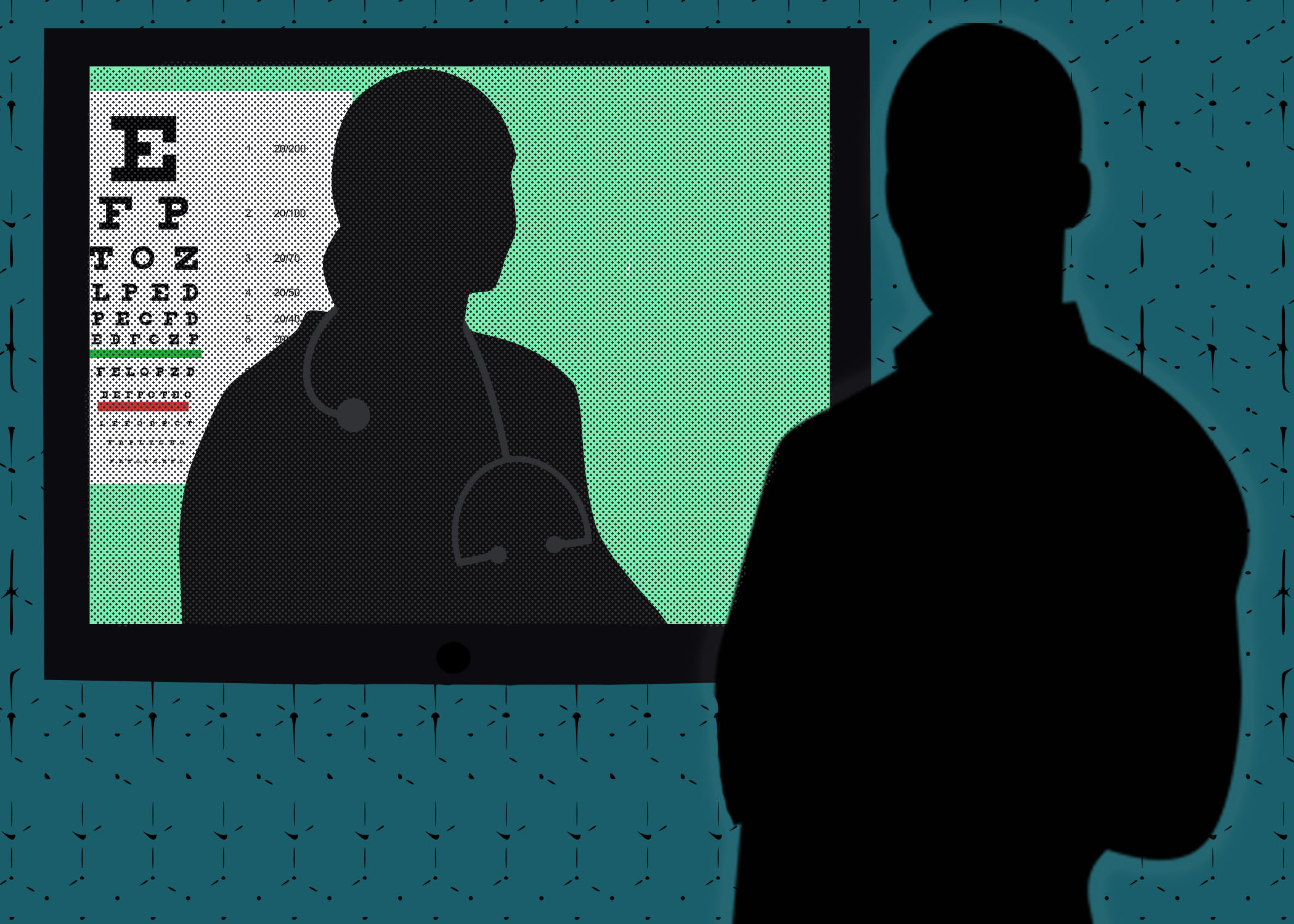
    There are multiple solutions to the healthcare shortage being discussed. One option is telepsychiatry. Telepsychiatry is a video conference with an outsourced psychiatrist in a different location.

    “Students would come in the health center, sit in front of a large screen and have a conversation with a psychiatrist who is somewhere else in California,” Mistler said.
    “The psychiatrist will work with our team on campus. The student will be able to walk down to the pharmacy and pick up their prescription.”

    Health Education and Clinic Support lead Mira Friedman supervises the clinical peer health educators on campus. The peer-to-peer service helps with the clinic’s wait times.

    “It allows our medical providers to see more students with complex issues,” Friedman said.

    The clinical peer educators are not physicians. They are paired up with a medical provider if they have medical questions. Each peer educator is paid minimum wage.

    Clinical peer educators work a minimum of 10 hours and a maximum of 20 hours a week. Friedman holds weekly staff meetings as well as an individual weekly check-in with the clinic’s peer educators.

    Kelsey Meusburger, a clinical peer educator since August of 2017, says she feels empowered helping students.

    “I only talk to students who are not showing signs of symptoms,” Meusburger said. “When they show signs of symptoms I refer them to the Gold Clinic.”

    The Gold Clinic is reserved for more urgent matters.

    The state of the student health center building was designed 60 years ago and has not been updated. The building needs to have repairs made in order to function.

    “The front of the building where the roof is rotting,” Mistler said. “We had to replace a beam, [and] that’s why there is construction outside.”

    There are two separate fees that go toward health services. One fee is for the physicians, the second is for the health center facilities. Both fees are being proposed to increase in order to improve the current healthcare conditions.

    “It would cost about $66 per student per semester to repair. For another $10, a brand new health center could be built,” Mistler said. “It seems like a much better idea than spending a lot of money fixing the current health center.”

    The Student Fee Advisory Committee is helping to decide the best way to adjust the health fees and increased funding.

    “We can’t provide better service in the current space, [because] we’ve outgrown it,” Mistler said. “Part of the reason we’ve outgrown it is because health services aren’t just the services we provide. Other things that are tied to health is physical, mental and other basic needs.”

  • Nurses knock on McKinleyville doors to promote healthcare for all

    Nurses knock on McKinleyville doors to promote healthcare for all

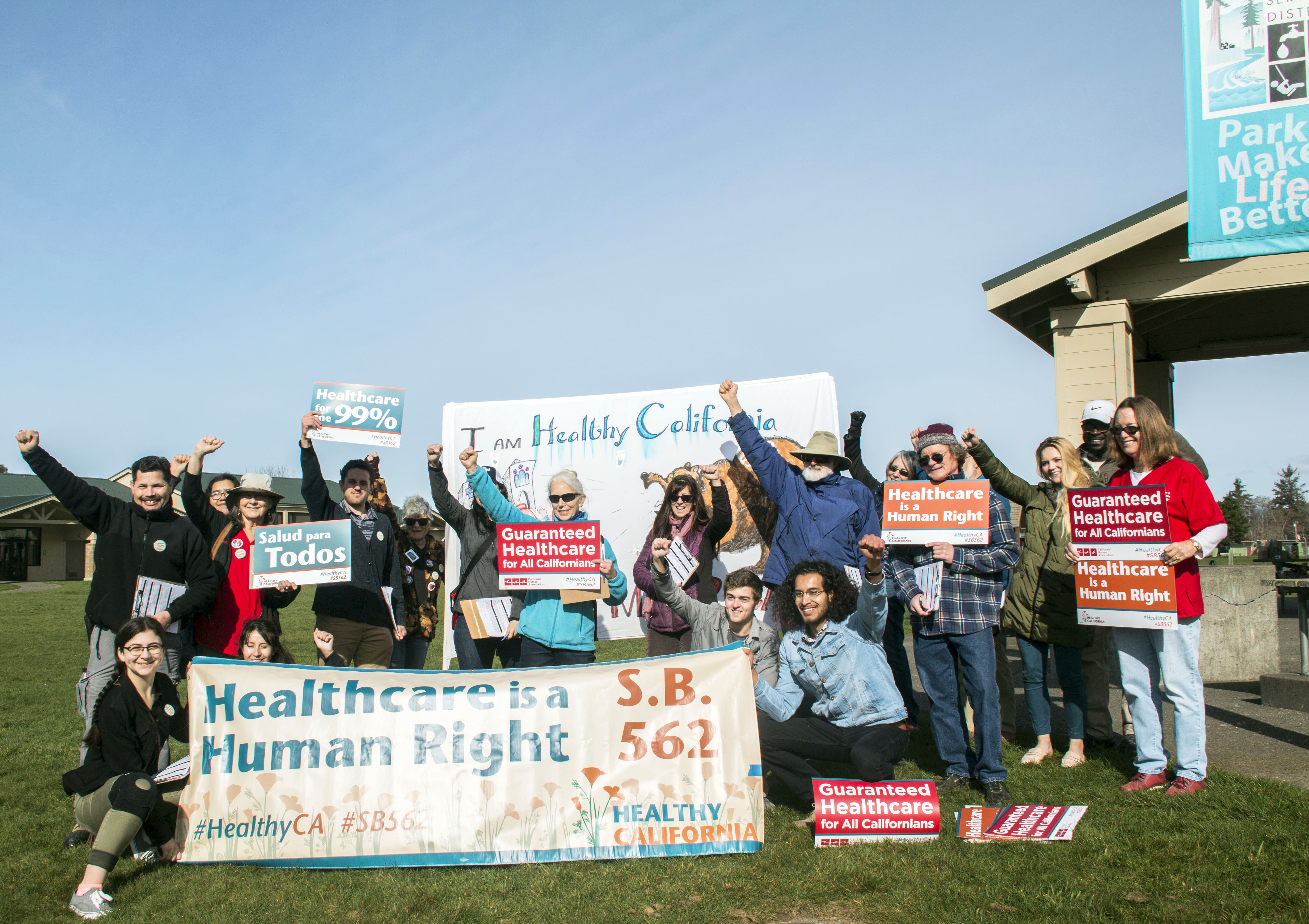
    Members of the California Nurses Association and volunteers gathered at Pierson Park in Mckinleyville on Feb. 10 to inform residents about the Healthy California Act SB 562, and urge them to call state assemblyman Jim Wood.

    The bill guarantees healthcare coverage to all California residents, but was shelved by assembly speaker Anthony Rendon.

    Humboldt State University student Jacob Stockwell is having trouble getting health insurance. He needs PPO insurance, but his is HMO.

    “I have a polyp in the brain,” Stockwell said. “I have to get an MRI and go down to Santa Cruz. It’s an eight-hour drive… it’s not even worth it.”

    Member of California Nurses Association Patricia Kanzler has openly criticized Wood on different committees before for not taking action on SB 562.

    “He’s a hypocrite,” Kanzler said. “He says he’s for single-payer healthcare, but there’s a bill right out there. If he’s so enthusiastic on single-payer, then why the hell isn’t he working on it? That really pisses me off.”

    Political science professor Kevin Murray volunteered in support of the California Nurses Association.

    “We’re not selling anything,” Murray said to residents after hesitantly opening their doors. “If we all share our horror stories, we’d realize this system is rigged.”

    Canvass volunteer Margy Emerson wore a metal button on her jacket that read ‘Healthcare is a human right’ in support of the cause. Emerson said the bill is important morally and economically.

    “I’m convinced that if one state gets it, the rest of the states will follow,” Emerson said.

    Volunteers met Mckinleyville resident Wilford Ward in his driveway while he worked on his car.

    “This needs to be fixed,” Ward said. “I’m paying $1,000 a month. It’s unconstitutional. There is something wrong when you’re talking about inequities. The rule of government is to protect its citizens. I’m getting screwed over.”

    Originally, Fred Brewster thought he signed up to volunteer, but ended up hosting a canvass. Brewster has been able to have health insurance on and off by working seasonal jobs.

    “I’ll have health insurance for part of the year, and then not for part of the year,” Brewster said. “It’s always a constant fight and worry to make sure I had asthma medicine.”

    Canvass host and College of the Redwoods journalism major Fred Brewster assigning volunteer Margy Emerson door-to-door SB 562 campaigns in McKinleyville on Feb. 10. Photo by Bailey Tennery.

    Brewster created a petition in the past to stop Starbucks from opening in Yosemite National Park, but he has never hosted a canvass before.

    “Going door to door puts a face to the movement,” Brewster said. “It allows [for] a more personal interaction with the people. It is not some distanced thing.”

    Organizer Phil Kim used Territory Helper, a website created by Jehovah’s Witness congregations for their canvassing, to print maps of Mckinleyville neighborhoods for volunteers.

    “They do a lot of door-knocking,” Kim said. “It’s kind of funny they’re helping us out, [because] we’re using the program they created. It helps to coordinate where everyone is walking, so people aren’t knocking on the same doors. It’s a way of dividing the maps in little sections.”

    Healthy California Act volunteers speaking with a McKinleyville resident. Photo by Bailey Tennery.

    Anne Olivia Eldred is a part of the California Nurses Association. She said it’s better to take care of people before they get sick, rather than waiting until they need immediate treatment that is expensive.

    “I see what not having access to healthcare looks like,” Eldred said. “There are people who are dying every day, because of lack of access, and that’s ridiculous.”


  • Editorial: What’s in your coverage?

    Editorial: What’s in your coverage?

    GOP presents the American Health Care Act

    If you are worried about obtaining health care insurance, well… you should be. After House Republicans faced a firestorm of criticisms for hiding away on the Hill to hash out their healthcare reform policies, Republicans finally introduced their version of health care reform last Monday, March 5. 
    The potential repeal of the Affordable Care Act, more popularly known as Obamacare, would leave college students at a disadvantage. We are still allowed to piggyback off of our parent’s insurance (if they have it) until we are 26 years old. However, for those who can’t, this measure creates additional expenses for college students. 
    As college students working in Humboldt County earning a minimum wage of $10.50 per hour, the possibility of affording health care coverage under the GOP’s American Health Care Act is unlikely. Obamacare tried to secure affordable healthcare for all and is by no means perfect, but instead of taking the time to fix the deficiencies, Republican’s “Obama-lite” healthcare system is wasting time and money.  
    While we are waiting for the new administration to learn the ins and outs of health care law, millions of people are at a standstill wondering how they are going to get and stay covered. 
    The bill wasn’t released with an analysis from the Congressional Budget office, and even conservative republicans are worried about the negative impact the measure could cause on the economy. The bill notes four key changes that shifts the fiscal burden from the government back to the people: Refundable tax credits, health saving accounts, block grants, and high- risk pools. These fiscal policies might sound like a dream solution — to those who can afford it. 
    Refundable tax credits is money the government is willing to give back to you. The problem with these credits is that they are based on age unlike Obamacare’s income-based regulation. Age does not dictate the severity of medical care cost. A refundable tax credit is insufficient cushion for the unexpected cost. Under this new bill, young adults are considered the less in need. The bill states just $2,000 are credited to individuals under 30 years of age.
    The new bill risks denying millions in coverage with its proposed block grants that would provide a fixed amount of money to states for their Medicaid programs. A fixed block of money that doesn’t rise with inflation, meaning that states might not be able supply coverage at the amount they have in the past.
    The GOP also sliped in a provision that would defund Planned Parenthood [PPFA]. At least 60 percent of Planned Parenthood patients use Medicaid or some other type of government based insurance according to PPFA. This means that if the program is defunded, all of these women would lose access to affordable health care. 
    Although people with pre-existing conditions will still be protected under the new bill, they will potentially have to pay more if they want to be insured. Insurance agencies will be allowed to increase the premium of those with pre-existing conditions while everyone else’s insurance rates are reduced.
    On top of all these new policies that would drain young adults pockets, the new bill includes a penalty for people who let their insurance lapse. The bill allows insurance agencies to raise their premiums 30 percent. This makes it hard for people to even try to regain coverage after losing it. All of these methods have been tested, tried, and found to be lacking in effectiveness. Obamacare was enacted in the first place as a solution to these problems. 
    While Obama care extended coverage to over 20 million people, the GOP’s health care plan seems to be ripping coverage out of the average American’s hands. The new healthcare reform bill may as well read: The poor, low-income, and persons with pre-existing conditions need not apply.