The Lumberjack


Students Serving The Cal Poly Humboldt Campus and Community Since 1929

Tag: Homelessness

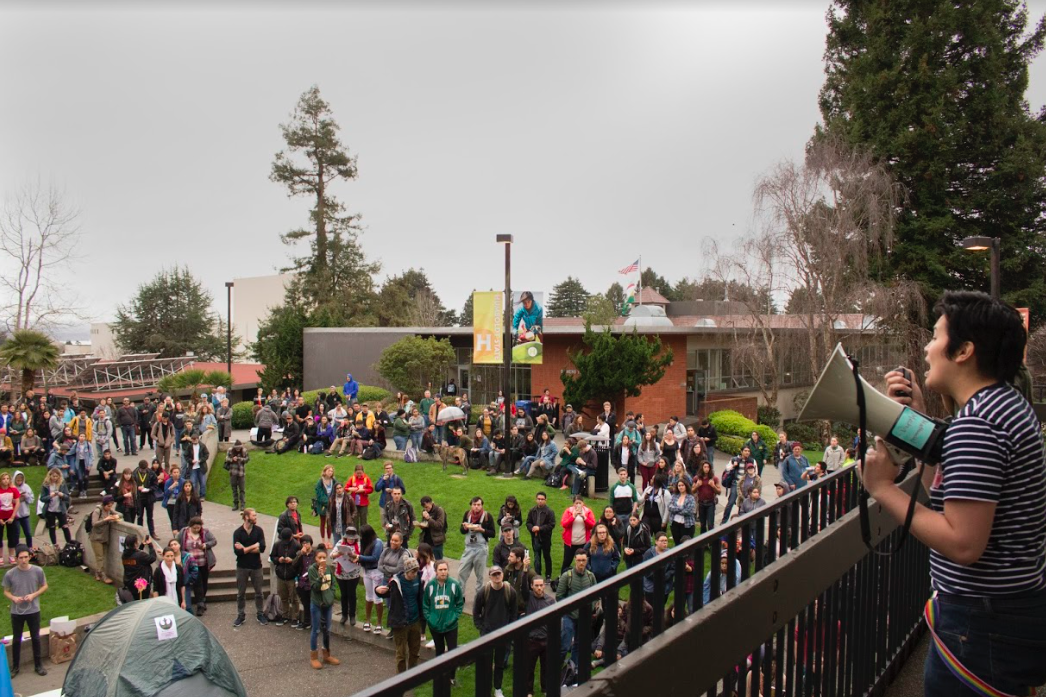
  • Two complaints were the basis for evicting over one dozen homeless Cal Poly Humboldt students

    Two complaints were the basis for evicting over one dozen homeless Cal Poly Humboldt students

    by Jasmin Shirazian

    Alleged complaints regarding unsanitary conditions created by students living in vehicles on campus didn’t exist when university administrators forced students living in their vehicles off-campus in November. 

    Aileen Yoo, Director of News and Information for Cal Poly Humboldt Marketing and Communications, was unable to find any formally filed complaints against alternative living students. 

    “There were no formal complaints filed with the University Police Department but there were informal complaints to UPD, Parking Services, and Facilities Management,” Yoo said in a Jan. 16 email. The italics are hers.

    After informing Yoo of the existing formal complaints and requesting any records of the alleged informal complaints, Lumberjack reporters did not receive a response.

    Cal Poly Humboldt released a campus-wide email stating the enforcement of parking regulations and ultimately the removal of students living within their vehicles on campus on Oct. 25, 2023.

    “There have been an increasing number of RVs and other vehicles parked long-term in University lots across campus,” Cal Poly Humboldt’s email read. “These vehicles are in permit-only parking spots, and have been parked in spaces overnight in violation of University policy that includes a prohibition on overnight camping on campus and overnight parking for anyone not living in University housing.”

    The email contained a statement that these students had received an unspecified amount of complaints regarding their living in on-campus parking.

    “Policy aside, overnight camping in University parking lots creates unsanitary and unsafe conditions for both those encamped and for our campus community at large,” the email read. “The University Police Department and other campus offices have taken calls from concerned members of the campus community expressing fear and frustration about the situation.”

    Only two formally filed complaints were made to UPD by the same people, listed only as RP and Pt, on Oct. 6 and Oct. 7, 2023. The complaints were obtained by The Lumberjack through a public records request 

    “RP owns the property at [redacted] and believes some of our houseless students are people associated with camping in the 14th and Union parking lots are jumping her fence to her unoccupied property at [redacted],” the Oct. 6 report states. “RP sent a photo of the subject who was unrecognizable.”

    The following day, UPD received another complaint from RP. This time, a person identified as Pt is mentioned in the same report, though their relation is unknown. 

    “RP calling back to report RV parked x 2 nights [across] the street from her residence,” the Oct. 7 report states. “Pt states there are ‘several men’ coming and going from the RV. RP is requesting a patrol check of the area. Subject contacted and they advise they will be moving RV.”

    The news of being removed from campus came as a shock to many alternative living students, who had recently formed a club to solidify the bond of their community. Some of these students even recall speaking to parking enforcement and housing administrators about their alternative housing plans prior to moving, to which they received no rejection or denial. 

    Carrie White, a biology major on a pre-medicine track, is one of the students who was pushed off campus by parking enforcement. 

    “Since I was forced to leave campus, I have continued to live in my vehicle, but I am parked in another parking lot,” White said. “I leave before dawn to avoid any potential issues occurring despite having permission to stay where I am. I stay away all day, moving between other street parking, lot parking and the coast line. I return later in the evening.” 

    White was already under tremendous stress when the university notified the students that they had to vacate the parking lots by Nov. 12, 2023, giving them two weeks to find accommodations. 

    “At the time, I had a friend that had just passed away, a sick grandfather, and finals,” White said. “There was a total lack of consideration of my humanity; I might have other things happening in my life besides living in my car, which is hard enough at times. It was a tone-deaf decision on behalf of the university, in my opinion.”

    Journalism major Brad Butterfield, who is also the science editor of The Lumberjack, is an alternative living student who has been living in his van on campus for several semesters. In an email to parking enforcement, Butterfield explained his situation and received a message stating that parking enforcers were aware of students living in their vehicles on campus. In Butterfield’s email, he specifically asked if the school allowed overnight parking if proper permits were displayed.

    “Parking is enforced from 7AM to 10PM, Monday through Friday,” Michaela Old, a parking enforcement employee said. “As long as you have a valid permit you will be able to park – also keep in mind that parking spaces are first come first serve.” 

    Several students said they attempted to acquire documentation of or information about the complaints, but were ultimately left without answers. 

    Recent graduate Maddy Montiel was in their last semester when they were notified of the parking enforcements. Montiel was finally becoming comfortable in their community after nine years in college, four of those spent at Humboldt. 

    “My last semester meant a lot to me,” Montiel said. “I was finally at the finish line, finally letting myself have some fun and deepen friendships. I joined more clubs and went to more events; I let myself enjoy the beautiful environment our school sits in. [I] remembered why I decided to move here and take all the risks I did to be here. I was finally getting what felt like a ‘college experience…  for the first time, I started to feel safe.” 

    This changed when Montiel had to vacate the parking lot in which the community formed. 

    “Having to spend my last couple months of what I thought was a graceful and beautiful end to my college experience, fighting for basic answers and the right to stay on campus until at least the end of the semester, only to have the door shut in my face over and over, was beyond disheartening,” Montiel said. “Since being kicked off campus, I’ve had to live at the community center and on city streets again. Always being on the move gets exhausting.”

    The vacating of students has left many of those affected, such as freshmen MA public sociology student Caleb Chen, feeling disheartened by the university’s decisions. 

    “I feel that this… has highlighted exactly how out of touch the administration and especially the President’s office is from their student body,” Chen said. “When the [administrative] office blatantly ignores the wishes and insights of everybody else, a university is doomed.”

    White shares a similar sentiment. 

    “One of the most hurtful things about that original email from Cal Poly Humboldt was that I realized I was totally disillusioned,” White said. “I chose to invest my time and money in this institution because I believed in its values and inclusivity policy, but upon that email being sent out, I realized that Cal Poly Humboldt is just that: an institution – with dollar signs for eyes.”

    Brad Butterfield is the science editor for the Lumberjack. He had no involvement with the making of this article.

  • APD clears out homeless encampment at Arcata Transit Center

    by Andres Felix Romero

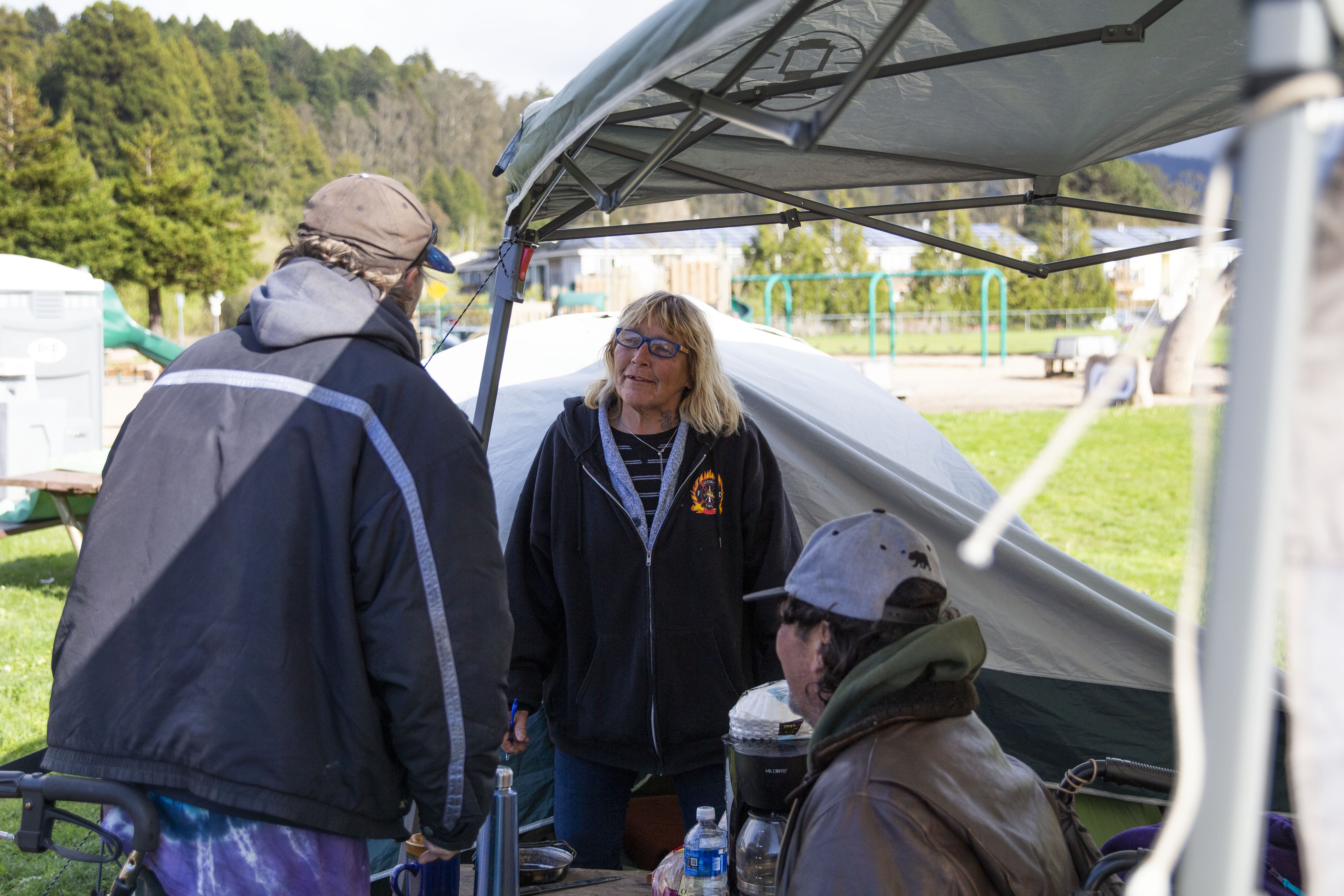
    Jacob Sroto, an Army veteran without a home, slept in a cramped encampment at the Arcata Transit Center after being kicked out of a shelter. There were other houseless people that occupied every inch of free space, except for the building’s doors nearby. While using the portable toilet, Sroto would notice rats scurrying nearby. Soon after his arrival at the transit center, he and other residents of the encampment were given notice by police officers that they were trespassing and must leave, despite the wet and cold weather conditions. 

    On the morning of Thursday, March 2, three officers of the Arcata Police Department (APD) removed an encampment of roughly a dozen houseless people outside the Arcata Transit Center. This encampment had been inhabited and growing for at least a month according to City Engineer Netra Katri, who was present at the transit center the day after the removal.

    “There was one big tent right there,” Netra said, pointing out a wall near the transit center, “and the next day it was gone.”

    The City of Arcata brought a large dumpster to toss out the belongings of the houseless individuals. Paul Geyer was present at the transit center during the removal and described the police as trying to be supportive to the individuals they were removing.

    “They were separating the stuff people might want,” Geyer said. “Guitars, cookstoves, probably a dozen propane tanks, stereos… all kinds of stuff.”

    Despite this attempt at civility, encampment residents such as Oscar Featherman felt that they had a right and protection to be on city property, especially with the winter weather warning in place.

    “They executed an eviction,” Featherman said. “You can’t evict people when it’s those kind of conditions.”

    There was about a three weeks’ notice given to the residents of the encampment. The notice cited violation of state laws on trespassing and camping. The notice also said that there have been concerns raised by resident and business owners about health and safety conditions of this location including the presence of rats, drugs, human waste, and debris.

    Over the course of the pandemic, the city of Arcata became more relaxed with houseless people living on city property. However, APD Sergeant Brian Hoffman noted that the conditions and size of the encampment prompted the removal. 

    “At that point it’s a health issue,” Hoffman said. “We tried to offer services to the people. It’s up to them if they act on those or not.”

    Present alongside trespassing notices were groups trying to offer services and support to the transit encampment residents. One group present the day of the removal attempting to offer support was the Arcata House Partnership (AHP), a grant-run program of over 30 years that seeks to advocate for and support houseless indindividuals.

    Prior to the day of the removal, AHP successfully offered services to Sroto by offering him a place in an extreme weather shelter in their housing project known as The Grove. 

    “They told me, ‘this is gonna get cleared out anyway and the weather’s gonna get real bad, you wanna come for this?,’” Sroto said. “Everyone didn’t hesitate with [the offer]. Anything’s better than staying at [the transit center].” 

    The extreme weather shelter is one of many programs run by the AHP directed at supporting the unhoused. They have other locations that offer services and advocacy for houseless individuals including bag lunches delivered by truck, mailing addresses, case managers, showers, sobriety assistance, assistance with EBT and finding shelter, gas cards and more.

    Tanya Rodriguez works for the AHP at their Grove housing project. She feels that the programs are needed for those who don’t know how to navigate the system, and because many are only one situation away from being houseless themselves.

    “Once you’re down on your luck, then you realize how easy it is to be right there,” Rodriguez said. “For many of us, it’s just one hospitalization that will suck everything you own out the door. One hospitalization, one natural disaster, one disability, one car breaking down.”

  • Homelessness in Humboldt, CA

    This is the first trailer of a homeless documentary created by HSU students. We have spent months filming and will continue to film throughout the next year. Follow the heartbreaking stories of the homeless community around Humboldt county and the organizations who are out trying to help in any way they can during the COVID-19 pandemic.

  • House Hunting in the heat of COVID-19

    House Hunting in the heat of COVID-19

    Housing struggles at Humboldt State continue to be a problem for students

    Homelessness at Humboldt State University is a major issue. The mess is only becoming more muddled and students are left to fend for themselves.

    Senior at HSU majoring in history, Alfred Silva, is mostly living out of his car. His housing search has been limited because he owns a dog and because he’s a single male, which according to Silva is unattractive to landlords. Not having an address has proven particularly challenging for him.

    “I need to take medication all the time,” Silva said. “Now I don’t have anywhere for my medication to be mailed to my house. So, I gotta figure out other ways to get it. I gotta go to the doctor’s office and bug them there and it’s kind of hard.”

    Silva has been looking for alternative methods of living including camping, but hasn’t had any luck.

    “I can’t find anywhere to camp,” Silvia said. “The only place I found that will allow me to sleep is the back of the HSU parking lot.”

    If anything, Silva believes COVID-19 has attracted more people to Humboldt than in past years, and that’s become a big roadblock for him when it comes to finding a home.

    “I think the influx of people coming into town right now is just ridiculous,” Silva said. “It’s like you got people that are not even students – many, many, many people that are not even students – they’re just flooding the place right now.”

    On the flipside, Silva believes the landlords are as equally guilty in manufacturing the housing crisis in Humboldt County.

    “It kind of hurt their wallets a lot because they’re relying on HSU students to pay rent all this time and then when they took off and that happened, it really hurt them,” Silva said. “So now they’re just trying to survive like everyone else but charging rent. When one person’s drowning, they’ll do anything to survive. They’ll even drown another person.”

    In a similar situation, HSU senior and biology major Grace Rhoades, moved back up to Humboldt because of a job opportunity they got working for one of the labs at HSU. Landing secure housing has been difficult, but they’re grateful to be subletting a friend’s house until the end of the month.

    “There’s just a lot of applying for things, application fees,” Rhoades said. “With COVID, you don’t even really get to see anything or meet anybody in person, you just pay the fee and then like maybe a third of the time they get back to you about the status of your application.”

    Even with a roof over their head, Rhoades is still feeling the anxiety of not knowing where they’ll live next month.

    “I’m definitely a homebody, I like to know that I have a place,” Rhoades said. “I’ve kind of moved away from home and that’s not really much of an option anymore.”

    HSU Off-Campus Housing Coordinator Chant’e Catt recognizes how students are being affected by COVID-19 and finding housing.

    “What’s been really hard is students who moved out of town needing people to take over their leases and landlords not being really flexible sometimes with that,” Catt said.

    For Catt, another issue that arises is between roommates because of disputes over the extent to which they will abide by COVID-19 rules while sharing a communal living environment.

    “People have wanted to break their leases because their roommates don’t respect the restrictions around COVID,” Catt said. “Which puts them in precarious situations where they have to find a new place to live or find somebody to replace their roommate, which could put them into situations where they can’t pay rent.”

    Catt has her doubts surrounding the idea that COVID-19 contributed to homelessness at HSU.

    “I don’t know if COVID changed anything,” Catt said. “I feel like it’s all the same and that’s because it’s always been so bad.”

  • Housing the Homeless in Humboldt

    Housing the Homeless in Humboldt

    California houses, shelters and aids homeless as COVID-19 cases continue to rise

    With at least 151,278 homeless individuals in California, measures to keep them safe and healthy during the current shelter-in-place order are crucial.

    Governor Gavin Newsom and his administration have sought ways to provide shelter and temporary homes for the homeless. On March 18, Newsom published a statement addressing what actions are to take place to ensure that everyone in the state maintains their health.

    “People experiencing homelessness are among the most vulnerable to the spread of COVID-19,” Governor Newsom said. “California is deploying massive resources to get these vulnerable residents safely into shelter, removing regulatory barriers and securing trailers and hotels to provide immediate housing options for those most at risk. Helping these residents is critical to protecting public health, flattening the curve and slowing the spread of COVID-19.”

    To help with the crisis, Newsom released $150 million to local governments to pursue leases with hotels and motels for temporary shelter. An additional $650 million is said to be released on April 1 from last year’s budget, to ensure that enough supplies are given to shelters and other medical resources. Shelters all over the state are struggling to gain more medical supplies and are losing volunteers.

    Around 130 homeless individuals are staying in shelters around Arcata and Eureka.

    “This is one of the biggest challenges our homeless system has ever seen,” Deputy Secretary for Homelessness for the Newsom administration Ali Sutton said. “And our population is one of the most at risk.”

    Newsom also said he and his administration are working on creating leases lasting a few months with hotels and motels in order to house more homeless. According to an article from The Latest, Newsom announced 2,400 more hotel and motel rooms have been secured to house those on the streets, with 1,900 of those rooms coming from San Diego alone. There are now 4,000 rooms secured statewide. San Diego plans to continue sheltering the homeless by moving them to the city’s Golden Hall, the downtown Convention Center (home to Comic-Con), and other vacant rooms in hotels.

    Humboldt County is also working to gain more shelters, rooms and supplies for those on the streets. Around 130 homeless individuals are staying in shelters around Arcata and Eureka. Some shelters have already taken place like Eureka Rescue Mission and Arcata House Partnership.

    Each shelter in Humboldt County is expected to receive $300,000 in order to keep up with medical resources and other supplies, but shelters might still need more help to make sure they have everything they need. Eureka Rescue Mission, for example, had to close their thrift store, which was a main source of income, making sheltering the homeless more difficult as the pandemic continues.

    The city of Arcata, along with AHP, have been working together to find other ways to help. After calling and surveying businesses and other organizations, Arcata was able to secure two parking lots in town. The lot on G Street can maintain at least 19 people, while the Transit Center lot can hold up to 15 people. Tents inside the lot are recommended to be six feet apart. AHP is working with Affordable Housing Homeless to ensure portable showers, sinks and bathrooms are provided for the lots. The lots can also expect to soon see mobile health services to make sure individuals are healthy.

    The Centers for Disease Control and Prevention set out guidelines for how to manage tent camps, recommending that local law enforcement should not force individuals out of the camps unless there is immediate housing available for them to go to.

    Hotel and motel rooms, meanwhile, are still in the process of being secured for more individuals. Arcata is also giving out food at the Arcata Food Pantry on Wednesdays from 4 p.m. to 6 p.m at the Trinity Baptist Church.

  • Spreading Warmth for Winter

    Spreading Warmth for Winter

    Many organizations around Humboldt County provide warm clothing for little or no cost

    With winter right around the corner, it’s important that less fortunate and displaced individuals have access to food, shelter and basic necessities.

    Humboldt County has among the highest rates of homelessness in the state. With the steep temperature decline of the winter, coats, socks and warm clothes become an extreme necessity.

    Robert Lohn, the founder of Coats for the Cold, one of the largest coat drives in the county, spoke on the need for warm clothes during the upcoming months.

    “There’s a flock of families, individuals and couples who go to food banks and can’t afford food,” Lohn said. “Let alone warm clothing.”

    Lohn started the movement 12 years ago with just 20 coats. Since then, the movement has gained major recognition from across the county to help collect, clean and store clothes that are redistributed to underprivileged children in schools. The amount of jackets received has greatly increased over the years, but Lohn still prioritizes spreading the word.

    “The big picture is to show other parts of the community what we do, how we did it and how the other areas could do it as well,” Lohn said.

    Coatsforthecold.org provides a lengthy list of drop-off locations ranging from McKinleyville to Garberville. Drop-off boxes are distributed at the beginning of December through to January.

    “If anybody is in desperate need of a pair of pants or some shoes, and we have it, we will get it to them.”

    Steven Thompson
    St. Vincent de Paul Employee

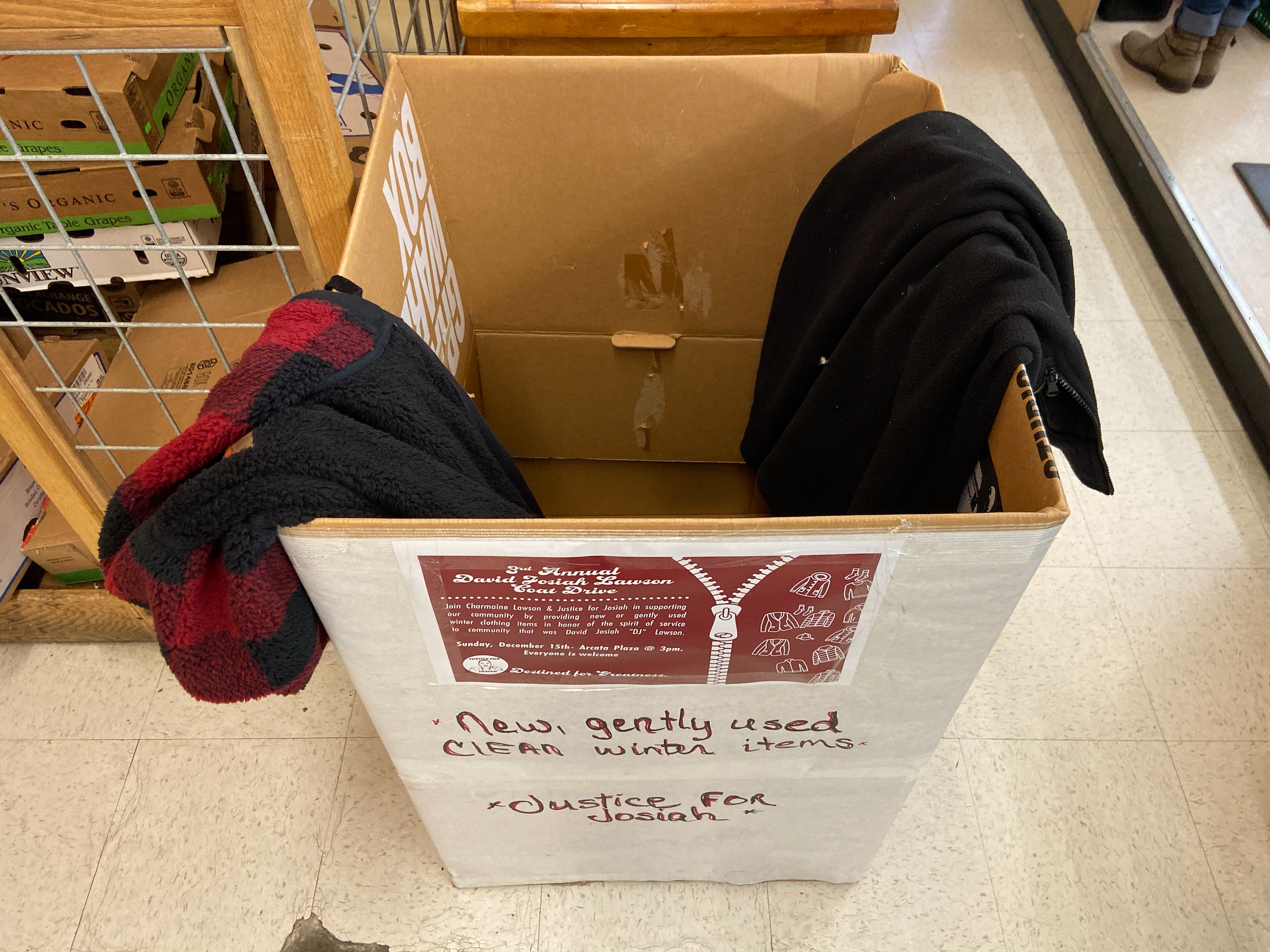
    A drop-off box for warm clothes was placed on the first floor of the Behavioral Social Sciences building on Monday, Dec. 2 and will remain there through January. Warm clothes to donate include: jackets, sweaters, pants, hats, blankets, socks and gloves. Backpacks are welcomed as well.

    Another place to donate is the at the Third Annual David Josiah Lawson Coat Drive, which takes place on Dec. 15 at 3 p.m. on the Arcata Plaza.

    The St. Vincent de Paul non-profit organization in Old Town Eureka is also a great resource for people who would like to donate, or are in need of daily necessities. They provide bag lunches and free clothing. They are open seven days a week, besides the first two weekends of the month.

    Steven Thompson, a worker at St. Vincent’s, says there is no specific criteria needed in order to receive the items that are offered.

    “If anybody is in desperate need of a pair of pants or some shoes, and we have it, we will get it to them,” Thompson said.

    Not only do shelter and coat drives work for donating, but Angel’s of Hope Thrift Store is another place where people can donate their warm clothes.

    According to employee Jasmine Oakshotte Angels of Hope is open every Tuesday, Wednesday and Friday, 11 a.m. to 4 p.m.

    Oakshotte says that they have plenty of warm clothing, but it is the process of getting it out to the public that makes it difficult.

    “It’s just about man power for us because we are a small group,” Oakshotte said. “There’s only four of us that price the stuff. So getting through it all, like we have bunches of it, it’s just that we have to get it out.”

    Volunteers are more than welcome and will receive store credit by volunteering for the thrift store. They also have deals throughout the week for enrolled HSU students, including receiving half-off clothing Wednesdays, Saturdays and Sundays.

    If you’re in need of warm clothes this winter, consider using the above organizations and stores around Humboldt County that provide them at either no cost or for very cheap.

  • Students are still struggling with homelessness

    Students are still struggling with homelessness

    Under the Bridge Awareness Benefit event raises money for SHAA, new book to be published on student homelessness

    The benefits of attending a four year university attract more than 484,000 students to enroll in the CSU system, yet more than 50,000 of them have experienced homelessness in the last year.

    Eleven percent of CSU students have gone to school without having a roof over their head. This finding was part of a research study for “Addressing Homelessness and Housing Insecurity in Higher Education,” a book set to publish in June.

    The book is authored by Assistant Professor of social work at CSU Long Beach, Rashida Crutchfield and Associate Professor of social work at Humboldt State University Jen McGuire.

    They also found that roughly 400,000 students enrolled in the California community college system have experienced homelessness in 2019, and nearly 20% of students at HSU reported being housing insecure at least once in the last year.

    this is an image
    Community members bid on art donated by HSU students and local artists during the silent art auction at the Under the Bridge Awareness Benefit. All proceeds went to SHAA. | Photo by T.William Wallin

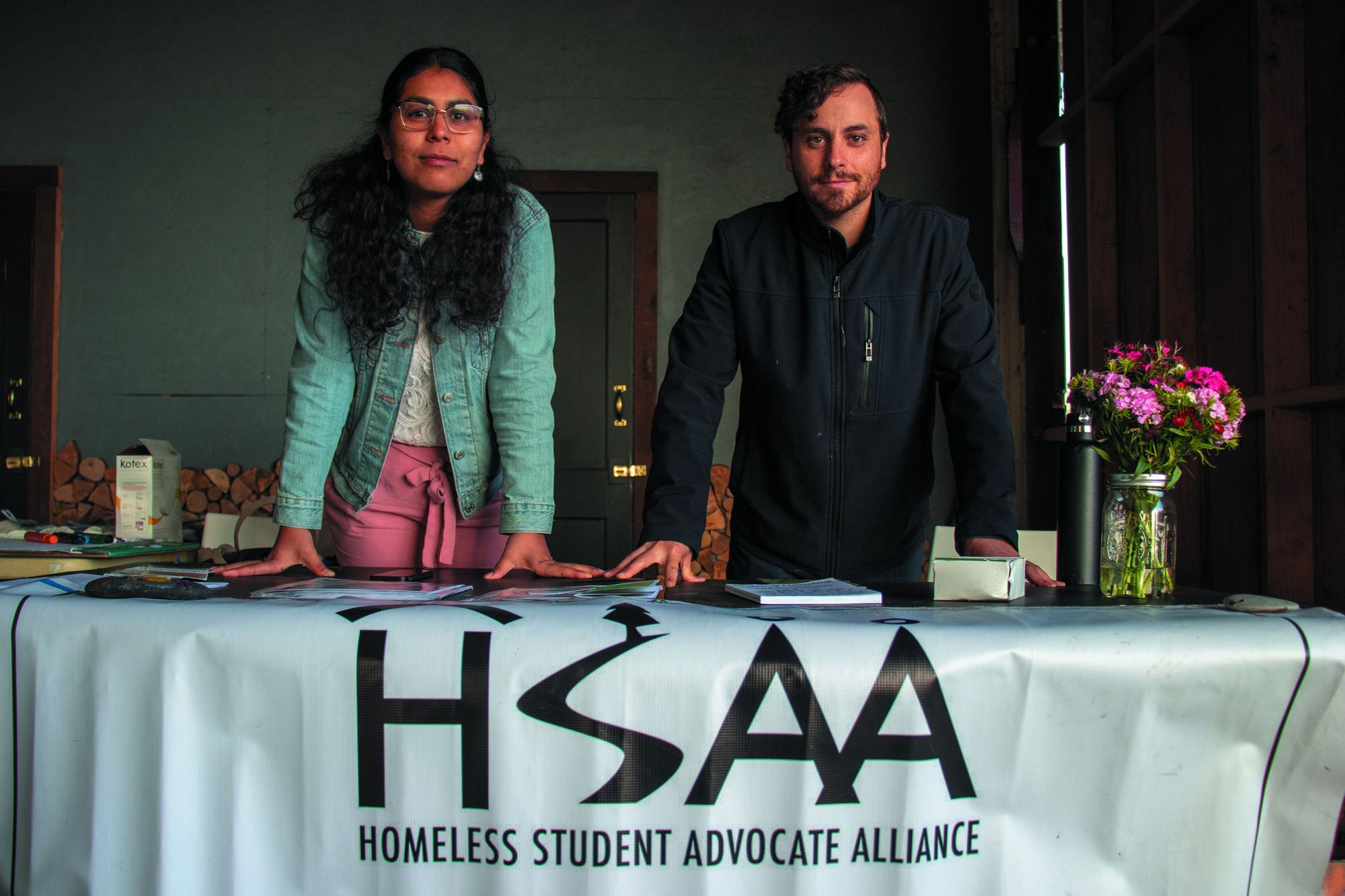
    One group helping to reduce these numbers and offer resources for students at HSU is Student Housing Advocate Alliance (SHAA), who has worked closely with McGuire since the group was founded three years ago.

    The purpose of SHAA is to advocate for the rights of homeless students, locate resources to assist students, engage in activism to help push this issue to the forefront and engage the larger community in the struggle to end homelessness.

    Because of the work they do, recreation administration senior Ines Aguilar co-coordinated the Under the Bridge Awareness Benefit event at the Humboldt Bay Social Club to raise money and spread information about SHAA. The event was her senior project and she said her and her event partner felt SHAA’s cause was the best to address.

    “I was homeless with some friends for a while,” Aguilar said. “We found housing eventually but it was scary. You think, ‘I’m a student paying tuition, how can I be homeless?’ I didn’t know what I was going to do or how I was going to go to school.”

    Aguilar said she didn’t know there were resources like SHAA on campus, and more students need to know what they offer. Aguilar would like to get involved with a similar non-profit organization once she graduates and said the goal is to be able to give back to community.

    “We have a large percentage of homeless students dealing with housing insecurity,” Aguilar said. “(SHAA) helps with housing, food and just basic needs getting met.”

    IMG_0097.jpg
    Art was donated by local artists and HSU students. | Photo by T.William Wallin

    SHAA staff member Daniela Prada also experienced homelessness while working on her senior project at HSU and said it encouraged her to get involved with SHAA. Prada’s project was about policy processes of homelessness and while conducting research she met other students who were navigating school without a home.

    “I wanted to make it a personal project,” Prada said. “We started talking with community members who were experiencing similar experiences. There were a lot of students going through the same thing but not voicing it.”

    Prada has been with SHAA since its beginning. She first worked as a secretary and then started working towards policy changes. She is currently an apprentice for a local law firm that she said is involved with family and juvenile criminal law, which intertwines with housing issues.

    “There is a plan for us to look into complaints with tenants and landlords so we can know the platforms people go through in Humboldt county,” Prada said. “We are in a fucked up system when people are living on the streets and we are one of the wealthiest nations.”

    SHAA Co-founder Michael Barnes agrees with Prada. Even with money in their savings and good credit, Barnes and his partner had trouble securing a spot to live when he transferred to HSU. It took them three months to find a rental.

    Barnes said HSU was falling short of helping students secure housing and one of the goals for SHAA was to get HSU to partially take responsibility for the state of the current housing issue.

    “They eventually took some responsibility, they should take more but it was a start,” Barnes said. “We felt validated, like all this effort was for something.”

    Barnes said that other CSU campuses are looking to SHAA so they can improve their own campuses and help their students. A point-in-contact position was created last year for the first time, not only at HSU but for the entire CSU System. Co-founder of SHAA, Chante Catt, filled that position as off-campus housing liaison.

    Barnes said they collaborate with other CSU campuses who don’t have a point-in-contact position and advocate for them. Barnes said in other states like Washington this position is carried out by professors who have rapport with students.

    “It’s someone students can rely on and have an ear to the ground about what’s happening with housing opportunity in the community,” Barnes said. “The person of contact has the info but also the empathy of being able to relate with the experience of the student.”

  • Some progress, but far from perfection

    Some progress, but far from perfection

    Homeless Student Advocate Alliance aims to avoid homelessness

    The housing situation at Humboldt State University has been a huge problem since 2016. In the last year, about 19 percent of HSU students were homeless, according to a recent study done by CSU Chancellor’s office social work professor Jennifer Maguire and CSU Long Beach social work professor Rashida Crutchfield.

    Many students demand more housing. Fernanda Estrada, a junior in psychology, has lived on campus her entire student career and said her biggest fear is not being able to find housing within the next few years she has left here.

    “I am still unsure whether I will even have granted housing next year, to live on campus,” Estrada said. “This school has a huge problem on not having a lot of housing for on campus living. For someone who doesn’t have a car, it is very hard to live off campus as well. I feel like a lot of students aren’t taking action into this situation, and they only will unless they are in this situation.”

    IMG_3703.JPG
    HSU student, Fernanda Estrada reaches for a book. | Photo by Delaney Duarte

    We are mostly unaware of the students that are homeless. We see them on campus and don’t even know they’re having housing insecurity. We see these students in our classes, walking out on the quad, or even in the Depot without knowing they have nowhere to sleep. Christopher Regalado is a junior in marine biology who was homeless for a semester and knows how it feels to be homeless.

    “It was really tough, I had to sleep from one friend’s place to another and I even had a tent, so sometimes I slept in the forest,” Regalado said. “I didn’t want to bother my friends all the time because that is their place and not mine.”

    IMG_1622.jpg
    HSU student, Christopher Regalado stands in College Creek’s soccer field. | Photo by Delany Duarte

    Regalado couldn’t find any housing available on campus or off campus. When he applied for housing on campus he’d gotten a waitlist number, which was 272. That number was far from a single digit number to even have a slight chance on getting a place to live.

    [perfectpullquote align=”right” bordertop=”false” cite=”Christopher Regalado” link=”” color=”” class=”” size=”19″]“I really hope those students who are homeless currently know they aren’t alone…”[/perfectpullquote]

    “I was really disappointed with how the system of on campus was set up,” Regalado said. “It is very unfair. I wouldn’t wish being homeless on anyone, it is such a stressful time.”

    Regalado said he had a hard enough time being homeless for one semester and couldn’t imagine the students who are homeless for a year or more. Regalado hopes that housing changes very soon for those students suffering without a safe place to live.

    “I really hope those students who are homeless currently know they aren’t alone, Regalado said. “And I hope they have supportive friends like I did at a time where I needed them the most.

    On campus, there’s supportive advocates to help those students who can’t find homes.The Homeless Student Advocate Alliance, is a club that creates dialogue services and awareness of housing issues are overlooked. This club was started by Chant’e Catt, who is also the Off-Campus Housing Coordinator. Chant’e Catt assists students who are homeless to find homes off campus and helps support them.

    “There is a lot of awareness now on campus, so professors and faculty staff know what to look for when they see a student in need so they do refer those students to me,” Catt said. “Also when students are brave enough to come out and find help, they are immediately directed to me.”

    Many students want these housing issues to be improved and get better as time goes on. Catt said that the housing situation has improved throughout the years she’s been working on the issue.

    “HSU, while people like to think we aren’t doing a lot, are actually the leader in solving and supporting the students around this need,” Catt said.

    There has been a lot of people who blame the school itself, and the people that work within housing. Catt said that there is emergency housing on campus in the woodworks for next semester that can house one or two students. This

    “I see a lot of progress going on for student basic need,” Catt said. “A lot of people like to blame a specific area or one person but in reality it is just a system failure in the institution.”

    If you are currently going through a similar situation, you can contact Chant’e Catt at cmc1776@humboldt.edu.

  • New program for Arcata tenants & landlords

    New program for Arcata tenants & landlords

    Educated Landlord and Tenant Program aims to educate both parties on mutually beneficial renting practices

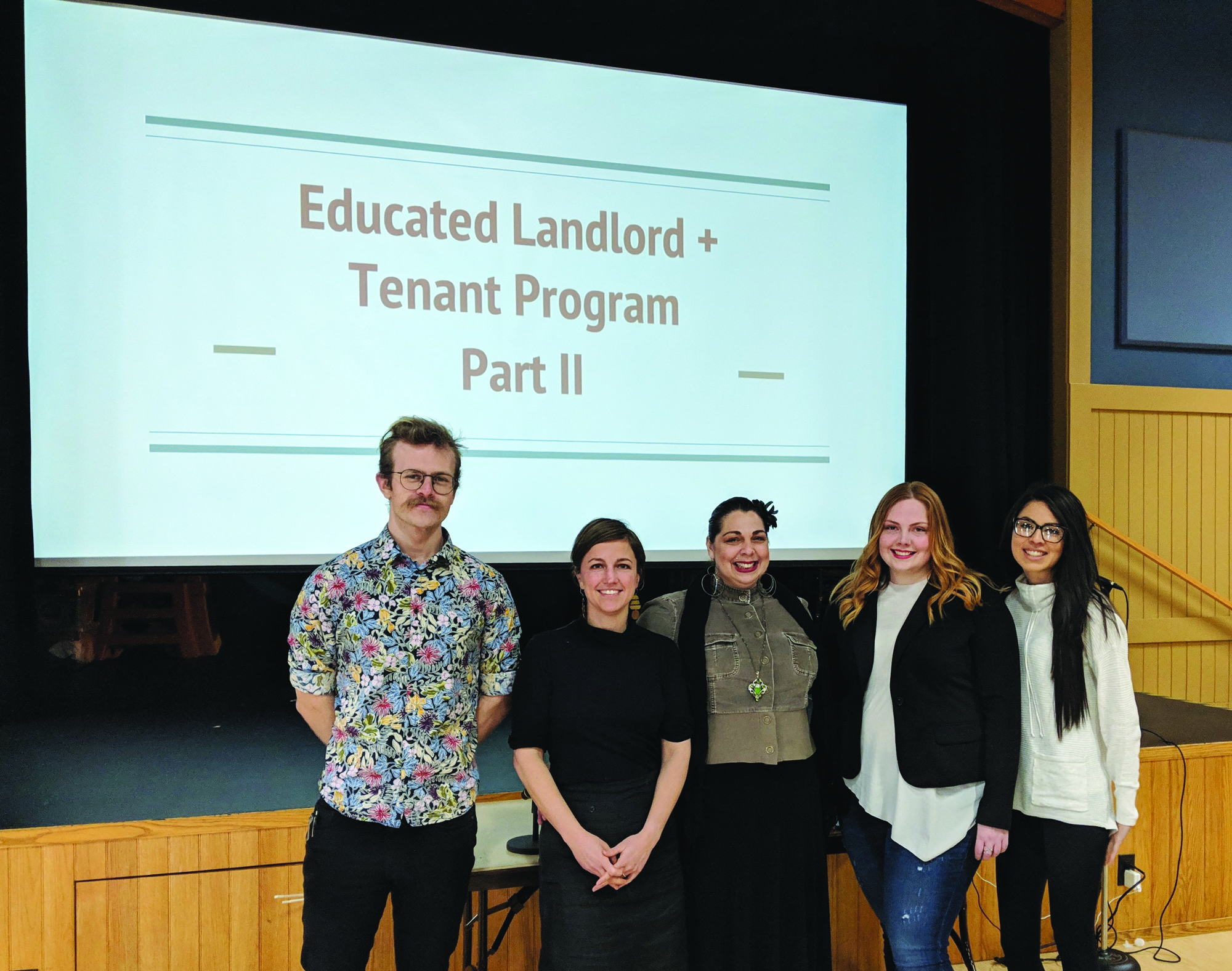
    One of the most daunting prospects of ‘adulting’ is moving into your own space. Soon Humboldt State will offer a program to make that transition easier. Students and faculty presented information on a proposed landlord-tenant certification program, tentatively called the Educated Landlord and Tenant Program, on Feb. 15, at the D Street Community Center.

    The intent of ELTP is to create an equity-based program that educates both tenants and landlords on life skills, their rights and responsibilities and the best practices to follow when renting. Chant’e Catt, who is the off-campus housing director and project leader, said the idea came from a meeting she attended three years ago where students complained about the lack of tenant education programs offered by HSU. The concept stuck in her head until she began collecting input from the community with a team of students eight months ago.

    “What we started hearing was that landlords were interested as well,” Catt said. “The student tenants were being treated poorly, but some landlords could say the same.”

    With this knowledge, the project blossomed into a grassroots community effort to include both landlords and tenants in the discussion, and create a program that could benefit both parties equitably. The team held three town hall meetings to gather information from the community on what the structure of the class would look like, and what specific curriculum would be covered.

    “We felt it was important that all voices came into the planning of this education program,” Catt said. “There’s no way people in the community can say they didn’t have input.”

    MVIMG_20190215_120811.jpg
    Chant’e Catt, the driving force behind ELTP, describes where she plans to take the program in the coming months. | Photo by Jett Williams

    The proposed two to three hour free class session would allow landlords and tenants to learn cooperatively and earn ‘gold star certifications’ upon completion of the program. The certification would be a sign that the tenant or landlord is educated on all aspects of renting a room or apartment. The program is expected to be implemented early next semester.

    One of the landlords attending the town hall meeting was Simone Wyche. Wyche is the office manager of Strombeck Properties and said she is excited to see the execution of this program.

    “I’ve never seen anything like it,” Wyche said. “We won’t just pick tenants with the certification, but it would definitely be enticing.”

    MVIMG_20190215_114121.jpg
    A blend of students, landlords and interested community members gathered to hear the details behind ELTP and provide vital community feedback. | Photo by Jett Williams

    [perfectpullquote align=”right” bordertop=”false” cite=”Jesse Richards” link=”” color=”” class=”” size=”18″]“Waking up and going to the bathroom sounds simple, but for a homeless person it’s never that easy.”[/perfectpullquote]

    Forestry major and ELTP Research Collaborator Jesse Richards’ struggles with housing motivated him to help build the program. He survived living out of the trunk of his car and sleeping in the community forest before buying a van and outfitting it into a livable space.

    “Being homeless adds stress to your day, because so much of your time is spent dealing with simple tasks that become much harder when you don’t have a place to stay,” Richards said. “Waking up and going to the bathroom sounds simple, but for a homeless person it’s never that easy.”

    If this program had been in place when he first came to campus, Richards said he absolutely would have utilized it.

    “This program is designed partly as a buffer to help students with insecure housing, to prevent them from becoming homeless,” Richards said. “Knowing that there’s someone on your side, advocating for you sometimes is all you need to go to school and do things in your daily life.”

  • Extreme Weather Shelters

    Extreme Weather Shelters

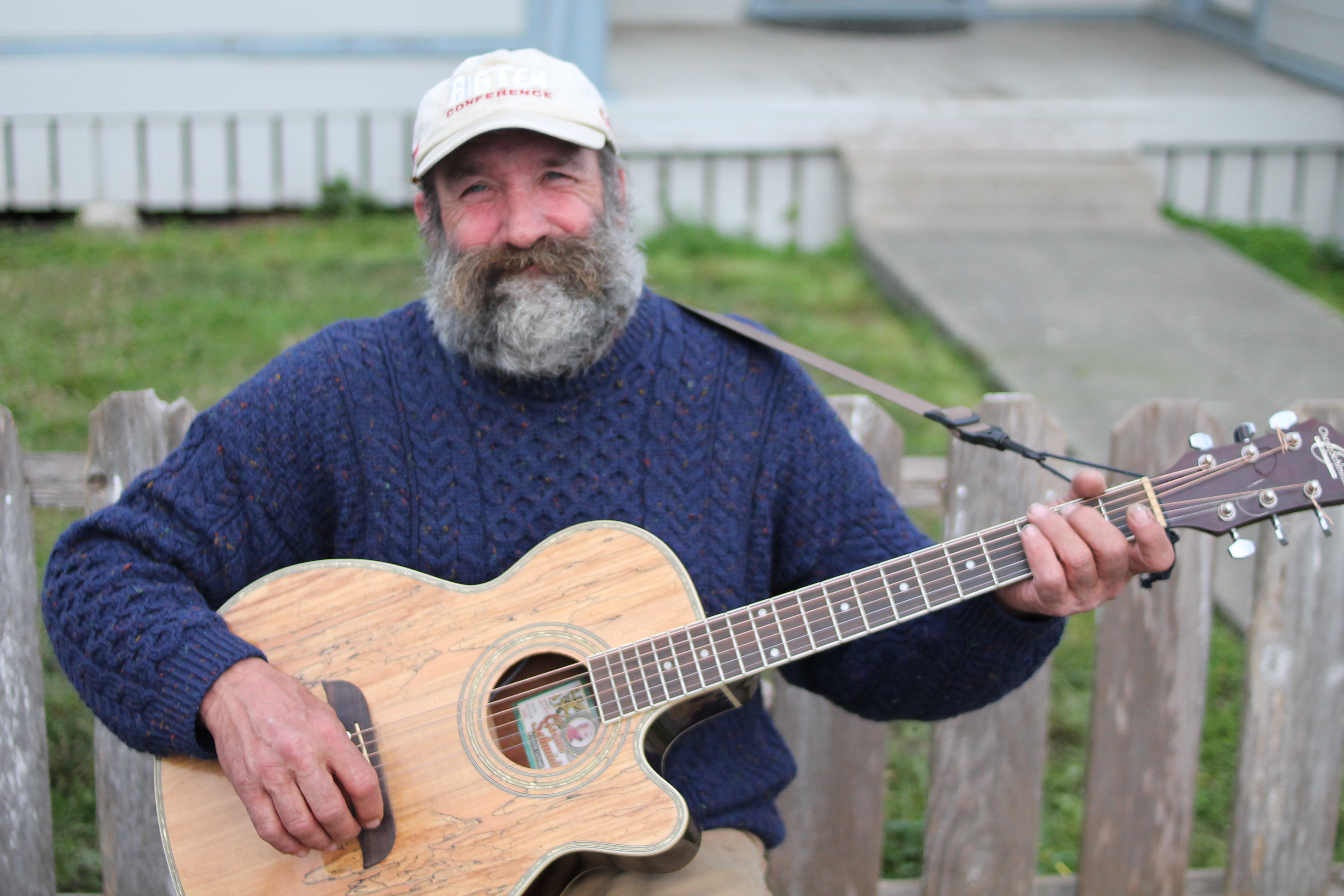
    On a below-freezing December night, Ricky Smith found himself outside in Arcata’s cold weather with nowhere to go. His only option was to find warmth in Arcata House Partnership, or AHP’s emergency weather shelter. Smith has a Yosemite Sam mustache layered atop a scruffy beard and can be spotted around town with a guitar strapped around his shoulder. He is 60 years old and has been homeless the last two years.

    “I was a local contractor and my house was foreclosed,” Smith said. “I lived in the same house for 25 years in McKinleyville but I took out one of those crazy loans.”

    Smith said he usually doesn’t use the emergency shelter, but that particular night was unbearable and he couldn’t see himself surviving the frost. Although the volunteers were friendly Smith said he would take his chances on the street next time. It isn’t uncommon for homeless people to choose the street rather than a shelter.

    David Pirtle, member of the Faces of Homelessness Speakers’ Bureau, National Coalition for the Homeless, told NPR reporter Ari Shapiro, “My fear of the unknown, of what might be waiting for me at that shelter, was worse than my fear of the known risk, you know, of staying out on the street.” Pirtle said that the negative actions talked about of certain shelters can outweigh the shelters that are safe.

    “The weather was below freezing when I used the emergency shelter but I prefer to sleep outside no matter how cold it is,” Smith said. “It isn’t worth the hassle to get loaned bedding.”

    Smith isn’t alone in his experience. According to AHP there are 1300 homeless people in Humboldt County, or roughly 1 percent of the population. Darlene Spoor is the executive director for AHP and said the emergency weather shelter is 100 percent volunteer ran and relies solely on donations from the community.

    “We can only do this with the generosity of our community,” Spoor said. “We do partner with the county, they are a great help with us and with people with mental health concerns.”

    Spoor said the emergency weather shelter is contingent on the National Weather Service’s extreme weather warning, which is around 34-33 degrees and below. Spoor said they can sleep up to 18 people including families. She works with local churches in Arcata that act as temporary housing for the homeless during nights with emergency weather warnings. When she is alerted by email they open their call building, the Annex, and offer dry clothes and food. After intake they can shower and receive bedding.

    “They get dinner and then we transport them to where they will sleep,” Spoor said. “We have staff that stays at the location the entire time then in the morning we bus them back so they can get breakfast and go on their way.”

    Spoor said although their regular shelter is full this year they haven’t filled up their emergency weather shelter, but that doesn’t mean there isn’t a need for the beds. They are in need of more sleeping bags, mats and large pans of food that can be frozen and feed 20. She said the main challenge is getting the information out into the community when the emergency weather shelter is open because it’s unpredictable.

    “What people can do is check our Facebook page, we post signs, we tell the hospital, 211 and the police,” Spoor said. “One of the misconceptions is people have to be clean and sober, which isn’t true, they just have to have a good behavior”

    The largest homeless population resides in Eureka where the Eureka Rescue Mission can house 46 women and children and around 73 men safely. Brian Hall Sr. is the executive director for the Eureka Rescue Mission and said during the winter season they act as if everyday is an extreme weather alert. Because the men’s shelter is under renovation they are sleeping in the small cafeteria, the size of half a basketball court. Hall said this doesn’t affect the amount of space they hold for those who need shelter and haven’t yet had to turn anyone away.

    “During the winter season we lower the bar at this time,” Hall said. “If we smell a little bit of booze we let it slide, but if their sloshy drunk we can’t take them in.”

    The Eureka Rescue Mission serviced over 100 people a night last. Hall said 160 or so was their maximum and if they’re completely full they call St. Vincent on 3rd St. in Eureka which can house 20 cots. Hall said this year is low in comparison but that could easily change. When the weather is rainy their outside area is covered with tarps and they can run a heater to accommodate an additional 15-20 men.

    “There has been an increase of men going from homeless to having an apartment,” Hall said. “According to some there is a need for more homeless shelters, my take is there more need in our community for places for people to go who are active in their addiction, or who have dogs. We don’t allow dogs and if I was homeless i would have a dog.”

    For more information on the emergency weather shelter you can contact Arcata House Partnership at (707) 633 6236 or the Eureka Rescue Mission at (707) 445-3787.

  • Students v. admins: frustrated conversations at the budget cuts walkout

    Students v. admins: frustrated conversations at the budget cuts walkout

    “Students’ rights! Students’ rights!”

    “Where the fuck is Lisa? Where the fuck is Lisa?”

    “Cut her pay! Cut her pay!”

    Video by Bailey Tennery.

    HSU students could be heard storming through Siemens Hall yesterday, demanding the school’s administration to face students’ anger surrounding the budget crisis.

    Trevor McDowell, a wildlife major at HSU, was among the crowd of student protestors.

    “We are marching to find President Rossbacher, wherever she is meeting with WASC,” McDowell said.

    WASC, or the Western Association of Schools and Colleges, is a reviewing body that determines whether a school is capable of preparing students for the next steps in their careers.

    Dr. W. Wayne Brumfield, interim vice president of student affairs, explains the significance of a WASC approved institution.

    “WASC accreditation happens all across the country, and is important to a student’s degree. Having the accreditation is a sign of a healthy institution with good academics,” Brumfield said.

    Interim VP of Student Affairs Dr. W. Wayne Brumfield listens to student demands in Siemens Hall on March 21. Photo by Philip Santos.

    David Alvarez, a student protestor, wanted Brumfield to know that HSU is not healthy.

    “Why is there a lottery to live on campus? That’s not healthy,” Alvarez said. “I am scared to be homeless. We are not healthy.”

    The students’ protest, led by Moxie Alvarnaz, started in the UC Quad.

    “How do you feel about the budget cut? The administration just got another raise,” Alvarnaz said.

    A collective “boo” swept through the crowd.

    Dr. Alexander Enyedi, HSU’s provost and an administrator, was in attendance at the protest.

    “I think we should keep the focus on the budget structure,” Enyedi said. “A deficit is different from a budget cut. The colleges’ budgets are mostly untouched, but we are asking them to not spend more than what they are given.”

    Enyedi was certain that using the school’s degree auditing system, or DARS, to gather an idea of what classes students need will ensure that students have the right classes to graduate on time, in spite of the deficit reduction effort.

    Tents in the UC Quad at Humboldt State during the student-organized event to protest budget cuts on March 21. The walkout was organized by Students Coalition for Organized and Direct Action. Photo by Matthew Hable.

    As students marched into Siemens Hall from the UC Quad to find President Lisa Rossbacher, they confronted Enyedi in front of his office. William Cooke, a student protestor, disagreed with Enyedi on the class offering strategy.

    “If you think that we should be prepared for the rest of our lives, then why offer only the classes we need?” Cooke said. “I pay so much money for my education. Why can’t I take the classes that I want to take and experience college fully?”

    Footage by Garrett Goodnight. Edited by Bailey Tennery.

    David Alvarez, an undeclared major, expressed concerns for students’ ability to explore different majors.

    “I am undeclared. What if I want to become a biology major? Are you going to cut biochemistry [and] botany classes?” Alvarez said.

    Kelsey Meusburger, another student protestor, explained what students are seeking from administrators.

    “We are asking for an income cap to make HSU a more equitable place,” Meusburger said. “Is that something you’d be open to?”

    “Always, always,” Enyedi said.

    Ben Gorham and other HSU students ensure they are heard while WASC reviewers meet in Siemens Hall 222 on March 21. Photo by Philip Santos.

    Brianna Allen, who was missing a capstone class to be at the protest, expressed frustrations with the responses Enyedi has given to students’ questions.

    “I need to see you take action,” Allen said. “I need to know if you will advocate for us, on the board of admin, to take budget cuts through your money.”

    “I will advocate for you,” Enyedi said. “I will discuss with the cabinet about the ideas that are being put through.”

    Dixie Blumenshine, a biology major, brought up the recent firing of CNRS’s dean, Dr. Richard Boone.

    “Why did Rich Boone leave early? His resignation isn’t effective until June,” Blumenshine said.

    “He wasn’t interested in doing his job anymore,” Enyedi said. “If he was committed, he wouldn’t resign.”

    Kylie Brown, a general biology freshman student, was watching the protest from the UC Quad.

    “I am here today because I heard that some classes, which I’m hoping to take, will be cut,” Brown said. “I hope to become an endangered species biologist. If the [budget deficit] cuts botany classes at HSU, I will not be prepared for my career. This makes me angry. I haven’t been able to experience all the classes I want to take, and they’re already taking it away.”

    Lizzie Phillips (left), one of the members of Students Coalition for Organized and Direct Action who participated in the HSU walkout on March 21, stands in front of a makeshift mural where students air our their grievances on the budget cuts at Humboldt State. Photo by Matthew Hable.

    Hana Watanabe and Kotaro Kawakubo, international students, were present at the protest in the UC Quad.

    “We heard about this protest through our professor, who told us to come see the cultural differences,” Watanabe said.

    “We’re also here because we’re worried about the office of international programs,” Kawakubo said. “Our boss has already been fired. We don’t want the office to close. Losing this program would be like losing a home for us.”

    Students are encouraged to attend the Associated Students budget forum on Monday, March 26th, from 5-6:30 pm in the KBR for further questions.

    See what the HSU budget looks like at URPC.

    Information on HSU’s WASC accreditation can be found here.

  • EDITORIAL: Lend a helping hand

    EDITORIAL: Lend a helping hand

    It’s Monday morning and you have class at 9 a.m. You get out of bed and hop in the shower, get dressed, do your hair in the bathroom and brush your teeth. You get ready in the comfort of your home and go to school, hopefully grabbing breakfast along the way.

    Whether you live on or off campus, you’re able to get to school without having to think twice about where you got ready, if you got to shower or where you woke up. For homeless students, these are luxuries that come with having a stable living situation. These students are your friends you see in class every day as a someone with a stable living situation, and there are ways to help your peers and colleagues even when you feel you don’t have too much to offer.

    President of the Humboldt State University Homeless Student Advocate Alliance, Chant’e Catt, gave some bigger picture suggestions on how students can help their fellow students.

    1. Get political

    One of the ways a student can help is by being involved with and voting for local legislature that promotes help for homelessness.

    To do this, students should update their voter registration address so they are eligible to vote in Humboldt County. To do this, you can register online at the Department of Motor Vehicles website or in person at the DMV as well.

    Catt said after changing voter addresses, students should “vote on local policies that restrain housing development and other student issues so we can create legacy for students to come.”

    Attending city council meetings and sharing opinions at these meetings is another way to influence change. Arcata city council meetings happen several times a month. You can find the next one at the city of Arcata’s website.

    2. Get involved on campus

    Homeless students are encouraged, at their own discretion, to participate in any research studies on campus by sharing their stories and experiences. Catt said by participating, suggestions based off these stories can be made to the CSU system to help others in the future.

    For example, Oh SNAP! is a student food program run by students that provides help for food insecure students. Visit their website at http://hsuohsnap.org to discover more of their resources and find out how you can help.

    Students can also spend two hours a week participating in clubs and programs like the HSAA, the Youth Educational Services or becoming a part of the Associated Students executive board to promote change and support for homeless students. Y.E.S. also facilitates a homelessness network that offers resources to homeless families in Humboldt.

    3. Get involved in the community

    Looking for local shelters and finding a way to volunteer time and support to these shelters could potentially give back to students utilizing them. You can find a list of shelters in the area at https://www.shelterlistings.org and by searching for Humboldt County.

    Catt suggested students get involved in the Raven Project Street Outreach Program. The Raven Project is put on by the Redwood Community Action Agency which owns rentals as housing options, offers connection to crisis assistance, home repair assistance, some transportation options and other resources for homeless families.

    The Affordable Homeless Housing Alternatives said they work with the community on both long and short term goals to help find housing for the homeless in the area. They accept multiple forms of help and donations.

    Even if these local options don’t seem student oriented, remember that most students are above the age of 18 and are technically adults. This means local homeless adult resources might be their only option.

    4. Check in with each other

    One of the best ways a student can support other students who might be homeless is to ask them how they are doing. Checking in with each other could make a world of a difference.

    Catt said students should ask each other how they are and share resources and information more often.

    “Be more open to sharing just a few hours helping each other,” Catt said. “Absolutely every study I find on resiliency says mentors, council, friends are the key to success. Networking creates a safety net in the community.”

    In some cases, the ability to admit you need help might be the hardest thing to do. By looking out for your fellow students, you might discover someone who needs your help.


  • Future housing developments for students in Arcata

    Future housing developments for students in Arcata

    As the busy students of Humboldt State University get back into the swing of things, some students are in the unfortunate situation of being homeless.

    While many think no actions have been taken, it is easy to notice the many construction projects that have popped up around town.

    The one closest to campus is located on Foster Avenue. These buildings are beginning to catch attention.

    According to Alyson Hunter, City of Arcata’s senior planner, this construction is part of a project known as the Sunset Terrace Apartments.

    “The city had known the developer’s plans for the site long before construction started,” Hunter said.

    Construction began in 2014 in several phases. The property developer, Kramer Investment Corp., posts pictures of the construction process on their website.

    It is going to be a 142-unit apartment complex consisting of solely one bedroom and one bathroom units.

    While Alex Hunt of Kramer Investment Corp. was unable to release more information, he said that the first phase was nearing completion.

    “We’ll have to coordinate with PG&E to finish the first phase,” Hunt said.

    At this point, rent prices are unknown, but residents of other properties managed by Kramer Investment Corp. say similar units go for around $700 per month.

    Recent HSU graduate Nathaniel Matteson had been homeless for three months last semester.

    “I was looking really hard and I could not find anything,” Matteson said. “It would have been really nice to have something like this as an option.”

    Future students of HSU may not have to worry about housing as much as students are today, as this project is not the only one in the area. On Feb. 13, a city council meeting will be held to discuss further steps on what is known as The Village Student Housing Project.

    According to City of Arcata’s website, it is proposed to house 800 beds specifically for students. It will be a multi-story complex at the end of I Street and St. Louis Road, which is across the freeway from campus.

    These projects could make housing a smaller problem than it is among the students at HSU. As for now, the eventual completion and opening of the Sunset Terrace Apartments will decide whether homeless students will have some relief of trying to find a place to live.


  • Housing conference weighs homelessness in Humboldt County

    Housing conference weighs homelessness in Humboldt County

    By | Charlotte Rutigliano

    Chant’e Catt and Mike Barnes, along with the Homeless Student Advocate Alliance (HSAA), are seeking to create a greater connection for students, the university, and the community. Something they plan on doing with the upcoming events after fall break.

    Catt is the founder and president of the HSAA. She said that an estimated 15 percent of students experience homelessness while attending HSU.

    Catt founded the HSAA last September to give a voice to students experiencing homelessness.

    “I eat, breathe and sleep this club,” Catt said. “This club is support for students who find themselves seeking housing.”

    Barnes, who is the current vice president for HSAA, said the three-day event is one of the biggest events they’ve done on campus, especially since they’ve taken on a lot of the event planning and marketing.

    “If I described this event in one word, it would be ‘necessary,’” said Barnes.

    Barnes said there isn’t enough information for students who have housing insecurities.

    According to Barnes, the event will include both student and community led organizations, such as the Affordable Homeless Housing Alternatives, Inc. (AHHA).

    Nezzie Wade is president of the board of AHHA. Wade said that they have worked with several groups of students at the university on housing-related issues and projects.

    Both Catt and Barnes said this event will open up a dialogue for students and will help bridge the local community with the student community.

    Barnes said that it might be hard to find seating for the first two days of the events because of how much support they’ve gotten from the community.

    ————————

    Day 1 – Nov. 28 from noon to 1 p.m. on the HSU University Quad.

    Afternoon sustainability fair consisting of student innovations and ideas of sustainable living outside of traditional dwellings.

    Housing: Indigenous Insights 6 p.m. to 8 p.m. in the Native American Forum at HSU.

    A night of storytelling featuring Jene McCovey, an open forum for attendees to share their stories.

    Day 2 – Housing: Social Justice Insights Nov. 29th from 6 pm to 8 pm in the Native American Forum at HSU.

    Perspectives on social justice and breaking stigma. Featuring a Native Speaker and Vernon Price, a highly knowledgeable advocate for homelessness rights and co-star in I Am I was Homeless, a featured video to be shown; faculty members from the Department of Social Work, members of the Multi-Cultural Center, Affordable Homeless Housing Alternatives and more representatives from HSU.

    Day 3 – Housing: Innovative Insights Nov. 30 from 8 p.m. to 12 p.m. in the University Center Quad at HSU.

    The final day of the summit will consist of an idea fair, featuring student, faculty, and community projects focusing on anecdotal solutions to housing insecurity. The workshop will provide opportunities to acquire skills that will help support the lifestyle should you encounter it.