The Lumberjack


Students Serving The Cal Poly Humboldt Campus and Community Since 1929

Tag: HSU Student Health and Wellness Services

  • Mental Health at Humboldt State

    Mental Health at Humboldt State

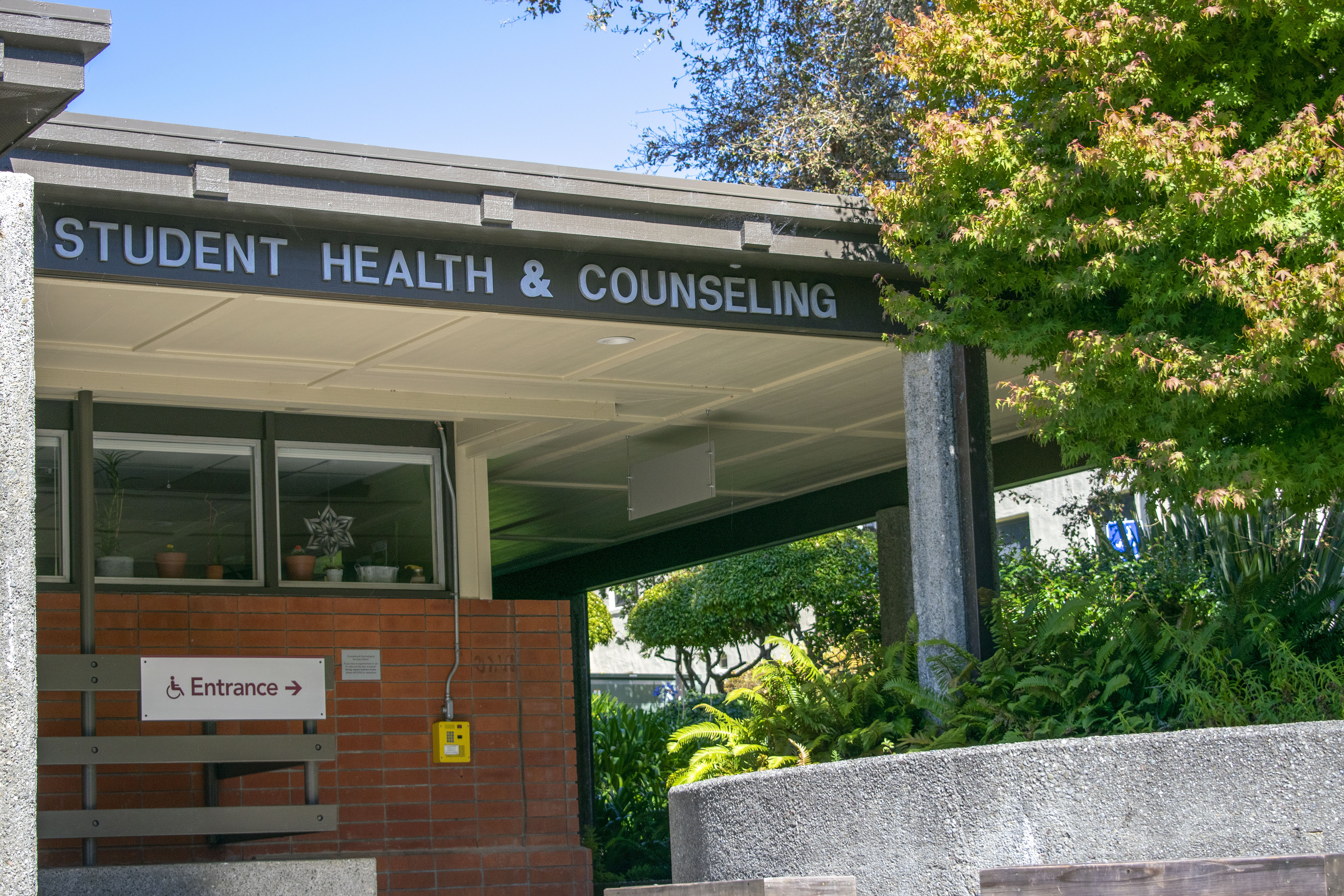
    HSU’s CAPS is working to combat mental health concerns among HSU students

    Rates of attempted suicide in Humboldt County stand far above national and state averages, according to Humboldt State University Health Center Director Brian Mistler, Ph.D.

    “Suicide attempt rates in Humboldt County are nearly twice the national and California averages,” Mistler said in an email response facilitated by HSU Communication Specialist Grant Scott-Goforth. “And HSU students face greater systemic barriers to access health care than in other more affluent and less isolated parts of the country.”

    An estimated 40% of HSU students felt elevated levels of depression according to a 2016-2017 Healthy Minds Study led by Daniel Eisenberg, Ph.D of the Healthy Minds Network, which performs web-based mental health surveys on college students.

    Eisenberg has been leading an analysis of student mental health at all 23 California State Universities. In the 2016-2017 analysis of HSU, an estimated 42% of students had elevated levels of anxiety, while an estimated 4% of students attempted suicide in the last year.

    Mistler tied Humboldt County’s lack of expert services to mental health.

    “…HSU students face greater systemic barriers to access health care than in other more affluent and less isolated parts of the country.”

    Brian Mistler, Humboldt State University Health Center Director

    “Mental health is a critical basic need and it’s tied to others like having enough food, shelter and physical health care and safety,” Mistler said in the email. “Psychological needs become more important as chronic resource insecurity increases.”

    Mistler clarified that HSU’s relatively high rates of mental health conditions do not appear to be caused by Humboldt itself.

    “From what we know today, the increased needs among students appear to be present on the first day,” Mistler said in the email. “That is, it’s not caused by being here.”

    Mistler added that many HSU students may arrive with a history of limited health care access.

    “It’s also true that many students arrive at HSU having not had access to their fair share of health and counseling services in the past,” Mistler said in the email. “It’s clear from all the data that HSU’s team of health experts do a phenomenal job of helping those students who choose to seek help.”

    Counseling and Psychological Services Staff Psychologist and Outreach Coordinator Dr. Elizabeth McCallion in a CAPS office on Oct. 1. McCallion said most students who visit CAPS report positive experiences. | Photo by James Wilde

    HSU Counseling and Psychological Services Staff Psychologist and Outreach Coordinator Dr. Elizabeth McCallion is one of the experts working to help students.

    McCallion hopes to mitigate the stigma around mental health.

    “Mental health support doesn’t just have to be for when you’re having severe symptoms,” McCallion said. “It can be a way of just generally taking care of yourself. Kind of like preventative health care.”

    McCallion said CAPS is working to meet students where they are, including through library SkillShops and outreach by Multicultural Specialist Cedric Aaron.

    McCallion praised HSU’s mental health services but did acknowledge a lack of services in the surrounding community.

    “I think in terms of the counseling center, the counseling center does a wonderful job with that support,” McCallion said. “In terms of our community, there is a need for additional mental health care. But that’s not just mental health, that’s health care in general because of where we live.”

    Both McCallion and Mistler emphasized that those students who do use HSU’s services see verifiable benefits.

    “Dozens of studies confirm that medical and counseling services reduce the risk for students of catastrophic outcomes, help with anxiety and depression, and increase the chances of students graduating,” Mistler said in the email. “If there’s a message here, it’s to encourage people to use the available resources.”

    Mistler noted that HSU’s outreach efforts have produced an increase in student visits to counseling services of about 5% each year.

    Mistler also pointed out that students that receive counseling show improved retention rates and a higher likelihood of graduating.

    Mistler and Eisenberg plan to prepare a CSU-wide analysis of mental health in spring 2020, which they hope will provide more information on the state of student mental health.


    Per the CAPS website: You can reach a CAPS therapist by phone at all hours at (707) 826-3236. In emergency situations, you should call Humboldt County Mental Health at (707) 445-7715 or dial 911.

    You may also reach the National Suicide Prevention Lifeline at 1-800-273-8255.
  • Humboldt State faces healthcare shortage

    Humboldt State faces healthcare shortage

    One part-time psychiatrist working six hours a week.

    Students at HSU are facing a healthcare shortage. Brian Mistler has been the director of the Student Health and Wellness Services for two years.

    “I spent the first week on the job really understanding it,” Mistler said. “Students have been telling me weekly how the wait times are increasing and how we need more staff.”

    There is one part-time psychiatrist working six hours a week on HSU’s campus.

    “Students have trouble getting their medication,” Mistler said. “They have to wait two or three months to see the psychiatrist. Right now, it’s March and he’s booked for the rest of the year.”

    Mistler says local hospitals and open door clinics are backed up, and they do not have extra capacity.

    “When we send a student off campus often times that means the student just doesn’t get care and then they are forced to leave school,” Mistler said.

    There is no Kaiser facility within five hours of Humboldt County.

    “We’re isolated,” Mistler said. “Other universities solve this is by sending students off campus to a local hospital.”

    Delays in regular facilities maintenance are affecting the current state of the health center. Mistler said the temperature inside certain areas of the facility overheat.

    “The lab where we do our blood tests overheats, because the heating doesn’t flow right in the building,” Mistler said. “The temperature gets too hot and we have samples that have to be stored at a specific temperature in order to test.”

    Mistler said the student health center building is 20 percent over capacity.

    “There is not enough room to hold the staff,” Mistler said.

    There are multiple solutions to the healthcare shortage being discussed. One option is telepsychiatry. Telepsychiatry is a video conference with an outsourced psychiatrist in a different location.

    “Students would come in the health center, sit in front of a large screen and have a conversation with a psychiatrist who is somewhere else in California,” Mistler said.
    “The psychiatrist will work with our team on campus. The student will be able to walk down to the pharmacy and pick up their prescription.”

    Health Education and Clinic Support lead Mira Friedman supervises the clinical peer health educators on campus. The peer-to-peer service helps with the clinic’s wait times.

    “It allows our medical providers to see more students with complex issues,” Friedman said.

    The clinical peer educators are not physicians. They are paired up with a medical provider if they have medical questions. Each peer educator is paid minimum wage.

    Clinical peer educators work a minimum of 10 hours and a maximum of 20 hours a week. Friedman holds weekly staff meetings as well as an individual weekly check-in with the clinic’s peer educators.

    Kelsey Meusburger, a clinical peer educator since August of 2017, says she feels empowered helping students.

    “I only talk to students who are not showing signs of symptoms,” Meusburger said. “When they show signs of symptoms I refer them to the Gold Clinic.”

    The Gold Clinic is reserved for more urgent matters.

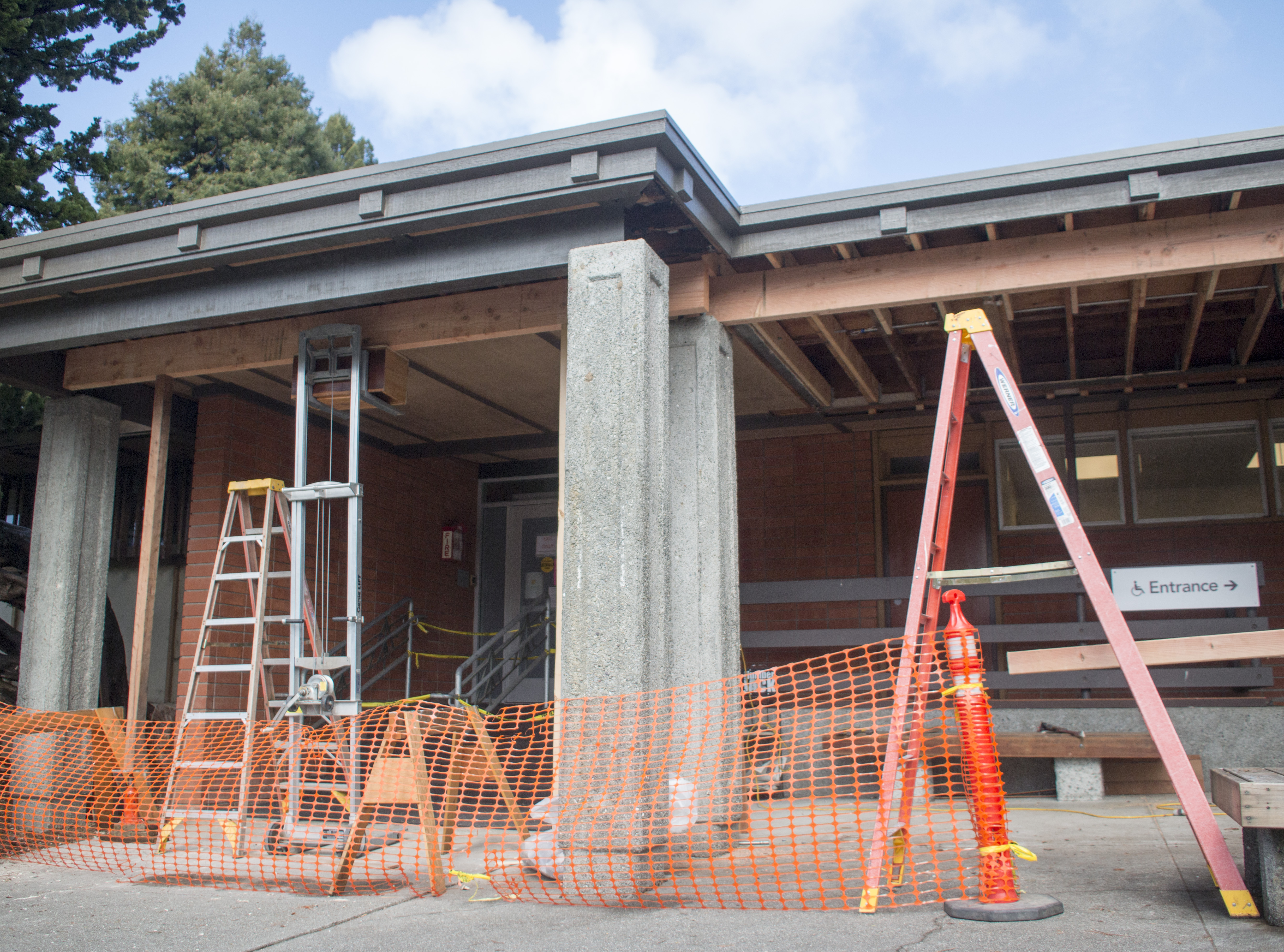
    The state of the student health center building was designed 60 years ago and has not been updated. The building needs to have repairs made in order to function.

    “The front of the building where the roof is rotting,” Mistler said. “We had to replace a beam, [and] that’s why there is construction outside.”

    There are two separate fees that go toward health services. One fee is for the physicians, the second is for the health center facilities. Both fees are being proposed to increase in order to improve the current healthcare conditions.

    “It would cost about $66 per student per semester to repair. For another $10, a brand new health center could be built,” Mistler said. “It seems like a much better idea than spending a lot of money fixing the current health center.”

    The Student Fee Advisory Committee is helping to decide the best way to adjust the health fees and increased funding.

    “We can’t provide better service in the current space, [because] we’ve outgrown it,” Mistler said. “Part of the reason we’ve outgrown it is because health services aren’t just the services we provide. Other things that are tied to health is physical, mental and other basic needs.”