The Lumberjack


Students Serving The Cal Poly Humboldt Campus and Community Since 1929

Tag: Humboldt International Film Festival

  • Humboldt International Film Festival hosts at Van Duzer Theatre

    by Lidia Grande-Ruiz

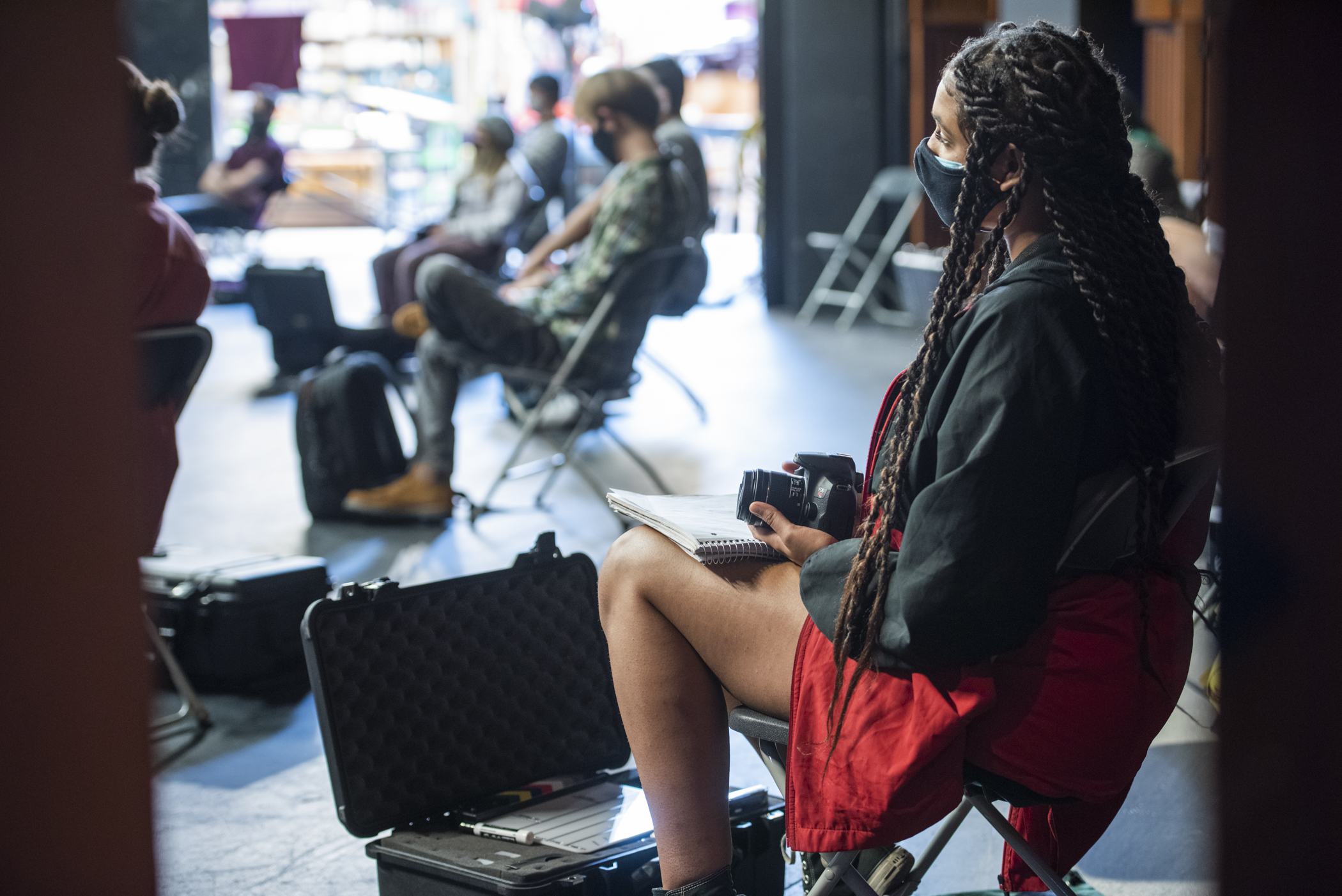
    The Humboldt International Film Festival (HIFF) team hosted a night of film sharing at the Van Duzer Theatre on November 3. The films were pulled from the HIFF archives and all have a common theme: discomfort and exploring it more through that feeling. 

    The films shown were “Simon” (2015, directed by Camille de Galbert), “Dancing with Scissors” (2019, directed by Steven Vander Meer), “Gone Sale” (2018, directed by Matt Meindel), “Aviary” (2021, directed by Lauryn Blottin), “Prey” (2018, directed by Jing Sun), and “The Quiet” (2019, directed by Radheya Jegatheva).

    “Change occurs at the point where it outweighs risks,” said Sarah Lasley, assistant film professor at CPH. “So when you are so uncomfortable that the fear of risks in change is no longer scary, we are kind of forced to make change.”

    Lasley continued to speak about the night. 

    “A lot of new wave films are intended to make the audience feel some kind of discomfort and these films occurred in a huge shift and change in sociopolitical climate,” Lasley said. “When you think about how that mixes in with discomfort, you know this idea on how discomfort outweighs risk, this change is occurring.”

    Students in the audience thought that the festival was cool and visually appealing. There were some who mentioned how certain films made them uncomfortable and freaked out, especially the film “Gone Sale,” which brings back memories of going to the mall but touches on consumerism. 

    “These nights are very successful nights because it is nice to see a variety of films coming to the school and the school has become a hub for all these international films,” said Ralph Valle, a film student and one of the co-directors of the film festival. “It is very honorable to be part of something like this. We get to distribute these films to a variety of people and it brings me joy because I get to see how people view life and movies that try to have some kind of message that they are trying to convey is pretty awesome to see.”

    All kinds of people, not just film majors, came together to see films that can resonate with everyone in some kind of way. The films emphasized that, while we may come from different backgrounds but we have one thing in common. We are impacted by what we see around us. From historical perspective to animation, at the end of the day, film brings us around and we discover at times not just people we never planned on meeting, but also a new side of ourselves.
  • Film Department loses budget and resources

    Film Department loses budget and resources

    Annual Humboldt International Film Festival proceeds without a budget

    Ann Alter is chair of the film program at Humboldt State University. She and other film professors significantly adjusted their instruction to the new format of virtual learning. The department typically relies on in-class teaching, specifically, access to a film set.

    “Everything is modified,” Alter said. “The scope of classes, student activities, interactions between students and faculty, teaching, assignments, grading, equipment and facilities access and even the films we are able to show in our film studies classes.”

    Professor David Scheerer is also frustrated with the uncertainty of online teaching and how its affecting students’ education.

    “Teaching the incredibly complex and aesthetically challenging on-set techniques of the filmmaking process is virtually impossible,” Scheerer said. “There is no other way but hands-on instruction to teach students the actual professional practices in order to prepare them for post-graduation reality.”

    Teachers are still requiring students to work with a partner to complete assignments, expecting them to follow safety precautions.

    Bodhi Kim-Foulk, a senior film student, transferred to HSU in the fall of 2019. He believes working with another student will help him in the long run.

    “It’s probably for the best that we still have to find a way to work with others, because the pandemic is ultimately going to end at some point and overcoming obstacles in production is what filmmaking is all about,” Kim-Foulk said. “Learning to confront these challenges can only make us more resilient as artists.”

    Despite frustrations, Scheerer does what he can to look positively on the situation.

    “I have turned a lemon into lemonade by making this an excellent exercise in solving an entirely new series of practical production problems, while students must also solve the ‘usual’ creative problems to tell their story,” Scheerer said.

    Kylie Holub is a transfer student film major. With less time spent on socializing, Holub has had the opportunity to focus more on screenwriting.

    “It’s all about finding the silver lining in what we have to work with,” Holub said. “This is a crazy time to be alive and a crazy semester we are experiencing right now. But, filmmaking and writing films, I can say, have been a major component for keeping my spirits up.”

    The film program has also experienced a lack of mentoring opportunities this semester for beginning students. Not having access to work on a film set has been detrimental. According to Alter, this historically been a key strength of the film program. Additionally, the department’s annual Humboldt International Film Festival, a tradition dating back 53 years at HSU, was given no budget this year because of the pandemic.

    Michelle Cartier is a lecturer and first year coordinator of the festival. The budget issue has forced Cartier and their team to improvise a creative strategy to keep the event going. As of now, the festival is planned for April 22-25, 2021.

    The student run event includes four different categories of films: Experimental and Animation, Narrative, Documentary and Best of the Fest. For 2021, they’ve added new categories including COVID-19, Black Lives Matter and LGBTQ+.

    While the event has been held at the Minor Theater for several years, access to the Minor Theater is in question due to funding. The festival team is considering other options including drive-ins, a virtual format and other live venues.

    Along with the impacts on students’ education, the lack of resources is affecting opportunities for students post-graduation.

    “When [a student] gets to work on a professional film production, they have something meaningful to put on their resume,” Alter said.

    Film students and instructors avoid filming in crowded areas, keep their crews small and reduce the number of actors they work with. If anything, the pandemic has helped students become more creative and resourceful in the way they tell their stories.

    “HSU film students are resilient, passionate about film, and they have important, wacky, scary, adventurous, romantic, informative and moving cinematic stories to share with the world,” Alter said. “We will continue doing this in a safe and meaningful way through all the challenges that this pandemic is bringing for everyone.”

  • International festival reels universal film into Humboldt

    International festival reels universal film into Humboldt

    Student-run Humboldt International Film Festival hosts film from across the globe for 51 years.

    The longest running film festival entirely managed by students is hosted in the heart of Humboldt every spring.

    Humboldt International Film Fest is open to any film submissions from around the world and combines international film with local film lovers and artists.

    Screenings will begin Wednesday, April 18 and will continue for four days with the Best of the Fest screening on Saturday, April 21. Four final categories include experimental, narrative, documentary and animation.

    A reappearing character in the animation category has been The Bum Collective’s 10-foot, one-eyed, orange monster, Lilly. Lilly Monster was originally drawn up in Calgary, Canada by Xstine Cook’s kids and has developed into a family-run series.

    Cook’s three children, along with her sister’s three daughters, have been making animated shorts since 2010 and have participated in the festival for seven years. The first animated short of the series, Lilly’s Big Day, was drawn and voiced by Cook’s 3-year-old at the time.

    This year, they submitted the film Lilly and the Baby, the most recent adventure of the monster babysitting a human child.

    Cook said she was pleased by the reaction to the previous films by the Humboldt audience.

    “There were all these stoned people and they all got the jokes,” Cook said. “It’s for kids, but they all were laughing.”

    Aside from a class in the film department at Humboldt State, the festival is a campus club that anyone can join and contribute to. Students in the FILM 260 class and club participate in pre-screenings of festival submissions, judge each one and decide on which ones make the final cut.

    Over its 51 years, the Humboldt International Film Festival has moved venues. Held for the first time in 1967 at the Sequoia Theater (currently the John Van Duzer Theatre), the festival has expanded to a yearly, four-day celebration of international film at Minor Theatre.

    Maddy Harvey is a senior film major at HSU. Harvey has been involved in the International Film Fest since 2016 and this year, she is the co-director of entries.

    Harvey says this year, the festival received more than 195 films from 22 countries around the globe.

    “It’s really interesting to see how different countries and cultures express themselves through film, how different stories are told,” Harvey said.

    French exchange student Joanna Cottel is part of the film class at Humboldt State and has loved her experience planning the festival.

    “I have been part of organizing other film festivals in France, so I when I saw this one, I was like, hell yeah!” Cottel said.

    Cottel says as an exchange student, she is proud to be participating in the festival.

    Screenings will be divided into four days based on categories, and will begin at 5 p.m. and again at 7:30 p.m. Tickets are $5 for each day and $10 for the Best of the Fest screening on Saturday, April 21.

    “Even though the festival is international, the heart of it is in the Humboldt community,” Harvey said.