The Lumberjack


Students Serving The Cal Poly Humboldt Campus and Community Since 1929

Tag: Humboldt Redwoods State Park

  • Redwoods Growing at Remarkable Rates

    Redwoods Growing at Remarkable Rates

    Some coastal redwoods are growing faster than expected and scientists aren’t certain why

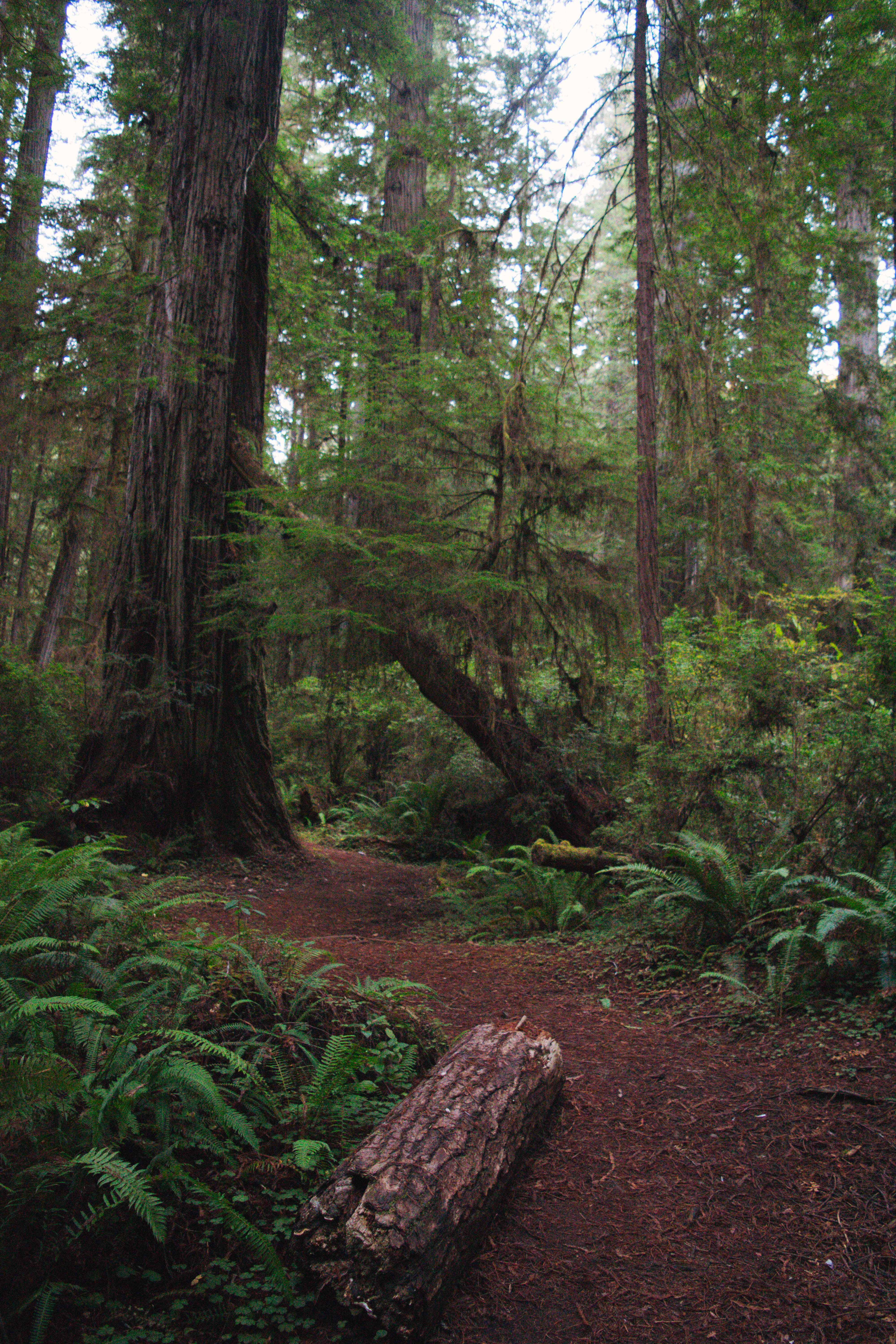
    Many redwoods in Northern California are growing at unexpected—even record-breaking—rates. While redwoods only remain in a tiny portion of the world, they appear to be in good health.

    “People talk about saving the redwoods,” Humboldt State University Professor of Forest Ecology Steve Sillett said. “The redwoods, as long as we don’t cut them down, are doing just fine. The question is, can they help save us?”

    The answer is complicated.

    “The Redwoods and Climate Change Initiative found that one Del Norte County redwood put on 2,811 pounds in 2014, a record-breaking annual growth.”

    Many coastal redwoods are growing faster today than they have in the last thousand years, according to a 2019 report from the ongoing Redwoods and Climate Change Initiative.

    The RCCI, a research partnership studying redwood health since 2013, found surprising growth in redwoods located away from dry forest fringes or recent fires.

    By estimating tree weight based on the tree’s measured width, height and volume, the RCCI found one Del Norte County redwood put on 2,811 pounds in 2014, a record-breaking annual growth.

    The cause of the increased growth is uncertain. Sillett, who sat in his lab beside tree rings which he used to measure age and growth, said climate change may or may not play a role in the increased growth. Sillett said the Clean Air Act of 1970 may have cleaned the air enough to allow more sunlight on the trees.

    “What happened is, the air cleared,” Sillett said. “And with clear air, you get more light, and so it could very well be that this increase in growth rate that we see very strikingly in some of these trees, starting in the late 60s and early 70s to present, is just because of increasing air quality.”

    Beyond climate and air quality, Sillett said multiple factors likely contribute to increased growth. Sillett also said the growth won’t necessarily last.

    “I think that there’s very much a limit to what redwoods or any vegetation can achieve,” Sillett said.

    A redwood tree ring in HSU Professor Stephen Sillett’s lab Aug. 28. | Photo by James Wilde

    A sudden spread of redwood forest also seems unlikely, Lucy Kerhoulas, an assistant professor of forest physiology, said. Kerhoulas said redwoods already have to work hard to reproduce via seed. Climate change might make reproduction even more difficult.

    “Successful seedling germination and establishment might be really challenging under a warming and drying climate,” Kerhoulas said.

    In other words, redwoods are doing well, but they’re not about to reclaim their lost forests.

    Sillett emphasized that many living redwoods are maintaining their normal growth despite less successful reproduction.

    “It’s not the case that they’re responding uniformly,” Sillett said. “But what we do see is that in the prime parts of their range, which is, say, north of San Francisco and relatively close to the coast, the rates of wood production are higher than they were in the not-too-distant past.”

    Redwoods store large amounts of carbon, especially in their prime ranges, but Sillett said that won’t offset the carbon dioxide produced by humans.

    “There’s not enough land in the world to plant with redwood forest,” Sillett said, “that would allow them to save us from what we’re doing to the atmosphere’s chemistry.”
  • Warriors of Rainbow Ridge

    Warriors of Rainbow Ridge

    In between the Humboldt Redwoods State Park and the King Range National Conservation Area lies Rainbow Ridge, a hidden treasure connecting the redwoods to the sea. 

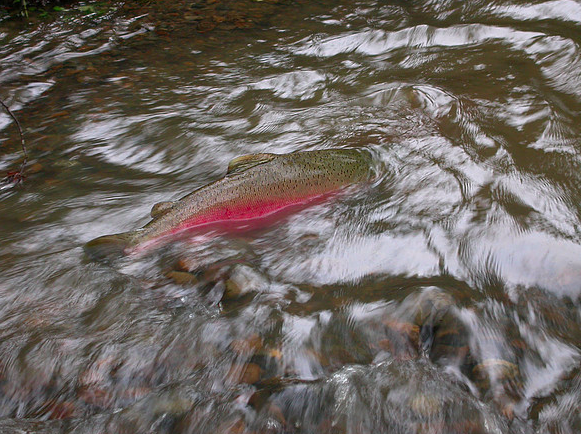
    About an hour south from Humboldt State University lies Rainbow Ridge, a fairy tale forest with 300-foot tall trees covered in lichen and moss. Fungi grows in all shapes, sizes and colors. Rare and endangered animals lurk; the agarikon, the pine marten, the Pacific fisher, the spotted owl, Coho salmon and Sonoma tree vole. The endangered Coho salmon return here to spawn.

    “It is really important that we save the remainder of old growth. It is all that we have left,” conservation consultant for the Lost Coast League, Gabrielle Ward said. “We need to look at how we can help preserve and maintain landscape connectivity so that animals can continue to move across landscapes and not be isolated.”

    Rainbow Ridge is a combination of coastal Douglas fir trees and mixed-hardwood forest along the north fork of the Mattole River. Inside of Rainbow Ridge’s 18,000 acres of forest and meadows lies 1,100 acres of old growth coastal Douglas fir trees.

    Rainbow Ridge is “one of only two old growth Douglas fir forests that have been unentered and untouched, and the only one in California,” Joe Seney, a HSU lecturer in forestry and wildland soils, said.

    “There are very few remaining tracks of old growth Douglas fir anywhere along this part of the California coast,” Seney said.

    The Lost Coast League is a group of citizens from the Mattole watershed and they have been in land acquisition, litigation and conservancy since the early 1970s. The Lost Coast League has acquired and protected thousands of acres of forest since their inception.

    “The goals of the Lost Coast League are to study, survey, understand and preserve and restore this forest,” Ward said.

    The Lost Coast League hopes to acquire and restore Rainbow Ridge. The Rainbow Ridge is privately owned by the Fisher family, who is known for their GAP clothing stores. The Lost Coast League intends to purchase Rainbow Ridge from the Fisher family.

    The east border of Rainbow Ridge is adjacent to Humboldt Redwoods State Park, which holds Rockefeller Forest within it that has the largest contiguous old growth redwood forest in the world.

    The west border of Rainbow Ridge is the King Range National Conservation Area. The purchase and preservation of Rainbow Ridge would connect the world’s largest redwood forest with the ocean, creating a wildlife corridor to remain throughout time.

    “If the Fisher family would recognize the treasure value of Rainbow Ridge and what kind of legacy they could leave, they could create a Fisher Forest standing adjacent to Rockefeller Forest. This is something that could last throughout time,” Michael Evenson, vice president of the Lost Coast League, said.

    The advantages of this biodiverse forest close to HSU provides unique opportunities. The Lost Coast League would like to see the University of California’s nature preserve program or Humboldt State’s College of Natural Resources utilize Rainbow Ridge for research.

    “By looking at what is left we can understand what the rest is supposed to look like,” Ward said.

    There is the potential for new discoveries on Rainbow Ridge, especially in fungi. Agarikon is a fungus found growing on Rainbow Ridge with medicinal properties that can treat antibiotic resistant tuberculosis.

    “There is a vast opportunity for students to be a part of the solution. Looking at fire regimes and restoring portions of the landscape that have been [logged] in the past, and it does have some deep carbon sinks,” Ward said.

    The Cascadia Temperate Rainforest spans from Southern Alaska to Southern Humboldt and is the largest carbon sink on the planet.

    “The only deep carbon sinks left in the United States are along the coastline of this Cascadian Temperate Rainforest,” Ward said. “It’s all that we have left, we can’t continue to fragment this endangered ecosystem.”

    Paulo Sweeney, a forest defender, addresses Humboldt Redwood Company’s inconsistencies in forest practices.

    “Humboldt Redwood Company sets aside high conservation areas that they are not going to log at that time. They aren’t going to log the area now but that does not mean that it is protected from being logged in the future,” Paulo said. “These are key places for restoration.”

    During Earth Week from April 16-22, HSU will be having talks, films, demonstrations and workshops on environmentally sound practices and sustainability.

    Paulo will be having a question and answer period on April 19 after the film “If a Tree Falls” in Forestry Room 201 from 3-4:30 p.m., as part of the documentary day hosted by the Climate Crisis club for Earth Week. Come and learn more on forest defense in the community, climate change, ecological collapse and student involvement in direct action.